After blowing over $200. so far on materials and two weeks of work (with a chronic illness) and much worry, what the city would think about, or worse, make me tear it all out for a redo, I had the good sense to inquire of the town's bldg. inspector. He came and took a look, and said mine was a reconstruction and didn't require a permit (the cost of which have doubled) and applies mostly to unscrupulous contractors. The issue of permits & standards is very confusing, and the inspectors seem to have some discretion.
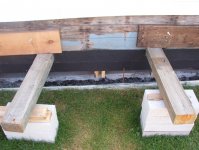
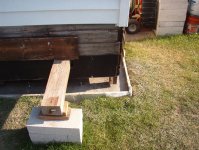
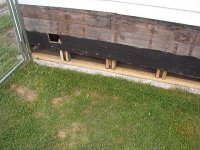
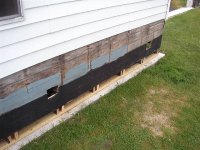
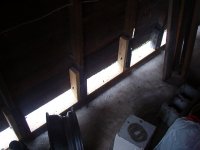
As it turns out the amount of concrete to pour the required 8" x 8" curb footing along my pad is less than half a yard, and I would have saved a lot by doing it according to city code from the very beginning, so I tore out my old work and dug a trench and will be installing forms and having a truck pour the day's left-overs, adding a sill and calling it done.
You lucked out.
Your inspector gave you a gift, seriously!
ANY work that is structural, requires permits and inspections.
And that means work done to code, with deep foundations.
I'm sure you gave him the poor me speech, and he took pity.
Earlier, you commented about the need for permits to do work on your own property. A lot of people have this attitude, that they should have the right to do whatever they want to their property, after all, it's theirs, right? Well, not entirely. You have a legal obligation to do work to accepted practices and codes. And the permit process is to make sure you do. If we didn't have this system, people could build shacks, and we would end up with shanty towns like third world countries have. And you will live in this property for a finite number of years. After that it becomes someone else's problem. That's why we have standards and permits. Your ownership is not absolute. It is conditional.
Something needs to be said about the plastic bag mixing method. If you add enough water to make this work, you have too much water in the mix, and the strength of the concrete will be lessened. Concrete should be stiff. What you ended up with is a slurry with much less strength, although it will probably do for your temporary purposes. Another place where your half measures may work for you, but future owners, who have a right to expect approved construction methods, will be short changed. When you do sell, be sure to disclose what has been done, and how, so you aren't left liable.
Don't forget the sill seal between your concrete and treated sill plate.
The fact that your foundation is wider than the wall presents a problem that can be solved in 2 ways. One is to flash from under the wall sheathing, over the foundation, as mentioned by another poster. Another, and easier and better method, is to lay a course of small brick sized block. Locate these so that the outside edge is flush with the outside face of the studs. This will allow the siding to extend down over the sill plate and the face of these units, shedding water properly. It will also raise the garage an additional 2 1/2" above surrounding grade. I doubt you will do this though, as it is throwing money at the project.
Does the concrete level you now have get the sill plate above grade?
Have you calculated what will happen with the height of your garage door opening in relation with the new level of the building?
Bill




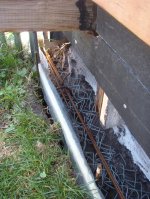


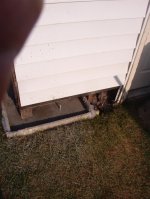
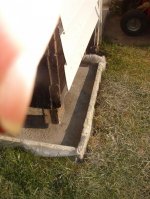




 I too would flash that over the concrete, to keep things dry.