No what their doing is totally intended knipex spent a lot of money on research and development got to charge a premium for a while and now that time has expired and harbor freight is coming in to reduce prices and margins through the spaceThere is no perpetual monopoly. Make something that does the same job and bingo, you can compete.
That the patent may have run out (though its being updated may keep it in force), and HF then went on to produce their version using the no longer patented mechanism is not a problem.
But the ability to sell one's ideas without the fear of someone producing your design for less because they have little to no R&D is what drives innovation.


You are using an out of date browser. It may not display this or other websites correctly.
You should upgrade or use an alternative browser.
You should upgrade or use an alternative browser.
Look out Knipex, here comes ICON!
- Thread starter javyLSU
- Start date
Your hurty feelings against HF are leading you to make statements that are untrue, or at least inaccurate in the legal sense. What's going on here is in an entirely different category of IP law than Mickey, Apple or Coke, and is almost certainly in full compliance with the rules around what constitutes Trade Dress (and, more importantly in this case, what doesn't...).One, it's not a patent issue. There are lots of other companies that make a similar tool. None of them use the EXACT same shape, colors, chrome, cutouts, etc. They straight up stole the design. Not just the mechanism, not just the concept, everything. They are basically identical. HF is attempting to capitalize on the iconic look and reputation Knipex earned by basically photocopying the tool. HF is legally in the clear patent wise, but it is a scummy thing to do, and it reeks of no morals and straight up bad business.
Now, trademarks are different than patents, and it could be argued that Knipex has a trademark violation case. Much like the Coca-Cola font, the Apple logo, or the shape of Mickey Mouse's head, companies have legal rights to things that seem simple but are the core of their brand identity. The specific shapes of the jaws and cutouts, the silver matte chrome with that specific color red grips, the overall size and shape of the tool make Knipex tools easily identified and unique from other tools, kinda like Channellock's blue grips or DeWalt's yellow and black color scheme. By copying THAT essence, HF has stolen IP from Knipex. Has nothing to do with the patent for the tool.
Two, there is no way in hell Knipex would license their IP to a shithole company like HF. Truck brands, yes, they've done that. But the bottom of the barrel? The **** that is left behind for free at the garage sale? No. Knipex has a valuable market identity and share. They would actively damage their brand and reputation by allowing HF to use their IP.
It's the same old group of users who get their testicles twisted every time "Harbor Freight" is mentioned. It's fine if you don't want to be their customer. I sorta get where folks are coming from (though I disagree with them and don't think anyone is "fooled" that it isn't a HF product) and I do think the "Designed by Icon" is the stupidest kind of marketing, but ultimately I don't really care. It's some marketing guy who thinks he's more clever than he is.
It seems odd they have a Doyle equivalent of the Cobra and an Icon equivalent of the pliers wrench, but whatever - their branding is a little scattered.
Last edited:
@dr_clyde your understanding of what is covered by trademarks and was is covered by patents is incorrect. Trademarks are for entity logos or marks that are easily distinguishable. Patents cover inventions, discoveries and processes and their form and function. The design of a tool falls into the patent where the branding on the tool would be trademark.
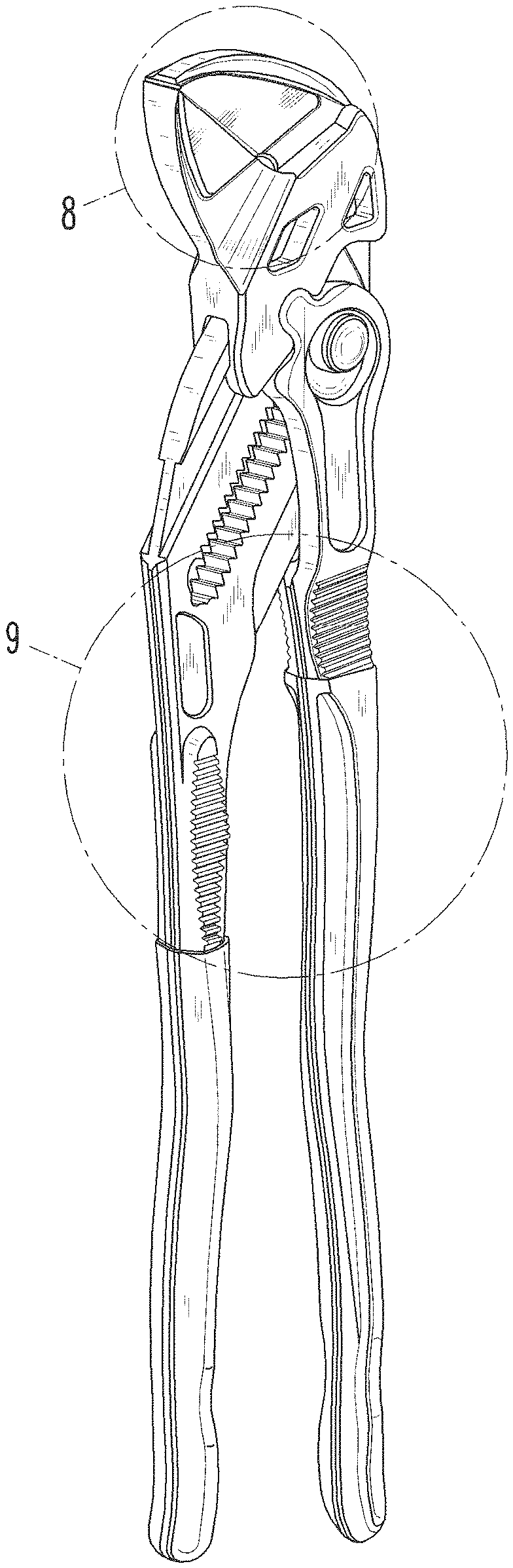
Knipex does have a current patent on the pliers wrench for anyone that is curious as to what is in a patent. It also references other patents to give credit to the original.

Knipex does have a current patent on the pliers wrench for anyone that is curious as to what is in a patent. It also references other patents to give credit to the original.
WordMan
ALLIANCE MEMBER
No what their doing is totally intended knipex spent a lot of money on research and development got to charge a premium for a while and now that time has expired and harbor freight is coming in to reduce prices and margins through the space
And I said, if the patents have expired, that's fine.
WordMan
ALLIANCE MEMBER
Actually, it is. It's exactly the reason why patents expire. It's done on purpose.
I am speaking of before the patent expires.
ericm
Well-known member
@dr_clyde your understanding of what is covered by trademarks and was is covered by patents is incorrect. Trademarks are for entity logos or marks that are easily distinguishable. Patents cover inventions, discoveries and processes and their form and function. The design of a tool falls into the patent where the branding on the tool would be trademark.
Knipex does have a current patent on the pliers wrench for anyone that is curious as to what is in a patent. It also references other patents to give credit to the original.
Thanks for posting that.
It's a design patent. Per the USPTO: "In general terms, a "utility patent" protects the way an article is used and works (35 U.S.C. 101), while a "design patent" protects the way an article looks (35 U.S.C. 171)." So it's not patenting the way the jaw moves or any function, it's patenting the size and location of lightening holes, handle knurling, and other visual features.
In a utility patent, which is what I have experience with, the references are prior art which the patent is an improvement upon. I'm not sure what they are in a design patent.
It looks to me that the Icon has some of the features that are in the Knipex design patent. But I don't litigate patents and don't deal with design patents, so my opinion there could be wrong.
Even if there is a patent violation, Knipex could be licensing theirs to Icon. That's common with utility patents. Or Icon could be blatantly ripping them off and daring them to sue. There's likely no way to know, and I doubt either company will answer emails on the subject.
...which isn't the case here, so...?I am speaking of before the patent expires.
dr_clyde
Well-known member
If you took the branding off a random selection of pliers and asked what company made which, it would be very obvious which tools Knipex made. They have a style, an aesthetic, a certain flair. The features that identify the tool as Knipex are what HF stole.
I’m clearly not an expert in trademarks or patents. But when the shapes, colors and patterns are how you recognize something, that is worth acknowledging. Call it whatever you like, HF stole the essence of what defines the Knipex aesthetic. That’s what they want. They want people to mistake their tools for Knipex at a glance. They want to sell to the people who are too cheap to pay for the real deal, but want the bling. They’re selling fake Rolexes and I don’t understand why people aren’t getting that. It’s ******, underhanded and low. Buyer beware.
I’m clearly not an expert in trademarks or patents. But when the shapes, colors and patterns are how you recognize something, that is worth acknowledging. Call it whatever you like, HF stole the essence of what defines the Knipex aesthetic. That’s what they want. They want people to mistake their tools for Knipex at a glance. They want to sell to the people who are too cheap to pay for the real deal, but want the bling. They’re selling fake Rolexes and I don’t understand why people aren’t getting that. It’s ******, underhanded and low. Buyer beware.
dr_clyde
Well-known member
FWIW, I don’t really have a dog in this fight, I’m mostly interested in the discussion and the philosophy of branding. I think the pliers wrench is kinda dumb, no matter who makes it. I have a few, they rarely get used.
While I do think HF is a morally bankrupt con artist, they fill a role and I understand why they exist and have no real issue with a discount tool retailer selling cheap tools. I own some stuff from HF. Probably will shop there again. I generally buy quality stuff, but that’s just me. If you want to buy their products, no skin off my teeth.
While I do think HF is a morally bankrupt con artist, they fill a role and I understand why they exist and have no real issue with a discount tool retailer selling cheap tools. I own some stuff from HF. Probably will shop there again. I generally buy quality stuff, but that’s just me. If you want to buy their products, no skin off my teeth.
It's funny, I have a couple patents (and been on other applications), but I can't say I read them well. If I read that right, it's for the new cheek design of the jaws and the ridges on the handles. Neither exist on the Icon version, which I'm guessing isn't an accident.@dr_clyde your understanding of what is covered by trademarks and was is covered by patents is incorrect. Trademarks are for entity logos or marks that are easily distinguishable. Patents cover inventions, discoveries and processes and their form and function. The design of a tool falls into the patent where the branding on the tool would be trademark.
Knipex does have a current patent on the pliers wrench for anyone that is curious as to what is in a patent. It also references other patents to give credit to the original.
Obv. they're not imitating any logos.They’re selling fake Rolexes and I don’t understand why people aren’t getting that. It’s ******, underhanded and low. Buyer beware.
Are Sieko or Hamilton fake Rolexes too?
Is Florsheim a pirate copy of Alden's longwing (shoe)?
I dunno - there are so many products that would be hard for the uninitiated to mistake for the product that "started the whole thing" and generally it seems to work out.
Brother, you might have just set a record for conflicting statements in one pretty short postFWIW, I don’t really have a dog in this fight, I’m mostly interested in the discussion and the philosophy of branding. I think the pliers wrench is kinda dumb, no matter who makes it. I have a few, they rarely get used.
While I do think HF is a morally bankrupt con artist, they fill a role and I understand why they exist and have no real issue with a discount tool retailer selling cheap tools. I own some stuff from HF. Probably will shop there again. I generally buy quality stuff, but that’s just me. If you want to buy their products, no skin off my teeth.

I'll tip my hat and retire for the night.
Last edited:
The diamond cutouts on the moveable jaw are the Knipex logo silhouette which is also present on the Icon pliers. So yes they are imitating logos.Obv. they're not imitating any logos.
dr_clyde
Well-known member
There is a difference between having a discussion about an idea without caring too much about the actual subject matter.Obv. they're not imitating any logos.
Are Sieko or Hamilton fake Rolexes too?
Is Florsheim a pirate copy of Alden's longwing (shoe)?
I dunno - there are so many products that would be hard for the uninitiated to mistake for the product that "started the whole thing" and generally it seems to work out.
Brother, you might have just set a record for conflicting statements in one pretty short post
I'll tip my hate and retire for the night.
I truly don’t care about the pliers wrench. I am interested in the discussion, the interesting arguments made, and the opinions. It’s about the idea, not the thing.
Think of it like a conversation at a bar. Not life changing in any way, but interesting nonetheless.
four.cycle
Well-known member
Here are both the patents for the Herrmann (Knipex) D893969 and the Wang (Great Star) D10406655 pliers.
The Great Star patent document is 23 pages of tiny print. Most of the "design" patents I look at for tools are single pages.
Feel free to pick through all the fine print and "legal-ese" language in the full documents. This is just a wild guess on my part, but just a cursory view of these two documents and the names in the "references cited" lists cause me to wonder if this "new and improved" ICON model is just another episode of what many simply be a game of "design patent whack-a-mole". It wouldn't be the first time.
( *.pdf files HERE: https://patft.uspto.gov/netahtml/PTO/srchnum.htm )
The Great Star patent document is 23 pages of tiny print. Most of the "design" patents I look at for tools are single pages.
Feel free to pick through all the fine print and "legal-ese" language in the full documents. This is just a wild guess on my part, but just a cursory view of these two documents and the names in the "references cited" lists cause me to wonder if this "new and improved" ICON model is just another episode of what many simply be a game of "design patent whack-a-mole". It wouldn't be the first time.
( *.pdf files HERE: https://patft.uspto.gov/netahtml/PTO/srchnum.htm )
Attachments


Ton ton
Well-known member
LOL.FWIW, I don’t really have a dog in this fight, I’m mostly interested in the discussion and the philosophy of branding. I think the pliers wrench is kinda dumb, no matter who makes it. I have a few, they rarely get used.
While I do think HF is a morally bankrupt con artist, they fill a role and I understand why they exist and have no real issue with a discount tool retailer selling cheap tools. I own some stuff from HF. Probably will shop there again. I generally buy quality stuff, but that’s just me. If you want to buy their products, no skin off my teeth.
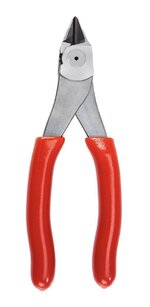
Are these HF any good? I have the Snap-On one and while I like them, I liked the original smaller ones better.I’m surprised at the amount of “shock” in here… This is standard operating procedure for good old Harbor Freight. In the case of the flush cut pliers, they even went as far as copying the cap that Snap-on ships the pliers with:



Meursault74
Well-known member
I agree that it looks just like the Knipex and they did that on purpose. I don't agree with the tool bling and cheap statement. I don't have a "pliers wrench". I have a several sets of pliers and several adjustable wrenches though. Maybe I need one of these pliers-wrench someday when the tools I have can't get the job done. That being said I've purchased tools and used only a few times to accomplish a task or two because I'm a DIY guy not a pro. This Icon tool may fill that need for me someday. If someone were to use and rely on a tool of this type day in and out, then the price difference wouldn't matter over the long run and the Knipex would be a better bet for them.Call it whatever you like, HF stole the essence of what defines the Knipex aesthetic. That’s what they want. They want people to mistake their tools for Knipex at a glance. They want to sell to the people who are too cheap to pay for the real deal, but want the bling. They’re selling fake Rolexes and I don’t understand why people aren’t getting that. It’s ******, underhanded and low. Buyer beware.
If I wasn't on this site, I doubt I'd have even heard of Knipex. My pliers are Channellock and Irwin because that's what was sold locally. I can imagine myself walking into HF and seeing that pliers-wrench tool and thinking it might be useful someday and not know a thing about it being a copy. My brothers use tools. They just get what HF or Home Depot has to get the job done. I can assure you they're not on a tool forum discussing the details. They'd never care enough to buy a Knipex for what they need to do or even have a notion that the HF design is a copy.
I like tools, but I stick with the middle class of tools. Bottom line is I'm sure Knipex makes a fine pliers-wrench and it's better than the Icon. If there was no Icon I'd likely not buy the Knipex and get the job done with what I have. With the Icon and the reduced cost, I may get one if I thought it might help me out. It's not cheap, it's just being realistic with my needs and wants. I don't care about bling or the impression of it.
its almost certain that they are avoiding them specifically to weaken any potential lawsuit by knipexIt's funny, I have a couple patents (and been on other applications), but I can't say I read them well. If I read that right, it's for the new cheek design of the jaws and the ridges on the handles. Neither exist on the Icon version, which I'm guessing isn't an accident.
I suppose if the "Icon" (not Doyle, Quinn, Bauer, General, Predator, Warrior, Hercules, drill master, badland, maddox.....etc etc) were $9.99, they'd be a decent deal, but for the extra $30 I'm happy to own Knipex. Maybe Knipex should invent 50 B.S. "brand" names just to keep up?
PugetDude
ALLIANCE MEMBER
Hey guys (and gals), looks like everyone's favorite tool store Harbor Freight is selling a jen-you-whine Knipex Plier wrench. Obviously since it looks almost EXACTLY the same it must be the real deal at half the price....
Anyone who thinks the Knipex buyer is going to somehow be deceived by this is delusional; the HF target market for these
A) Probably never heard of Knipex
B) Likely wouldn't pay the Knipex premium if they did..
Next thing you know HF will be selling jen-u-whine Crescent Wrenches, Channelock Pliers, Allen Wrenches, Skilsaws, Sawzalls, Portabands, Hole Hawgs, California Framing Hammers, Kant-twist clamps, Phillips Screwdrivers, Jello, Kleenex, and Speed Squares.
Anyone who thinks the Knipex buyer is going to somehow be deceived by this is delusional; the HF target market for these
A) Probably never heard of Knipex
B) Likely wouldn't pay the Knipex premium if they did..
Next thing you know HF will be selling jen-u-whine Crescent Wrenches, Channelock Pliers, Allen Wrenches, Skilsaws, Sawzalls, Portabands, Hole Hawgs, California Framing Hammers, Kant-twist clamps, Phillips Screwdrivers, Jello, Kleenex, and Speed Squares.
DerekV
Well-known member
Precisely - this is just another Tuesday for HF.I’m surprised at the amount of “shock” in here… This is standard operating procedure for good old Harbor Freight. In the case of the flush cut pliers, they even went as far as copying the cap that Snap-on ships the pliers with:
It’s slimy and facepalm inducing, and you don’t have to like it, I personally don’t. But they’ve been ramping up their carbon copy quests a lot more over the past few years, ones so bad that they’ve had legal issues (i.e. Snap On jack, Lincoln Electric TIG welder, etc.)., and they don’t seem to be stopping. You have to assume they know what they’re doing and don’t lose a wink of sleep worrying about potential lawsuits.
It’s lame, but what can you really do other than voting with your wallet?
Don’t know, haven’t tried them. I’ve owned the Snap-on version for a few years now and love them. I did get a chance to handle the Icon version last year, and I can tell you that the grips feel very different than the Snap-on. The grip that Snap-on puts on their pliers is one of my favorite features of their pliers, so I won’t be buying those any time soon… or ever.Are these HF any good? I have the Snap-On one and while I like them, I liked the original smaller ones better.
The diamond cutout itself isn't something that can be protected, at least by itself. I agree they're copying it, but they could/would probably argue successfully in court that it's material savings (and thus functional) and not a protected or trade dress or trademark in any case. They'd almost certainly win on that point.The diamond cutouts on the moveable jaw are the Knipex logo silhouette which is also present on the Icon pliers. So yes they are imitating logos.
Agree. I'm not ruffled.There is a difference between having a discussion about an idea without caring too much about the actual subject matter.
I have one, as well as the Doyle flush cutters. The Icon pair is great to me (never held the SO), but the Doyle feels like something that should cost less than the $10 and is harder to get the perfect cut on. I got them for tight spots, and they're fine, but the Icon pair feels much more substantial. My $0.02.Are these HF any good? I have the Snap-On one and while I like them, I liked the original smaller ones better.
Great post. I also would have never heard of Knipex if it weren't for GJ, and I'm glad I did - they make great tools. I also agree with you that the vast majority of people who wind up with a pair of the Icon were never buying Knipex in the first place. That, coupled with the fact I'm pretty sure they're doing nothing wrong legally, makes me un-rustled about it.I agree that it looks just like the Knipex and they did that on purpose. I don't agree with the tool bling and cheap statement. I don't have a "pliers wrench". I have a several sets of pliers and several adjustable wrenches though. Maybe I need one of these pliers-wrench someday when the tools I have can't get the job done. That being said I've purchased tools and used only a few times to accomplish a task or two because I'm a DIY guy not a pro. This Icon tool may fill that need for me someday. If someone were to use and rely on a tool of this type day in and out, then the price difference wouldn't matter over the long run and the Knipex would be a better bet for them.
If I wasn't on this site, I doubt I'd have even heard of Knipex. My pliers are Channellock and Irwin because that's what was sold locally. I can imagine myself walking into HF and seeing that pliers-wrench tool and thinking it might be useful someday and not know a thing about it being a copy. My brothers use tools. They just get what HF or Home Depot has to get the job done. I can assure you they're not on a tool forum discussing the details. They'd never care enough to buy a Knipex for what they need to do or even have a notion that the HF design is a copy.
I like tools, but I stick with the middle class of tools. Bottom line is I'm sure Knipex makes a fine pliers-wrench and it's better than the Icon. If there was no Icon I'd likely not buy the Knipex and get the job done with what I have. With the Icon and the reduced cost, I may get one if I thought it might help me out. It's not cheap, it's just being realistic with my needs and wants. I don't care about bling or the impression of it.
FWIW - I've never liked the adjustable/Crescent-style wrenches, and they've literally gone untouched since I got my Knipex set - easier/faster/stronger/less "fiddly" etc.
Said differently "they are complying with applicable patent and trademark law"its almost certain that they are avoiding them specifically to weaken any potential lawsuit by knipex
Exactly.Anyone who thinks the Knipex buyer is going to somehow be deceived by this is delusional; the HF target market for these
A) Probably never heard of Knipex
B) Likely wouldn't pay the Knipex premium if they did..
Last edited:
I do think that that their Icon line will eventually become the new standard like Craftsman was in the 90's and 2000's if they can keep inventory on the shelves and quality high.
Good looking tools, reasonably priced and available at your local HF everyday.
The current availability and quality of what's available at the big box stores is ****, but you have to keep lowing the quality of the product to continue selling it at the same price point. The same can be said for the low tier offerings at HF, but the Icon line is trying to be that mid tier option.
I don't agree with them carbon copying this pliers wrench, but I also don't think it's going to detour their success.
Good looking tools, reasonably priced and available at your local HF everyday.
The current availability and quality of what's available at the big box stores is ****, but you have to keep lowing the quality of the product to continue selling it at the same price point. The same can be said for the low tier offerings at HF, but the Icon line is trying to be that mid tier option.
I don't agree with them carbon copying this pliers wrench, but I also don't think it's going to detour their success.
Last edited:
i agree with most that hf is being crummy with a nearly exact copy.
what i find comical is all of the chest thumping and i am a better person because i would buy a genuine knipex over the hf version.
a local independent hardware store picked up the knipex line a few months ago. a week or so back i asked him how it was selling. his comment was ok. he asked if i had any or purchase some. i told him that i had a few pair and proceeded to ask if he had or would be getting any of the new twin grip pliers. he looked strangely at me and said he didn't know what they were.
what is my point in all of this? the owner of a store that carries the line didn't know they existed and then admitted that most customers in his store did not even know what the knipex brand was.
the members of this site are an odd bunch. we know of brands and styles of tools that 95% of the general public do not know of yet expect that they should know and support the original.
hell, they don't know what knipex is. they have never seen this particular style of pliers and have no idea where to get them if they did know about them. at the end of the day, joe consumer wants a tool that works and won't break the bank.
again, i am not saying it is right or wrong i am just saying all of the chest thumping here means almost absolutely nothing.
what i find comical is all of the chest thumping and i am a better person because i would buy a genuine knipex over the hf version.
a local independent hardware store picked up the knipex line a few months ago. a week or so back i asked him how it was selling. his comment was ok. he asked if i had any or purchase some. i told him that i had a few pair and proceeded to ask if he had or would be getting any of the new twin grip pliers. he looked strangely at me and said he didn't know what they were.
what is my point in all of this? the owner of a store that carries the line didn't know they existed and then admitted that most customers in his store did not even know what the knipex brand was.
the members of this site are an odd bunch. we know of brands and styles of tools that 95% of the general public do not know of yet expect that they should know and support the original.
hell, they don't know what knipex is. they have never seen this particular style of pliers and have no idea where to get them if they did know about them. at the end of the day, joe consumer wants a tool that works and won't break the bank.
again, i am not saying it is right or wrong i am just saying all of the chest thumping here means almost absolutely nothing.
Kscardsfan
Well-known member
Think I’ll just spend the extra 15-20 bucks on the real deal. If it was half price of the real thing I might give it more thought.
What other cases have you heard of other than SO and Lincoln?Precisely - this is just another Tuesday for HF.
It’s slimy and facepalm inducing, and you don’t have to like it, I personally don’t. But they’ve been ramping up their carbon copy quests a lot more over the past few years, ones so bad that they’ve had legal issues (i.e. Snap On jack, Lincoln Electric TIG welder, etc.)., and they don’t seem to be stopping. You have to assume they know what they’re doing and don’t lose a wink of sleep worrying about potential lawsuits.
It’s lame, but what can you really do other than voting with your wallet?
SO settled (and from all appearances got absolutely nothing) and I haven't seen any resolution on the Lincoln bit, which appears to complain they HF's welders were green
. There's not much out there, but found this: "a judge in the US District Court for the Northern District of Ohio denied Lincoln’s motion for a preliminary injunction because the company had not made the necessary showing of irreparable harm." That doesn't bode well for Lincoln - I can't see the case, but looks like it might have wrapped up in 2019. Quietly...WordMan
ALLIANCE MEMBER
There is a difference between having a discussion about an idea without caring too much about the actual subject matter.
I truly don’t care about the pliers wrench. I am interested in the discussion, the interesting arguments made, and the opinions. It’s about the idea, not the thing.
Think of it like a conversation at a bar. Not life changing in any way, but interesting nonetheless.
The whole "calm down," type of comment is just and attempt at gaslighting.
Because the Lincoln thing seemed to be floating out there, and that kind of thing bugs me, I did some (non-trivial) digging.
In other words, Lincoln's lawsuit failed.
My understanding of IP law is that companies are essentially required to defend their IP/trademarks/etc. or risk it being declared public domain, so Lincoln didn't "lose" (and of course HF didn't either). The court just found that HF wasn't doing anything that wasn't in compliance with the law and the IP in question.
I don't understand why people think the fact that a lawsuit was filed is somehow proof of something or a "win" on the part of whoever filed the suit. It's just a part of a process, and in the case both both SO and Lincoln, the process didn't yield anything in their favor.
Pacer ([URL='https://pacer.uscourts.gov/' said:Public Access To Court Electronic Records[/URL])]
DECISION/JUDGEMENT
CLERK (BY) DEPUTY CLERK DATE
1:17-cv-02329 11/6/2017 for the Northern District of Ohio
The Lincoln Electric Company and Lincoln Global, Inc. Harbor Freight Tools USA, Inc.
8,618,441 12/31/2013 Lincoln Global, Inc.
8,256,659 9/4/2012 Lincoln Global, Inc.
2,650,903 11/19/2002 Lincoln Global, Inc.
4,948,982 5/3/2016 Lincoln Global, Inc.
Stipulation and Order of Case Dismissal, with prejudice. Each party shall bear its own attorneys' fees, expenses and costs. Related
document 75 . Signed by Judge Solomon Oliver, Jr. on 4/26/2019.
In other words, Lincoln's lawsuit failed.
My understanding of IP law is that companies are essentially required to defend their IP/trademarks/etc. or risk it being declared public domain, so Lincoln didn't "lose" (and of course HF didn't either). The court just found that HF wasn't doing anything that wasn't in compliance with the law and the IP in question.
I don't understand why people think the fact that a lawsuit was filed is somehow proof of something or a "win" on the part of whoever filed the suit. It's just a part of a process, and in the case both both SO and Lincoln, the process didn't yield anything in their favor.
WordMan
ALLIANCE MEMBER
...which isn't the case here, so...?
If you follow the thread, you'll see I was making a distinction between stealing a patented design and doing so after the patent is expired. I also wondered if the modification/improvement on the design Knipex made would keep the design under patent.
Again - not an attorney (and IP law is a deep, complicated area of law), but that's not my understanding of how it works. My understanding is a derivative patent can protect the improvements (but doesn't always - not sure how that line is drawn, but I don't fully understand how that area works), but wouldn't protect the original IP. Again, the system is designed to ensure the technology/etc. eventually makes it to the open market, so there isn't any meaningful "extending" of a patent.If you follow the thread, you'll see I was making a distinction between stealing a patented design and doing so after the patent is expired. I also wondered if the modification/improvement on the design Knipex made would keep the design under patent.
This is why SawStop is layering on patents to their technology. The core patent is expiring, but the inventor has put many derivative patents on top, which makes it pretty challenging to use the now-or-soon expired original patent in a product. This Reddit thread on the topic was really interesting/informative (and a bit of a dumpster fire at the same time).
IIRC, the inventor and patent holder of the SawStop technology was a patent attorney. He's been very aggressive with his patents - apparently he approached all the big makers to license it, but was asking for a huge price per saw that included his technology ($100 if I recall correctly). I'd definitely pay $200+ for a saw that included that tech vs. one that didn't, but that lump of cost on every saw just isn't going to work for big makers. So he started his own company and has filed a LOT of lawsuits over the years. Ultimately, it looks like that even with all the effort/patents/lawsuits/etc. the technology will be fully in the clear in 2024.
dr_clyde
Well-known member
??The whole "calm down," type of comment is just and attempt at gaslighting.
Its hard to convey tone on the internet, but I’m having a hard time understanding what you’re trying to say.
This is a casual discussion about tools and manufacturing ethics, nothing worth getting worked up over.
PugetDude
ALLIANCE MEMBER
Again - not an attorney (and IP law is a deep, complicated area of law), but that's not my understanding of how it works. My understanding is a derivative patent can protect the improvements (but doesn't always - not sure how that line is drawn, but I don't fully understand how that area works), but wouldn't protect the original IP. Again, the system is designed to ensure the technology/etc. eventually makes it to the open market, so there isn't any meaningful "extending" of a patent.
This is why SawStop is layering on patents to their technology. The core patent is expiring, but the inventor has put many derivative patents on top, which makes it pretty challenging to use the now-or-soon expired original patent in a product. This Reddit thread on the topic was really interesting/informative (and a bit of a dumpster fire at the same time).
IIRC, the inventor and patent holder of the SawStop technology was a patent attorney. He's been very aggressive with his patents - apparently he approached all the big makers to license it, but was asking for a huge price per saw that included his technology ($100 if I recall correctly). I'd definitely pay $200+ for a saw that included that tech vs. one that didn't, but that lump of cost on every saw just isn't going to work for big makers. So he started his own company and has filed a LOT of lawsuits over the years. Ultimately, it looks like that even with all the effort/patents/lawsuits/etc. the technology will be fully in the clear in 2024.
He will have to go back to ambulance chasing table saw accidents after his patents expire. The man does like to litigate.
39 LaSalle
Well-known member
Four pages of outrage into it, but yet nobody here has filed a lawsuit charging copyright infringement. Why is that? Oh, that's right...it's nobody's business but Knipex or HF. Either buy the Icon's or don't, shop at HF or don't...nobody cares what you do...especially Knipex or HF. So all you legal eagles out there should file your lawsuits on behalf of Knipex, or perhaps dial back the bellyaching with no effect other than wasting time and space. Speaking for myself, I am ashamed I've followed this thread this far and actually bothered to post in it.
Personally, I own several Knipex products. I own several HF products. Some of my Knipex have been well worth the money. Others, not so much for my purposes. Some of my HF stuff has worked out excellent for me. Others, I wish I had spent the extra bucks for higher quality. So far though, neither of them has kicked the other out of my tool box because they can't stand being around each other.
All I, or any reasonable person would need to know about these plier wrench knockoffs is how well they work and hold up. Anybody on this forum with a lick of sense already knows the score that Knipex is probably going to be of a bit higher quality than HF. As others have pointed out, the vast majority of consumers out there have no idea who or what Knipex is nor do they care. The question for those who do know then becomes, is that difference worth the $20 or not? For some it will be, for others it won't.
Personally, I own several Knipex products. I own several HF products. Some of my Knipex have been well worth the money. Others, not so much for my purposes. Some of my HF stuff has worked out excellent for me. Others, I wish I had spent the extra bucks for higher quality. So far though, neither of them has kicked the other out of my tool box because they can't stand being around each other.
All I, or any reasonable person would need to know about these plier wrench knockoffs is how well they work and hold up. Anybody on this forum with a lick of sense already knows the score that Knipex is probably going to be of a bit higher quality than HF. As others have pointed out, the vast majority of consumers out there have no idea who or what Knipex is nor do they care. The question for those who do know then becomes, is that difference worth the $20 or not? For some it will be, for others it won't.
Odd-job
Well-known member
Exactly some companies just visualize lawsuits as a cost of doing business.Precisely - this is just another Tuesday for HF.
It’s slimy and facepalm inducing, and you don’t have to like it, I personally don’t. But they’ve been ramping up their carbon copy quests a lot more over the past few years, ones so bad that they’ve had legal issues (i.e. Snap On jack, Lincoln Electric TIG welder, etc.)., and they don’t seem to be stopping. You have to assume they know what they’re doing and don’t lose a wink of sleep worrying about potential lawsuits.
It’s lame, but what can you really do other than voting with your wallet?
While I cringe at some of the stuff HF wants to "copy", I didn't feel too bad for Snap On on the jack given this was one of their outsourcing plays up there with the Snap On LED light I picked up from Costco one day. Reading that whole thread convinced me I wanted a AC Hydraulic jack.
Swear I saw some 10 inch Knipexs on Amazon warehouse yesterday for $50.
WordMan
ALLIANCE MEMBER
??
Its hard to convey tone on the internet, but I’m having a hard time understanding what you’re trying to say.
This is a casual discussion about tools and manufacturing ethics, nothing worth getting worked up over.
My apologies...
M635_Guy seemed to be implying you were too worked up over the whole thing. Generally, these sorts of statements are an attempt at gaslighting. They wish to make you think you must be wrong because you are obviously overreacting.
I have to think he's made his nut on his saw company, which of course will continue well-beyond the expiration of his patent. Apparently the parent-company of Festool bought SawStop a few years ago.He will have to go back to ambulance chasing table saw accidents after his patents expire. The man does like to litigate.
My job revolves significantly around patented technology (as y'all might have guessed). In some cases, we're cross-licensed with other companies, meaning they are free to use our patents (and vice-versa). But it's clear that in many cases having the patent and knowing what to do with it is an whole different thing. Part of the equation is why you invented it that way in the first place and the nuances that make a potentially significant difference. That's why I'm not surprised HF didn't deviate much/at all from the mechanical shape of the Knipex - a little tweak could make a big (negative) difference in feel, performance, etc. (I'm not suggesting that was their main/primary reason). The lack of deviation is what makes the "Designed by Icon Tools" bit so ludicrous though - it applies to the packaging more than anything
Oh - well I do think a few people in this thread seem to be taking this product (and HF in general) very personally. And a lot of people are entirely wrong in their understanding of patents and IP law. I haven't claimed (and wouldn't) that mine is perfect, though it's enough to know HF is almost certainly doing nothing that violates Knipex's patents/IP. And I just don't think the "looks just like it!" thing is a big deal - I'd bet there is one or more examples of the identical thing in the homes of the loudest voices in this thread.My apologies...
M635_Guy seemed to be implying you were too worked up over the whole thing. Generally, these sorts of statements are an attempt at gaslighting. They wish to make you think you must be wrong because you are obviously overreacting.
I don't understand the torches and pitchforks a few people on this forum seem to constantly carry. It's a company that appears to treat and pay their thousands of employees well, offers a lot of good value and quality, has excellent customer service (in my experience) and as far as I can tell hasn't ever been found in the wrong on the patent/IP drum people are beating in this thread.
To be clear, if HF was infringing on Knipex's IP, I'd completely support Knipex getting that set straight immediately.
dnschmidt
Well-known member
Well, well. Now that we've covered the patent aspects and the moral implications has anybody used them and determined if they are as good as the Knipex which is all 99% of the people in the world give a **** about.
PugetDude
ALLIANCE MEMBER
Imagine the GJ outrage if these were Craftsman branded instead of Icon.