worcesterint
New member
They make a wrench called the Model 60 that has a 60" handle and weighs 100lbs!
lowellcorp.com/products/model-60-socket-wrench-9-1-8-sq/
lowellcorp.com/products/model-60-socket-wrench-9-1-8-sq/




It is pronounced Woostah, and we started the whole damn country, so if you don't talk like us YOU have an accent!In Mass, the letter ''R'' is often pronounced as ''ahh''lol
I’m from mass, and I spent a lot of time in wista. Ya wista.It is pronounced Woostah, and we started the whole damn country, so if you don't talk like us YOU have an accent!
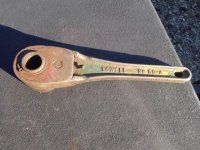
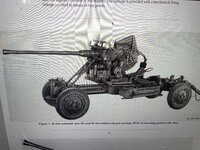
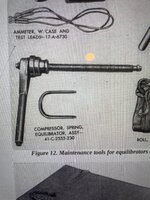
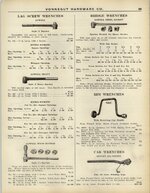
Bofors TM.....has to be a LowellI'm not going to take a picture of every Lowell ratchet in the catalog, but here is one example...
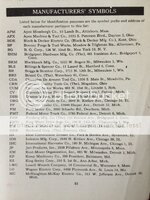
Note that when they didn't have a spec number, they used the Mfgr's. LWC-4 1/2 indicates Lowell and their model number.
yeah, everyone spells different tool names wrong. I get that,... with Thorsen the founder even spelled it wrong, he was trying to make it look like it was connected to swedish steel and then spelled it in a more historically Norwegian style (sen as opposed to son or sson) Hell, I was the guy who convinced the original outbid everyone else Plombmaniac guy (RIP) to misspell Plomb on purpose to see more auctions on eBay. He was a WW2 vet in his 90's and kept arguing with me that the correct spelling was "Plomb" not plumb and would go straight into the tool company lawsuit history until I practically forced him to type "Plumb" socket set or Plvmb or whatever just as an experiment and even after seeing all the results he wanted to explain to me that they were spelling it wrong. With Worcester there almost seems to be something else going on with people wanting to put an "h" in it.... countless times I've seen people try to pronounce even Worcestershire sauce as wor-ches-ter shire sauce for some reason. Anyway, oh wait, "Pronto" for Proto is one that kills me too. Man there's a ton.^ oh... I see that all the time. Run a search for "Industro" or "Indestreo". Then try "Thorson" or "Thoreson" or "Thoresen". Craftsman misspellings are all over the map.
Well 'frickin Dawchistuh",...... do Haverhill and Peabody now.Wista
lol That is a wicked good Dorchester.Well 'frickin Dawchistuh",...... do Haverhill and Peabody now.
Wista-shea sauce is wicked pissa.wait... what???
That brown stuff that comes in a bottle is "Whatsishere" Sauce
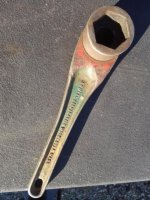
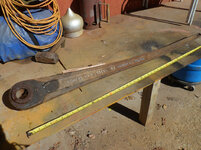
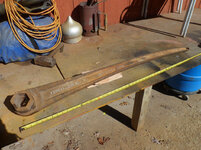
I know this an old thread but I have a question for you. I have this identical ratchet. On the non socket side there is a flathead screw on the top & bottom of the round protrusion. Do these need to be removed or loosened in order for the socket to turn? Mine is froze up. I may soak it in 50/50 ATF & Acetone. I can't get the screw out to remove the plate to get to the mechanism. I wandered if you ran into similar issues? Any info helps.my biggest lowell, used by bridge builders and sandhogs.
sent 1 minute info video to ur fb. soak it.I know this an old thread but I have a question for you. I have this identical ratchet. On the non socket side there is a flathead screw on the top & bottom of the round protrusion. Do these need to be removed or loosened in order for the socket to turn? Mine is froze up. I may soak it in 50/50 ATF & Acetone. I can't get the screw out to remove the plate to get to the mechanism. I wandered if you ran into similar issues? Any info helps.
I don't do fb. But yes, I'm going to soak it.sent 1 minute info video to ur fb. soak it.
i thought u tooladdict ben. i can't take pics now.I don't do fb. But yes, I'm going to soak it.
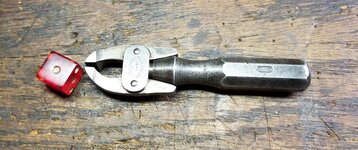




Very cool Lugz. You know I'm a big Lowell fan. I watched Scoutcrafter restore one of these on his YouTube channel. Very unique tool. Difficult to find. Interesting info on the tool.Who knew Lowell Wrench Co. made hand vises?
"Not I," said the blind man.
DATAMP has a nice page on this tool, patented (166,553) on August 10, 1875, linked here.
Lowell was famous among jewelers, silversmiths, die sinkers, engravers, and arts and crafts metal workers at the turn of the last century for this pattern, which opened and closed the cantilevered jaws by turning the handle one way or the other.
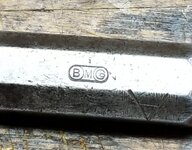
As a bonus, this surprise was staring at me from the handle...
That's an early logo for the Braunsdorf-Mueller Company.
I believe Lowell was their supplier.
They were both listed in various directories...
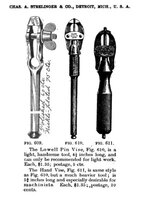
But it was Lowell's patented pattern and there's plenty of examples of Lowell making them for others, such as this 1895 Strelinger & Co. catalog...
...and this 1926 Dixon catalog, with Dixon's name right on the handle.
It's the most feasible explanation. It's highly unlikely there was some kind of industry standard for threading of each piece, and just as unlikely they were each making the entire tool with pieces that just happen to have interchangeable parts, and a prior owner had one half of each.
Yep. Me too. There are a few of us. The size of their following here is not indicative of their historical impact, but I have to admit, I think of them mainly in terms of ratchets for heavy industry (bridges, tunnel, RR, etc), so I was pleasantly surprised to see the name on this hand vise and I was unaware of their significant contribution to hand vises as a type with this irrepressibly clever yet simple design.You know I'm a big Lowell fan.
Even more difficult than you might think. A thorough search reveals a few posted here on GJ, but none actually marked Lowell. All the other examples were made by Lowell for others or copied after the utility patent expired.Very unique tool. Difficult to find.
Lowell is definitely mostly industrial size tools. When I see giant heavy ratchets the first thing that comes to mind is Lowell Wrench Company. Like you said, RR, bridges, and thanks to the hard underground work of the Sandhogs, the subways in the big cities. Lowell's tools literally helped build American industry. That's what makes Lowell's hand vise so unique.Yep. Me too. There are a few of us. The size of their following here is not indicative of their historical impact, but I have to admit, I think of them mainly in terms of ratchets for heavy industry (bridges, tunnel, RR, etc), so I was pleasantly surprised to see the name on this hand vise and I was unaware of their significant contribution to hand vises as a type with this irrepressibly clever yet simple design.
Even more difficult than you might think. A thorough search reveals a few posted here on GJ, but none actually marked Lowell. All the other examples were made by Lowell for others or copied after the utility patent expired.
get that red ratchet 2 1/2 opened yet?Lowell is definitely mostly industrial size tools. When I see giant heavy ratchets the first thing that comes to mind is Lowell Wrench Company. Like you said, RR, bridges, and thanks to the hard underground work of the Sandhogs, the subways in the big cities. Lowell's tools literally helped build American industry. That's what makes Lowell's hand vise so unique.
Nope. It's being stubborn. I took it out of the 50/50 soak. It was in the soak for 9 days. I heated it up so much that the handle was hot about a foot down the handle & the plate screw still wouldn't budge even after beating on it with a hammerget that red ratchet 2 1/2 opened yet?


I'm quickly running out of options. I've seen tools after Evaporust soak & it has that dull metal finish. But then I've seen people take it to a wire wheel & it took that dull finish away & it looked like the original finish again. If I thought I could get that original finish look after Evaporust soak by using the wire wheel, I would consider trying it. Is this your experience with Evaporust?I have used Kroil for decades. It works well, but does not work miracles.
Check out this link. Scoutcrafter put two Craftsman ratchets in Evaporust then used the wire wheel on them afterwards. It took that dull finish away. Forward to the 9:20 section of the video to see this.Almost none, and only on items that would get a polish later.
No worries, 4.c. Fortunately, there is no shortage of references on Google Books. It was a very popular item in many retailers' catalogs!I guess I didn't post the Lowell "hand vise" catalog page because all we ever see here is Lowell ratchets.... !
Nope. You have any experience with Kroil?
Tried that for a week and a half with no results.nope, i'm trans with acetone man.