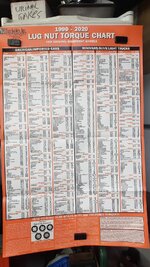
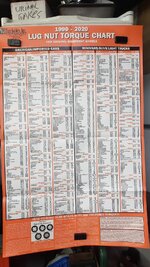
This right here is a prime example of why I don't post.
The manufacturer of the lube of choice dosen't need to know anything about any fastener it is put on. The simply need to know the coefficient of friction for their product. the math is simple and universal.
Every product that I have used or looked up lists this in the PDS.
My post is not irrelevant simply because you don't understand what I am posting. I deal with fasteners that are torqued to 1,000's of foot pounds on a daily basis and they are all lubed.
Would you install a stainless steel stud and lug with no lube?
Sorry, Munice, I apologize. I misread what you posted and for some reason I thought you were talking about using K factor for the torque spec, which can be very inaccurate if it's used in conditions outside of the original lab measurements, which is pretty much what you have with all used fasteners.

If anyone out there is dead set on using a lube on a lug and stud even though
wheel lug and stud manufacturers advise not to, the coefficient of friction calculation Muncie uses is in fact the is the way to do it "right":
T=F×[(0.159×P)+(0.577×d×μ)+(D_f×μ/2)]
Where T = Torque Applied (Nm)
F = Tension Generated in Fastener (N)
P = Thread Pitch (m)
d = Pitch Diameter (m)
Df = Nut Friction Diameter (m)
μ = Coefficient of Friction
Oh, I also wouldn't install any SS fasteners without lube, all SS fasteners require it. On that note, I don't know of any OEM lugs or studs that are SS...

On a separate note, for the guys asking about torque sticks or "dogbones", they're all ****. The do not (actually, they can not. It's impossible unless it physically separated from the gun at the rated torque) limit torque accurately, if at all. Read the instructions they come with. They require specific model impact guns, used at specific settings and at a specific air pressure and CFM. I can all but guarantee almost none of those requirements are ever checked/applied properly in the field.
Tommy