Jesus Christ, don't look, into any connector, gbic or fibre port, whether single-mode or multi. You can't see the light as any modern light comms are in wavelengths that are invisible, yet can cause irrepairable damage to your eye. Cap all open ports and patch cord ends when not in use.
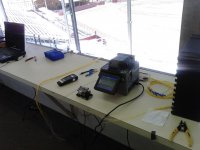
There is some good advice here, and some, well, not... IMHO, of course. However, I do have a couple decades working with fibre networks, cable and all the equipment with lots of pretty flashing lights, and currently splice fibre full time for a large telco in western Canada.
For a 400 foot distance, multi-mode is fine. I'd recommend 62.5 micron strands as it's the most common in use in North America. Single-mode is over kill and expensive and will require even pricier electronics at the ends.
Pull in some more strands than you need. Four or six would be ideal. This will give you some redundancy and room for any possible future expansion. Plus it will allow for recovering from cable damage, which brings me to another point...
I assume that it gets cold there in the winter? Unless you install some sort of continuous unjointed plastic duct or conduit like core line or liquid tight, you need to use outdoor rated cable. Any water ingress into your duct, which will happen with EMT or metal conduit and possible with PVC, can damage the fibre if it freezes. You can get outdoor cable with tight buffer strands which will make it easier to mount connectors directly to the end of the fibres. With loose tube, it's a bit more complicated and expensive.
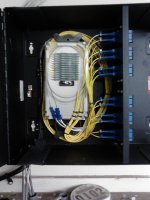
Speaking of connectors, it really doesn't matter which you use. It's best to have the same as your electronics, but adapter cords with the same core size of your fibre and the correct type connectors are available. Common types are SC and LC and a plethora of others. SC is still pretty common on older work group switches or consumer grade stuff. LC is now almost all that's available on devices for high density requirements like server rooms. ST is still quite common, but I'd avoid them if you can. The connector type will not affect the speed or bandwidth of your connection.
I'd pull in some unconnectorized cable so you can get the outside rated stuff and then not have to try to store (and not damage) a bunch of slack because you overestimated the distance. For the termination of the cable, look up a local network cable company that works with fibre and hang around their shop at the end of day to ask if any of them is interested in a couple hours of work for a C-note and an armload of their favourite alcoholic beverage. Find out the type/brand of connector they are familiar with and if you should supply them or if they will. A mechanical type connector runs about $15 each and a 3M hot melt is about $10. You'll need one for each strand. Terminate more than you need. I'd recommend four. That will give you two transmit/receive pair or enough for two connections. The hot melts are more robust, but take about twice as long (and require more skill) to install and are not all that common any longer. The mechanical types take no longer than 5 minutes to install for each, but that still requires a bit of cable prep work before hand.
For your application, I'd recommend a pair of media converters of the same model and manufacturer. Most will work with other brands, as the technology is supposed to be universal, but some boxes don't play nice with those from other builders. And any copper switch or hub will work with the converters. You can probably even plug your computer directly into the garage end converter, though it may require a cross-over patch cable. If you can find some switches with built in fibre ports that aren't too pricy, I'd suggest that route. This solution is inexpensive and easy to manage.
Good luck and if you have any specific questions, drop me a note. I'll help if I can.