To avoid these ads, REGISTER NOW!

MAJOR Concrete issue! Options?

FL Guy

Well-known member
Joined
Dec 21, 2022
Messages
302
Looking for ideas and see what my options are…

I paid for a “3000” psi pad and had it poured 4 months ago.

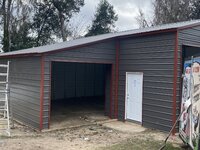
About 2 months ago my metal garage was installed. About a month or so ago I noticed gouge marks and lots of scratches on the surface. From what I can tell the surface of the concrete was extremely soft.

I had an engineer company come out and pull three concrete cores.
The first core they pulled was towards the back of the building, a second core was pulled in the middle of the building and the third core was pulled towards the front of the building.

When they started pouring the concrete they began in the back of the building area and worked their way towards the front.
The first and second core came from the first truck load of concrete, 10 yards.

The third core came from the second truck load of concrete, 6 yards.

Below is my concrete strength that is 4 months old…

First core 1600 psi
Second core 1758 psi
Third core 3976 psi

The engineer report for my building states a minimum of 2500 psi.
I’m not even sure if the anchors that are holding the base rail down to the concrete are doing anything right now. I can see a tropical storm coming through here and literally ripping the base rail off the concrete.

What are some of the options that I currently have?

I understand a complete tear out and re-pour is obvious, but my building is up and electricity is ran, plus the garage is full and operational.

This building has probably 3000 screws holding it together. I know for a fact if this building comes down it will not go back up the same and I’ll be dealing with leaks in extra holes that I did not pay for.

The engineer told me they could pour a slab over the existing slab but obviously this will cover the 2.5 inch base rail and even come up the wall approximately 1.5 inches.

The other option is to pour a layer of hydraulic cement to make the surface harder but this obviously does not do anything for the strength of the concrete below it. Not to mention if I ever have to bolt anything to the floor I think I’m going to have issues.

If anybody has run into the situation, I’m all ears on as far as what to expect or what I should do or demand.

After adding up the tear out and disposal of the old concrete, install new concrete, pay for a couple of pods for storage, pay for all permits and a new engineer core testing, have an electrician come out to remove all the wiring and then reinstall it, I’m a little over $22k.

If I push for a new building as well which I think I’m entitled to that’s going to add another $21k.

Now I’m just a weekend warrior. I’m not running a 24/7 business out of this garage. I do like to diddle around a little bit with welding fixing stuff up and what not.
 
To avoid these ads, REGISTER NOW!

cannuck

Well-known member
Joined
Nov 30, 2021
Messages
4,604
Location
Rural SK
Don't know the rules where you are, but I imagine the first thing you need to do is contact the original contractor who gave you a 3k pad. Hopefully, there is some written contract to refer to. If you want to do it formally (and you should consider that) send him a registered "demand letter" as that is generally a requirement if there is going to be a lawsuit. Hopefully, they will realize when they see the demand letter you mean business.
 

Leaflessshadetree

Well-known member
Joined
Aug 1, 2013
Messages
7,146
Location
Don't ask.
That *****.
Tear out shouldn't be as bad as you are thinking. I'm over simplifying a bit but. Empty the buillding, lift the building, tear out (or maybe not), repour set the building back down. If electric is overhead you probably just have to deal with the ground. With some planning it could possibly done in sections and just moving stuff around in the building.
 

ConCretin

Well-known member
Joined
Jan 20, 2011
Messages
3,378
Location
Central Maine
I suspect your contractor added an excessive amount of water to the first load to make it easier to get the concrete into the far end of the building. Unless he fesses up and accepts responsibility, you probably don't have much recourse there. Contrary to previous posts, there is rarely insurance coverage for this sort of thing. If there happens to be a bond, you may have recourse but otherwise you are probably on your own.

With all that said, while there is no good solution to the functional deficiency of a soft surface, there might be a solution to the structural issues. Your low strength concrete is probably capable of supporting the compressive loads placed on it. It only needs to be a strong as the soils underneath. My guess is that the 2500 lb minimum strength has to to with the anchors that resist uplift and shear. The solution here might be as simple as adding more anchors .

Good luck and sorry you are having to deal with this. There are a lot of hacks out there doing concrete work.
 

nitroracer20

Well-known member
Joined
Feb 25, 2018
Messages
238
Location
NY
Whats the slab - a haunch (thickened perimeter edge?) or just a uniform thickness slab? Have any plans to share? How big is your building?

Id be concerned about 1500psi break tests from a concrete testing agency. Dont think there are any cheap fixes here (pour overs etc) - What are they anchoring into - WEAK CONCRETE.

We often order 5000 psi concrete. 7 day testing results register at 6000psi generally. At 4 months in your definetly not gaining any more strength.

Good lesson for all. No downfall to ordering 4-5K concrete if you have a finisher who can handle.

I think local concrete guru Willys can provide some good insight.
 

ybnormal

Well-known member
Joined
Jan 3, 2016
Messages
5,002
if he is a reputable concrete contractor, he should have insurance that will cover this issue. if so, IMHO it should also cover moving and storage of the objects already in your garage, because this is a completely obvious eff-up.
if not reputable and he tells you to go pound sand, then start talking to local building code department and your lawyer. check with your own insurance company too, as they will not be happy about providing insurance for a non-conforming building.
 
OP
F

FL Guy

Well-known member
Joined
Dec 21, 2022
Messages
302
Whats the slab - a haunch (thickened perimeter edge?) or just a uniform thickness slab? Have any plans to share? How big is your building?

Id be concerned about 1500psi break tests from a concrete testing agency. Dont think there are any cheap fixes here (pour overs etc) - What are they anchoring into - WEAK CONCRETE.

We often order 5000 psi concrete. 7 day testing results register at 6000psi generally. At 4 months in your definetly not gaining any more strength.

Good lesson for all. No downfall to ordering 4-5K concrete if you have a finisher who can handle.

I think local concrete guru Willys can provide some good insight.
It’s a 900 sf building. 12x12 footers. Slab is 4” thick.
 

ConCretin

Well-known member
Joined
Jan 20, 2011
Messages
3,378
Location
Central Maine
if he is a reputable concrete contractor, he should have insurance that will cover this issue.
ybnormal, I'm a concrete contractor and I'm not aware of any insurance that covers defective workmanship. Contractors usually carry general liability and auto to cover personal injury and property damage but repair or replacement of deficient work isn't covered. A perfomance bond might be an option if there is one in place but they are rare in residential construction.
 
OP
F

FL Guy

Well-known member
Joined
Dec 21, 2022
Messages
302
if he is a reputable concrete contractor, he should have insurance that will cover this issue. if so, IMHO it should also cover moving and storage of the objects already in your garage, because this is a completely obvious eff-up.
if not reputable and he tells you to go pound sand, then start talking to local building code department and your lawyer. check with your own insurance company too, as they will not be happy about providing insurance for a non-conforming building.
I want to try and avoid the building dept. i can see them demanding I tear the building down because the slab is not structurally sound. Then I’m standing here with my di*k in my hand.
 
OP
F

FL Guy

Well-known member
Joined
Dec 21, 2022
Messages
302
ybnormal, I'm a concrete contractor and I'm not aware of any insurance that covers defective workmanship. Contractors usually carry general liability and auto to cover personal injury and property damage but repair or replacement of deficient work isn't covered. A perfomance bond might be an option if there is one in place but they are rare in residential construction.
What about the company that mixes the concrete and delivers it? Wouldn’t their insurance cover something like this since obviously it’s a mix issue that happened at their plant?
 

nitroracer20

Well-known member
Joined
Feb 25, 2018
Messages
238
Location
NY
Just curious what prompted you to get the concrete testing done? The gauges / scratches ?
 

Big Bad Dad

Well-known member
Joined
Jan 31, 2010
Messages
2,665
Location
Southwest/ Central Va.
What about the company that mixes the concrete and delivers it? Wouldn’t their insurance cover something like this since obviously it’s a mix issue that happened at their plant?
Not if your contractor had them add water to the mix as it was being poured from their truck so it could be raked or pumped. The delivery driver should have given a reciept that certified the slump and the mix formula when he made the delivery. Any water added after it left the plant would have been at the contractor's request.... That's a common issue.
 
OP
F

FL Guy

Well-known member
Joined
Dec 21, 2022
Messages
302
Is the Slab tied into footer?

How talls the bldg? Lets see some pics!
Slab and footers are one pour. Footer have (2) #5 rebar. Concrete has fiber . Walls are 12’ tall. 14.5’ to peak.
 

Attachments

  • 5873ECF7-58C4-42EC-89E2-798438A068F6.jpeg
    5873ECF7-58C4-42EC-89E2-798438A068F6.jpeg
    1 MB · Views: 246
  • 2F6122B8-A319-401C-BB7D-B9319F2759E4.jpeg
    2F6122B8-A319-401C-BB7D-B9319F2759E4.jpeg
    1 MB · Views: 247
To avoid these ads, REGISTER NOW!
OP
F

FL Guy

Well-known member
Joined
Dec 21, 2022
Messages
302
Don't know the rules where you are, but I imagine the first thing you need to do is contact the original contractor who gave you a 3k pad. Hopefully, there is some written contract to refer to. If you want to do it formally (and you should consider that) send him a registered "demand letter" as that is generally a requirement if there is going to be a lawsuit. Hopefully, they will realize when they see the demand letter you mean business.
All I have is the estimate he gave me that shows he’s going to pour a pad with 3000 psi concrete and fiber.
 

ConCretin

Well-known member
Joined
Jan 20, 2011
Messages
3,378
Location
Central Maine
What about the company that mixes the concrete and delivers it? Wouldn’t their insurance cover something like this since obviously it’s a mix issue that happened at their plant
While it's more likely that the contractor added too much water at the site, you raise an interesting question. Since ready mix suppliers are more like manufacturers than contractor's, I'm honestly not sure what type of insurance is available to them. In my experience, it's pretty rare for them to screw up but when they do, they take responsibility. Maybe that's cause they have insurance. lol. I'm gonna ask them tomorrow.
 

Firebrick43

Well-known member
Joined
May 12, 2015
Messages
13,999
Location
West central Indiana
Just out of curiosity, is there a vapor barrier under the slab?

Did you wet cure it for a week?

Is the end that is significantly weaker maybe get significantly more sun?

I assume because of your name that your from FL(it help to put your general location under your avatar). What was the weather like in December there and at least a week following?
 

wssix99

Well-known member
Joined
Mar 2, 2011
Messages
5,156
Location
Chicago, IL
While it's more likely that the contractor added too much water at the site, you raise an interesting question. Since ready mix suppliers are more like manufacturers than contractor's, I'm honestly not sure what type of insurance is available to them. In my experience, it's pretty rare for them to screw up but when they do, they take responsibility. Maybe that's cause they have insurance. lol. I'm gonna ask them tomorrow.

They should deliver a ticket with the load that certifies what's in it, but the minute the on-site contractor starts dumping water in the back, that sort of thing is worthless and the concrete company would not be liable.

If the contractor gave the guarantee/spec for strength, it would be their problem and up to them to go after the concrete company if they got a bad load. We always file our delivery tickets (and don't add anything on-site).

For the OP's situation, I would definitely look for a reputable local construction lawyer. Managing something like this on one's own could make the situation commercially worse.
 
OP
F

FL Guy

Well-known member
Joined
Dec 21, 2022
Messages
302
Just out of curiosity, is there a vapor barrier under the slab?

Did you wet cure it for a week?

Is the end that is significantly weaker maybe get significantly more sun?

I assume because of your name that your from FL(it help to put your general location under your avatar). What was the weather like in December there and at least a week following?
Yes there is a vapor barrier
Yes I kept it wet for a week
Get equal sun.
Yes I’m in Fl. Temps here in Nov were in 70-80s.
 

JWILLIE1977

Well-known member
Joined
Jan 8, 2020
Messages
142
Location
WNY
First, a big 👍 for getting a lab to core your concrete for testing Based on the info available, I would also guess contractor added excessive amounts of water.

I'm on the side of LLWillysfan. Most all ready mix producers have computer controlled batching systems to control the batching to control the quality. While mistakes can happen, the ready-mix company would know before anyone. Ask the contractor for copies of the batch tickets. If you purchased the concrete, ASTM C94, the specification for ready mix concrete stipulates that you are to get copies of the tickets. The batch tickets will tell you all the materials, and how much went into the load, including water.

All water added onsite should have only been done at the direction of the contractor. The amount of water added onsite, should be documented by the driver on the batch tickets.

In my area, most residential contractors blame the ready-mix company first. They know that for a homeowner to prove that the liability lies with the contractor, the additional testing is more money, meaning the homeowner is less likely to continue.

A petrographic analysis would be the next step. Your testing lab would most likely take another core or two, and send out to a specialist lab for analysis. Ultimately it will tell you the makeup of the concrete. . Most importantly, they can estimate the water/cement ratio, and the air content, Two BIG culprits in low strength concrete.


Good luck!
 
OP
F

FL Guy

Well-known member
Joined
Dec 21, 2022
Messages
302
They should deliver a ticket with the load that certifies what's in it, but the minute the on-site contractor starts dumping water in the back, that sort of thing is worthless and the concrete company would not be liable.

If the contractor gave the guarantee/spec for strength, it would be their problem and up to them to go after the concrete company if they got a bad load. We always file our delivery tickets (and don't add anything on-site).

For the OP's situation, I would definitely look for a reputable local construction lawyer. Managing something like this on one's own could make the situation commercially worse.
Unfortunately I didn’t get a delivery ticket.
 

RivennHewn

Well-known member
Joined
Jun 4, 2011
Messages
10,368
Location
PNW
If water was added at the site, the driver should have noted it on the ticket. I’d call the plant and get copies of the batch tickets if you didn’t keep them. It could also show a different mix was used between the 2 trucks.

Batch plants screw up occasionally. I’ve set loads back when the special inspector caught the wrong mix being used.
 
OP
F

FL Guy

Well-known member
Joined
Dec 21, 2022
Messages
302
If water was added at the site, the driver should have noted it on the ticket. I’d call the plant and get copies of the batch tickets if you didn’t keep them. It could also show a different mix was used between the 2 trucks.

Batch plants screw up occasionally. I’ve set loads back when the special inspector caught the wrong mix being used.
I never got a batch ticket.
 

Renegade1LI

Well-known member
Joined
Mar 11, 2018
Messages
4,938
Location
long island ny
Unfortunately if you didn't take test cylinders it's hard to prove the plant screwed up. At this point I would have a pull test done to see how well your anchors are holding. I'm willing to bet they are ok, if they are you may want to think about applying a wear surface, some good sika products available that are self leveling and will give you a harder surface. I will see what we used in a previous project, the engineer added a sika resurfacer product to go over a bad slab that couldn't be removed, stuff worked so well I used it in my garage.
 

240sxguy

Well-known member
Joined
Jan 6, 2009
Messages
1,157
Location
Madison, wi
Unfortunately if you didn't take test cylinders it's hard to prove the plant screwed up. At this point I would have a pull test done to see how well your anchors are holding. I'm willing to bet they are ok, if they are you may want to think about applying a wear surface, some good sika products available that are self leveling and will give you a harder surface. I will see what we used in a previous project, the engineer added a sika resurfacer product to go over a bad slab that couldn't be removed, stuff worked so well I used it in my garage.

I'd like to know what was used here too. My attached garage floor is badly spalled!
 

mepstein

Well-known member
Joined
Sep 17, 2010
Messages
1,282
I bet when all is said and done, the best option is to learn to live with it. Realistically, lawyering up is as much as the cost of the concrete and even if you win, good luck getting money from the contractor. He probably has thicker skin than his concrete. I would plan around a 4 post lift instead of a two post (or cut and re-pour under the two post) and talk to an engineer about adding some anchors that might use the concrete more effectively than what is all ready there. Add them in so you feel more at ease when a big storm comes through.

I have a car business that operates out of a 150 year old barn. We had to pour new concrete under our two post lift because some spots were as thin as 1 1/2”. Otherwise, the concrete works fine and we live with what we have.
Maybe consider racedeck instead of epoxy or stain if you are concerned about scratching.
If you bought the house with the concrete already installed, you would just deal with it. I know it’s not best case senecio but life is too short to go after concrete guys.
 

Spud McGee

Well-known member
Joined
Apr 11, 2022
Messages
405
I bet when all is said and done, the best option is to learn to live with it.
I think the result will be somewhere in the middle.

If the concrete guy cares at all about their reputation, they will try to come up with some sort of a solution besides blowing the whole thing off. Many of them would jump at the chance to be able to just cut out the section under the lift and re-pour it, and maybe even offer in a partial refund or some free labor elsewhere.

The concrete guy will fight a lot harder to not have to cover the cost of getting the building out of the way, tearing out the whole concrete, pouring it right, and putting the building back.


As far as holding the building down to the slab, since OP lives in FLA, the idea of pouring a new slab on top of the existing one and over top of the rail 1.5" does sound like it'd keep the building there. Maybe try to get the concrete company to cover that as well as cutting and repouring the section for your lift.
 
Last edited:
To avoid these ads, REGISTER NOW!
Top Bottom