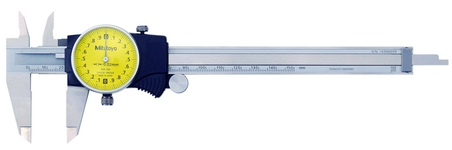
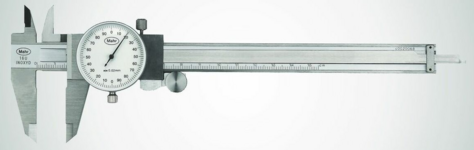
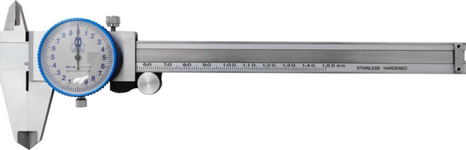
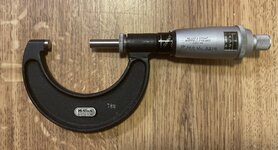
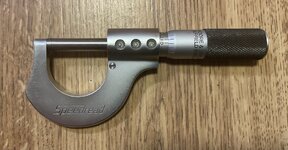
-If the UK used Imperial units were any of your instruments pre 1959? I ask for a reason.
-Nor could any of us at a certain age (vintage) for a lot of the things we've acquired. I no longer use many of the "unreplaceables".
-Must have been somewhat expensive buying two standards of instruments. I bought a few items for the anticipated national conversion to metric that never happened. I thought I was buying "the future", now I just use the calculator for conversion.
-I have several tooling fixtures that are vintage and no longer available but I still enjoy using them when possible. Some items like my Lufkin vertical jig borer indicator have been retired. If it's fragile it's been archived, if not fragile then it's still available for selected duty.
-The improvement must have been a delight to watch.
-That's when I first encountered M&W, Rabone Chesterman, and a few other makers. The M&W items were of good quality but seemed more prone to rust than the domestic (US) brands of Starrett and B&S. The steel used seemed to be softer as well and more prone to scratching/dents. I avoided purchasing more from them than the few items I had. I've still got a couple of the thread center gauges (arrow shaped) for single point threads (lathe) from Rabone Chesterman.
-My preferences have always been about the instrument itself over the brand. While still young in the trade I made mental notes of things I liked and what I didn't. Purchases were always made along those preferences so I've got a mix of many different brands.
-Would have liked to have seen those items that didn't make it over here.
-Not much for quantity in any of the tooling suppliers that I frequented in Chicago or the mail order catalogs either.
-Which accounts for little representation in my tool chests.
-That's a bit unexpected. I would have thought some of the German and Swiss makers would be present due to proximity.
-Well there's two more names I'm unfamiliar with. I like seeing different makers of dial gauges.
-The irony is almost amusing (but it's not).
The U.K. obviously did, and to an extent still does, use Imperial units, but the engineering world gradually switched to metric in the 1990’s. Back then it was an important distinction, but now it’s just a case of pushing a button on a DRO to switch between the units.
It’s still important for people like me, who have manual machines, but all mine are graduated in Imperial and that’s how my brain works. It’s bad enough switching from a British machine where one turn of a handle is 1/8” to a Swiss one where it’s .100 or .200.
Yes, I do have some instruments pre 1959, and some more that are “probably” pre 59, but only the tools for military contracts are usually dated, so it’s hard to tell for sure. Also, I prefer instruments with “pearl chrome” scales, the majority of which are later.
Buying two sets of instruments was surprisingly inexpensive. Many bigger firms don’t bother to re calibrate much, they just buy new with every major contract and factor that cost in. Consequently, there’s a constant stream of “surplus“ tools of you know where to look.
At the time of metrication there really was a glut, and that forced prices down, especially for the more specialised equipment. A model engineer or car mechanic can always use a 0 to 1” micrometer, but far less use a 5 to 6 inch, or a 24” vernier?
Being in the defence industry I was also able to pick up a lot of stuff from liquidation sales when I was buying machinery.
I’m too young to have seen the post war improvement in the Moore and Wright, but my Father and Grandfather saw it, and it’s evident from the tools.
I’ve never noticed a tendency to rust with M and W, in fact quite the opposite, however the gauges end of the business was a later acquisition for the firm (It may have been part of the Tyzack family originally) and I think they did their own thing to a degree.
Chestermans originally had a superb reputation for inspection equipment. They were pretty much top end wheras the older Moore and Wright was good, but not quite as good. When Chesterman merged with J. Rabone (a tape measure and rule manufacturer) to form Rabone Chesterman, the inspection equipment was never quite as good.
There is a fair amount of Swiss stuff here to be honest. I pick that up too, at the right price. Perhaps less of the German, but I think that’s because we had so much domestic made.
Verdict make really nice dial gauges, particularly their small ones, which feel like a Swiss Watch.

You will also find Baty, which are a mixture of British and Swiss made instruments, and also Mercer. Mercer were lovely but they closed down in the 1980’s. I have several Mercer dial gauges that I picked up for £5 each.