Similarly I recall reading a story (possibly apocryphal) of an American steel company exec complaining about Japanese mills having been rebuilt after ww2 and having to compete with them, and being rebuffed and told “you’re still using your same equipment and we’ve replaced ours 3 times since then”
I won’t totally fault using old equipment - some of it is productive. But it’s not always competitive - at some point you can **** a few more bucks of production out of it, but milking the asset won’t let you compete long-term without reinvesting. And protectionism can make it worst by encouraging further stretching of those assets.
One thing that gets pointed out about old firearms, is that one reason it’s hard to produce reproductions, is because the methods of manufacture are completely different nowadays.
The old method was toGave a jig fir each cut, or a row of machines set up, with each machine producing a different operation in sequence.
With newer production lines, the goal is to clamp a piece, or multiple pieces in a CNC machining center, and have the machine setup move the cutter automatically, possibly combined with the clamped part/s also being moved automatically at the same time.
This results in the machining process needing to be thought out completely differently.
Tolerances and particularly flex in the machining of each part would also need to be calculated differently.
The CNC could presumably be used to a certain extent like a “dumb” machine for individual cuts, but for a product which was developed when “dumb” machines were the norm, a dumb machine may be better suited to production.
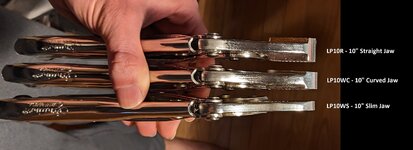
If Malco wanted to machine more complex jaw shaped, such as screw head gripping jaw tips, a CNC would have advantages, but plenty of the other production stages could provably be done in a 1970s high school shop.