To avoid these ads, REGISTER NOW!

Maple bed frame is cracked. Help me fix it please.

fishwatcher

Well-known member
Joined
Jan 26, 2023
Messages
751
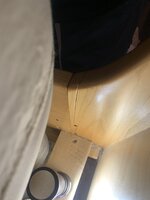
My bed frame is cracked. If I push the frame one way, you can see the crack open up.

IMG_7479.jpeg

If I push it another way, the crack closes up.
IMG_7480.jpeg

This is the inside view.
IMG_7482.jpeg


IMG_7481.jpegHow should I fix this? I’m thinking squeeze some Hyde Glue III in it and clamp it together so everything is flush.

How would I get the glue in? Would a thinner glue or an epoxy be better? Gorilla/Crazy glue?

Is glue enough? Does additional reinforcement need to be added? I have basic tools. Electric drill, hand saw and circular saw, clamps and screw drivers.

Thanks!
 
To avoid these ads, REGISTER NOW!

LopezBart

Well-known member
Joined
Oct 13, 2023
Messages
2,533
Location
Lopez Island, WA
It's hard to see exactly how this put together, but my guess is that it failed at the joints where it comes apart for moving. Gluing the joints (a good wood glue) and clamping tightly will help, but I think a repair plate w/ ample pre-drilled screws (obviously on the inside of the bed) would help carry the loads across the joint, but would make moving more tedious. I'd do both sides (perhaps all four) while you have the mattress out.

Oh yes, remember from now on: this bed is built for comfort, not for speed :cool:
 

Monza Harry

Well-known member
Joined
Dec 29, 2018
Messages
1,433
Location
Windsor ON
I'm with @The Cobbler, if you use a water based glue, grab a craft or travel squeeze bottle, transfer some glue and add a "a few DROPS" of water to help it flow and gravity is your friend! Then gently work that joint open and closed a few times to help distribute the glue. To clamp I would use a dollar store ratchet strap right around the head board. Use caution to insure you don't cantilever the joint and break it further, (strap around the solid part not the legs) use painters tape to hold in place if help is scarse. Harry
 

southalabama

Well-known member
Joined
Jan 10, 2011
Messages
5,532
Location
Brewton AL
It's hard to see exactly how this put together, but my guess is that it failed at the joints where it comes apart for moving. Gluing the joints (a good wood glue) and clamping tightly will help, but I think a repair plate w/ ample pre-drilled screws (obviously on the inside of the bed) would help carry the loads across the joint, but would make moving more tedious. I'd do both sides (perhaps all four) while you have the mattress out.

Oh yes, remember from now on: this bed is built for comfort, not for speed :cool:
Nor is it a trampoline, though fun.
 

FrankLee

Well-known member
Joined
Sep 13, 2010
Messages
3,574
Location
seMI, 48317
It's hard to see exactly how this put together, but my guess is that it failed at the joints where it comes apart for moving.
Yes. You need to see how it's assembled before a real fix can be determined. If the wood split, it's going to split again with just glue. You'll need glue and a mechanical fix, i.e., screws and/or brackets.
 

yhprum

Well-known member
Joined
Jul 27, 2006
Messages
1,385
Location
Brisbane Australia
I’ve never been mistaken for a woodworker, but I recently saw something where a shop vac was used, pulling on the bottom side of a cracked board, and he’s was squirting glue in the crack on the top side. The vac was doing a great job pulling the glue into the crack.
Seems like some reinforcement would be good idea, maybe a plywood scab patch on the non visible side, or maybe those bow tie inserts some guys use to stop crack progression?
Again, I am no woodworker so tread carefully hahah.
 

bwringer

Well-known member
Joined
Jan 1, 2013
Messages
10,255
Location
Indianapolis
I think a decent wood glue would do the job, and if you manage the squeezeout on the visible side, would be pretty much invisible. Good glue is stronger than the wood. Buy a fresh bottle.

But check the other side carefully as well. If there's some engineering issue, the other side might be heading the same way, so reinforcement on the inside might be a good idea.


And yeah, maybe this thread is just a not-so-subtle humblebrag...
 

Rusted Nut

Well-known member
Joined
Dec 11, 2022
Messages
1,806
Location
PNW
As others have said, clamp and glue it. I would also screw a small gusset of 3/8” plywood on the inside.
 
OP
F

fishwatcher

Well-known member
Joined
Jan 26, 2023
Messages
751
I think a decent wood glue would do the job, and if you manage the squeezeout on the visible side, would be pretty much invisible. Good glue is stronger than the wood. Buy a fresh bottle.

But check the other side carefully as well. If there's some engineering issue, the other side might be heading the same way, so reinforcement on the inside might be a good idea.


And yeah, maybe this thread is just a not-so-subtle humblebrag...
Thanks!

One of my kids, almost 18, jumped on the bed a few weeks ago and said, “I think I heard a crack.” I found the crack a few days ago.
 

cgrutt

Well-known member
Joined
Mar 4, 2016
Messages
8,203
I think a good wood glue titebond, gorilla etc will do it might want to pick up a children's medicine or first aid flush syringe at local pharmacy and try injecting it. Clamp until it squeezes out and wipe off any excess with a damp cloth. Keep the clamp on until it dries I'd leave it clamped overnight if you can.
 

RPH

Well-known member
Joined
Dec 17, 2006
Messages
4,190
Location
Michigan Thumb
Yes. You need to see how it's assembled before a real fix can be determined. If the wood split, it's going to split again with just glue. You'll need glue and a mechanical fix, i.e., screws and/or brackets.
Yes, I agree with disassembling and inspecting. The glue joint done with proper adhesive will be stronger than the parent material. Most adhesive failures come from adhesive layer too thick. Then the glue joint fails.
Done right the wood will fracture in another area.
 
To avoid these ads, REGISTER NOW!
OP
F

fishwatcher

Well-known member
Joined
Jan 26, 2023
Messages
751
Wet the joint prior to applying glue, this helps wick the glue into joint. Then just use tightbond 2 or similar flavor. Clamp and let set overnight. Then good to go.
Thanks for these suggestions everybody.

@hefnerconstructionlc - I bought Tightbond 3. Specs say it is slightly stronger. Any reason to use 2 instead?

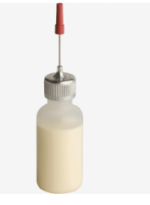
I like the glue injector idea from @rharman. Would watering down the glue make it easier to inject into the right space?
 

johnre

Well-known member
Joined
Dec 1, 2016
Messages
1,046
Location
Portland, OR

I like the glue injector idea from @rharman. Would watering down the glue make it easier to inject into the right space?
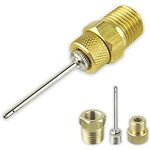
Rather than try to coax the glue in, I'd drill very small holes in a line along a non-cosmetic face, then inject it in under pressure with a sports ball air inflator needle that has pipe fittings on it rather than an air chuck fitting - see image below. You can prefill the tube leading up to it with glue, then put pressure from your air system in back of it. Hard to say what it will take to get the glue moving, but I would think 100 PSI would do it - and if it needs more, there's always the grease gun.

You know when you're at the right insertion depth when it starts oozing out from the crack. Then just jump from hole to hole, doing the same, until the crack is full of glue.

And remember to clean the system with water afterward, or just throw out the inflator piece; they're not that expensive.

1700469537958.jpeg
 

hefnerconstructionlc

Well-known member
Joined
Nov 1, 2016
Messages
665
Location
Kansas
Thanks for these suggestions everybody.

@hefnerconstructionlc - I bought Tightbond 3. Specs say it is slightly stronger. Any reason to use 2 instead?

I like the glue injector idea from @rharman. Would watering down the glue make it easier to inject into the right space?
#3 is just fine also, It is just a little more expensive and suited well for exterior projects. Since you have it, use it. I would not purchase a separate glue for the project. Really just wet, glue, clamp, set, and be done. The glued joint will stringer than the surrounding wood.
 

MoonRise

Well-known member
Joined
Nov 5, 2010
Messages
4,028
Location
NJ
Done 'well', a glued joint with wood glue is typically STRONGER than the wood itself. The wood itself will fail before the glue lets go.

Titebond Type 3 is fine, it is waterproof and is a little slower to set up initially than the Type 2. Don't use hide glue, not really the right choice IMHO.

Do NOT water down the wood glue before use. You mess up the chemistry of the glue and thus the bond if you do that. (a drop or two of water in some glue is probably no big deal, unless you have a drop or two of water per a drop or two of glue in which case that is way to much dilution. And if a drop or two of water thins the glue that much, you probably have some old glue that has thickened and you should just throw that bottle out and get a new fresh bottle of wood glue.)

Apply the glue, clamp the joint and let sit undisturbed for 24 hours. Yeah, leave it alone that long. (directions say to leave in the clamps for 30 minutes to 1 hour minimum, but I've often found the glue to have not fully bonded and cured by that time so I just leave the clamps on for the full 24 hours. I'm not in a production/factory type setting, so leaving the clamps on overnight or for a day is no big deal for me typically.)

But before discussing glues or clamps or drying/curing time, take the bed frame apart if possible and check out the damage specifics and the joint and the surrounding wood structure.

It looks like you might be able to remove the corner posts from the footboard section? I see four round holes, two on the post and two on the footboard piece, that might be joining the two pieces together? If those holes are used for a 'drawbolt' type fastener, remove the fasteners and then you can look more closely at how the two pieces connect to one another and what some more easily concealed ways to reinforce the cracked wood might be.

Yes, I already said that a well done glued joint is stronger than the wood itself. But sometimes the wood itself and/or the structure can/should be beefed up. You (or your kid :lol: ) already proved that the structure is not stronge enough for some activities.

If the joint between the corner post/board and the footboard board can be separated (which you might want to do anyway for clamping purposes, as not everybody has multiple bar/pipe clamps that can span the width of a bed frame. Although there are some possible ways to clamp the cracked piece while still in place, they would probably involve some creative uses of multiple shorter clamps and some jigging/rigging to accomplish that.) , you can maybe reinforce the crack internally with some glued in dowels or some metal screws. Once reassembled, those types of reinforcement would be completely hidden from view. And metal screws would not only reinforce the wood but also act as the clamping pressure to hold the glued joint together while the glue dries, no clamps needed then.

But you might want/need to add some steel reinforcement plates or brackets, but those would be at least slightly visible when you look down into the bed corner. But more importantly, they would be typically be surface mounted and you would NEED to make sure that there are no burrs or sharp edges/corners that someone (or something like the bed sheets or blankets or whatnot) could get snagged or caught on. Trying to make the bed (bedding like sheets and blankets and not MAKING the bed structure :lol2: ) and getting a finger/hand snagged or cut when tucking things in there or the bedding getting snagged or cut would not be good.
 
Last edited:
OP
F

fishwatcher

Well-known member
Joined
Jan 26, 2023
Messages
751
Done 'well', a glued joint with wood glue is typically STRONGER than the wood itself. The wood itself will fail before the glue lets go.

Titebond Type 3 is fine, it is waterproof and is a little slower to set up initially than the Type 2. Don't use hide glue, not really the right choice IMHO.

Do NOT water down the wood glue before use. You mess up the chemistry of the glue and thus the bond if you do that. (a drop or two of water in some glue is probably no big deal, unless you have a drop or two of water per a drop or two of glue in which case that is way to much dilution. And if a drop or two of water thins the glue that much, you probably have some old glue that has thickened and you should just throw that bottle out and get a new fresh bottle of wood glue.)

Apply the glue, clamp the joint and let sit undisturbed for 24 hours. Yeah, leave it alone that long. (directions say to leave in the clamps for 30 minutes to 1 hour minimum, but I've often found the glue to have not fully bonded and cured by that time so I just leave the clamps on for the full 24 hours. I'm not in a production/factory type setting, so leaving the clamps on overnight or for a day is no big deal for me typically.)

But before discussing glues or clamps or drying/curing time, take the bed frame apart if possible and check out the damage specifics and the joint and the surrounding wood structure.

It looks like you might be able to remove the corner posts from the footboard section? I see four round holes, two on the post and two on the footboard piece, that might be joining the two pieces together? If those holes are used for a 'drawbolt' type fastener, remove the fasteners and then you can look more closely at how the two pieces connect to one another and what some more easily concealed ways to reinforce the cracked wood might be.

Yes, I already said that a well done glued joint is stronger than the wood itself. But sometimes the wood itself and/or the structure can/should be beefed up. You (or your kid :lol: ) already proved that the structure is not stronge enough for some activities.

If the joint between the corner post/board and the footboard board can be separated (which you might want to do anyway for clamping purposes, as not everybody has multiple bar/pipe clamps that can span the width of a bed frame. Although there are some possible ways to clamp the cracked piece while still in place, they would probably involve some creative uses of multiple shorter clamps and some jigging/rigging to accomplish that.) , you can maybe reinforce the crack internally with some glued in dowels or some metal screws. Once reassembled, those types of reinforcement would be completely hidden from view. And metal screws would not only reinforce the wood but also act as the clamping pressure to hold the glued joint together while the glue dries, not clamps needed then.

But you might want/need to add some steel reinforcement plates or brackets, but those would be at least slightly visible when you look down into the bed corner. But more importantly, they would be typically be surface mounted and you would NEED to make sure that there are no burrs or sharp edges/corners that someone (or something like the bed sheets or blankets or whatnot) could get snagged or caught on. Trying to make the bed (bedding like sheets and blankets and not MAKING the bed structure :lol2: ) and getting a finger/hand snagged or cut when tucking things in there or the bedding getting snagged or cut would not be good.
Lots of great tips here and from others who have replied! Thank you.
 

johnre

Well-known member
Joined
Dec 1, 2016
Messages
1,046
Location
Portland, OR
Apply the glue, clamp the joint and let sit undisturbed for 24 hours. Yeah, leave it alone that long. (directions say to leave in the clamps for 30 minutes to 1 hour minimum, but I've often found the glue to have not fully bonded and cured by that time so I just leave the clamps on for the full 24 hours. I'm not in a production/factory type setting, so leaving the clamps on overnight or for a day is no big deal for me typically.)
My rule of thumb: If it's a stressed connection (e.g. a crack that wants to open up on you, such as the OP is dealing with), then give it the full 24 hours. Anything shorter will compromise the joint because it wants to open.

If it's a flat unstressed connection, e.g layered / sandwiched pieces, then 8 hours is enough to risk unclamping it - but don't resume working on the piece before 24 hours have elapsed. This is only to get your clamps back, for example, so you can proceed with glue-up of something else.
 

JMLangford

Well-known member
Joined
Jun 25, 2014
Messages
1,122
Location
Upstate SC
I haven't heard anyone mention pocket holes to strengthen the break....
Fill the cracks with glue and clamp - let cure for a day - then drill 3 (or more) pocket holes (drilled from the back side of course-see pic) - secure with screws of appropriate length to span the break....and Bob's Your Uncle :thumbup:
PH1.jpeg
PH2.jpg
 

toolmiser

Well-known member
Joined
Sep 1, 2009
Messages
1,656
Location
La Crosse, WI
Use an old credit card or motel room "key" to push the glue in. Some are thinner than others. If the apposite side is exposed, you can use a vacuum cleaner to **** the glue through also
 

rharman

Well-known member
Joined
Apr 22, 2012
Messages
8,772
Location
SoCal
OP
F

fishwatcher

Well-known member
Joined
Jan 26, 2023
Messages
751
I used TiteBond III with glue syringes from Amazon. It was quite easy with one of the middle thickness needles. The glue was much more flowy than I expected and injected easily into the cracks. I pushed the frame flush to get squeeze out, wiped off excess glue, then used c-clamps with wood shims to avoid clamp marks as well as an f-clamp. Compression was done in two directions.

I left it clamped for 29 hours and here it is with the tiny bit of excess glue shaved and sanded off, and a little Pledge to shine things back up.

I’m sure pocket screws or a backing plate would have made this even stronger.. but for now I’m crossing my fingers this holds.

Thanks for everybody’s tips!
IMG_7646.jpegIMG_7648.jpeg
 
Last edited:
To avoid these ads, REGISTER NOW!
Top Bottom