Done 'well', a glued joint with wood glue is typically STRONGER than the wood itself. The wood itself will fail before the glue lets go.
Titebond Type 3 is fine, it is waterproof and is a little slower to set up initially than the Type 2. Don't use hide glue, not really the right choice IMHO.
Do NOT water down the wood glue before use. You mess up the chemistry of the glue and thus the bond if you do that. (a drop or two of water in some glue is probably no big deal, unless you have a drop or two of water per a drop or two of glue in which case that is way to much dilution. And if a drop or two of water thins the glue that much, you probably have some old glue that has thickened and you should just throw that bottle out and get a new fresh bottle of wood glue.)
Apply the glue, clamp the joint and let sit undisturbed for 24 hours. Yeah, leave it alone that long. (directions say to leave in the clamps for 30 minutes to 1 hour minimum, but I've often found the glue to have not fully bonded and cured by that time so I just leave the clamps on for the full 24 hours. I'm not in a production/factory type setting, so leaving the clamps on overnight or for a day is no big deal for me typically.)
But before discussing glues or clamps or drying/curing time, take the bed frame apart if possible and check out the damage specifics and the joint and the surrounding wood structure.
It looks like you might be able to remove the corner posts from the footboard section? I see four round holes, two on the post and two on the footboard piece, that might be joining the two pieces together? If those holes are used for a 'drawbolt' type fastener, remove the fasteners and then you can look more closely at how the two pieces connect to one another and what some more easily concealed ways to reinforce the cracked wood might be.
Yes, I already said that a well done glued joint is stronger than the wood itself. But sometimes the wood itself and/or the structure can/should be beefed up. You (or your kid

) already proved that the structure is not stronge enough for some activities.
If the joint between the corner post/board and the footboard board can be separated (which you might want to do anyway for clamping purposes, as not everybody has multiple bar/pipe clamps that can span the width of a bed frame. Although there are some possible ways to clamp the cracked piece while still in place, they would probably involve some creative uses of multiple shorter clamps and some jigging/rigging to accomplish that.) , you can maybe reinforce the crack internally with some glued in dowels or some metal screws. Once reassembled, those types of reinforcement would be completely hidden from view. And metal screws would not only reinforce the wood but also act as the clamping pressure to hold the glued joint together while the glue dries, not clamps needed then.
But you might want/need to add some steel reinforcement plates or brackets, but those would be at least slightly visible when you look down into the bed corner. But more importantly, they would be typically be surface mounted and you would NEED to make sure that there are no burrs or sharp edges/corners that someone (or something like the bed sheets or blankets or whatnot) could get snagged or caught on. Trying to make the bed (bedding like sheets and blankets and not MAKING the bed structure

) and getting a finger/hand snagged or cut when tucking things in there or the bedding getting snagged or cut would not be good.


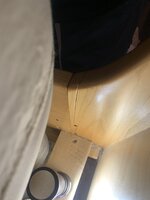
 How should I fix this? I’m thinking squeeze some Hyde Glue III in it and clamp it together so everything is flush.