To avoid these ads, REGISTER NOW!

Maxjax Installs: Post Here

To avoid these ads, REGISTER NOW!

VictorBravo

Well-known member
Joined
Jul 13, 2014
Messages
321
Location
Asotin County, Washington
I installed my Maxjax the same day as nholmes (post 1149) and intruded on his thread. So I'll follow his lead and post my run-of-the-mill basic installation.

I had no issues at all. I used the Wejit anchors, had 4 1/2" of 5 year old hard and reinforced concrete. Followed the directions (but reread everything I've read before on GJ for installation pitfalls). It's in place and works exactly as advertised.

Ordered through Costco during the $1999 sale. They said expect 5 weeks delivery. Two days later day I got a shipping notice and was to expect it in two days.

I panicked because I wasn't ready for it--called the shipping company. They said no problem, they had a free lift gate truck and would drop it off without charge.

I unpacked it the evening after it came:

01%20unpacking_zpsuli7es8l.jpg


I had some nice steel leftovers:

05%20steelleftover_zps7td12l9l.jpg


Next morning was a Saturday, so I started the layout:

02%20layout_zpsshzxsv5c.jpg


Drilled holes with my trusty Milwaukee SDS Hammer:

03%20sdsdrilling_zpshfkrhnn5.jpg


Here is where I deviated from the instructions slightly. It says to drill the 5/8 pilot hole a couple inches, then proceed with the 7/8 hole. I found on the first hole that doing that would cause the 7/8 bit to wobble so the top of the hole was a little out of round. The rest of the way was round and smooth.

My alternative was to just drill the pilot hole half an inch and then switch to the 7/8 bit. That ended up with very nice looking holes.

The only other thing I did for help was to put a square on the floor to help keep the bit straight.

I didn't take any photos of the Wejits, but they went in just as directed. I put the posts in place and torqued down, ran the lift up, bled the cylinders, and then gave it a try on my 2001 Ranger:

04%20maxjax%20first%20lift%201_zpstkkusi89.jpg


After that, I set it down and rechecked the torques on the bolts, got brave, and lifted the Audi allroad, which is the heaviest vehicle I have right now (and the reason I've been wanting a lift for 5 years):

06%2009.26.2015%20audi%20lift3_zpsygqvrvpu.jpg


So that's it. Plain installation, nothing fancy. Happy enough. When I get time I'll probably do something fancier with the hoses.

And that packing scrap is being put to good use too. I don't have a finished photo--but you get the gist.

07%20cart_zpszsns2txu.jpg
 

nsogiba

Well-known member
Joined
Jan 16, 2013
Messages
232
^ nice clean install. Glad you could make something out of the spare angle they included.

has anyone ever had an issue bolting the power unit to the cart? Mine has a bunch of extra holes in the bracket that's welded to the back of the motor, and although it bolts up, it is installed at a distance from the flow divider such that the short hose connecting the two is too long. I'm thinking the Chinese child that welded the bracket onto the motor may have accidentally flipped it upside down. Will probably end up drilling new holes for the flow divider in the cart bracket.
 

VictorBravo

Well-known member
Joined
Jul 13, 2014
Messages
321
Location
Asotin County, Washington
^ nice clean install. Glad you could make something out of the spare angle they included.

has anyone ever had an issue bolting the power unit to the cart? Mine has a bunch of extra holes in the bracket that's welded to the back of the motor, and although it bolts up, it is installed at a distance from the flow divider such that the short hose connecting the two is too long. I'm thinking the Chinese child that welded the bracket onto the motor may have accidentally flipped it upside down. Will probably end up drilling new holes for the flow divider in the cart bracket.

Mine had an extra set of holes, but it seemed to bolt together OK.

bolt%20layout_zps29k2pxdl.jpg


The hose you are talking about was a little too long, but I just bent it a bit.

unit%20hose_zpsai4xt2wr.jpg
 

nsogiba

Well-known member
Joined
Jan 16, 2013
Messages
232
well, i feel dumb now. That is the exact problem I had. I kept insisting to myself that the fittings had to point towards each other, and I just could not get the fittings to start threading without kinking the hell out of the hose. I never considered clocking the fittings to take up the slack in the hose. Thanks for that tip! I am hoping to do a trial run tonight and bleed the columns.
 

VictorBravo

Well-known member
Joined
Jul 13, 2014
Messages
321
Location
Asotin County, Washington
well, i feel dumb now. That is the exact problem I had. I kept insisting to myself that the fittings had to point towards each other, and I just could not get the fittings to start threading without kinking the hell out of the hose. I never considered clocking the fittings to take up the slack in the hose. Thanks for that tip! I am hoping to do a trial run tonight and bleed the columns.

Cool. Sometimes just need another set of eyes.
 

nsogiba

Well-known member
Joined
Jan 16, 2013
Messages
232
finally got the columns loosely bolted down. I still need to do a final torque on the hardware. It has been 10 days since the pour and I'm itching to put some weight on the columns, but I'm going to wait. I did hook up all the hydraulics and power unit to verify operation. Spent some time bleeding the columns, which was very easy, and they seem to be operating fine. The wait continues...in the meantime, I had my wife start parking in the garage, and it looks like the grand experiment worked because she hasn't (yet) banged into the post with her car. I plan on adding some visual aids to help her pull in easily every day without worrying about hitting anything.


image by Norbert Ogiba, on Flickr
 

nsogiba

Well-known member
Joined
Jan 16, 2013
Messages
232
Generally is everyone waiting 28 days before loading a car on the lift? I poured just a hair over 2 yards, it has been about 2 weeks since the pour.
 

larry4406

Well-known member
Joined
Jan 27, 2006
Messages
18,965
Location
Northern Virginia
In the commercial concrete work I have been involved with, we tested at 7 days to get an indication that the mix was proper and would get about 70-75% design strength with full strength by the 28 day test. We had extra cylinders to test at I think 54 days if we had a mix that the strength was coming up slowly.
 
Joined
Jan 12, 2015
Messages
17
Location
NC
MaxJax Install

A recent install - lots of ideas from this forum and many others.
Built a detached garage for car storage, workshop and other activities. I knew I wanted a MaxJax after reading all the articles here and in other forums so as the garage was being built, I marked and dug out slightly deeper depressions (about 6") before the floor was poured. Ceiling is 9' so no issue there - any taller would have meant more expense on the garage - just needed to get a side lift garage door opener so no interference with a car on the lift.
Floor was allowed to cure, then scrubbed with 80 grit floor polisher (HomeDepot rental) before finishing with PPG Aquapon 35 epoxy coating (2 coats). Decided to use the PowerSert s epoxy secured anchors instead of the Wej-It anchors supplied with the MaxJax. (Have a set of 10 Wej-It anchors leftover - make me an offer). Of course this required a special 10:1 caulk gun for the epoxy (not cheap!) and I wanted several sets of anchors spaced so I could vary the lift spacings depending on the car.
After installing, a torque check to 100 lb-ft insured proper installation.
Replaced the quick disconnects with no leak types from discount hydraulic hose.
Setup has one post in a single position and the second can be varied to suit the car. Used cap plugs to block off the anchor holes when not in use. Didn't get all of them below the surface but... it works.
Lift works great - easy to use. I usually leave the posts in place and just disconnect the hydraulic hose when not needed.
https://www.flickr.com/photos/ochristofferson/albums/72157660391505735
 
Last edited:
Joined
Jan 12, 2015
Messages
17
Location
NC
^ looks like a nice open space with lots of room to play!
Thanks - just need that third special car to take up residency!
Garage is 24 X 28 with a half bath and radiant heat in the bathroom floor. I ripped out all the celotex they use to separate the slab from the lower walls - capillary action was making the lower cinder block wet - replaced with some rubber gasketing they sell to cover/seal sidewalk and driveway joints. The second floor is essentially unused at this point while I have started rocking the lower floor ceiling after insulating all the walls. A wireless bridge let me extend my network and gives me LAN access without digging up the pavers. Soon workbenches...
 
Last edited:

nsogiba

Well-known member
Joined
Jan 16, 2013
Messages
232
FINALLY

28-days-later.jpg


one long month of waiting and we're ready to roll. I used that time to mount the power cart and hydraulic stuff on the wall by the rear of the car. It's close to an electrical box that I'll be using to permanently power the unit. I also need to route the hydraulic lines over the ceiling to clean up the floor.

I got home from a weekend trip to NYC late last night and of course the first thing I did was pull the wagon in for a test. Being that it has the most suspension travel I figured it would be lowest risk for damage should something happen. Although I bled the columns multiple times unloaded, there was still a tiny bit of air once the car had been resting on hydraulics alone for a few minutes. Before heading in for the night I brought the car up to the first stop and rested it on the safety bars to sit overnight. Will probably bleed again tonight and should be all done!

image by Norbert Ogiba, on Flickr

image by Norbert Ogiba, on Flickr
 

10GT500

Member
Joined
Nov 27, 2015
Messages
6
I'm planning on fabricating a set of mounting plates also only because I like it better than the wedge inserts.. now can I just use regular quikrete cement mix from the bag or would a stronger type concrete still be needed?
 

efranzen

New member
Joined
Nov 28, 2015
Messages
3
Location
Queen Creek, AZ
The Maxjax is great. My garage is about a car and half wide and leaving a post permanently mounted would have really messed up the feng shui.

I had to make new shorter arms to fit this cab, but it beats spending the money on beer and pizza for a bunch friends to lift it off the frame.
 

Attachments

  • IMG_0913.jpg
    IMG_0913.jpg
    146.2 KB · Views: 138

Denwood

Well-known member
Joined
Sep 22, 2014
Messages
4,180
Location
Thunder Bay, Ontario, Canada
Two updates. A RaceDeck drain pad (the yellow tiles correspond to vehicle center between columns) and magnetically attached 2" urethane column pads with reflective bits to help with car parking.

rd4.jpg


maxpad7.jpg
 
To avoid these ads, REGISTER NOW!

SpecBC

Member
Joined
Jul 6, 2015
Messages
16
Location
Minneapolis, MN
Awesome work and amazing transformation Denwood!

I ordered the MaxJax recently during the $1799 deal with free shipping from Big Boys Garage Toys. Was going to go Costco, but had to pay a non member fee and taxes which made it nearly $2100.

It is in transit right now, likely will be delivered next week. I think after reading a majority of this thread I would have drilled a test hole to see depth first before ordering but I wanted to get the deal haha. I do want the lift either way but have other projects happening so if this turns into an even larger one it may have to wait awhile.

I think I may use the wej-it anchors but also add epoxy to those anchors as well. There was debate on if this should be done. My assumption is that the epoxy power sert is held due to the chemical bonding strength and added length(surface area) of the power cert, and the wej-it traditional is relying on mechanical wedge. Assuming I can get bite on the traditional anchors, I assume adding the epoxy should only help complement this.

Anyone have input on this thought process? I guess the issue is if it does not bite and I have a quick set up time on the epoxy so then it is set and not really doing what it should. I will plan to use a longer set time epoxy to hopefully counter this issue.

If I don't have 4" of concrete this will likely be on hold. I live in a townhouse complex, not sure what the building standards were back in 1984...we will see.

Thanks for all the ideas and info so far, I'm sure I will be back with questions.

Also, from what i saw from Gabe it was 6" from any wall or crack. I am not sure if there are actual cracks at the wall. My garage is fairly small basically 19x19 so I want to try and put it as close to the wall as possible while still following the instructions.

I have seen good ideas on how to keep the drill level while drilling, I feel like there must be a way people keep them vertical that is more repeatable in the professional drilling business. I just don't want to run into the issue of making the holes too large.

Any other thoughts and ideas that anyone who has recently installed a lift can point out would be greatly appreciated.

Thanks!
Ben
 

shortykorte

Well-known member
Joined
Sep 1, 2014
Messages
8,034
Location
Tallahassee, Fl
SpecBC

If you haven't drilled two test holes you're a day late. After two attempts of installing my MJ and not checking depth, I have two failed attempts. First attempt, the concrete was too thin and the bit I used was a tad wider than 7/8. Even using epoxy with the wej-it, I had pull up. (pix 1) The driver side, I had decent thickness, ground the bit head diameter down to 7/8 and used epoxy. That side I would lift an elephant with.

My second attempt was the other day. Again, no test holes before starting. I'm lazy and stupid I guess. Started with drivers side. Thickness was close to limit, used wej-it and epoxy and the install looks good. (pix 2).

When I drilled the passenger side, oh ****! :mad: Barely 3" and this is a commercial warehouse. When the bathroom was relocated there was a good 6" slab the plumber had to jack hammer so I assumed. Wrong! Anyway, no MJ install for me until I cut a hole, lay some rebar and pour some concrete. At $100 a set, I don't want to buy a third set of anchors.

So check that thickness as soon as possible!!!
 

Attachments

  • MJ-fail1.jpg
    MJ-fail1.jpg
    54.4 KB · Views: 180
  • MJ_anchors2.jpg
    MJ_anchors2.jpg
    54.4 KB · Views: 154
  • MJ-thinconcrete.jpg
    MJ-thinconcrete.jpg
    44.2 KB · Views: 155

Denwood

Well-known member
Joined
Sep 22, 2014
Messages
4,180
Location
Thunder Bay, Ontario, Canada
Ben, thanks for the kind words. The epoxy combined with standard anchors should work..but the big difference in the anchors is both in length, as well as profile. So the mechanical anchors are designed to grab mechanically, so have a relatively smooth profile, which is also shorter. In other words, I would just use epoxy with the correct anchors.

Perfectly straight holes are difficult..the important thing is that they start in the right place. If you use the actual Maxjax plate as your template to start the holes, it will work fine. I did nothing other than eyeball it..but kept the base in place to start all five holes.
 

stratojet

New member
Joined
Dec 28, 2015
Messages
2
Location
Ontario Canada
Hello Garage Journal,
First time post here, great thread!

Early apologies on the image size.

I'm looking at doing a MaxJax in my 28x10'10" carport this spring. I'm in Ontario, the GTA and have a full size 67 classic.

As partially seen below, my plan is to cut the asphalt and drill two 14"x 4' 6" deep footings below the proposed jack bases (indicated by the white squares), as well as cut for a slab around and joining the two bases (est 4x10'). Probably go 6-8" thick on the slab with the footings and all tied in with rebar. The slab towards the open side can be tied into the existing roof support footing (which is majorly big below). The spacing of the jack bases is yet to be determined, but realistically somewhere around 110-115". The open side is slightly below level from the house, so the base there will have to be built up.


Wondering if the experts here might answer a few questions, and perhaps offer some advice,


Do you think my proposed footing and slab in the asphalt drive be sufficient to support the max weight without moving? Should it be increased in width, say 5 or 6'? I could simply continue over and tie into my solid poured wall.

Would I be best fabricating a pour in place base plate with female plugs tied in to the rebar lattice to receive the bolts, or let the slab cure, then drill out for epoxy in Weg-it's?

How well can the jacks take wet weather? The plan would be to keep them up May-Nov but not in the winter. The Jack on the open side will be indirectly exposed to rain. I could make a slip on cover for it. I also plan on making up semi permanent hoses to go up and over.


Cheers and thanks, Mark


23945272591_68b1f4e377_o.jpg
 

SpecBC

Member
Joined
Jul 6, 2015
Messages
16
Location
Minneapolis, MN
SpecBC

If you haven't drilled two test holes you're a day late. After two attempts of installing my MJ and not checking depth, I have two failed attempts. First attempt, the concrete was too thin and the bit I used was a tad wider than 7/8. Even using epoxy with the wej-it, I had pull up. (pix 1) The driver side, I had decent thickness, ground the bit head diameter down to 7/8 and used epoxy. That side I would lift an elephant with.

My second attempt was the other day. Again, no test holes before starting. I'm lazy and stupid I guess. Started with drivers side. Thickness was close to limit, used wej-it and epoxy and the install looks good. (pix 2).

When I drilled the passenger side, oh ****! :mad: Barely 3" and this is a commercial warehouse. When the bathroom was relocated there was a good 6" slab the plumber had to jack hammer so I assumed. Wrong! Anyway, no MJ install for me until I cut a hole, lay some rebar and pour some concrete. At $100 a set, I don't want to buy a third set of anchors.

So check that thickness as soon as possible!!!

Thanks for the info and pics that is helpful, I am definitely concerned and feel stupid for not testing first. I do want the lift either way but if it ends up being 6 months before I can install I may as well have just waited to buy it haha.

Denwood, what would you recommend though if it is say 4" deep for using epoxy anchors. I almost feel like that situation may be better served with a mechanical element as well or have people had success with a through hole? I know some have done it, just have some concern.

thanks for the help. I assume there is no way a cordless drill and bit will do a test hole? I don't have the hammer drill yet so I can't easily do the test. Any other tricks anyone can think of to get an idea?

Ben
 

shortykorte

Well-known member
Joined
Sep 1, 2014
Messages
8,034
Location
Tallahassee, Fl
Ben
When I ordered my second set of anchors, Danmar told me 5" for epoxy, 4" for wedge. I went with the wedge since I probably didn't have the 5".

You should be able to use good masonry bits and a drill. Drill a small pilot and work up to 1/4 or 3/8 then see if you can verify depth. A coat hanger with a short 90* bent tip could work.
 

SpecBC

Member
Joined
Jul 6, 2015
Messages
16
Location
Minneapolis, MN
Ben
When I ordered my second set of anchors, Danmar told me 5" for epoxy, 4" for wedge. I went with the wedge since I probably didn't have the 5".

You should be able to use good masonry bits and a drill. Drill a small pilot and work up to 1/4 or 3/8 then see if you can verify depth. A coat hanger with a short 90* bent tip could work.

Good info thanks. Out of curiousity did you run into the same issues where the 4" anchors didn't "bite" at all? I am curious why so many seem to have that problem with some(maybe it's an issue of not enough depth?). Do you feel you did anything differently for success if you had no issues?

I may have the ability to get a general gauge of depth from the wall and floor joint. It appears they must have poured each townhome slab separately and then put insulation(approx 1/2") between the slab and wall foundation. I will still drill as I assume it is possible the edge could show thicker than the rest of the slab.

Now that I look at that joint I likely want to for sure be 8" away from that edge if not 10" to be safe(was originally hoping I could be 6").

I ordered a Bosch SDS hammer drill from Amazon(free angle grinder too! yay) but will likely go to HD tomorrow to grab a masonry bit for a pilot hole test.

The lift is likely going to be delivered tomorrow or the next day. Unfortunately, prob won't have the drill until next week. :(

If I end up having 5" for epoxy anchors I am hoping BBGT will let me send the original ones back in exchange for the epoxy ones.

Thanks for the help!
Ben
 

RAYJAY

Well-known member
Joined
May 29, 2006
Messages
2,638
Location
UNION DALE PA
Hello Garage Journal,
First time post here, great thread!

Early apologies on the image size.

I'm looking at doing a MaxJax in my 28x10'10" carport this spring. I'm in Ontario, the GTA and have a full size 67 classic.

As partially seen below, my plan is to cut the asphalt and drill two 14"x 4' 6" deep footings below the proposed jack bases (indicated by the white squares), as well as cut for a slab around and joining the two bases (est 4x10'). Probably go 6-8" thick on the slab with the footings and all tied in with rebar. The slab towards the open side can be tied into the existing roof support footing (which is majorly big below). The spacing of the jack bases is yet to be determined, but realistically somewhere around 110-115". The open side is slightly below level from the house, so the base there will have to be built up.


Wondering if the experts here might answer a few questions, and perhaps offer some advice,


Do you think my proposed footing and slab in the asphalt drive be sufficient to support the max weight without moving? Should it be increased in width, say 5 or 6'? I could simply continue over and tie into my solid poured wall.

Would I be best fabricating a pour in place base plate with female plugs tied in to the rebar lattice to receive the bolts, or let the slab cure, then drill out for epoxy in Weg-it's?

How well can the jacks take wet weather? The plan would be to keep them up May-Nov but not in the winter. The Jack on the open side will be indirectly exposed to rain. I could make a slip on cover for it. I also plan on making up semi permanent hoses to go up and over.


Cheers and thanks, Mark


23945272591_68b1f4e377_o.jpg


this may help on the pour, how much frost do you get ? with the outside pads will they push around in the winter, or will you have to put in a footer to stable them

http://mohawklifts.com/library/manuals/Slab_Require_Recommend_11_07.pdf
 
Last edited:

shortykorte

Well-known member
Joined
Sep 1, 2014
Messages
8,034
Location
Tallahassee, Fl
SpecBC

Yes the edges of foundations usually are a little thicker since it's easy to spot if too shallow. If there is an expansion joint between the units, I would think you would have a footer there and thickness should not be an issue. Out in the middle of floor can be a **** shoot.

For installing the Wej-it, as long as you have good SOLID concrete the proper depth, the hole is drilled no larger than 7/8, you use a brush to clean the dust from the sides of the hole, you should be fine. The holes that met the above criteria, set properly for me. Important note: on my 7/8 SDS masonary bit the spade part was wider than 7/8 thus my biggest problem. After grinding down to 7/8, all was good.

Hope everything works out for you.
 
Last edited:

Denwood

Well-known member
Joined
Sep 22, 2014
Messages
4,180
Location
Thunder Bay, Ontario, Canada
Spec, my personal thoughts after doing a bit of research, was to use epoxy, and re pour to get correct depth. It wasn't a ton of work, but the peace of mind is excellent :) I used the mohawk spec as below, and parsed out the essentials.
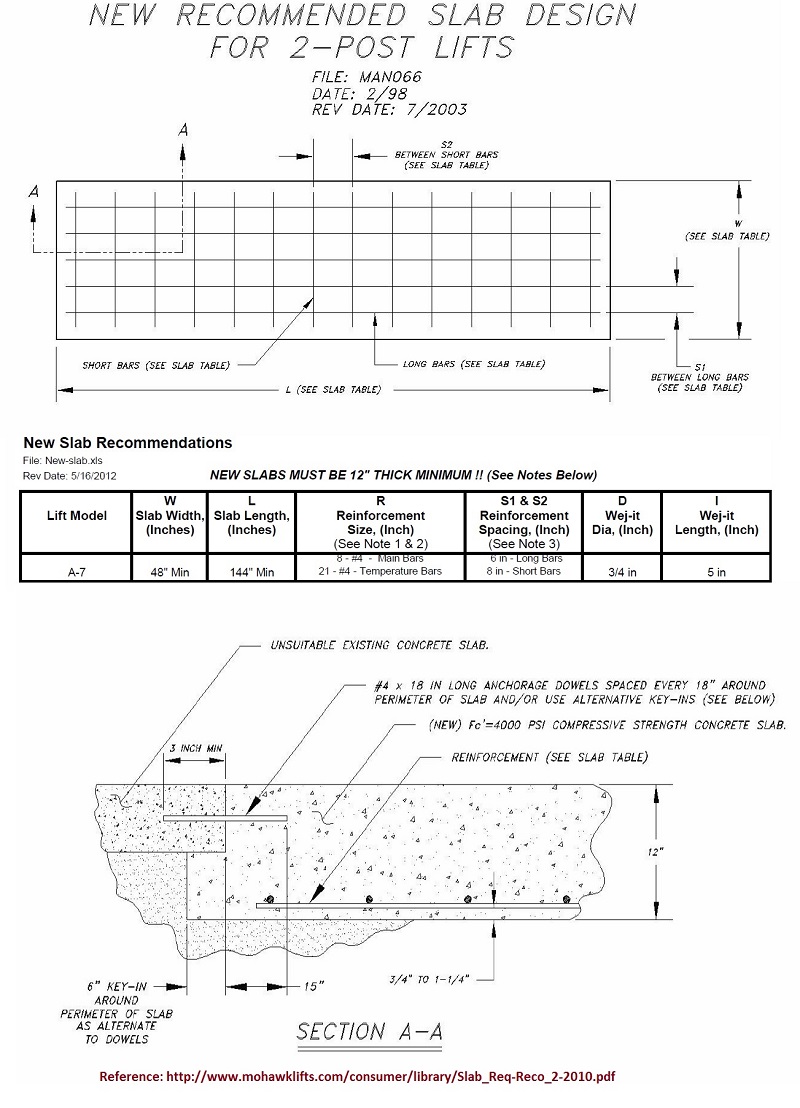
Stratojet, my suggestion for the carport would be a 4'x12' reinforced slab, 12" thick, undercut at least 6" to the existing pavement. I ran some numbers on this scenario and calculated that it would require a 1000 lb mass, hanging from your average 14ft long car bumper, to tip a slab like this (assuming a free standing slab) Because the surrounding pavement will offer less strength at the edges, the sheer weight of this slab will give you a good safety factor. I'm not an engineeer, just going by Mohawk's recommendations and simple force/lever calcs.

http://mohawklifts.com/library/manuals/Slab_Require_Recommend_11_07.pdf

mohawk_slab.jpg
 

SpecBC

Member
Joined
Jul 6, 2015
Messages
16
Location
Minneapolis, MN
cool, good to know thanks!

Given shortykorte's story(do you know your brand bit?) What are peoples thoughts on using a 22mm bit vs 7/8"? would it result in too tight of a fit? Could help from making it too large. I'm curious how much that wedge expands on the anchor when you set it, maybe it ultimately wouldn't matter.

I got my maxjax today and the hammer drill so I am going to drill a 1/4" pilot hole by the wall to check the initial depth and then I'll go from there.

Thanks for the help so far!
Ben
 

Slick111

Well-known member
Joined
Feb 6, 2012
Messages
248
Location
Everett Wa
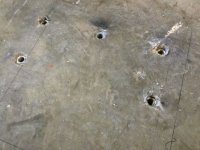
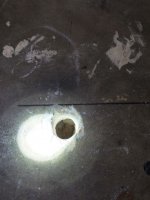
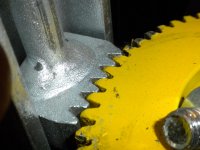
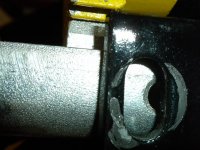
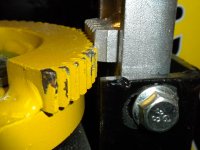
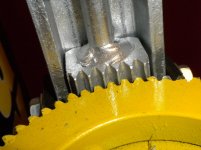
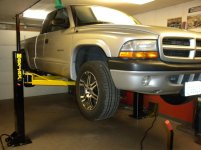
Got mine with the Costco deal had to rework the sloppy China workmanship lift arm spline latches all 4 were less than 50% contact easiest fix was to cut them apart and mill down the center tube re-weld & refinish here are some pics of the before and after rework and the daily driver Dodge up for a oil change.
 

Attachments

  • maxjax 012.jpg
    maxjax 012.jpg
    139.2 KB · Views: 142
  • maxjax 009.jpg
    maxjax 009.jpg
    137.4 KB · Views: 138
  • maxjax 008.jpg
    maxjax 008.jpg
    143.9 KB · Views: 145
  • maxjax 007.jpg
    maxjax 007.jpg
    138.3 KB · Views: 149
  • maxjax 003.jpg
    maxjax 003.jpg
    138.5 KB · Views: 158
  • maxjax 019.jpg
    maxjax 019.jpg
    131.9 KB · Views: 165
Last edited:

leonv33

New member
Joined
Sep 2, 2015
Messages
1
Help a brother out

Had the Maxjax for 6 months now and all I can say is ahhhhh finally off the floor!
No more strained neck :)

Anyway I am away at work at the moment and was wondering if anyone could tell me the lift pad pin OD, or the arm hole bore size.
I am making an adjustable pad so when I swing the arms under the car (very low) I can manually screw the pad in place.
My jacking points ( Nissan r33gtr) are not just a flat spot .

I think the pins were around 1 3/8" diameter but not sure. DO not have a lathe at home in case its to big.

Any help very much appreciated.

Happy MaxJax owner.
 

stratojet

New member
Joined
Dec 28, 2015
Messages
2
Location
Ontario Canada
Thanks for the tips on the slab guys. We need to be down 4.5' here in footing to best the frost, and that would be my plan, 2,14x4.5' holes directly below the posts. Thanks for the numbers Dennis. I think a healthy slab as you say, but all tied in as well with two footings might do the trick. I will also pin into the house foundation as well. There still might be an option to simply do the entire drive under the carport in reinforced concrete. Cheers, Mark.
 

SpecBC

Member
Joined
Jul 6, 2015
Messages
16
Location
Minneapolis, MN
SpecBC It's a Dewalt.

Thanks

Alright well I haven't determined too much outside of:

A: the Bosch bulldog hammer drill is pretty awesome based on the first test hole I drilled.

B: I at least seem to have 4" of concrete from the test hole near the wall.

C: I'll definitely want some type of guide because I am not vertical on this 1/4" hole.

As long as I can ensure I am vertical I really see no reason to do anything but the 7/8" bit, but I am sure it will be a bit more difficult than 1/4" obviously.

I need to layout the holes in the middle of the garage and hope it is at least as thick out there.

Fingers crossed!
Ben
 

AG1LE

Member
Joined
Dec 11, 2015
Messages
11
Location
Kansas City Area
I bought a MaxJax lift directly from the website shortly before the holidays, and am just now starting installation. I'm excited!

First, getting the lift to my house was a bit of an ordeal. Dannmar provided great support, but the local freight company was not able to follow through with residential delivery. The first delivery was delayed (lost at the originating dock) and when it arrived the residential delivery attempt failed (they didn't have the right equipment to get it onto the lift gate). There were some concerns about the condition of the freight, so Dannmar sent a new lift. I picked up the lift at the dock in my truck (residential and lift gate delivery fees were refunded), and carefully unpacked the freight piece by piece in the truck bed. I didn't have any help, but I took my time and it worked out. The posts and arms have some cosmetic damage/marks from shipping, but I'm not worried about it.

I assembled everything without problems, The hydraulic threads already had tape on them, and I cranked them down as much as I could, but I may still take advice from this site and upgrade the hydraulic fittings. I plan to use AW32.

Being a risk assessor by profession, I decided to invest in two types of supplemental supports that I learned about from this thread. How I use these will probably depend on the job (how much clearance I need, etc), but the few hundred extra dollars are worth the peace of mind in my opinion:
- (3x) Greg Smith 2 Ton Heavy Duty Tripod Stands SHORT (to support the car or car parts)
- (4x) Barker Manufacturing Universal Sidewinder (to support the lift arms)

After testing with my car in place (2014 Camaro), I decided 130" apart (outside measurement) is optimal. I will be lifting from the pinch welds (using adapters), which means the arms don't need to extend very far under the car. At 130", with the car perfectly in the middle, the arms extend about mid-way between their longest and shortest length, which gives me some flexibility.

I drilled one hole tonight. To drill straight I used two laser levels placed perpendicular to one another, making sure the drill bit stayed in line with both lasers. I started with 3/8", then 5/8", then 7/8". I got the depth to almost 5.5" and it didn't go all the way through the slab....I may have hit rebar at that point, but doesn't matter because it's deep enough. Drilling was much easier than I expected, and I hope the other holes will also be that deep! I really don't want to have to cut and pour footings.

Here's where I hit a snag. I installed the anchor to 5/8" below the surface, but couldn't get it back up to 1/8" with my standard wrenches (got it to 3/8 or so)...I guess that's a good sign that the anchor is holding, but I need to find a way to get more leverage to get it up to 1/8" before I drill the remaining holes. If I can't, I may just get some slightly longer bolts to ensure I have enough thread engagement in the anchor.

This site has been great source of information - thanks to all who have contributed!
 

Slick111

Well-known member
Joined
Feb 6, 2012
Messages
248
Location
Everett Wa
Here is what I did go to a bolt supply store and get a 3 foot length of grade 5 heat treated threaded 5/8 rod. NOT grade 3 from a home depot type store with 4 or 5 extra 5/8 nuts next get a 4 x 4 plate 1/4 thick or even thicker drill a hole in the plate for the threaded 5/8 rod the washers supplied with the lift are too thin and small they will curl up when you are trying to set the anchors long before they reach the 1/8 dimension required. Cut the 5/8 rod into 6-8 inch sections lube up the area on the rod and nut with graphite grease that will be tightening-drawn down get a box end wrench and a 2 foot piece of cheater pipe and start wrenching the threaded rod & nut will do about 2 anchors before the nut will start to bind on the threaded rod toss it and go to the next chunk of rod and a new nut. DANGER the cheater pipe can be deadly be careful not to strip or pull damage the threads on the anchors make sure you have screwed the threaded rod all the way into the bottom of the anchors before you start to tighten you will get the 1/8 setting and be sure they are properly set you don't want them letting go under load with you under a car.
 
Last edited:

AG1LE

Member
Joined
Dec 11, 2015
Messages
11
Location
Kansas City Area
Great info, thanks Slick111. I already deformed the washer I was using, so the plate is a good idea. I was planning to find a box end wrench and use a breaker bar to get leverage. With the threaded rod I won't be able to prevent the rod itself from turning (as directed by Dannmar when using the bolt), but I didn't see the bolt head turn any so-far, so it's probably a non-issue. I am a bit nervous that I might strip the anchor threads by applying too much force, but hopefully that won't happen when all of the threads are engaged. I'll check ACE hardware for grade 5 threaded rod.
 
To avoid these ads, REGISTER NOW!
Top Bottom