To avoid these ads, REGISTER NOW!

Metal Panel Foam Closure Strips

crooney1189

Active member
Joined
Sep 27, 2017
Messages
36
Location
Hernando, FL
Has anyone used this style foam closure strips? What was your experience? Any tips or tricks when installing?

Looking to seal up the building edges, I don't have any water intrusion (knock on wood) but I can definitely see light coming through all building corners. My thought was to pull the vertical corner trim pieces and install the foam behind them, same with the edges of the metal roof (take out the last row of screws, squeeze the foam under, then put screws back. Would also probably do this at the roof ridge.

I do eventually plan to insulate the building (leaning towards spray foam), but my mini-split will be functional prior to that point (electrical portion will be temporary at the interior), and I just wanted to keep it a little more efficient in the meantime until I can get the actual insulation done. If I can get away with $200 or so in foam strips that will help seal the building better, it seems like it would be worth the effort.

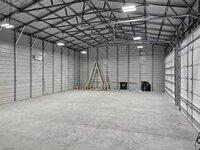
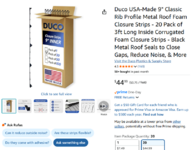

Exterior.jpgInterior.jpgInner Closure Strip.pngOuter Closure Strip.png
 
To avoid these ads, REGISTER NOW!

Firebrick43

Well-known member
Joined
May 12, 2015
Messages
14,145
Location
West central Indiana
I have used them on pole barns. The work well when they stay in place. If the metal is dusty it needs wiped down for the adhesive to stick.

I would highly suggest not spray foaming your building.

With metal on the walls side to side, exposed fasteners on the roof, and not having an over lap you will experience at least small leaks eventually.

Spray foaming will hold that water against the metal and rust it out. By the time you realize it will be quite bad as the spray foaming will not let the water thru to witness anything.

Almost all metal r panel manufacture void the warranty if spray foamed as well
 
OP
C

crooney1189

Active member
Joined
Sep 27, 2017
Messages
36
Location
Hernando, FL
The trick is to install them when installing the R-panel. Doing it after the fact will be a PITA.
Oh I know it would have been way easier to have this coordinated with the install crew when the building was going up, but at the time I was thinking my insulation and walls would be in place prior to the mini-split so I wasn't as worried about sealing the corners with these strips, but things just didn't work out that way. First time doing a building like this, live and learn.
I have used them on pole barns. The work well when they stay in place. If the metal is dusty it needs wiped down for the adhesive to stick.

I would highly suggest not spray foaming your building.

With metal on the walls side to side, exposed fasteners on the roof, and not having an over lap you will experience at least small leaks eventually.

Spray foaming will hold that water against the metal and rust it out. By the time you realize it will be quite bad as the spray foaming will not let the water thru to witness anything.

Almost all metal r panel manufacture void the warranty if spray foamed as well
I do agree there is some risk there to the spray foam in terms of trapping leaks (especially with the exposed fasteners as the gaskets disintegrate), but I can't see any way of completely eliminating those risks. Even if I use batts or rigid insulation at the roof, I still have to cover the insulation somehow (likely would use vinyl and some sort of strapping), which would limit my ability to see a leak. The spray foam I was at least planning to leave exposed, likely just with some paint over it.

The walls will be covered with OSB full height no matter what way I insulate, so I may see evidence of a leak towards the bottom, but that's only if the water drains to the inside of wall, and not the outside just running down the surface of the metal panel. I've tried to give a lot of thought to the insulation, and I've been coming up with pros and cons for each.
 

Firebrick43

Well-known member
Joined
May 12, 2015
Messages
14,145
Location
West central Indiana
Oh I know it would have been way easier to have this coordinated with the install crew when the building was going up, but at the time I was thinking my insulation and walls would be in place prior to the mini-split so I wasn't as worried about sealing the corners with these strips, but things just didn't work out that way. First time doing a building like this, live and learn.

I do agree there is some risk there to the spray foam in terms of trapping leaks (especially with the exposed fasteners as the gaskets disintegrate), but I can't see any way of completely eliminating those risks. Even if I use batts or rigid insulation at the roof, I still have to cover the insulation somehow (likely would use vinyl and some sort of strapping), which would limit my ability to see a leak. The spray foam I was at least planning to leave exposed, likely just with some paint over it.

The walls will be covered with OSB full height no matter what way I insulate, so I may see evidence of a leak towards the bottom, but that's only if the water drains to the inside of wall, and not the outside just running down the surface of the metal panel. I've tried to give a lot of thought to the insulation, and I've been coming up with pros and cons for each.
Since you are covering with osb on the walls I would just friction fit xps foam the thickness of your vertical members.

I would do the same with your rafters as well but put some flange head screws into the bottom of the purlins hat channels.

The xps not glued to the metal skin allows the water to fall to the bottom of the wall and dry out. Even fiberglass will eventually dry. Spray foaming just holds it there. The ribs on R panel are not just there for added strength but some ventilation as well between the panel and any insulation or sheathing. Of course it works better vertically but it still does some good horizontal and it’s not easy or likely to change that now

XPS will also be cheaper if you install yourself. Of course it won’t be a 1 day affair like spray foam but you will probably save time as you won’t have to scrape it off the face or shave it down like you might have to in places depending on just how good your spray foam guy is.
 
OP
C

crooney1189

Active member
Joined
Sep 27, 2017
Messages
36
Location
Hernando, FL
Since you are covering with osb on the walls I would just friction fit xps foam the thickness of your vertical members.

I would do the same with your rafters as well but put some flange head screws into the bottom of the purlins hat channels.

The xps not glued to the metal skin allows the water to fall to the bottom of the wall and dry out. Even fiberglass will eventually dry. Spray foaming just holds it there. The ribs on R panel are not just there for added strength but some ventilation as well between the panel and any insulation or sheathing. Of course it works better vertically but it still does some good horizontal and it’s not easy or likely to change that now

XPS will also be cheaper if you install yourself. Of course it won’t be a 1 day affair like spray foam but you will probably save time as you won’t have to scrape it off the face or shave it down like you might have to in places depending on just how good your spray foam guy is.
Yea good points, agreed that a large part of the spray foam success would be the capability of the installer.

I likely will price out rigid foam again and explore that route some more. Assuming I'd just tape the seams to create a good sealed envelope at the interior surface of the foam, allowing some air circulation through the ribs as you mentioned.

But to that extent, if I were to go that route I wonder if I'd actually be better off WITHOUT the foam closure strips at the edges, since that would allow for better airflow through the ribbed cavities in the panels.
 
To avoid these ads, REGISTER NOW!

dcg9381

Well-known member
Joined
Jun 20, 2018
Messages
11,830
Location
Austin, TX
I have used them on pole barns. The work well when they stay in place. If the metal is dusty it needs wiped down for the adhesive to stick.
This. Best if done during construction. We've got a few on a pole barn that have "blown out" - and you have to go back and stuff them back in place (with glue is best).
I would highly suggest not spray foaming your building.
With metal on the walls side to side, exposed fasteners on the roof, and not having an over lap you will experience at least small leaks eventually.
Spray foaming will hold that water against the metal and rust it out. By the time you realize it will be quite bad as the spray foaming will not let the water thru to witness anything.
Meh. We spray foam buildings here all the time. And even in this building, if it's too much trouble to get that R-panel foam blocks in there, I'd consider "sealing" it with a high quality DIY foam (you'll have to order it, not the stuff you get at Home Depot). The trick will be that you have to tape off or block off the foam's ability to expand to the outside, otherwise it'll run down the edge and it's darn near impossible to clean up.

Open cell foam does not hold water. It's just like any other insulation product. Get it wet, water follows gravity.

Closed cell makes things a bit harder to figure out as the water can potentially follow any available flow path. Potentially it "could" trap water against the steel, but it could also prevent the same if properly bonded.

Almost all metal r panel manufacture void the warranty if spray foamed as well
When is the last time you saw a warranty claim on a steel building? And dollars to donuts that warranty covers the panel, not the labor.
They'll deny warranty on ANY steel that is subject to a leak. That's "improper installation". Bat, cellulose, blanket - all of 'em. They're not going to warranty steel that is leak or was subject to a leak.

The real craptastic thing about spray foam is that if you have to remove the panel, you'll be removing the foam insulation too. I worry about the roof deck of my stick built house. If I had to replace roof decking (ever) it'd mean that we have to re-spray. I don't have attic space in the entire house, so we'd have to pull drywall in a large number of places to replace roof deck. But even in stick construction, we use foam to seal things up where traditional bat insulation doesn't work well.

But to that extent, if I were to go that route I wonder if I'd actually be better off WITHOUT the foam closure strips at the edges, since that would allow for better airflow through the ribbed cavities in the panels.

Perhaps. But a properly designed building that isn't foam enclosed would have a ridge vent. I wouldn't worry about foam at the ceiling/wall joint... They should have put the right foam block there anyway.
 

Firebrick43

Well-known member
Joined
May 12, 2015
Messages
14,145
Location
West central Indiana
.


When is the last time you saw a warranty claim on a steel building? And dollars to donuts that warranty covers the panel, not the labor.
They'll deny warranty on ANY steel that is subject to a leak. That's "improper installation". Bat, cellulose, blanket - all of 'em. They're not going to warranty steel that is leak or was subject to a leak.
Warranty from leaks is not what I was talking about as no exposed fastener panel is leak free as you stated(and I inferred earlier.

The painted and corrosion warranty is what I am talking about.

I have never seen a leak cause rust through with fiberglass or foam sheets. I have personally seen two cases with spray foam.

Britain's government incentivized spray foam for years and now it’s a catastrophe of epic proportions. Banks over there won’t even lend money on sprayfoamed buildings until it’s removed.


dcg9381

Well-known member
Joined
Jun 20, 2018
Messages
11,830
Location
Austin, TX
The painted and corrosion warranty is what I am talking about.
I agree with you that some steel companies will say "warranty void". I get it. 100%. But we've got buildings standing here for 20+ years that are foam insulated and they're not rusting out. Like I said closed cell can make finding a leak difficult. Closed cell, not so much.
I have never seen a leak cause rust through with fiberglass or foam sheets. I have personally seen two cases with spray foam.
Ahh, I haven't seen those. Was it closed cell?
Britain's government incentivized spray foam for years and now it’s a catastrophe of epic proportions. Banks over there won’t even lend money on sprayfoamed buildings until it’s removed.
Yep, I've read about this drama. I "think" these are mainly retrofits though on older homes that were not designed for spray foam. Modern spray foam structures have moisture control (in climates where appropriate like the UK). For all I know many of these homes got a contractor to come in and spray the roof deck, but didn't address things like vent tubes that lead to attics that were designed to be vented and didn't install ERV or other moisture controls.

Certainly closed cell could hold water against a roof truss or other wood and cause rot that absolutely can't see until it's too late. But open cell, it'd just leak through... You'd know it.

The "insurance problem" is that you're not just replacing the roof and roof deck, you've got to go in and replace the insulation. On my home that would be a very expensive insurance claim as you'd have tear down a LOT of drywall to fix it. I wish I had sprung for a metal roof... I was just up there this weekend inspecting flashing, caulking a bunch of nails that were clearly potential water leaks, etc.

I'll continue to build with foam 100% or spray foam hybrid with traditional insulation. There are definitely pros/cons.
 

Firebrick43

Well-known member
Joined
May 12, 2015
Messages
14,145
Location
West central Indiana
I agree with you that some steel companies will say "warranty void". I get it. 100%. But we've got buildings standing here for 20+ years that are foam insulated and they're not rusting out. Like I said closed cell can make finding a leak difficult. Closed cell, not so much.

Ahh, I haven't seen those. Was it closed cell?
One of each. The guy with closed cell thought it was wonderful as well for 15 years and I seriously thought about doing it in my shop until the damage surprised him. I wouldn’t have known about it without knowing him.
Certainly closed cell could hold water against a roof truss or other wood and cause rot that absolutely can't see until it's too late. But open cell, it'd just leak through... You'd know it.
Most of the problems in the UK are with open cell foam.

Even though it’s open cell it can still hold a significant amount of moisture, and if the heat and air movement isn’t there to dry it out it causes mold and corrosion on metal

I am not against spray foam, it just should be applied to allow a drainage plane between it and the siding/roofing and to buildings that design isn’t known to be leak prone.

I would absolutely use it on a cathedral ceiling with ply sheathing and standing seem roof or even in a pole barn if a layer of foam was placed between girts before the siding was installed for additional insulation if it wasn’t on my dime
 

Firebrick43

Well-known member
Joined
May 12, 2015
Messages
14,145
Location
West central Indiana
Yea good points, agreed that a large part of the spray foam success would be the capability of the installer.

I likely will price out rigid foam again and explore that route some more. Assuming I'd just tape the seams to create a good sealed envelope at the interior surface of the foam, allowing some air circulation through the ribs as you mentioned.
I personally seal the edges with carefully applied foam from a pro 14 gun. Very neat results can be had as you can use the dial on the back to control it.

If you use foam that is the same thickness as your uprights flashing tape would work very well and even isolate your osb from sweating of the metal post.

But to that extent, if I were to go that route I wonder if I'd actually be better off WITHOUT the foam closure strips at the edges, since that would allow for better airflow through the ribbed cavities in the panels.
I would stuff something in there, even it’s mesh roll vent cut into strips.
 

dcg9381

Well-known member
Joined
Jun 20, 2018
Messages
11,830
Location
Austin, TX
I am not against spray foam, it just should be applied to allow a drainage plane between it and the siding/roofing and to buildings that design isn’t known to be leak prone.
Thank you for sharing the "poor" experience. I'll certainly take it under advisement. Happy to learn from the experience of others.

It's interesting because the way you described it is exactly how contractors are doing it in northern states. But I had a post where the "drainage plain" failed (not due to water) and I had to fix it as it resulted in massive cracks in the foam insulation. It's function was more of a vent plane, I had not seen foam insulation with roof vents and soffit vents before. Here in the south, they spray it directly to the roof deck. I'm on structure #3 with open cell.. We've had a leak or two, but I noticed both pretty quickly and was able to get them sorted.
 
To avoid these ads, REGISTER NOW!
Top Bottom