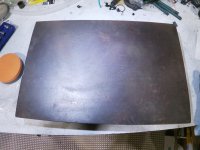
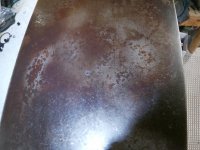
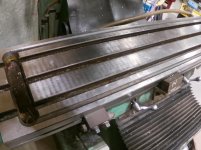
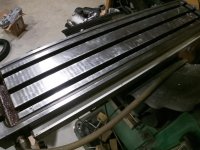
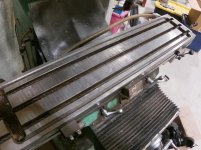
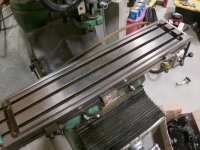
This is just my opinion but the lines the OP mentioned in the photo appear to be a machine generated pattern due to the even spacing all along the table. If so, this would most likely be from a horizontal milling cutter used when the table was cut from the rough casting. The horizontal milling cutter was out of round ever so slightly when it was sharpened, the machine arbor may have had an out-of-round condition, or an excessive feed rate may have created a cyclic rise/fall with the advance along the table being milled. This is not uncommon to find on older machine tables. It showed up because stoning hit the high points and didn't touch the valleys. Even a ground surface will exhibit this if a fine enough abrasive is used, using the technique the OP did with the 220 grit on the surface plate. The "ripples" should be of no concern, I wouldn't even try to remove them. Why risk affecting the table flatness for something that's really just cosmetic.
To the OP- Congratulations, hope this is working out for you. Try to get a granite surface plate that's in good condition when the budget allows, it will be your reference surface for all other things in the shop. The cast iron one is nice but you still don't know how flat it really is and you'll want at least ONE reference surface you can count on for all other things. Good luck, ganbatte.




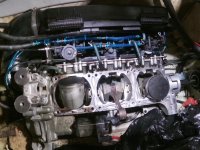


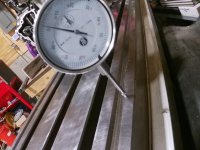
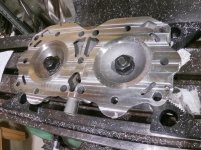
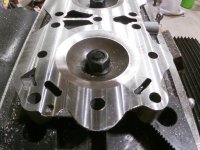
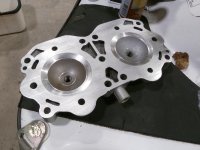
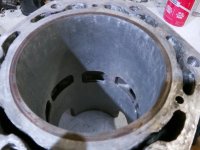
 You can see one little dent to the right of the exhaust port, and there is another 1/4 x 3/8 spot down low in the bore. Really nothing that will affect the running on this. I'm feeling pretty proud of myself.