
To avoid these ads, REGISTER NOW!

Mini lathe base build.

AceofSpad3s

Well-known member
Joined
Oct 1, 2014
Messages
1,808
I bought a 7x14 vevor mini lathe a while ago, haven't had the chance to actually set it up in a permanent way yet though. At first, it was because I couldn't find a good spot for it, and didn't have anything to mount it to. Well I remedied those, neither are particularly good though, I found probably the most beat to death Snap On late 70's 30" box on the curb for free which was a bit closer to banana than rectangle in shape and stuck it in the corner by the oil tank. I built a cradle for the bottom and have some leveling feet on it, so it's quite stable now. For a box the top is thicker than most in terms of gauge, but not ideal to mount a lathe to even ignoring that the box is a bit wonky.
I've seen people do cast concrete bases for the little import lathes to give them a heavy base to help stiffen them up, but with curing it would take a while to get that going, I might do it at a later date.
Would laminating 3-4 pieces of MDF to get a 1"-2" base be a decent solution to give it a stiff base at least to get it going to run small parts? Obviously not ideal being a wood product, but being engineered it would at least be far more stable than typical natural lumber with humidity shifts, not that the basement sees that drastic of a change compared to the garage.
Obviously the ideal would be mounting it to a thick steel or aluminum plate, but sourcing one that's 1" thick is going to cost half the price of the machine.
 
To avoid these ads, REGISTER NOW!

Oldsnapper

Well-known member
Joined
Jun 26, 2016
Messages
192
Location
Stony Plain Alberta
For a solid base for a small lathe this size, would you be able to use a 24 X 30 concrete sidewalk block cut down to 18 X 30. This would fit on top of the cabinet that you have. You know that it wouldn't warp. It can be drilled and anchors installed to secure the lathe. If it isn't perfectly flat, the lathe can be shimmed.
 

rancherbill

Well-known member
Joined
Oct 18, 2007
Messages
5,332
Location
Foothills County, Alberta, Canada
Just a wild thought, get a couple of sidewalk block. 24x30, and glue them together with PL masonry glue. Get a piece of plywood and countersink some studs into the plywood and then PL glue them to the sidewalk blocks. Bolt your lathe to the studs. You don't have to torque the bolts to high numbers, but a well glue piece of plywood will really hold.

It's heavy, quick and sturdy.
 

AEAdam

Well-known member
Joined
May 27, 2023
Messages
2,729
Location
SE PA
This subject comes up often. There are really only 2 engineering issues and you’ve mixed in a third (seasonal wood movement) that’s not really relevant. Here’s what you want:

1) A stiff flat top you can bolt the lathe to that will allow you to pull out any twist of bed ways and/or one that doesn’t introduce twist. MDF is flat but not stiff. A commercial butcher block would probably be better. You will need a precision level to mount this properly. The cast iron may move move than wood so you will need to inspect periodically.

2) You want a base that is stiff such that it doesn’t allow the lathe to vibrate I.e. one that dampens vibration. Mass helps. Tool boxes are 5 sided boxes and not good choices for machine bases, regardless of how thick the steel is. Any sort of work table you bought or built would be better.

These lathes are dreadful pieces of Chinese ****. The base castings are of the poorest quality. I had the mini mill version. The fun of these is pushing them to their limits seeing how to produce good work with a poor quality tool. Start with a stiff work table with a stiff strong thick top. Slide your tool box under the table. Whatever stretchers exist between the legs of the table should be moment carrying. The applied load isn’t just vertical, it’s horizonta. That is reacted by friction at the floor. If you can tie the table to the walls, that would be ideal.
 

wyb2

Well-known member
Joined
Dec 27, 2012
Messages
188
Location
Southern NH
What is your experience and what are your goals/expectations? Have you used it much?

I had no machining experience when I bought mine (a Grizzly). I plopped it on a plywood workbench and started using it. It’s been about 10 years and that’s still how it sits (well, different bench, in a different house, but same idea). It works fine for making occasional washers, spacers, and pins out of plastic, aluminum, and brass. I’ve done some steel, but it’s slow going. I’m sure if I got really into machining I would start noticing all its shortcomings, but for now it works just fine.

Before you spend any real time, energy, or money on some kind of base, use the machine for a while and see if it does what you need it to do.

A lot of people **** on the little machines because they’ve had their baseline expectations set by a machine that outweighs a small car and cost someone a year’s salary back in 1953. My mini lathe was an impulse buy and it was easier to move between houses than my mattress.
 
OP
A

AceofSpad3s

Well-known member
Joined
Oct 1, 2014
Messages
1,808
What is your experience and what are your goals/expectations? Have you used it much?

I had no machining experience when I bought mine (a Grizzly). I plopped it on a plywood workbench and started using it. It’s been about 10 years and that’s still how it sits (well, different bench, in a different house, but same idea). It works fine for making occasional washers, spacers, and pins out of plastic, aluminum, and brass. I’ve done some steel, but it’s slow going. I’m sure if I got really into machining I would start noticing all its shortcomings, but for now it works just fine.

Before you spend any real time, energy, or money on some kind of base, use the machine for a while and see if it does what you need it to do.

A lot of people **** on the little machines because they’ve had their baseline expectations set by a machine that outweighs a small car and cost someone a year’s salary back in 1953. My mini lathe was an impulse buy and it was easier to move between houses than my mattress.
Not much, but enough to not want to be using it on just the rubber bumpers it comes with.
 
To avoid these ads, REGISTER NOW!

AEAdam

Well-known member
Joined
May 27, 2023
Messages
2,729
Location
SE PA
What is your experience and what are your goals/expectations? Have you used it much?

I had no machining experience when I bought mine (a Grizzly). I plopped it on a plywood workbench and started using it. It’s been about 10 years and that’s still how it sits (well, different bench, in a different house, but same idea). It works fine for making occasional washers, spacers, and pins out of plastic, aluminum, and brass. I’ve done some steel, but it’s slow going. I’m sure if I got really into machining I would start noticing all its shortcomings, but for now it works just fine.

Before you spend any real time, energy, or money on some kind of base, use the machine for a while and see if it does what you need it to do.

A lot of people **** on the little machines because they’ve had their baseline expectations set by a machine that outweighs a small car and cost someone a year’s salary back in 1953. My mini lathe was an impulse buy and it was easier to move between houses than my mattress.
Super small quibble. Sorry this sounds argumentative. But I hope this helps:

1) These are terrible machines. Their problems are well documented.
2) If you unbox it and set it up and try start playing with it, you may find it’s a terrible machine, as so many before you have done.

To actually “get away” with the cheapest Chinese lathe on the planet, there are things you can do to help it. They include:
1) Thorough disassembly and cleaning
2) Deburring and dressing mating surfaces
3) polishing and adjusting the lead screw
4) mounting it and straightening the bed
.
.
.
n) learn how to inspect the tool and it’s output
y) learn how to custom grind and polish tools.

If you do this, as others have done, the worlds cheapest lathe can surprise you and impress your friends and neighbors!
 

wyb2

Well-known member
Joined
Dec 27, 2012
Messages
188
Location
Southern NH
Not much, but enough to not want to be using it on just the rubber bumpers it comes with.

I don’t recall if mine came with rubber feet, it’s not sitting on any. That doesn’t sound ideal as it seems like the machine will feel bouncy as you turn the handwheels.

I simplified a little above, mine is actually screwed to a pair of plywood scraps, which are screwed down to a pair of 2x4 scraps, which sit on my workbench. This raises it up a couple inches and gives me more options on where to grab if I’m moving it around.

Super small quibble. Sorry this sounds argumentative. But I hope this helps:

1) These are terrible machines. Their problems are well documented.
2) If you unbox it and set it up and try start playing with it, you may find it’s a terrible machine, as so many before you have done.

To actually “get away” with the cheapest Chinese lathe on the planet, there are things you can do to help it. They include:
1) Thorough disassembly and cleaning
2) Deburring and dressing mating surfaces
3) polishing and adjusting the lead screw
4) mounting it and straightening the bed
.
.
.
n) learn how to inspect the tool and it’s output
y) learn how to custom grind and polish tools.

If you do this, as others have done, the worlds cheapest lathe can surprise you and impress your friends and neighbors!

Well I don’t disagree - they are terrible for how you would want to use one.

But for some people’s use cases they work just fine, and cost a lot less than a better machine. It’s a different class of machine, the same way an electric bike/scooter is in a different class from a massive bagger or a 1000cc sport bike, even though they all have 2 wheels and handle bars. You could call the scooter terrible because it can only go 20 mph and runs out of juice after 30 mi. But if your need is something for short trips through crowded streets that you can park anywhere, it would be dumb to spend 10x the money on one of the ‘better’ class machines.

I’ve done exactly zero of the things on your list, but when I want a random pin or spacer out of aluminum or plastic, I walk down my basement stairs and fire up my terrible machine. And a few minutes later I have the thing that I wanted.
 

RoninB4

Well-known member
Joined
Jul 22, 2020
Messages
3,488
Location
Under My House
Several good points already contributed by others. I've been using industrial quality machines for most of my life, I also own one of the mini lathes. I also **** on them, but always within the context of intended use.

1) For really small parts like washers, spacer, or short bushings they can work just fine. I use mine for secondary operations
2) They **** for longer parts that need to hold tolerance over several inches because the bed/saddle travel isn't parallel to the headstock axis of rotation. This can be fixed sometimes with some work but you can't expect to exceed the limitations of the machine.
3) MDF is a horrible material to use as a machine base. It absorbs water, de-laminates, and isn't very flat. Others have reported good results from mounting small lathes in a type of pourable granite, look it up.
4) If your parts are small/short then mount it to whatever you want so you can use it. Mine isn't mounted, it sits on a large blueprint vault and I just use light cuts to avoid vibration.
5) If you bolt this lathe to a surface that isn't flat/planar and also changes with the seasons it will likely twist the lathe bed and you'll never achieve any accuracy over distance. Probably better to just let it sit on metal feet that's been shimmed properly and use light cuts. The planar accuracy of the feet/bed when it left the factory is probably better (maybe) than bolting it down to an unstable surface. JMO
 

Aaron_W

Well-known member
Joined
Feb 6, 2018
Messages
2,893
Location
Northern California
The people mounting Chinese mini lathes to engineered bases are typically trying to make it more that it was meant to be.
They are a small inexpensive lathe meant to do small basic machining. Can you get better performance by putting a lot of time and effort into a really solid base? I'm sure you can, but why? You are kind of defeating the point, it is no longer a small, portable machine.

Mount it to a plywood base and use it. If you need a little better, tear it apart and do the finish work needed. Need a little better than that, then maybe a fancy base is needed. Still need better, then stop fiddling with that lathe and hunt down a good quality small lathe.

I'm not down on these lathes, but it amazes me the effort people will go to to try and make them into something more than they are. Putting the same time, effort and finances into something like an old Hardinge Cateract, Wade, Rivett etc tool makers lathe or even a small South Bend, or Logan will have a far greater return.
 
OP
A

AceofSpad3s

Well-known member
Joined
Oct 1, 2014
Messages
1,808
I wouldn't particularly call any of the methods mentioned herculean in terms of effort.


For a solid base for a small lathe this size, would you be able to use a 24 X 30 concrete sidewalk block cut down to 18 X 30. This would fit on top of the cabinet that you have. You know that it wouldn't warp. It can be drilled and anchors installed to secure the lathe. If it isn't perfectly flat, the lathe can be shimmed.
That's an idea, the top is probably big enough to fit the entire block so I'd just leave it uncut for the extra weight, and it's heavy enough I could probably just stick some rubber under it to keep the block from moving around and not have to bolt it to the box.
 

imagineer

Well-known member
Joined
Dec 13, 2015
Messages
1,000
Location
Ohio
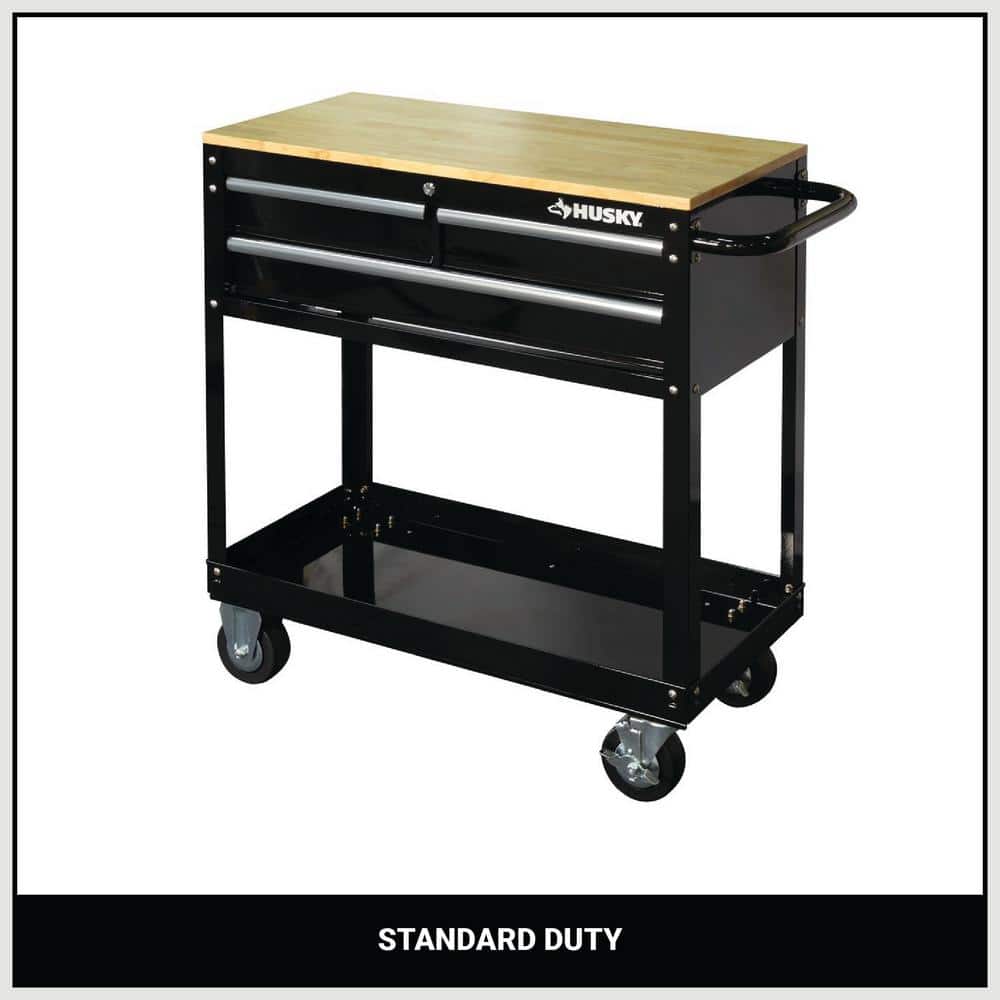
I have a Shop Fox M1049 small lathe and have it mounted on one of these.


So far, it's been fine, but I am going to make a back and side panels for the cart to further stiffen it up.
 
To avoid these ads, REGISTER NOW!
Top Bottom