To avoid these ads, REGISTER NOW!

Mini Mill and Lathe for small shop?

barrysuperhawk

Well-known member
Joined
Jun 20, 2015
Messages
116
Location
Middle of Illinois
Ok, so I am not a machinist or a professional gunsmith. I have a couple of friends with full sized bridgeports, but I hate to impose on them. So I have been looking at ways I could do small jobs myself. I don't have a full sized shop or or even room for a real lathe or a full sized mill. I cant even get 220v run to my garage for less than these tools (was quoted $2300 to get 220v to my garage for a welder and compressor.)

Then I got to thinking, every single favor I have asked of my machinist buddies has been physically small. Cutting slides for MRD, custom head for a tripod, making small part adapters for sights, new linkage for my golf cart, etc, everything I have ever paid or begged someone else to machine has all been small, easily able to fit in these things. Even something like finishing 80% lowers would easily fit here, and both of these together, including tooling aren't much more than what ghost gunner wants for their rigs.

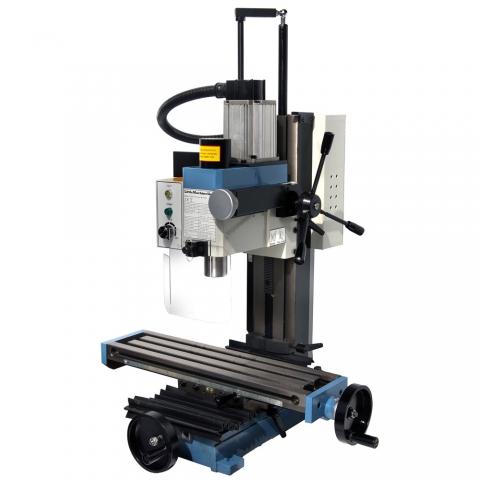
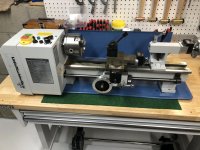
I present to you: HiTorque Mini Mill
3990.480.jpg

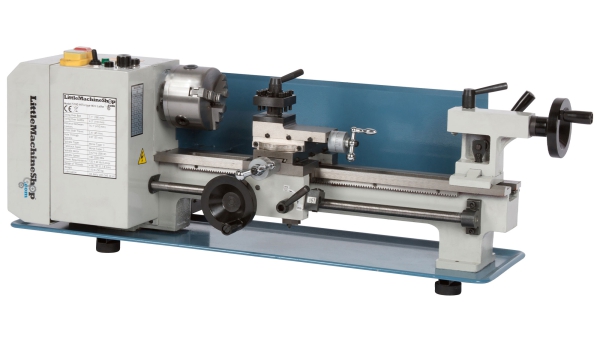
https://littlemachineshop.com/products/product_view.php?ProductID=5100
5100.480.jpg


But wait, there's MORE...

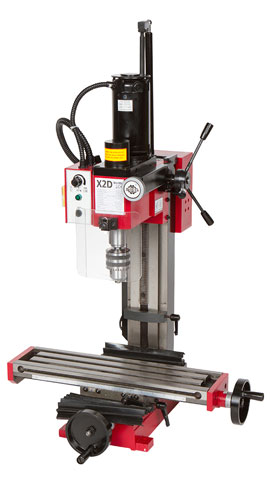
In researching this post, I discovered the SEIG mini mill
4962.480.jpg

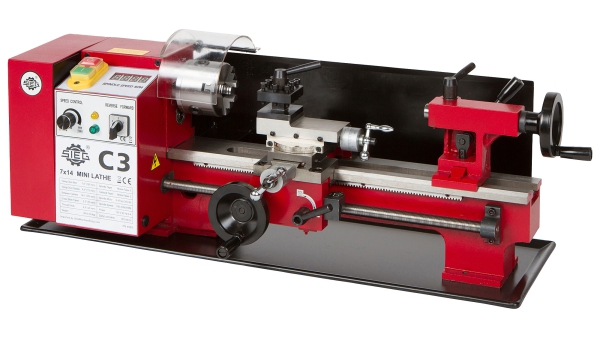
...which is even smaller and cheaper!!! And they have a matching lathe
4959.480.jpg


So, dear reader, I am relying on you to tell me why these fantastic looking little machines are a bad idea.
 
To avoid these ads, REGISTER NOW!

Packard V8

Well-known member
Joined
Mar 16, 2009
Messages
7,380
Location
Spokane, WA
It all depends on your skill, your expectations, your balancing space, cost and capabilities.

I've known several guys who bought these for the reasons you mention. More than half of them hated the limitations, the weaknesses, the cheap Chicom construction, sold them to and bought a real machine. The minority managed to get most of what they wanted done and found a way to work around the limitations.

Before buying one, buy beer for someone who has one of these, take a job you'd like done and see how you relate to it.

jack vines
 

ez-duzit

Well-known member
Joined
Jun 24, 2013
Messages
5,099
Location
Marina del Rey
Those cheap toys are a joke. Even to make small parts you want precision, which is virtually impossible with lightweight, crappy machines. You might get by with small, but not small and cheap.

Better re-think this before wasting money.
 

Chevy-SS

Well-known member
Joined
Feb 11, 2010
Messages
1,492
Location
Rhode Island
I had very similar small machines (mill and lathe) a few years back. I used them for RC (radio control) custom parts. They are extremely limited in what they can do. I had a machinist buddy who guided me through the buying process of the machines, but then you need to buy all the accessories..... and that was more $$$$$$ than the machines. And the machines were really only good for aluminum or plastics, they were virtually useless with steel. I since sold everything.

My advice would be, buy small machines if you;
1) have limited space, AND,
2) you will be working soft metals or plastics, AND,
3) you are doing only small jobs.

If you are solidly in all of those 3 categories, then you will be relatively satisfied with the small machines. Otherwise, I would shop around for used REAL machines. You can typically find used ones at giveaway prices. Good luck

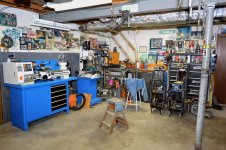
This was my setup:
workshop2new.jpg
 
Last edited:

Dave455

Well-known member
Joined
Mar 19, 2013
Messages
5,815
Location
Sussex, England
The problem with these machines, apart from the size of jobs they can handle, is generally power, rigidity, and the fact that they are Chinese, which means there is no guarantee of accuracy, squareness, or even consistency from machine to machine.

Now, I’ll say that any lathe or mill is better than no lathe or mill, but personally I think most folks are better off going for a better quality used machine than these things. I haven’t been involved with many of them in the last few years, and I’ll admit that the quality has improved, but I’ve been involved with sorting out an awful lot of issues in the past on machines that shouldn’t have got out of the factory door if anybody had cared, which they obviously didn’t.

Some things have been easily sortable, some less so. The problem is that most people who buy these just want to plug them in and get machining, not faff about setting them up and correcting issues. That’s why they got them in the first place.

Personally, for a lathe, I’d get the biggest used one you can squeeze in, of decent make. I’m in the U.K. and I must admit I’m not really familiar with small U.S. made lathes but I’m sure they are out there. I restore machine tools and I’ve sold small older British lathes (Drummond) for less money than these Chinese things, and they will hold their value.

The Chinese lathes, once set up, and equipped with decent tooling (and provided you got an o.k. one) will at least allow you to turn, but they remind me of an old Ariel bike I once rode - I got where I was going in the end, but it wasn’t a great experience!

The mills always seem to be disappointing. They never seem to have enough power to do what you want (which is generally to cut steel) and they lack the rigidity to do anything accurately. If you can get them to do a job, it’s always too slow or the finish is too poor!

I’m not too familiar with exactly how much milling you need to do on an 80% lower (AR-15 I assume) but my gut feeling is no way. I know it’s aluminium, but you need enough space on the table to be able to hold the thing rigidly, and I think you will struggle with that for a start. In fact I think you will struggle with every operation!

If all you need to do is drill and ream holes, then a jig borer would serve you better. Otherwise get a decent mill. There are British machines called Centecs that would suit you much better if you’re tight for space. They have a small footprint but are much more solid.
 

Attachments

  • 424D4DF8-F03F-4EF3-B703-12567F93D754.jpg
    424D4DF8-F03F-4EF3-B703-12567F93D754.jpg
    91.3 KB · Views: 113
Last edited:

gnpenning

Well-known member
Joined
Jan 25, 2015
Messages
2,754
Location
I have more questions than answers.
I think we have a couple members that have a step or 2 up and still table top size that are happy with them.

There is a point of diminished return on size. Hopefully you can find the balance you need.
 

Jack84

Well-known member
Joined
Jul 30, 2016
Messages
516
Location
Netherlands
I have both, a mini lathe and mill. I only do small stuff and am happy with the performance of both. Do steel with both, just take it easy.


Sent from my iPhone using Garage Journal
 

rsanter

Well-known member
Joined
Dec 22, 2007
Messages
18,514
Location
visalia ca
Over the years I have had several machines in various sizes.

The good.
Small takes little room
Good for safety for a beginner as it limits how bad you can get hurt

The bad
Small is often underpowered
Small is limited in size.

With that said, I think you should go for it but I also think that you need to go at least one size up. The ones you are showing are just too small.
While most of what I do is small, it is sure nicer to have a little bigger machine even when working on small stuff.
You should be able to get into a 9" lathe and still be in the 110v motors range.

Also keep in mind that for a mill, you can get an older Bridgeport that has a 1hp motor and get a VFD that will go 110v to 3ph for the 1hp.
Otherwise if you go to a small mill/bench top mill, you need to look at one that is just a little bigger than what you are showing
 

ducksface

Banned
Joined
Oct 25, 2012
Messages
2,477
Those cheap toys are a joke. Even to make small parts you want precision, which is virtually impossible with lightweight, crappy machines. You might get by with small, but not small and cheap.

Better re-think this before wasting money.

Ten thousand youtube videos says this opine is entirely wrong.

Those who can, make watch repairs with them.
Because I can, I like a smithy Ltd.
Fits nicely on top of a hf 44 roller
https://smithy.com/Smithy-Combo-Lathe-Mill-Midas

I've set up quite a few guys on gj with tooling.
If you buy a smithy pm me and we'll trade something.
 
Last edited:

ez-duzit

Well-known member
Joined
Jun 24, 2013
Messages
5,099
Location
Marina del Rey
Ten thousand youtube videos says this opine is entirely wrong.

Those who can't, don't...

Overdramatize much? I would be hesitant to take advice from anyone with a duck's face. ;)

But, yeah, for working on such lightweight stuff as a watch, one might get by with such a light duty machine.
 

FlaGman

Well-known member
Joined
Aug 4, 2018
Messages
430
Location
Western North Carolina
I wanted to get started with the world of home machining, and a HF mini mill and lathe allowed me to do that for about $1100 (sale prices, total $300 off). I would have preferred buying vintage USA made machines locally for pennies on the dollar and have my brother/cousin/friend deliver to me for a case of beer (as so many on GJ do) but I scoured CL and FB for a year with no luck.

I am still just getting started but so far, I am happy with my purchases. I am able to make and modify small parts, the machines don’t take up too much space, and if I decide to go further the bought tooling and learned skills will be mostly transferable to larger machines. I am sure I could sell them for at least 75% of my investment, so it is a small price to pay to see if I really want to get serious.
 

RoninB4

Well-known member
Joined
Jul 22, 2020
Messages
3,559
Location
Under My House
I've been a paid machinist for over 30 years running all sorts of large/expensive machines. After selling off all my larger machines I still found a need to do the occasional bushing or mounting plate. I bought a small mill and lathe like the OP pictured. They can do small work if enough time and care is given, I made several pieces that stretched the limits of the work envelope/accuracy. Having said that:

1) They are all poorly made machines with little attention paid to build quality
2) The tiny handles are difficult to use more than 2-3 fingers on
3) The mills often use cheap motors that burn out quickly
4) The mills often use cheap plastic drive gears that explode even in light duty use
5) They are NOT the sort of machine to use carbide cutting tools in, use HSS

I have full size machines again but still use the crappy little ones for second operations like chamfer, polishing, and de-burr. You don't need 3 phase if you use a VFD or a RPC. I have single phase 200 amp service but run 3 machines that need 3 phase, 460 volts and one needing 3 phase 220 volts. What I'm saying is you don't have to limit yourself to tiny machinery based upon your electric service. Real machinery (used) can be had for not much more money than the tiny new machines from Chi-Wan. Even the Centec that Dave455 posted looks to be a much better machine with decent motors that last and drive gears that don't explode. As for ten-thousand videos,... are ten million flies wrong?
 

ducksface

Banned
Joined
Oct 25, 2012
Messages
2,477
Those who can, do.
Those who can't, say you can't either.

https://littlemachineshop.com/products/product_focus.php?Focus=Model Engines
Everything in this link, and 1,000 other links was built and acts as evidence of capability. They all seem to be of gun component size and quality.


The op can use those small machines and do the work he needs to do as STATED IN THE OP.

Please, everyone on gj, stop bashing equipment you can't master.
 
Last edited:

ez-duzit

Well-known member
Joined
Jun 24, 2013
Messages
5,099
Location
Marina del Rey
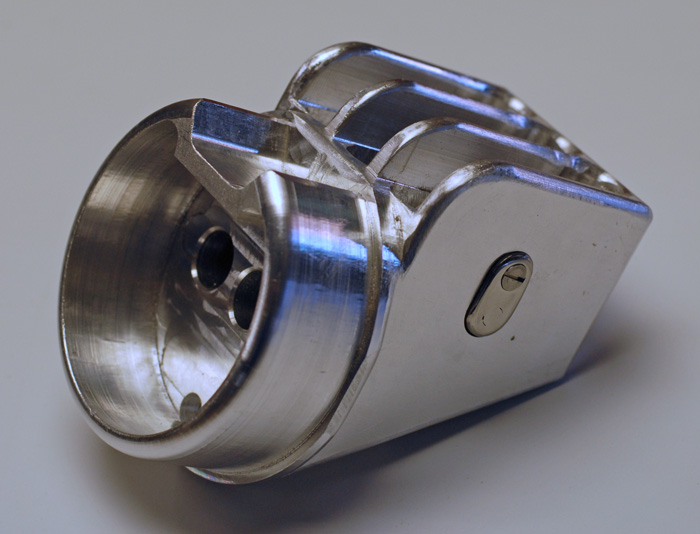
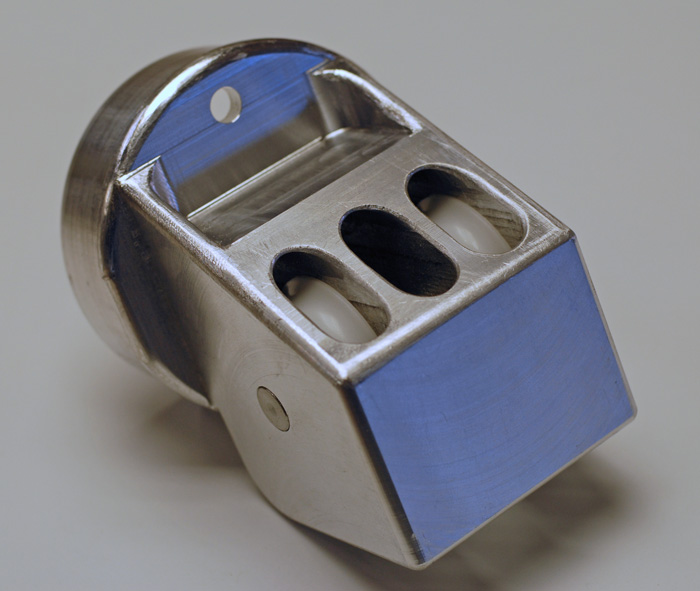
Not suggesting the OP needs the same size machines that I bought, but my mill and lathe together cost me $2,000. That was when I was ~70 years old; I had never operated a lathe or mill before. Yeah, I waited a long time to get started. :) These machines are rugged enough to actually do a job.

Shown is the very first part I ever made on a mill, an end fitting for a 4" sailboat boom. Made almost enough on that first part to pay for the mill.


2oolhound

Well-known member
Joined
Dec 18, 2010
Messages
5,918
Location
BC Canada
Nice work ez-duzit!

I'm kinda between ez-duzit and the op. I bought a 10" atlas lathe for $325 and a Morgon mill drill (Rong Fu or RF-30 but sold under many different names). It was delivered for $500. My lathe is about 70 years old and the mill drill is about 35 years old. The atlas lathe is sold under the craftsman name in smaller sizes down to 6" I think and are often available cheaply.

Those tiny tools make me wonder if you couldn't do the same work with a 3D printer.

Regarding 220 power, my welder, compressor and mill drill all run on 220 single phase for which I run a 50' extension cable ($100) through the dryer vent to the dry plug in the house. The cable never moves, it just gets plugged or unplugged when the dryer is needed and I swap the tools at the other end. These are legal extension cables and a cheap way to provide 220 single phase to your shop.
 

pepi

Well-known member
Joined
Mar 27, 2013
Messages
2,883
Location
Woodstock, GA
There are some good size machines the run house current.

attachment.php
 

Attachments

  • DSC_0540.jpg
    DSC_0540.jpg
    164.6 KB · Views: 648
OP
B

barrysuperhawk

Well-known member
Joined
Jun 20, 2015
Messages
116
Location
Middle of Illinois
Ok, sorry, I thought I knew I was opening a can of worms here but damn. this seems as much of a hot button as PVC air lines LOL.

So, it seems like some are saying that if I don't buy machines that are 3 tons of american iron EACH, somewhere little puppies are going to get their little toenails ripped out. Others are saying I might want to step up in Quality, and still others say I might be able to get what I want to get done accomplished, but I will have to be careful, mindful of inaccuracies, and work slow enough for the machine to keep up. Ok, fair enough. I even understand the motivation behind denegrating everything that is less capable than what one currently has as being worthless.

Most importantly, for me, is that it is one or two of these small machines or nothing. I literally have no place for larger machines, physically or power wise. Currently the best place I have to potentially put these is in my basement, and theres no way I could get a full size machine down there even if it was free.

I understand that will limit me in what I could possibly do. But lets be real, one of the projects I named, milling out an 80% receiver, can be done more or less freehand with a router, so somehow I doubt a chinese mill will be appreciably less accurate. Currently, when I have need of a lathe, I literally stick a hand drill in my vise, ziptie it in the on position, then use anything from a file to an angle grinder to cut what I need to. Much of the machine work I currently do more often resembles something that would be done by a barefoot dude in Rural Pakistan. If I am really honest, that is an injustice towards those dudes.

So, full size machines are out. If those were the only choice, I am not getting any tools. That said, lets talk more about the smaller machines. I kind of assumed the HF stuff was worse than nothing at all, but the stuff I linked above seemed a step up from that. If I had to choose, I will absolutely start with a mill just due to the nature of the types of things I want to do. Could someone give me a good-better-best heirarchy of small mills?
 

BTL-A4

Well-known member
Joined
Feb 28, 2018
Messages
1,252
Location
Santa Clarita
I have the same mill and have cut steel with it. Just take light cuts. It is fine for the work that the OP wants to do. And accuracy is also due to the operator. I've made square parts to within .0.001" with a DRO. I would recommend taking a class and starting with simple parts.
I have a 75-year old Atlas Craftsman 12x18 lathe. It's not as stiff as it could be but I can make decent parts with light cuts. I think the small lathes are fine for the OP's purposes.
It is my understanding that Seig makes most of the machines for others, so the ones at Little Machine Shop are all from the same place. Price differences (cheaper harbor freight ones, for example) are due to the level of QC. If you buy a cheap one, expect to spend money and time getting it sorted out to be usable and accurate.
I'd recommend buying used and see if you can get tooling and other goodies you will need.
Lastly, join hobby-machinist.com. There are tons of helpful people there that know about particular machines. Good luck!

BTW, the cheaper plastic gears are there for a reason. If you stall the mill from a heavy cut or do something else "wrong", the easily replaced, cheap plastic gear will break and save the more expensive, harder to replace components.
 
Last edited:

ducksface

Banned
Joined
Oct 25, 2012
Messages
2,477
When I say, as I sometimes do,
Some on gj recommended a knee Mill to a guy living in a rented condo with a one car garage so he could turn the wheels for ONE pine derby race... I wasn't kidding.
It's a real post... Then he doubled down.


I can't give you a hierarchy.
I can tell you the smthy Combo can require a tear down to switch between lathe and mill. Sometimes it doesn't.
The Ltd has seperate motors for mill and lathe.
But
It has great resale, like you seldom see them for sale type great, and they take up little room.
It's all I know. I can't compare.
I can tell you:
As far as slop and bad build and such some have mentioned:
One of the prides, and dailies, and needs of a machinist is to fit the mill. YOU fix the slop by making shims on your lathe, making flats on your mill, milling and knurling handles and knobs and wheels to fit yourself.
I'm always surprised when someone mentions the finish on a Chinese mill. I'd think of a Chinese mill as an 80%receiver kit and have that sort of fun with the Chinese mill. I'll not understand those among us who don't see how they can fix any problem with any mill if they have the The talent. You pay less for that 80% unfinished receiver, you pay less for the unfinished Chinese lathe. Seems easy enough to seem....

As you can see from the link I provided as proofs, you can make anything you want.

And

'In 1949, a precursor to the modern artificial heart pump was built by doctors William Sewell and William Glenn of the Yale School of Medicine using an Erector Set, assorted odds and ends, and dime-store toys. It kept a dog alive for an hour.'

Sewell and Glen would have loved to have had a mini mill....
 
Last edited:
To avoid these ads, REGISTER NOW!

Iron Beaver

Well-known member
Joined
May 3, 2020
Messages
684
I personally own a Taig lathe and mill. Better design and precision than what I've seen of the HF/Seig machines, but smaller and less ridgid. I can do decent work (for a hobby guy) on both by going slow and taking light cuts.

In the end, nothing would beat a good solid Clausing lathe and a Bridgeport mill. If you can't swing that, many people have successfully made those chinese lathes and mills work.

I seem to recal the LMS versions had something done about the plastic headstock gears? Like a belt or steel gears?
 

adamz

Member
Joined
Jan 19, 2014
Messages
19
Location
Cordova, TN
I have the Grizzly 7x12 mini lathe as well as a Light Machines Spectralight CNC mini (aka Sherline 5400). Are either of these machines a Bridgeport / Southbend / Lagan / Haas / etc.? No. But what they are, are fantastic machines that can ease you in to learning how to machine, really think about how you are going to make something due to limited work envelope / spindle speeds / blah blah blah.

I don’t have room for anything bigger, and while I lust after bigger and better machines, I haven’t been let down by what I have. I’ve machined plastics up to 17-4PH H900. Could I take deep cuts at high feed rates? Hell no. Did I understand my limitations and have to determine the best parameters to get the job done? Yes, and even better because we were in a pinch because a certain high volume prototype manufacturer can’t thread worth **** and we had to ship parts for a meeting the next day.

For the mill, if you want a little more umph and have slightly more room take a look at the Precision Matthews PM-25MV. I think it’s specs are better all around than the LMS mill packages. For the lathe, I’d love to have a 9x20 but just isn’t happening. Don’t go lower than a 7x12 because if you use the tail stock drill attachment you run out of room quick and have to get creative. If possible, a 7x16 from LMS is a great starting point.

Be sure the check out CDCO for accessories and tooling, and always be on the lookout for a deal (local shop closing, or get to know people at large shops in the area that throw away tooling that may not be to their standards but will still make chips if you don’t need perfect.

Good luck and let us know what you go with!
 

matt_i

Well-known member
Joined
Mar 14, 2008
Messages
10,728
Location
SE Michigan
Seems like the OP is set on the small machines.

Which is good, grab 'em and run 'em.

I think if a person enjoys machining and wants to expand and do more machining or can see the apps for more varied jobs, those benchtop tools will probably be on the market soon.

That's the reason for polarized advice...but, at the end of the day if you can hit the dimensions it does not matter what machine it was made on.
 

RoninB4

Well-known member
Joined
Jul 22, 2020
Messages
3,559
Location
Under My House
BTW, the cheaper plastic gears are there for a reason. If you stall the mill from a heavy cut or do something else "wrong", the easily replaced, cheap plastic gear will break and save the more expensive, harder to replace components.

-Not be contrary or start an argument but I exploded one of those plastic gears in the middle of a job. The replacement was installed and I took great care in NOT stressing it, a .010 cut in aluminum was dialed in. The gear exploded anyway. I installed another replacement, ordered two, and did finish the job but was/am quite unimpressed with the quality. I eventually found a steel gear for sale and am using this. The motors are also anemic and tend to burn up quickly. Look this up.

To the OP. Use what you choose, my only advice is to buy the most machine you can within your budget as you will attempt to increase the physical size of your work as you gain confidence. Machining lowers with a router? Not a good idea, just because something is "possible" doesn't mean it should be attempted. JMO. Good luck with whatever you decide.
 

ducksface

Banned
Joined
Oct 25, 2012
Messages
2,477
The part I don't understand.
Have to have the master equipment, yet can't make a replacement part for it.
Chinese slop, yet can't work a shim.
Ways warped, yet can't fix them.
Uncomfortable wheel, yet can't cut a keyway.

When you type things, we read things.

Same with the welding threads.
You type, we read, you don't know, now we know you don't know.
 
Last edited:

wayne55

Well-known member
Joined
Oct 28, 2010
Messages
359
I have the Grizzly mini lathe and mill, because that's what I wanted to make small parts. It depends on what your end use will be. I just have a small DIY shop, but if I was a professional, my needs might call for bigger.
 

misterfixit

Well-known member
Joined
Feb 9, 2013
Messages
199
Location
Kaufman Texas
Something to consider with any size you end up with, is that fixtures for holding work and tool bits/cutters themselves take up lots of space. On the smallest mills, I'm not sure if you have room to attach a rotary table which you will need to cut the front radius on an RMR cut for a slide. Doing an 80% lower will require a vise which will take up some real estate.

On the small lathes, getting a barrel through the spindle might not be possible, and would be the only way to thread it.

The 'larger' benchtop mill such as an RF30 or Grizzly 0705 really doesn't take up a lot more space but is much more of a machine. I have one of the round column machines and can do larger work with it.

My advice is to look for larger machines possibly on the used market. Facebook Marketplace and Craigslist are good bets. It may take a while but you will ultimately be happier.

The best analogy I can think of is to compare lathes to lawnmowers:
Consider the larger industrial Bridgeport mills and Clausing type lathes as commercial Zero-turn mowers. This group would be Knee mills and lathes 12x36 and up:
Scag%20Turf%20Tiger%20II%20ZTR.jpg

hwacheon.jpg

Mills.jpg


Now consider round and square column mills 8x28 and up and lathes of at least 9x20 as being the big 'heavy duty' homeowner grade lawnmowers
New%2BJohn%2BDeere%2BE120%2BLawn%2BTractor.png

Southbend-lathe.jpg

20171123_125006-jpg.248951


Smaller lathes and mills, like the 7x12 and mini mills are like a push mower.
1502-ptb-mower-for-lawn-2-context-300.jpg

engineering-mill-set-up-working1-2


If all you ever want to turn or mill is small and soft, those will do fine. If you ever have a larger project you will get frustrated very fast. Can you mow 2 acres of knee high grass with a push mower? Sure, it will take forever. But can you mow a small yard with a zero turn? Absolutely, and very fast and easy too. You can do small projects on a large machine much easier than you can do large projects with a small machine.

My advice is to imagine the largest part you would ever possibly work on, heavy barrels, suppressors, using rotary tables and or spin index, barrel alignment fixtures. Buy a machine that can fit those things, then you can work on anything smaller.
 

Chevy-SS

Well-known member
Joined
Feb 11, 2010
Messages
1,492
Location
Rhode Island
Ok, sorry, I thought I knew I was opening a can of worms here but damn. this seems as much of a hot button as PVC air lines LOL.

So, it seems like some are saying that if I don't buy machines that are 3 tons of american iron EACH, somewhere little puppies are going to get their little toenails ripped out. Others are saying I might want to step up in Quality, and still others say I might be able to get what I want to get done accomplished, but I will have to be careful, mindful of inaccuracies, and work slow enough for the machine to keep up. Ok, fair enough. I even understand the motivation behind denegrating everything that is less capable than what one currently has as being worthless.

Most importantly, for me, is that it is one or two of these small machines or nothing. I literally have no place for larger machines, physically or power wise. Currently the best place I have to potentially put these is in my basement, and theres no way I could get a full size machine down there even if it was free.

I understand that will limit me in what I could possibly do. But lets be real, one of the projects I named, milling out an 80% receiver, can be done more or less freehand with a router, so somehow I doubt a chinese mill will be appreciably less accurate. Currently, when I have need of a lathe, I literally stick a hand drill in my vise, ziptie it in the on position, then use anything from a file to an angle grinder to cut what I need to. Much of the machine work I currently do more often resembles something that would be done by a barefoot dude in Rural Pakistan. If I am really honest, that is an injustice towards those dudes.

So, full size machines are out. If those were the only choice, I am not getting any tools. That said, lets talk more about the smaller machines. I kind of assumed the HF stuff was worse than nothing at all, but the stuff I linked above seemed a step up from that. If I had to choose, I will absolutely start with a mill just due to the nature of the types of things I want to do. Could someone give me a good-better-best heirarchy of small mills?

Buddy, I think the responses you've gotten here are terrific. You've received a lot of honest feedback from a wide assortment of folks. This is definitely a great forum!

Good luck with your purchase, whatever you eventually decide. I've already given my $.02, so I won't be redundant here. I will just add this one old adage; “The Bitterness of Poor Quality Remains Long After the Sweetness of Low Price is Forgotten”

So, if you're dead-set on buying small, at least buy excellent quality.... :D
 

M635_Guy

Well-known member
Joined
Dec 5, 2019
Messages
4,334
Location
NC
If the lathe is in the $650 range, I have an American made, quality alternative for you.

I bought a large Logan lathe a few weeks ago. As part of the package deal, I got a small Craftsman lathe from 1949. Not the low capability one you usually see, but a screw cutting full featured small 6" lathe that was only made in 1949, model 109.21270. With full set of gears, a brand new 3 jaw and a brand new 4 jaw chuck. It was set up with a variable speed dc motor. I found a 1/3 hp appropriate motor for it last week at an estate sale. Has the manual with it, but that's a minimal publication, more of a pamplet.

Previous owner was a machinist at Boeing, and he said he thought it had never been used from the looks of it. I know the gears look like they've never been on it. Has very minor rust staining on the ways from storage. He had it on a piece of plywood and was using it as a piece of wall art, using the dc motor to run the carriage back and forth as an active display to show people how a lathe worked.

It's light enough to ship Fedex, and I'd split the cost of shipping.

That's a fantastic deal.

I bought a ratchet (and it seems like something else from Dave, and it was a good transaction.


The only really good reason to have a smaller machine is because you don't have space, or can't move the weight of a commercial machine.
Or can't afford a commercial one. ;)
 

gnpenning

Well-known member
Joined
Jan 25, 2015
Messages
2,754
Location
I have more questions than answers.
When I was looking my uncle had a small Atlas/Craftsman very much like what Dave pictured. While too small for what I wanted it would be perfect for what you are looking for. As Dave mentioned you could mount on a piece of plywood and hang on the wall saving bench space. Hopefully you will talk to Dave and get more information on his. Maybe you just want to buy new, that's okay as well. I do know there are some smaller older lathes that should fit your needs.

Good luck.
 

ssdave

Banned
Joined
Apr 11, 2015
Messages
2,913
Location
Eastern Oregon
That's a fantastic deal.

I bought a ratchet (and it seems like something else from Dave, and it was a good transaction.


Or can't afford a commercial one. ;)

Thanks for the kind words.

Commercial machines are generally available cheaper on the used market than the well built hobby ones. If a lathe weighs less than 1000 pounds, it is worth several times what a 4000 to 8000 pound one is because most guys can deal with getting an 850 pound machine in their garage, but can't deal with a two to four tons. I passed up a 2 ton Morgan lathe last year for $350, the seller eventually gave it away to someone that would clear it out of the shop for free, so he didn't have to pay to have it moved out.

I wish I had the space for a 20 inch toolroom lathe, a decent bridgeport, and a HAAS CNC machining center.
 

TheLoamRanger

Active member
Joined
Feb 8, 2015
Messages
34
Location
Hobart, Washington
Thanks for the kind words.

Commercial machines are generally available cheaper on the used market than the well built hobby ones. If a lathe weighs less than 1000 pounds, it is worth several times what a 4000 to 8000 pound one is because most guys can deal with getting an 850 pound machine in their garage, but can't deal with a two to four tons. I passed up a 2 ton Morgan lathe last year for $350, the seller eventually gave it away to someone that would clear it out of the shop for free, so he didn't have to pay to have it moved out.

I wish I had the space for a 20 inch toolroom lathe, a decent bridgeport, and a HAAS CNC machining center.

Agreed. As nice as the bigger machines are, not everyone uses them. They take up a lot of space and are a pain to move.

Smaller machines are usually pretty easy to resell when you decide you want to upgrade. If you use it enough, you'll become familiar with the limitations and what you want to upgrade to. In the mean time, a small machine is FAR better than no machine!
 

jfleisher

Well-known member
Joined
Dec 13, 2010
Messages
1,077
Location
Marysville, Ohio
Nothing wrong with the smaller machines, just have to work within their limitations:

attachment.php


attachment.php
 

Attachments

  • 2020-07-03 12.22.55.jpg
    2020-07-03 12.22.55.jpg
    152.8 KB · Views: 286
  • 2020-08-26 14.59.51-1.jpg
    2020-08-26 14.59.51-1.jpg
    154 KB · Views: 290

rmack898

Well-known member
Joined
Jan 23, 2007
Messages
3,171
Location
Honu Grove NE Florida
I seldom reply to threads like this because this is one of those subjects like politics, religion, or even air line material that gets folks really wound up and emotional. But since I'm recovering from surgery, have some very good first hand knowledge of the issue, and nothing better to do, I'll ad my thoughts to the mix.

I leaned to run a lathe long before the internet with nothing more than a textbook and access to a Sheldon 13". Ten years later I decided that I wanted my own small lathe and I wanted it to work right out of the box. I bought a brand new Smithy Granite. It worked as advertised right out of the box and I made some very nice high quality parts on it for a few years. The Smitthy had its limitations and it was a better lathe than it was a mill. I learned a lot running that machine and outgrew it. I sold it on CL for what I paid for it and bought a 13" south bend lathe and a Bridgeport mill for just a few hundred dollars more than I sold the Smitthy for.

I totally restored the South Bend and made parts on it for a year or so when I realized I needed 2 lathes, one big and one small. I sold the South Bend on eBay for $4500 and he had it shipped across the country.

The South Bend was replaced with the 2 lathes that I currently own, a 16x54 American Pacemaker and a Monarch 10EE ( I still own the Bridgeport). Somewhere along the line I bought an EMCO (not Enco) mini mill. The Emco was very small and very accurate and made good parts but it just didn't get used enough to warrant real estate on the bench so I sold it and replaced it with a 2-1/2 ton, Brown & Sharpe horizontal mill.

I hope my little personal machinery history lends credence to my thoughts on the OP.

As noted these little machines are capable of making quality parts, it might take 40+ spindle hours (maybe more) to do an 80% lower but it can be done.
The small import machines come in many flavors and levels of quality. You can buy ready to run out of the box or you can buy a kit that looks like a machine that needs weeks of work before its ready to make a part. Your priorities and wallet will determine which way you go, everything is a compromise.

If I were in the small machine market for a lathe my priorities would focus on first on power, second on swing size and third on spindle thru-hole size, you can compromise on all the other fluff and still have a capable machine.

When comes to a small mill, rigidity is the most important feature to consider. Mass is your friend, the heavier the machine the better. Power and spindle taper come next. R-8 tooling is plentifull and cheap (compared to others). I have many hours running a Rong-Fu 30 at work and I dislike round columns so I think having a square column is high on the list.

While I have not had the opportunity to run any of the LMS or PM machines, I have seen them in person and was able to turn the handles and get a feel for them. I do believe that small machines form either one of these vendors are at the high end of the quality scale when it come to small machines. Although I have not personally seen one, I think some the offerings from DRO Pros might also be of similar quality.

Theres quite a few here on GJ that have PM machines and I have never heard any complaints from them.

For what it's worth, that's all I got.
 

BTL-A4

Well-known member
Joined
Feb 28, 2018
Messages
1,252
Location
Santa Clarita
-Not be contrary or start an argument but I exploded one of those plastic gears in the middle of a job. The replacement was installed and I took great care in NOT stressing it, a .010 cut in aluminum was dialed in. The gear exploded anyway. I installed another replacement, ordered two, and did finish the job but was/am quite unimpressed with the quality. I eventually found a steel gear for sale and am using this.

Good thing you had a plastic gear then! 0.010" isn't much; maybe the gear was already stressed from a previous cut/feed rate issue.
I think some of these mills can be converted to belt drive, which also mitigates the problem.
Good luck with the metal gear.
 

Aaron_W

Well-known member
Joined
Feb 6, 2018
Messages
2,912
Location
Northern California
OP there are two reasons people usually buy small machines, one they think they are cheaper. #2 and what you have focused on is shop space.

Cheaper eh, maybe but often not. If you have the space for large machines there are some great deals out there, so a small budget is not necessarily a good reason to buy a small machine.

Size, now that is something very hard to get around. This is an issue I know well. Getting creative many of us have fit much larger machines than we initially thought was possible, but your space does dictate your choice of machines. The best deal on a Bridgeport or a 20x96" lathe doesn't matter when it physically will not fit into your space.

I have a Sherline lathe and mill which are quite small by machine tool standards (the lathe is about 30" long and weighs about 30lbs, the mill stands about 2 feet tall and weighs around 50lbs). These are what I started with and I really like them, however did I mention they are small? :D

These two machines have been perfect for the projects I was interested in doing. They will chew right through brass, or aluminum, steel is also possible although it takes more finesse. I haven't worked anything harder, but I know of people working stainless steel and titanium so they can work hard metals, again just a matter of time. After about 2 years, I ran into a problem, my interests grew, and I found myself wanting to make bigger stuff. So I ended up getting a 1970s vintage 11x24" lathe, which was soon joined by a 1960s vintage 6x24" vertical mill. That was a challenge getting them into my little basement shop, but I did it. Even found space for a small horizontal mill to keep the vertical mill company. The holiday decorations took a trip to a storage unit, until I can build a shed for them. ;)
Although I now have some bigger machines, I still do the majority of my work on the smaller ones.

I think the biggest problem people have when buying small machines is having unrealistic expectations. Many of these small machines are quite capable, and can make you happy so long as you understand going in that it is not a fullsize machine that is limited to small work. Small machines may lack power and rigidity, and that is fine so long as you compensate by taking smaller bites. They also lack many of the features on full size machines like a quick change gear box on a lathe, they may only have power feed on some travel, or lack it entirely. Small machines can be very accurate, although cheap machines may not be. Good small machines are not toys, but some of them kind of are. Some of the cheaper small machines will take a lot of work to make them really work as they should. The iconic Chinese 7x10-16" mini-lathe is a great example of this. You can buy the 7x12 at Harbor Freight for less than $700, you can also expect to need to do a lot of fine tning and modifying before you are happy with it (and may never be). You can also buy the same lathe from somebody who has done a lot of this work for you. Little Machine Shop is one vender who sells an upgraded 7x16 lathe, which is the same basic lathe as the one HF sells, but with a larger motor and they have already done a lot of the work improving it. It also costs $300-600 more depending on how much improvement you choose to buy.


As far as what are the best? Very subjective, but something like Precision Matthews 10x22 lathe and their PM25 7x27" mill can give you a lot of capability in a relatively small package, and runs on 120v. This is the combination Blondihacks (a youtuber) runs and it fits into 1/2 of a 2 car garage while still leaving room to park 2 cars. Both of these machines weigh around 350lbs so you can move them with help, but they aren't exactly mobile unless you put them on wheels which can bring its own set of problems. Grizzly also sells some similar sized machines.

Too big? The 8x16 and 9x20 lathes are about a foot shorter in length and lighter (about 170 for the 8x16, 250 for the 9x20) but are still a pretty good step up from the smaller mini-lathes. A big advantage over the 7x lathes is they are built to a higher standard of quality. The basic Chinese 7x lathes are built to a pretty hard price point. The 8 and 9" lathes are still built to keep the price down but they tend to run almost 2x the price, so you get more features, higher quality and more initial tooling for the money. I'm really not very familiar with the comparable mills and would probably still point you towards the PM25 or Grizzly G0704 at this size, although Grizzly and Little Machine Shop does have some smaller mills that could be worth looking at.

There are a variety of small vintage lathes from the Atlas 6" lathes which compare fairly well in size to the 8x16 and 9x20 lathes and there several that are closer in size to the 10x22 I mentioned above, 9 and 10" Southbend, Logan, and Atlas lathes being very common. Vintage mills in the PM25 size class are fewer, and tend to be costly, Rockwell and Clausing both made a 6x24" vertical knee mill (think 1/2 size Bridgeport) that are very popular with those with small shops.

At the bottom end of the size scale you have the real table top machines, the 7x lathes weighing about 100lbs, Taig and Sherline less than 1/2 that. These are machines that could literally be stored in a cabinet and used on a kitchen table (the wisdom of actually running a lathe in the kitchen is entirely up to your living situation :D ). Taig and Sherline are both made in the USA, and are nice little machines that run well right out of the box. They lend themselves to tinkering, and lots of owners mod them for their particular needs but they don't need a lot of work unlike the Chinese 7x lathes which usually require a fair bit of work to get them running well. These little lathes are not ideal for gunsmithing work but I know of people who have done quite a bit of work on pistols with Taig or Sherline machines. They are also fairly popular with clock and watchmakers.

So to sum up, small machines can be great tools, but you need to be realistic in your expectations or you may be disappointed. I have seen some fantastic work done on little machines, and I enjoy mine.
 
Last edited:
To avoid these ads, REGISTER NOW!
Top Bottom