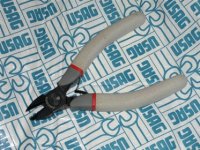
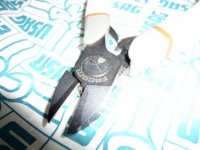
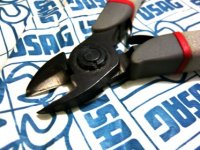
Good video review. Thanks.
 No it wasnt, it was rubbish! I prefer the written blog, I'm not cut out to be a video blogger.
I'll keep an eye out then.
Unfortunately, I haven't located a source here in the US (I did search, but if someone knows of one, it would be appreciated).
I had to contact Schmitz direct. They were great to deal with but I had to international wire transfer which was painful. I need a German contact to buy them local, and let them make a cut with Paypal. Monte or Jens?
Looking around, it seems quite a few of the well known, top-tier electronics cutter/plier manufacturers have switched to lap joints held together with screws and press-in nuts (Erem, Swanstrom, Larsen, Knipex on some models, Tronex for example).
Its cheaper to make and the customer wont come back in 20 years to buy a new pair like me! The Tronix I have in particular, have been a let down, there is too much friction between the joints and they don't return correctly.
I'm not certain, but it seems since they've gone for harder metal, they have come up with a less expensive joint (trying to get performance up to a box joint, but cost levels closer to a traditional lap joint). Maybe I'm just crazy though.
My take on the Lindstrom situation is that box joint is made in Sweden while the lap joint pliers are made in countries where its cheaper to make them. My guess is that the clock is ticking on the box joint construction in Sweden. If they were going to keep them they would of upgraded the handle system.
I am aware, but thanks for the warning.
I'll dig a bit deeper into NWS's other lines, but I'm a tad nervous to order expensive pliers/cutters and end up disappointed (not to mention return shipping and restocking fees). Though I suspect it wouldn't be nearly as bad as it would be in Australia.
According to All-Spec, the RX models they're selling are made in Spain (they have a COO in the technical details tab, similar to Grainger).
I'm hoping someone could elaborate on how much the newer Lindstrom models are vs. the previous Swedish made units. Based on the joint type maybe, or is there more to it?
Both have their uses in electronics (smooth are good for lead bending when there's compliance involved), but at least one pair of serrated are needed, and likely used more often (depends on the user, but I grab serrated more than anything else).
For bending components for PCB assembly, I use one of these - http://au.element14.com/duratool/tp...ing-tool-tp9/dp/2022739?in_merch=New Products
And the Hemostats are brilliant for electronics work IMHO.





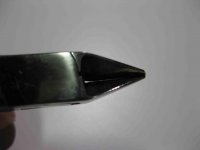


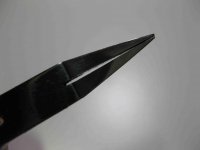
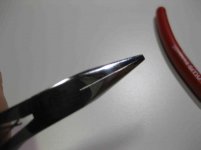

 I'm looking forward to this.

 Seems I've had another Homer Simpson moment. Doh.