To avoid these ads, REGISTER NOW!

mini split evac setup question

diamondracer

Member
Joined
May 22, 2014
Messages
5
Hi, so I finally pulled the trigger and bought a Pioneer mini split system for my 750 SF detached garage. I don't have any experience with these but have read extensively about how to do the evac, although I have some questions of course, and I'm hoping someone has some insight:

- For this 1 time install, is a charging manifold/gauge set necessary? Is there any reason I can't use just one vacuum hose attached to the service port to the pump? Specifically I was thinking I would use a core tool with sideport (with micron gauge / ball valve) and then just go straight to vacuum pump from there. So I would have to buy some fittings, a hose, vacuum pump, and micron gauge. Then either sell or keep said items. I know nitrogen testing would be ideal but I'm over it.

- For connecting the micron gauge, vacuum hose, fittings, etc, is any sealant required? Or do you just "twist and go" ? Having trouble finding the answer to that question for some reason.

- I've read you should use crows feet with a torque wrench to do proper torque on flare fittings. Is this necessary? I'm guessing yes, so I plan on buying a cheap set from Harbor Freight for this purpose. I'm guessing if you've tightened a flare fitting a thousand times, you probably have a feel for it and may not need a torque wrench.


Thanks for any help on the above questions !
 
To avoid these ads, REGISTER NOW!

monkeyspanners

Well-known member
Joined
May 28, 2013
Messages
419
Location
Oxford, UK
Cheap torque wrenches cause more problems than they fix, personally never use them.

6" adjustable for 1/4" pipe, 8" for 3/8" and 10" for 1/2" pipe, they do not need to be murder tight, some oil or nylog on the back and face of the flare will help sealing and prevent twisting.

Nylog for helping seal the fittings for vacuuming.
 

bzinsky

Well-known member
Joined
Oct 27, 2014
Messages
5,565
Hi, so I finally pulled the trigger and bought a Pioneer mini split system for my 750 SF detached garage. I don't have any experience with these but have read extensively about how to do the evac, although I have some questions of course, and I'm hoping someone has some insight:

- For this 1 time install, is a charging manifold/gauge set necessary? Is there any reason I can't use just one vacuum hose attached to the service port to the pump? Specifically I was thinking I would use a core tool with sideport (with micron gauge / ball valve) and then just go straight to vacuum pump from there. So I would have to buy some fittings, a hose, vacuum pump, and micron gauge. Then either sell or keep said items. I know nitrogen testing would be ideal but I'm over it.

- For connecting the micron gauge, vacuum hose, fittings, etc, is any sealant required? Or do you just "twist and go" ? Having trouble finding the answer to that question for some reason.

- I've read you should use crows feet with a torque wrench to do proper torque on flare fittings. Is this necessary? I'm guessing yes, so I plan on buying a cheap set from Harbor Freight for this purpose. I'm guessing if you've tightened a flare fitting a thousand times, you probably have a feel for it and may not need a torque wrench.


Thanks for any help on the above questions !
Yes to all of that, no sealant needed on vacuum equipment, I'd just use it for flares.

Don't get the core tool for one unit. I mean get the same tool, just without the core remover. I used it because I had to vacuum a lot of them at once and wanted to do it fast. I had a good one, and it really urked me when I got them down to 40-50 microns, holding rock solid, and then you go to put the core in, and it's impossible to put in without a small amount of air getting in. Probably doesn't mean much, but when you're excited about getting it down to below 50 and holding solid, putting the core back in makes it impossible to be below 150 microns. Core removal is just for speed anyway.

Also, I had to replace two separate items I bought from yellow jacket because of leaking, I know they are promoted on this board, it really held up my day.
I bought a couple appion things and they were definitely higher quality and issue free.

I also found positive pressure testing useless. There were no leaks that couldn't be detected with the with the vacuum gauge. Out of 20 units, the ones that leaked with nitrogen leaked with vacuum. The ones that didn't leak with nitrogen, didn't leak with vacuum. Maybe if I had done more I'd find ones that were only detectable under high pressure, don't know. The vacuum gauge is very very sensitive. I honestly don't see the point in pressure testing, maybe someone could educate us. It's not like the vacuum is going to seal a leaking flare and cause you to miss a leak.

Nitrogen is inert though, not sure if nitrogen flowing through the lines is an actual benefit, or it's just a matter of; if you're going to pressure test, you need an inert gas.
 
Last edited:

walrus

Well-known member
Joined
Nov 12, 2008
Messages
11,674
Location
Maine
Hi, so I finally pulled the trigger and bought a Pioneer mini split system for my 750 SF detached garage. I don't have any experience with these but have read extensively about how to do the evac, although I have some questions of course, and I'm hoping someone has some insight:

- For this 1 time install, is a charging manifold/gauge set necessary? Is there any reason I can't use just one vacuum hose attached to the service port to the pump? Specifically I was thinking I would use a core tool with sideport (with micron gauge / ball valve) and then just go straight to vacuum pump from there. So I would have to buy some fittings, a hose, vacuum pump, and micron gauge. Then either sell or keep said items. I know nitrogen testing would be ideal but I'm over it.

- For connecting the micron gauge, vacuum hose, fittings, etc, is any sealant required? Or do you just "twist and go" ? Having trouble finding the answer to that question for some reason.

- I've read you should use crows feet with a torque wrench to do proper torque on flare fittings. Is this necessary? I'm guessing yes, so I plan on buying a cheap set from Harbor Freight for this purpose. I'm guessing if you've tightened a flare fitting a thousand times, you probably have a feel for it and may not need a torque wrench.


Thanks for any help on the above questions !
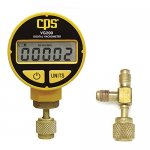
I use a flare tee with ball valves, 2ft hose, gauge, vac pump. No need for gauges and manifold as their is only one port anyway. .
 
OP
D

diamondracer

Member
Joined
May 22, 2014
Messages
5
Thanks guys, all very good information - I'll just forego the core tool. I am having trouble finding an appropriate tee fitting online - anyone have a good source ?

Also I'll probably purchase a Harbor Freight style pump for this - should I pay up for the 2 stage? Or would a 1 stage be OK for this install ?

Also, they include their own "leak preventer" with the split unit - is this any different than nylog? Should I use one over the other?

The size of my garage is 25w X 30 deep, 750 SF. I know the calculators online said to go with 18K + btu for that space, but the space is very well insulated and I didn't feel like paying up for the extra BTU's... and I've read it is better to under-size than over-size anyway. Hopefully it will be OK.

Thanks
 

LS6 Tommy

Well-known member
Joined
Dec 27, 2013
Messages
26,162
Location
Northern NJ
Yes to all of that, no sealant needed on vacuum equipment, I'd just use it for flares.

Don't get the core tool for one unit. I mean get the same tool, just without the core remover. I used it because I had to vacuum a lot of them at once and wanted to do it fast. I had a good one, and it really urked me when I got them down to 40-50 microns, holding rock solid, and then you go to put the core in, and it's impossible to put in without a small amount of air getting in. Probably doesn't mean much, but when you're excited about getting it down to below 50 and holding solid, putting the core back in makes it impossible to be below 150 microns. Core removal is just for speed anyway.

Also, I had to replace two separate items I bought from yellow jacket because of leaking, I know they are promoted on this board, it really held up my day.
I bought a couple appion things and they were definitely higher quality and issue free.

I also found positive pressure testing useless. There were no leaks that couldn't be detected with the with the vacuum gauge. Out of 20 units, the ones that leaked with nitrogen leaked with vacuum. The ones that didn't leak with nitrogen, didn't leak with vacuum. Maybe if I had done more I'd find ones that were only detectable under high pressure, don't know. The vacuum gauge is very very sensitive. I honestly don't see the point in pressure testing, maybe someone could educate us. It's not like the vacuum is going to seal a leaking flare and cause you to miss a leak.

Nitrogen is inert though, not sure if nitrogen flowing through the lines is an actual benefit, or it's just a matter of; if you're going to pressure test, you need an inert gas.

Wow.
Sealant on a flare (or compression fitting) does NOTHING. You CANNOT use vacuum with gauges to leak check, period. ONLY pressurize a system with dehydrated nitrogen.

If I have to explain the reasons to anybody considering themselves to be an HVAC "Pro", they're in the wrong line of work.

Tommy
 

monkeyspanners

Well-known member
Joined
May 28, 2013
Messages
419
Location
Oxford, UK
Thanks guys, all very good information - I'll just forego the core tool. I am having trouble finding an appropriate tee fitting online - anyone have a good source ?

Also I'll probably purchase a Harbor Freight style pump for this - should I pay up for the 2 stage? Or would a 1 stage be OK for this install ?

Also, they include their own "leak preventer" with the split unit - is this any different than nylog? Should I use one over the other?

The size of my garage is 25w X 30 deep, 750 SF. I know the calculators online said to go with 18K + btu for that space, but the space is very well insulated and I didn't feel like paying up for the extra BTU's... and I've read it is better to under-size than over-size anyway. Hopefully it will be OK.

Thanks

Two stage pump. If you went with the single stage the micron gauge would be pointless as it would never get a low enough vacuum.
Don't like the sound of leak preventer, nylog is basically sticky refrigeration oil, so will not do any harm to the system if used sparingly.
 
OP
D

diamondracer

Member
Joined
May 22, 2014
Messages
5
Thanks guys, one more question on this - I've heard references to "balancing the system" after the refrigerant is released. What is it and is it something I need to worry about?

Also, the unit comes standard with a 16 ft line set..I downgraded to a 10 ft line set. The instructions sat that if you chop off more than 10 feet, then you need to take out some refrigerant.

So basically, will I be OK after the refrigerant is released? Do I need to do anything else after that refrigerant wise ?

Thanks !
 

CA_Tallguy

Well-known member
Joined
Sep 4, 2014
Messages
120
I'm in the same boat right now -- trying to vac down my mini split lines. As for single vs two stage, well I have a single stage hooked up as we speak and I am getting down to about 1500 microns based on the CPS vacuum gauge I bought on eBay. I have the gauge hooked up right next to the service valve on the condenser with a tee. I put a yellow jacket ball valve on right after it all so that I could isolate the vacuum gauge and lines as much as possible from all the hoses on the manifold. NOTE: the gauge on the harbor freight manifold is useless to see what is going on when you are trying to get to very low micron readings! It hits 30 Hg in the first couple minutes of vacuum pump running. You are going to need a better gauge if you want to know how deep your vacuum is getting.

So my issue is getting down below 1500 microns. I have not left the pump running for hours on end like some people do yet so not sure if it will eventually pull down further. I'm thinking about exchanging my pump of the two stage HF unit to see if that helps. OR I'm wondering if I have a leak in my lines. When I close the ball valve just past the micron gauge, the microns zoom up to 10000, 20000 and bounce around a lot. When I was first trying this the other day, strange thing was that after zooming up, it started to drop and drop and drop back down to 1500 and it would sit there -- this is without the pump running. Can anyone explain what to expect in vacuum readings? Should they be pretty stable when I close off the valve and hold at whatever the micron gauge was saying when the pump was running and it was open?

Right now this is just kind of a test vacuum to get a feel for the system. I'm trying to figure out a way to get some nitrogen for a proper leak test without spending $250 to buy a bottle at my local cylinder exchange place.
 

CA_Tallguy

Well-known member
Joined
Sep 4, 2014
Messages
120
Thanks guys, all very good information - I'll just forego the core tool. I am having trouble finding an appropriate tee fitting online - anyone have a good source ?
Thanks

I just ordered some stuff from SupplyHouse.com -- they had pretty good pricing. As someone else said, you might just use a standard flare tee fitting. My CPS vacuum gauge came with a tee fitting with the type of screw downs that the rest of the manifold set uses.

You also mentioned crows feet -- keep in mind that the crows feet that harbor freight sells are not all that large. I bought those thinking that was my solution as well. BUT my suction line is 5/8 and I needed a 27mm or 1-1/16 wrench for those nuts and I got a cheap jumbo set on amazon. They were cheaper for the metric set so I bought that. But wouldn't ya know, the set came and ONE wrench was wrong... the one that I needed. But amazon is good about that stuff and sent me just the individual wrench the next day.

Here's the set I bought at Amazon.... http://amzn.to/1HM6zsd

You can also buy the individual wrenches from the same company. I also have the HF wrenches for the smaller nuts. Probably about the same price if you buy them on amazon.
 

CA_Tallguy

Well-known member
Joined
Sep 4, 2014
Messages
120
FYI - the reviews for the harbor freight manifold set did say that they often were leaky, and it appears that I have confirmed mine indeed is. I removed the set from my setup and just used one of the hoses. Now I have vac pump ==> blue hose ==> yellow jacket ball valve ==> tee with CPS micron gauge off side ==> service port.

Now I'm down to 1100 and hopefully still dropping.

Before I took the HF manifolds off I determined there was a leak by closing the manifold valve and the new ball valve I had at the end of the hose and before my micron gauge. Then I turned off the pump and the manifold + hoses did NOT hold the vacuum. Within 2-3 minutes I was almost back to atmospheric pressure on the manifold.

Now, with the manifold removed from the equation, the micron gauge seems to be holding a lot more steady. Before it was bouncing up and down while trending down while the vacuum was on.
 

CA_Tallguy

Well-known member
Joined
Sep 4, 2014
Messages
120
OK, 30 minutes later and my microns with this single stage HF pump are down in the 900 to 1000 range. Trying to decide if i just need to run this for hours to see if it can go lower or if I should go back for the 2 stage pump. Before I started all this I hooked the micron gauge directly to the pump and it pulled it well below 500 microns but I don't know, maybe this single stage pump doesn't have the juice to do that on a full line set. Or maybe it will if I want to babysit it for a few hours to see. I might try changing the oil in the pump because I have read a lot about the quality of the oil directly correlates to the quality of the vacuum achieved.

So anyway, as for the question on single vs 2 stage HF pump, that's what I'm seeing as of now. HF specs on single stage says down to 75 microns. Two stage pump says 22.5 microns.

Or -- maybe I have a leak. When I close the ball valve, the microns still are jumping but not as much as before. Like to 4000 or so. I guess I could watch that to see if it is steady or climbing with the valve closed and pump off. Strangely, the microns jumped then FELL yesterday with the pump off. I don't understand that. Maybe the lines take a bit to equalize? Or have moisture?
 
Last edited:

CA_Tallguy

Well-known member
Joined
Sep 4, 2014
Messages
120
Ok a little more detail on single vs two stage HF pump. I exchanged single for two stage and it seems like it got my line down to 900 micron range more quickly than single but I'm still hitting a wall at this level. I suspect a leak because my lines and various hvac adapters are not holding vacuum when closed off. May just have to bite the bullet for a nitrogen tank.

I'm glad I got the bigger pump because I can see myself spending a lot of time vacuuming, being that I suspect a leak, so it's good to have extra power to try to minimize. But as of now, both pumps seem to have the ability to get me to 900 microns. I'll post back to let u know if I figure out what my issue is with getting beyond that and what it is like as far as time and difficulty to get below 500. Hope I don't end up throwing in the towel and hiring a pro.

My plan right now is to redo the last part of my 5/8 suction line that started to kink near the condenser with a "nokink" hose - that will give me 2 more flare connections to worry about. Then will try vacuum again to see if I cut out any leak. If I still cant get below 900 still have trouble holding vac in the line, will prob get a nitrogen tank for leak check.

I bit the bullet and ordered the yellow jacket flaring tool to install this nokink line. I wasn't thrilled with the factory flares on my line set to start with so hope this helps.
 

CA_Tallguy

Well-known member
Joined
Sep 4, 2014
Messages
120
FYI - I do have schrader valves in some of my hvac fittings so that is prob slowing the process some. I have doubts about that being the reason it appears my line set isn't holding vacuum but maybe? It does separate the line set chamber from micron gauge and fitting chamber with a fairly small orfice restriction.
 

monkeyspanners

Well-known member
Joined
May 28, 2013
Messages
419
Location
Oxford, UK
Nokink? not seen them here.

If you have just a small kink in the pipe, clamp a flaring block round it, it will round it out again. Redo the factory flares, i have heard they give trouble.
 

smokey0810

Well-known member
Joined
Mar 29, 2013
Messages
3,056
Location
Canyon, Texas
If you're not sure of what you are doing, I would seriously consider finding a professional to do it for you either through their job or as a side job. Had my Pioneer done by a friend of a friend with 20+ years of A/C work for $50. Just DO NOT turn the system on heat/cool until it is vacuumed out. Found out the hard way and had to get a replacement compressor, which they set over free of charge.
 

smokey0810

Well-known member
Joined
Mar 29, 2013
Messages
3,056
Location
Canyon, Texas
Second summer of using my Pioneer and I wouldn't trade it for the world. Best value at $600 drop-shipped to the house through amazon. Installed myself in a day. Hardest part was drilling/chiseling through the brick fascia on the house to run the hoses through. Was a 115volt unit, so just ran it right to my breaker box.
 

Jackfre

Well-known member
Joined
Dec 26, 2010
Messages
4,406
Location
N CA
Wow.
Sealant on a flare (or compression fitting) does NOTHING. You CANNOT use vacuum with gauges to leak check, period. ONLY pressurize a system with dehydrated nitrogen.

If I have to explain the reasons to anybody considering themselves to be an HVAC "Pro", they're in the wrong line of work.

Tommy

Sure it does, Tommy! With Fujitsu it voids the warranty:)
 

CA_Tallguy

Well-known member
Joined
Sep 4, 2014
Messages
120
Nokink? not seen them here.

If you have just a small kink in the pipe, clamp a flaring block round it, it will round it out again. Redo the factory flares, i have heard they give trouble.

I mucked up the line pretty good trying to get it around in the right position so figured I would just clean it up either with spliced in 5/8 tubing or this thing. Could have got 50 feet of 5/8 for $90 or this for $45. Wasn't sure if I'd ever need more of the 5/8 so decided to go for this. There are a few reviews on Amazon for the different sizes and people like it. Also, several mini-split retailers online also sell it.

This is the 'NoKink" product at amazon -- this is 3/8 but mine is 5/8 http://amzn.to/1Ko15G2

71F4HNm3icL._SL1500_.jpg
 
To avoid these ads, REGISTER NOW!

CA_Tallguy

Well-known member
Joined
Sep 4, 2014
Messages
120
FWIW -- word to the OP -- I'm having a HELL of a time getting this vacuuming to work. Seem to be narrowing the issues down to the fittings/manifold I'm using trying to connect to the service valve and all that. For the last few hours I've been trying different configurations and it looks like my fittings and hoses and all that are a big part of my problem in trying to get below 900 microns. Connecting my vacuum gauge directly to the vacuum pump yields about 2-3 microns! But as soon as I start putting in fittings and hoses, the microns start to go up.

On one hand, I'm glad that I'm finding issues outside of my line set connections! But I'm not sure how I'm going to rectify these issues so that I can hook up my line sets! My advice to anyone else trying to get setup for vacuuming down is to test all of your equipment BEFORE you hook it up to try to vac. My goal right now is to come up with hose configuration and valves that I can vacuum down to well below 500 BEFORE it is hooked up to the mini split. Then I can be a lot more confident that I don't have leaks outside my line sets that are affecting the pumping down of the mini split.

These are the yellow jacket ball valves I'm using from Amazon .... http://amzn.to/1ULe7EK

So basically I have this hooked up right to the mini split adapter on the service port and when it is CLOSED I want to be able to get my vacuum down well below 500. At that point I will start to try to get the system down to that level as well.

The biggest culprit may be the tee fitting that came with my used CPS vacuum gauge. Not exactly sure yet. Or maybe I have a problem with the yellow jacket ball valves that I'm using to try to isolate various elements. I'm going to get a new tee fitting and better hoses to see if I can get a handle on this.

Heres the vacuum gauge and tee it comes with via Amazon http://amzn.to/1ULdyei (I got mine on eBay used so can't complain too much if the tee or seals are worn out.)

51L2ZcybJgL.jpg

The last test I did was to NOT use the tee fitting and I put the vacuum gauge directly on the low port of my HF manifold set, and hooked the center hose up to the pump. That came down to about 250. Then, when I closed the low side valve, microns jumped up to about 1500. Maybe I'll try to insert one of my yellow jacket ball valves between the manifold and gauge to see if that ball valve will hold the vacuum inside the gauge better than the manifold valve.
 
Last edited:

bzinsky

Well-known member
Joined
Oct 27, 2014
Messages
5,565
FWIW -- word to the OP -- I'm having a HELL of a time getting this vacuuming to work. Seem to be narrowing the issues down to the fittings/manifold I'm using trying to connect to the service valve and all that. For the last few hours I've been trying different configurations and it looks like my fittings and hoses and all that are a big part of my problem in trying to get below 900 microns. Connecting my vacuum gauge directly to the vacuum pump yields about 2-3 microns! But as soon as I start putting in fittings and hoses, the microns start to go up.

On one hand, I'm glad that I'm finding issues outside of my line set connections! But I'm not sure how I'm going to rectify these issues so that I can hook up my line sets! My advice to anyone else trying to get setup for vacuuming down is to test all of your equipment BEFORE you hook it up to try to vac. My goal right now is to come up with hose configuration and valves that I can vacuum down to well below 500 BEFORE it is hooked up to the mini split. Then I can be a lot more confident that I don't have leaks outside my line sets that are affecting the pumping down of the mini split.

These are the yellow jacket ball valves I'm using from Amazon .... http://amzn.to/1ULe7EK

So basically I have this hooked up right to the mini split adapter on the service port and when it is CLOSED I want to be able to get my vacuum down well below 500. At that point I will start to try to get the system down to that level as well.

The biggest culprit may be the tee fitting that came with my used CPS vacuum gauge. Not exactly sure yet. Or maybe I have a problem with the yellow jacket ball valves that I'm using to try to isolate various elements. I'm going to get a new tee fitting and better hoses to see if I can get a handle on this.

Heres the vacuum gauge and tee it comes with via Amazon http://amzn.to/1ULdyei (I got mine on eBay used so can't complain too much if the tee or seals are worn out.)

51L2ZcybJgL.jpg

The last test I did was to NOT use the tee fitting and I put the vacuum gauge directly on the low port of my HF manifold set, and hooked the center hose up to the pump. That came down to about 250. Then, when I closed the low side valve, microns jumped up to about 1500. Maybe I'll try to insert one of my yellow jacket ball valves between the manifold and gauge to see if that ball valve will hold the vacuum inside the gauge better than the manifold valve.

I had to replace my yellow jacket ball valve tool with an appion.

I suggest hooking everything up in different ways and eliminating individual pieces to find out what is leaking. Keep in mind, the vacuum lowers the boiler point of water. So when you start boiling any moisture in the lines, it will reduce the vacuum. I noticed that when I had a leak, it was a very steady on the gauge, where as moisture would just raise the gauge very quickly.

If it ever levels off, that means you do not have a leak. The actual pressure difference in psi between 1500 and 100 microns is almost nothing. So if it jumps up to 1500 and stays there, then it's likely because of the moisture. If you shut the ball valve, and it keeps continuously rising, then you have a leak.
 

CA_Tallguy

Well-known member
Joined
Sep 4, 2014
Messages
120
Thanks bzinsky. I have ordered some new seals for my stuff and am trying to get a fix on what is wrong. Seems like it could be the seals, especially since I was probably over tightening things with channel locks DOH! I now have learned that you really only should do very strong finger tightening?

Here's a guy on youtube that is going through his equipment to confirm they are ready for deep vacuum....

Note to other folks who are doing this.... the harbor freight AC manifold hoses seem like they have PLASTIC gasket-y things in them, not rubber like what seems standard for real hoses. Unless I missed something and I'm supposed to remove those plastic parts. Doubt that. I have a better hose coming along with the new gaskets for my vacuum gauge.

I also ordered a core removal tool that has a port for vacuum gauge and a ball valve. I got the Mastercool 91496 on Amazon since it was 10 bucks cheaper than the Robinair and Yellow Jacket tools and I might not even need to use it. They also have the Appion tool but it was more expensive and they didn't have prime shipping on it. http://amzn.to/1IWXmRE

If I'm understanding these tools properly, they also function like a tee fitting with a ball valve, correct?
 

CA_Tallguy

Well-known member
Joined
Sep 4, 2014
Messages
120
Breaking news! Harbor Freight tools ****! LOL Well, their hoses seem to have been the problem for me.... at least signs are pointing that way. Note that I am on my second set of hoses as I exchanged the first manifold. I just got a Robinair hose delivered and hooked it up instead of the HF hose and I left the HF manifold out of the setup too and BOOM things started to become more sane...... dropped right down through 500 microns. Got some nice puffs of steam out of the vacuum pump at the start (which I did with the HF hoses too).

I quit pulling since I was just testing this anyway at 340. After 700, there was some rising and falling back down at a few points in getting there, I assume from moisture boiling off. Then I closed off my ball valve to the pump hose and the microns popped up a bit, as was to be expected, but they held pretty nicely between 660 and 700 for several minutes. I am elated!

So HOPEFULLY this means I found the problem. I suspect that by running the pump for an hour it would still go well below 300. And also with fresh oil in the pump. I'm not going to try that until I splice in my NoKink line that is arriving tomorrow as I previously described.

Now I just need to decide if I am going to nitrogen test. I believe that I found a place where I can rent a tank for a few days and just pay for the fill. So under $50 to nitrogen leak test. Well, I would also need a regulator... can I use an argon regulator from Harbor Freight for $30? Is nitro test really necessary if I can hold vacuum below 1000 for 10 to 15 minutes?

340vac.jpg
 
Last edited:

CA_Tallguy

Well-known member
Joined
Sep 4, 2014
Messages
120
For this 1 time install, is a charging manifold/gauge set necessary? Is there any reason I can't use just one vacuum hose attached to the service port to the pump? Specifically I was thinking I would use a core tool with sideport (with micron gauge / ball valve) and then just go straight to vacuum pump from there. So I would have to buy some fittings, a hose, vacuum pump, and micron gauge. Then either sell or keep said items. I know nitrogen testing would be ideal but I'm over it.

This is kind of what I'm ending up with. I have the HF 2 stage pump but for all I know the single stage may have worked fine. I upgraded while trying to troubleshoot my vacuuming problems. Just be sure to USE A GOOD HOSE!

The CPS vac gauge I am using comes with a tee fitting that may be sufficient rather than using a core tool. Only thing is it might be a good idea to have ball valves so you can close off the vac gauge before you release refrigerant. I kind of want to have manifolds hooked up and then let out a tiny amount of refrigerant to pressurize the lines, and then watch the manifold gauge to be sure it is holding pressure before fully releasing the charge.

So my current thinking is to (1) vac down as far as I can below 500, make sure that holds for 10 mins or more below 1000. (2) blank off the vac gauge with the ball valve. (3) close off the vac hose ball valve and then move the hose to manifolds. (4) crack the charge in the condenser REALLY fast to pressurize lines a tiny bit. (5) reopen the hose ball valve and purge air at the manifold, quickly closing the valve there. (6) watch the pressure for awhile before calling it good and releasing all the charge and disconnecting etc.

Maybe do some bubble leak checking somewhere in the end steps.
 

Doozer75

Well-known member
Joined
Oct 24, 2009
Messages
260
Location
Buffalo NY
So for I have installed 3 Mitsubishi mini split systems.
I also did not want to buy an nitrogen tank for leak testing.
I just used the argon tank from my Tig welder.
I assure you it is free of moisture, or it would not
Tig weld worth a ****.
I set the regulator for 300psi for leak testing, no problem.

Q? Instead of going through the pains of the deep vacuum,
why not use the triple-evacuation method?
Pull a vac and break it with nitrogen (or argon),
rinse and repeat 3 times. After the last vac, open the
service valves and admit the refrigerant.
Just google triple-vacuum and you will see it explained
better elsewhere.

---Doozer

PS- I just watched Craigslist until I found a JB digital
manifold gauge set ($150) and a Robinair deep vac
pump (also $150).
 
Last edited:

monkeyspanners

Well-known member
Joined
May 28, 2013
Messages
419
Location
Oxford, UK
Q? Instead of going through the pains of the deep vacuum,
why not use the triple-evacuation method?
Pull a vac and break it with nitrogen (or argon),
rinse and repeat 3 times. After the last vac, open the
service valves and admit the refrigerant.
Just google triple-vacuum and you will see it explained
better elsewhere.

---Doozer


Years ago it was common to do a triple vac when the vacuum pumps were poor. (The vacuum would need to be broken with refrigerant to make it worthwhile, though in many places this would be illegal to do now if you were going to vac it again)

The idea is say the first vac gets down to 5% air left in, the second is 5% of 5% air and the third 5% of 5% of 5% which i think would get you down to 0.0125 air left in. But if you break the vacuum with something other than the correct refrigerant for the system you are not gaining much if anything.
This is why we aim for one deep vacuum nowadays, though there are times with badly contaminated system where repeated vacuums broken with nitrogen et al would be the chosen method.
 

CA_Tallguy

Well-known member
Joined
Sep 4, 2014
Messages
120
Thanks for the feedback guys. Quick update -- I installed the "NoKink" line today to replace the last 3 feet of kinked suction line coming out my wall. Also used the $100 yellow jacket flaring tool on the joint and for a new connection to the condenser. I'm thinking the flare on the kinked line might have been leaky because now I've got the system down to 150 microns and it held under or around 1000 microns for several hours. This has GOT to be leak free, right?

Here's a link to the Yellow Jacket flaring tool at Amazon. http://amzn.to/1Pp6Ire Reviews were super and a lot of DIY mini split install folks said great things about it in different threads too. Many pros say that they always cut off any factory flares on line sets and reflare themselves too. This unit has a built in stop gauge to get the depth just right. I've done a bit of flaring in my life and know it can be tricky so decided not to skimp on this tool. Note that instructions say to oil the cone but not sure what oil will not contaminate the R410A.

There may also be a tiny leak at the micron gauge as when I left the valve to that open it did seem to slowly climb. Instead, I closed off the valve just before it and came back to open to check it at 10, 30, 60, 120, 240+ minutes. In fact, I even took off the gauge and put it back on at the end and I'm still holding around 1000 microns. (The first several checks were a good bit under 1000 microns... it got up around 1000 from opening and closing the valve and taking the gauge on and off I think.)
 
Last edited:

AndyCBR

Well-known member
Joined
Jun 22, 2014
Messages
396
Location
Baton Rouge, LA
I spent a lot of time jerking around with 2 different C&D core tools I got from Johnstone supply. They warrantied both out as they wouldn't hold above 500psi on the standing pressure test and they certainly wouldn't hold vacuum.

Got an Appion and passed the standing pressure test overnight and held vacuum the next day under 1000 microns.

It is frustrating to not know whether you are testing the system or the test rig but you have to have a leak free test rig to ensure the integrity of the system.

My experience in pressure/vacuum testing is that if the gauges show a leak then you have a leak!

The micron gauge can drive you batty though as it is very sensitive and evaporating moisture can cause the gauge to rise even with a tight system. If you have passed a standing pressure test overnight prior to the vacuum test you have likely eliminated "mechanical' sources of leaks and then the vacuum is just to remove the moisture.
 

CA_Tallguy

Well-known member
Joined
Sep 4, 2014
Messages
120
It is frustrating to not know whether you are testing the system or the test rig but you have to have a leak free test rig to ensure the integrity of the system.

.....

The micron gauge can drive you batty though as it is very sensitive and evaporating moisture can cause the gauge to rise even with a tight system.

YES indeed! Just want to +1 your comments as this was the biggest surprise to me in undertaking this. So many people have posted that it is no big deal.... just a harbor freight pump and manifold and sounds like many people kick the unit on. I tried this method but ended up spending 100's more on better quality tools and I'm pretty down on HF vac pumps and manifold after all this. I don't remember a lot of posts from my research where people explained how tricky it is to get everything just right with tools to get the vac test done.

The pros have a big leg up on us DIY'ers as they have a set of tools that is tested/proven and they know well. I can see how they would spend a fraction of the time I have just from that. I have spent a LOT of time suspiciously eyeing my vacuum gauge, hoses, manifolds, vacuum pump (and even exchanging one) and a few little ball valves, adapters, etc.

I have not yet done nitrogen test -- still trying to decide if I will. I wasn't going to, then I decided that I'd bite the bullet, and now that my vacuum is holding nicely I'm second guessing again. FWIW, from what I've read, that usually helps pull a better vacuum.
 
Last edited:

bzinsky

Well-known member
Joined
Oct 27, 2014
Messages
5,565
I spent a lot of time jerking around with 2 different C&D core tools I got from Johnstone supply. They warrantied both out as they wouldn't hold above 500psi on the standing pressure test and they certainly wouldn't hold vacuum.

Got an Appion and passed the standing pressure test overnight and held vacuum the next day under 1000 microns.

same EXACT thing happened to me, ended up buying an appion, worked like a champ

IMO so many people recommending yellow jacket, and they are not that cheap. Appion is the way to go.

Honestly we should create a used mini split equipment thread. Everybody needs the same stuff and only needs it once. Would be nice for people to be able to buy the good stuff and then just sell it on here. It's difficult figuring out what to buy.
 

CA_Tallguy

Well-known member
Joined
Sep 4, 2014
Messages
120
Honestly we should create a used mini split equipment thread. Everybody needs the same stuff and only needs it once. Would be nice for people to be able to buy the good stuff and then just sell it on here. It's difficult figuring out what to buy.

Great idea! I have a slew of **** and am going to try to return some of it since it wasn't needed. The HF manifold set was a WASTE as those hoses are not "real" AC hoses with normal rubber gaskets in them. Fortunately I think that can be returned. I didn't need the manifold since just used a tee and ball valves with a micron gauge.

And I just bought one better quality hose off amazon.... http://amzn.to/1LncHPo

Picked the Robinair 31036 hose since the reviews had people talking about using it for vacuum with good results.

So in the end, I got by with HF vacuum pump and just the hose above plus the following:

CPS VG200 Vacuum Micron Gauge http://amzn.to/1fslGA9
(note that the above comes with a tee fitting)

Two (2) Yellow Jacket 93843 Ball Valves (or core removal tool w/side port + 1 ball valve)
http://amzn.to/1fsmdCl

attachment.php


I would probably try to do better than the HF pump if I were to do this over again. That is one of the items I need to test further to decide if I want to return or exchange. It doesn't seem like it is pulling down as far or as fast right now as it did out of the box.

This thread talks about the crows foot wrenches for torquing the flare nuts... (btw, looks like one guy on page 2 used similar setup with CPS gauge as I did)
http://www.garagejournal.com/forum/showthread.php?t=247635

I bought this set of jumbo metric crows foot wrenches at amazon http://amzn.to/1gYXqqE the 27mm or 1-1/8 works for a 5/8 flare nut... you can also buy the wrenches individually.... http://amzn.to/1U0Fatz (27mm).... or this set goes up to 7/8 which I think is good for a 3/8 flare nut http://amzn.to/1U0GaOp

NOTE: the HF crowfoot and flare-crowfoot wrenches DO NOT have either of these sizes!!!
 
Last edited:

CA_Tallguy

Well-known member
Joined
Sep 4, 2014
Messages
120
FYI - I went ahead and started up my unit without doing a nitrogen test -- though I must say that I do think the nitrogen test and purge would be very valuable.

What I did is vacuum down my system to about 150 microns, then closed off the ball valve to the micron gauge and I "burped" the system on the opposite valve from the service port... cracked the valve for a fraction of a second... so the burping would force air and contaminants toward the service port and vacuum gauge. Then I vacuumed a bit more.

Then I closed off the vacuum valve and opened micron gauge valve to see how microns were holding. I was really surprised at how stable the microns were after this! If burping it like this made such a difference, then I suspect that a nitrogen test and purge might be even better. I would hate to have skipped over this step or a nitrogen test because I feel 1000% more confident in the condition of my lines after doing so.

Lastly - can anyone tell me what the best procedure is for disconnecting from the service valve? I disconnected AFTER releasing the refrigerant in the lines and had a small amount of refrigerant escape from that schrader valve. It was enough gas escaping that it didn't seem to be all that graceful to me so there must be a better way to do it! The only other thing I can think of would be to disconnect before releasing the refrigerant.... but instead of refrigerant escaping, it seems like this would let air and moisture into the system, right?
 
Last edited:

dreasoner

Well-known member
Joined
Jul 2, 2015
Messages
177
Location
Indianapolis, IN
Here are a few ideas that may help. Use a double flare on any flare nut connections. I don't know what the warrant states, but you might consider using leak lock on threaded connections if doesn't affect warranty. The black refrigerant hoses are able to pull lower vacuum. Could also use soft copper to make with double flares to make interconnections. Check your pump by deadheading your micron gauge to the outlet of the pump. Change your pump oil after every pull. It does not hurt your pump to run for hours at a time; just make sure oil level is good in pump. These are things I learned working in ultra low refrigeration. I routinely pulled vacuums down to 20 microns. I was required to hold a 200 micron or less blank off for a minimum of 20 minutes. This is not needed on split systems but is just for reference. Hope this helps someone.
 

Brian_WK

Well-known member
Joined
Jun 30, 2015
Messages
1,177
Location
NE South Dakota
FYI - I went ahead and started up my unit without doing a nitrogen test -- though I must say that I do think the nitrogen test and purge would be very valuable.

What I did is vacuum down my system to about 150 microns, then closed off the ball valve to the micron gauge and I "burped" the system on the opposite valve from the service port... cracked the valve for a fraction of a second... so the burping would force air and contaminants toward the service port and vacuum gauge. Then I vacuumed a bit more.

Then I closed off the vacuum valve and opened micron gauge valve to see how microns were holding. I was really surprised at how stable the microns were after this! If burping it like this made such a difference, then I suspect that a nitrogen test and purge might be even better. I would hate to have skipped over this step or a nitrogen test because I feel 1000% more confident in the condition of my lines after doing so.

Lastly - can anyone tell me what the best procedure is for disconnecting from the service valve? I disconnected AFTER releasing the refrigerant in the lines and had a small amount of refrigerant escape from that schrader valve. It was enough gas escaping that it didn't seem to be all that graceful to me so there must be a better way to do it! The only other thing I can think of would be to disconnect before releasing the refrigerant.... but instead of refrigerant escaping, it seems like this would let air and moisture into the system, right?

You can "burp" the system like you mentioned before until you get the pressure to above a vacuum then take off your gauges and it will prevent the blow out/Frozen fingers when you take them off. then fully open the service valves.

Congratz on getting it up and going sounds like you did alright and asked the right questions and questioned the right things. Enjoy the cool air!

Here are a few ideas that may help. Use a double flare on any flare nut connections. I don't know what the warrant states, but you might consider using leak lock on threaded connections if doesn't affect warranty. The black refrigerant hoses are able to pull lower vacuum. Could also use soft copper to make with double flares to make interconnections. Check your pump by deadheading your micron gauge to the outlet of the pump. Change your pump oil after every pull. It does not hurt your pump to run for hours at a time; just make sure oil level is good in pump. These are things I learned working in ultra low refrigeration. I routinely pulled vacuums down to 20 microns. I was required to hold a 200 micron or less blank off for a minimum of 20 minutes. This is not needed on split systems but is just for reference. Hope this helps someone.

Same here on those cascade ultra low temp systems with proprietary refrigerants I never even used hoses just flared 3/8 copper. We always used to joke we were going to **** the system inside out...

Brian
 

Slowgsr

Well-known member
Joined
Nov 14, 2014
Messages
610
Location
Southern ontario
I remember when I changed the AC at my parents house we bought a kit which was new compressor, lines, a frame etc. Came pre charged, I had never silver soldered but it went well, just hard to get enough heat to melt the lines, and soldering in tight spaces behinf the furnace. Had to use the oxy/acetylene to get enough heat, was more needed the soldering copper.

Ran a vac pump on it for like 30min that I borrowed from a hvac guy at work (also gave me the solder). Opened the valves and it's been working great for 6 years. I was sweating bullets mainly because it was the hottest day of the year, and I didn't know what I was doing.
 

CA_Tallguy

Well-known member
Joined
Sep 4, 2014
Messages
120
You can "burp" the system like you mentioned before until you get the pressure to above a vacuum then take off your gauges and it will prevent the blow out/Frozen fingers when you take them off. then fully open the service valves.

Very good tip! Fellow mini split DIY'ers about to embark on this process, take note!
 

dreasoner

Well-known member
Joined
Jul 2, 2015
Messages
177
Location
Indianapolis, IN
Another way to remove hoses without quick connects and avoid burning yourself is to simply hold down hose end tightly on schrader connection until hose is disconnected and THEN pull hose off. I normally want to leave hoses connected on an initial startup until I am happy with operating pressures. Can't troubleshoot well without knowing pressures; you are simply guessing at that point.
 
To avoid these ads, REGISTER NOW!
Top Bottom