SALIV8
Well-known member
Local code is braze but manual and factory tech expert specifically states no braze only flare...

Speaking from Fujitsu's viewpoint, when I represented them, they did not want brazed joints. The flares are a giant pitn, but with care they are great. With Great Care. I had a customer who insisted upon brazing the evaps. He was a successful contractor and over the years we did a great deal of business on assorted products. I had a really good relationship with him, but I could not get him to stop brazing. Problem was that he was having a lot of problems with systems. It doesn't take a lot of silver solder to plug up a 1/4" line. He would cut out evap and send them back but never with the brazed joint on the return. Fujitsu finally said they wanted to see the joints too. He had many times the problems of any contractor I sold Fujitsu to. He finally said he was going to Mitsu. Honestly, at the point I was happy to see him go. A couple years later at a trade show I saw the Mitsu Regional and asked how he was doing. He said he was having problems with evaporators.
Can you braze? Sure, but the back purge is critical as is the technique. A skilled guy won't pour the silver to it and plug the line. Are you skilled working in an awkward position. With welding or brazing, it is the position work that tells the tale on the guy doing the work. Also, putting the flame that near the body of the evap is dicey. Those drain pans are styrofoam. Whichever way you choose, practice wins the day.
So are you saying it's a bit of an old dogs n new tricks kinda stubborn thing combined with maybe a bit of an ego thing that 'I can braze better than those other guys'?
As far as code I wonder if they are more concerned with brazing vs solder, I've run across more then 1 unit plumbed with lead solder. I would sit down with the head mechanical inspector and get a clarification if I was in doubt.
Even if you purge nitrogen you will get some oxides when brazing, you get a lot less with nitrogen but you will still have some.
I had a Daikin training class this spring, two reps from daikin said 90% of the problems they see are either leaky flares or sealant plugging the electronic expansion valve, Nylog and Leak lock were the two that they called out by name, they also stated that warranty would be denied if sealant was found on the flare fittings.
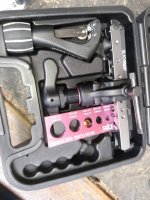
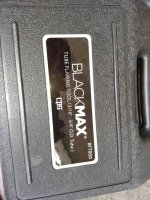
We spent several hours dealing with how to make a proper flare, I had several flare tools but none would consistently make a perfect flare, I ended up buying a CPS flare tool kit that makes it relatively easy along with a digital torque wrench to ensure that each one is properly tightened.
I have used leak lock in the past but will not use it now, I test all my flares to 500 psi to ensure that they are sound.


Are not the DIY units with the connected purged line set brazed ? That's how they used to do them.
Don't get the industry -- there has to be better way. With automotive applications using crimp connectors and o rings -- this should be the direction.
They did that in the 60's. The Aeroquip "flex lines" sucked big time.
People seem to have problems with flares. I never really had an issue with ones I made, but have found most "bad" fittings could be fixed be redoing them, or using a copper flare gasket in a pinch. I don't use any type of sealer on anything other than pipe thread fittings.
Tommy
All true but I have a Honda with 200k miles that I have never replaced the metal washer. No leaks. One day it will let me down though. Oil is thicker and not under pressure like hvac stuff, what he said is correct.No. You're potentially making things worst, creating two surfaces for leakage. Those copper washer are typically used in conjunction w/ another material, like aluminum or steel lines. You have to re-flare it for good seal because the copper was crushed precisely to that mating surface. Once you take the flare fitting off, it's impossible to realign it and make a perfect seal.
It's like a crush washer you have on your oil drain plug to keep the mating surface sealed. After it's used, you have to replace it. Same w/ the copper flare fitting.
We had a sales guy of some sort drop off some samples of a copper washer with a loctite coating designed to seal flare fittings, flaretite was the name, I have no idea if they are worthwhile but it's an interesting idea as a dry coating wouldn't have much of a chance of causing contamination.
Just wondering if you know these copper gaskets are meant to be used up things brass to brass, which you will definitely need.
Or, repair an existing leak.
https://www.flaretite.com/flaretite-seal
This is the torque wrench and flare kit I use. Torque wrench has presets for different size lines so it's quick and easy to get the right setting. Flare kit has a nice cutter, flare block with depth stop, deburring tool and and a go/no go sizeing plate to make sure that the flare is the correct size.
I also have a CPS bender kit that's pretty nice, I had very little exposure to CPS tools before this stuff but it's pretty darn nice stuff.
Sent from my XT1254 using Tapatalk
Related - Opinions on Nylog with flared fittings ?
I actually mentioned about the exact exception but deleted it. Honda is unique because that washer is stay fixed.All true but I have a Honda with 200k miles that I have never replaced the metal washer. No leaks. One day it will let me down though. Oil is thicker and not under pressure like hvac stuff, what he said is correct.
it's been my experience of my own and also watching a manufacturer accredited installer make flares and used a torque wrench, use refrig oil etc, about half the joints seem to leak, not enough to go flat quick but probably in a year or two. Not sure the quality of the flare, maybe bad deburing job. Installers are in a rush and they make more money putting in furnace circuit boards and capacitors.
Half the flare joints leak? Really? So if there are four flare joints per unit all of them statistically will leak?
Pulling a vacuum with a micron gauge will 100% determine if there is a slow leak, so no systems should be put into service leaking, correct?
Of course quality of the flare is important, no industry has figured out a way around crappy installers. However, using the above the installer should know if there is a leak before they even release the refrigerant.
Yes, I have a leak detector (now) and a manifold with total 5 flare connections at the condenser unit, the results are worry some. The installer blanked off the valve and wanted to see a certain micron level and released immediately.
I am guessing he knows his micron gauge leaks, but paired with a nitrogen pressure test you make a call how the system is doing.
I am going to take it apart see if I can find the cause. One of the joints is a factory made reducer with a flare so cannot fault the installer because he didn't make the flare. I think the torque is not tight enough

So once again an installer that cannot read instructions or even understand the purpose of using a micron gauge.
Why over complicate a procedure that is being used everyday with high success? I use the factory flare nut, use a good flaring tool like the Yellow Jacket 60278 and take my time making my own flares, use Nylog lightly on face and threads (not so much to seal as to allow a proper torque on the flare face), and a flare torque wrench (I use a Yellow Jacket 60652). I use a JB pump and pull to ~500 microns, then let it set 15min.
Using the above (or equivalent tools and steps), I just don't have problems.
So once again an installer that cannot read instructions or even understand the purpose of using a micron gauge.
Why over complicate a procedure that is being used everyday with high success? I use the factory flare nut, use a good flaring tool like the Yellow Jacket 60278 and take my time making my own flares, use Nylog lightly on face and threads (not so much to seal as to allow a proper torque on the flare face), and a flare torque wrench (I use a Yellow Jacket 60652). I use a JB pump and pull to ~500 microns, then let it set 15min.
Using the above (or equivalent tools and steps), I just don't have problems.