To avoid these ads, REGISTER NOW!

Mini Split or Propane ceiling uni

mogandave

Well-known member
Joined
Nov 4, 2021
Messages
3,052
Location
Bangkok
Check with the manufacturer, if they even post specs for cassettes !
So, you don't know. I do not need to check anyone's website. Typically:

Cassettes draw the return-air from the center of the room and blow the cooled/heated air about the perimeter of the room. Wall units draw return-air from one end of the room and blow the cooled/heated air to the other end of the room.

Cassette filters have significantly greater surface area than do wall units.

Cassettes use propeller fans rather than squirrel-cage fans.

Cassettes draw the return-air up and blow it over and down through the coil. Wall units draw the air down and blow it forward through the coil.

Cassette's fan stays dry year-round while the wall unit's fan is usually wet when cooling, so the cassette's prop-fan gets dusty, while the wall unit's fan gets muddy.

Cassettes pump the condensation up and out, while wall units either rely on gravity for the condensate to drain or depend on an axillary pump to evacuate the condensate.

Cassettes almost never drip water, but when they do, it's usually because the condensate pump has failed. Wall units without condensate pumps drip more often due to mud/mold clogging the drain.

In the event of dripping water, the cassette drips on the center of the floor, while the wall unit drips onto the TV or whatever else is below them along the wall.


The only downside to cassettes is cost and the vertical clearance required.
 
To avoid these ads, REGISTER NOW!

thammel

Well-known member
Joined
Oct 3, 2005
Messages
2,242
Location
Maryland
So on a 12’ceiling your mounted at 11’? Interesting. What part of the country you live in?
I'm in northern Maryland, close to Pennsylvania. I also have a ceiling fan to help distribute heat, but it's really not needed. The vanes of the mini split are usually pointed down.
 

Mrgreen617

Active member
Joined
Mar 16, 2023
Messages
28
So, you don't know. I do not need to check anyone's website. Typically:

Cassettes draw the return-air from the center of the room and blow the cooled/heated air about the perimeter of the room. Wall units draw return-air from one end of the room and blow the cooled/heated air to the other end of the room.

Cassette filters have significantly greater surface area than do wall units.

Cassettes use propeller fans rather than squirrel-cage fans.

Cassettes draw the return-air up and blow it over and down through the coil. Wall units draw the air down and blow it forward through the coil.

Cassette's fan stays dry year-round while the wall unit's fan is usually wet when cooling, so the cassette's prop-fan gets dusty, while the wall unit's fan gets muddy.

Cassettes pump the condensation up and out, while wall units either rely on gravity for the condensate to drain or depend on an axillary pump to evacuate the condensate.

Cassettes almost never drip water, but when they do, it's usually because the condensate pump has failed. Wall units without condensate pumps drip more often due to mud/mold clogging the drain.

In the event of dripping water, the cassette drips on the center of the floor, while the wall unit drips onto the TV or whatever else is below them along the wall.


The only downside to cassettes is cost and the vertical clearance required.
Yeah I looked into a cassette. I have installed many of these in commercial aplications and never really wall units. I wanted the cassette but the dimensions for the size I was after was 34” my trusses are 24” centers. I would have had to mount it below the ceiling rather than through the ceiling. Again almost bought one but decided on wall unit. Cassettes I have installed we are given from the floor measurement to the bottom edge. Then drop ceilig goes around then.
 

pcmeiners

Well-known member
Joined
Aug 13, 2009
Messages
7,855
Location
In the only town in Pennsylvania, Bloomsburg.
"The only downside to cassettes is cost and the vertical clearance required."

They require a lot more work to install, as generally they are 22" inches enclosures, which involves cutting rafters and working in attics if you do not have a suspended ceiling, very expensive as to HVAC installer rates and are not as efficient as wall units.
 

mogandave

Well-known member
Joined
Nov 4, 2021
Messages
3,052
Location
Bangkok
"The only downside to cassettes is cost and the vertical clearance required."

They require a lot more work to install, as generally they are 22" inches enclosures, which involves cutting rafters and working in attics if you do not have a suspended ceiling, very expensive as to HVAC installer rates

Which is is part of the cost, yes? Did I not say that?


and are not as efficient as wall units.

Yeah, someone else made that claim, but they were not able to support it. Would you please explain how, in a real-world application wall units are more efficient? As I understand it, typically:

Cassettes draw the return-air from the center of the room and blow the cooled/heated air about the perimeter of the room. Wall units draw return-air from one end of the room and blow the cooled/heated air to the other end of the room.

Cassette filters have significantly greater surface area than do wall units.

Cassettes use propeller fans rather than squirrel-cage fans.

Cassettes draw the return-air up and blow it over and down through the coil. Wall units draw the air down and blow it forward through the coil.

Cassette's fan stays dry year-round while the wall unit's fan is usually wet when cooling, so the cassette's prop-fan gets dusty, while the wall unit's fan gets muddy.

Cassettes pump the condensation up and out, while wall units either rely on gravity for the condensate to drain or depend on an axillary pump to evacuate the condensate.

Cassettes almost never drip water, but when they do, it's usually because the condensate pump has failed. Wall units without condensate pumps drip more often due to mud/mold clogging the drain.

In the event of dripping water, the cassette drips on the center of the floor, while the wall unit drips onto the TV or whatever else is below them along the wall.
 

Firebrick43

Well-known member
Joined
May 12, 2015
Messages
13,998
Location
West central Indiana
Which is is part of the cost, yes? Did I not say that?


Yeah, someone else made that claim, but they were not able to support it. Would you please explain how, in a real-world application wall units are more efficient? As I understand it, typically:

Cassettes draw the return-air from the center of the room and blow the cooled/heated air about the perimeter of the room. Wall units draw return-air from one end of the room and blow the cooled/heated air to the other end of the room.

Cassette filters have significantly greater surface area than do wall units.

Cassettes use propeller fans rather than squirrel-cage fans.

Cassettes draw the return-air up and blow it over and down through the coil. Wall units draw the air down and blow it forward through the coil.

Cassette's fan stays dry year-round while the wall unit's fan is usually wet when cooling, so the cassette's prop-fan gets dusty, while the wall unit's fan gets muddy.

Cassettes pump the condensation up and out, while wall units either rely on gravity for the con
Because all the manufactures rate their wall units with higher efficiency than ceiling cassettes and they test them in HVAC labs and monitor the power consumed vs output.

What incentive would the manufactures have to falsify the ceiling cassettes performance compared to their own wall unit?

Why would multiple manufactures come up with the same conclusions?
 

mogandave

Well-known member
Joined
Nov 4, 2021
Messages
3,052
Location
Bangkok
Because all the manufactures rate their wall units with higher efficiency than ceiling cassettes and they test them in HVAC labs and monitor the power consumed vs output.
That's why I stipulated real world. The sell ten times as many wall units and tests are designed around the biggest product line.
What incentive would the manufactures have to falsify the ceiling cassettes performance compared to their own wall unit?
None
Why would multiple manufactures come up with the same conclusions?
For the same reasons.

Do ANY of the manufactures explain what makes the wall units more efficient? No.

Can you explain how the wall units are more efficient? Apparently not.

If someone can explain how wall units are more efficient, I'll change my position.
 

Firebrick43

Well-known member
Joined
May 12, 2015
Messages
13,998
Location
West central Indiana
That's why I stipulated real world. The sell ten times as many wall units and tests are designed around the biggest product line.
Some lines you can choose either a wall head or a cassette with the same outdoor unit, and the cassette is rated less efficient.

And as for "real world" am I to assume you have test equipment and have hooked it up in place on both systems and have recorded such data in place? Or just because you say so?
None

For the same reasons.

Do ANY of the manufactures explain what makes the wall units more efficient? No.
Duct losses, condensate pump losses, centrifugal fans are more efficient in higher pressure pumping applications (hvac systems especially with filters) than axial fans, on average line sets are going to be significantly longer so freon pumping losses, ect.
Can you explain how the wall units are more efficient? Apparently not.
You gave a list of your assumptions, thats all it is.

I at least give the manufactures(since its pretty much all of them) the benefit of the doubt and according to their data, not someone claiming all the manufactures to be wrong. Efficiency ratings on the heads are available on most of the major manufactures websites.
If someone can explain how wall units are more efficient, I'll change my position.
You can have your opinion, but the facts available from the companies that make the equipment say otherwise, and there is nothing other than your opinion to refute that.
 

mogandave

Well-known member
Joined
Nov 4, 2021
Messages
3,052
Location
Bangkok
Some lines you can choose either a wall head or a cassette with the same outdoor unit, and the cassette is rated less efficient.

And as for "real world" am I to assume you have test equipment and have hooked it up in place on both systems and have recorded such data in place? Or just because you say so?

Duct losses, condensate pump losses, centrifugal fans are more efficient in higher pressure pumping applications (hvac systems especially with filters) than axial fans, on average line sets are going to be significantly longer so freon pumping losses, ect.

You gave a list of your assumptions, thats all it is.

I at least give the manufactures(since its pretty much all of them) the benefit of the doubt and according to their data, not someone claiming all the manufactures to be wrong. Efficiency ratings on the heads are available on most of the major manufactures websites.

You can have your opinion, but the facts available from the companies that make the equipment say otherwise, and there is nothing other than your opinion to refute that.
If you don't know, just say you don't know.
 

Firebrick43

Well-known member
Joined
May 12, 2015
Messages
13,998
Location
West central Indiana
Yeah, but we already knew that, yes?
You say “we” but you’re arguing that the cassettes are more efficient against the manufactures information?

Or by “we” you are admitting that wall mount heads are more efficient as advertised by the manufacturers?
 
Last edited:

mogandave

Well-known member
Joined
Nov 4, 2021
Messages
3,052
Location
Bangkok
You say “we” but you’re arguing that the cassettes are more efficient against the manufactures information?

Or by “we” you are admitting that wall mount heads are more efficient as advertised by the manufacturers?

I am saying that we (meaning you and I) already knew that the manufactures efficiently ratings for their wall heads are higher than their cassette units.

What we (meaning you) don't know is what that makes a wall unit appear to be more efficient than a cassette unit.
 

Firebrick43

Well-known member
Joined
May 12, 2015
Messages
13,998
Location
West central Indiana
What we (meaning you) don't know is what that makes a wall unit appear to be more efficient than a cassette unit.

You have no empirical data that wall heads just “appear” more efficient.

I already made three statement, centrifugal fan, lack of condensate pump and line set length(friction losses) that do affect efficiency.

There is no point having a logical discussion about your “theory” when all available data points to the opposite of your “theory”.

HVAC equipment is a well developed science and the engineers that develop the equipment are well equipped to measure its efficiency. They are not just pulling numbers out of a hat.

You don’t even have any numbers to pull out of a hat, you are just giving general ideas.
 

Smniemi

Member
Joined
Dec 24, 2021
Messages
5
Exhausted all ways of trying to find a suitable mini spit, even second best with Zero success. Fourteen foot ceiling for mini splits seems to be the killer, not to mention dust? So with all the talk here about mini splits here, what's the secret with them? I'm about to give up and go the dreaded propane ceiling unit. Thanks
Out of curiosity since I’m also looking into one, what references are stating that the ceiling height is a problem? Also, it seems like there is no issue, from what I’ve read in the install manual for one I’m looking at, with installing lower than a certain distance from the ceiling. It seems like it defines a min height from the floor.
 

Smniemi

Member
Joined
Dec 24, 2021
Messages
5
I am saying that we (meaning you and I) already knew that the manufactures efficiently ratings for their wall heads are higher than their cassette units.

What we (meaning you) don't know is what that makes a wall unit appear to be more efficient than a cassette unit.
Also, check out the current utility rebates in your area as well as the current Dept of Energy tax credits. I’m looking at about $200 for a 12k btu Pioneer hot/cold after $500 from my electric company since I use portable electric radiators right now. Plus 30% off the total purchase price of the unit for federal tax credit. Home Depot spells it out clearly if you look at mini splits and type in your zip code.
 

pcmeiners

Well-known member
Joined
Aug 13, 2009
Messages
7,855
Location
In the only town in Pennsylvania, Bloomsburg.
Firebrick43, do not bother arguing, Mogandave is correct and the manufacturers, their Engineers, and everyone else stating cassettes are less efficient and have a major installation cost downside are just plain wrong. :thumbup:

As to the tax credit it could be better, it should have been implimented so unused credits are carried over to future years. Why does the Federal government always have to needlessly complicate everything for the tax payers ?
 
Last edited:

mogandave

Well-known member
Joined
Nov 4, 2021
Messages
3,052
Location
Bangkok
You have no empirical data that wall heads just “appear” more efficient.

I already made three statement, centrifugal fan, lack of condensate pump and line set length(friction losses) that do affect efficiency.
I apologize, I did not realize you had listed centrifugal fan, lack of condensate pump and line set length, as advantages. You are correct, these are all absolutely efficiency advantages during testing, and sometimes in real world applications.

Centrifugal VS Propeller
Correct, centrifugal/wheel fans are arguably more energy efficient, particularly with high, constant air flow, but with lower, variable airflow (inverters) that efficiency can easily be lost. During testing, with a constant load, a nice, clean new wheel fan may be more efficient. But what about a five-year-old, wet, mud/mold caked wheel-fan compared to a dry, dusty prop-fan? Probably not. In any event, it's the condenser using the bulk of the power, what kind of fan does it have?

Condensate Pump VS Gravity
Correct, a condensate pump is less energy efficient than a gravity drain. One unit mounted on an exterior wall, with a gravity drain running out and down will use less energy than cassette unit that depends on a pump to evacuate the condensate. But as soon as you have to add a condensate pump to an interior wall unit or want multiple wall units to utilize a common drain, that savings is gone. Gravity drains are also more likely to clog, but that's generally much less of an issue in the US.

Line Set Length
Correct, longer lines use more energy than do shorter lines. A wall unit mounted on an exterior with the condenser on the opposite side of the wall will generally have shorter lines than a cassette unit. But a wall unit mounted on an interior wall typically will not, nor will a wall unit in the front of the house with a condenser on the back of the house. And what about multi-splits?

There is no point having a logical discussion about your “theory” when all available data points to the opposite of your “theory”.
I think you mean all available sales literature, yes?
HVAC equipment is a well developed science and the engineers that develop the equipment are well equipped to measure its efficiency. They are not just pulling numbers out of a hat.
This is absolutely correct. Manufactures are in the business of selling product, and good test results are means to that end.

In a 20' X 20' room, a new wall unit on an exterior wall with the condenser on opposite side of the wall one will use less energy than a cassette unit in the same room. But it will not cool the room more effectively, as it generally blows from one end of the wall to the other, as opposed to blowing from the center of the room out to the perimeter of the room.

What often ends up happening, is people run a wall unit and a ceiling-fan to better distribute the air, so all the extra efficiency of the wall unit over the cassette are lost.
You don’t even have any numbers to pull out of a hat, you are just giving general ideas.
Yeah, sorry, I'm just not that good at regurgitating sales literature. You're welcome post up a lot of numbers if you like, or you could explain how it is I am wrong in my thinking.
 

Mrgreen617

Active member
Joined
Mar 16, 2023
Messages
28
"The only downside to cassettes is cost and the vertical clearance required."

They require a lot more work to install, as generally they are 22" inches enclosures, which involves cutting rafters and working in attics if you do not have a suspended ceiling, very expensive as to HVAC installer rates and are not as efficient as wall units.
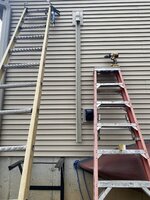
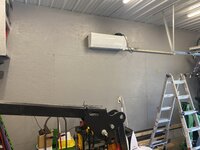
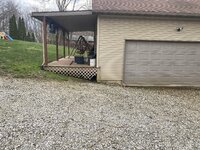
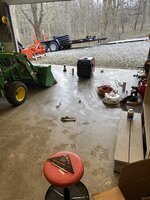
Here’s where I’m at so far. Just need to run the line set and power. I do refrigeration installation and some hvac. Just never installed a Minisplit. Mostly split systems. I picked 8’5” to bottom of unit. Leaves 19” above. We’ll see how it goes. Almost there. Really want to curve the moisture problem o have. Be posting another thread soon to see what people think. I have a 3’ concrete wall on a hill side and I get a lot of water from the hill but today mostly water from cold concrete and 70 degree ambient. Had door open. I do run a full time dehumidifier too and a floor fan when bad. Just hate all my tools rusting and all my metal ect…. Hoping all this will help. When it rains it’s like a creek in front of my door.
 

Attachments

  • 45F9EEC5-CD4B-4A29-B2A8-6ED775C21BF5.jpeg
    45F9EEC5-CD4B-4A29-B2A8-6ED775C21BF5.jpeg
    751.1 KB · Views: 14
  • 43D25EBB-507D-404C-8604-7142FC7DE808.jpeg
    43D25EBB-507D-404C-8604-7142FC7DE808.jpeg
    708.6 KB · Views: 13
  • D90E1727-01FB-4AD2-A4EC-C67F256D21EF.jpeg
    D90E1727-01FB-4AD2-A4EC-C67F256D21EF.jpeg
    592.8 KB · Views: 13
  • D69A5A58-74C9-42CF-B446-068042CC2526.jpeg
    D69A5A58-74C9-42CF-B446-068042CC2526.jpeg
    1.6 MB · Views: 14
  • 5967E5A3-71A3-4A97-9AF7-02F0AFE7B8EA.jpeg
    5967E5A3-71A3-4A97-9AF7-02F0AFE7B8EA.jpeg
    1.2 MB · Views: 13
  • 4435244E-4148-4E8C-A7A3-C88625A4B180.jpeg
    4435244E-4148-4E8C-A7A3-C88625A4B180.jpeg
    1.3 MB · Views: 14
  • 614C2E10-F1E9-4EE9-B393-FC70130E765E.jpeg
    614C2E10-F1E9-4EE9-B393-FC70130E765E.jpeg
    1.3 MB · Views: 14
To avoid these ads, REGISTER NOW!

pcmeiners

Well-known member
Joined
Aug 13, 2009
Messages
7,855
Location
In the only town in Pennsylvania, Bloomsburg.
The mini split should help with the condensation if you keep the temperature above the usual dew point. hate rust so I set the mini-split for 50° F at night, everything stays dry as bone but I do not have a concrete wall which soaks up the cold at night, as such causes condensation once the humid air warms up; also I have a fairly air tight garage, with a vapor barrier-ed slab. If you keep your garage 50-60 ° you should not have a condensation issue . Do not allow air changes at the wee hours of the morning (2am to 7am), this only brings in moisture laden air, almost at dew point, ready to condensate on cold surfaces.
 

Mrgreen617

Active member
Joined
Mar 16, 2023
Messages
28
Want to update post. Just got Minisplit installed and completed. Unit did quick work to bring temp up 15 degrees. Will update more. Still having the 30s at night and high 60s during the day temps here in indiana
 

finn

Well-known member
Joined
Mar 27, 2005
Messages
16,203
Location
The UP, God's country
I know the manufactures efficiently ratings for their wall heads are higher than their cassette units.
That's what I found when researching cassettes a few years ago. The cassettes ALWAYS had poorer efficiency than wall mounted units, and multiple head units were always worse than single head units.
 

mogandave

Well-known member
Joined
Nov 4, 2021
Messages
3,052
Location
Bangkok
That's what I found when researching cassettes a few years ago. The cassettes ALWAYS had poorer efficiency than wall mounted units, and multiple head units were always worse than single head units.
Yeah, in tests designed to sell the most units with the highest margins.

Add a condensate pump or fan to a wall unit, or run with a fan caked with mud/mold and the numbers go out the window.
 

finn

Well-known member
Joined
Mar 27, 2005
Messages
16,203
Location
The UP, God's country
Yeah, in tests designed to sell the most units with the highest margins.

Add a condensate pump or fan to a wall unit, or run with a fan caked with mud/mold and the numbers go out the window.
Rather cynical comment. There’s no advantage to pushing one configuration over the other, from the manufacturer’s standpoint. In fact, if I remember correctly, the ceiling cassettes were always sold at a premium.

If you don’t have hard data to support your allegations and biases, I’ll go with the data from the half dozen manufacturers I was considering at the time. Your opinions have no credibility or factual data to back them up at this point.

I ended up with three Mitsubishi installations, and have had Mo issues. They aren’t the cheapest units I considered.
 

mogandave

Well-known member
Joined
Nov 4, 2021
Messages
3,052
Location
Bangkok
I suspect the wall-mount units have larger coils with more coil area
No. The evaporator coil in a wall mount unit is straight, and something less than the OAL of the unit.

The evaporator coil in a cassette unit is rectangular, and something less than four times the the width of the unit.

Cassette units are much more costly to produce than wall units.
 

mogandave

Well-known member
Joined
Nov 4, 2021
Messages
3,052
Location
Bangkok
Rather cynical comment. There’s no advantage to pushing one configuration over the other, from the manufacturer’s standpoint. In fact, if I remember correctly, the ceiling cassettes were always sold at a premium.

If you don’t have hard data to support your allegations and biases, I’ll go with the data from the half dozen manufacturers I was considering at the time. Your opinions have no credibility or factual data to back them up at this point.

I ended up with three Mitsubishi installations, and have had Mo issues. They aren’t the cheapest units I considered.

I have a mitsu, two yorks and three carriers and have not had any issues either.

One of the yorks has been moved twice, is over twenty years old and I’m getting ready to replace it with a new carrier wall unit.
 

mogandave

Well-known member
Joined
Nov 4, 2021
Messages
3,052
Location
Bangkok
A wall mount unit is much cheaper and easier to install than a cassette unit, making it easier to sell more of them.

The manufacturer typically makes nothing on the installation.

It is interesting that some people seem to think manufactures are not concerned with margin.
 

miragesmack

Member
Joined
Mar 23, 2009
Messages
24
Location
Louisville, KY
Good lord, is this argument still going on?!? Efficiency in my world, if how much cooling am I getting and for how much cost, including initial cost. Start with your initial cost, then add up your bills every month, which is cheaper? That is efficient. Initial cost puts you behind the eight ball with cassettes from the get go, and your bills are typically higher. Maybe you require better distribution of temps, I don’t know, but I’m a low key guy, and only use a 5000 btu window unit for my whole house. I’m not spoiled by personal comfort. 45-50° is perfect in winter time and 80°-85° is comfortable in summer. If it feels good on the beach, why not in my house?
 

American Locomotive

Well-known member
Joined
Jan 8, 2017
Messages
10,935
Location
Rhode Island
No. The evaporator coil in a wall mount unit is straight, and something less than the OAL of the unit.

The evaporator coil in a cassette unit is rectangular, and something less than four times the the width of the unit.
One of the biggest deciders of modern HVAC system efficiencies are the sizes of coils. On a wall-mount unit, the size of the evaporator is essentially unconstrained. They can simply make the unit wide, taller, or deeper. On the 6,000 BTU/hr Mitsubishi M-Series I installed, the entirety of the indoor unit is evaporator coil. It reaches down nearly to the very bottom of the unit, juts out, goes up to the top of the unit, and then curves around and touches the back wall. It has a huge amount of surface area for a unit of that capacity.

On a cassette unit, the manufacturers have much tighter sizing constraints. The coil must be able to fit in a very limited height, the coil can't be too long or too wide, otherwise the unit will be very difficult to install without major demolition. If you have a cassette designed to fit between standard 16-on-center joists, you're even more constrained. Unsurprisingly, Mitsubishi's 16-on-center cassettes are their least efficient options at 22 SEER.

When you look at the detailed data information of a Mitsubishi M-series wall mount and ceiling cassette of identical capacity - the power consumption difference is 10w. 10 watts is not going to drop you from 31 seer down to 23 seer. I suspect the more constrained nature of the ceiling cassette makes them inherently less efficient.
 
Last edited:

mogandave

Well-known member
Joined
Nov 4, 2021
Messages
3,052
Location
Bangkok
One of the biggest deciders of modern HVAC system efficiencies are the sizes of coils. On a wall-mount unit, the size of the evaporator is essentially unconstrained. They can simply make the unit wide, taller, or deeper. On the 6,000 BTU/hr Mitsubishi M-Series I installed, the entirety of the indoor unit is evaporator coil. It reaches down nearly to the very bottom of the unit, juts out, goes up to the top of the unit, and then curves around and touches the back wall. It has a huge amount of surface area for a unit of that capacity.

On a cassette unit, the manufacturers have much tighter sizing constraints. The coil must be able to fit in a very limited height, the coil can't be too long or too wide, otherwise the unit will be very difficult to install without major demolition. If you have a cassette designed to fit between standard 16-on-center joists, you're even more constrained. Unsurprisingly, Mitsubishi's 16-on-center cassettes are their least efficient options at 22 SEER.

When you look at the detailed data information of a Mitsubishi M-series wall mount and ceiling cassette of identical capacity - the power consumption difference is 10w. 10 watts is not going to drop you from 31 seer down to 23 seer. I suspect the more constrained nature of the ceiling cassette makes them inherently less efficient.
I've gone over extensively what I see are the real-world benefits of the cassette design over the wall units, and no one has addressed any of them. I have also addressed why I believe a new wall unit would test better than a cassette unit.

Further, and maybe it is different in the US, but I can buy a 60K BTU cassette unit, but only about a 40K BTU wall unit, so I doubt the cassette design is constrained. Again, the evaporator coil is something less than the length of the wall unit, while it is something less than the perimeter of the cassette unit.

To be clear, I could be missing something, but I don't think so, certainly no one has pointed anything out beyond the test data.

In any event, it is my understating that the bulk of the power is used by the condensing unit, not the evaporator.
 
OP
S

Sturgeon

Well-known member
Joined
Oct 9, 2021
Messages
269
Location
W. Mt.
I don't have any information from any mini split manufacturer, but suffice to again say all the on line supplier's bulked at the 14' ceilings and my yearly winter climate zone. To many naysayers and didn't want to gamble. Propane ceiling heaters were yes yes all day long, didn't like it but had to move on. Best of luck.
 

toyotadriver

Well-known member
Joined
Dec 30, 2010
Messages
1,586
I don't have any information from any mini split manufacturer, but suffice to again say all the on line supplier's bulked at the 14' ceilings and my yearly winter climate zone. To many naysayers and didn't want to gamble. Propane ceiling heaters were yes yes all day long, didn't like it but had to move on. Best of luck.


Propane ceiling heaters are awesome! Love mine and I live in a warmer climate than you.
 

PoorUB

Well-known member
Joined
Mar 29, 2021
Messages
11,622
Location
Fargo, ND
Propane is awsome, if you like throwing money away. Look at the running cost of propane versus the cost of my air source heat pump. I plugged in my numbers for my Fujitsu unit. Propane would cost me 5 times the cost of running my minisplit .
That Fujitsu doesn't run at 400 COP all the time! Maybe 400 COP at 50F and it tapers down from there. What is the COP at 0F?

Granted, still better than anything else, but it bugs me when guys base operating expense and the best circumstance!

Also, I find it hard to belive you pay 10 cents a KWh. Look at your bill and add in all the delivery fees, taxes and what not, probably closer to 12 cents.

Natural gas probably would beat up your heat pump!
 

justinjoyal

Well-known member
Joined
Apr 30, 2015
Messages
888
Location
Quebec
The only downside to cassettes is cost and the vertical clearance required.

So, you don't know. I do not need to check anyone's website. Typically:

Cassettes draw the return-air from the center of the room and blow the cooled/heated air about the perimeter of the room. Wall units draw return-air from one end of the room and blow the cooled/heated air to the other end of the room.

Cassette filters have significantly greater surface area than do wall units.

Cassettes use propeller fans rather than squirrel-cage fans.

Cassettes draw the return-air up and blow it over and down through the coil. Wall units draw the air down and blow it forward through the coil.

Cassette's fan stays dry year-round while the wall unit's fan is usually wet when cooling, so the cassette's prop-fan gets dusty, while the wall unit's fan gets muddy.

Cassettes pump the condensation up and out, while wall units either rely on gravity for the condensate to drain or depend on an axillary pump to evacuate the condensate.

Cassettes almost never drip water, but when they do, it's usually because the condensate pump has failed. Wall units without condensate pumps drip more often due to mud/mold clogging the drain.

In the event of dripping water, the cassette drips on the center of the floor, while the wall unit drips onto the TV or whatever else is below them along the wall.


The only downside to cassettes is cost and the vertical clearance required.

- Filter area, i've never measured to be honest, but I doubt there's much difference and either way, filtration is not really a concern with wall or cassette units as it's there to protect the coil and nothing else. It doesn't play a significant role in the occupants health or whatever...

- I'd rather pour some cleaner or blow some air up/down a wall-unit drain line once a year rather than have a pump fail in a cassette.

- From my experience, cassette don't perform as good as wall units.

- And yeah, they're a lot more expensive.
 

mogandave

Well-known member
Joined
Nov 4, 2021
Messages
3,052
Location
Bangkok
- Filter area, i've never measured to be honest, but I doubt there's much difference and either way,
I can't speak to all cassettes, but the units I own and have seen use pleated filters as opposed to flat filters which significantly increases the surface area.

filtration is not really a concern with wall or cassette units as it's there to protect the coil and nothing else. It doesn't play a significant role in the occupants health or whatever...

But the filter does play a big role in energy consumption and maintenance costs.

And if I did want to protect the health of the occupants, I could buy a Hepa filter that will fit my ceiling cassette, but I can't for my wall units.

- I'd rather pour some cleaner or blow some air up/down a wall-unit drain line once a year rather than have a pump fail in a cassette.
If your wall-unit is on an exterior wall not facing the street perhaps, but a lot of wall-unit installations require a condensate pump be used.

I have a 15-year-old cassette that has never had an issue with the condensate pump, and I see cassette units installed in restaurants and whatnot everywhere and I don't think I have ever seen one dripping water, so I doubt very much condensate pump failure is much of an issue.

- From my experience, cassette don't perform as good as wall units.
That has not been my experience.
- And yeah, they're a lot more expensive.
Indeed. I'm getting ready to replace a 23-year-old York wall unit with a new 25.2K BTU Carrier inverter unit, and the wall unit is about $930 and a comparable Carrier cassette unit runs $1,660. Have not decided yet.
 

pcmeiners

Well-known member
Joined
Aug 13, 2009
Messages
7,855
Location
In the only town in Pennsylvania, Bloomsburg.
"That Fujitsu doesn't run at 400 COP"

The average COP of the unit I have is 4 not 400 (of yearly energy cost), (of unit noted in previous post), it has a higher COP then most geothermal units; obviously it does not run at a COP 4 all the time/temperatures.
lt would not make that much difference if it was $.12/kw, that would make it $8.79/million BTUs. Natural gas would not beat this, looked up natural gas price, roughly $14/million BTU, ......no issue anyway as I do not have NG at the street.
 
Last edited:
To avoid these ads, REGISTER NOW!
Top Bottom