To avoid these ads, REGISTER NOW!

More electrical connector / crimper questions...

bmwpower

Super Moderator
Staff member
Joined
Apr 24, 2005
Messages
12,578
Location
NJ
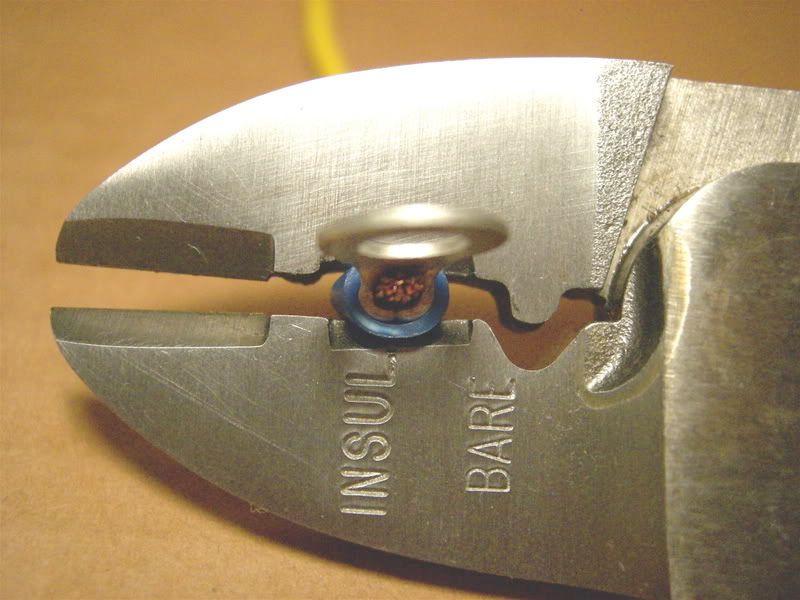
Ok, I thought an insulated connector was an insulated connector. How come there are 2 styles of crimping dies? Do the pro ones have more insulation or something? And why is the shape different?

One for "Large professional terminals (e.g. Panduit, T&B, etc.)"

http://www.paladin-tools.com/view_tool.php?id=396&parent_id=231

phpThumb.php


...and one for "Standard commercial terminals (e.g. hardware store brands)"

http://www.paladin-tools.com/view_tool.php?id=397&parent_id=231

phpThumb.php
 
To avoid these ads, REGISTER NOW!

mrb

Well-known member
Joined
Dec 31, 2008
Messages
3,734
the top one is for double sleeve type, bottom is for junky hardware store type.
 

jeepnut24

Well-known member
Joined
Aug 23, 2006
Messages
797
Location
Morrison CO
I use uninsulated terminals, then cover with heat shrink. :thumbup:

I wish I could find a good supplier of non-split, uninsulated terminals...

Until then, Ill use insulated terminals, uninsulated die on the crimper, and heat shrink. I think the non insulated die gives a better crimp.
 

metalwork

Active member
Joined
Dec 29, 2009
Messages
31
Location
Northeast USA
I wish I could find a good supplier of non-split, uninsulated terminals...

Until then, Ill use insulated terminals, uninsulated die on the crimper, and heat shrink. I think the non insulated die gives a better crimp.

Have you tried Mouser.com? They carry just about every variation of Tyco terminals there are.
 

comedyman809

Well-known member
Joined
Dec 29, 2009
Messages
1,179
Location
Smithtown, NY-thats in suffolk county long island.
actually, the most professional crimpers are a ratcheting type that is about 18 inches lon with red and yellow handles. not sure who makes them, they are about 250 dollars.

they leave either 1 dot or 2 dots on the crimp, to let you and osha know that it has been crimped properly, the 1 or 2 dots depends on gauge.

i worked at a facility that built control panels for bakeries, and each crimp had to have 2 dots or i had to redo them, and sometimes that meant re-running the wire.
 

Merkava_4

Banned
Joined
Dec 26, 2007
Messages
14,518
Location
Clovis, CA.
actually, the most professional crimpers are a ratcheting type that is about 18 inches lon with red and yellow handles.


Are you saying I'm unprofessional?!!? :D

The ratcheting crimpers are mainly to ensure that the terminal is fully crimped - as in they won't release until the crimp is made. But if you have a death grip like I do, there's no problem with using the manual crimpers. :evil:

Right before the terminal is fully crimped, my knuckles go - "POP!!" :D
 

SouthCoastMudder

Well-known member
Joined
Jan 7, 2010
Messages
255
Location
Alvin, Texas
I have the same problem with the whole knuckle "popage". I also don't like using the uninsulated dies on insulated terminals because I have a tendency to squeeze right through and mangle the terminal to all hell.
 

FNFS2000

Well-known member
Joined
Jan 12, 2009
Messages
859
If you go ratcheting, you may as well go all the way with Knipex, and know its the best and its made in Germany...
 
OP
B

bmwpower

Super Moderator
Staff member
Joined
Apr 24, 2005
Messages
12,578
Location
NJ

Those grips would drive me nuts. No contour.

Are you saying I'm unprofessional?!!? :D

The ratcheting crimpers are mainly to ensure that the terminal is fully crimped - as in they won't release until the crimp is made. But if you have a death grip like I do, there's no problem with using the manual crimpers. :evil:

Right before the terminal is fully crimped, my knuckles go - "POP!!" :D

I'm biased to the ratcheting ones. Less for me to mess up and a little easier to hold the connectors when you have a bunch of wires all over the place - just place the connector in the crimper and squeeze until it's snug (not crimped). Then put the wire in, align things and rat-rat-rat-rat.

But as you've seen from my other threads, you gotta buy all the dies at $20-30 a pop and it adds up quick. If you're just doing insulated, non-insulated, CAT5-6, RJ11, RG6 (like me), it's not too bad. Most ratcheting ones come as kits and you can supplement with more dies.

If you go ratcheting, you may as well go all the way with Knipex, and know its the best and its made in Germany...

Ok...I will bite. Why is it the best?
 
To avoid these ads, REGISTER NOW!

FNFS2000

Well-known member
Joined
Jan 12, 2009
Messages
859
why is BMW better than GM? haha
The knipex(really rennstieg, a company owned by Knipex) private labels almost all the crimpers for high end tool companies. They are used by spec in most manufacturing environments around the world. Their reputation is tops, I don't really know many specifics, its not my thing, but I know they are considered to be the best by everyone except some fanatical US made nuts.
 

mrb

Well-known member
Joined
Dec 31, 2008
Messages
3,734
I wish I could find a good supplier of non-split, uninsulated terminals...

Until then, Ill use insulated terminals, uninsulated die on the crimper, and heat shrink. I think the non insulated die gives a better crimp.

what you are looking for is called brazed barrel. Amp(tyco), 3M, and others make them.
 
OP
B

bmwpower

Super Moderator
Staff member
Joined
Apr 24, 2005
Messages
12,578
Location
NJ
you shouldnt be crimping coax anymore. Compression connectors are pretty much the standard now.

Not for me. :)
What do I need to do compression connectors? Lemme guess...another tool?
 
OP
B

bmwpower

Super Moderator
Staff member
Joined
Apr 24, 2005
Messages
12,578
Location
NJ
time. a couple seconds to strip, a second to load the connector and crimp.

I could strip and fit 5 or 6 connectors in a minute or so, depending on if its quad cable or not.

So there's no sonic/quality difference, just quicker. Not like I do coax that much, so probably not a big deal to me. This must be something that has come out recently cause I don't remember this stuff 7-8 years ago when I did my house.
 

cronic

Well-known member
Joined
Jun 19, 2008
Messages
245
time. a couple seconds to strip, a second to load the connector and crimp.

I could strip and fit 5 or 6 connectors in a minute or so, depending on if its quad cable or not.

Time? Really? I have put on thousands of connectors and the process for putting on compression ends is no quicker than crimp style. You still have to strip the cable properly, put on the end, and then crimp or compress it. They both take the same amount of time. Don't get me wrong, I like the compression style, mainly snap and seal, better than crimp, but they are no quicker than crimp style. I feel the compression style is a more secure connection.
 

kwhitelaw

Well-known member
Joined
Feb 24, 2008
Messages
1,273
Time? Really? I have put on thousands of connectors and the process for putting on compression ends is no quicker than crimp style. You still have to strip the cable properly, put on the end, and then crimp or compress it. They both take the same amount of time. Don't get me wrong, I like the compression style, mainly snap and seal, better than crimp, but they are no quicker than crimp style. I feel the compression style is a more secure connection.

I guess I should have elaborated, but multitasking leads to condensed answers..

in addition to time, which I do feel is quicker to compress than crimp, I feel the compressed fitting will more easily guarantee a solid connection/transmit of signal.. kind of like the age old crimp/solder debate..

assuming you can strip the cable properly, making sure the strands aren't in contact with the center conductor, and can insert the fitting onto the cable far enough, I feel you have a lower failure rate with a compressed connector than a crimped one, where a weak crimp could degrade signal flow over time, especially in an area that the cable could be jarred, breaking the connection.

one downside to compression fittings is the cost, I'll admit.
 

cronic

Well-known member
Joined
Jun 19, 2008
Messages
245
I guess I should have elaborated, but multitasking leads to condensed answers..

in addition to time, which I do feel is quicker to compress than crimp, I feel the compressed fitting will more easily guarantee a solid connection/transmit of signal.. kind of like the age old crimp/solder debate..

assuming you can strip the cable properly, making sure the strands aren't in contact with the center conductor, and can insert the fitting onto the cable far enough, I feel you have a lower failure rate with a compressed connector than a crimped one, where a weak crimp could degrade signal flow over time, especially in an area that the cable could be jarred, breaking the connection.

one downside to compression fittings is the cost, I'll admit.

I'm with you on the compression giving a more reliable connection, but I disagree that it is any quicker.... :headscrat I guess its all in what you get used to and are comfortable with. :)
 

kwhitelaw

Well-known member
Joined
Feb 24, 2008
Messages
1,273
I'm with you on the compression giving a more reliable connection, but I disagree that it is any quicker.... :headscrat I guess its all in what you get used to and are comfortable with. :)

yah, I guess. I can solder a car radio harness or remote start install faster than I can crimp..
 

bad daddy

Well-known member
Joined
Oct 22, 2009
Messages
277
Location
North Vancouver, British Columbia
I use the ANCOR product, and FTZ connectors, which we use in the marine industry.

Ancor has a ratcheting crimp tool, and I believe it is made by Sargeant.

It has a nice little feature, and that is a gripper that holds the connector in place, before you start the crimp. More importantly, there is never a doubt as to which way the connector should be inserted into the tool.
It's also a double crimp tool, and it crimps on the insulation, as well as the wire: giving added strain relief; provided you are using the connectors shown at the beginning of the thread.

Something to think about with connectors, the insulation on Stak-On, as well as Ancor is Virgin nylon. In cold weather, it doesnt crack.

Give consideration to the wire you're using. In the marine environment, we use tinned fine strand copper wire. It is AWG sizing, not SAE, and the difference is about 10-14% more wire per gauge size. The reason is most runs in a boat are over 10-15 ft, and the heavier gauge is preferred.

FTZ has some new connectors out called Cool Seal, and they have an anerobic sealand in them. Strip, crimp, done. No heat shrink.

Ancor also has some nice German made strippers, which place no strain on the wire, and are a real pleasure to use. I cant remember the name of them, but if anyone is curious, I can go out to the garage and have a look.

For heat shrink tubing, we use the polyolefin 3:1 ratio product, that has the sealant in it. Hard to burn that product.
 

Rocket1

Well-known member
Joined
Nov 12, 2009
Messages
387
Location
Arlington, TX
I have a cheap Taiwan ratcheting crimper off eBay. It works well and since I don't do a lot of wiring its fine for me.

Although now that I see that Knipex ones I might have buy one. They sure a pretty
 

comedyman809

Well-known member
Joined
Dec 29, 2009
Messages
1,179
Location
Smithtown, NY-thats in suffolk county long island.
Are you saying I'm unprofessional?!!? :D

The ratcheting crimpers are mainly to ensure that the terminal is fully crimped - as in they won't release until the crimp is made. But if you have a death grip like I do, there's no problem with using the manual crimpers. :evil:

Right before the terminal is fully crimped, my knuckles go - "POP!!" :D


im not saying your unprofessional. i use channellock crimpers that are the same as the ones in the picture.

the ratcheting ones are about 200-300 bucks. im just saying if you wanted the most professional looking crimp, that would be what you need.

i dont have a set of those, it was a shop tool that the company owned.
with my 20 dollar crimpers, i have never had a crimp come apart!!

but the pain in my hands is what i have to show for the crimper i have now:mad:
 

Hurricane_Whisperer

Well-known member
Joined
Nov 2, 2009
Messages
359
Ancors are good. The nylon is the key. PVC just cracks off.

Ace hardware actually carriers some decent made in USA crimp connectors.
 
To avoid these ads, REGISTER NOW!
Top Bottom