To avoid these ads, REGISTER NOW!

MP&C Shop Projects

OP
M

MP&C

Well-known member
Joined
Oct 21, 2009
Messages
4,396
Location
Leonardtown, MD
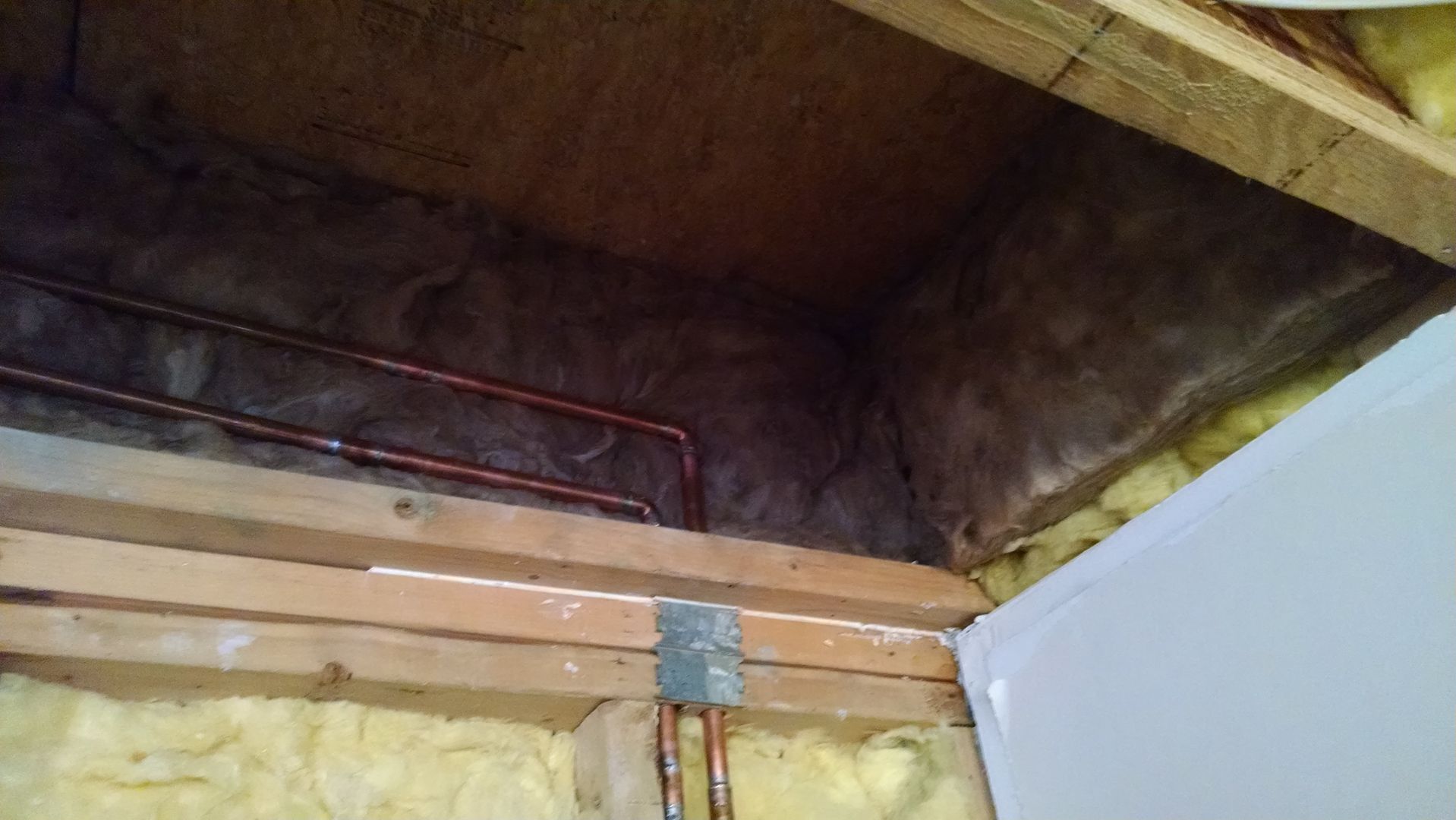
Thanks for the comments guys, here's the insulation installed on the correct side...


IMG_20150222_110518536.jpg


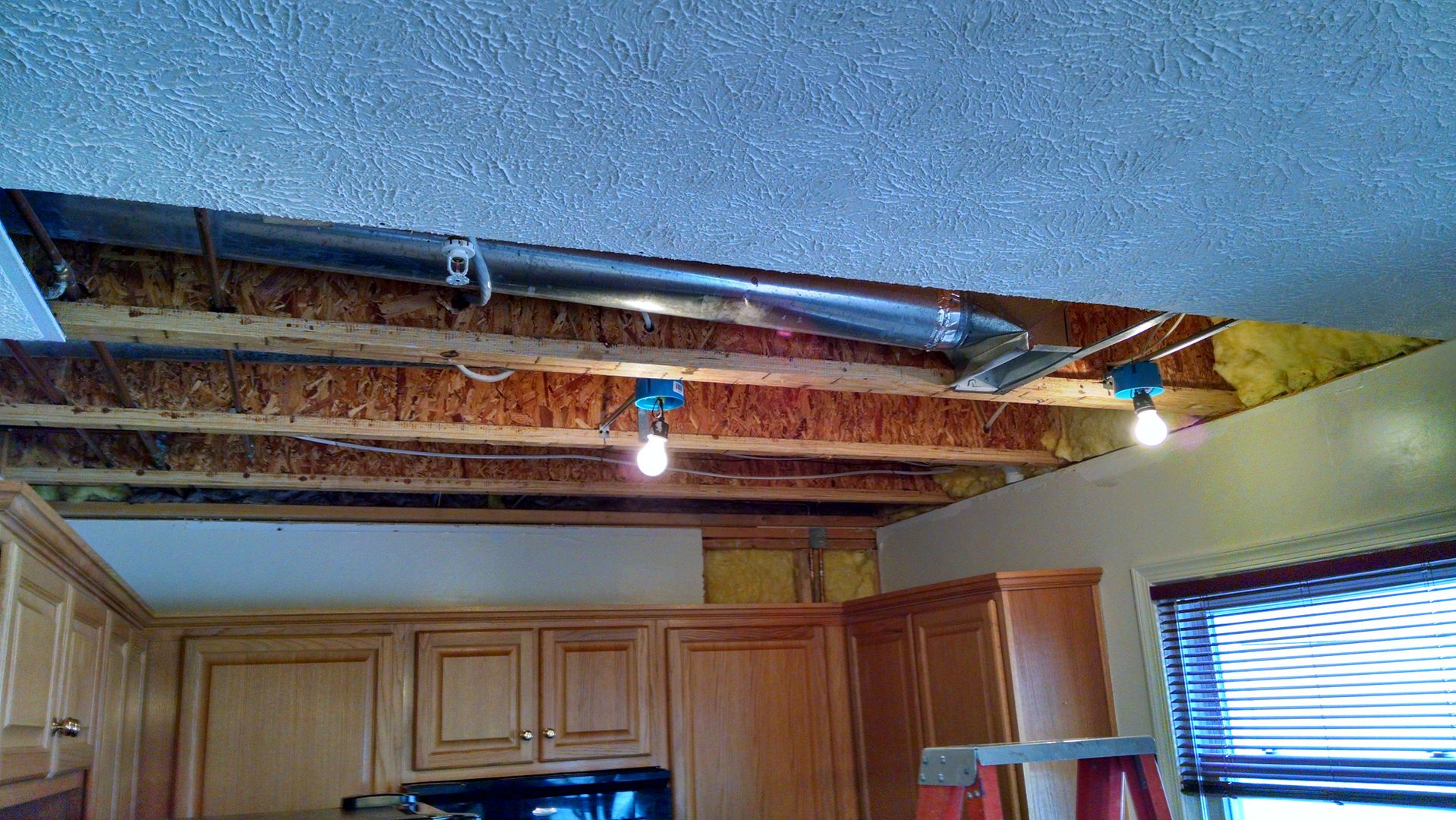
While removing the soggy drywall we also noticed the installation of the ceiling boxes for the two light fixtures was shaky at best. Electrician must have been related to the plumber... So we pulled down the old and also installed some new ceiling boxes as well, moving the center light fixture closer to the stove where it should have been..

All cleaned up, ready for the drywall..


IMG_20150222_150755961_HDR.jpg
 
To avoid these ads, REGISTER NOW!

BJ42LX

Well-known member
Joined
Dec 29, 2010
Messages
2,811
Location
WNY
All cleaned up, ready for the drywall..


IMG_20150222_150755961_HDR.jpg

I'm as interested in this fix as I am your work on the car!

I've got some ceiling drywall work in my future. I'm interested to see how you do the texture and blend it with the existing drywall.
 

Kevin54

MEMBER EMERITUS
Joined
Jan 12, 2005
Messages
29,341
Location
Urbana, Ohio
Robert.....keep track of all of your time and materials. Insurance should take care of all of that. Someplace like Serv-Pro would have came in and cleaned everything up and you wouldn't have had to do anything.

When the water line on our fridge broke, it warped all of the hardwood. They had to dry everything out, replace some hardwood flooring, and refinish it twice because they floor guys screwed things up. It was almost $9000 damage, and only cost me $500 off of the bill due to my deductible.
 
OP
M

MP&C

Well-known member
Joined
Oct 21, 2009
Messages
4,396
Location
Leonardtown, MD
I'm as interested in this fix as I am your work on the car!

I've got some ceiling drywall work in my future. I'm interested to see how you do the texture and blend it with the existing drywall.


Sorry, but we have a guy. We have another town house that he recently repaired a ceiling and needed to match the textured ceiling. Even as particular as I am, I couldn't see the seam..


Robert.....keep track of all of your time and materials. Insurance should take care of all of that. Someplace like Serv-Pro would have came in and cleaned everything up and you wouldn't have had to do anything.

When the water line on our fridge broke, it warped all of the hardwood. They had to dry everything out, replace some hardwood flooring, and refinish it twice because they floor guys screwed things up. It was almost $9000 damage, and only cost me $500 off of the bill due to my deductible.


Our rentals have 1K deductible on the insurance. We should be under that number for this repair, so turning it in would be pointless.. Luckily I was on the phone with the tenant when the water started dripping from the ceiling vent and was able to direct them to the water cut off valves so the water damage was much less than it could have been.. I have less than $75 in materials so far, part of which was forstner bits for moving the hole.
 
Last edited:

wbrian63

Well-known member
Joined
Mar 31, 2010
Messages
843
Location
Houston, TX
Robert - I purchased a mandrel and some Metabo 3" x 1/16 thick cutoff discs. These have a 1/4" center hole, and I'm having some issues.

They run true (no detectable wobble), but not co-linear with the center line of the grinder shaft. More of an eliptical orbit. Not a lot, but just enough to make it very hard to do precision grinding, as the edge of the disc bounces on and off the work surface.

There are 3 players on this team - the grinder, the mandrel and the disk. Runout is coming from somewhere, possibly all 3.

I removed the disc and securely fixed the grinder in my bench vice. Then I set up a dial indicator to check for runout. I installed a 1/4" solid carbide end-mill in the grinder and got 0 indicated runout on the shaft. No perceptable change if I pushed or pulled on the end mill - so the grinder isn't the source of the problem.

Put the mandrel back in and indicated as high up on the narrow part of the shaft as I could. The large diameter under the mounting screw is too narrow for the tip of my indicator. I got about .005 TIR. A little gentle persuasion of the mandrel got that number down to about .0005.

Installed a new disc - have to do a visual comparison on runout here - can't use the indicator against the rough edge of the disc. Looking down over the disk and adjusting the angle of view to coincide with a straight line and I see about 1/32 runout.

Confirm that the disk is uniformly 3" in diameter and the center hole is truly in the center.

However, with the mounting screw through the hole and into the mandrel body but not tightened, I can move the disc laterally. A little tweaking can get the disc to where it runs pretty much OK, but it never seems to stay put. After a little useage, I'm back to the same problem of bouncing. Don't know if the disc is wearing unevenly, or if it's shifting on the mandrel. I suspect the latter rather than the former.

I've not tried really cranking down on the mounting screw - the mandrel I got says "1/4 or 3/8 capable", but only one mounting screw was included. It has a 3/8" diameter shoulder (bushing, but not removable) under the head that nests into a 3/8" recess in the mandrel body. Really cranking down on the screw might cause distortion in the disc as the bushing tries to punch the center out of the disc.

So - here are the questions:
1) Have you had this problem before?
2) If so, maybe changing disc brands might help? I like the Metabo discs - they don't make a lot of nasty dust, they cut well and last a very long time, but other brands are surely available.
3) Maybe I should try 3/8" hole discs, and fab up a way to use a diamond grinding wheel dresser to true up the discs?

Any suggestions are appreciated.
 

mopar4don

Well-known member
Joined
Mar 9, 2013
Messages
103
When I put a new disk in I usually feel that bounce your talking about. But after using it for a minute or so the grinding disk will wear true, and the bounce will go away.
 
OP
M

MP&C

Well-known member
Joined
Oct 21, 2009
Messages
4,396
Location
Leonardtown, MD
Brian, I have noticed some with the issue you describe, but as Don mentioned they typically will correct themselves.


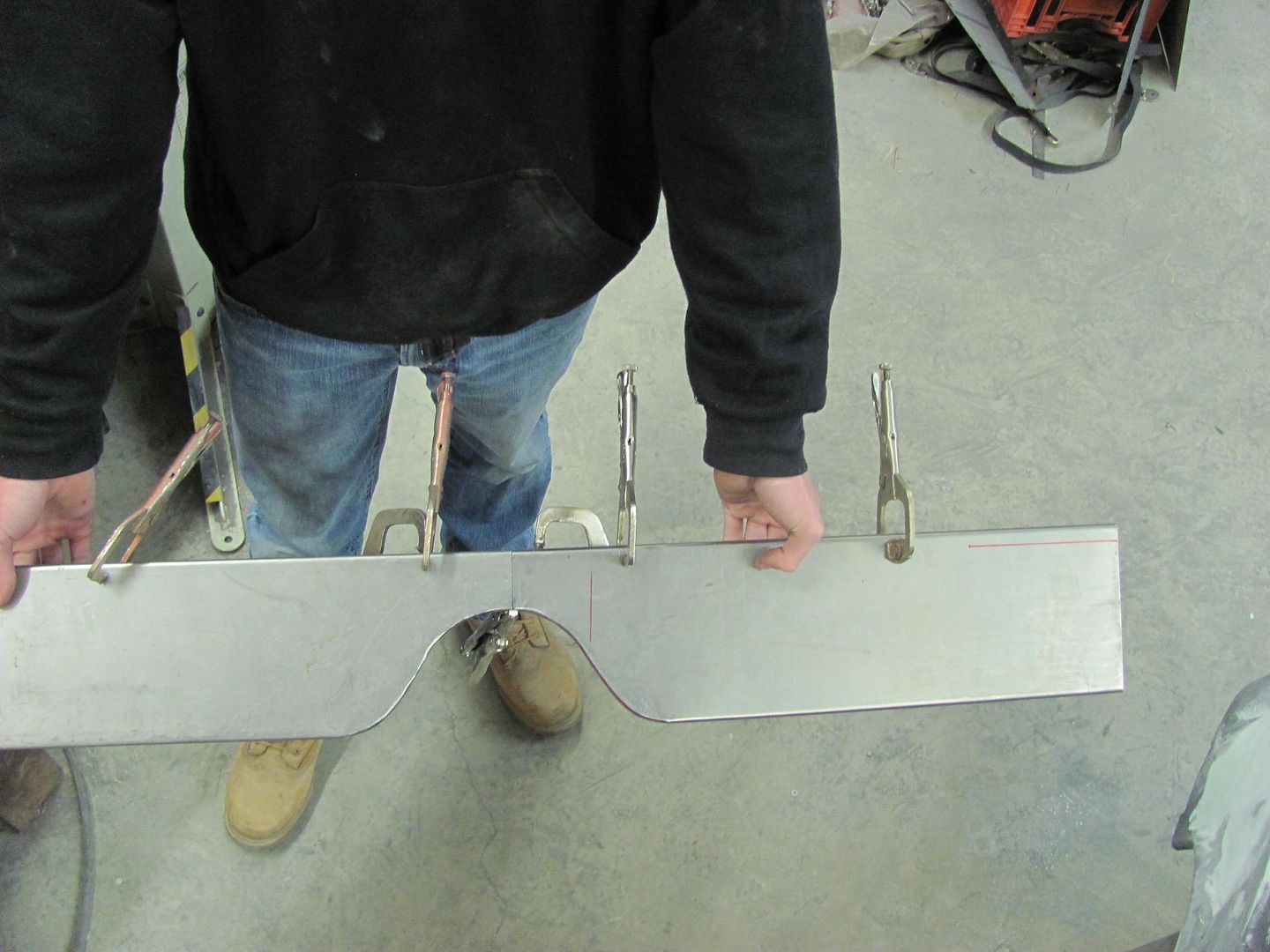
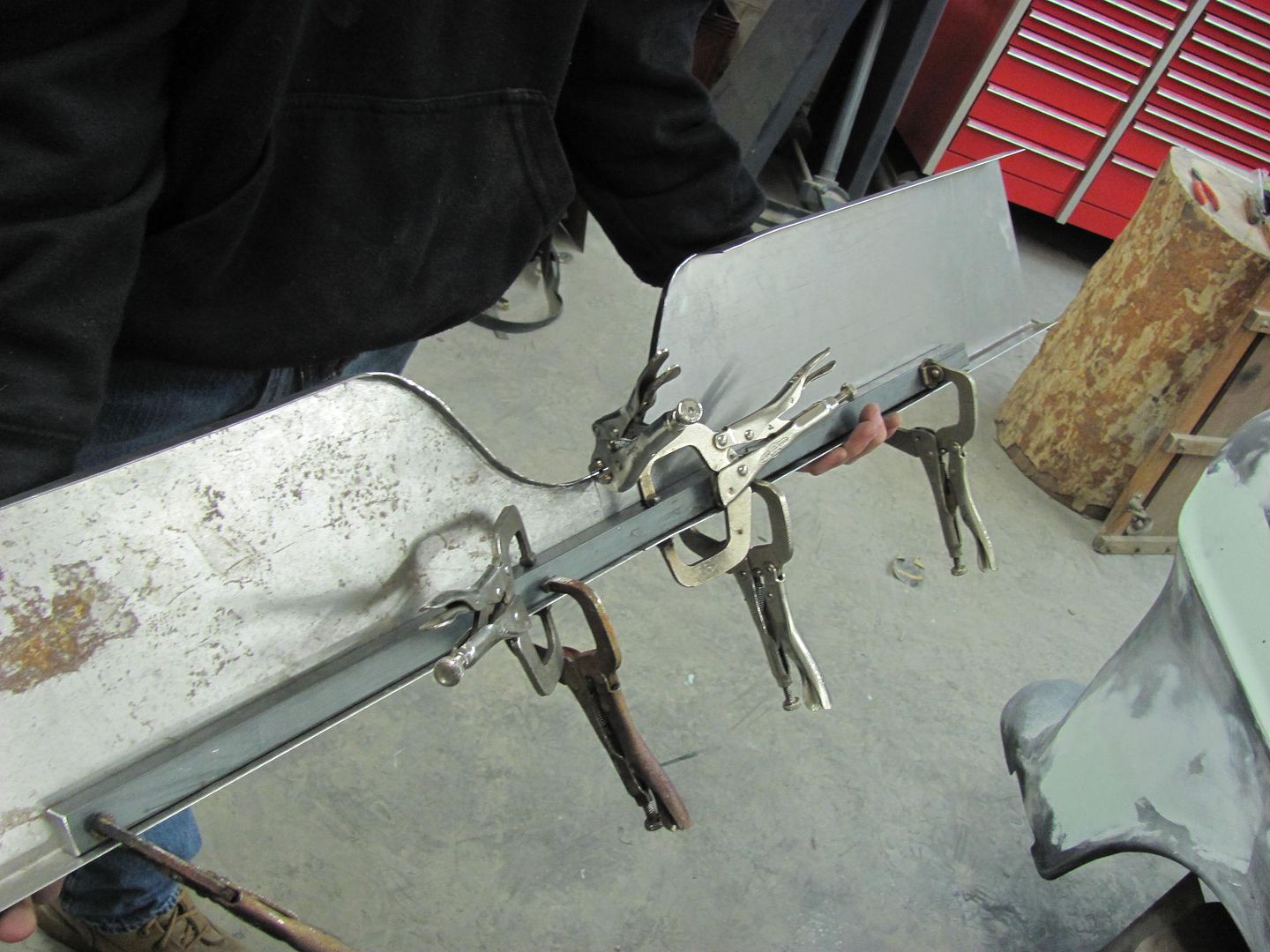
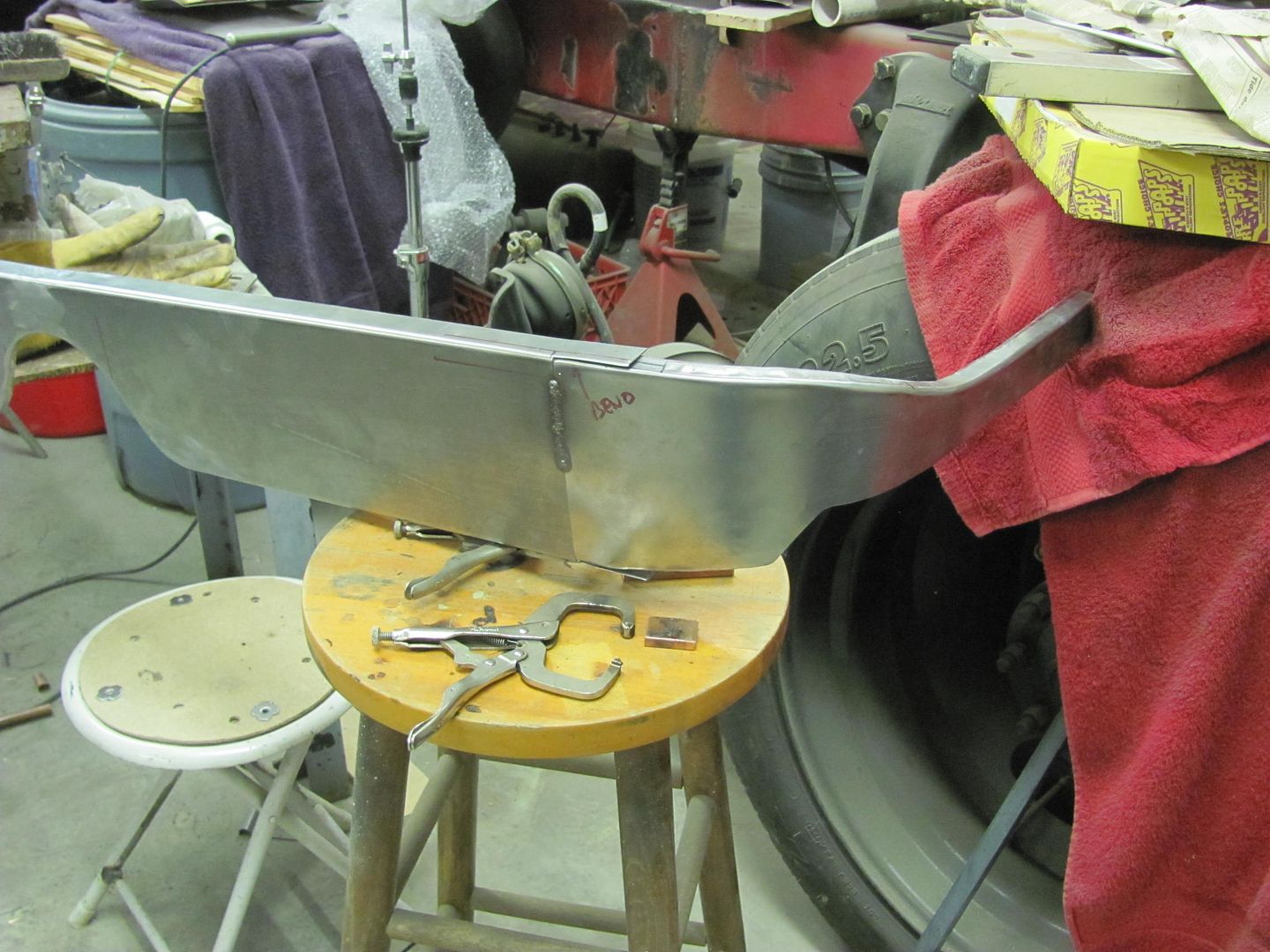
Here's the fitment of the two seat panels together, all clamped up for welding..


Picture%202217.jpg


Picture%202218.jpg


Picture%202220.jpg


Picture%202223.jpg


Picture%202227.jpg


Picture%202228.jpg


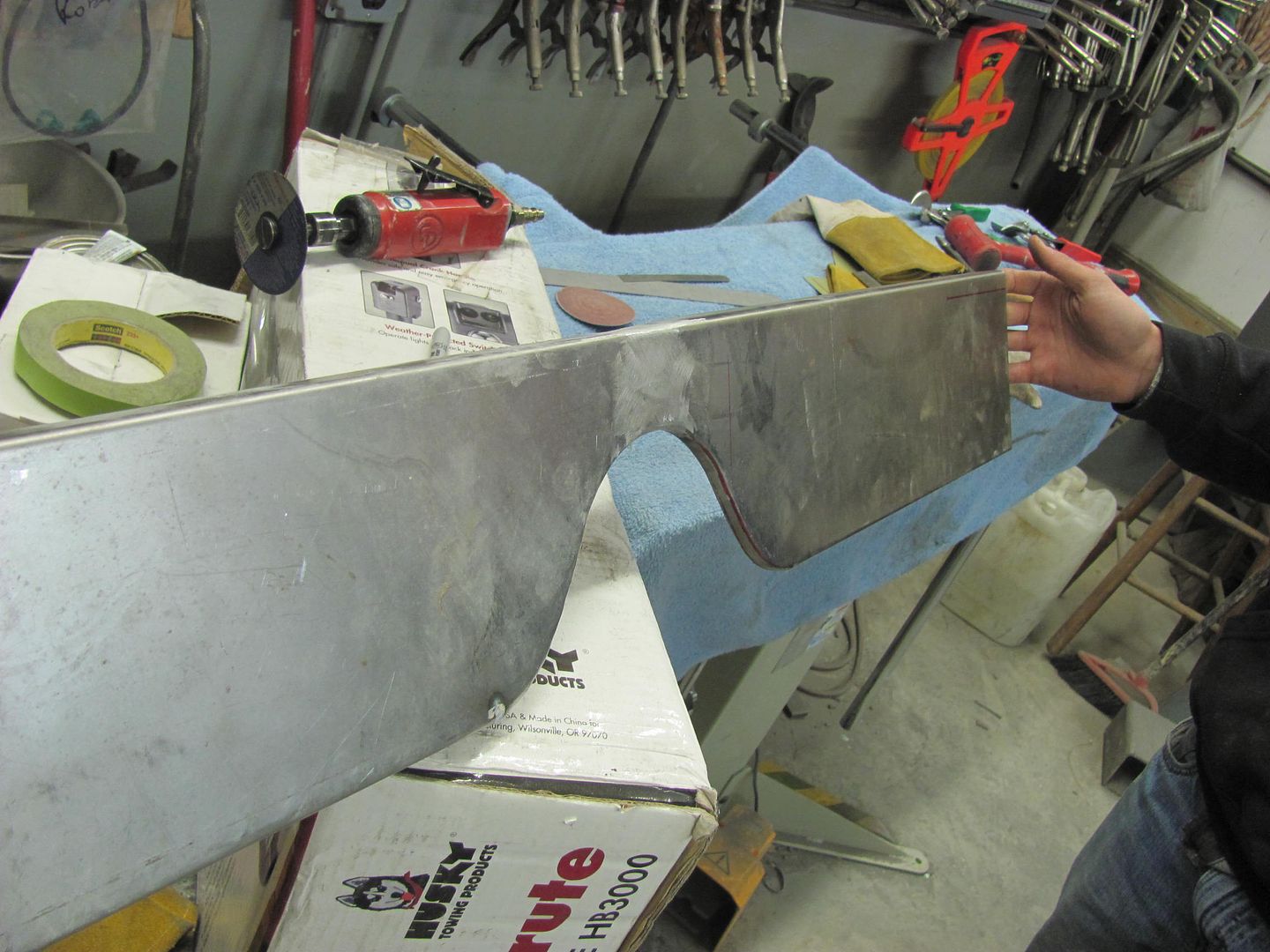
Test fit..


Picture%202229.jpg
 
OP
M

MP&C

Well-known member
Joined
Oct 21, 2009
Messages
4,396
Location
Leonardtown, MD
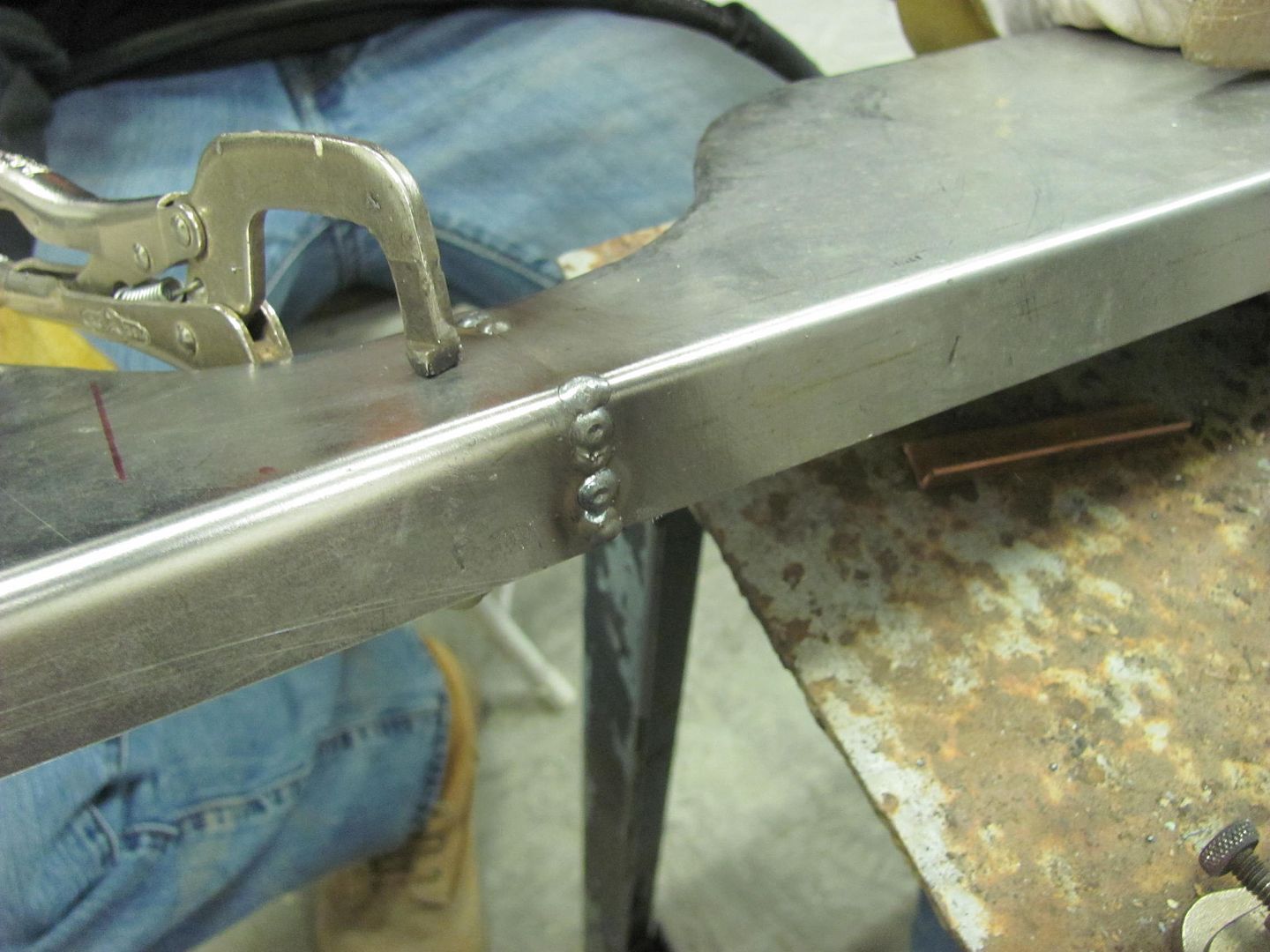
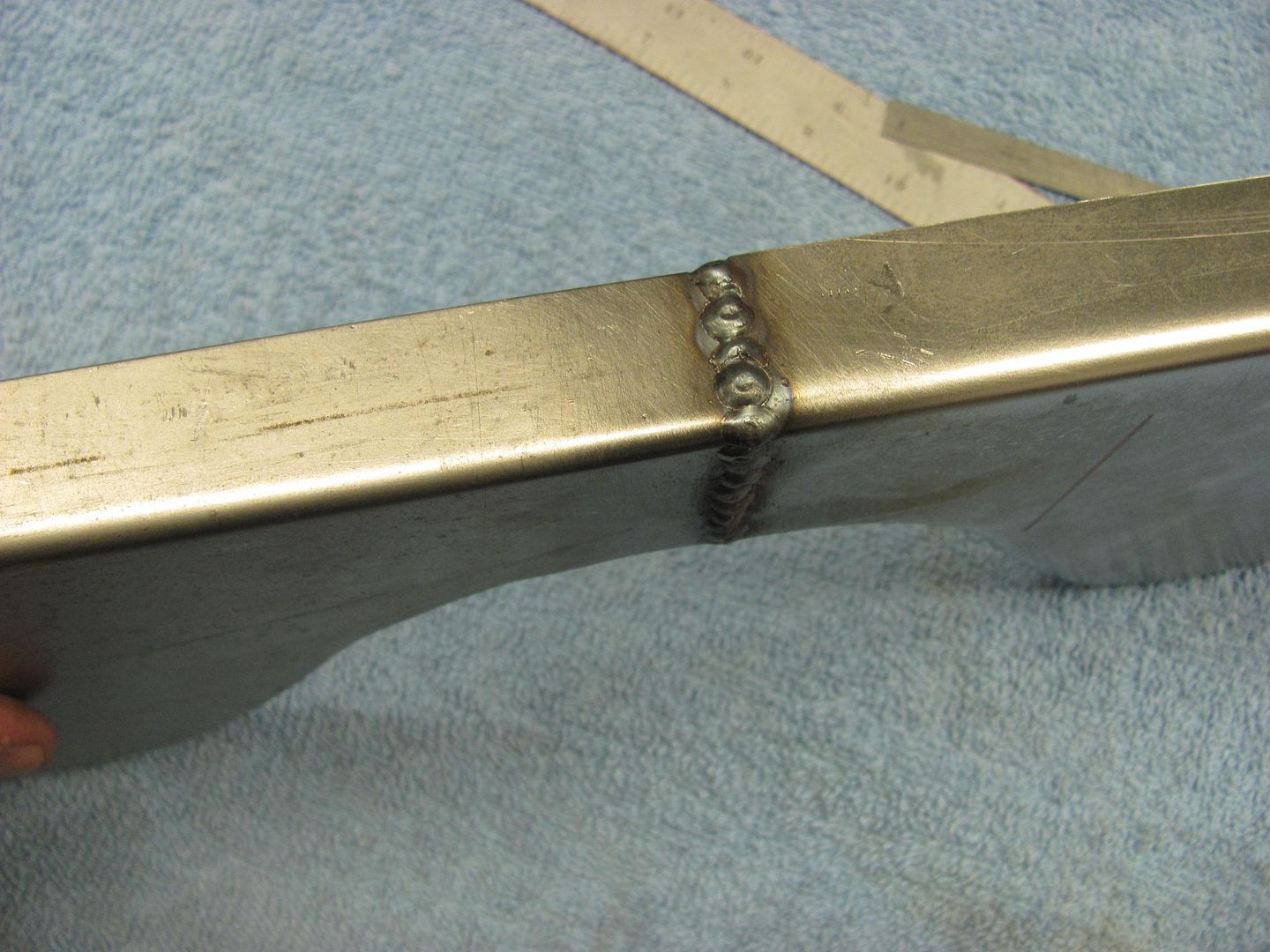
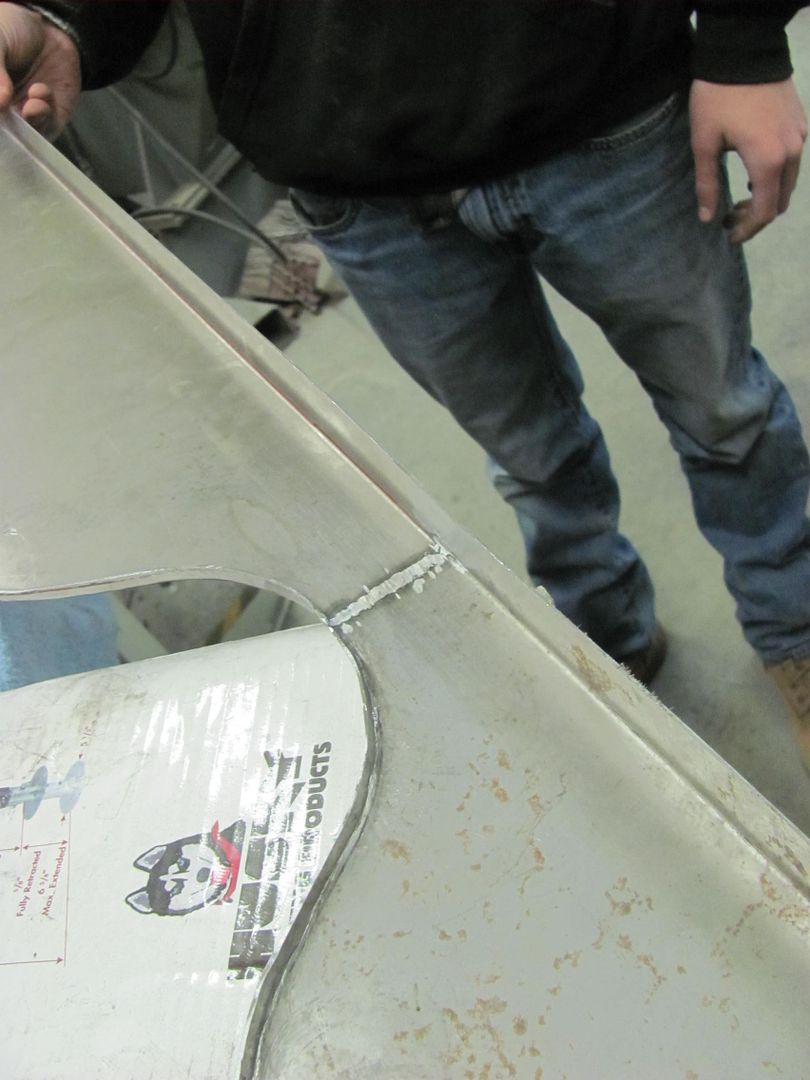
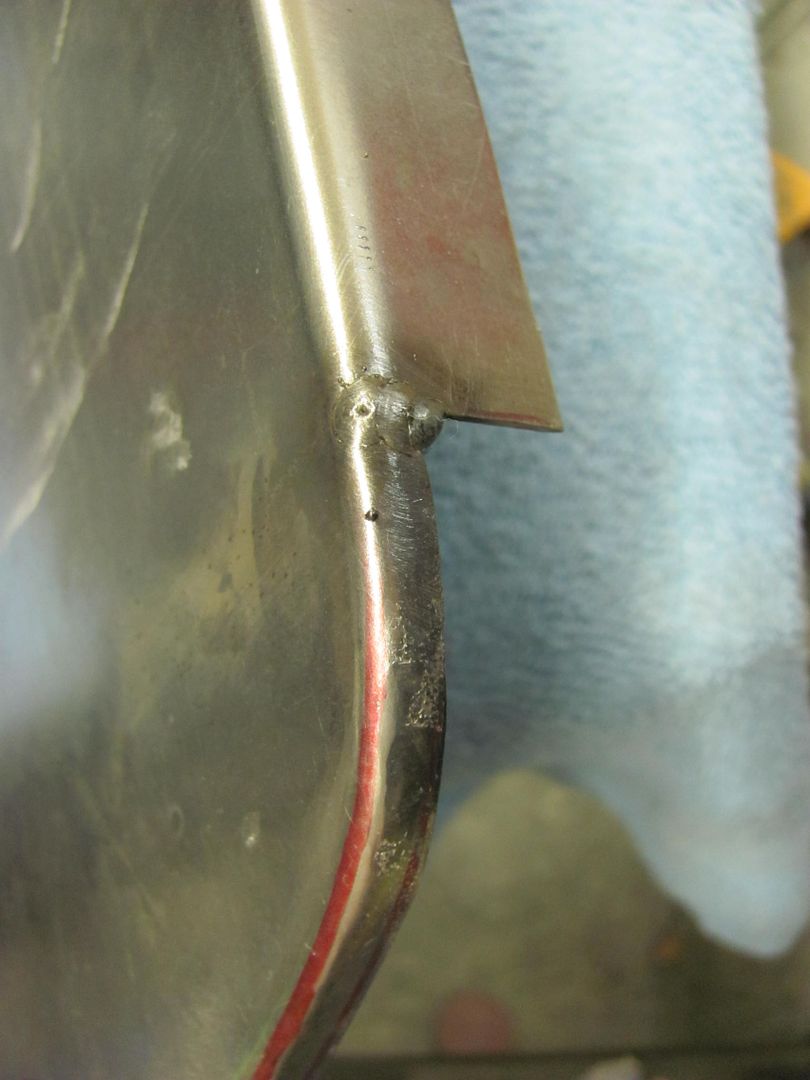
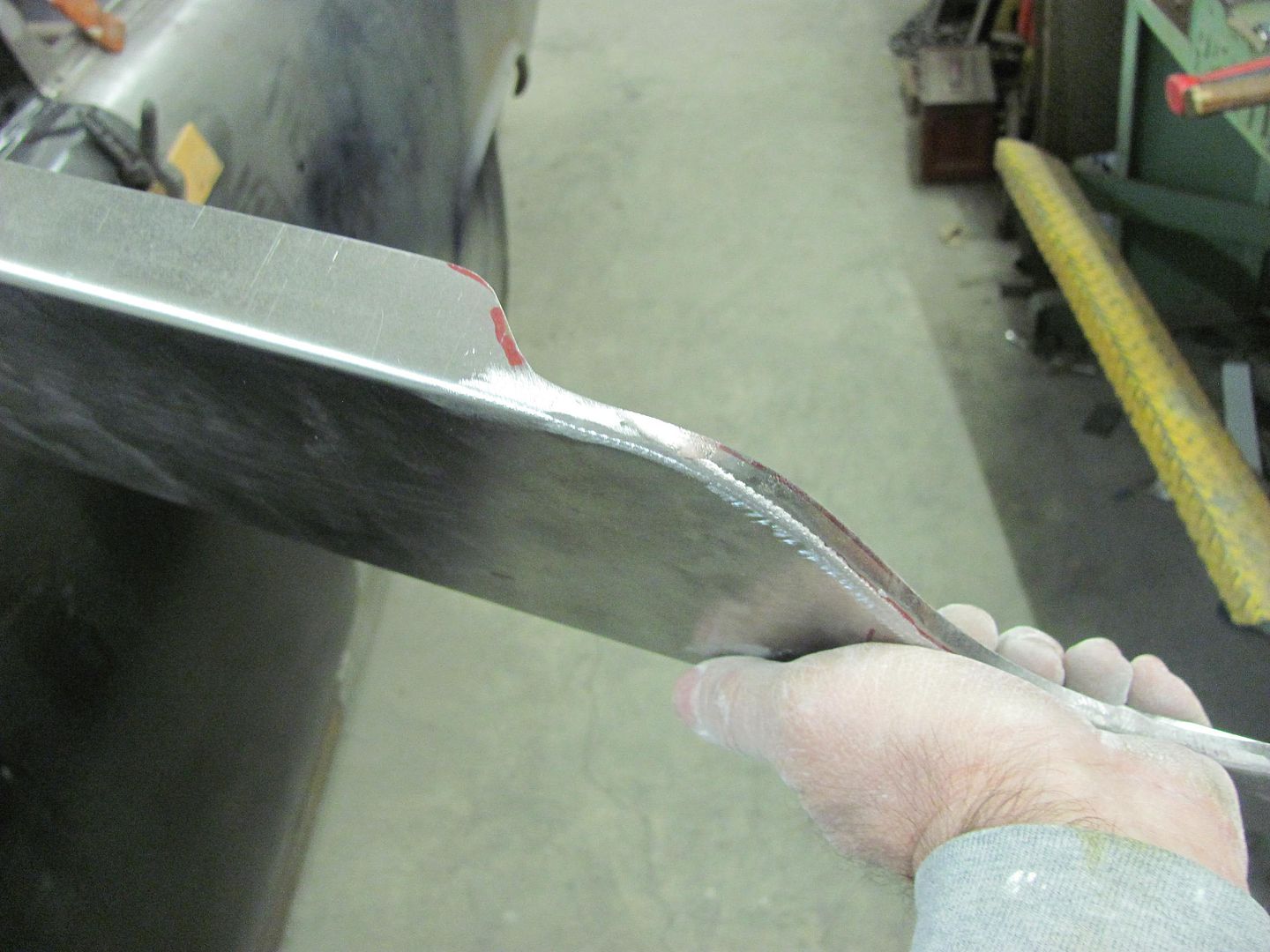
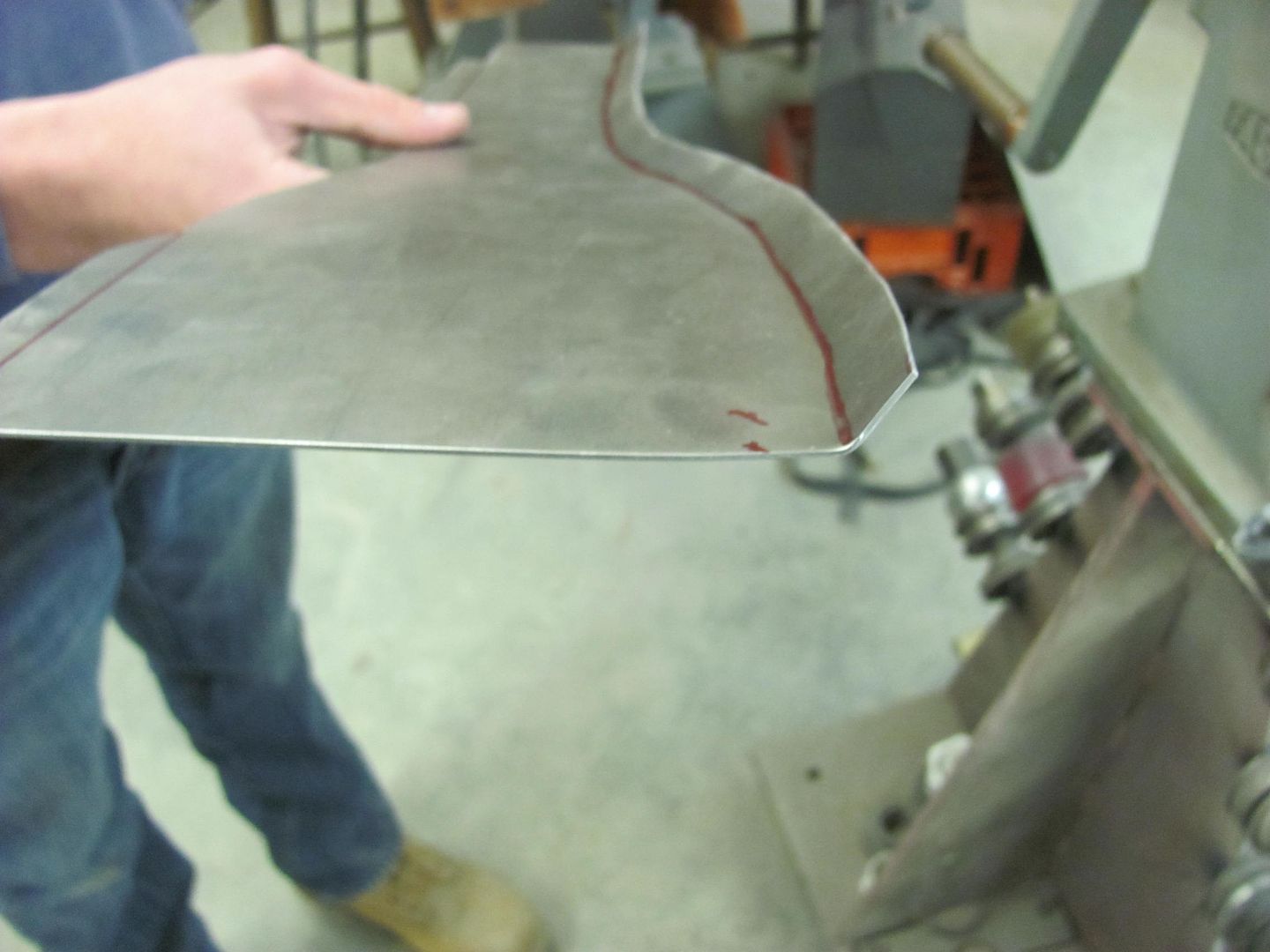
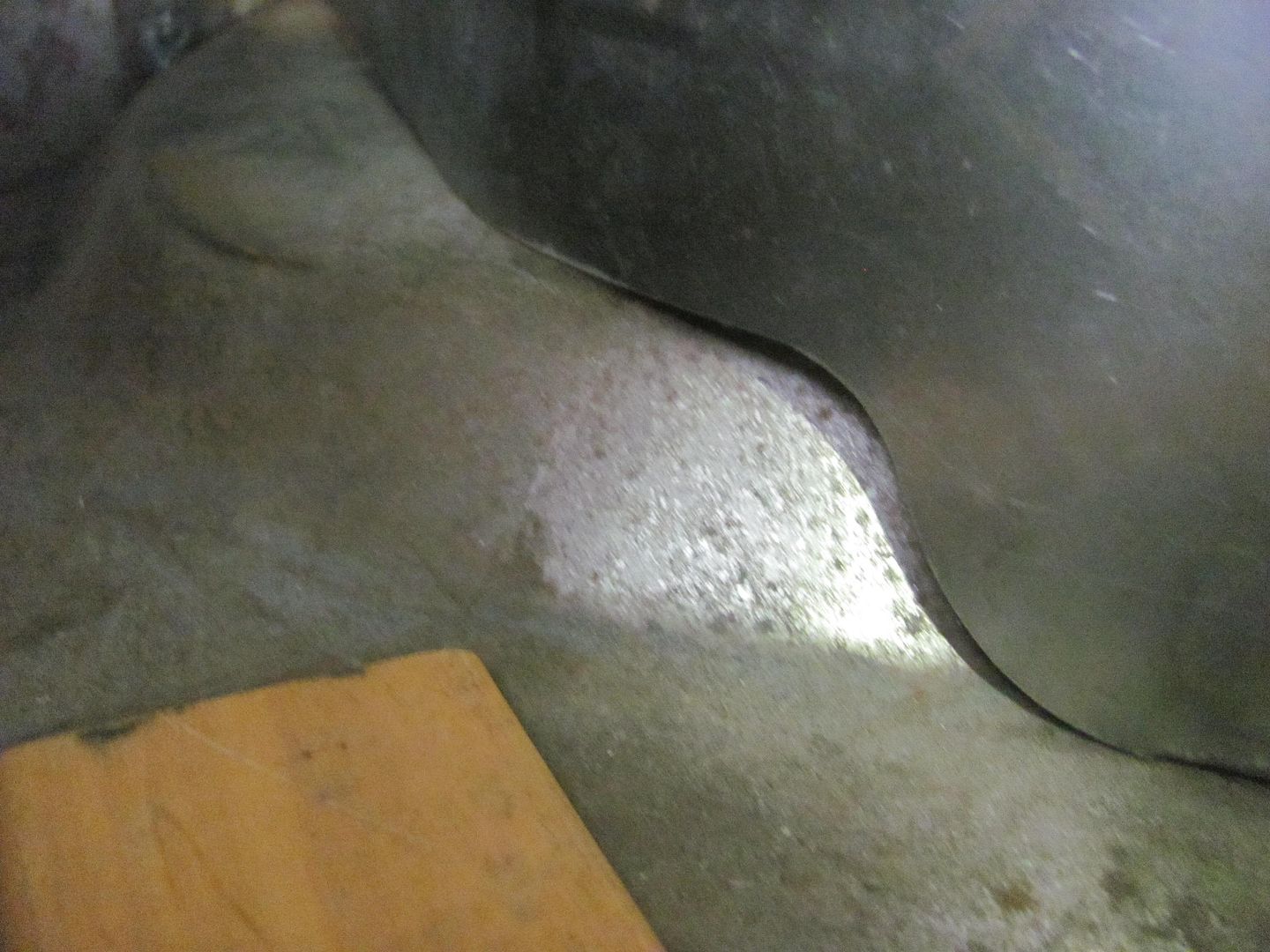
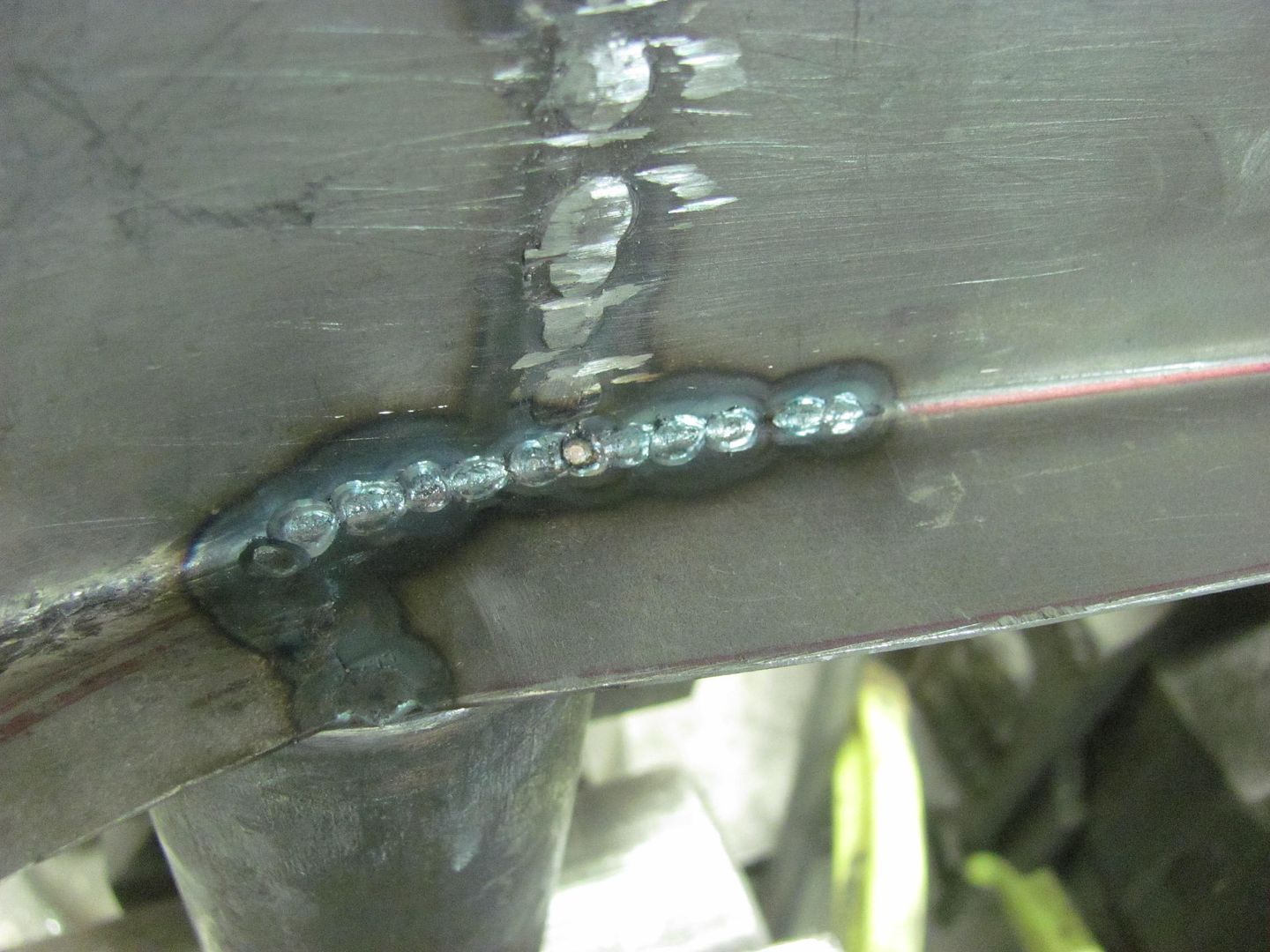
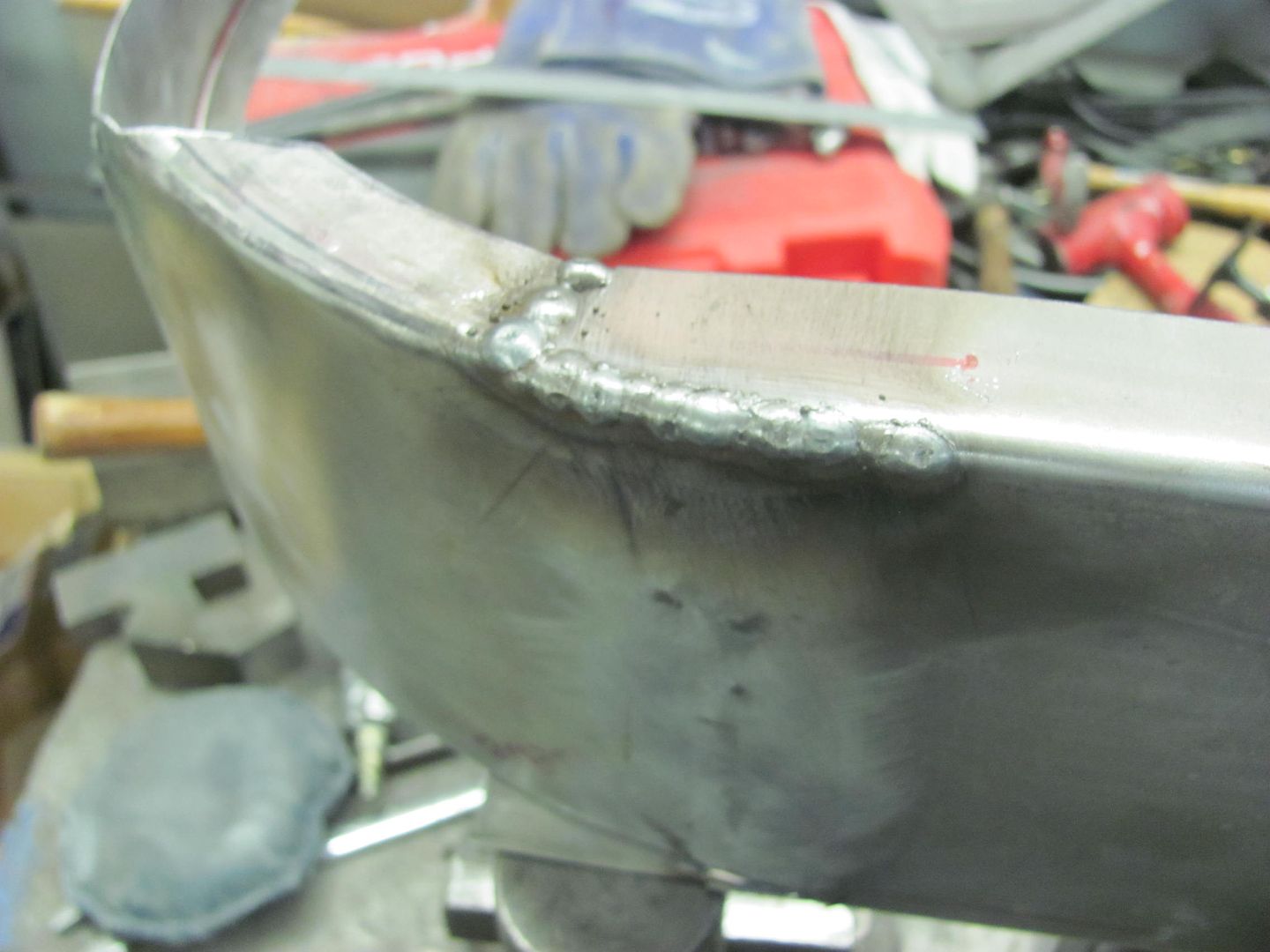
More work on the rear seat supports.. Once the welds by the tunnel relief were dressed, the sharp corners (inside and out) were removed to help prevent any cracks from starting..


Picture%202226.jpg


Picture%202230.jpg


Picture%202231.jpg


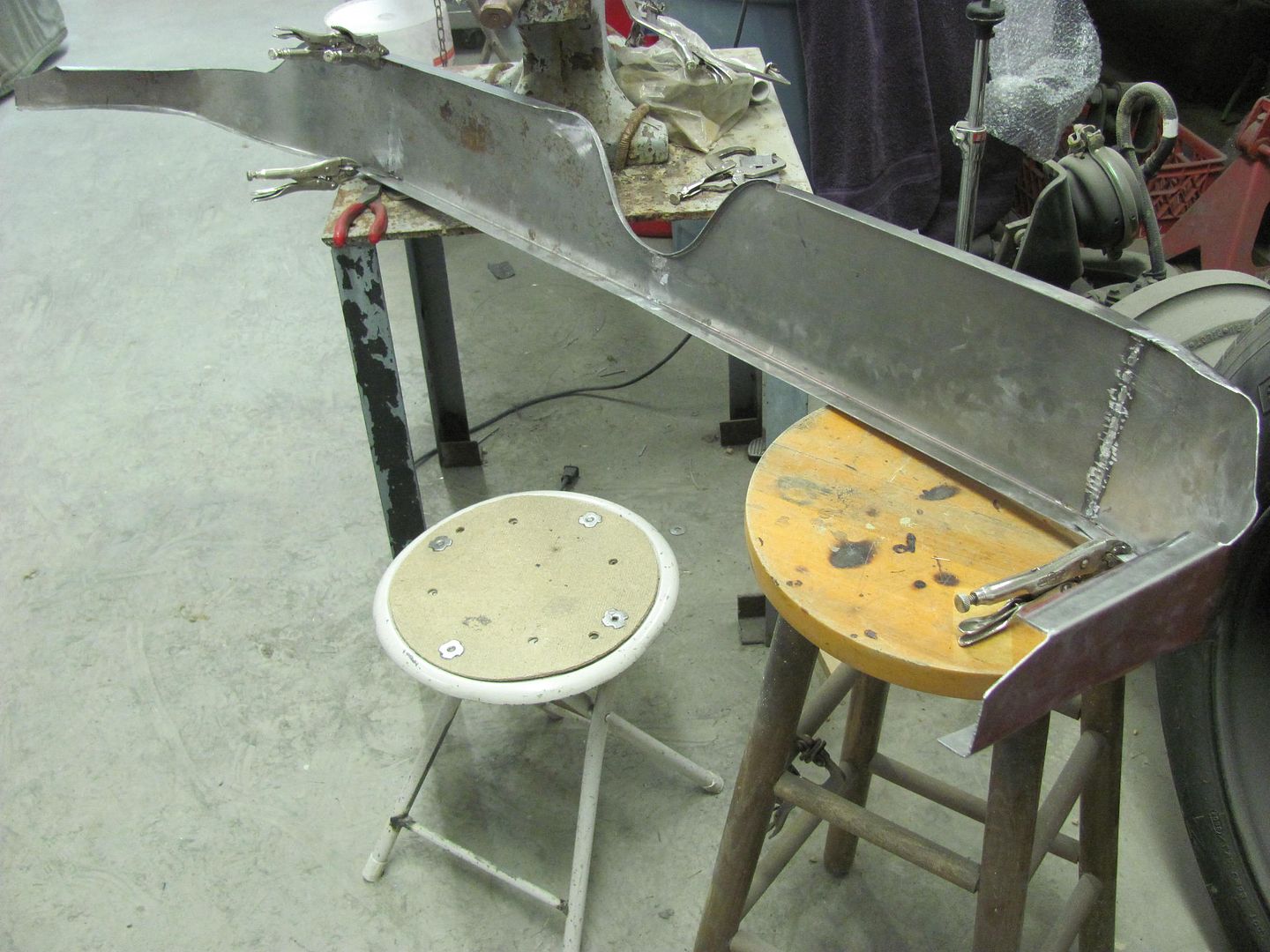
Then on to fabbing up the other side..


Picture%202232.jpg


Picture%202234.jpg


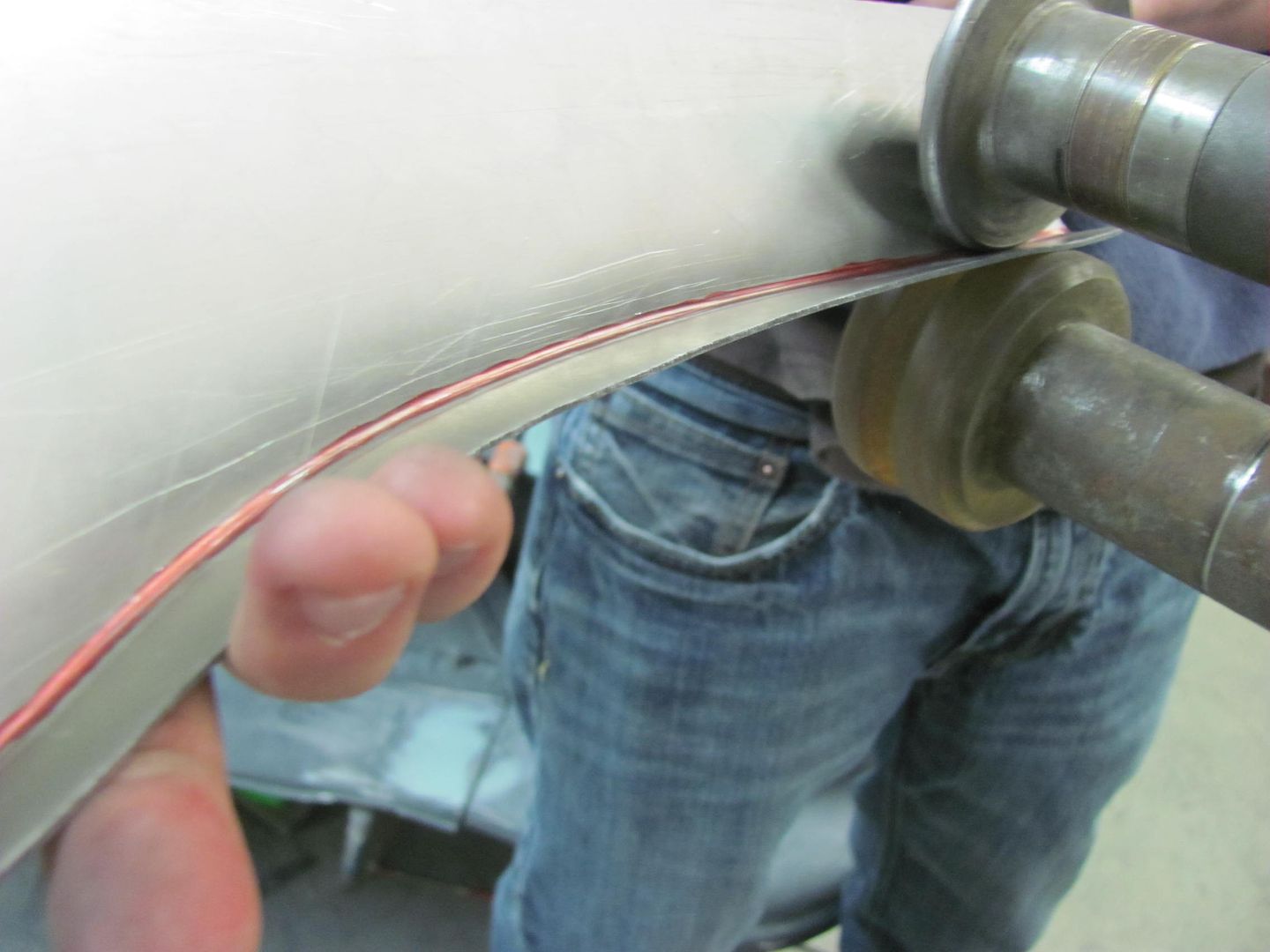
Kyle using the tipping die, I was relegated to bead roller powered option...


Picture%202235.jpg


Picture%202236.jpg


Picture%202239.jpg


Picture%202240.jpg


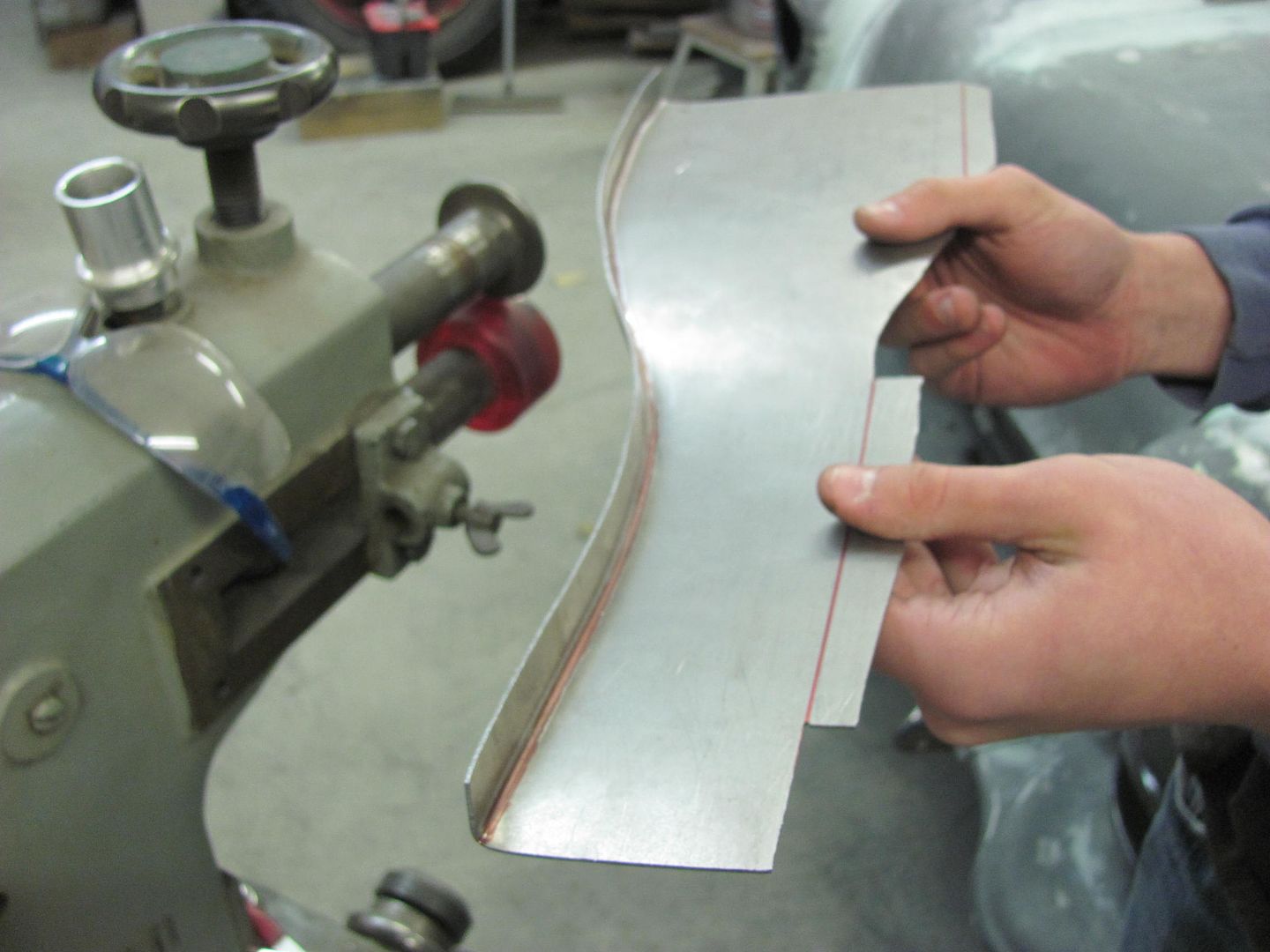
The two short flanges were bent in the press brake.. Then on to shrinking the flanges in the Erco. You'll have to visualize this one as we didn't get pictures. :lol:


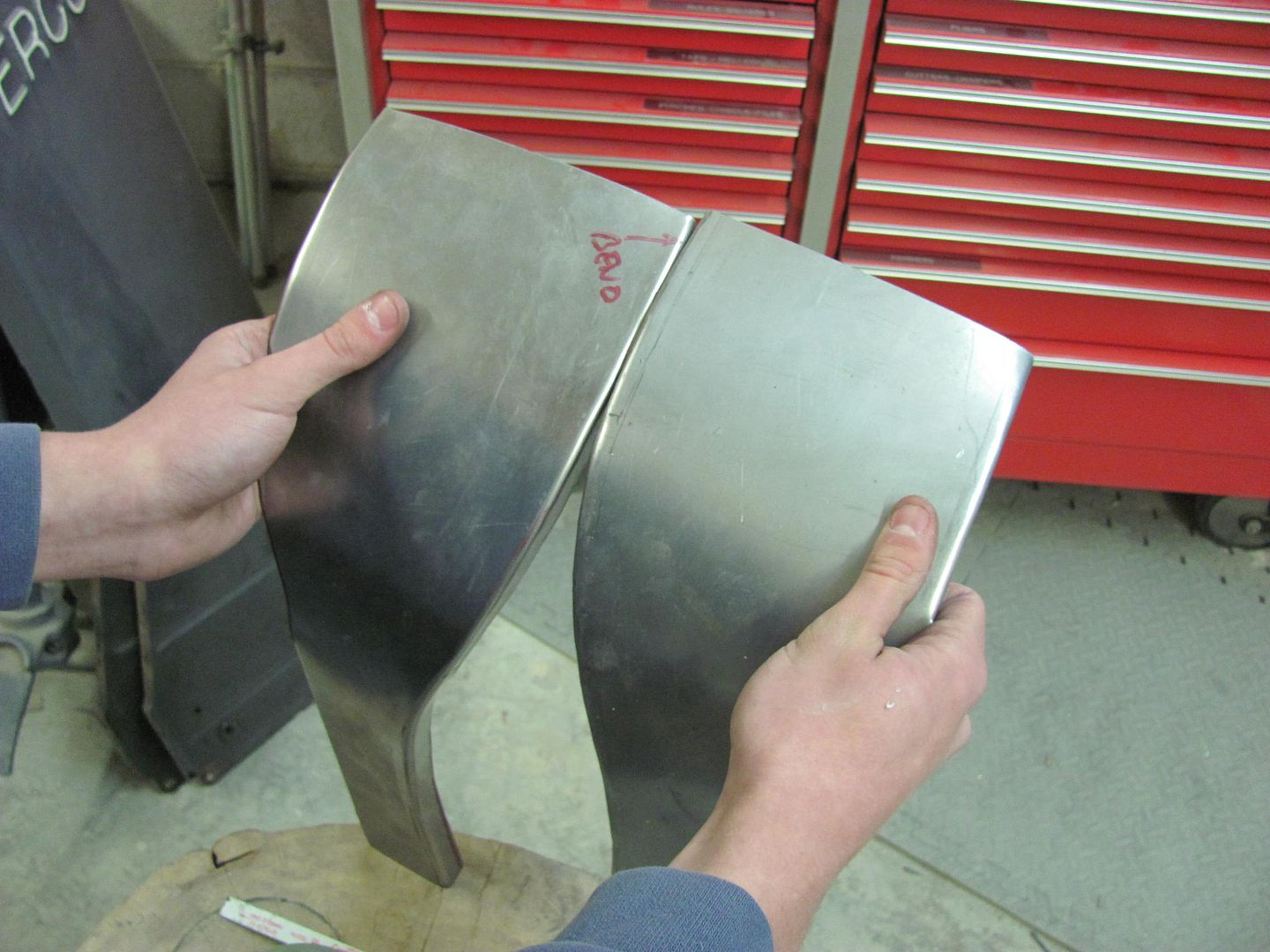
Comparing the two...


Picture%202245.jpg


Test fit...


Picture%202246.jpg


Seat cushion will need a widening kit..


Picture%202247.jpg
 

Divcod

Well-known member
Joined
Jan 9, 2015
Messages
319
Location
Pacific Northwest
Why did you fabricate the seat riser in two sections vs one? It seems as if you use more MIG skip welding than TIG, is this correct and if so why. Thanks for any explanations!

Enjoy seeing your work and equipment. A old metal worker told me he could do anything with a sand bag, hammers and dollies, it was just a matter of time. I find good tools help me a lot and save time.
 
OP
M

MP&C

Well-known member
Joined
Oct 21, 2009
Messages
4,396
Location
Leonardtown, MD
The length of the seat riser was longer than my machine capability at the time the first one was made. I had a 4' brake but it was 22 ga rated and didn't leave a very tight bend radius across the full span on 18 ga steel, so the piece was made in sections using the 24" Diacro press brake.

On the welding, creature of habit I guess. Need some old dog/new trick training. :lol:


Kyle did the welding on the seat riser, and hasn't learned the Tig yet. I told him he needed to learn Mig first, so he could get sick and tired of all the grinding. Then he would WANT to do better fitment that the Tig requires. His gap fitment on panels is getting better but not Tig better yet...
 

Divcod

Well-known member
Joined
Jan 9, 2015
Messages
319
Location
Pacific Northwest
Thks for the response, seems as if the size of equipment can add to the amount time and energy required to complete a project. Pictures of your shop looked like there was some heavier duty equipment. I am currently looking for a 8 ft brake and shear.

We spent 5 hours getting the fit on a qtr panel ready and then it took 45 minutes to weld and finish the joint. Seems like painting the work is in the prep.
 
OP
M

MP&C

Well-known member
Joined
Oct 21, 2009
Messages
4,396
Location
Leonardtown, MD
Another follow up to the FSJ drip rail.... Reminder:


Just as a follow up to this drip rail, the dies I used in the original attempt had about a .07 offset. I didn't want to alter their size as they get used once in a blue moon for sheet metal offset, like I did for the 55 Chevy truck windshield panel.. So I decided to make another set, and based on the dimensional difference between the good sample and the trial piece, it looked like I needed to add about .04 to the offset, or .110 total. So here are the new dies...


Picture1088.jpg


Picture1089.jpg


I again used the "backstop" die, and had to go back and trim a bit more off the width of the lower die to get the drip rail height correct.


Picture1076.jpg


Picture1077.jpg


Picture1078.jpg


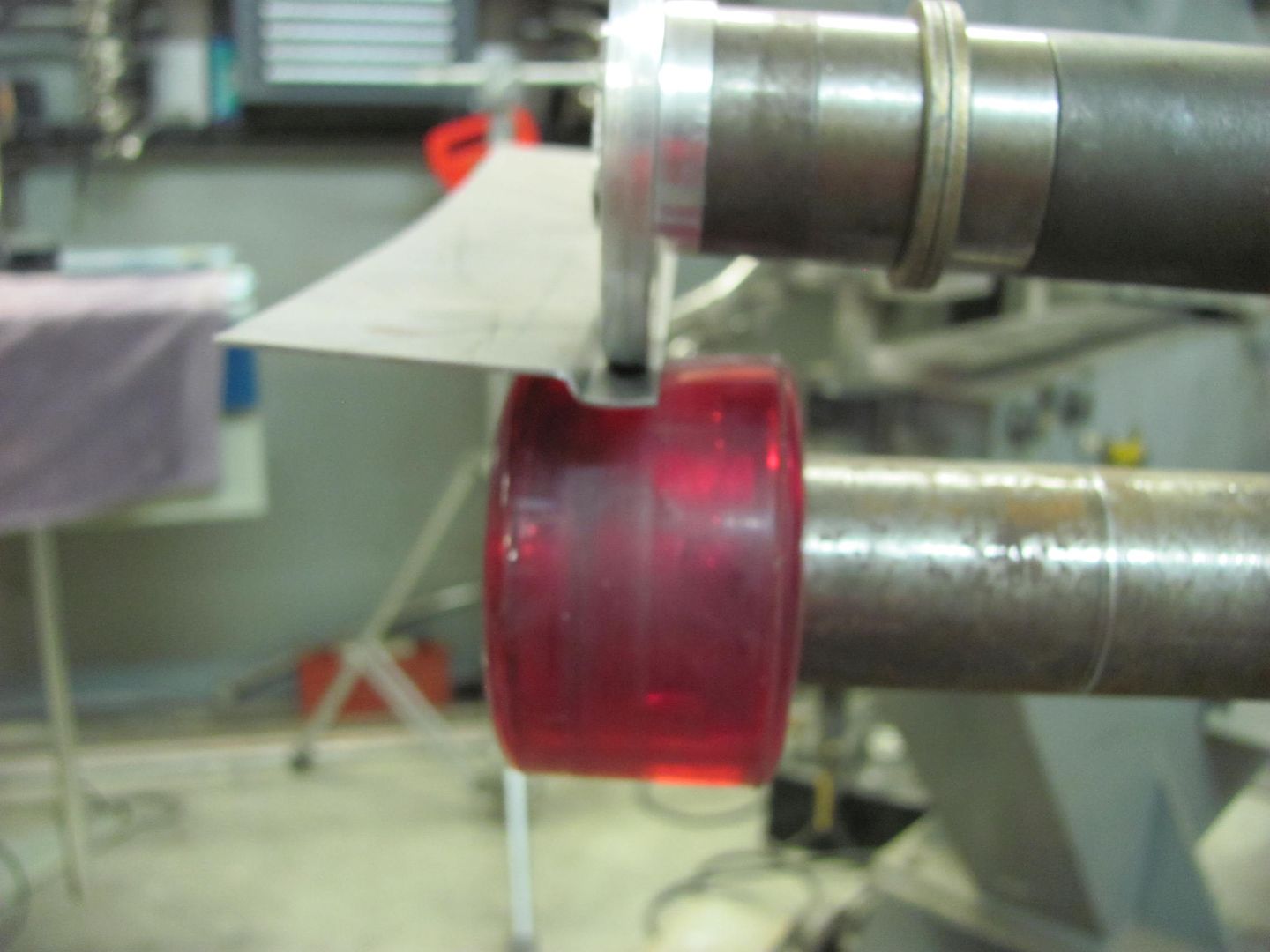
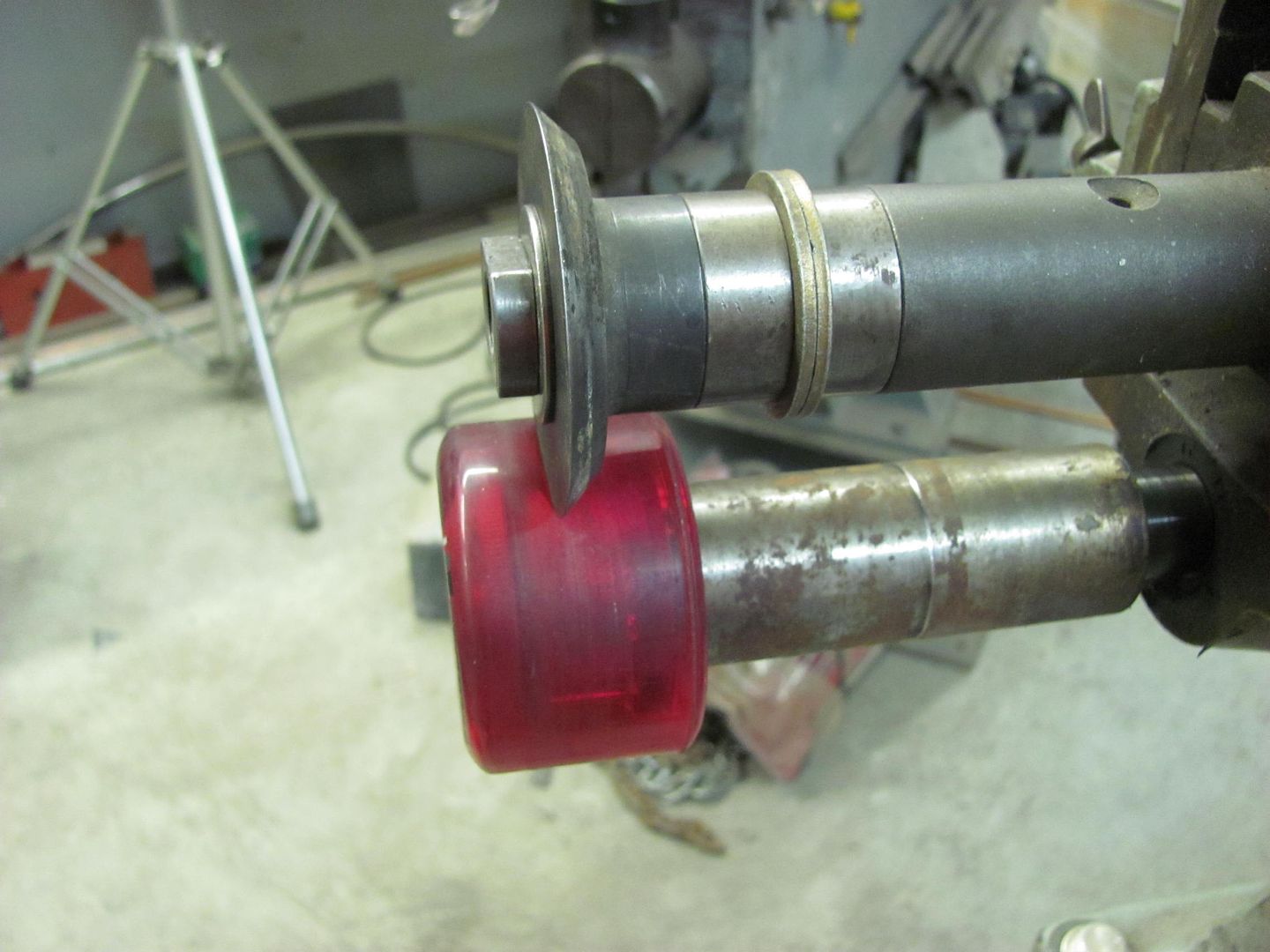
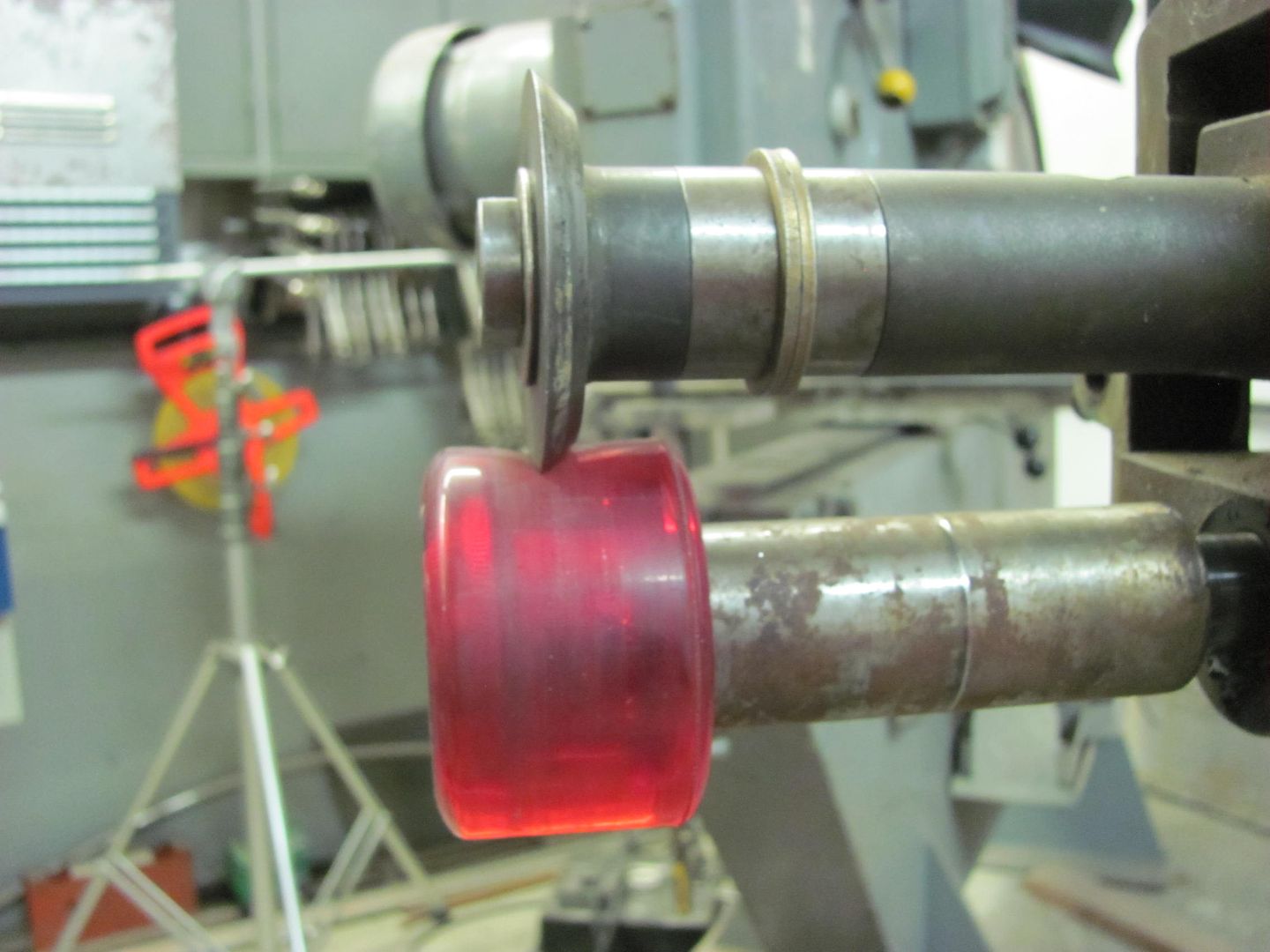
Then the "backstop" die was radiused to use with the skateboard wheel in providing the radius for the front face...


Picture1079.jpg


Picture1080.jpg


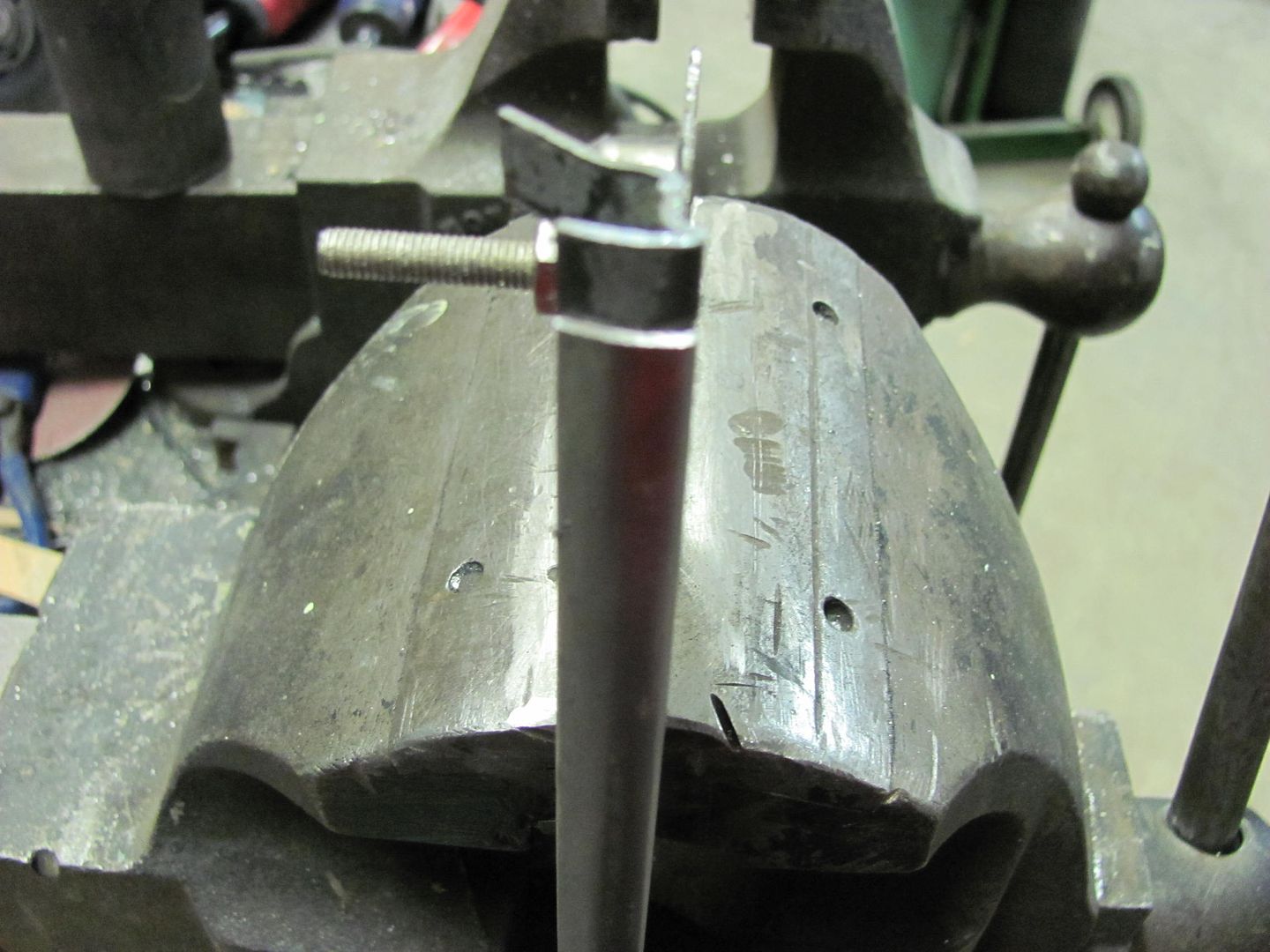
Then a few passes with the tipping die to fold up the front face...


Picture1081.jpg


Picture1082.jpg


The ends wanted to fold much more than the rest of the trial piece, so rather than continually readjust the tension, I sacrificed the first inch or so and just cut it off in the band saw.


Here is the outer portion formed, the height is about perfect, this is using die width and back stop to regulate dimension...


Picture1083.jpg


The offset also turned out much better. The sharp bend on mine wasn't quite as tight together, but we'll see what the Jeep guys say to this version.....


Picture1084.jpg


Picture1086.jpg


Picture1087.jpg


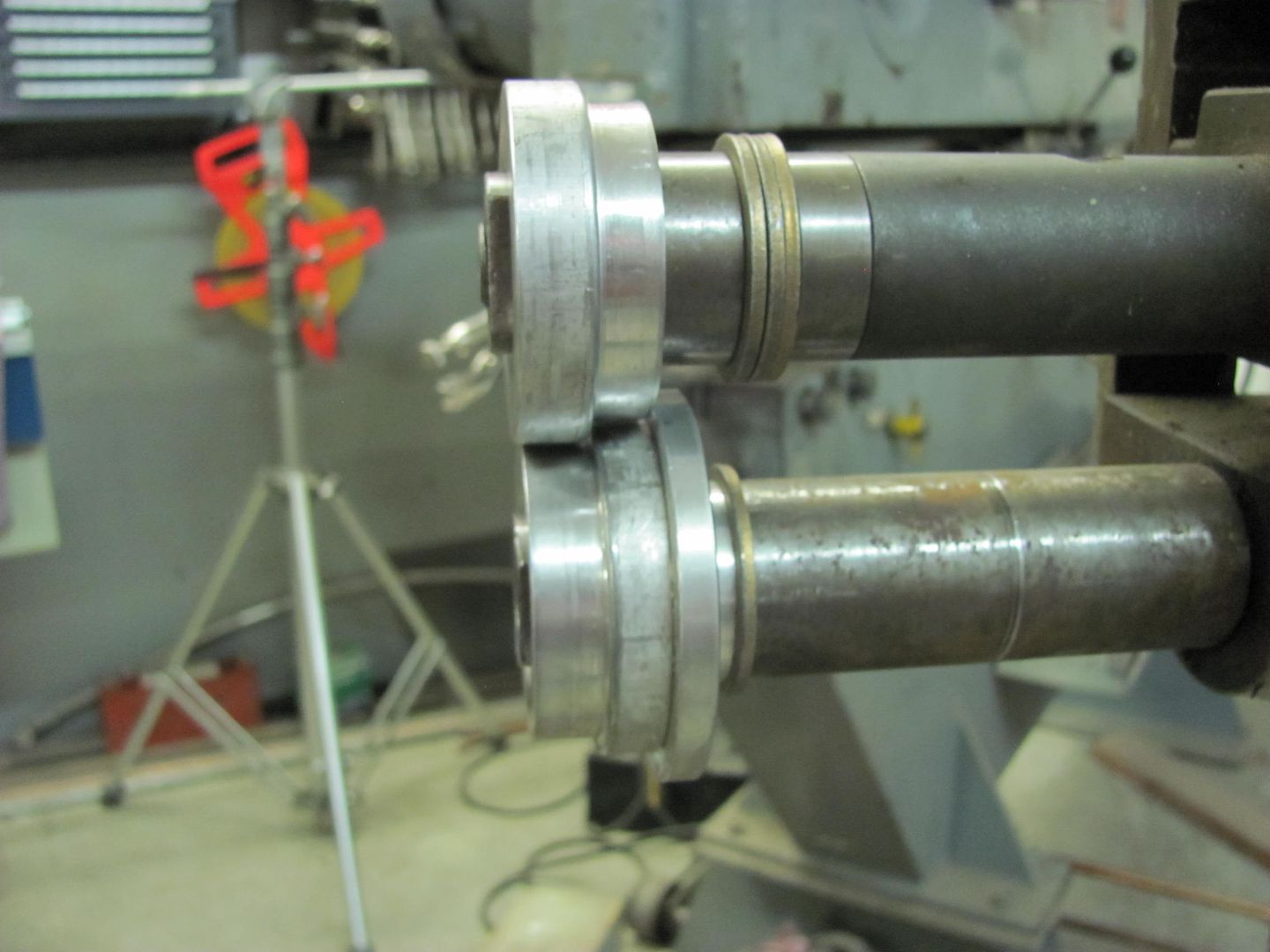
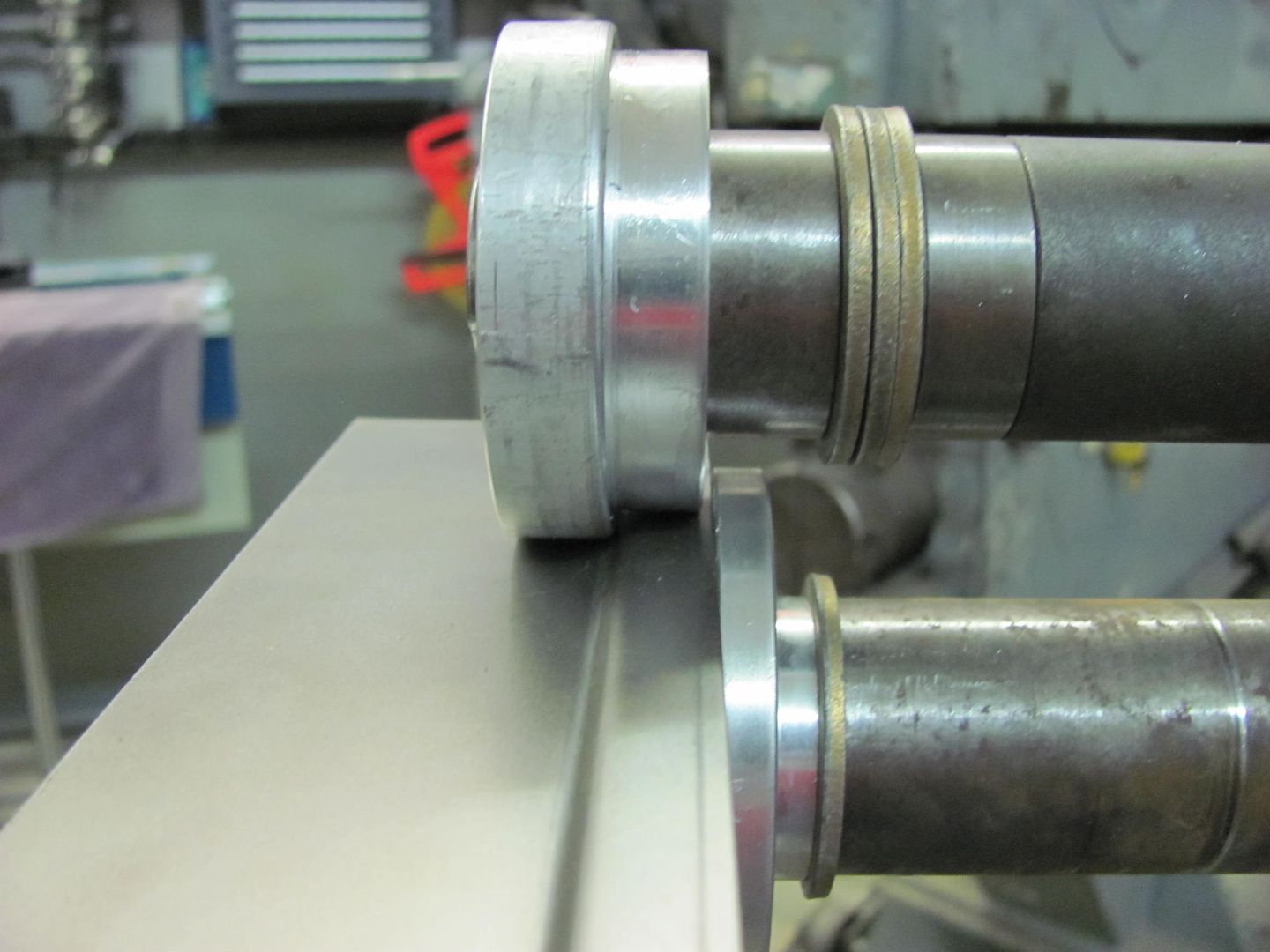
Part of the reason I hadn't made much headway on this was finding a consistent method of folding the face of the drip rail for repeatability. I had purchased some round discs for making dies for the bead roller and finally had a few spare moments last night while my nephew was cutting out hood vents for Honda S2000's.

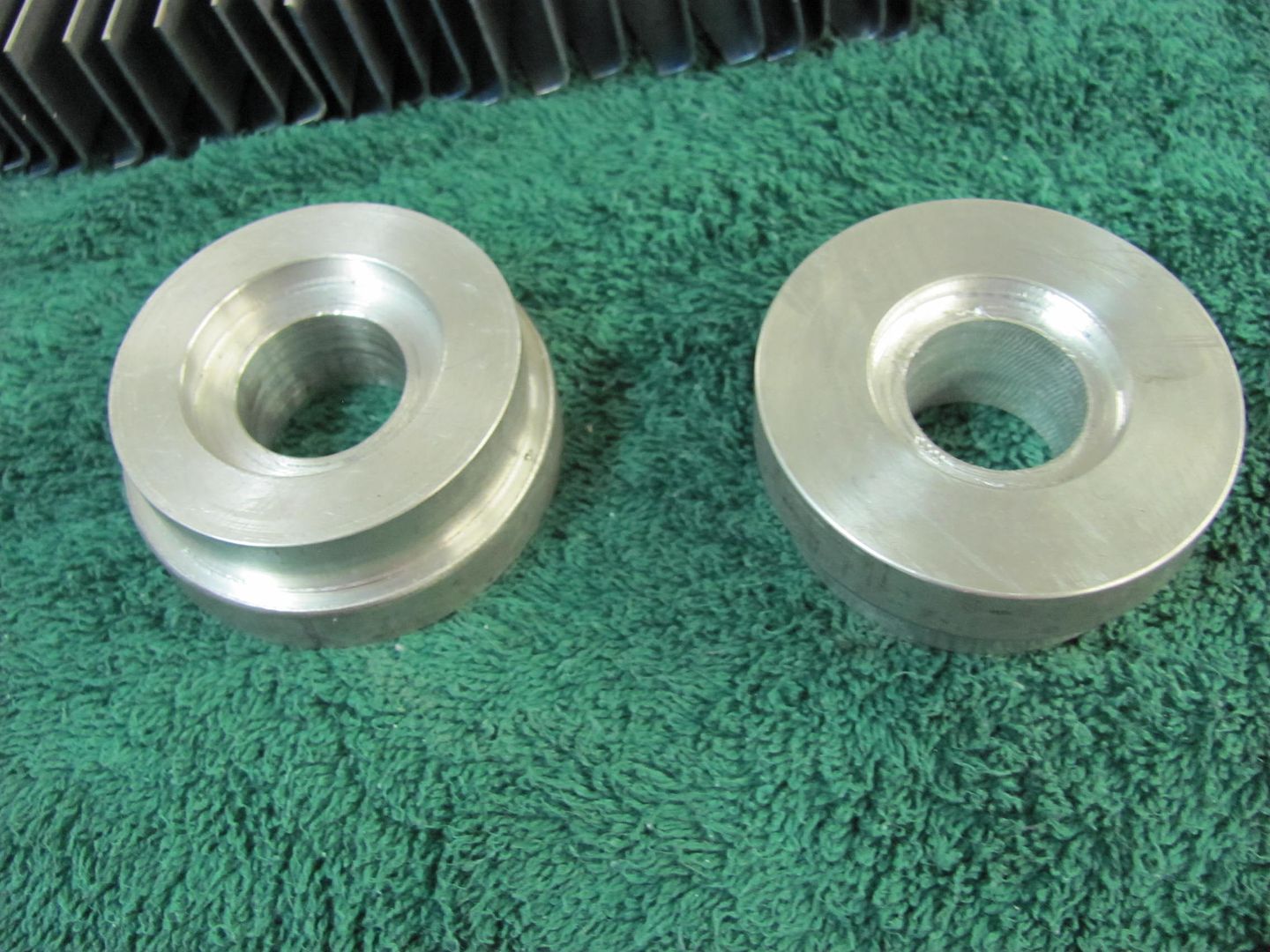
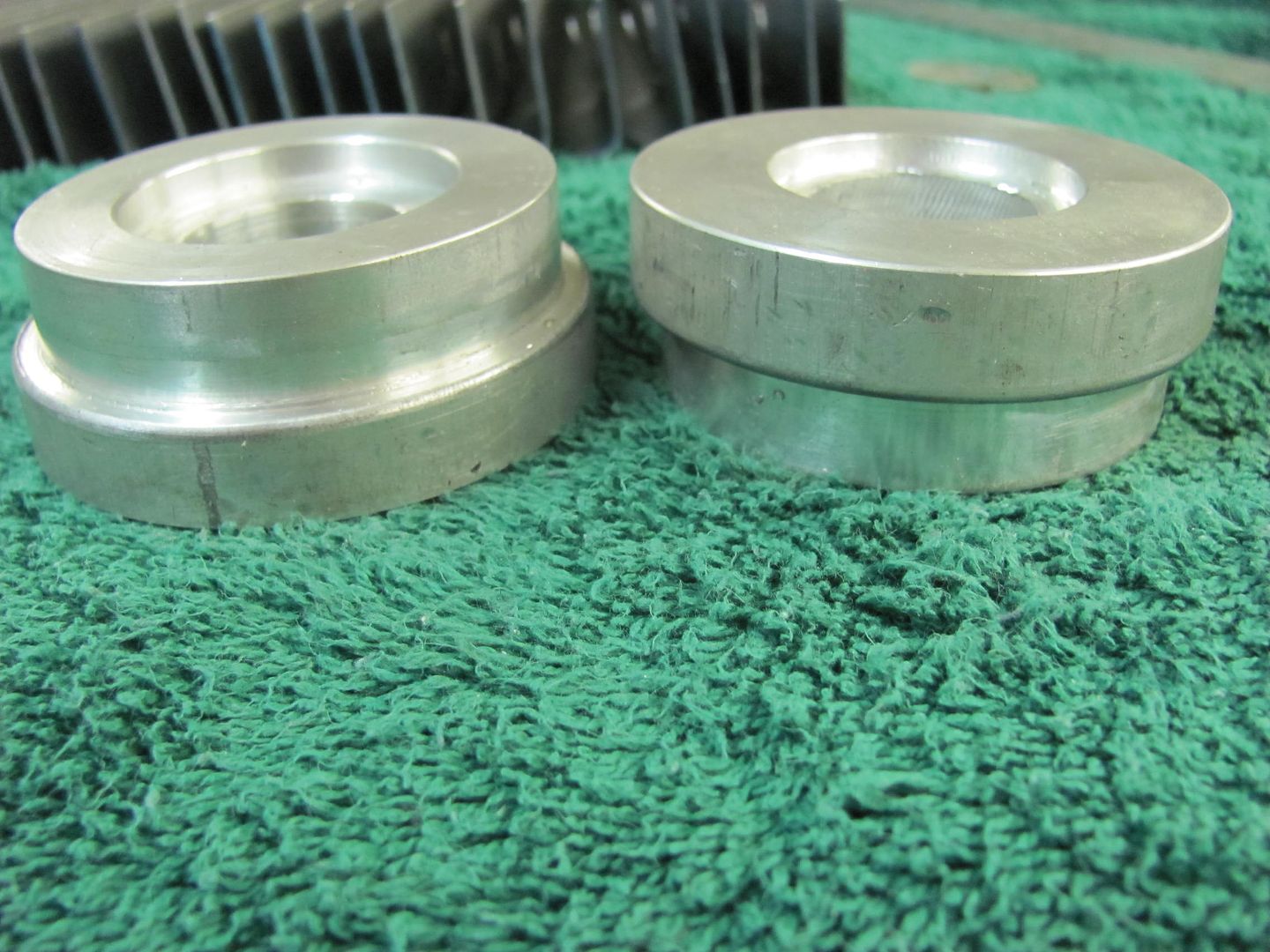
Here's our die blanks, 4" x 1/4" thick..


Picture%202249.jpg


My improvised "mandrel" for securing in the three jaw chuck on the South Bend for sizing the diameters


Picture%202253.jpg


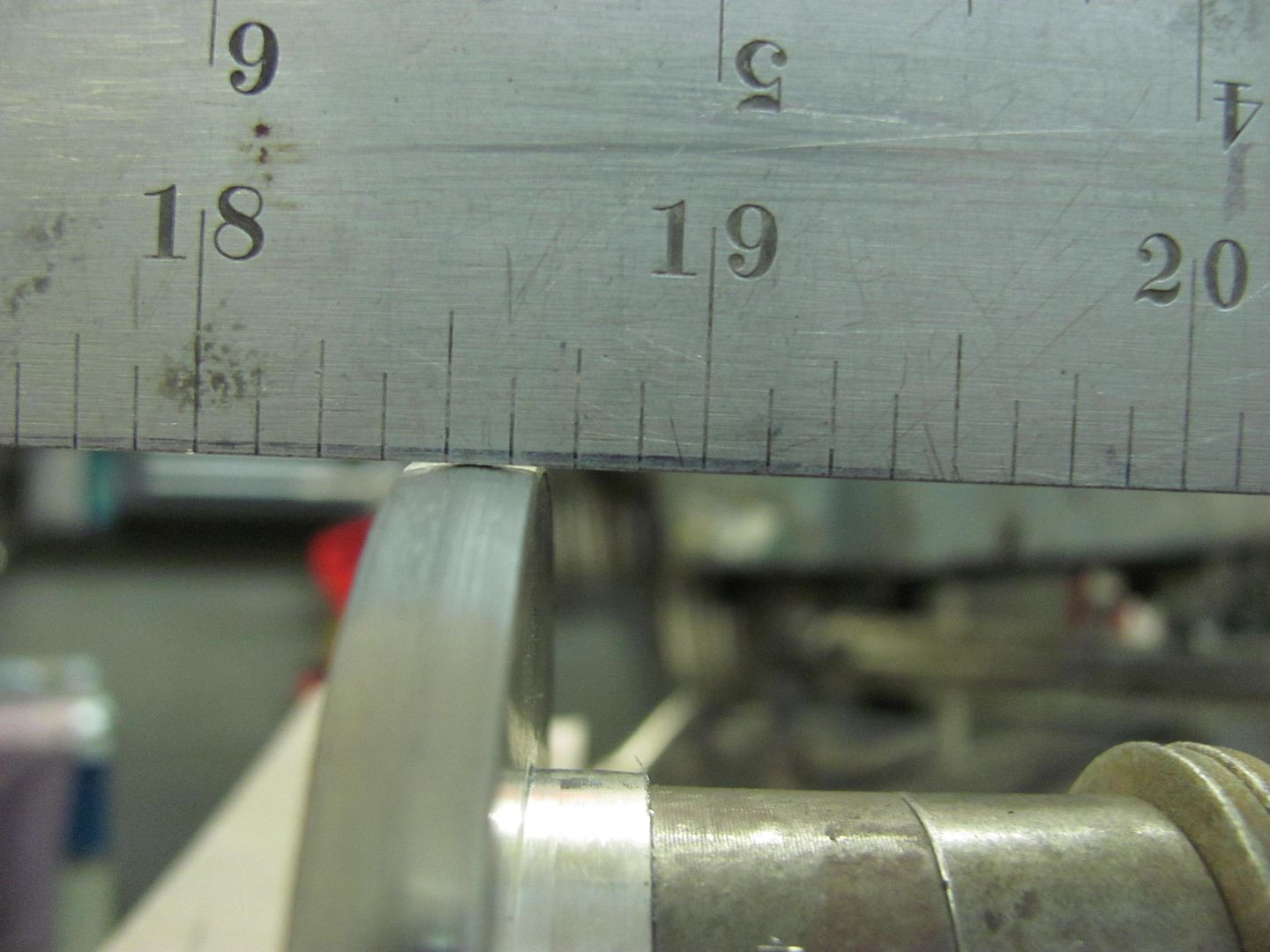
One piece was machined to support the face of the drip rail, the other an angular relief to support the lower bend as well as .050 relief for the metal thickness between the dies.


Picture%202251.jpg


Picture%202252.jpg


Then to open up our 1/2" diameter "mandrel" holes to 0.94 to fit the bead roller shafts...


Picture%202255.jpg


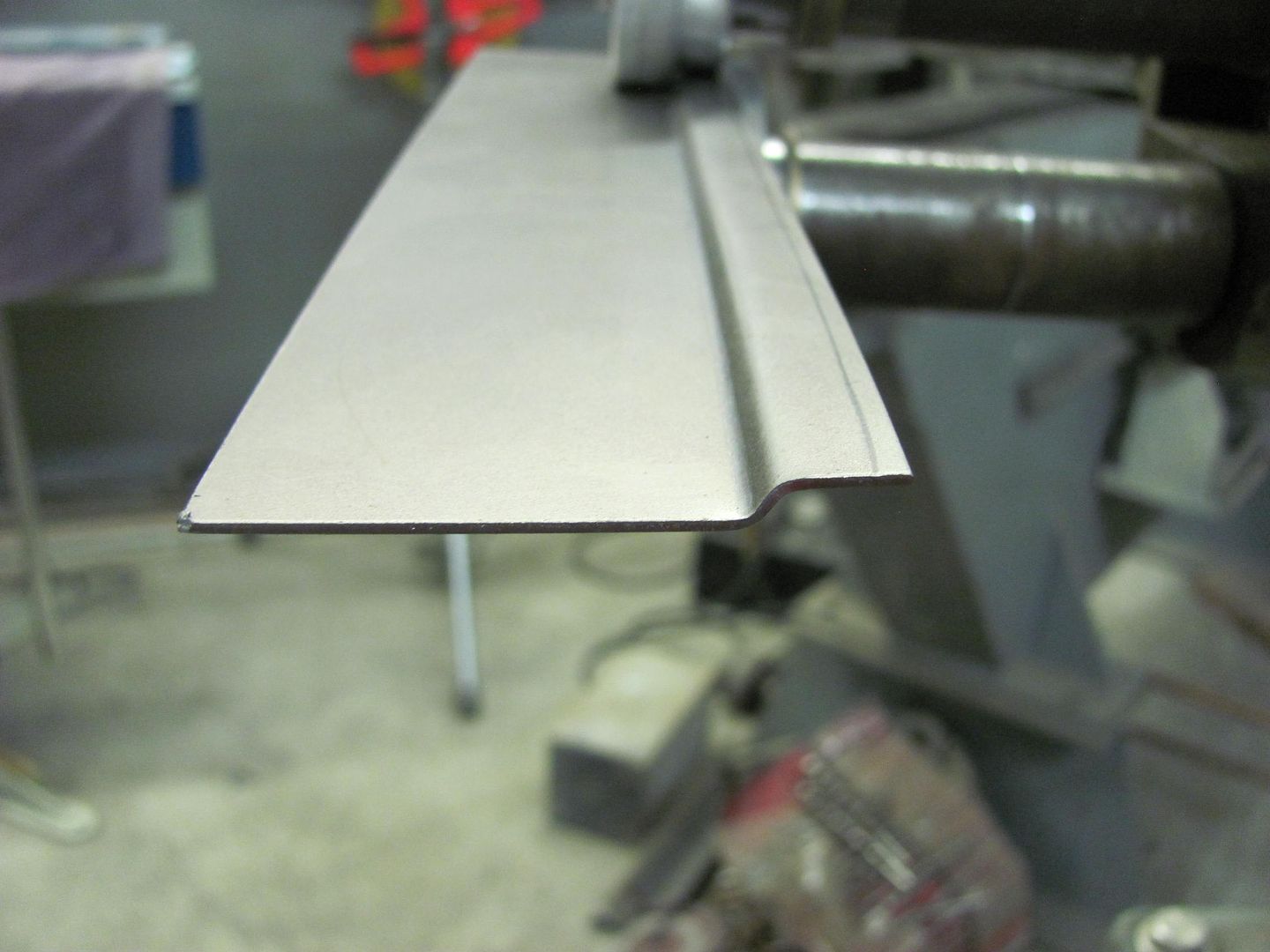
The thought is to do a partial bend of the drip rail face and use these on the bead roller, along with a plastic die to provide a consistent bend across a 24" piece. These are for the drip rails on the A pillar alongside the windshield..


Picture%202257.jpg


Picture%202258.jpg
 
OP
M

MP&C

Well-known member
Joined
Oct 21, 2009
Messages
4,396
Location
Leonardtown, MD
Thanks!


Our upholsterer stopped by the other day and discussed interior components. We are going to make some arm rests for the rear seat similar to what is used in the 55 convertible. To make room, we're going to keep the bottom seat cushion it's original width and just add foam to the corners to form the radius. So the sides for the seat risers were trimmed once more and test fitted...


Picture%202261.jpg


Picture%202260.jpg


The center of the seat riser was trimmed for the new size while leaving the flanges intact for later trimming..


Picture%202266.jpg


Picture%202267.jpg


Relief cuts added to tweak the radius, test fit into the car, and the top flanges clamped in place.. While clamped, the bottom flanges are trimmed for welding.


Picture%202268.jpg


Picture%202269.jpg


Picture%202270.jpg


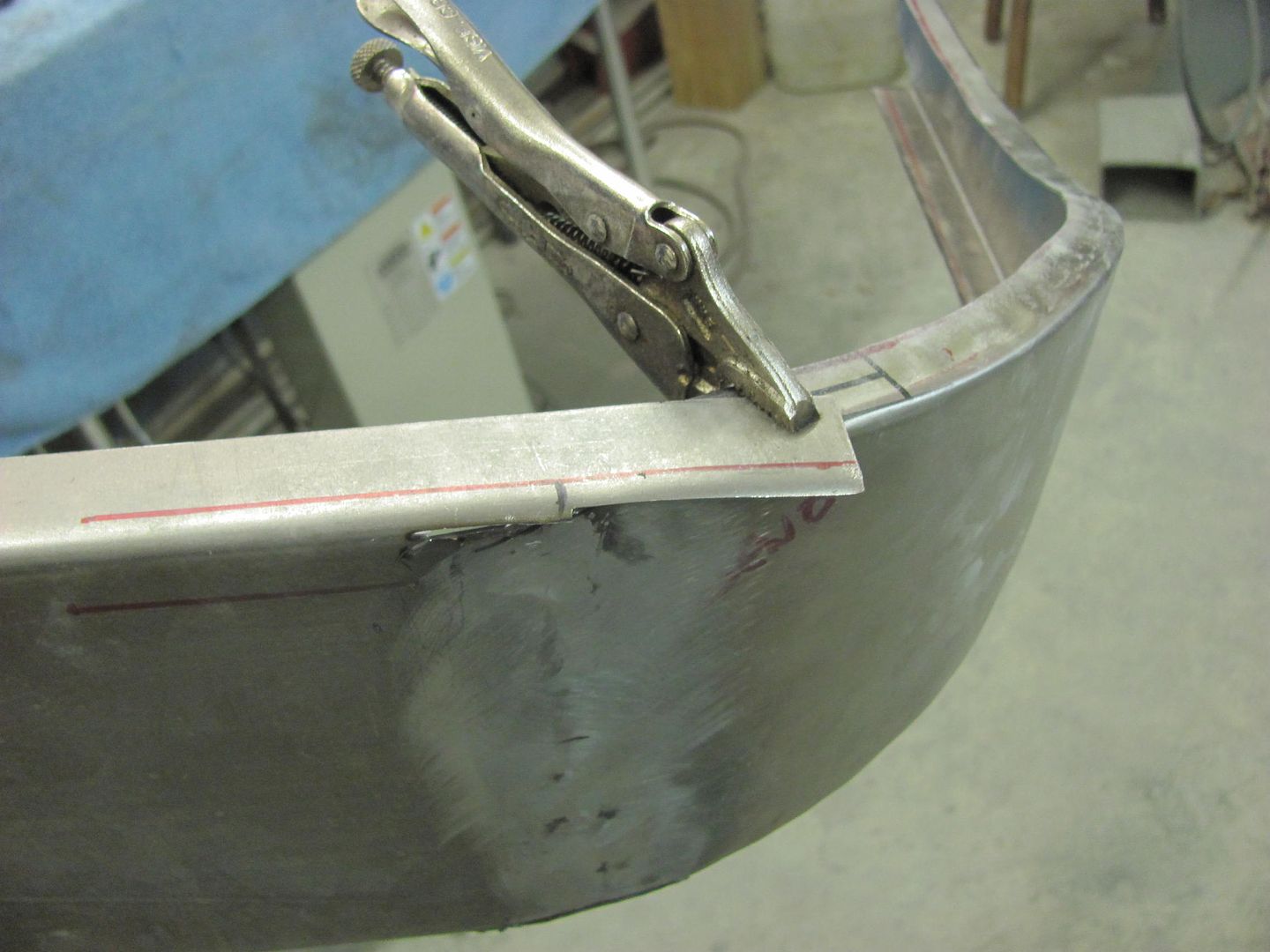
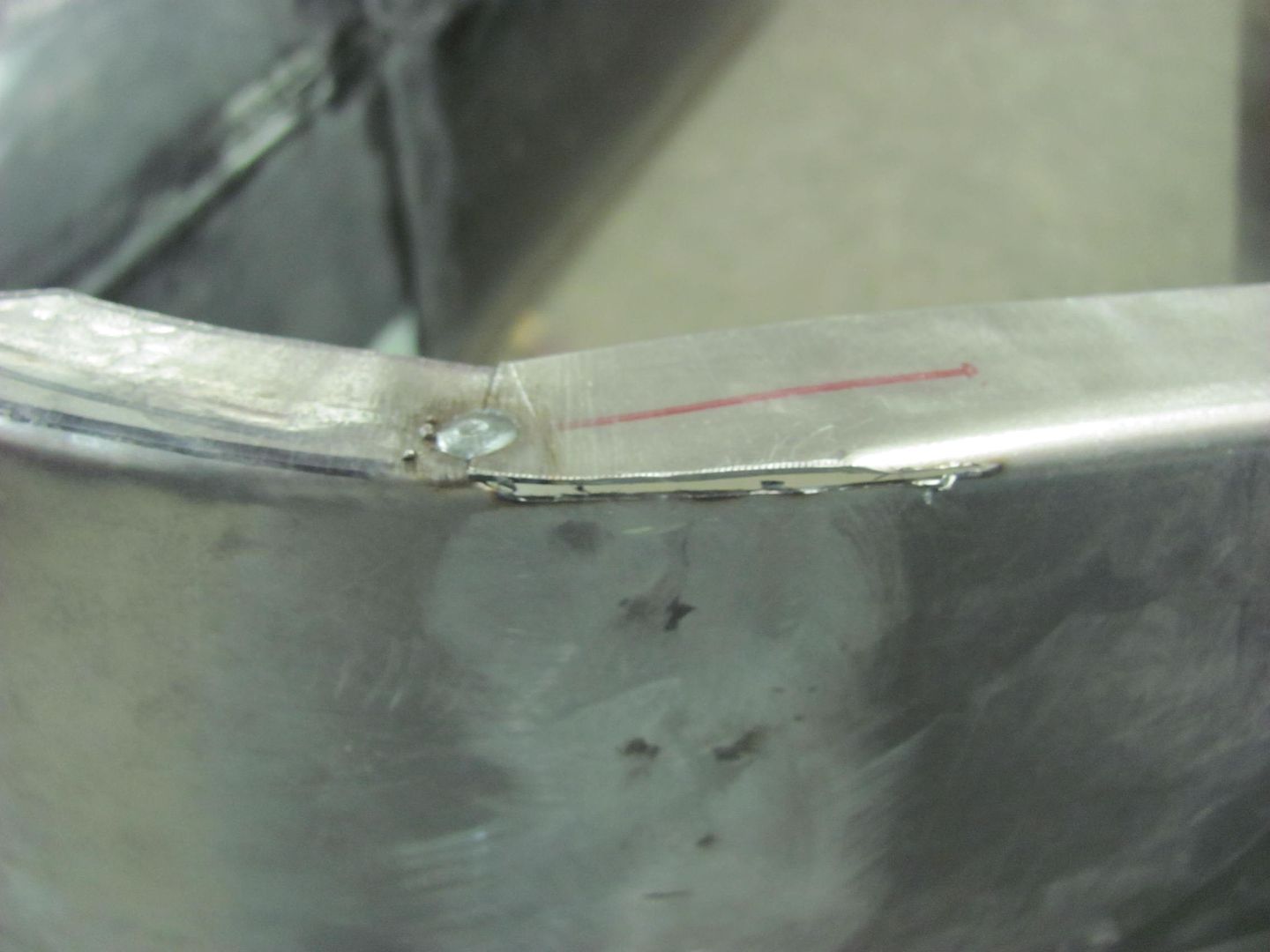
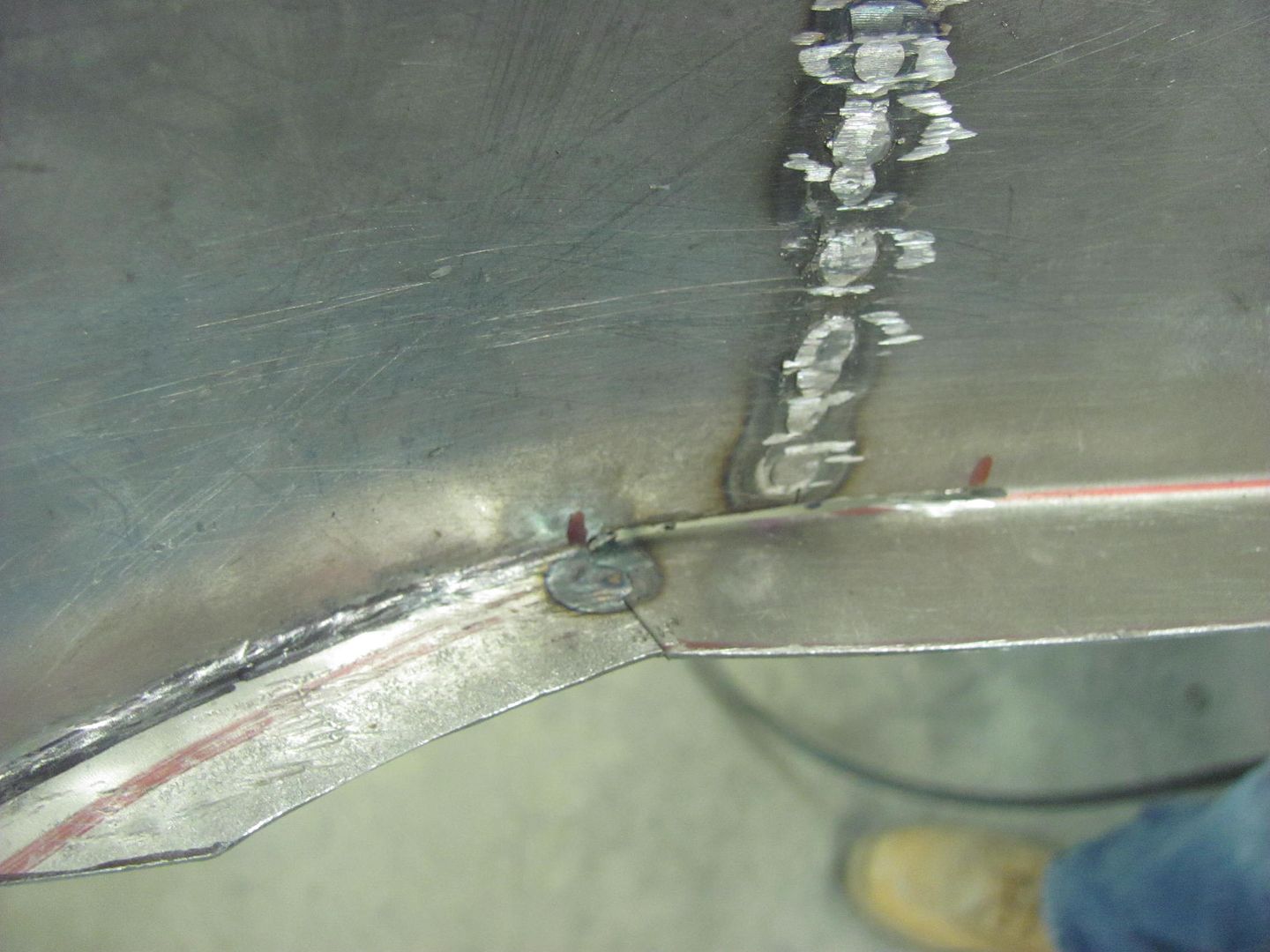
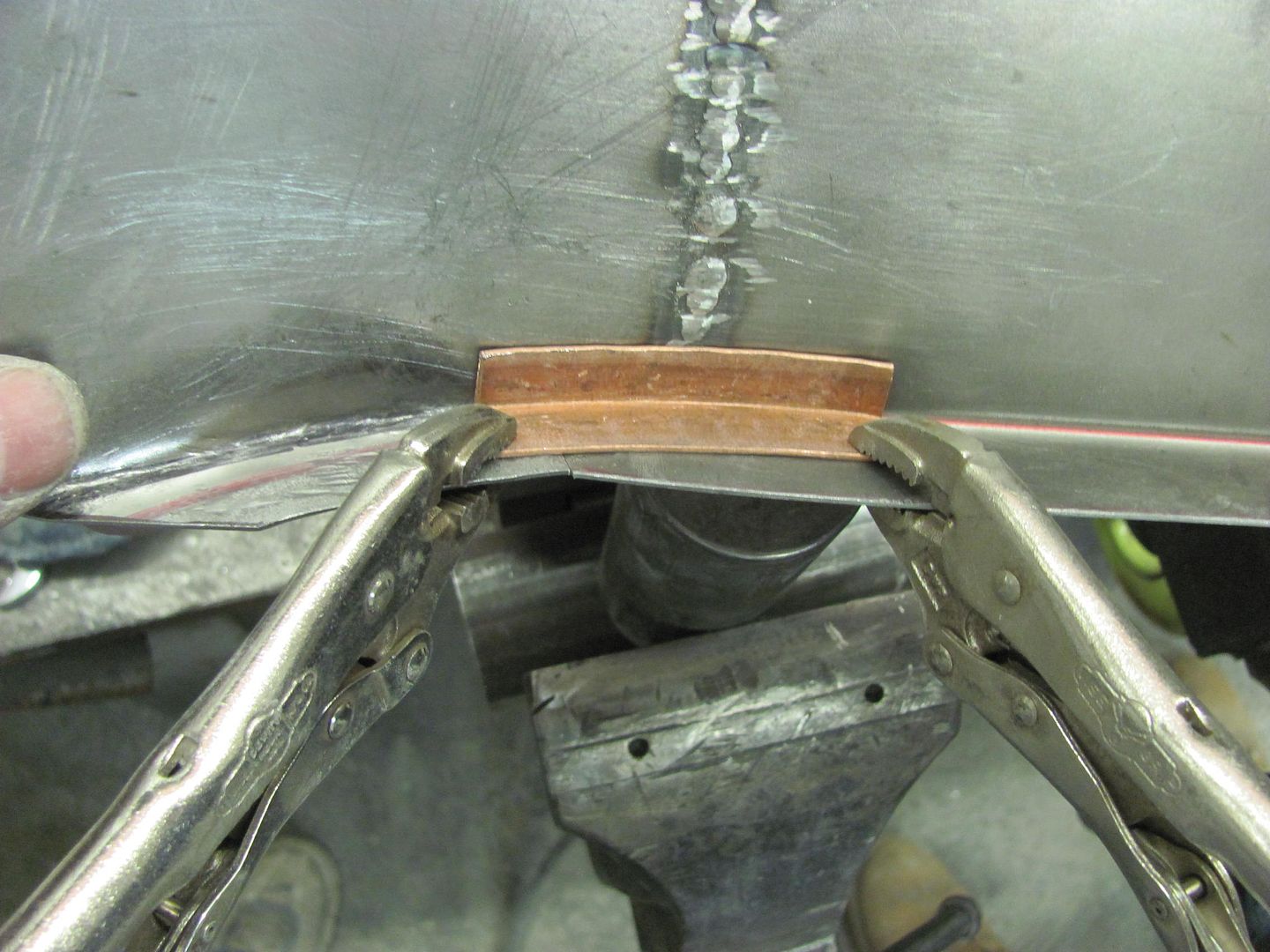
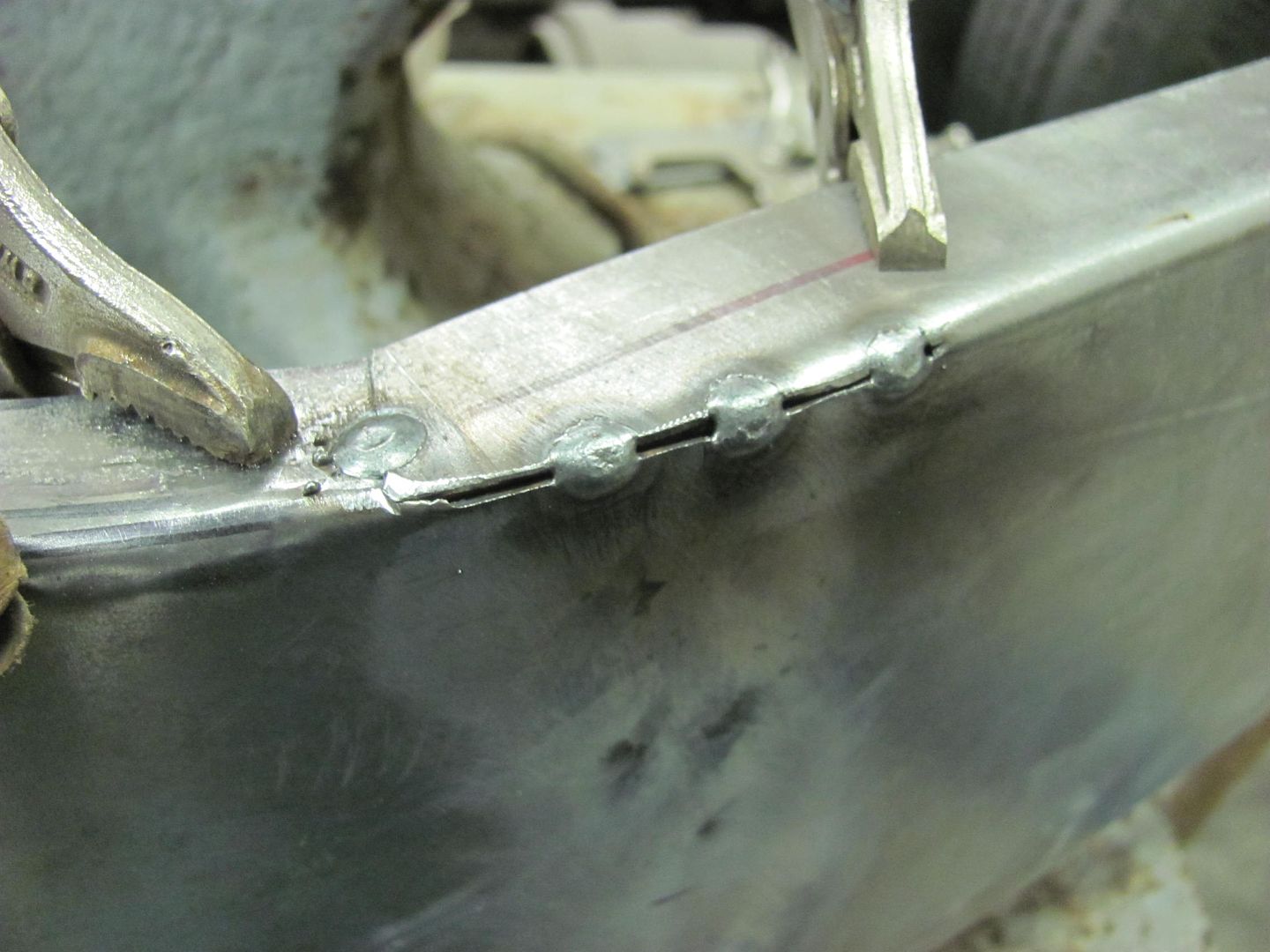
Copper backer made for welding up the corner..


Picture%202272.jpg


Picture%202274.jpg


Picture%202275.jpg


Picture%202276.jpg


All clamped up for the next one...


Picture%202277.jpg
 

bwingate

Member
Joined
Sep 27, 2014
Messages
16
I've read about 80% of this thread, the "Welding in patch panels" thread and a couple of others.


I am about to start patching the floors and a-pillars and other bits and pieces on a 1969 BMW 1600-2. A lot of bare steel will be left when I am done with each panel/section. That is, if the snow ever melts and it warms up here.


I've got two questions:


Are you using an etch primer on the bare metal at all or did you do some sort of phosphate coating before putting on the epoxy primer?


What is the order of coatings: primer then seam sealer or the other way around? (does it matter?)


Thanks, and phenomenal and inspirational work!!

Bruce.
 
OP
M

MP&C

Well-known member
Joined
Oct 21, 2009
Messages
4,396
Location
Leonardtown, MD
Most epoxy primers are a direct to metal (dtm) primer where an etch primer is not needed. They may have a slight bit of acid in their composition already to provide their own "etch" where any additional from using an etch primer first would be too much acidic content between the layers that a reaction and delamination occurs. Check the technical data sheet of the epoxy you plan on using, but I would say use a quality automotive epoxy and spray it directly over the bare, prepped metal..

If you've looked in the drip rails of any vintage automobile, no doubt you've seen seam sealer that has shrunk, cracked, and leaves bare metal exposed. My preference is to coat the area first in epoxy, to provide a good substrate and seal the bare metal. Most epoxy finishes are going to be more fluid than a seam sealer, so they should also do a better job of seeping into any panel seams. Then apply seam sealer.
 

Zeke

Well-known member
Joined
Aug 13, 2009
Messages
17,176
Location
Long Beach CA, the sewer by the sea.
I've read about 80% of this thread, the "Welding in patch panels" thread and a couple of others.


I am about to start patching the floors and a-pillars and other bits and pieces on a 1969 BMW 1600-2. A lot of bare steel will be left when I am done with each panel/section. That is, if the snow ever melts and it warms up here.


I've got two questions:


Are you using an etch primer on the bare metal at all or did you do some sort of phosphate coating before putting on the epoxy primer?


What is the order of coatings: primer then seam sealer or the other way around? (does it matter?)


Thanks, and phenomenal and inspirational work!!

Bruce.
A local Porsche restorer keeps cars bare for weeks if not months. They wipe them down with a phosphoric acid solution regularly. Bear in mind that they are 4 miles from the Pacific Ocean so rust can and does occur even overnight if the humidity is high. IIRC, they go directly to polyester primer when it's time to enter that stage.

Personally, I like the epoxy primers as a first coat over bare metal as long as the metal work is done and there is little possibility of sanding through. I can't find anything in this thread that I don't agree with. Fantastic work. I've been down this path but due to shoulder problems had to put the hammers away.
 

bwingate

Member
Joined
Sep 27, 2014
Messages
16
Most epoxy primers are a direct to metal (dtm) primer where an etch primer is not needed. They may have a slight bit of acid in their composition already to provide their own "etch" where any additional from using an etch primer first would be too much acidic content between the layers that a reaction and delamination occurs. Check the technical data sheet of the epoxy you plan on using, but I would say use a quality automotive epoxy and spray it directly over the bare, prepped metal..

Thanks - what's the best way to mix and apply a small amount of primer - I'll be working in small sections maybe only 4 square feet. I'm also worried about poisoning my family if I apply this in my attached garage.
 
To avoid these ads, REGISTER NOW!

bwingate

Member
Joined
Sep 27, 2014
Messages
16
A local Porsche restorer keeps cars bare for weeks if not months. They wipe them down with a phosphoric acid solution regularly. Bear in mind that they are 4 miles from the Pacific Ocean so rust can and does occur even overnight if the humidity is high. IIRC, they go directly to polyester primer when it's time to enter that stage.

I'm on Long Island, N.Y., not quite sea-side, but it gets and stays humid all summer. Porsches are a slightly different animal, from what I understand their panels are galvanized at the factory so they rust less/slower.
 
OP
M

MP&C

Well-known member
Joined
Oct 21, 2009
Messages
4,396
Location
Leonardtown, MD
Zeke, thanks for adding your experiences.. Many times the humidity of other locales isn't addressed in responses if it's not something you contend with as well... :eek:


Thanks - what's the best way to mix and apply a small amount of primer - I'll be working in small sections maybe only 4 square feet. I'm also worried about poisoning my family if I apply this in my attached garage.


Small areas are hardly worth having to clean out a spray gun for. Many people will mix up the epoxy, let it incubate if required, and apply with a small low knap paint roller or paint brush. I think the roller would give better coverage. Follow same instructions as if spraying, apply first coat, let flash, apply second coat. Keep in mind that this time of year you may need to heat the garage for a bit as some paints won't work well at all below 65. An extended period of heating may be required to bring up garage temp as well as the temp on the panel being painted..
 
Last edited:

Kevin54

MEMBER EMERITUS
Joined
Jan 12, 2005
Messages
29,341
Location
Urbana, Ohio
Zeke, thanks for adding your experiences.. Many times the humidity of other locales isn't addressed in responses if it's not something you contend with as well... :eek:


Small areas are hardly worth having to clean out a spray gun for. Many people will mix up the epoxy, let it incubate if required, and apply with a small low knap paint roller or paint brush. I think the roller would give better coverage. Follow same instructions as if spraying, apply first coat, let flash, apply second coat. Keep in mind that this time of year you may need to heat the garage for a bit as some paints won't work well at all below 65. An extended period of heating may be required to bring up garage temp as well as the temp on the panel being painted..

I always read this thread on a regular basis. Just so much good stuff in it. But just to add about heating up a garage to 65, or heating it for an extended period......for ones that may not know, if you use a Knipco, or salamander style of heater.......make sure you absolutely clean your surface before applying anything to the bare metal. Salamander type of heaters are not the cleanest option, so things need to be very clean to remove the oily sooty sort of residue.

MP&C.......it sure looks like your help is really working out for you, and coming along great. But then again, look at the mentor he has too.

I still would like to see those rear wheel openings modified though. :lol:
 

Zeke

Well-known member
Joined
Aug 13, 2009
Messages
17,176
Location
Long Beach CA, the sewer by the sea.
I'm on Long Island, N.Y., not quite sea-side, but it gets and stays humid all summer. Porsches are a slightly different animal, from what I understand their panels are galvanized at the factory so they rust less/slower.

Not to get OT, but Porsche began dipping some of the parts about 1976. The early 911 and 356 models have no coating. Besides, when you do metal finishing you are removing the plating. So that's a moot point you make.
 
OP
M

MP&C

Well-known member
Joined
Oct 21, 2009
Messages
4,396
Location
Leonardtown, MD
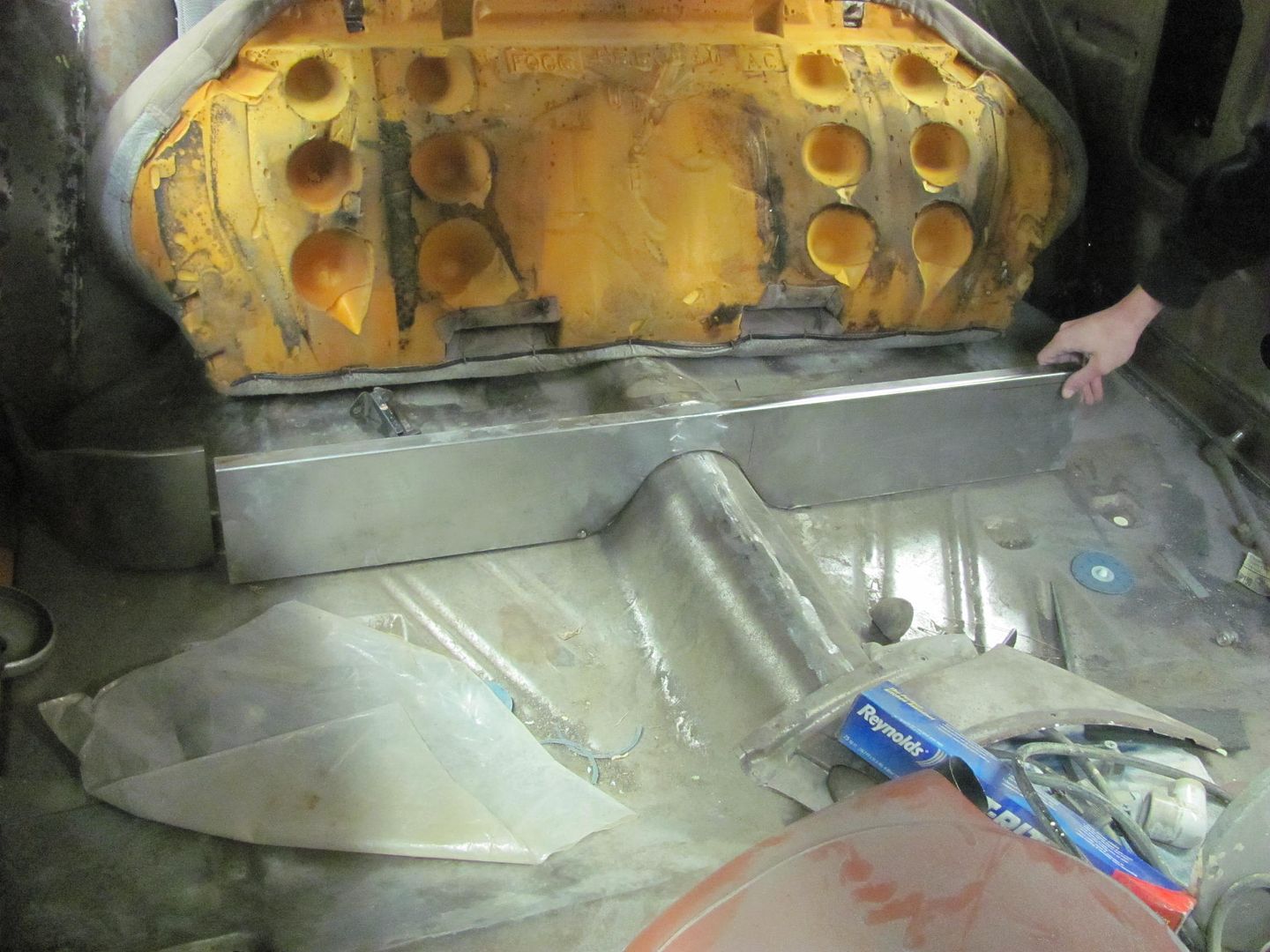
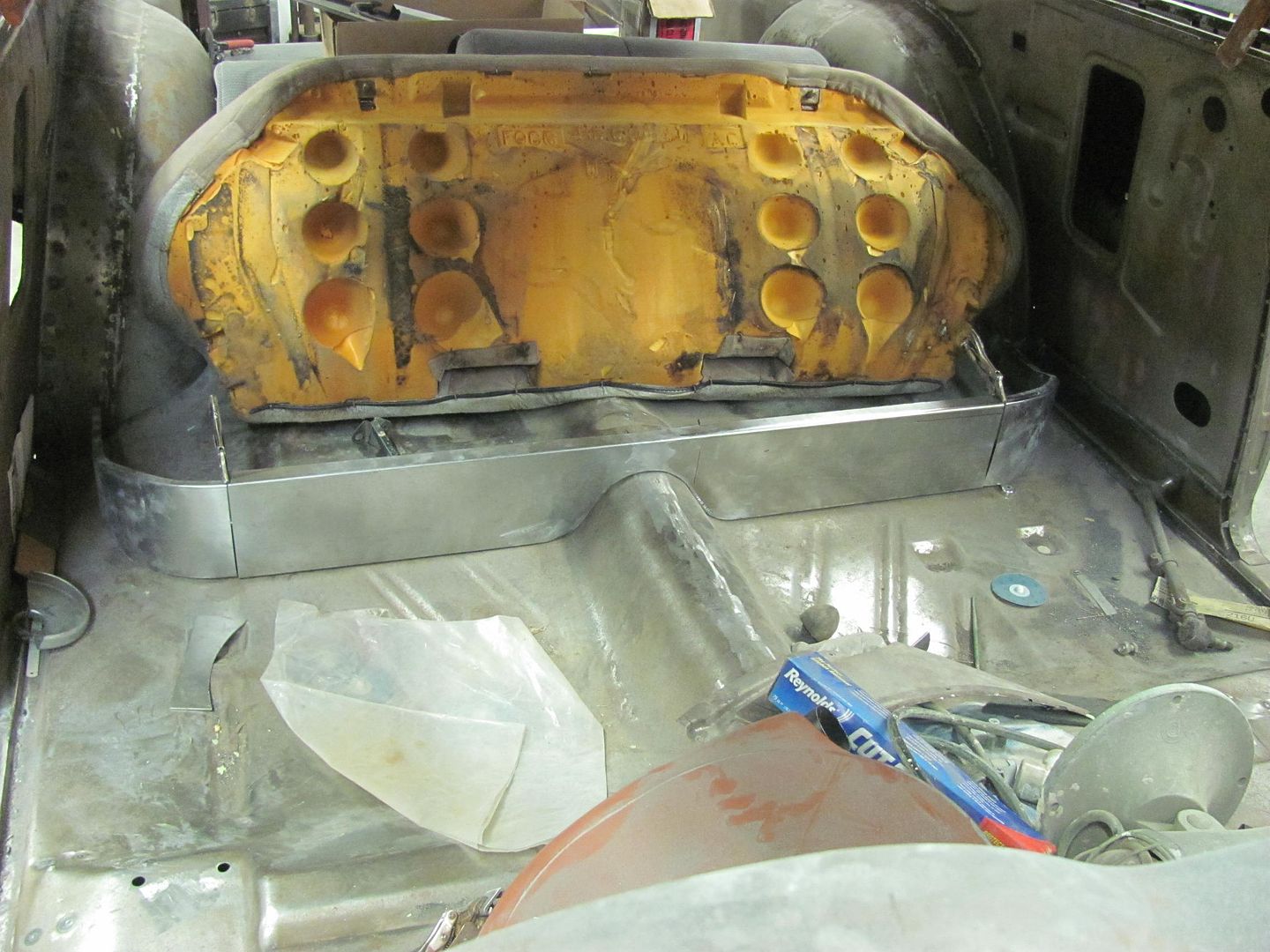
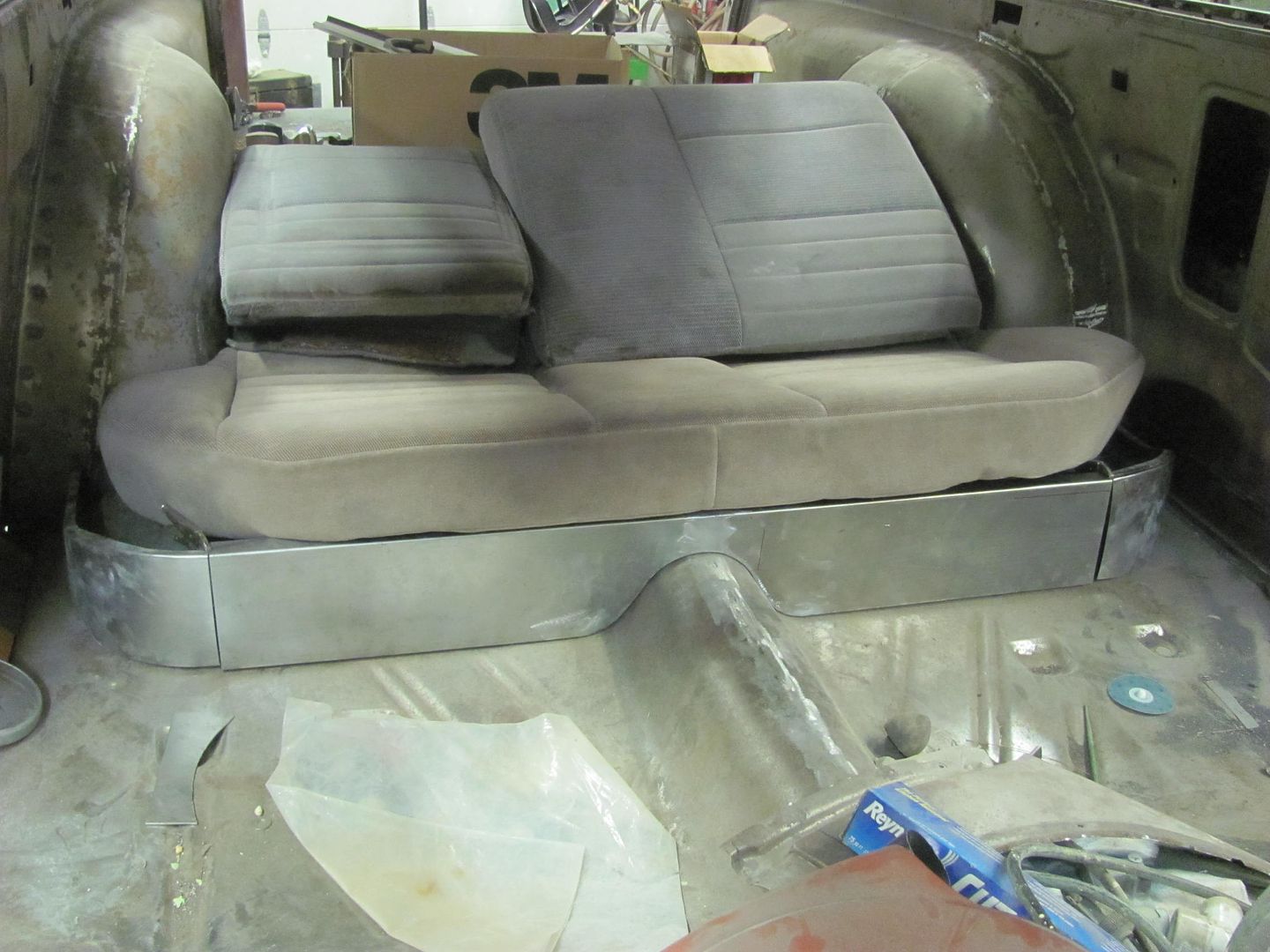
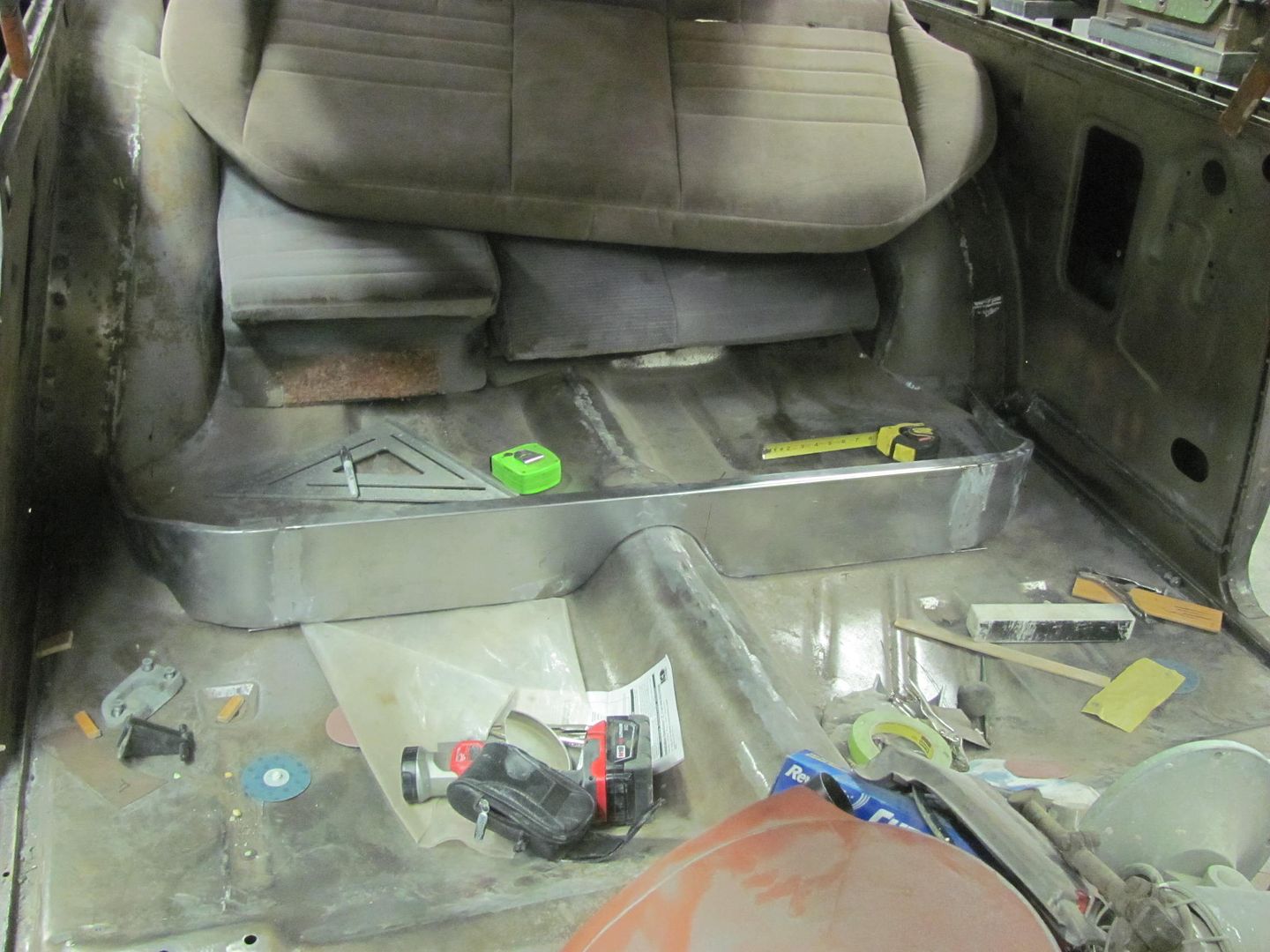
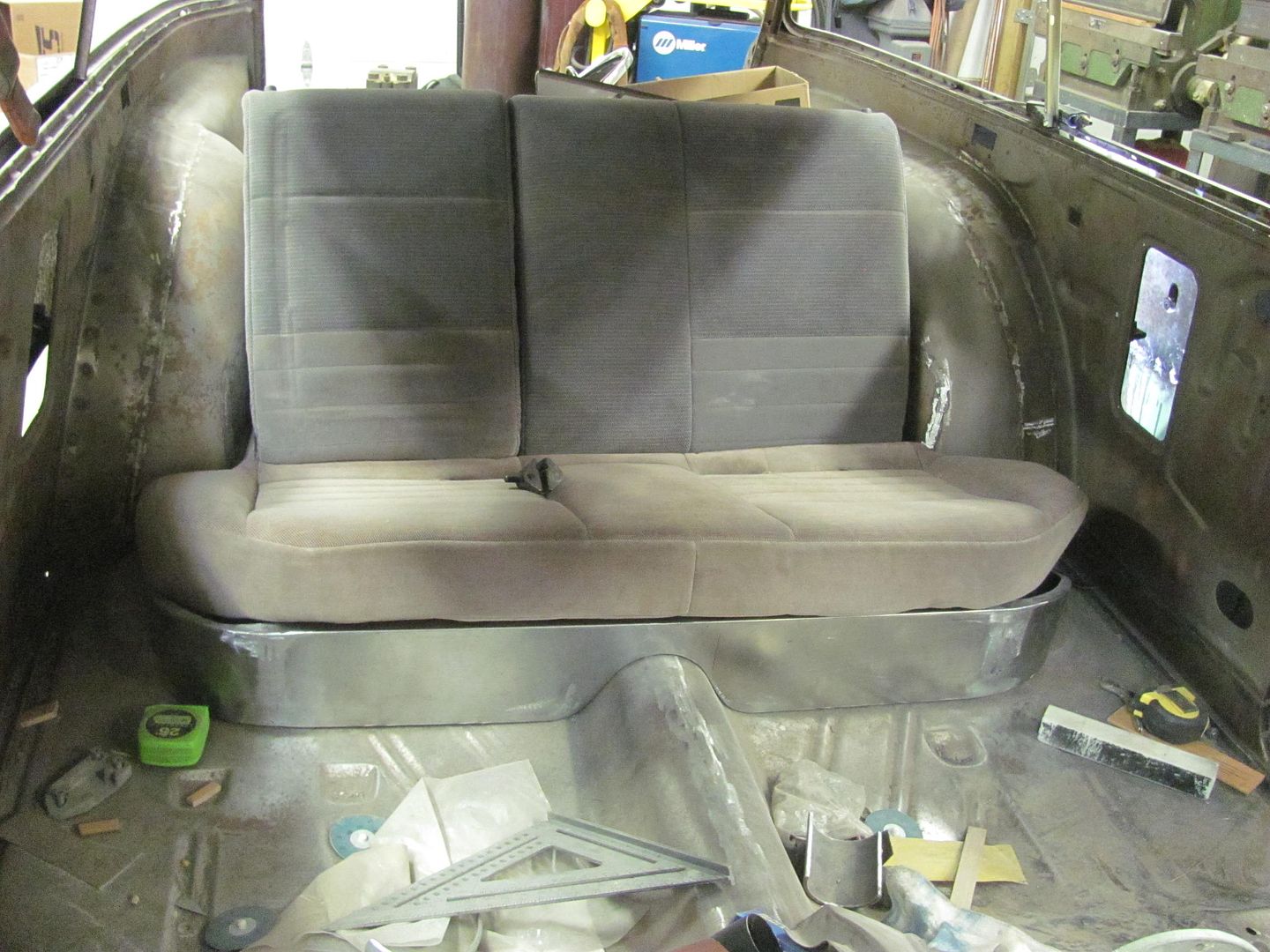
Seat riser completed, test fit of the rear seat...


Picture%202278.jpg


Corners of the lower cushion will have some foam added to fill out to a radius. Seat back will have some end cushions added to match the width of the lower seat..

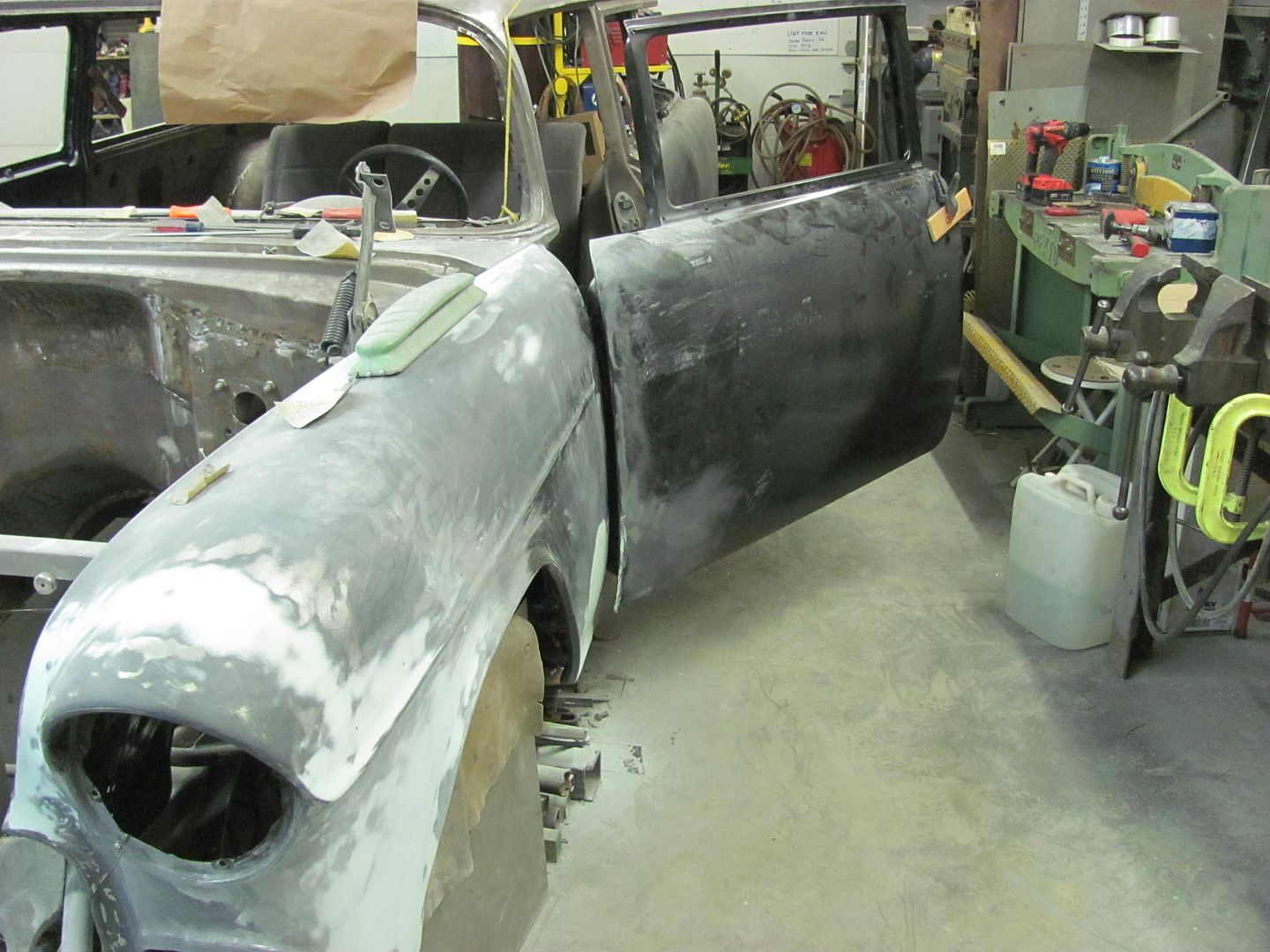
Blocking out of the driver's door is the last to go, and all the front sheet metal will be ready to come off for the next round of epoxy primer..


Picture%202280.jpg


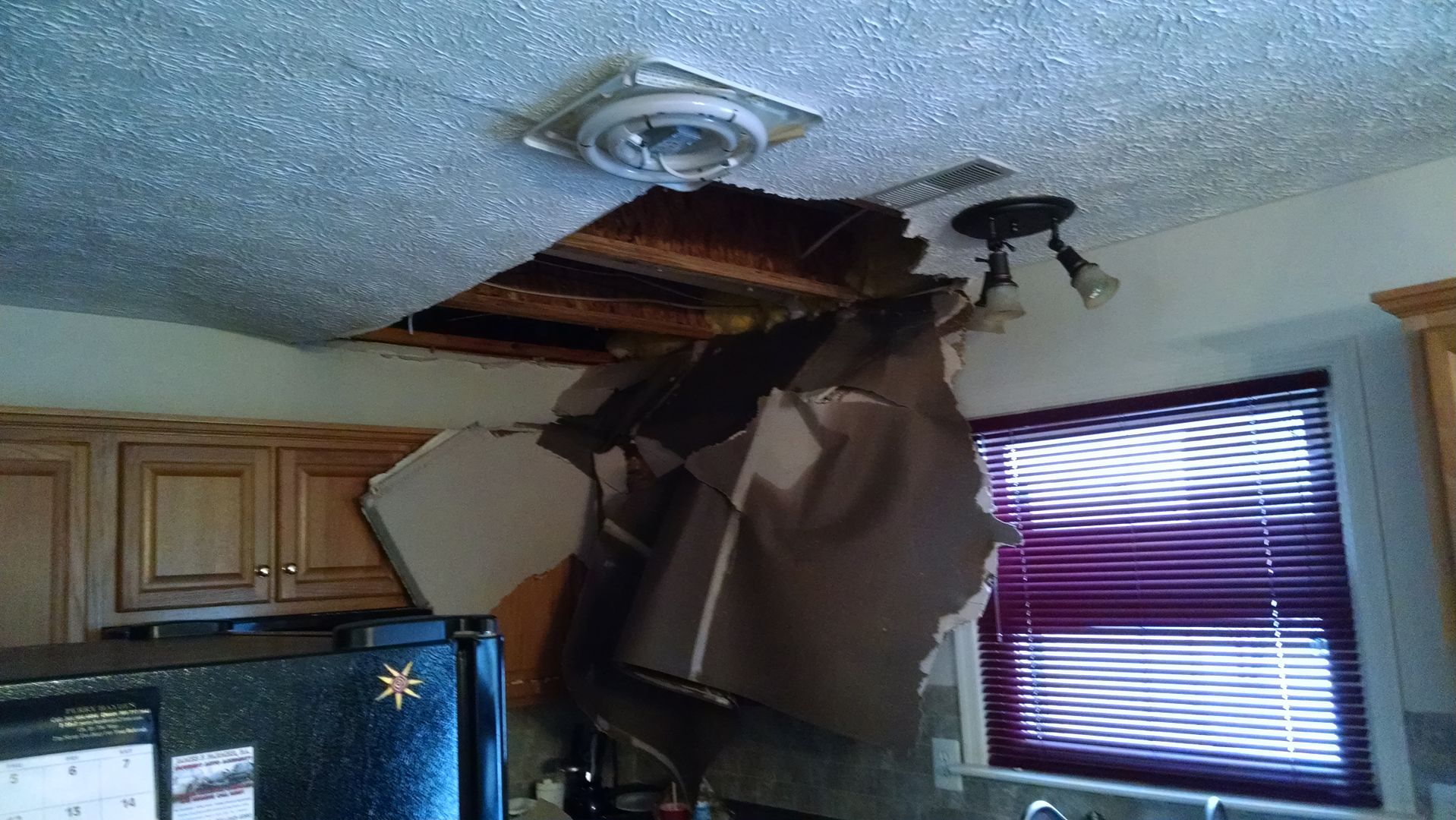
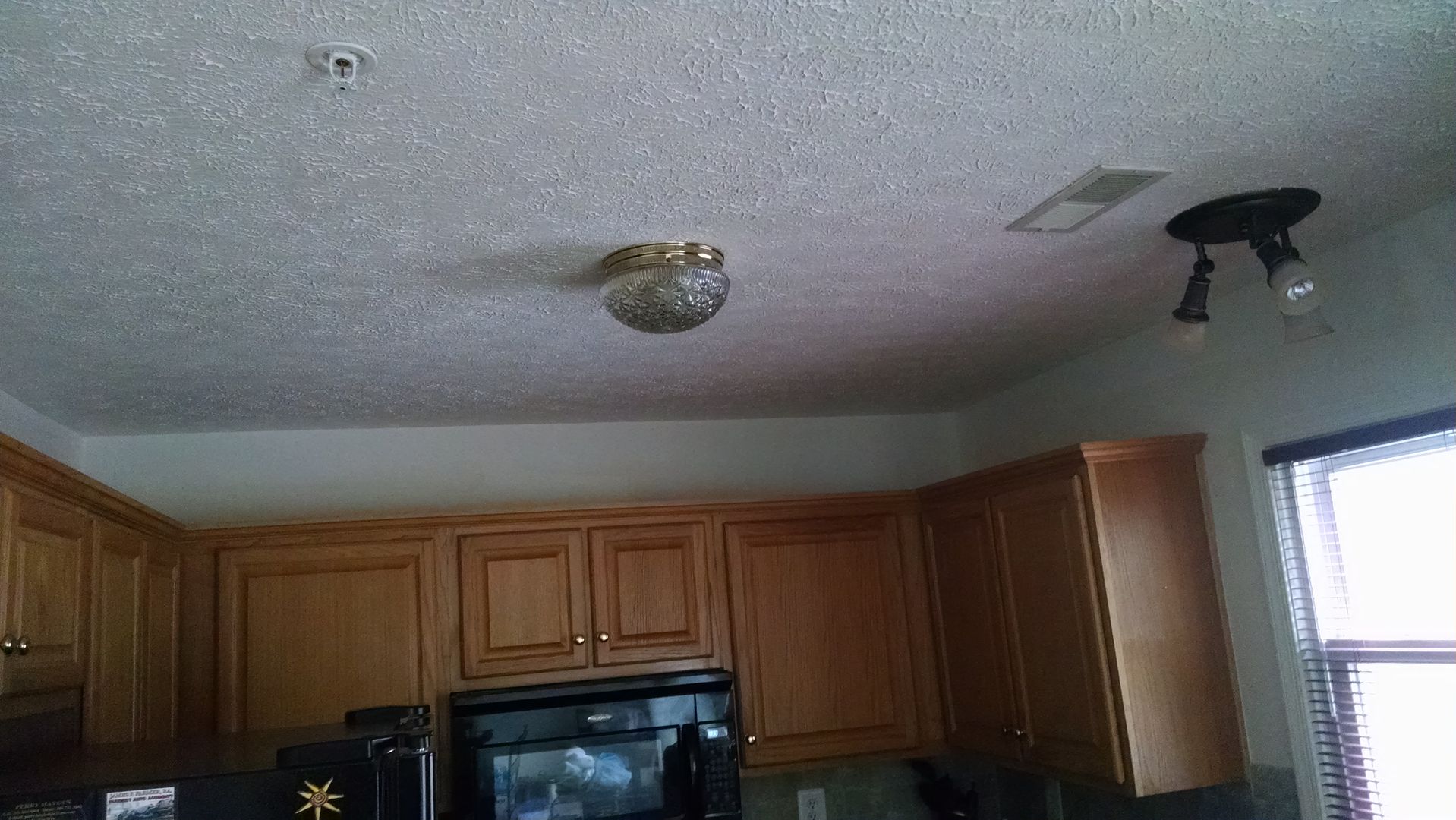
And here's the before and after of the frozen water pipe damage...


IMG_20150221_163201468.jpg


IMG_20150305_103115766.jpg


A bit of paint touch up and this will be done!
 

Divcod

Well-known member
Joined
Jan 9, 2015
Messages
319
Location
Pacific Northwest
It appears as if you apply plastic filler to epoxy primer vs bare metal, correct? I believe the chemical bond and between the primer and filler adds to the quality of the repair. In addition sandwiching the filler between layers of epoxy prevents absorbing moisture. Am interested in your experience / opinion .

Thks

Enjoy looking at how you complete metal working challenges, always more than one way.
 

NASTYZEN

Well-known member
Joined
Jun 11, 2010
Messages
2,823
Location
St-Colomban,Que. Canada
That water damage looks like it never happened Robert. Great fix.
I bet you nearly had a hart attack when you first laid eyes on the damages.

Oh that wagon is looking so awesome. What a colossal amount of work..a good thing Kyle seams to be picking up quickly.
 
OP
M

MP&C

Well-known member
Joined
Oct 21, 2009
Messages
4,396
Location
Leonardtown, MD
Thanks for the comments fellas...


It appears as if you apply plastic filler to epoxy primer vs bare metal, correct? I believe the chemical bond and between the primer and filler adds to the quality of the repair. In addition sandwiching the filler between layers of epoxy prevents absorbing moisture. Am interested in your experience / opinion ......


When I was painting motorcycles on a regular basis, I typically epoxied first, scuffed, then applied any filler, blocked and epoxied again, then final blocking..... then on to painting. Now that I recently started using SPI epoxy, their application instructions specify to apply epoxy first and filler on top. I know this is one of those hotly debated topics, primer first or filler first, and have done it both ways myself. But as you indicated, IMO sealing and encapsulating any fillers is the better method.
 

Divcod

Well-known member
Joined
Jan 9, 2015
Messages
319
Location
Pacific Northwest
Agree on the value of encapsulating filler. My MGA was painted 20+ years ago over a skim coat filler applied directly on bare metal. Result is today the filler pops off revealing oxidation to the base metal, future project is a full restoration.
I've use House of Kolor products and wonder if you have comparison experience with SPI?
 
OP
M

MP&C

Well-known member
Joined
Oct 21, 2009
Messages
4,396
Location
Leonardtown, MD
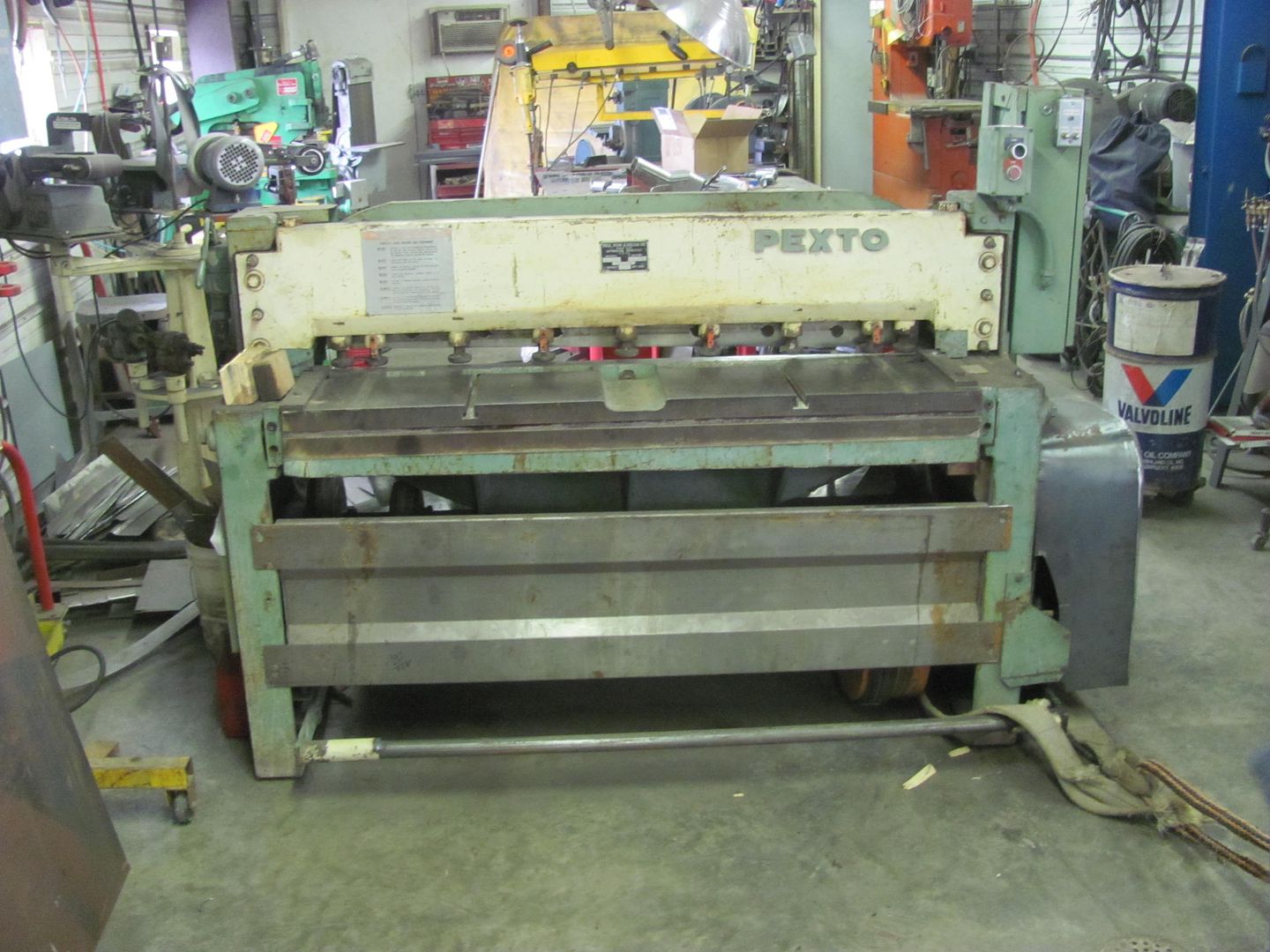
Spent the past few days at Dan Pate's. Well, it was only about a day and a half, but once you include the travel time...

To preface, I had posted a WTB ad for a 52" shear and Dan had sent me a PM about the one he had in his shop. It was getting replaced with a 6' machine. Dan's hosts a yearly metal shaping workshop and he suggested I come to his spring meet and pick it up from there. This conflicts with a mother's day event that I must attend every year (annual yard sale....I'm the furniture mover :D ), so I picked a window of opportunity that left minimal chance for the white powdery stuff falling from the sky. Namely, this past week. I departed Southern MD at about 12:45 am on Wednesday and drove through (rather un-eventful), arriving at Dan's at about 8:45 pm the same day. I recommend Mountain Dew and sunflower seeds for such an undertaking. ;)


I'm looking forward to a break from the 55 wagon and to help out on some of the many challenging projects that Dan has shown us on the metalshaping sites over the years. So Dan, what have you got to work on? Oh, this car here over in the corner, he says......

Route56%20005.jpg


I restrained my enthusiasm as best I could in true Charlie Brown fashion

AAUGH.jpg


(just kidding Dan)


We walked down the hill to the shop the next morning and Dan had experienced some fitment issues with some of the panels on the 55 and asked that I take a look. RichardK showed up mid-morning and we proceeded to take measurements and cross diagonals nine ways to Sunday. We verified these to a sample car sitting out in the yard, and still didn't have that ah-ha moment. Everything we checked seemed to be within factory specs, although that was pretty loose in 1955.

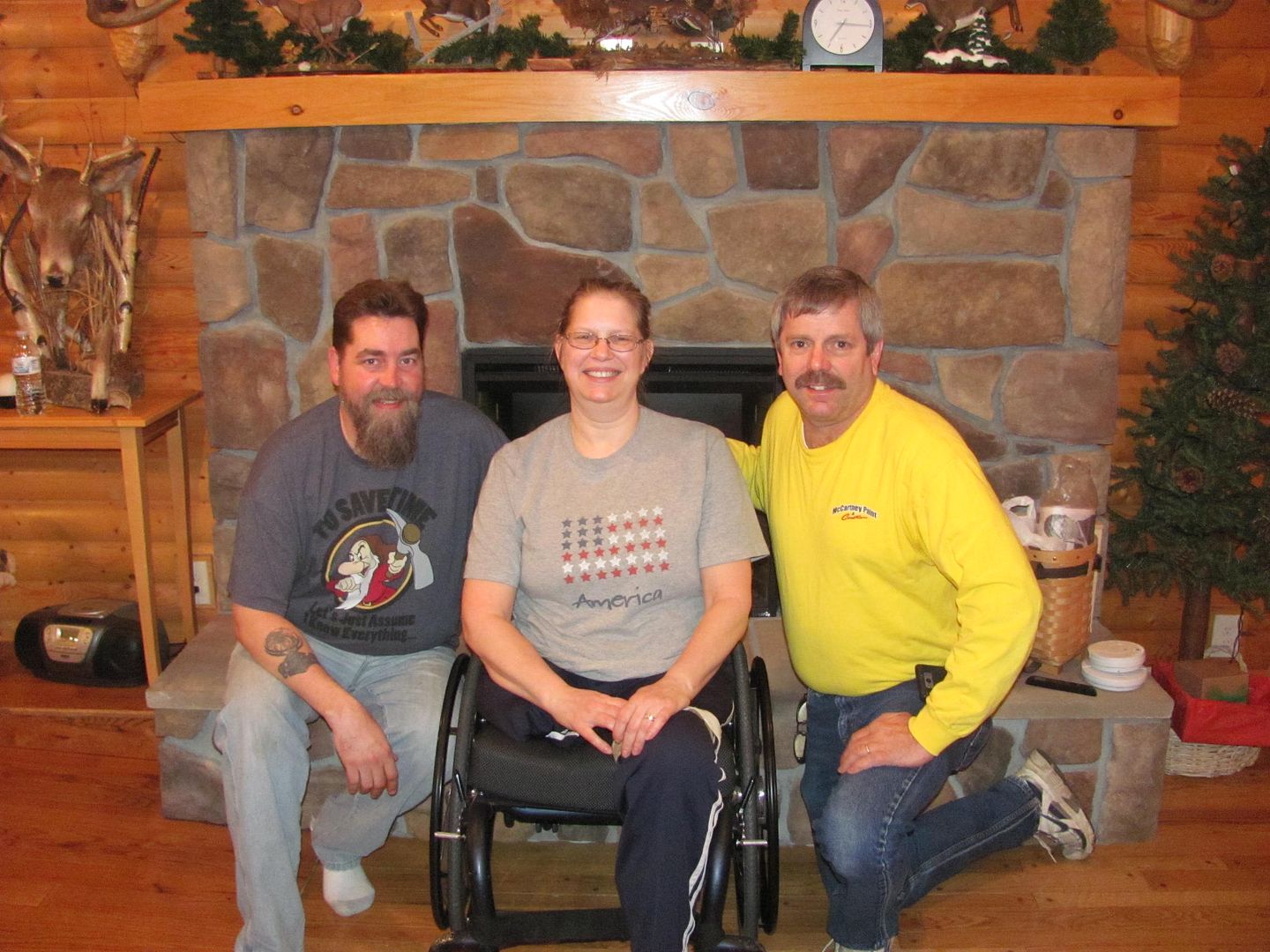
My plans were to work around the shop for a day, load up the shear the next morning (Friday), and leave around noon. I have a cousin, Nancy E. Rueckert, who lives in Litchfield, MN. She had been in an industrial accident at work and was now paralyzed, and I was going to visit her that evening. Dan wisely pointed out that we should load the shear to have everything ready to go, and then worry about other shop activity.

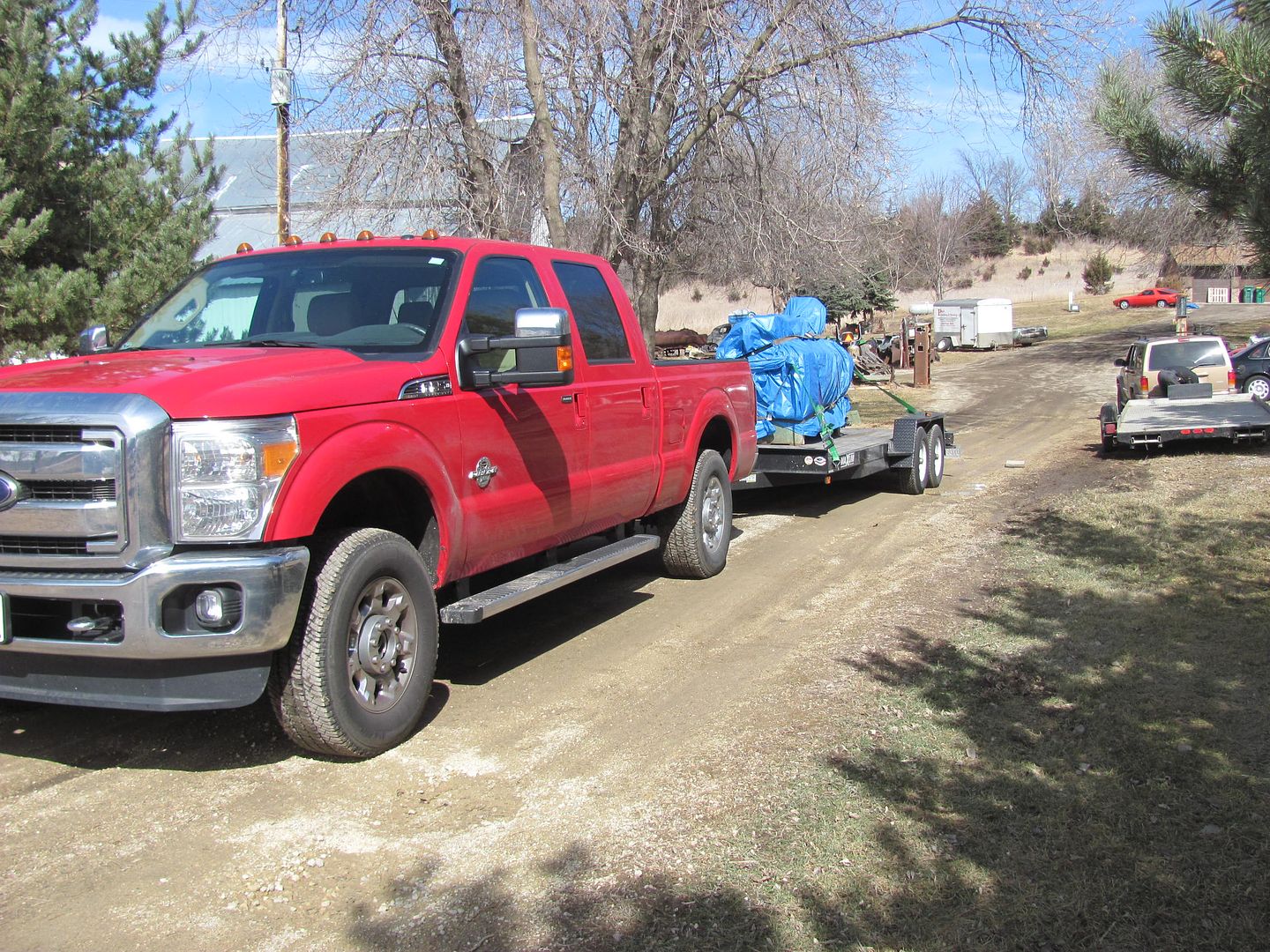
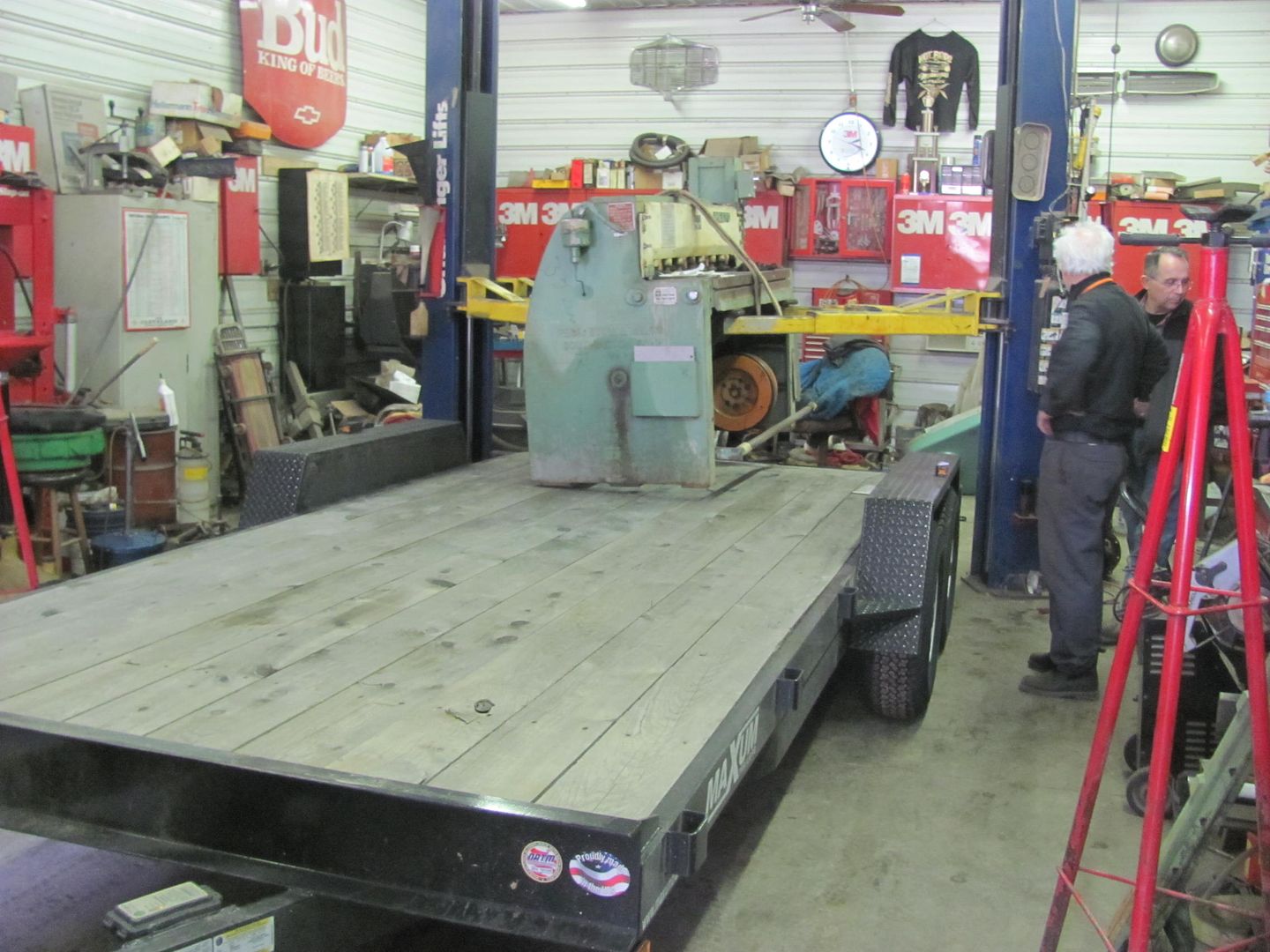
So here is the shear prior to the John Deere moving it...

Route56%20017.jpg


...and for anyone with sufficient space available for one of these, Dan has this nifty equipment hoist...

Route56%20018.jpg


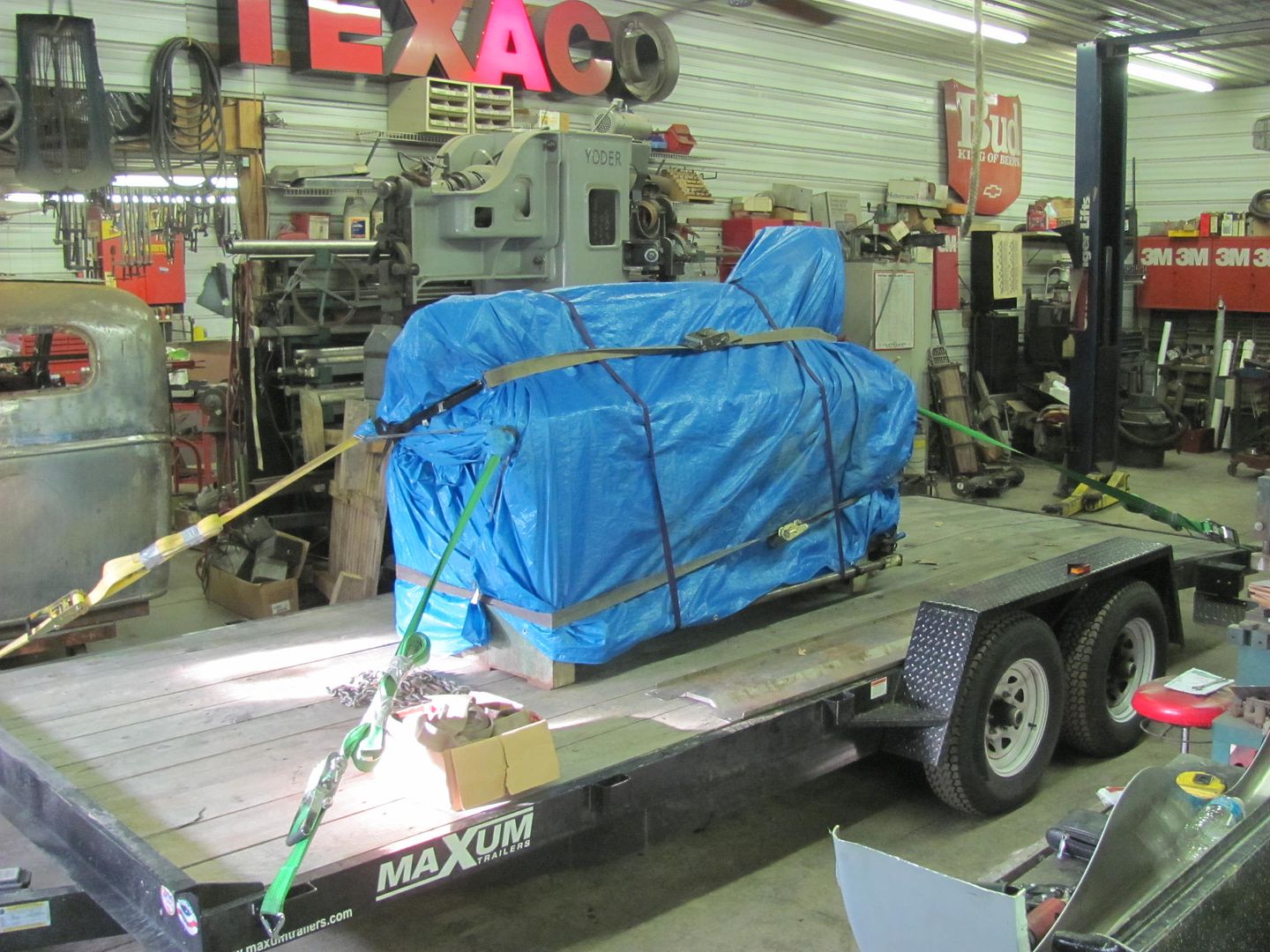
As there was some rain forecast for the east coast on Friday, the shear got some appropriate attention..

Route56%20023.jpg


It was about time for me to get cleaned up for the visit to my cousin's, and Richard mentioned that he had a buddy who lived in Howard Lake, a short drive before Litchfield. Since the truck was hooked to the trailer, he offered to drive me to Howard Lake, where he could visit his friend and I could continue to Litchfield. What a true gentleman, and as I've seen with Dan, genuine MN hospitality.

Had a nice visit with Nancy, and I think our conversations got carried away that when I looked at my watch I was worried Richard would put out an APB on his car :bounce:

Here's Nancy with her husband Dan.. (to eliminate confusion, let's call him Dan2)

Nancy.jpg


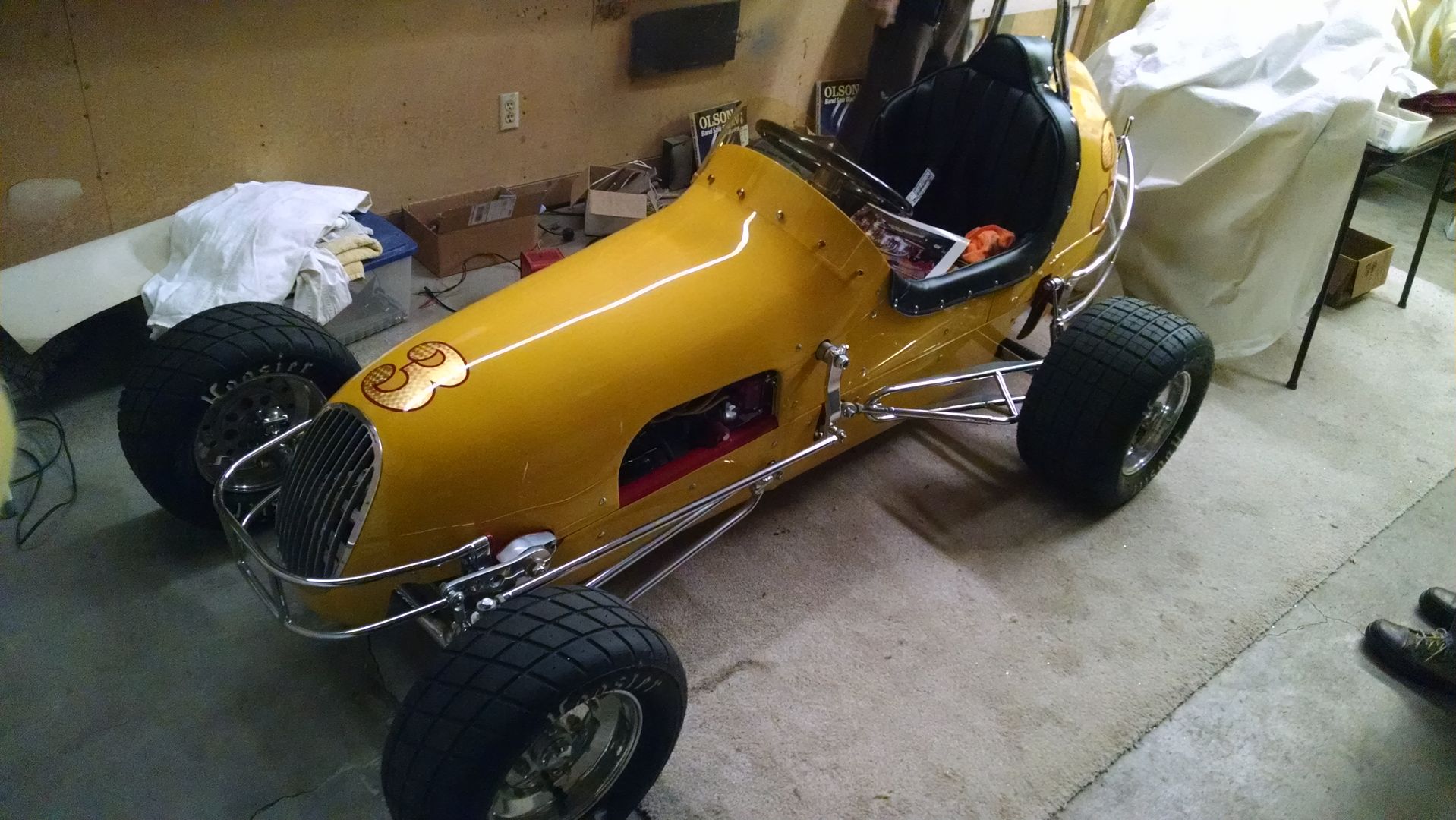
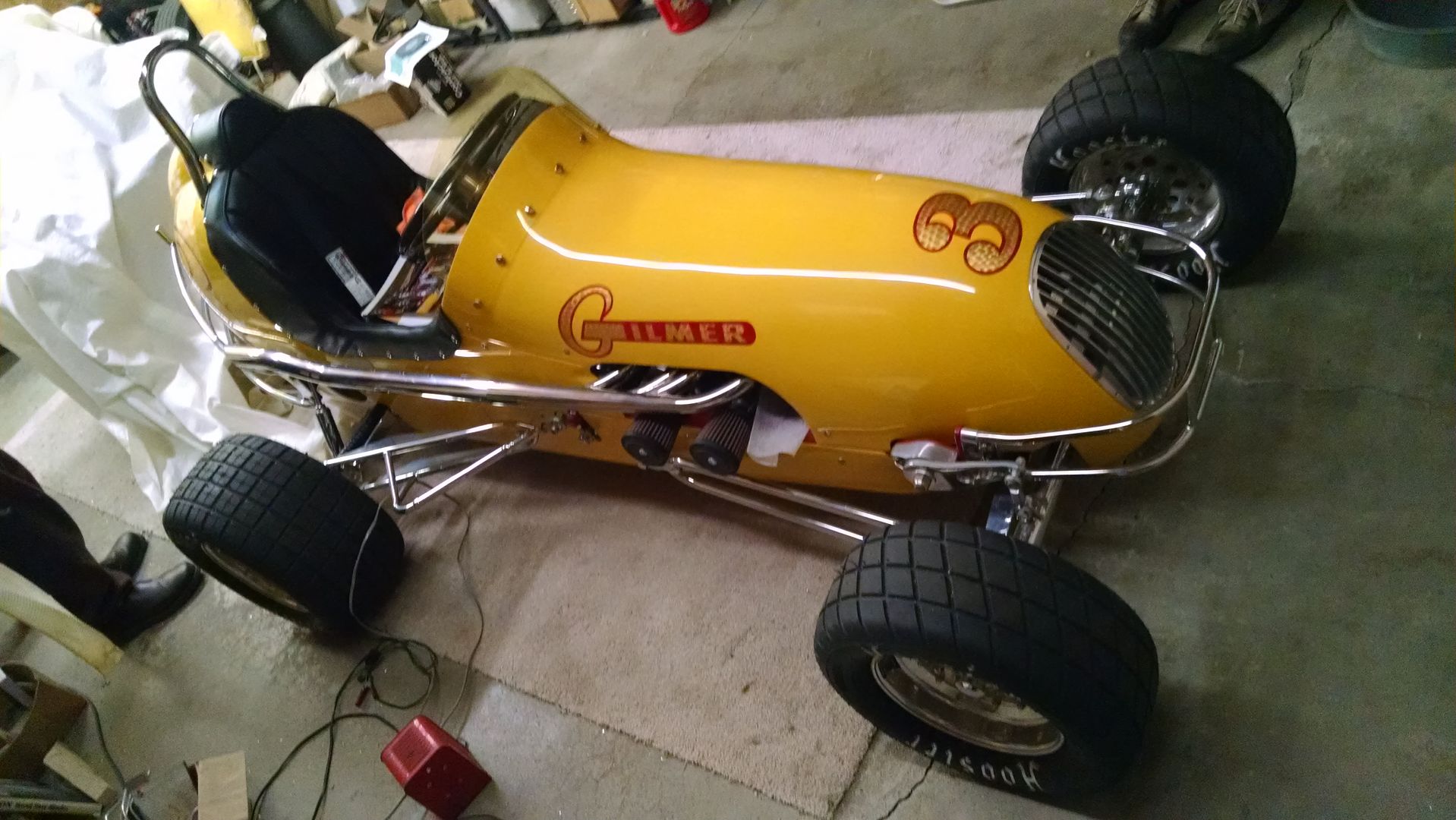
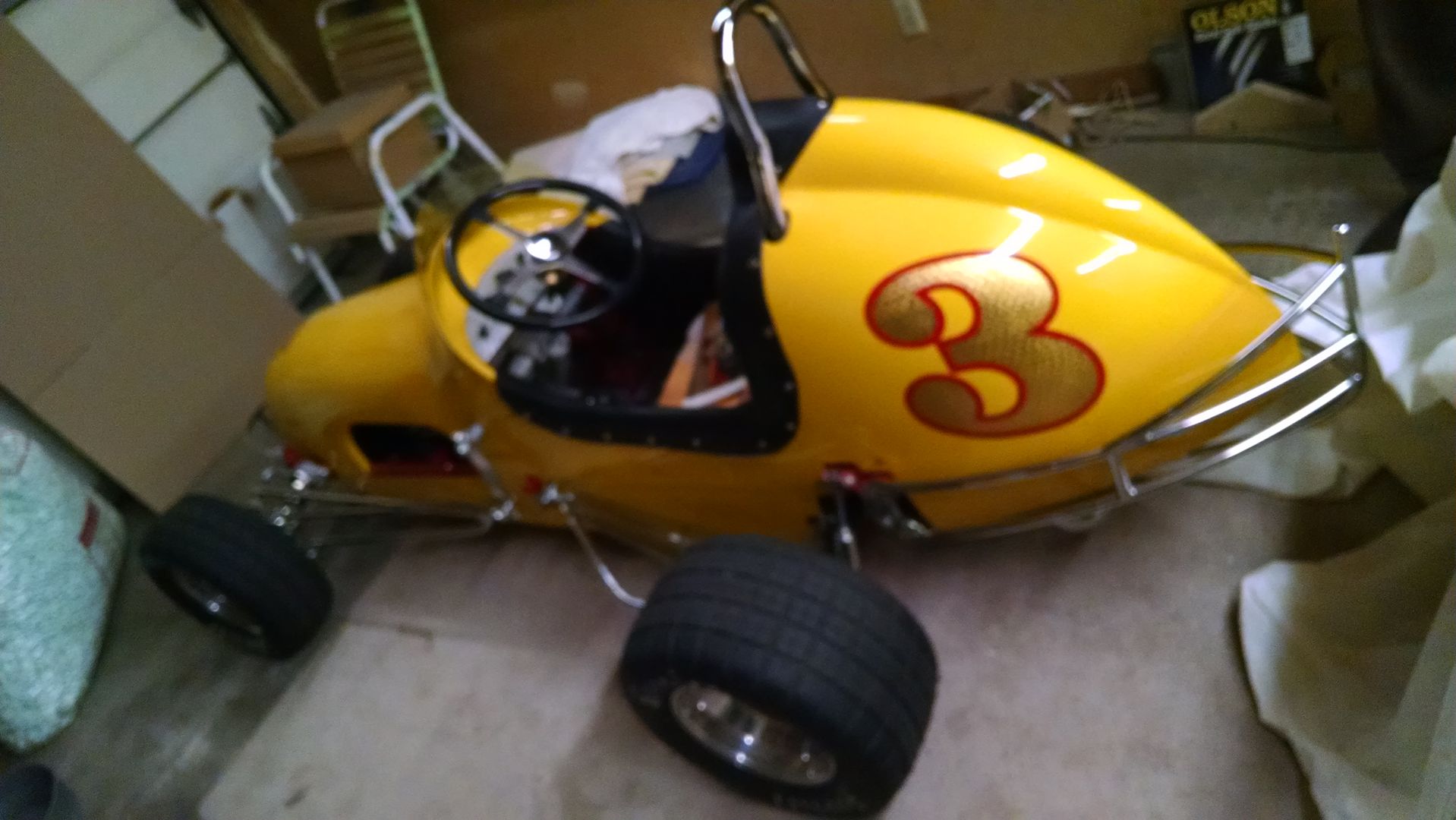
I made it back to Howard Lake and got a chance to meet Richard's friend, Jan Gilmer. He's well known in the Midget racing world and even more so, since his retirement, in his meticulous reproductions of 1/4 scale RC replicas. Here are some pictures of a restored Midget from 1956...

Richard1.jpg


Richard2.jpg


Richard3.jpg


.....along with Richard's thread posted here about the body he built for the car.. A work of art to say the least.

http://www.allmetalshaping.com/showthread.php?t=2768

And here are some links on Jan Gilmer for those interested...

http://www.herald-journal.com/archives/2012/stories/Gilmer-cars-Australia.html
http://www.quarterscalelegends.com/gilmer/gilmer.htm

Jan has a small machinist shop and still produces amazingly accurate 1/4 scale reproductions to this day. They are highly sought after, and after seeing them in person, I can see why.

Richard and I returned to Dan's with only one close call with a couple of Minnesota's 4 legged Bambi creatures.. Even as late as it was, Dan greeted me and I think we talked of more metalshaping stories for the next couple hours. My day job has me heading to Oahu in the near future, and he was telling me of his visit to the only Pullmax owner on the island of Oahu, let's call him George. So I hope to meet up with George on my next visit to HI.


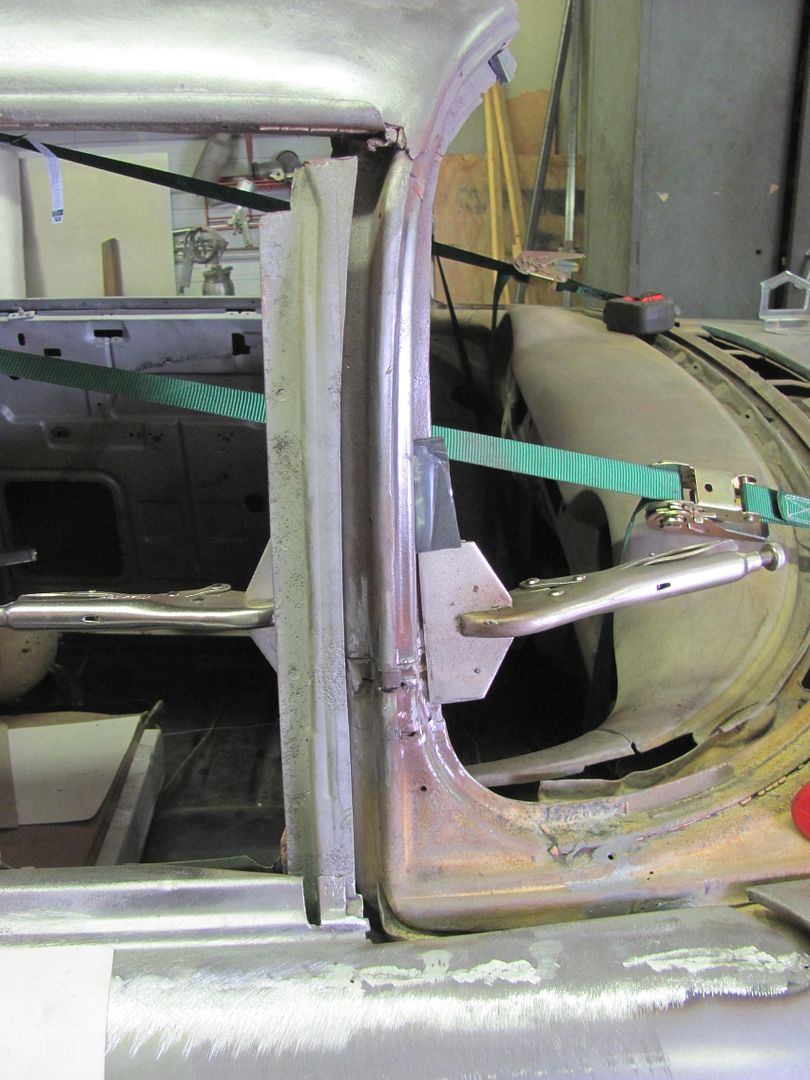
After breakfast we headed down to Dan's shop. Back on the 55, it wasn't until we took the height dimension of the windshield that we came up with the answer, there was a quite a difference there. Dan had installed a new roof on this from a donor car, one of the seams being in the A post. We found a slight excess in vertical made for quite a jump in the windshield opening. So with a bit of slicing, our height adjustment at the a-pillar made for quite an improvement and a more consistent and parallel gap to the door behind it..

Route56%20040.jpg


Route56%20041.jpg


Since I wasn't going to be at Dan's spring event, he spent quite a bit of time showing me some shop tricks...

Band Saw "guide" for cutting convex shapes on the band saw... Slides into the blade and gets bolted to the table.... Essentially moves the table surface for those oddball shapes that don't fit the table..

Route56%20026.jpg


Route56%20025.jpg


Linear stretch dies for the Pullmax....

Route56%20006.jpg


Route56%20008.jpg


The cantilevered and jack bolted design allows you to adjust the stretch for a tight radius, and the pointed ends allow you to get into the corner as tightly as needed...

Route56%20010.jpg


Adjustable backstop for thinning a panel for sharper bends

Route56%20016.jpg


Delrin die to use for panel beading.. in conjunction with MDF forms.. (partially unscrewed to show threads)

Route56%20034.jpg


"tank roll" or 45* radius tipping dies for the Pullmax... 3 pieces were laser cut in 1/4" stock and welded together to form the 3/4 shank..

Route56%20032.jpg


Route56%20033.jpg


Flanging/step die using an MDF guide....

Route56%20036.jpg


Imagine this for a bed side...

Route56%20039.jpg


At this time I think my target departure time had come and gone.. But no visit to Dan's shop is complete until you've used the Yoder....

Route56%20042.jpg


All packed up, ready to head east.

Route56%20048.jpg


I made mention to Dan that Friday the 13th was not a good day to travel. About halfway down I39 in Indiana proved this. I had just passed by a semi and pulled back into the slow lane in front of him when I noticed a set of headlights coming toward me.... in the fast lane I had just moved out of. I made out of that rather lucky. About a mile down the road some scattered auto debris and one car against the center divider showed they weren't as lucky. Everyone was OK, and I think most of the damage was from them swerving to miss the clown heading north in the southbound lane. I stopped in Springfield OH for a much needed nap, and met Kevin for breakfast. He had done some legwork in taking some pics for me of a CL shear that was nearby his house. Buying the guy breakfast was the least I could do to show my thanks, and besides that, great to meet him in person. Well upon arriving home, the rain added to the snow from last week has made my driveway a swamp. Looks like we will unload the trailer when this has dried up a bit.


I personally want to thank Dan for his hospitality, and all the shop tricks I learned in such a short time. Special thanks to Richard for driving me two hours (each direction) to visit my cousin.
 
Last edited:

iajonesy

Well-known member
Joined
Feb 8, 2009
Messages
2,467
Location
Iowa
Glad you made the trip ok,Robert.You caught the really great weather we have been having and stayed away from Chicago,so that helped. It was great talking to you last week on the phone. I'll be looking forward to more of your project posts,they are always the best.

Mike
 
OP
M

MP&C

Well-known member
Joined
Oct 21, 2009
Messages
4,396
Location
Leonardtown, MD
Thanks for the comments guys!


Agree on the value of encapsulating filler. My MGA was painted 20+ years ago over a skim coat filler applied directly on bare metal. Result is today the filler pops off revealing oxidation to the base metal, future project is a full restoration.
I've use House of Kolor products and wonder if you have comparison experience with SPI?


This is my first time in using the SPI but it comes highly recommended by some guys well respected in their field. I think you'd have good luck with either. Either can be used as a substrate for your base coat, either can be thinned and used as a sealer.


Glad you made the trip ok,Robert.You caught the really great weather we have been having and stayed away from Chicago,so that helped. It was great talking to you last week on the phone. I'll be looking forward to more of your project posts,they are always the best.

Mike

Good talking to you Mike, I had used that southern route before and will likely use it again next time. Traffic flowed well except for one fender bender on the southern bypass around Columbus, which only delayed a few minutes.
 

RonnieJ-57

Member
Joined
Feb 11, 2015
Messages
9
You do amazing work. I found this thread by accident. I think I should buy a lotto ticket before my good luck runs out.

How would you treat an area that has no rear access. I have a mid 50s truck and patched a hole in the front area of the interior roof. Compound curves. The patch was fit and looked great. Welded and shrank. The patch was drawn almost flat. I peened as I welded but was not enough to prevent it drawing up and looking like it was a flat piece of sheet metal. Any help would be greatly appreciated.

It is an understatement to say this thread is an inspiration.
 

yaidunno

Well-known member
Joined
Feb 10, 2011
Messages
1,336
Location
WI
Thanks for taking us on a road trip! Looks like you had a good time and come home with a nice new addition. Appears to be a mechanical shear, correct?
 
To avoid these ads, REGISTER NOW!
Top Bottom