To avoid these ads, REGISTER NOW!

MP&C Shop Projects

Kevin54

MEMBER EMERITUS
Joined
Jan 12, 2005
Messages
29,341
Location
Urbana, Ohio
I understand what you are doing now. I was thinking that you were going to mark the line, then run a slight bead on the line to sort of cover the minute gap.
 
To avoid these ads, REGISTER NOW!
OP
M

MP&C

Well-known member
Joined
Oct 21, 2009
Messages
4,398
Location
Leonardtown, MD
I'm not trying to push, pull, or otherwise manipulate a puddle like you may do with a weld bead / welded pass.. It's one dot of weld at a time, so I weld as close to perpendicular as I can get and still see what I'm doing.
 

K13

Well-known member
Joined
Oct 24, 2007
Messages
2,223
Location
St. Albert, AB Canada
I saw the abbreviated version of your gauge "pods" on the HAMB. I am glad I found the full version here really nice work!!
 

Omphaloskeptic

Well-known member
Joined
Oct 11, 2008
Messages
2,346
Location
Ultima Ratio, Wa.
Hey, thanks for answering my questions; it's really helpful to learn not only the 'what' of a process, but also the 'how'! Please keep posting the great pics/captions of your work; they're a real learning experience for those of us whose 'spirit is willing, but their technique is weak'! lol

I admire pro's like you who are willing to share their methods to help DIY guys like me who are not quite brave enough to dive right into a serious project with no prior training/experience. :beer:
A bit OT, (sorry MP&C), but speaking of a guy with no prior experience diving into a major project, check out this video on Jay Leno's garage web site -

http://www.jaylenosgarage.com/other/1951-kaiser-dragn/index.shtml#item=279198

My Grandfather owned a couple of Kaiser's, but they were nothing like this guy's beauty! :bow:
 
OP
M

MP&C

Well-known member
Joined
Oct 21, 2009
Messages
4,398
Location
Leonardtown, MD
I admire pro's like you who are willing to share their methods to help DIY guys like me who are not quite brave enough to dive right into a serious project with no prior training/experience. :beer:
Along those lines I'll be in Berryville VA this weekend for a metalshaping demo, if only you were a bit closer.


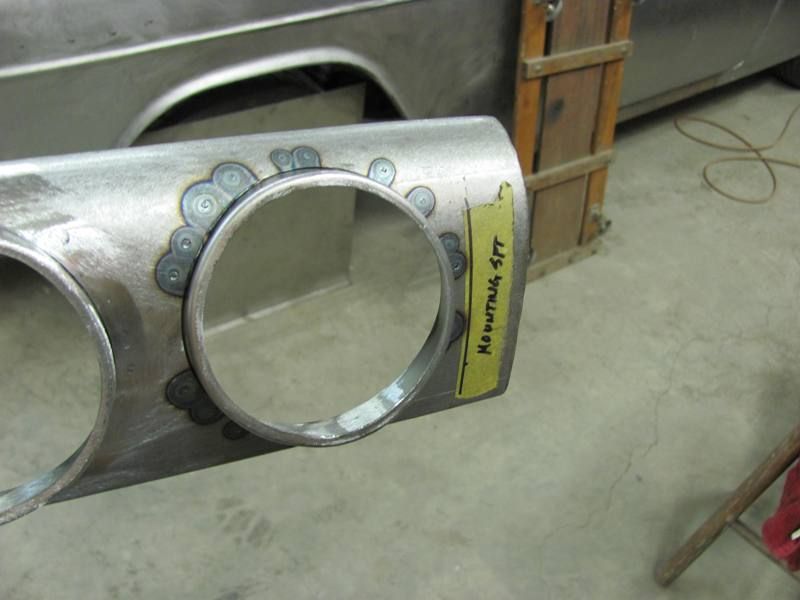
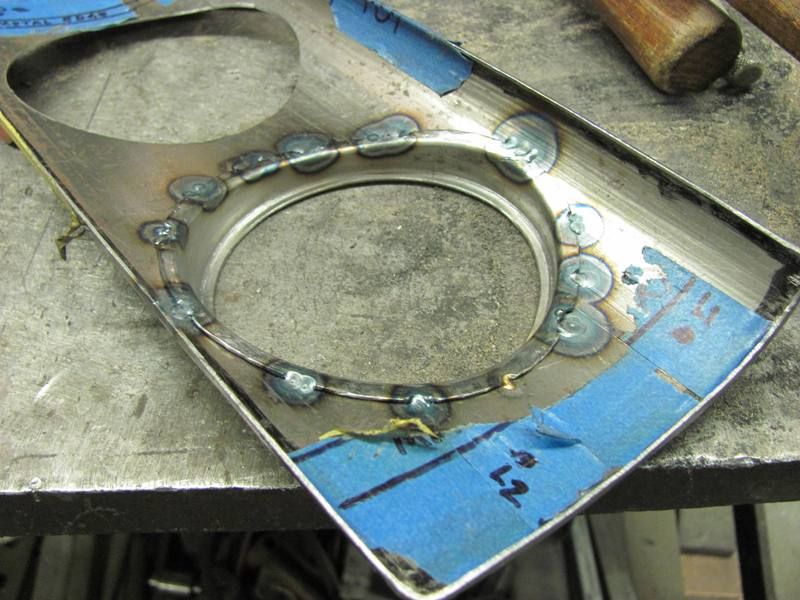
Worked on the dash panel again tonight, used the Tig to tack in the first ring...


Picture094.jpg


Picture096.jpg


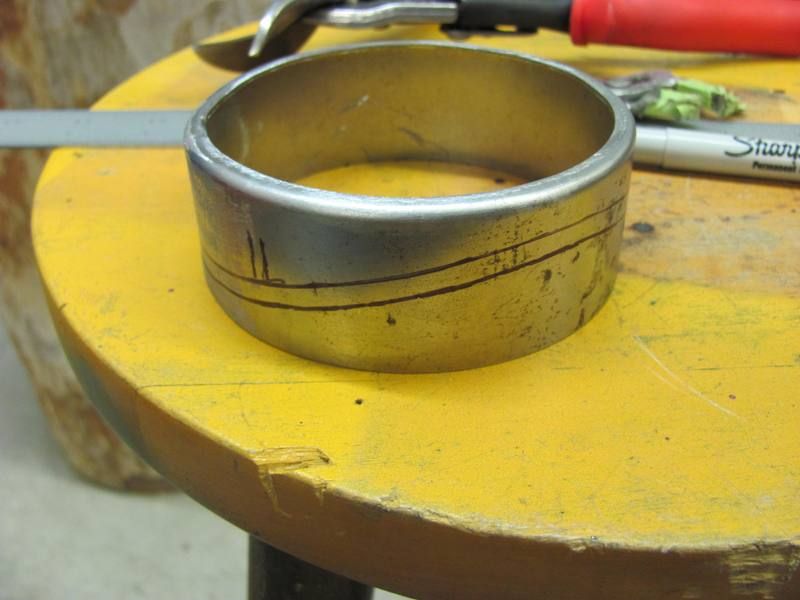
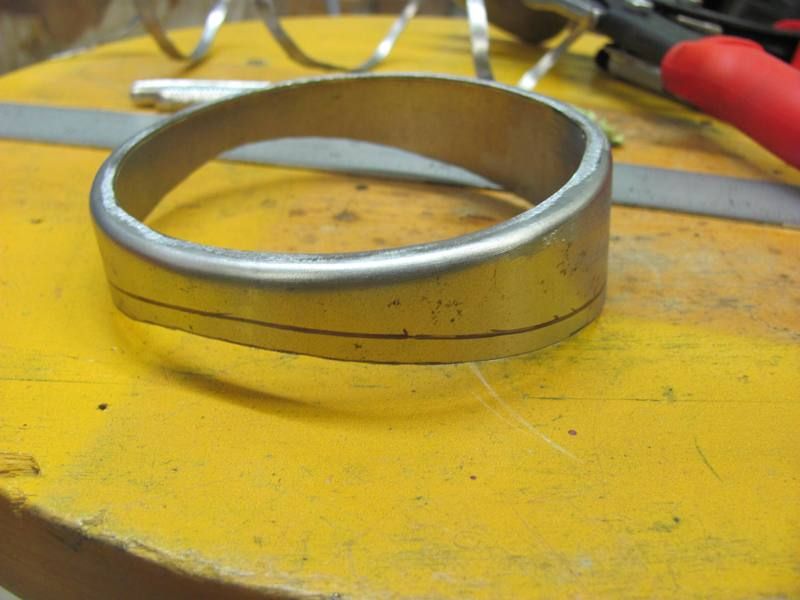
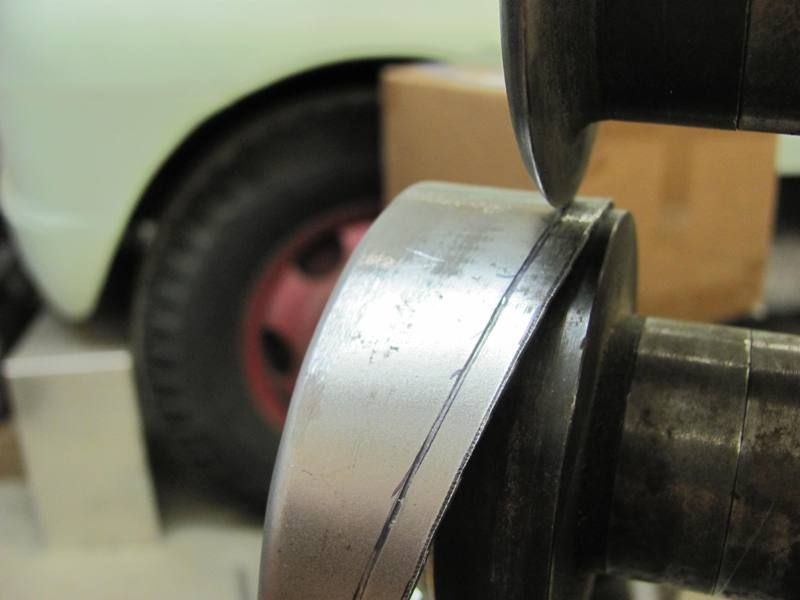
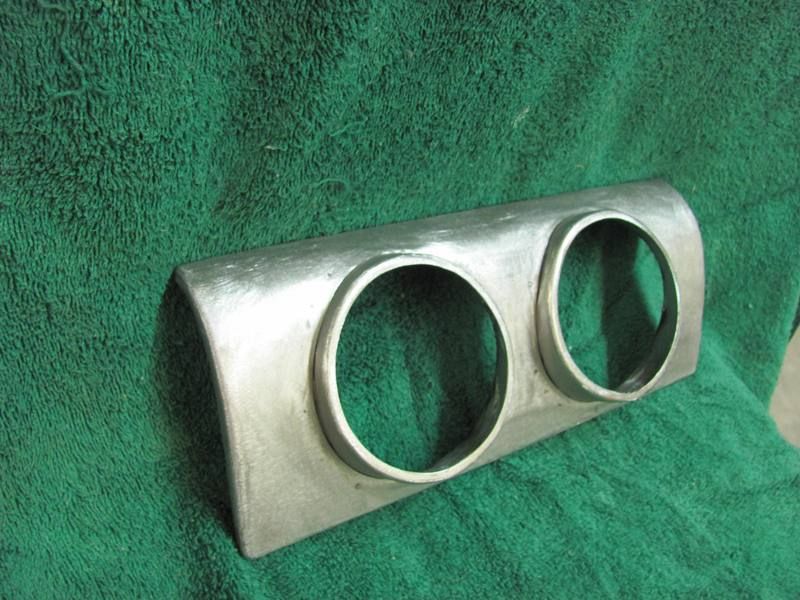
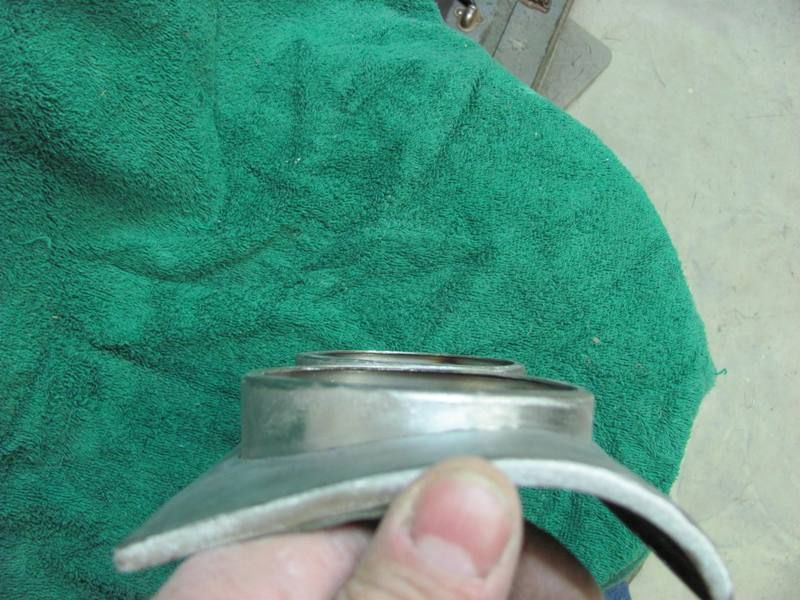
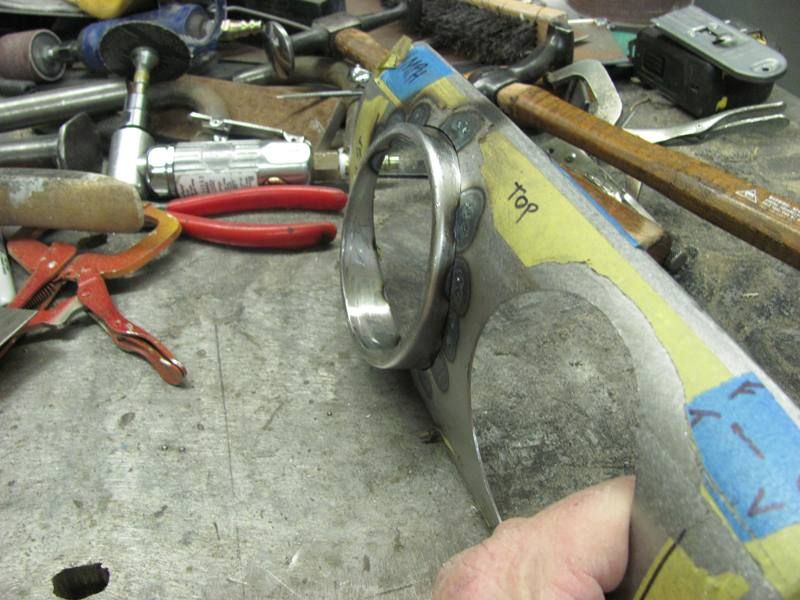
Then worked on the second, marked the flange at 3/16", trimmed, and made one revolution to mark the bend line, then tipped the inner flange as before...


Picture097.jpg


Picture098.jpg


Picture099.jpg


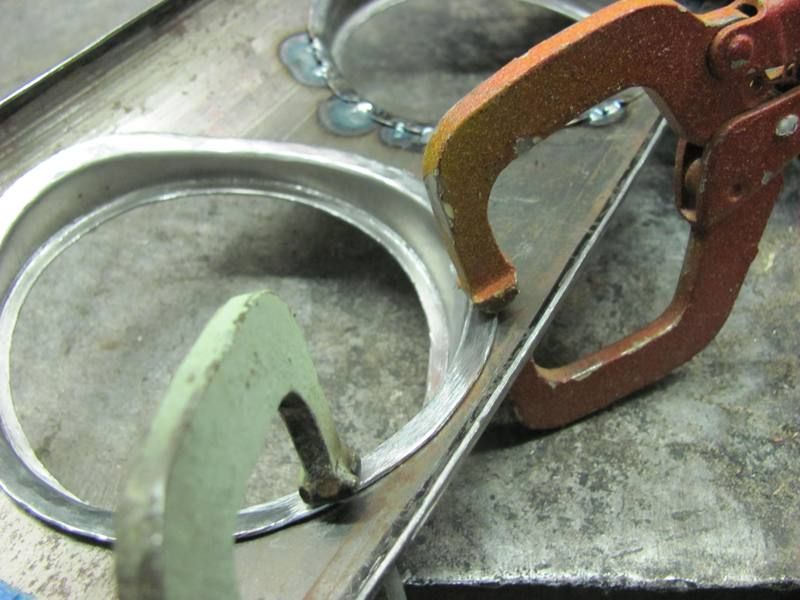
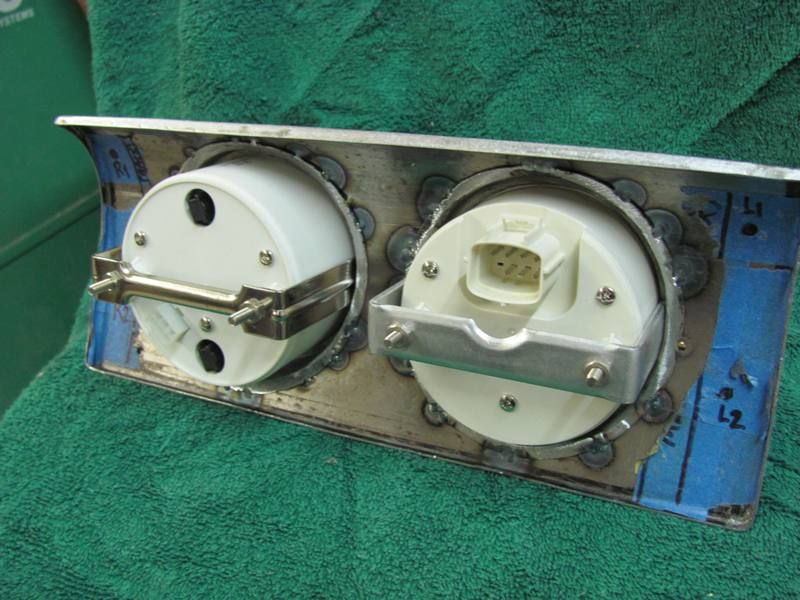
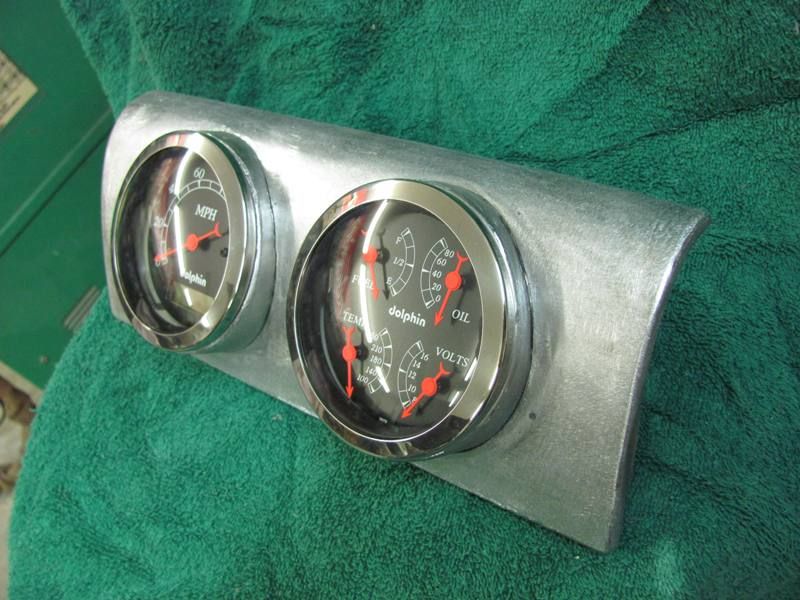
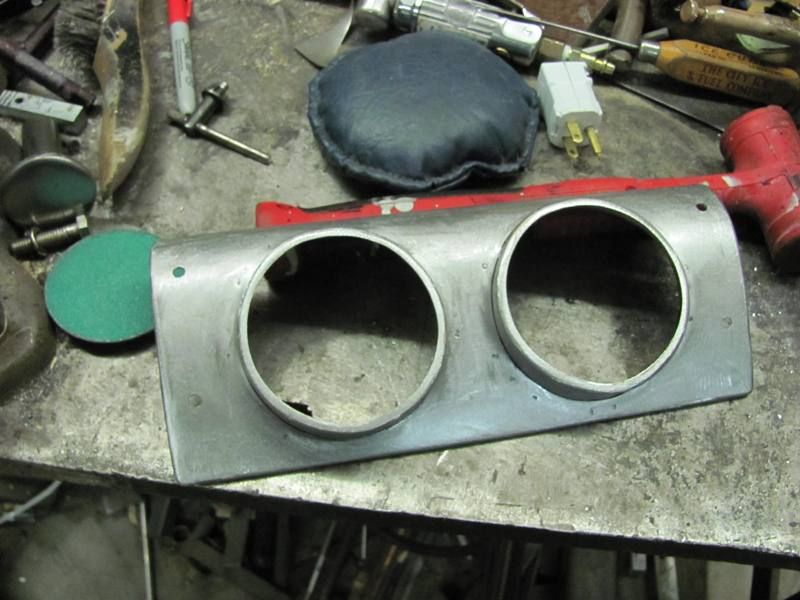
Second ring clamped, tacked in place, panel dressed a bit, and gauges test fit....bolted in this time..


Picture101.jpg


Picture102.jpg


Picture106.jpg


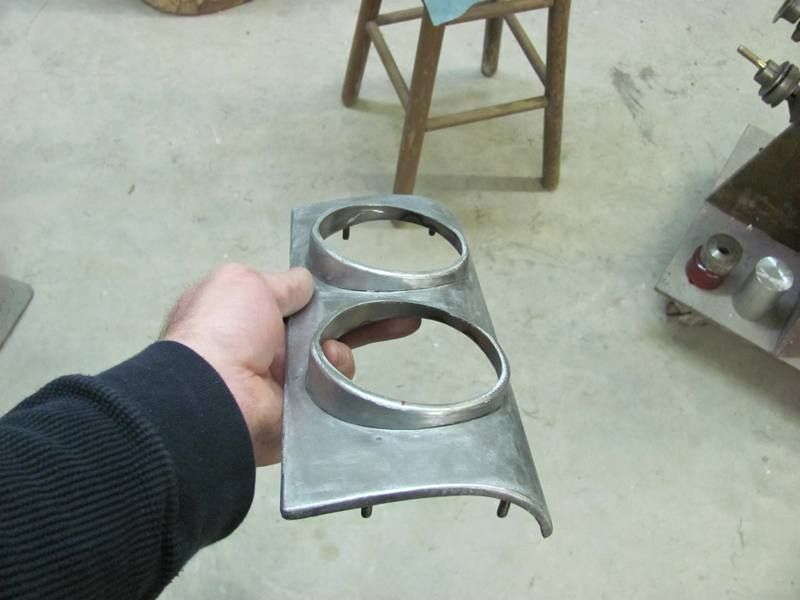
A couple small depressions at some of the weld tacks, some glaze will address any remaining imperfections. All in all, pretty pleased with the results...


Picture103.jpg


Picture108.jpg


Picture109.jpg
 
Last edited:

Mrcamaro

Well-known member
Joined
Feb 26, 2013
Messages
101
Location
Las Vegas
Awesome work, can't wait to see more, hope you are able to help on that Camaro question I PM'd you.
 
OP
M

MP&C

Well-known member
Joined
Oct 21, 2009
Messages
4,398
Location
Leonardtown, MD
Are you painting it? Will we see pics of it finished? maybe a couple more steps? Looks great so far!


I'm just in this one for the metalwork, But I should get some pictures after he gets it installed. I still need to weld the mounting studs on the rear... and then to the next panel


Awesome work, can't wait to see more, hope you are able to help on that Camaro question I PM'd you.


Sent some ideas, hope it works for you. Do you have a project thread started here on this car...hint-hint
 
Last edited:

Mrcamaro

Well-known member
Joined
Feb 26, 2013
Messages
101
Location
Las Vegas
I'm just in this one for the metalwork, But I should get some pictures after he gets it installed. I still need to weld the mounting studs on the rear... and then to the next panel


Sent some ideas, hope it works for you. Do you have a project thread started here on this car...hint-hint

haha... no project thread yet....HHHHMMMM just got an idea, maybe I should start a project thread... glad I came up with this idea all on my own. :bs:Newbie stuff though and I'm an Aries so I start other projects before I'm done, so might be an odd type thread going from restoring the Camaro to building a welding cart, to building a welding table, back to the car, then fixing some welders, then doing some fiberglass. But might not be a bad idea since that is what a lot of guys on here do anyways but just don't post it. Short description to the full on projects within the post???
 

Mrcamaro

Well-known member
Joined
Feb 26, 2013
Messages
101
Location
Las Vegas
What is that you sprayed instead of Krylon? Imron? looks natural, I rust treated some of my parts using molasses and they came out really nice, want to keep the natural shiny metal look instead of painting them, is that what it's for? Or would it be better just treating them and then just using a clear coat?
 
OP
M

MP&C

Well-known member
Joined
Oct 21, 2009
Messages
4,398
Location
Leonardtown, MD
Yes, the paint on the bumper filler panel is Imron (by Dupont), a silver metallic. I don't personally do the rust conversion coatings, so I don't have that experience to make a recommendation one way or the other, sorry. I typically use some type of abrading to get it to bare metal and then use epoxy primer as the substrate.
 

Mrcamaro

Well-known member
Joined
Feb 26, 2013
Messages
101
Location
Las Vegas
Yeah, no rust conversion, well unless you count molasses as one. Just wondering what is the best way to keep the natural metal look without having to worry so much about premature rust. Would like to keep this natural look instead of painting black or some kind of other "metal like" color.
 

Attachments

  • SDC13360.jpg
    SDC13360.jpg
    146.6 KB · Views: 292
OP
M

MP&C

Well-known member
Joined
Oct 21, 2009
Messages
4,398
Location
Leonardtown, MD
Looks like a window track? Is that the original? I think that has a zinc (or) plating of some sort, and as nice as it is I'd leave it alone. Should be fine for another 40 years.
 

Graham08

Well-known member
Joined
Dec 10, 2007
Messages
713
Location
Iron Station, NC
Robert,

Thanks for the demo on tipping the flange on those gauge pods. A tipping die is one thing I don't have for my bead roller yet, but as I see more of this kind of stuff that you can do with it, it's becoming more of a priority to get one.

Graham
 

Mrcamaro

Well-known member
Joined
Feb 26, 2013
Messages
101
Location
Las Vegas
Looks like a window track? Is that the original? I think that has a zinc (or) plating of some sort, and as nice as it is I'd leave it alone. Should be fine for another 40 years.

Yup, window track for my 68'. Thanks, think I might just leave it alone then, nice coating already and doesn't seem like something that will flash rust, or anytime in the near future.
 
OP
M

MP&C

Well-known member
Joined
Oct 21, 2009
Messages
4,398
Location
Leonardtown, MD
Thanks for the comments guys. Graham, I haven't even used half of the dies that came with my bead roller. Still learning myself.....


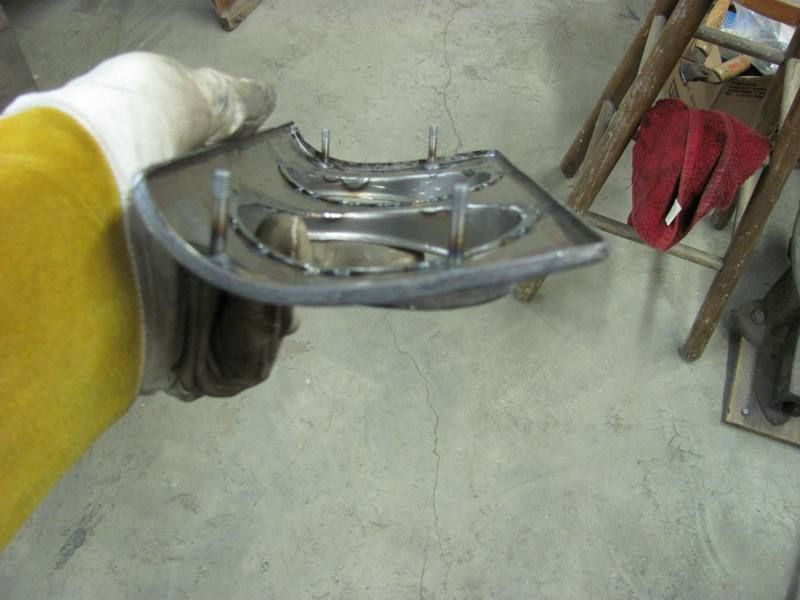
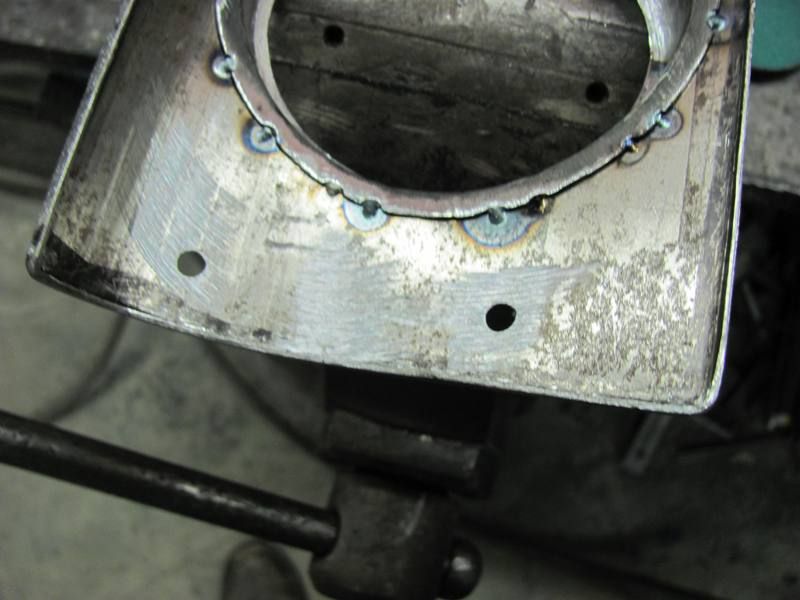
Wrapping this up, drilled four holes where the owner had marked them on the back, and cleaned up the burrs...


Picture110.jpg


Picture111.jpg


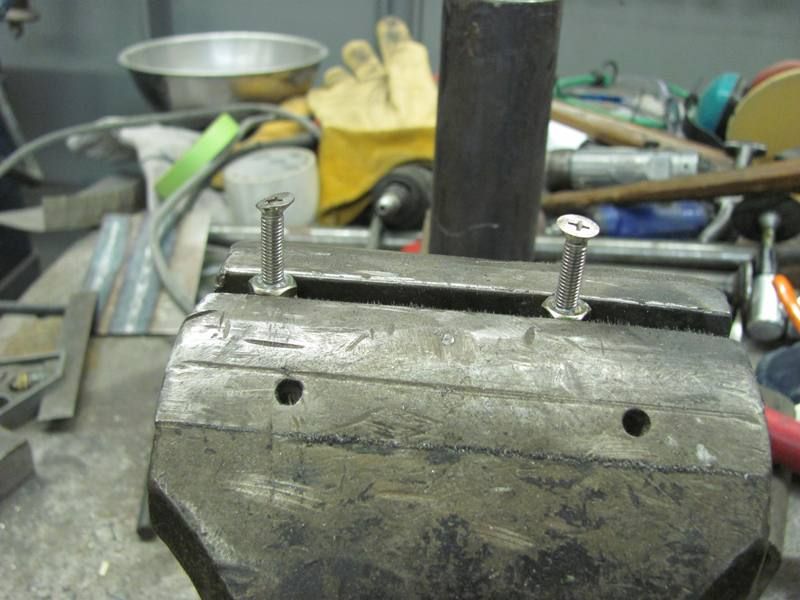
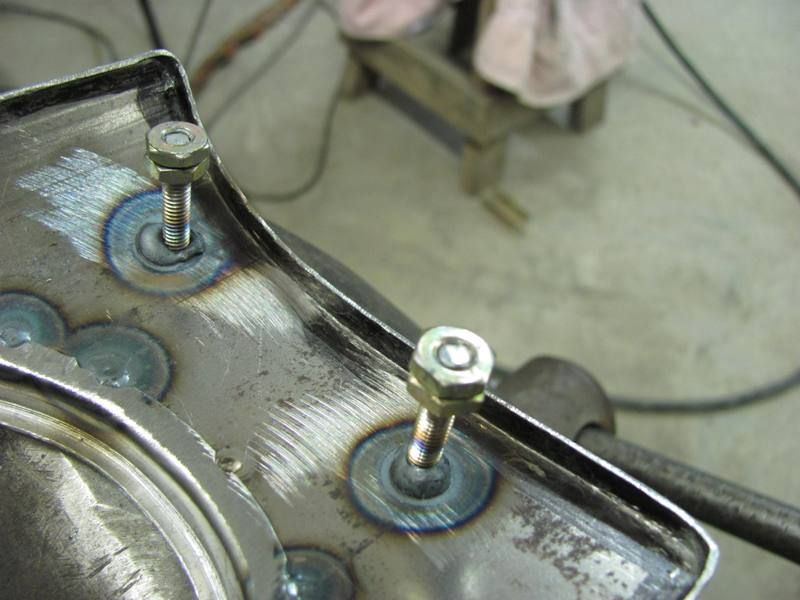
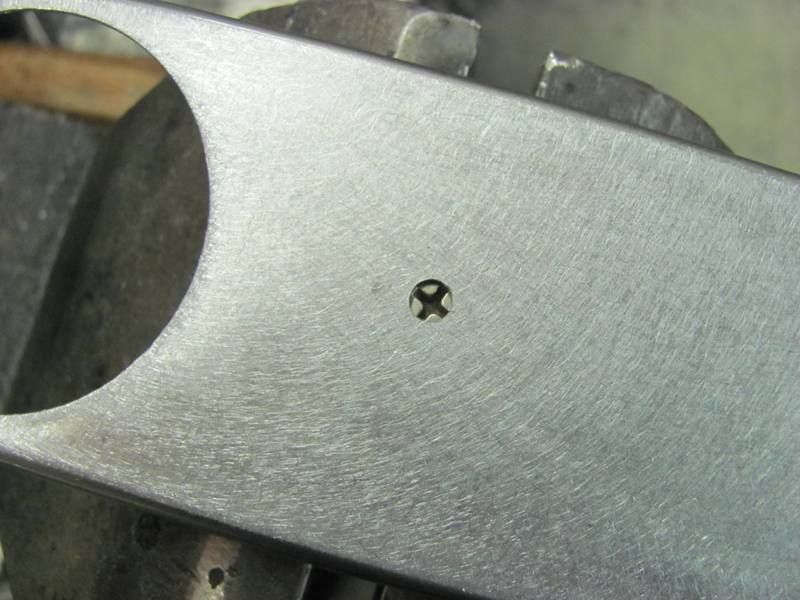
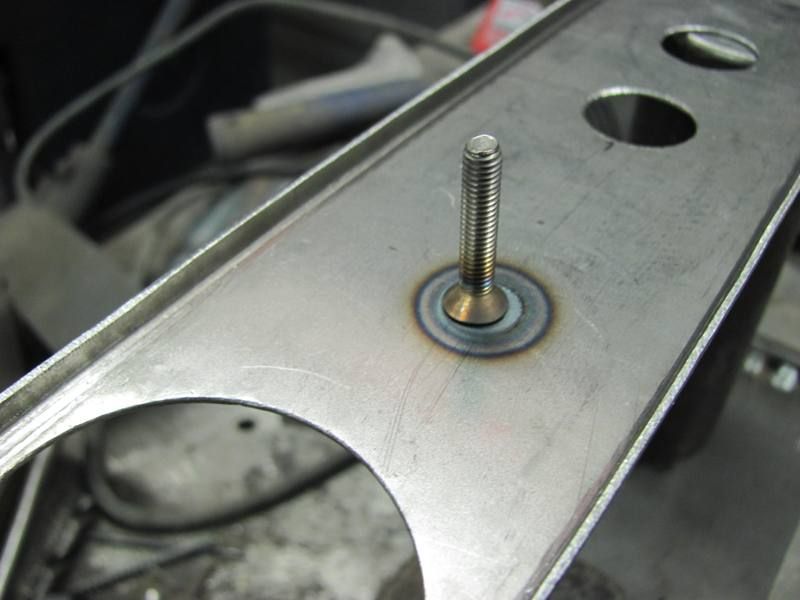
Used some 10-32 machine screws, ground the heads at an angle to match the profile of the dash panel...


Picture112.jpg


Note the anti-seize in the threads. Any time your weld circuit may cross hardware threads, the anti-seize will prevent the threads from galling.

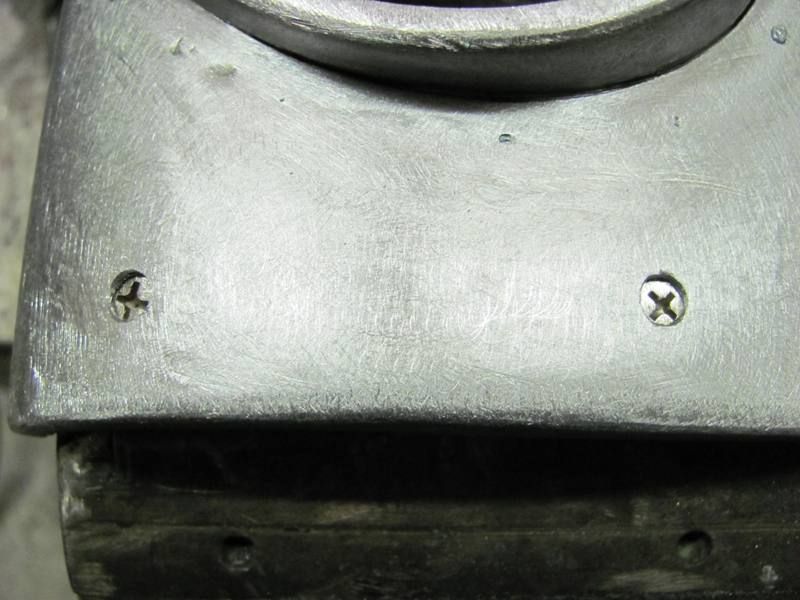
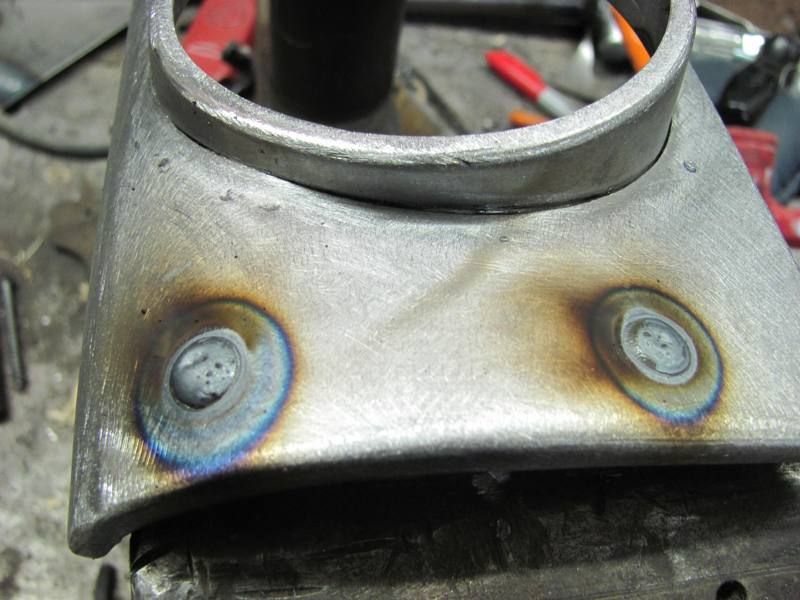
Screws aligned with the holes...


Picture113.jpg


Picture114.jpg


Picture115.jpg


Picture119.jpg


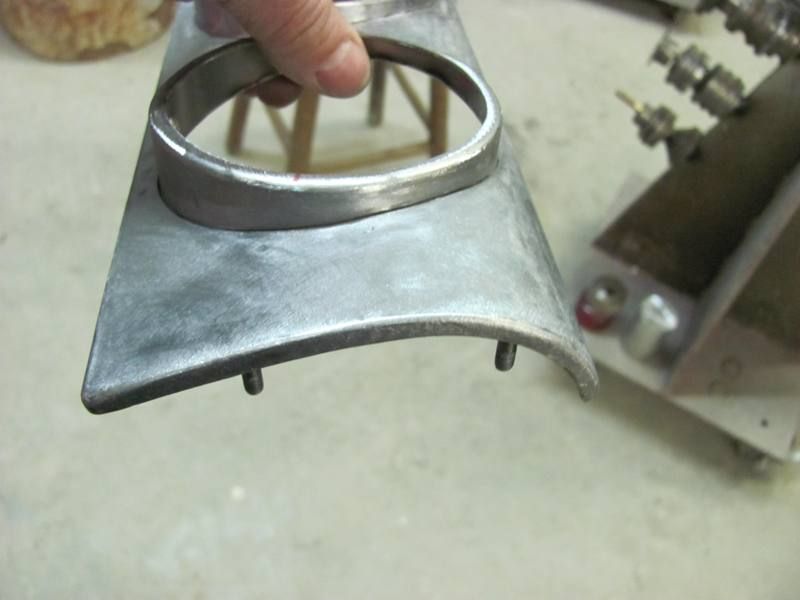
Then I ground down the front side of the welds, ready to test fit the dashboard....


Picture120.jpg


Picture121.jpg
 

e-tek

Well-known member
Joined
Dec 19, 2007
Messages
10,690
Location
Saskatoon, SK
Love the 'flush mounted' studs! I just did something similar on the 40 dash I'm working on. What grit are you using on the DA to get that final finish?
 
To avoid these ads, REGISTER NOW!

mdkingsley

Well-known member
Joined
Nov 18, 2012
Messages
371
Location
Chickamauga Ga
Great stuff here, I want to get into metal working myself. I have not ever worked with sheet metal and am looking foreward to giving it a start. Keep the good stuff coming.
 

Beaumont67

Well-known member
Joined
Apr 10, 2011
Messages
526
Location
St. Thomas, Ontario
Thanks for the comments guys. Terry, glad it worked out for you. You'll have to do a build thread............Should have the air handler closet done and ready for the HVAC guys after this weekend.

And back to more important stuff, a care package showed up today. To say it was packaged well is an understatement..
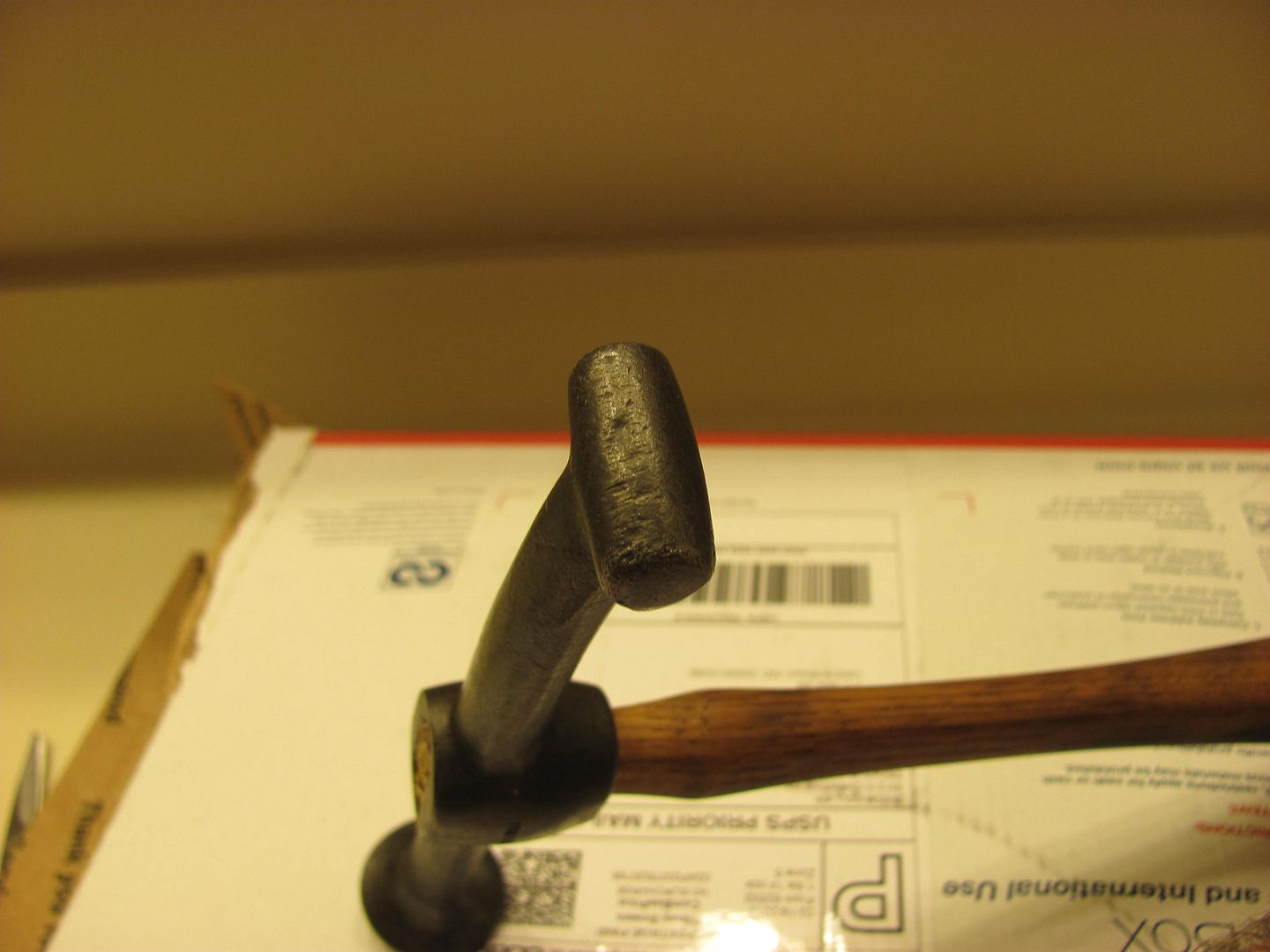
Picture197-2.jpg


Picture198-2.jpg

MP&C
First - Your workmanship in metal working is truly stunning, and a huge inspiration to many, me included.
I can thank GT and sheetmetal craftsman’s like yourself, for the education & body hammer addiction...:thumbup:


As I started to expand my vintage body hammers lately, I was curious if you have dated your recent Proto 1426 purchase ??
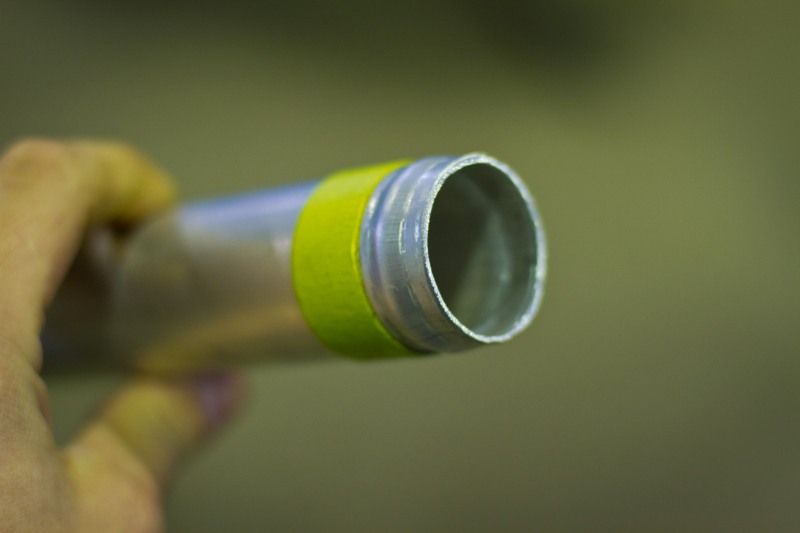
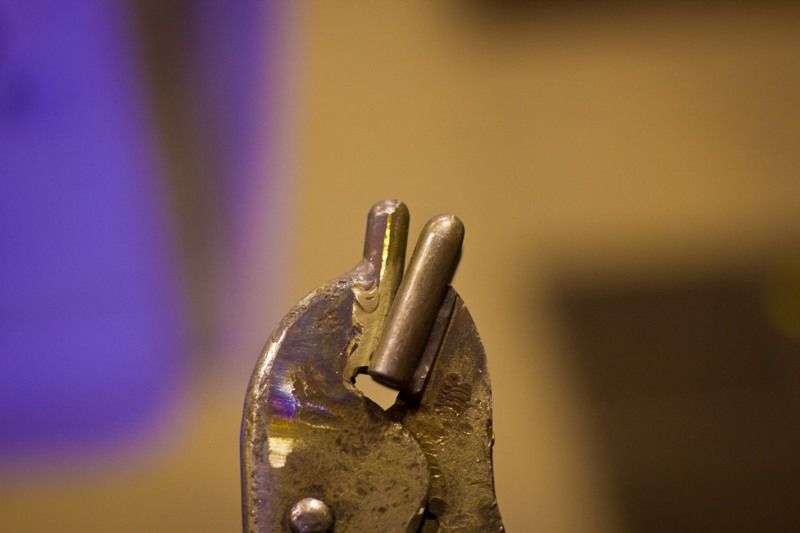
- please find a photo of my old Proto "barrel end" auto body hammer (below)
- with green paint on the handle end (painted end, masked on a slight taper...he-he)
- my Proto 1426 hammer was bought new around 1980, if I remember correctly
Another Question - current Snap-On body hammers #'s end in the letter "B" now....have their quality diminished over the old originals ??


These old tools, are still my pride & joy:
- Purchased my first Snap-On BF604...new in 1973 for $55 (I believe)...always been my favorate tool.
- Excited, I am picking up nice vintage Snap-On BF606 & BF611 hammers, next Saturday
- My panel crimping Vice-Grips were purchased at Barry Automotive FleaMarket (~30 years ago) before the Eastwood company was born.
(now, I know it’s a compromised mig weld repair...without learning how to control **** welded sheet metal)
- A repair panel “adjustable patch holder”, auto body tool (aircraft aluminum tubing with ductile iron forked end)
- The really old lead body file, is still in like new NOS condition, paid $3 a few years ago...at a local garage sale

 
Last edited:
OP
M

MP&C

Well-known member
Joined
Oct 21, 2009
Messages
4,398
Location
Leonardtown, MD
B67, that's a nice collection you have started there.. I'm not sure of the new numbering on the Snap-on hammers. I have three of them I've bought new about ten years ago, the rest of my body hammers have been bought used...


Love the 'flush mounted' studs! I just did something similar on the 40 dash I'm working on. What grit are you using on the DA to get that final finish?
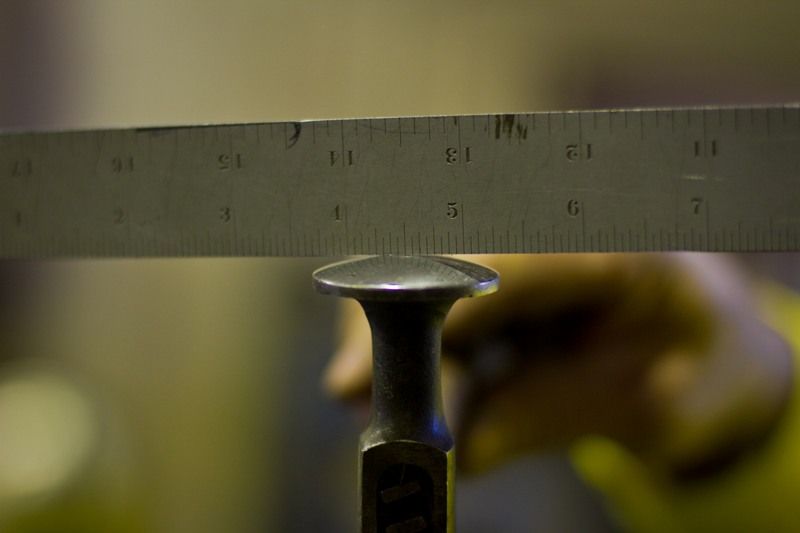
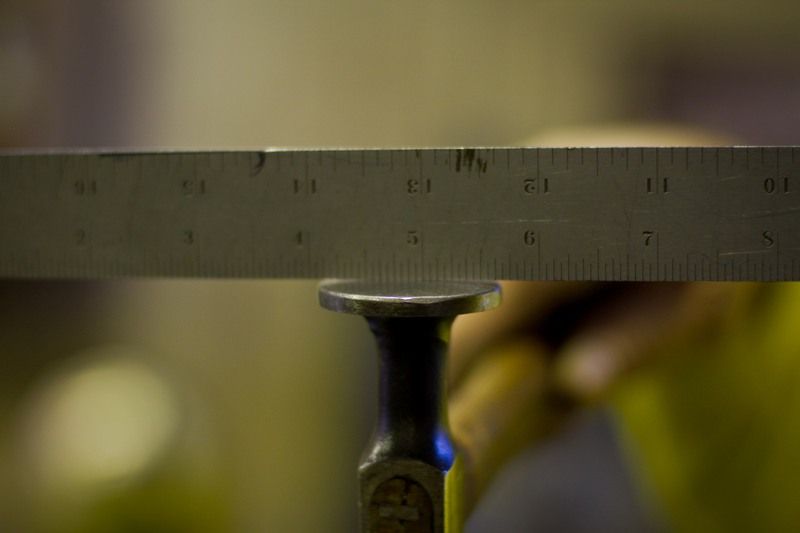
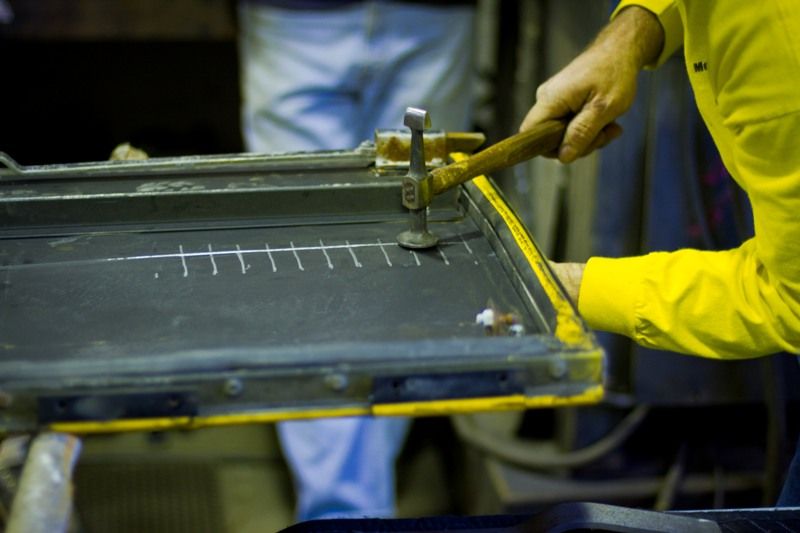
Thanks Ed, it's something I discussed with the owner, with the panel having a "smooth" look, we didn't want hardware to clutter things up. I used 80 then 120 on the DA ...
 

Mrcamaro

Well-known member
Joined
Feb 26, 2013
Messages
101
Location
Las Vegas
I was gonna PM you but I think this will add to the post. Looking at buying some body hammers and since you are very experienced and know your stuff I wanted to get your opinion real quick on these type with the interchangeable heads.
 

Attachments

  • Planish.jpg
    Planish.jpg
    140.6 KB · Views: 387
OP
M

MP&C

Well-known member
Joined
Oct 21, 2009
Messages
4,398
Location
Leonardtown, MD
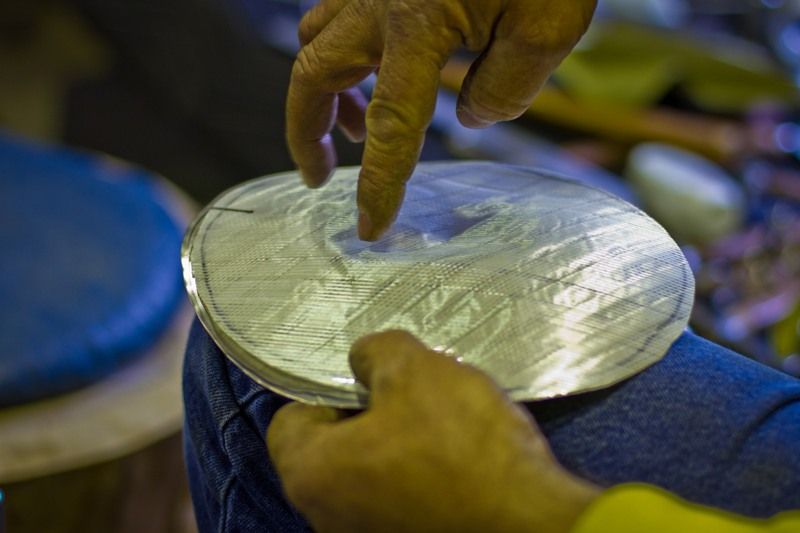
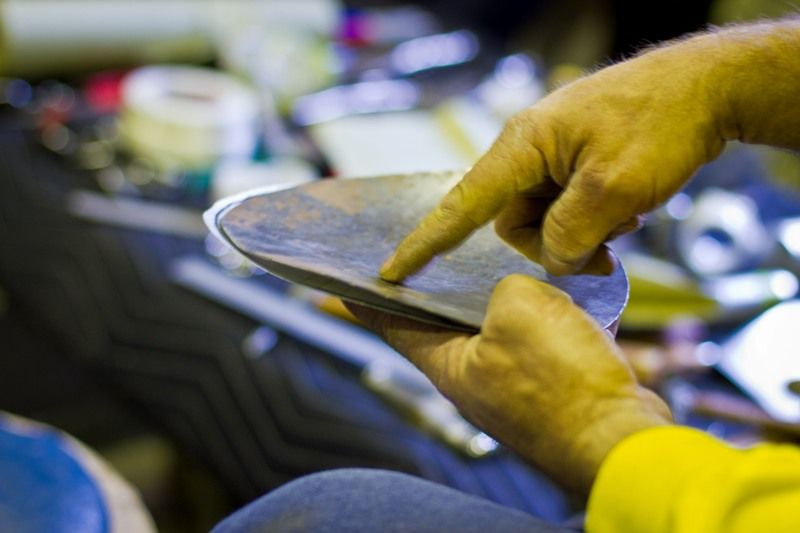
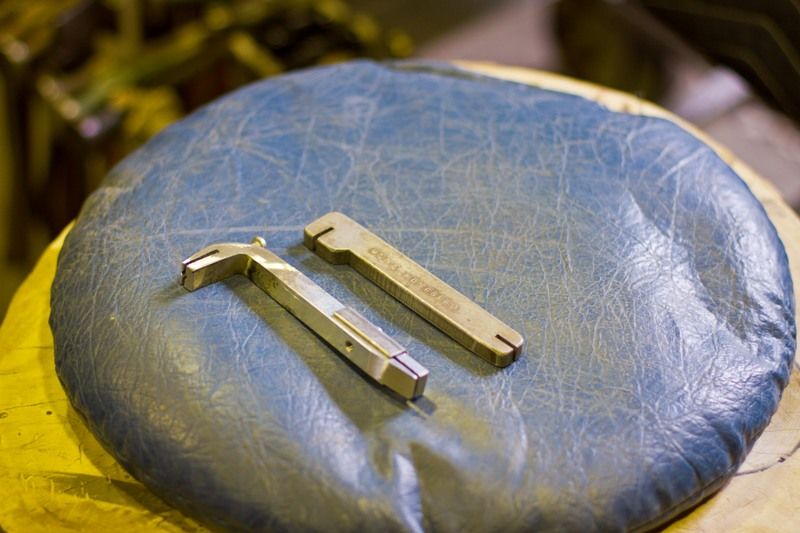
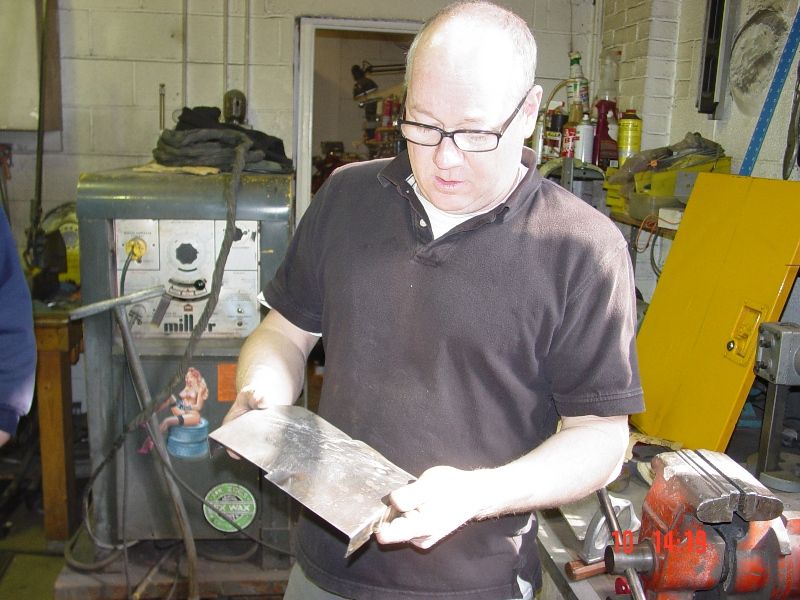
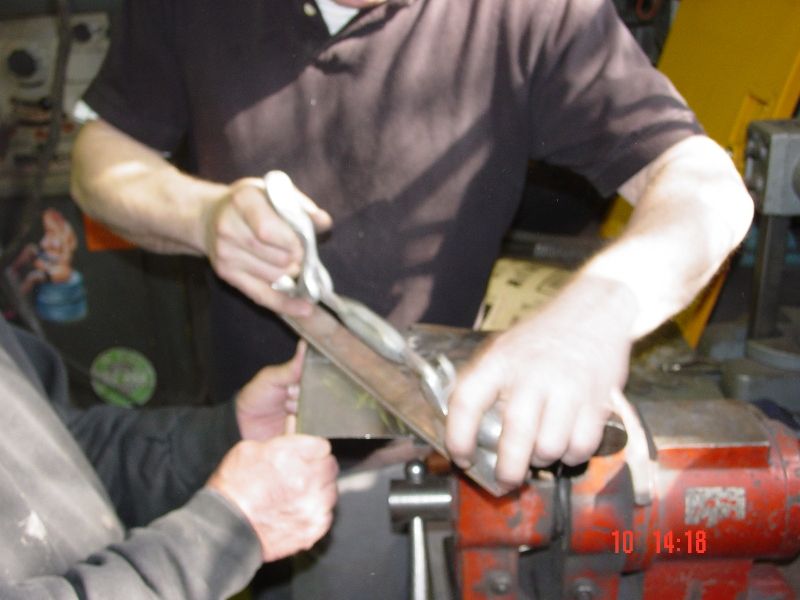
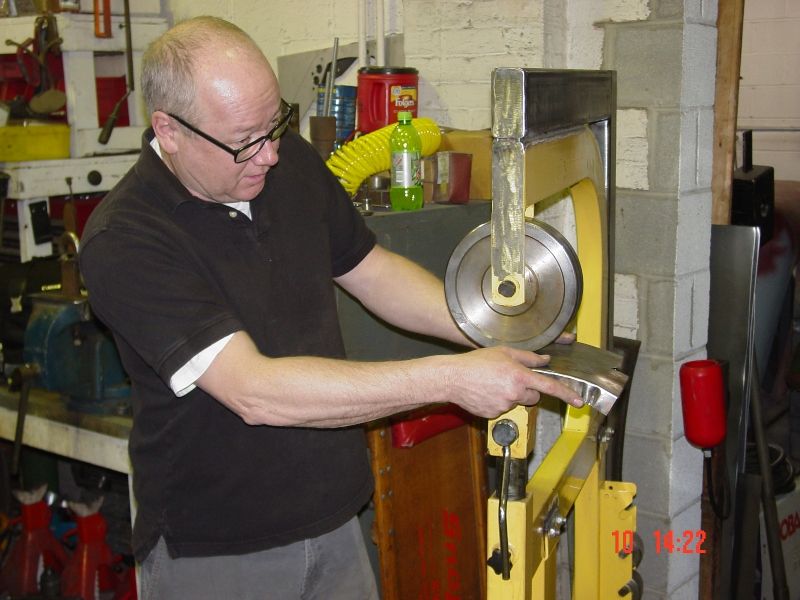
Spent much of the day yesterday at Clarke County Speed Shop in Berryville Va. The owner, OJ Higgins was hosting an all day event of Tig welding and metal shaping, and I was on the hook to provide a good bit of the metal shaping demo. The audience was primarily gear heads, and it seemed everyone had some vintage iron they were working on and looking for some insight to help out with rust repair and panel forming. Based on our audience, OJ asked that I focus on the use of hand tools where ever possible that anyone should be able to easily duplicate. We did stray from this slightly in showing the tipping wheel on the bead roller, but only after showing tipping methods using hand tools, including a cresent wrench...

We started off discussing hammer selection....


_MG_9923.jpg


_MG_9924.jpg


Then, using the body hammers, we showed the principles behind on-dolly, off-dolly, and use of the donut dolly, shown here with a damaged bus door.


_MG_9938.jpg


A grid was used on the door to assist with occasionally checking the alignment of the hammer to the dolly, for optimal effectiveness in using the donut dolly.

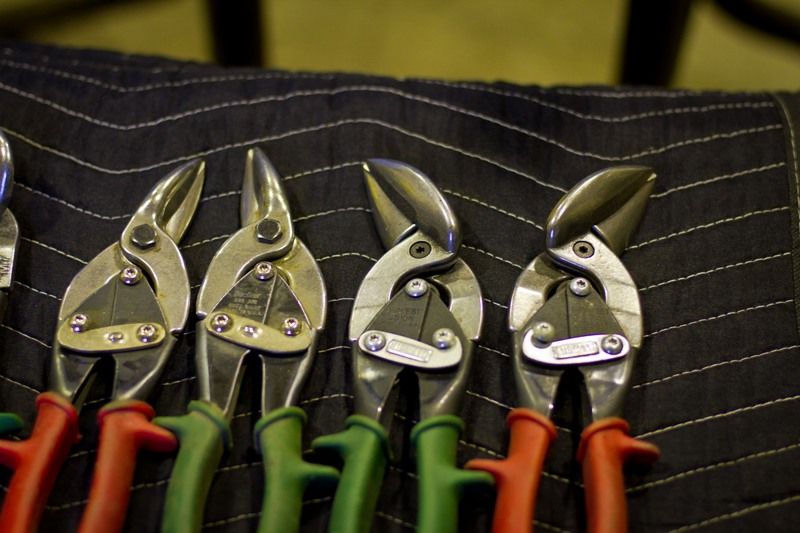
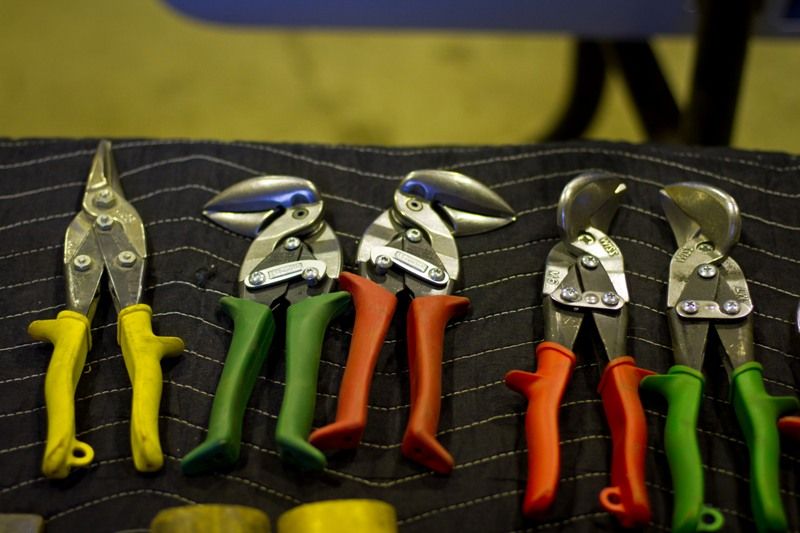
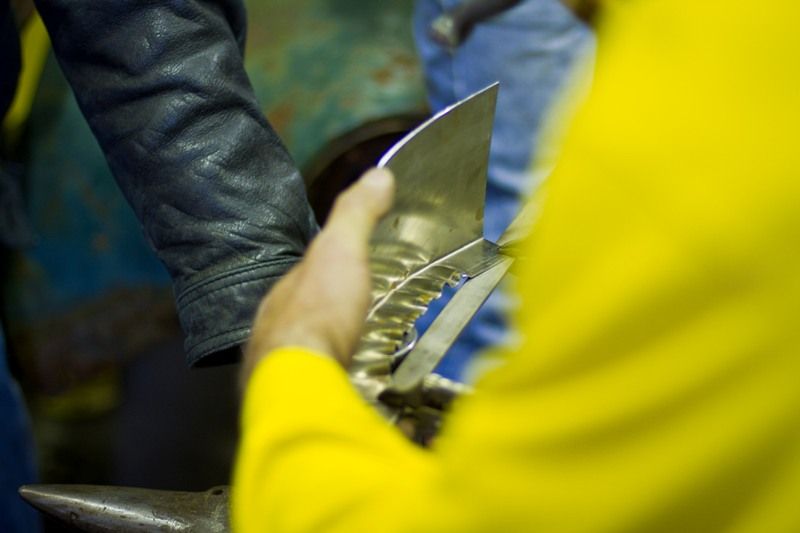
Next, in preparation for trimming patch panels we discussed the proper use of tin snips.


_MG_9930.jpg


_MG_9931.jpg


This was based on a video by Bill Gibson, a must see on youtube:


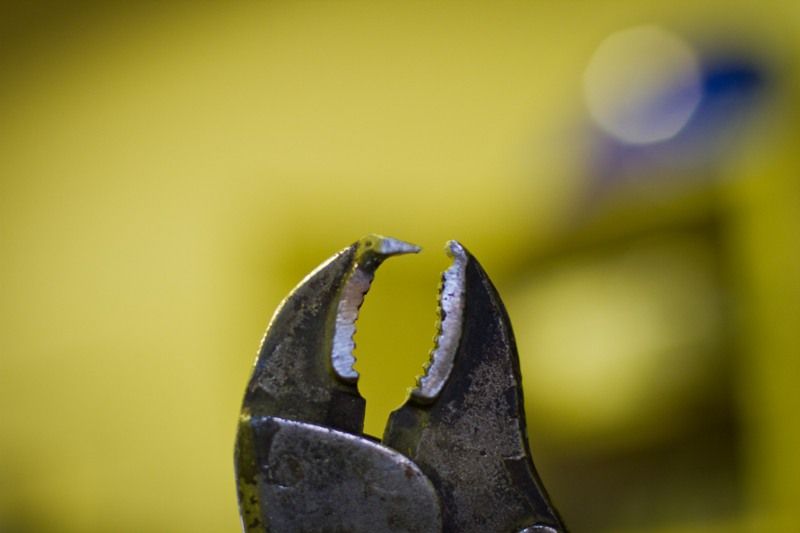
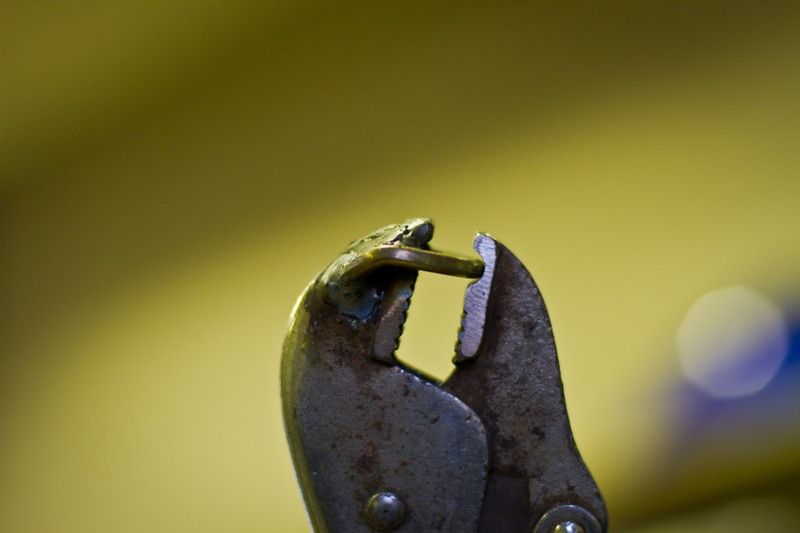
Questions diverted to the "odd looking" vise grips I had brought along, the de-skinning tool:


_MG_9926.jpg


The tube beading tool demonstrated:


_MG_9927.jpg


_MG_9952.jpg


.....and the tuck-shrink pliers...


_MG_9929.jpg


_MG_9944.jpg


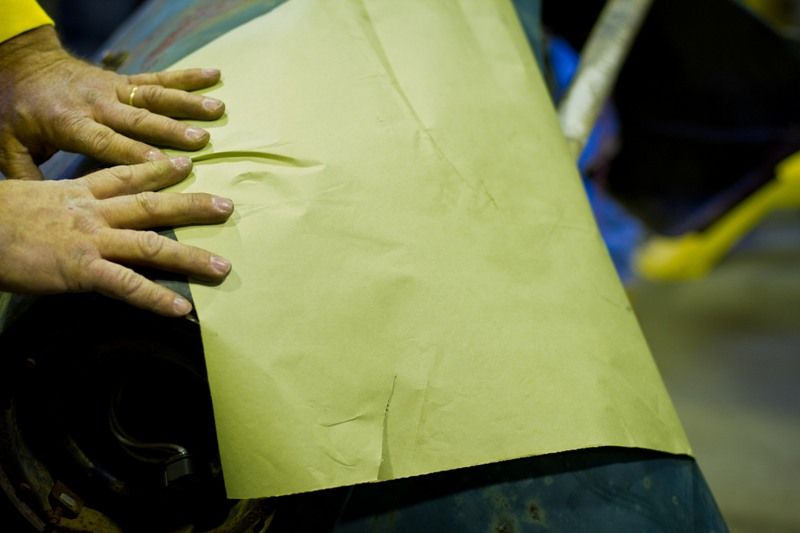
Then we moved on to reading the panel for fabrication of a patch. Starting with a piece of masking paper, forming it tight to the panel, any area showing a pleat would require shrinking, a slit would require stretching.


_MG_9953.jpg


_MG_9954.jpg


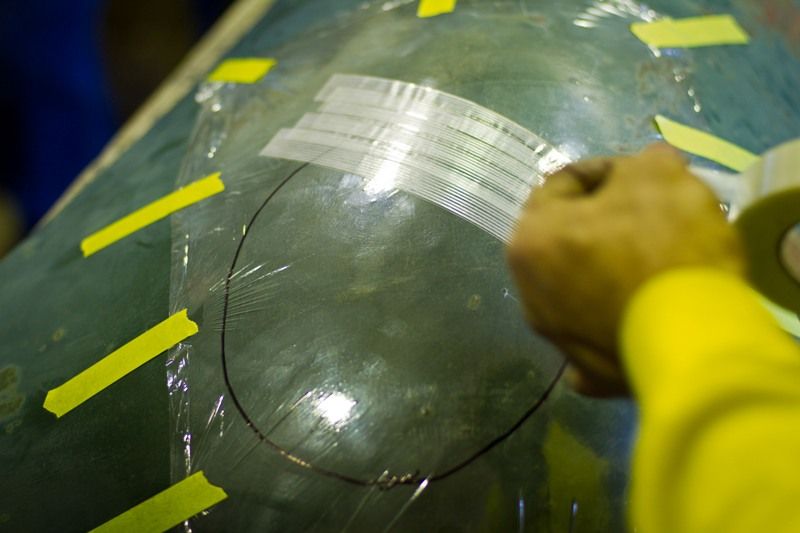
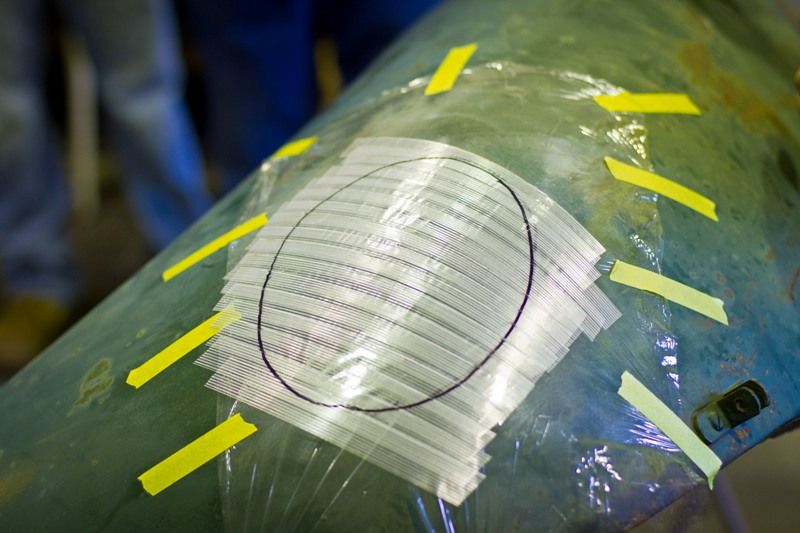
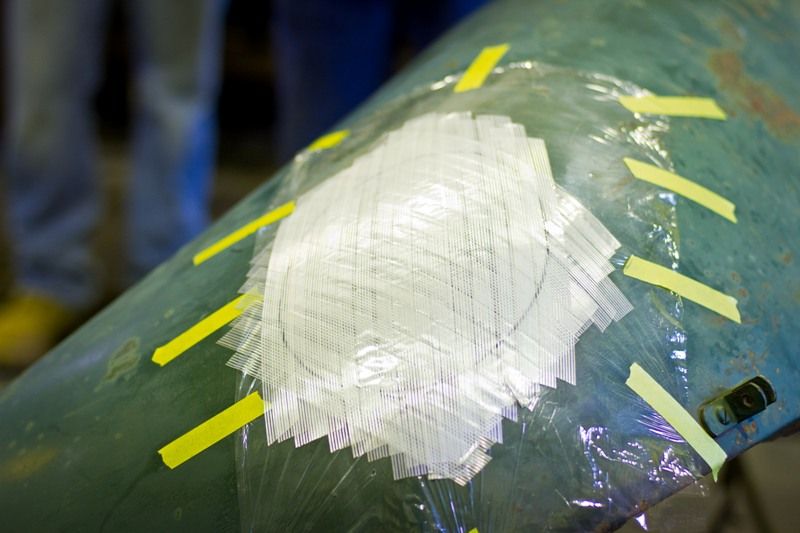
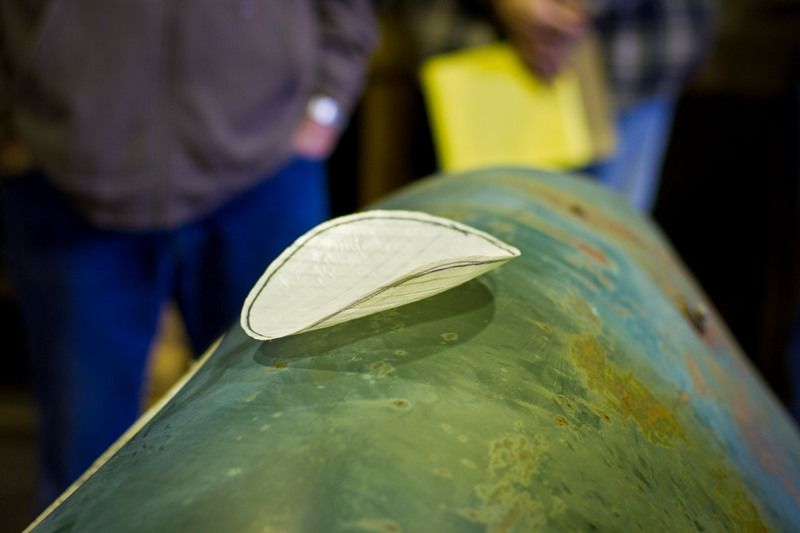
Next, a flexible shape pattern was taken from our circled "sample damage area". Cling wrap was used to act as a release agent, but as the cling didn't, it was stretched across the area and taped in place.


_MG_9970.jpg


_MG_9973.jpg


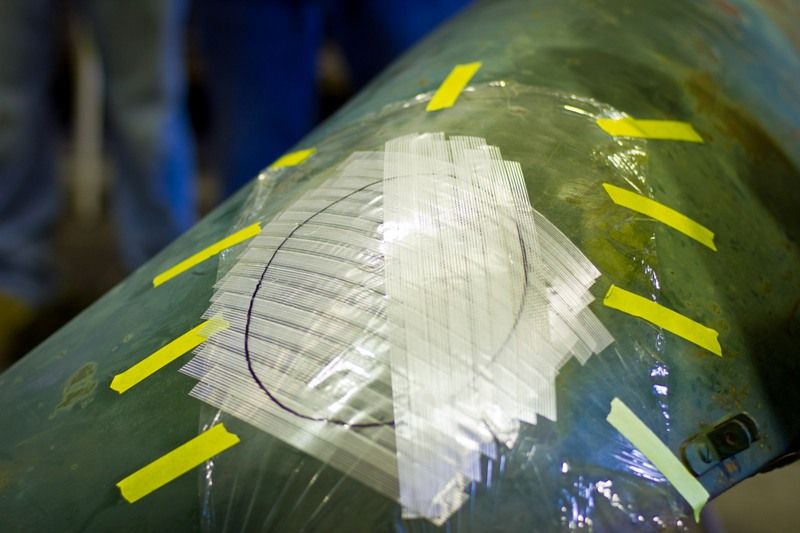
An opposing angle on the second layer helps to lock in the panels shape on the pattern...


_MG_9974.jpg


_MG_9975.jpg


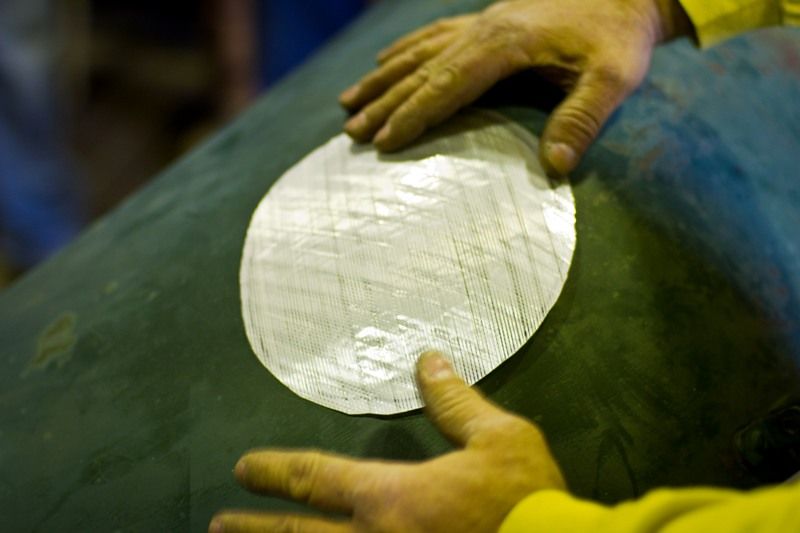
And trimmed off the excess. The reference line surrounding our "damage area" was copied onto each layer to help determine the correct size for the patch panel...


_MG_9976.jpg


_MG_9977.jpg
 
OP
M

MP&C

Well-known member
Joined
Oct 21, 2009
Messages
4,398
Location
Leonardtown, MD
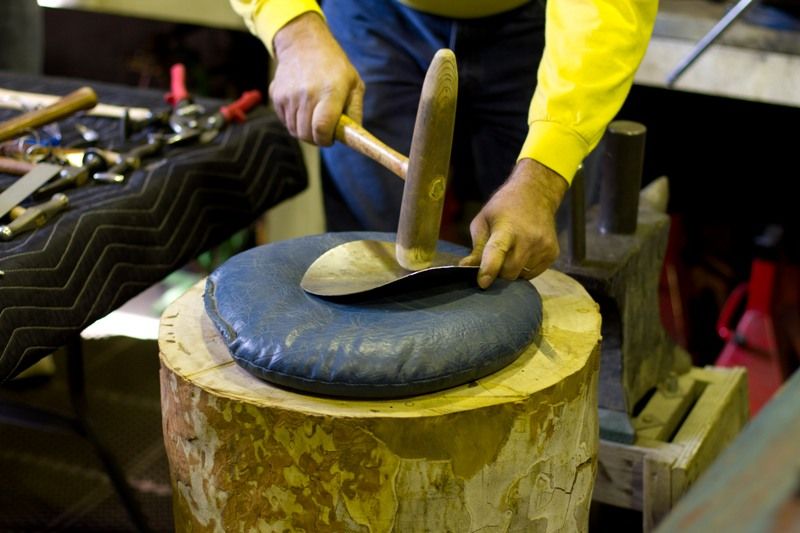
Next, a shot bag was used to hammer out our repair panel. By using the FSP on top of our patch, the loose areas shown indicate more stretch or shape is needed in the panel.. until the pattern reaches a snug fit.. And by simply inverting the pattern it will give us a pattern for the opposite fender.


_MG_9965.jpg


_MG_9978.jpg


_MG_9979.jpg


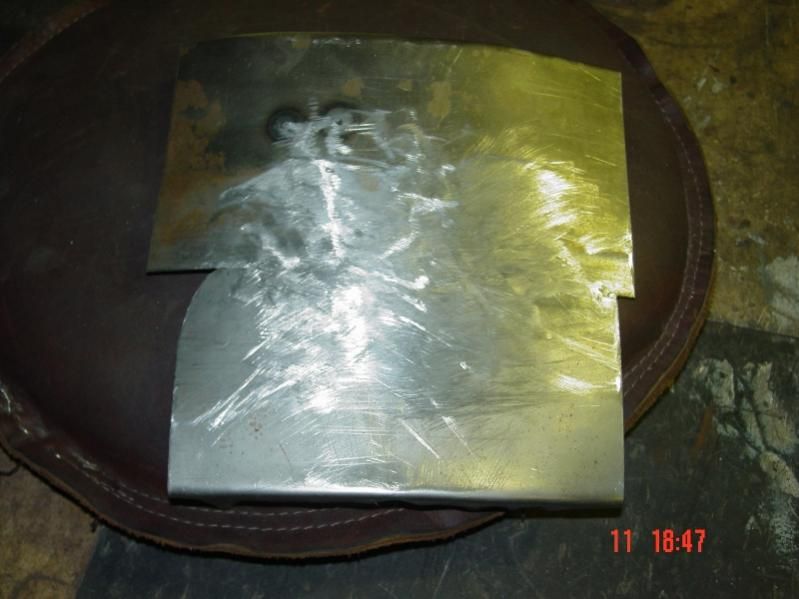
Next, we showed fabrication of a door skin patch. The outline of the door was marked on the patch, and the width of the flanges added.


_MG_9980.jpg


_MG_9982.jpg


The first trial was done using a cresent wrench, and we found the disadvantage being no depth stop. These tools show a fixed depth tool and an adjustable depth tool..


_MG_9983.jpg


_MG_9984.jpg


And then the tipping wheel in the bead roller showed another method. After both flanges had been tipped, one of OJ's drift punches clamped in the vise became a radius anvil for the corner....


_MG_9989.jpg


_MG_9990.jpg


Then we wrapped up a few of the different lessons together in forming a patch for the bottom of a Stovebolt rear fender. Many fenders of this vintage are plagued with rust around the running board attachment area, and this sample also showed a stress crack or two.


_MG_9996.jpg


_MG_9993.jpg


This patch needed rolling, a bit of stretching in the shot bag to add crown, tipping flanges, and a bit of tuck shrinking.


_MG_9994.jpg


_MG_9995.jpg


James Bowler showed fusion welding using the Tig. Two formed pieces were welded together and with a bit of filing and shaping, the outer seam was invisible...


shopgatherings014.jpg


shopgatherings012.jpg


shopgatherings017.jpg


DSC07142.jpg


....and here is the rear view...


DSC07143.jpg


I think everyone had a good time, we answered many questions, OJ kept everyone well fed, all in all a good day..
 
Last edited:

Omphaloskeptic

Well-known member
Joined
Oct 11, 2008
Messages
2,346
Location
Ultima Ratio, Wa.
MP&C, thanks for posting the pics, captions and the video link! :thumbup:

I need to find out if there is ever an 'old school' workshop out here in the Pacific Northwest to get some hands-on training. The videos are very informative, but attending a get-together like that really gets the restoration juices flowing.

I've got a few basic cheapo body bumping tools; looks like I need to start getting a 'shopping list' together for the various hand tools used in shaping sheet metal. I'm wondering if most sheet metal forming techniques can be done with hand tools, and perhaps a OA and MIG rig?

Maybe sometime you could lay out the tools you consider 'necessary', 'nice-to-have', and 'used-once-in-a-blue-moon' for your work?

Is there a good sheet metal work forum out there specifically targeting the DIY crowd?

Thanks again for the great documentation! :beer:
 

larry4406

Well-known member
Joined
Jan 27, 2006
Messages
19,062
Location
Northern Virginia
I attended the meeting at Clarke County Speed and thoroughly enjoyed the demonstrations. The ability to see, touch, and discuss at length helps to remove some of the mystery of the process. Thanks again Robert, OJ, and James for donating your time to help others to learn.
 
OP
M

MP&C

Well-known member
Joined
Oct 21, 2009
Messages
4,398
Location
Leonardtown, MD
A hand held hammer. The last piece is the barrel that each piece commects to and that barrell piece goes ona wooden handle.

While the "kit" looks to have about anything you would want, I would worry about the balance of such a hammer, given all the different configurations. That's a new one on me, but it would be neat to try one just to see how well it did work..
 
OP
M

MP&C

Well-known member
Joined
Oct 21, 2009
Messages
4,398
Location
Leonardtown, MD
MP&C, thanks for posting the pics, captions and the video link! :thumbup:

I need to find out if there is ever an 'old school' workshop out here in the Pacific Northwest to get some hands-on training. The videos are very informative, but attending a get-together like that really gets the restoration juices flowing.

I've got a few basic cheapo body bumping tools; looks like I need to start getting a 'shopping list' together for the various hand tools used in shaping sheet metal. I'm wondering if most sheet metal forming techniques can be done with hand tools, and perhaps a OA and MIG rig?

Maybe sometime you could lay out the tools you consider 'necessary', 'nice-to-have', and 'used-once-in-a-blue-moon' for your work?

Is there a good sheet metal work forum out there specifically targeting the DIY crowd?

Thanks again for the great documentation! :beer:

Some of the better jobs are done by gas welding with that O/A torch. Of course, using it with a fusion weld means absolute tight joints are needed, so fitment does become an issue. There are similar meets in your area, I would suggest metalmeet or allmetalshaping as two websites to watch for such events..


I attended the meeting at Clarke County Speed and thoroughly enjoyed the demonstrations. The ability to see, touch, and discuss at length helps to remove some of the mystery of the process. Thanks again Robert, OJ, and James for donating your time to help others to learn.

Larry, good to finally meet after all our online conversations. Glad you enjoyed the demos..
 
OP
M

MP&C

Well-known member
Joined
Oct 21, 2009
Messages
4,398
Location
Leonardtown, MD
Back to instrument panels today......


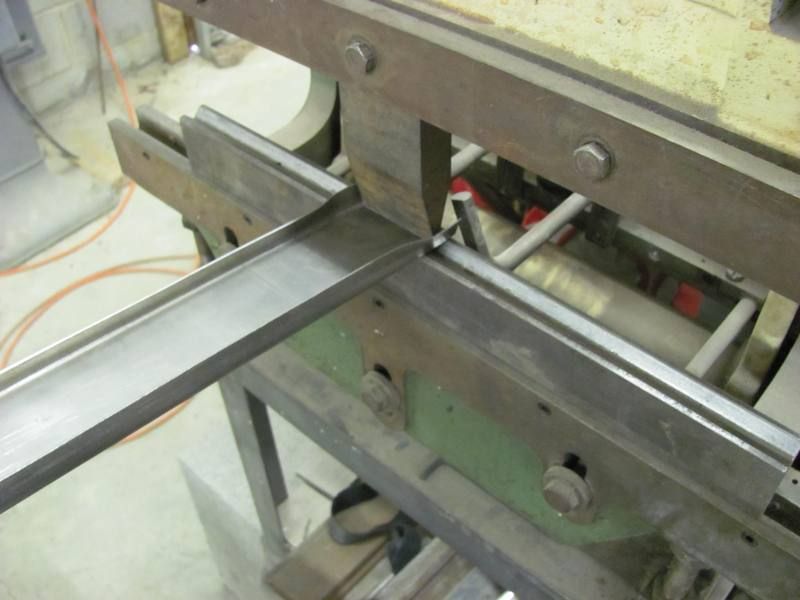
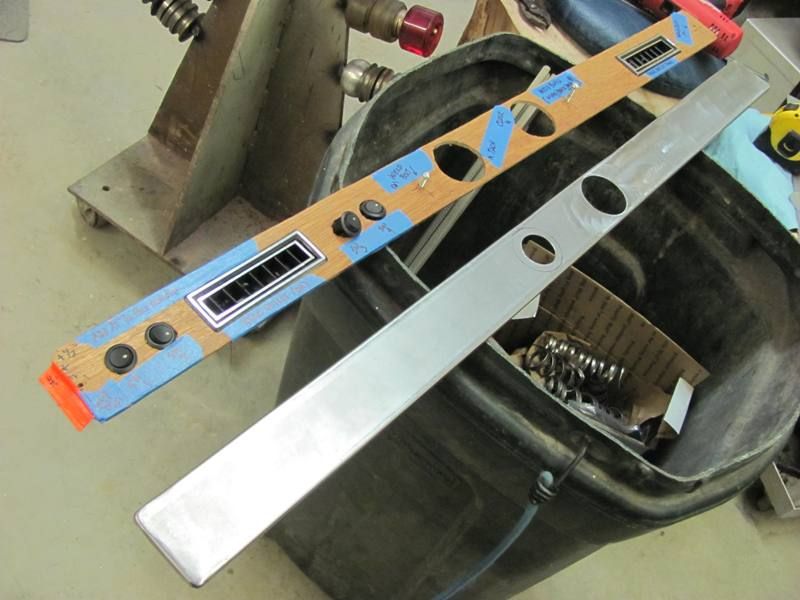
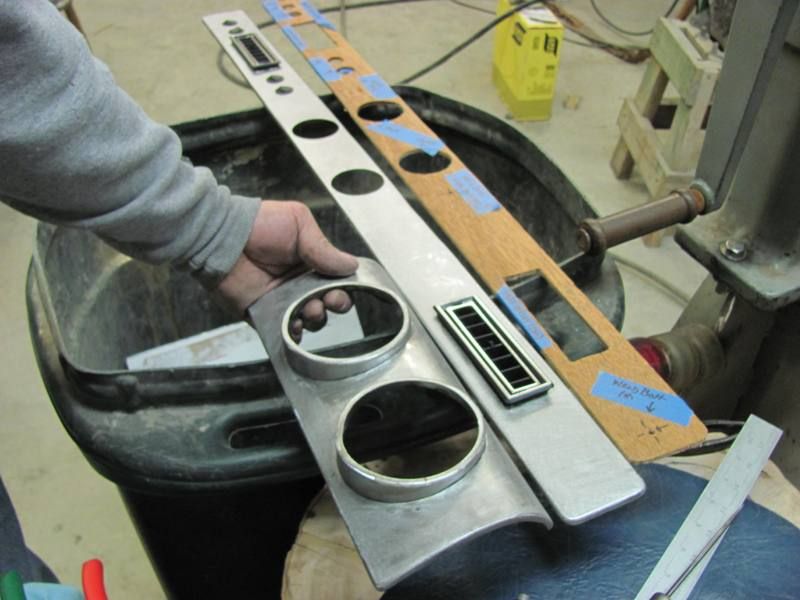
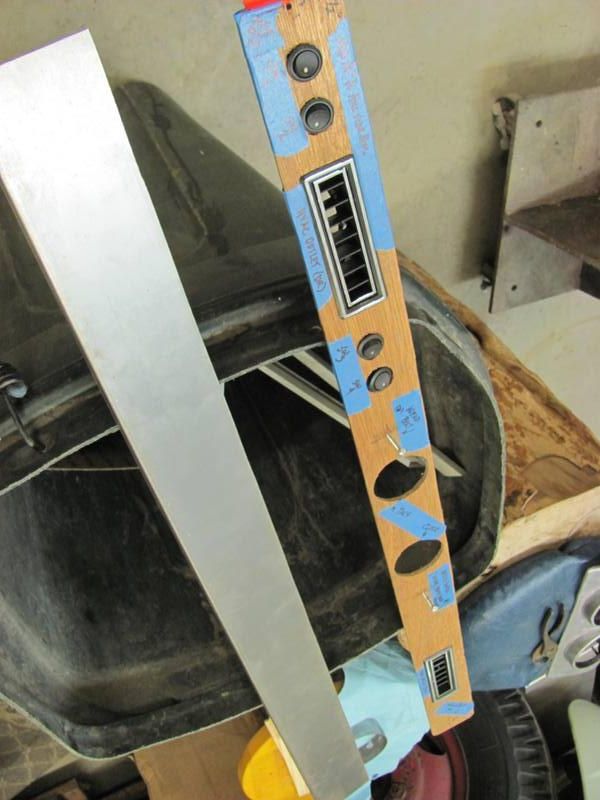
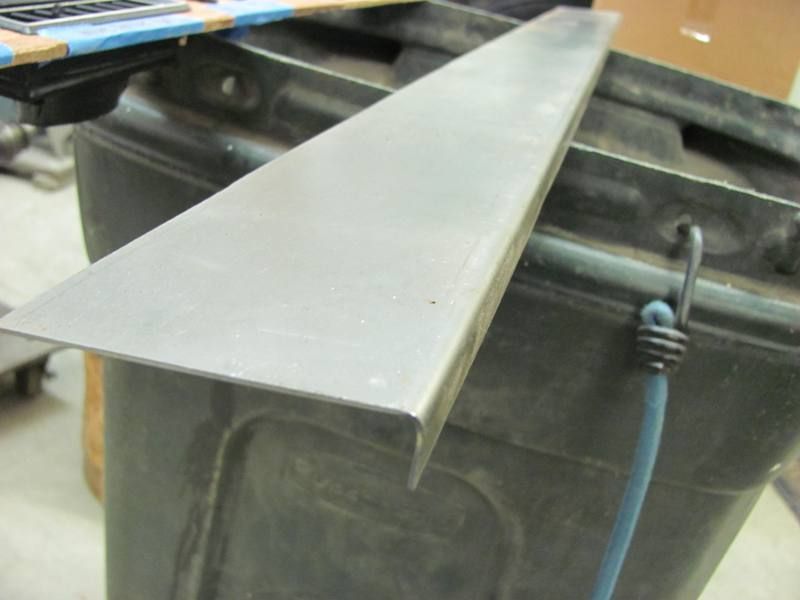
This one was just shy of 40" wide, really testing my 22 ga capacity apron brake... shown with the plywood pattern by the owner...


Picture122.jpg


Picture123.jpg


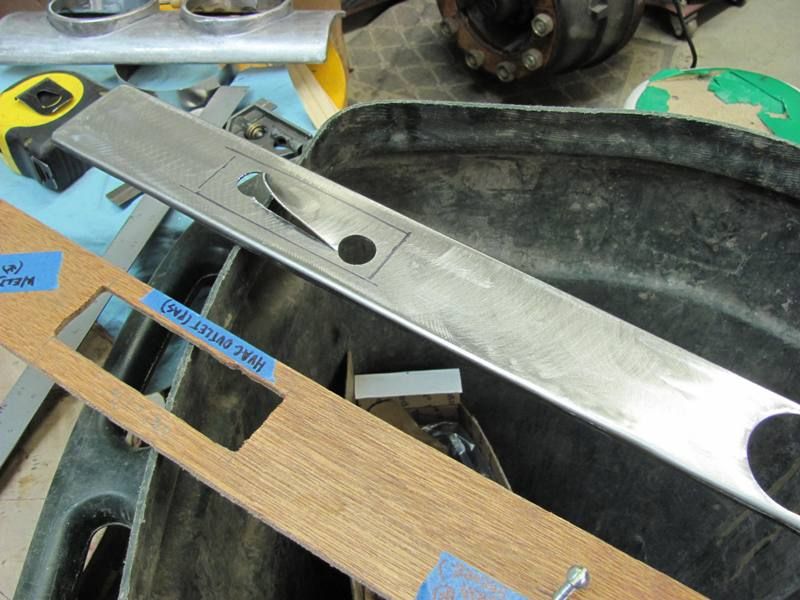
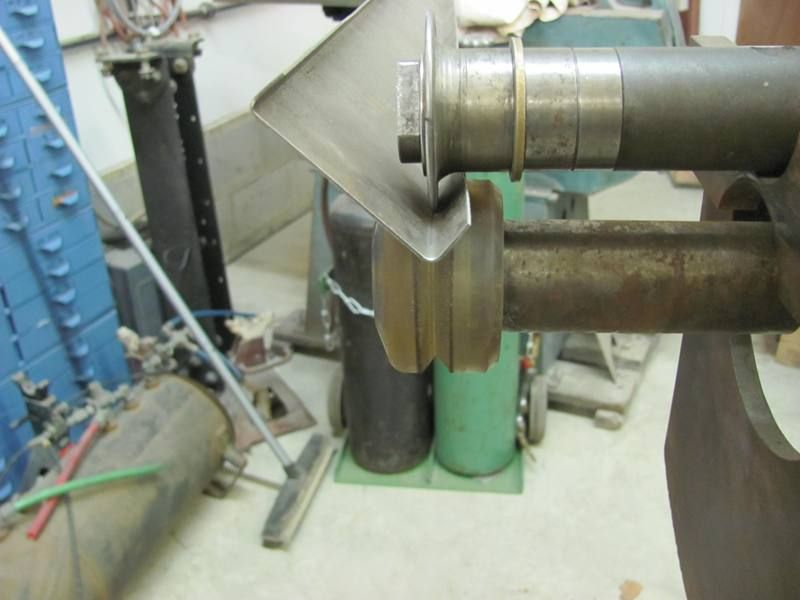
To sharpen up the bend just a bit, I ran it through the bead roller using the tipping dies...


Picture125.jpg


Trimmed the folded flanges down a bit. Final flange will be about 3/16", bent them using 1/2" so the apron brake would cooperate a little better..


Picture135.jpg


Picture127.jpg


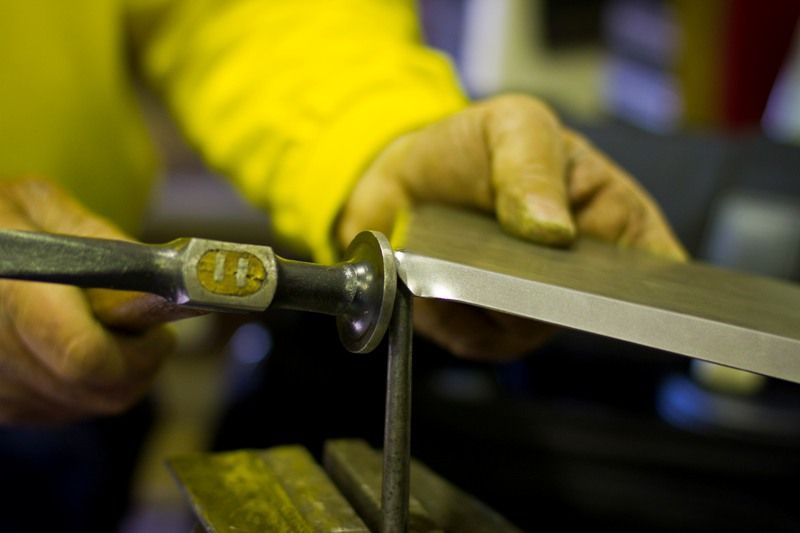
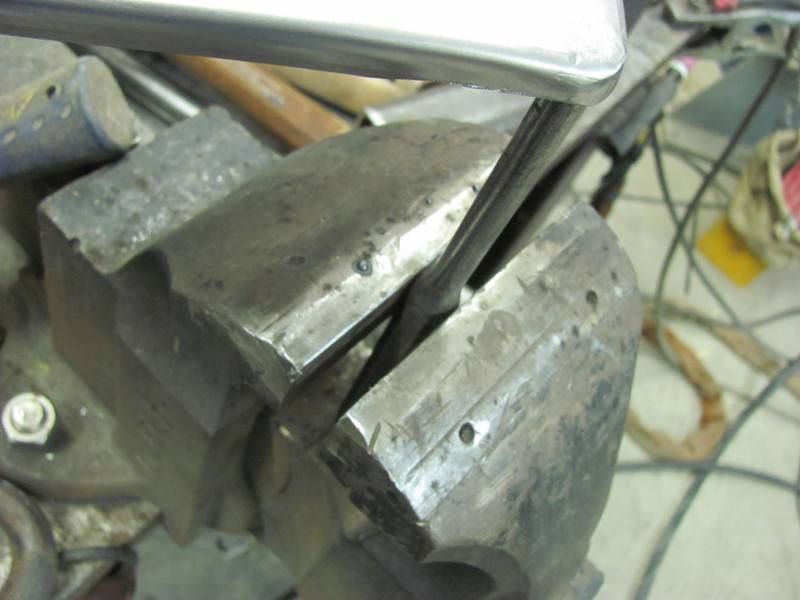
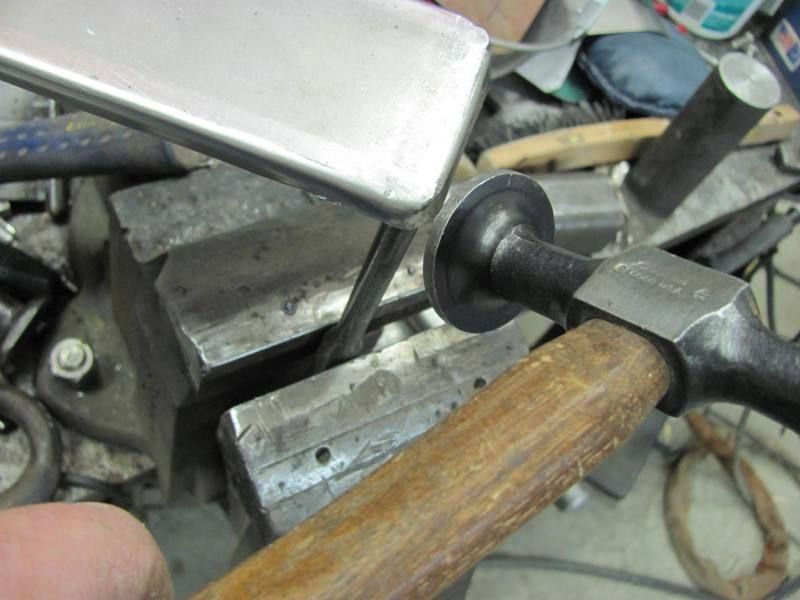
Used a 3/8 diameter punch as an anvil and hammered the corner radiuses (radii?)


Picture132.jpg


Picture133.jpg


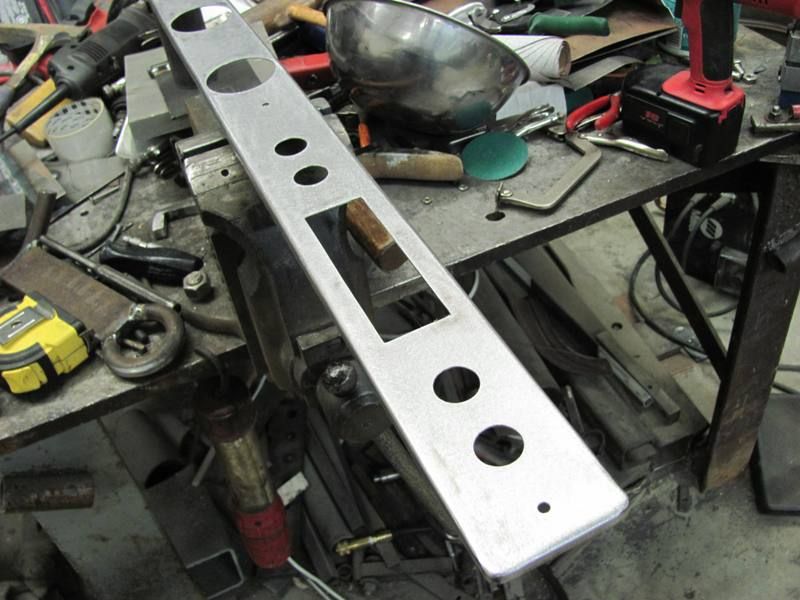
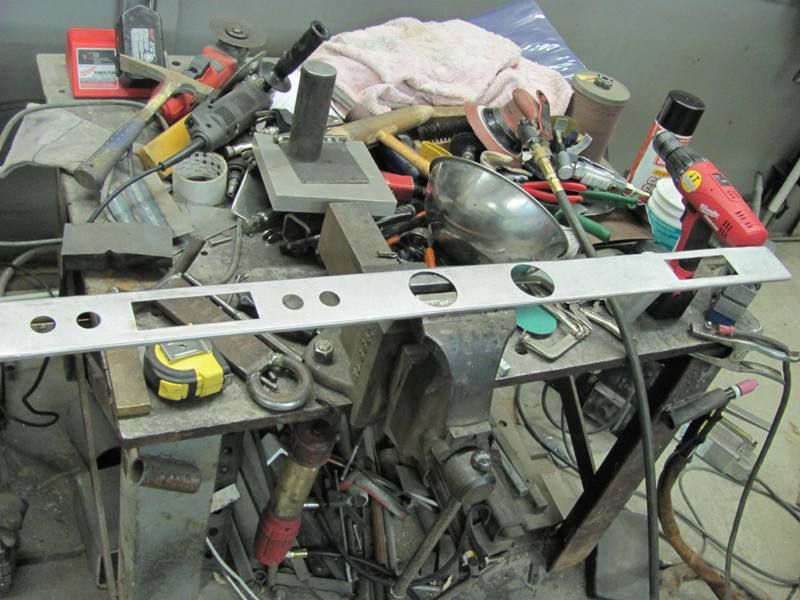
Adding holes...


Picture141.jpg


Picture143.jpg


Picture144.jpg


Welding on the "hidden studs"


Picture145.jpg


Picture146.jpg


Picture147.jpg


Picture148.jpg


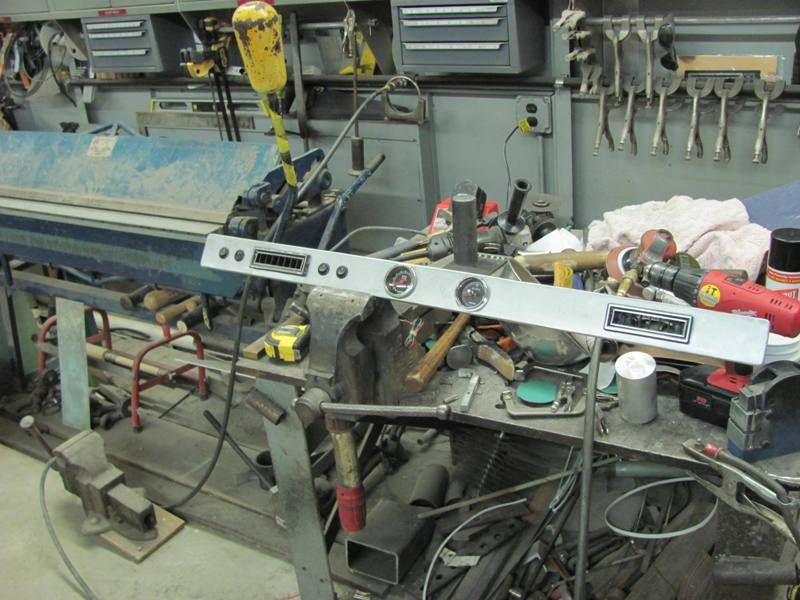
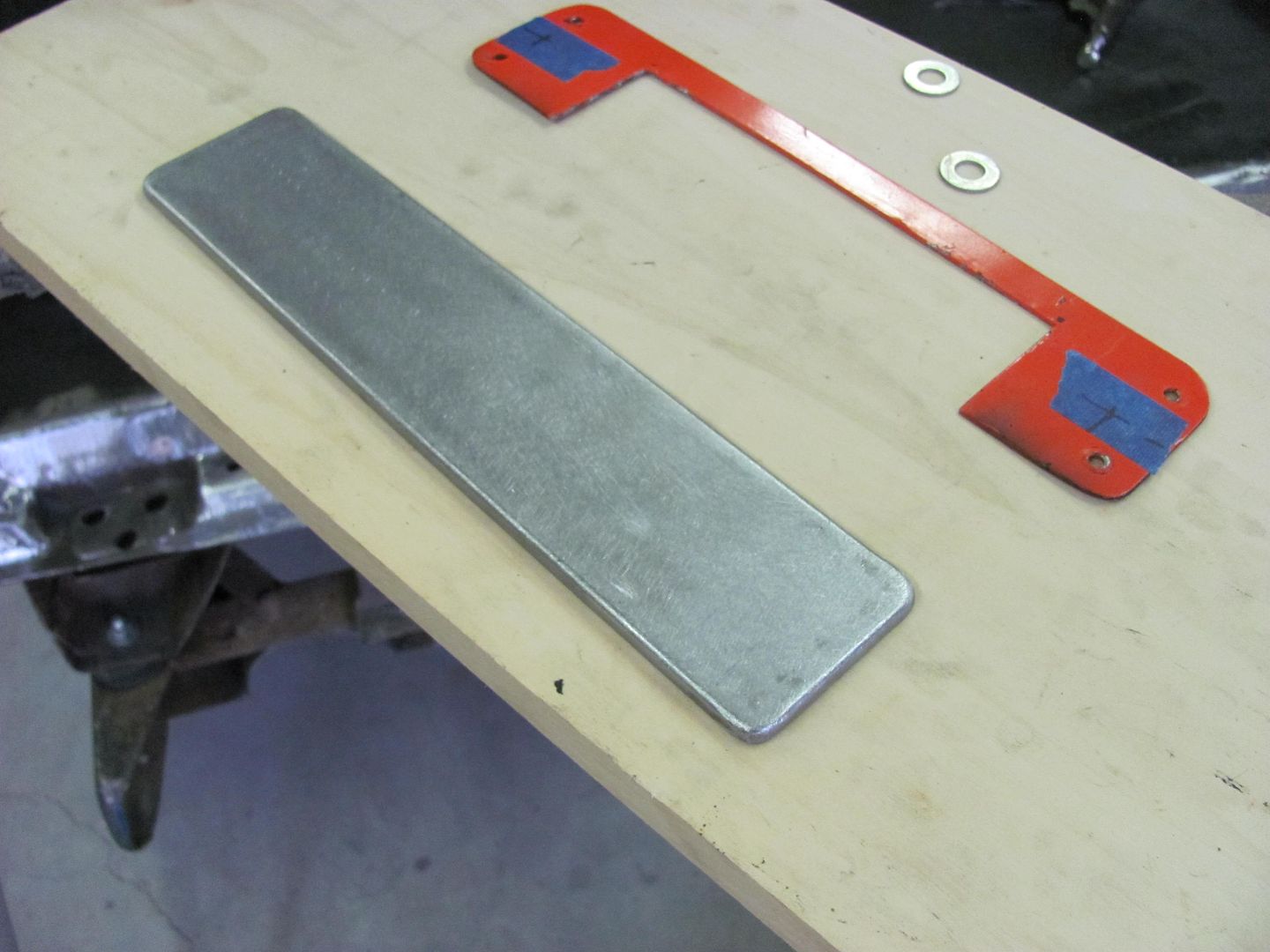
This will replace the original as well as the upper plate we made last year...


Original_Instrument_Panel1.jpg


Picture029.jpg


The parts will position something like this....


Picture152.jpg
 
OP
M

MP&C

Well-known member
Joined
Oct 21, 2009
Messages
4,398
Location
Leonardtown, MD
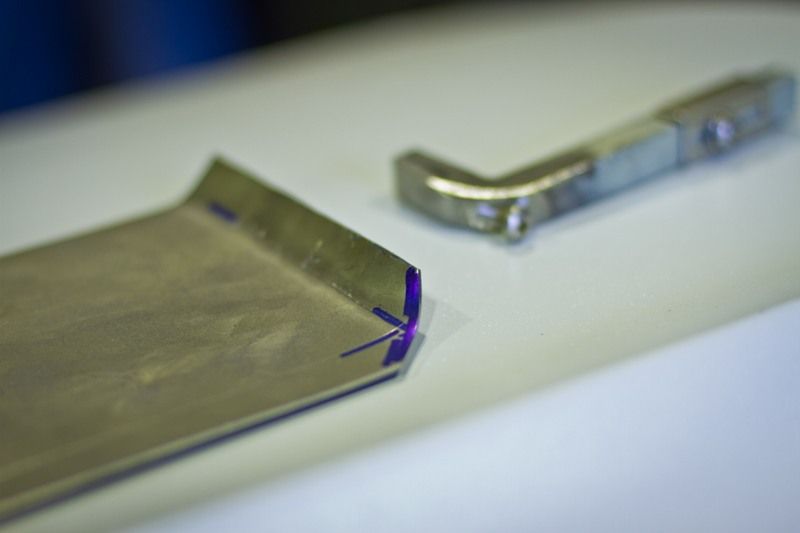
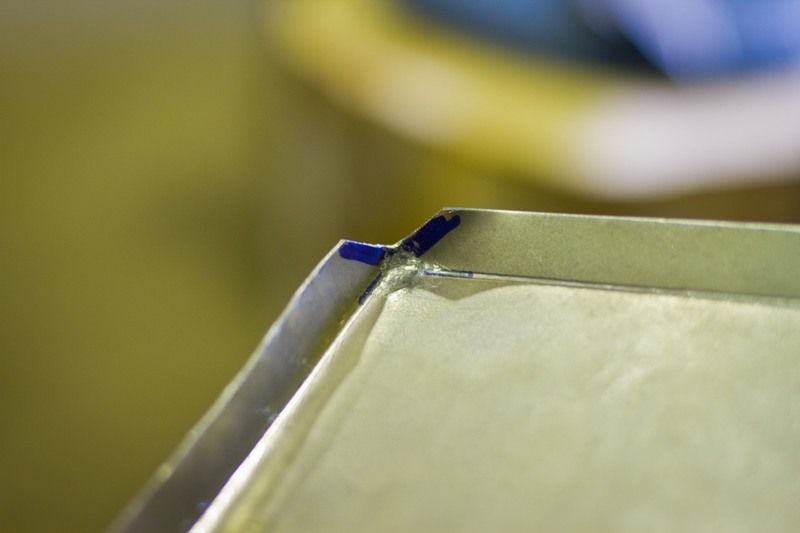
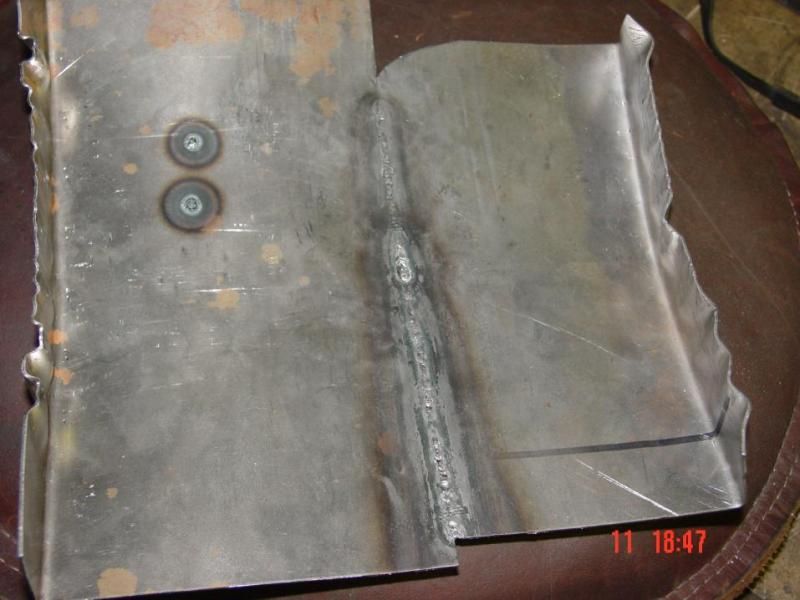
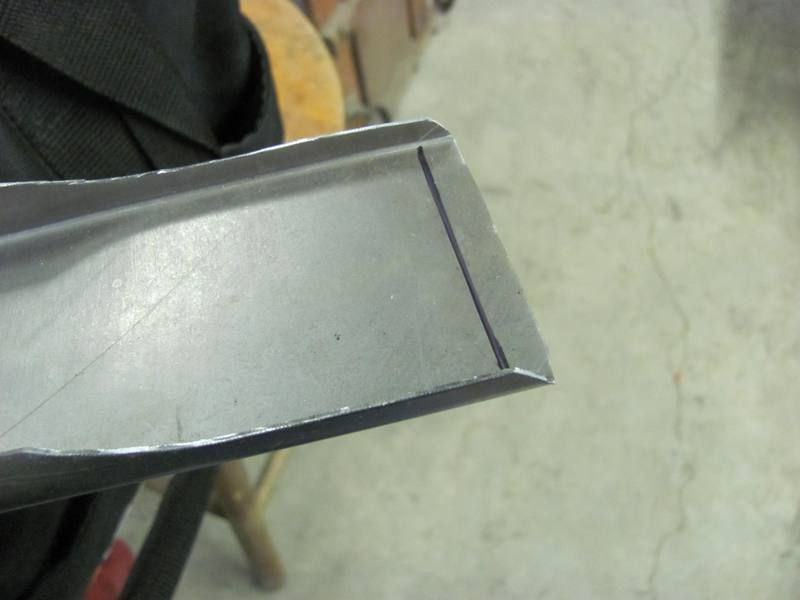
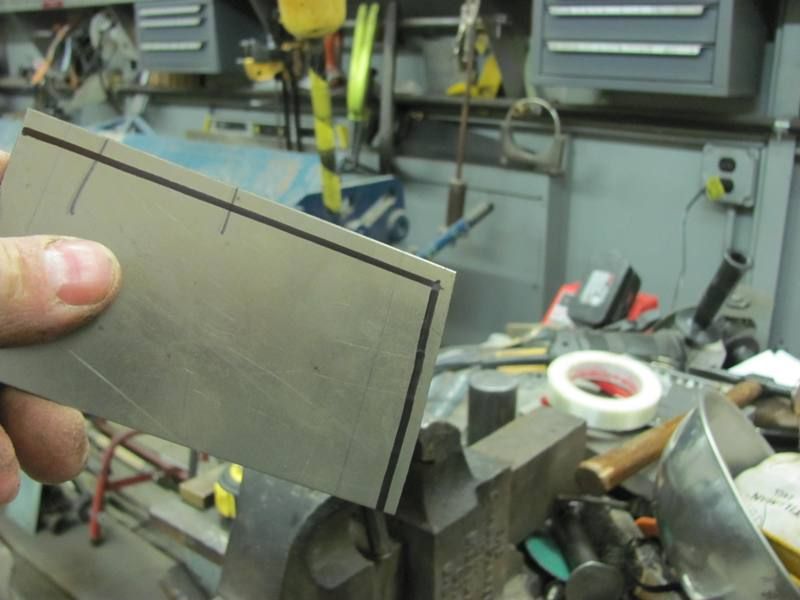
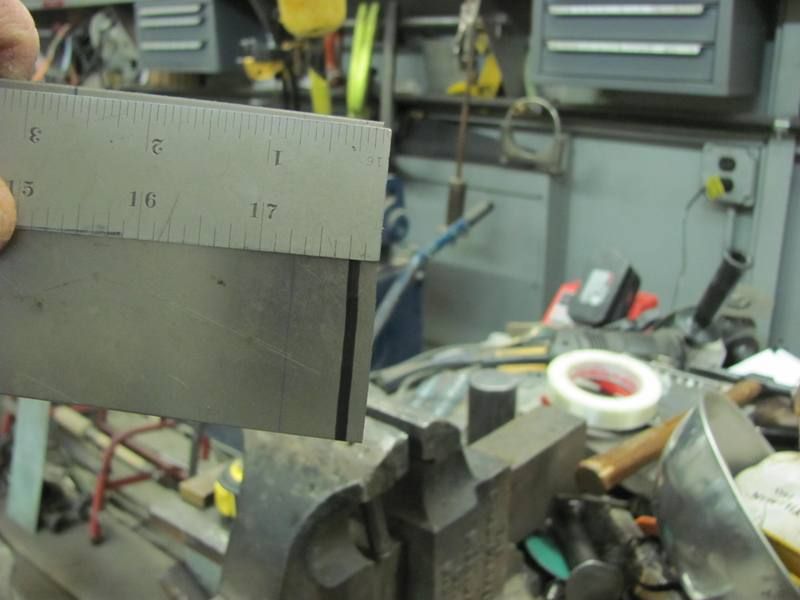
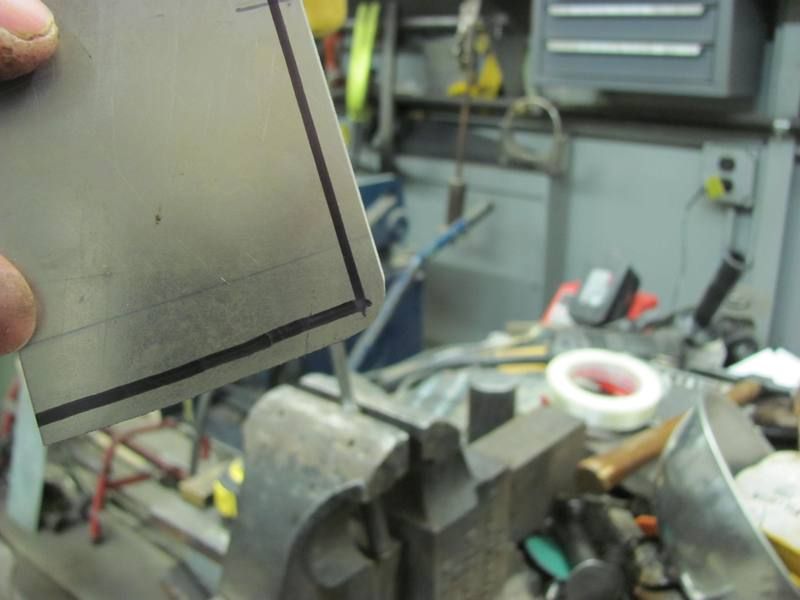
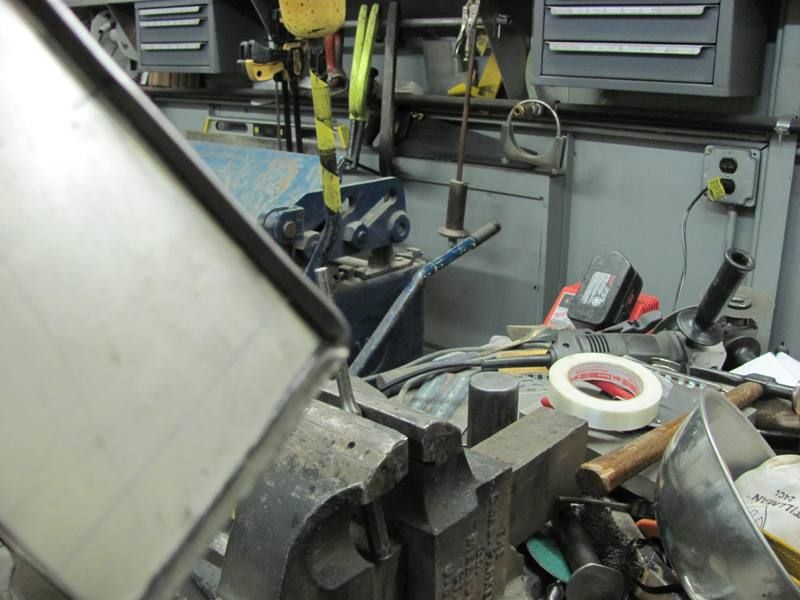
I had a request to show how the "unwelded" corners were formed, so I did another sample. The flanges were marked the same as the last version, just under 1/4"


Picture153.jpg


Picture154.jpg


The corner is trimmed at the corner to a radius to get rid of some of the excess metal...


Picture155.jpg


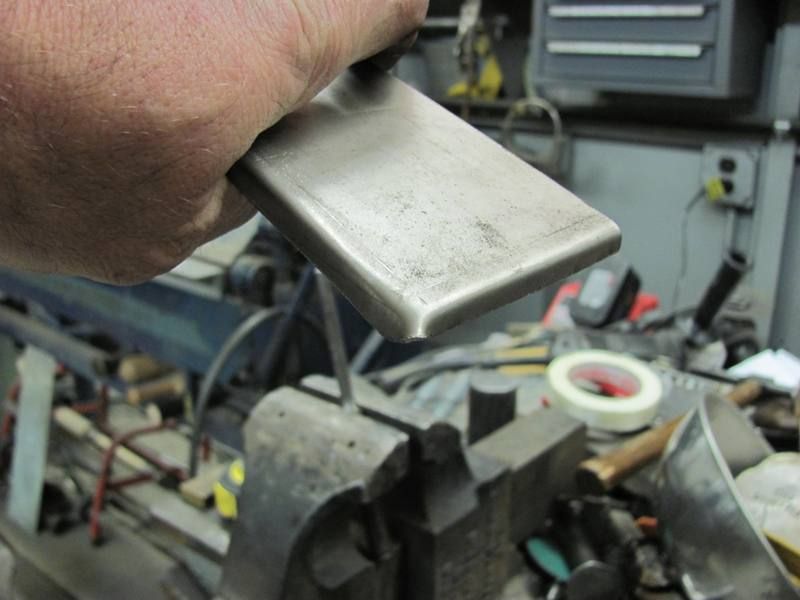
Flanges folded to just up to corner, leaving a tuck ready for shrinking...


Picture156.jpg


Picture157.jpg


Video of the hammering process:


http://s5.photobucket.com/user/rmccartney/media/1947%20Studebaker%20M5/Video158.mp4.html


Please excuse my lack of camera location awareness, my first feature film... :lol_hitti
 

1971gsfan

Well-known member
Joined
Dec 19, 2009
Messages
84
Location
Wilmington NC
very informative, I was thinking of making some pans with welded corners for an engine stand, but I like this method much better. Cool video, I'll go back to lurking now:D
 

Omphaloskeptic

Well-known member
Joined
Oct 11, 2008
Messages
2,346
Location
Ultima Ratio, Wa.
That 'hammering process' is slicker the snake-snot on the ********* doorknob!

Is your 'anvil' just a straight cut steel rod, or is there a slight radius ground into it?
 
OP
M

MP&C

Well-known member
Joined
Oct 21, 2009
Messages
4,398
Location
Leonardtown, MD
It's just a 3/8 diameter pin punch. It has a worn edge at the tip, which helps to prevent marking up the metal so much. But it needs to be clamped REAL tight in the vise.
 
Last edited:
OP
M

MP&C

Well-known member
Joined
Oct 21, 2009
Messages
4,398
Location
Leonardtown, MD
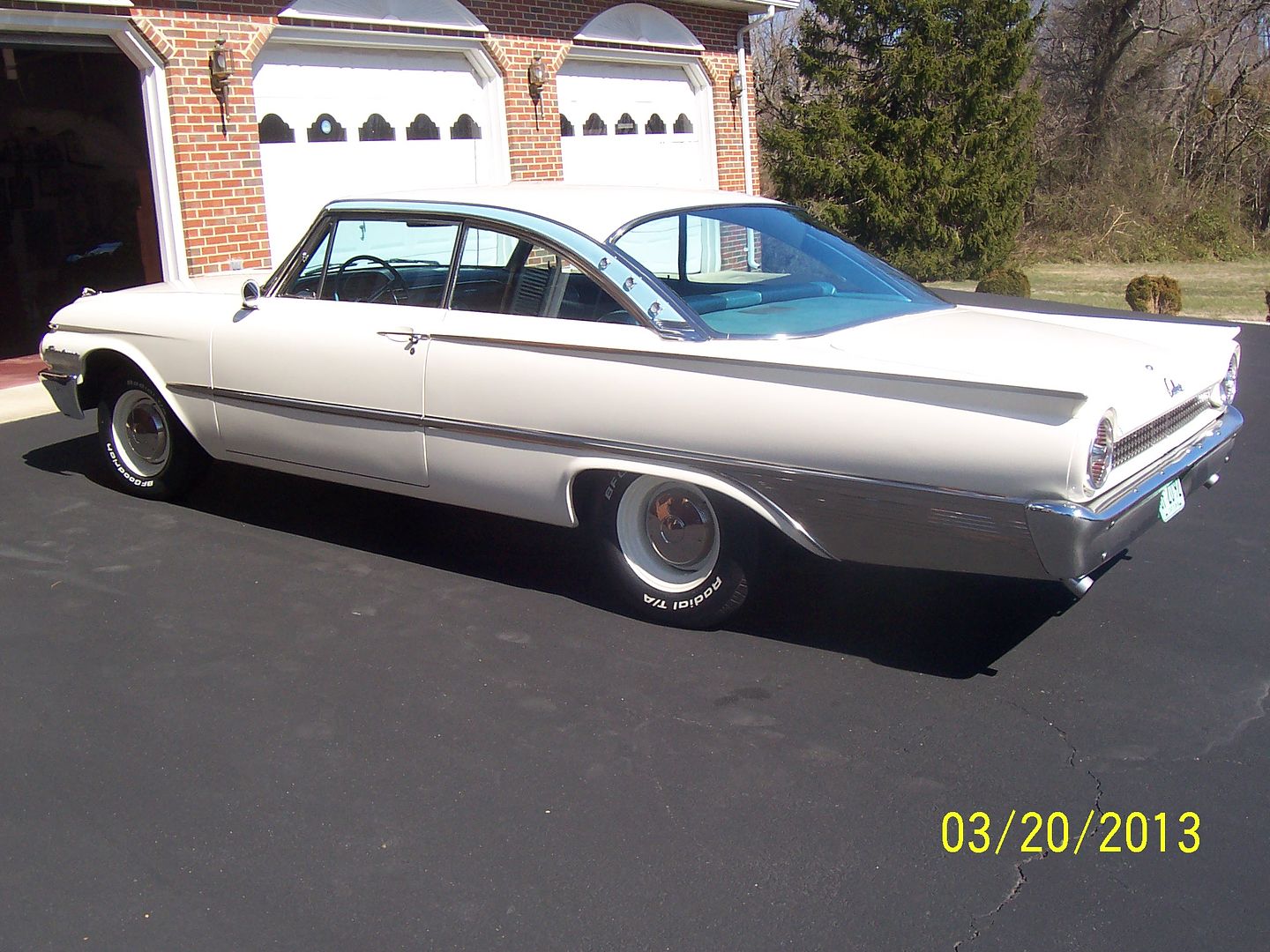
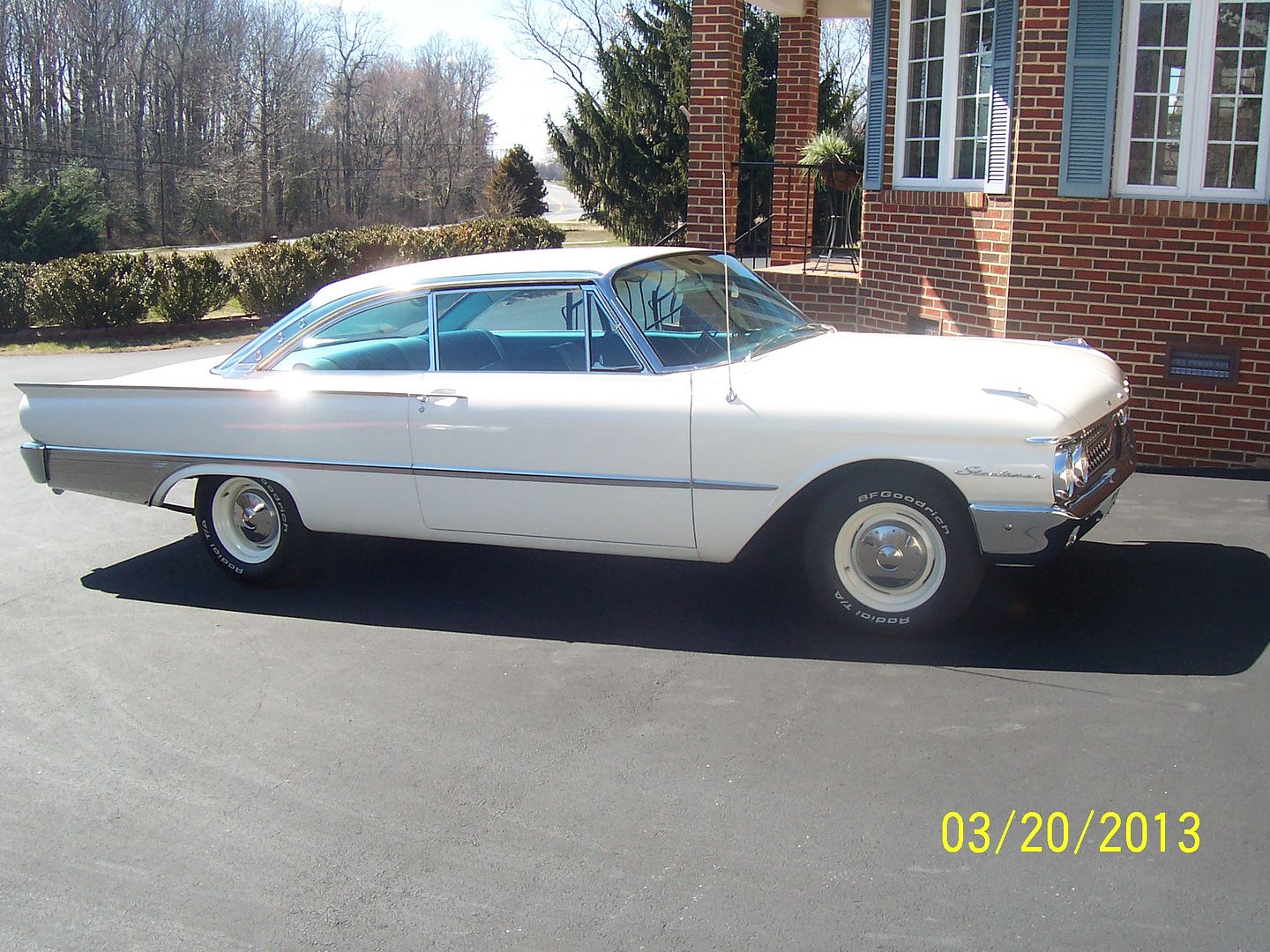
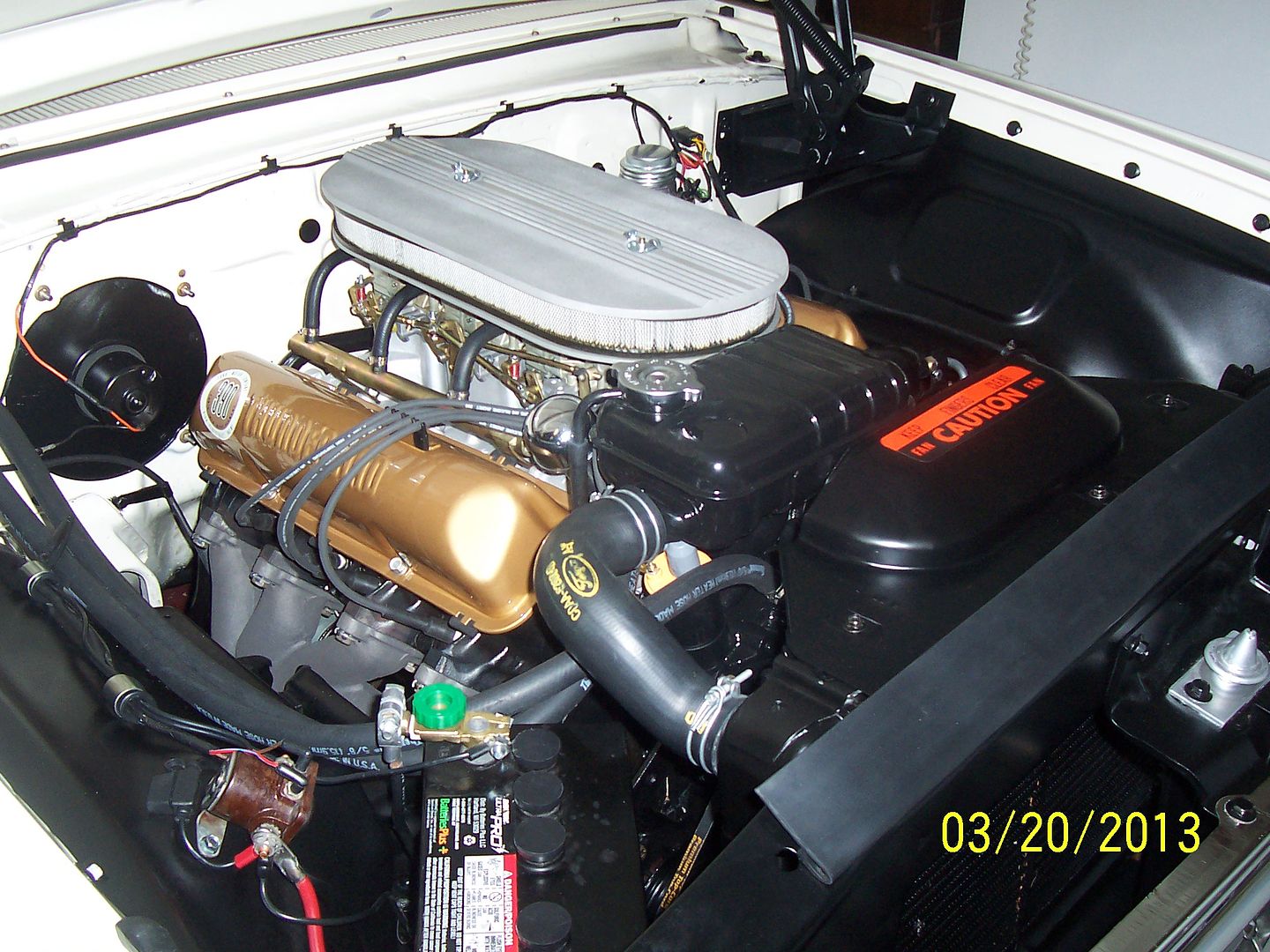
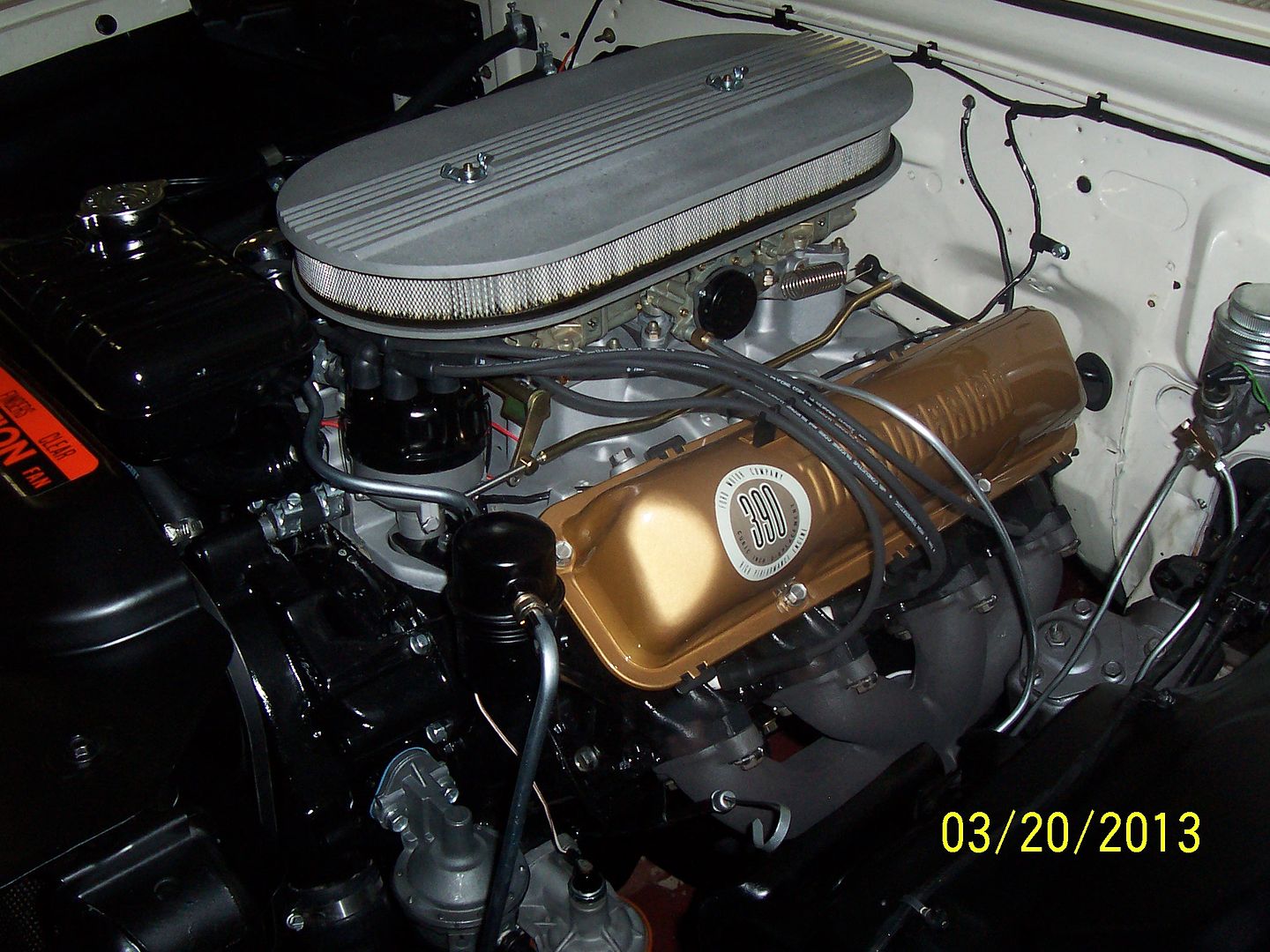
As a follow up to the valve cover repairs, the owner has the car just about ready, just needs some tune up work...


100_2939.jpg


100_2941.jpg


100_2945.jpg


100_2946.jpg
 
To avoid these ads, REGISTER NOW!
Top Bottom