To avoid these ads, REGISTER NOW!

MP&C Shop Projects

To avoid these ads, REGISTER NOW!

FarmerSid

Well-known member
Joined
Dec 12, 2005
Messages
145
Location
Ontario, Canada
That's a shame.......A bit more added work. You'll buff it right out. A bit off topic but what is that green paint/primer you use on your body patch panels? I'm to the point on my 51 chev truck that I think I need to coat the inside of the cowl panels etc with something to prevent corrosion.
 
OP
M

MP&C

Well-known member
Joined
Oct 21, 2009
Messages
4,396
Location
Leonardtown, MD
Yeah, I thought I was going to have an easy job for once, but doesn't look that way.

Sid, the green primer is House of Kolor epoxy. It is fairly high build, sandable, and adheres well to anything except rust conversion coatings. I typically put in new metal any place that is questionable, so it works well for me.
 

Kevin54

MEMBER EMERITUS
Joined
Jan 12, 2005
Messages
29,341
Location
Urbana, Ohio
Robert.....I thought you had another car coming in and not a Divco, after the '55 is done?

BTW......what are the plans for the Divco? Please don't say restored to original. It's got to be lowered, wide wheels and tires, and a huge V8. :rocker:

Growing up, out Milkman drove a Divco and he would let us ride around the block with him it we ran the milk up to the houses, then after the route in the neighborhood, he'd give us kids ice cream bars. I always thought that the Divco's were ugly as sin. Today, I think they are badass as can be. I'd love to have one, but they are scarce as hens teeth around here. :sad:
 

Kevin54

MEMBER EMERITUS
Joined
Jan 12, 2005
Messages
29,341
Location
Urbana, Ohio
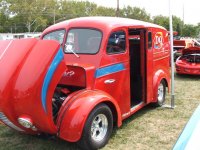
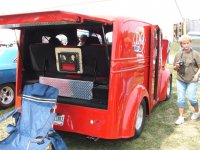
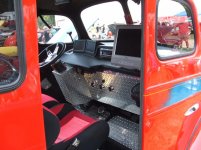
Here is a picture I did get at the car show a few years ago. To see one is sort of a rarity anymore. Even online there are only a few.
 

Attachments

  • DSCF2213.jpg
    DSCF2213.jpg
    141.6 KB · Views: 119
  • DSCF2214.jpg
    DSCF2214.jpg
    124.6 KB · Views: 113
  • DSCF2215.jpg
    DSCF2215.jpg
    146.9 KB · Views: 115
  • DSCF2216.jpg
    DSCF2216.jpg
    147.6 KB · Views: 102
  • DSCF2217.jpg
    DSCF2217.jpg
    144.6 KB · Views: 104
OP
M

MP&C

Well-known member
Joined
Oct 21, 2009
Messages
4,396
Location
Leonardtown, MD
Thanks Robert. Do you top coat the green primer with anything before an area is welded closed for good?


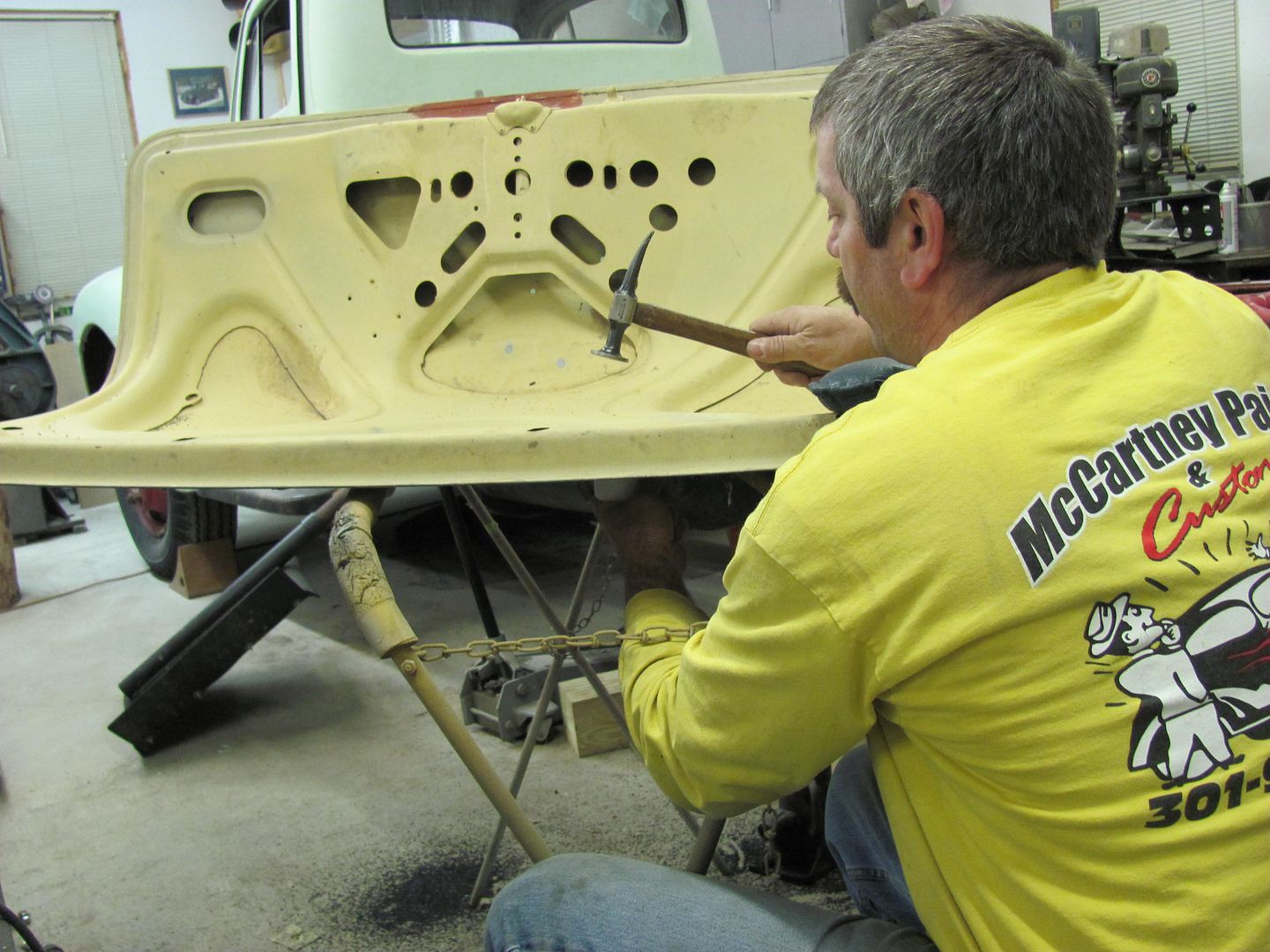
Sid, I used this on the inside of the wagons tailgate, priming the inner and door skin separately before installing the door skin. The only thing else I'll do is to pour some more inside and run back and forth at the seam to seal it up. Other than that, no top coat unless it's visible. The car will be going on a rotisserie for painting, top, bottom, and insides..


Kevin, as much as I offered suggestion, it will be going stock... He had bought a different one a few years back but it had quite a bit of rust everywhere, and would have required extensive rework. When I looked at it I told him he would be money ahead to buy one that was solid and sell the first one to recoup his money. It took him about a year, but he found this one, and I've never seen one so solid.


I have a few things on the waiting list.. This truck, a 1940 Chevy gasser build, a 46 ford running board installation, etc...
 
Last edited:

FarmerSid

Well-known member
Joined
Dec 12, 2005
Messages
145
Location
Ontario, Canada
Sid, I used this on the inside of the wagons tailgate, priming the inner and door skin separately before installing the door skin. The only thing else I'll do is to pour some more inside and run back and forth at the seam to seal it up. Other than that, no top coat unless it's visible. The car will be going on a rotisserie for painting, top, bottom, and insides..

What's your thoughts on using Chassis Saver or Por15 in those areas? Not sure what to do.
 
OP
M

MP&C

Well-known member
Joined
Oct 21, 2009
Messages
4,396
Location
Leonardtown, MD
I am not a proponent of using POR type products except in the case of inaccessibility in void areas where you can't get to for proper media blasting or abrading for using epoxy primer. So this would limit their use to areas that are not exposed or areas that will not get top coated. Even then there is no guarantee for success as these type products promote shortcuts.

To elaborate, you can go on any automotive forum and see all the proponents of using such products. Even the guy who still has a project in the garage that has no exposure to the outside elements since application is touting the benefits of these paints. It all boils down to human nature. We are looking for the easy way out, whatever gets the job done quicker. Whether it be someone's lack of welding capability to weld in new metal, or not wanting to media blast/properly abrade for a better coating of epoxy primer, these POR type products and rust conversion products promote shortcuts. I challenge you to go on any automotive forum and research the various threads on these products, and practically everyone is singing their praises. Rarely will you see anyone adding any cautionary notes about rust converters having reaction issues with some epoxy primers that will cause delamination. Rarely will you see someone mention that POR does not promote good adhesion for a top coat. They are so overwhelmed by all the work they have saved in media blasting, or panel replacement, that these issues have never entered the picture. Anyone who dares breathe a word to the contrary, as I have done here, obviously has used the product incorrectly.. :rolleyes: and doesn't know what they are doing.. But I do know that epoxy primers are designed to be used as a substrate to practically any other automotive paint product out there. POR, not so much. Likely the largest single cost associated with any restoration will be the paint finish. So why risk paint adhesion issues with these short cut products? In my case, that would involve rework that comes out of my pocket. So I tend to lean towards using products designed for the topcoat I put on it, epoxy primer.

When I did the repairs on the wagon tailgate, I did have the inner gate and skin separated, where it made more sense to media blast/abrade the panels separately, epoxy prime, and then assemble. See here:

http://www.allmetalshaping.com/showthread.php?t=2154

The only thing I'll also do there is to mix up more epoxy, dump inside, and slosh around the seam to seal it out for good. If you look at some of the damage inside the original tailgate skin you'll also see some deep pits nearby the ones that have broken through into pinholes. Where POR may be an option to protect this inaccessible area (if we hadn't separated the parts), it will hardly stop these deeply pitted areas from continuing to rust through. This is why many of your top restorers will remove door skins, hood skins, etc. to verify/remove any pitting damage prior to painting, and then re-assemble. When you're paying upwards of 20K for a paint job, you want it to last and you do what it takes to make sure that it will last. Guarantee that none of these guys use POR.

So while I do think they do have places where these products can be used, they are far from fail safe and even farther from the quality of repair that fresh sheet metal and epoxy primer can give. So someone needs to have some common sense when an area shows rust issues to exist, one pin hole coming through is seldom alone. With all of these type products, their biggest liability is they promote shortcuts, which in many cases involves a project in sore need of fresh sheet metal.

Sorry to have such a long winded response, but I rather tend to put out the whole story in regards to POR type paints rather than the generic blanket seal of approval that seems to flood the internet. ;)
 
Last edited:

1971gsfan

Well-known member
Joined
Dec 19, 2009
Messages
84
Location
Wilmington NC
^^^^^^^^:thumbup:
After having used por 15 and now replacing some of those areas with new metal I think Robert descibed it perfectly
 
OP
M

MP&C

Well-known member
Joined
Oct 21, 2009
Messages
4,396
Location
Leonardtown, MD
Won't be back in the shop until this evening, so I thought I'd add this media blast test to the thread for your reading pleasure. In many cases warp damage from an overzealous operator will wreak havoc on sheet metal panels. Hopefully this will take away some of the mystery in repairs, if needed.

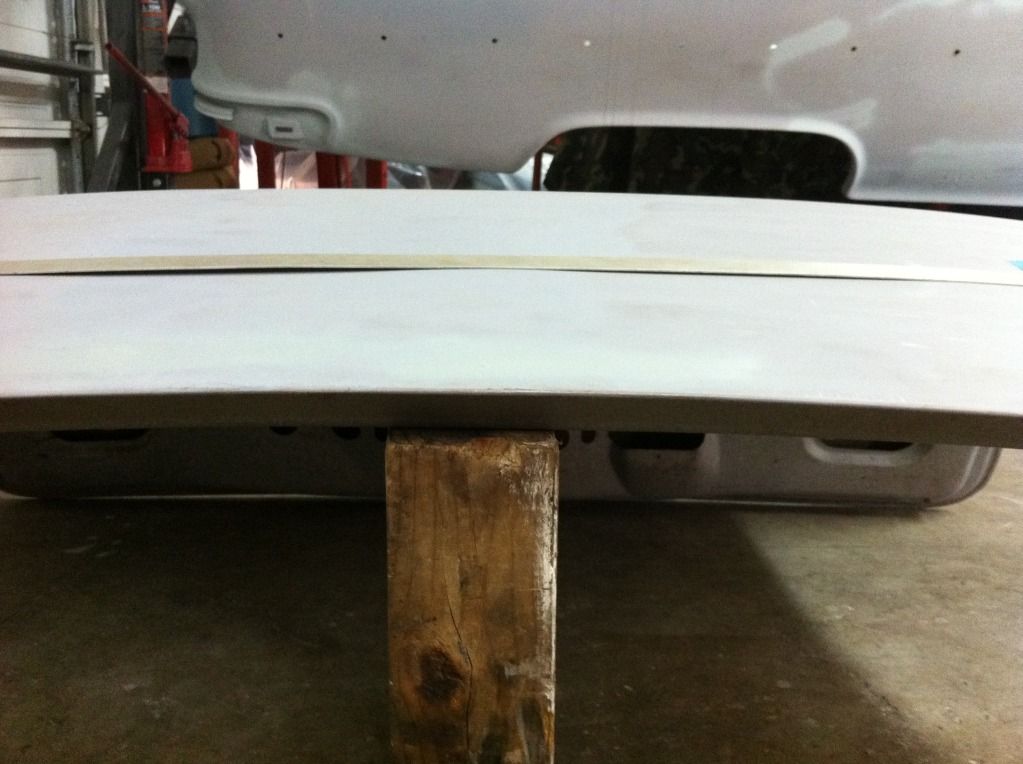
One of the guys on another forum I frequent had the misfortune of trusting his 55 Chevy to a sandblasting expert ("been doing this stuff for thirty years!") and now is trying to regroup from the damage. His trunk lid was only sandblasted from the inside, and needless to say, too much pressure, too coarse media, one or both produced these results......


IMG_0371.jpg


.......where the peening action caused the inside of the skin to stretch until it bulged inward. Discussion ensued as to the correct action to take to remedy the situation, with the primary differences of opinion being:

1) sandblast the outside to equalize the pressure caused by the peening (that caused a stretch on one side only) and then once equalized, shrink as needed to restore the panel to proper crown.

2) Shrink the panel as it sits, then take corrective action (stretch/shrink as needed) to restore the panel to proper crown.


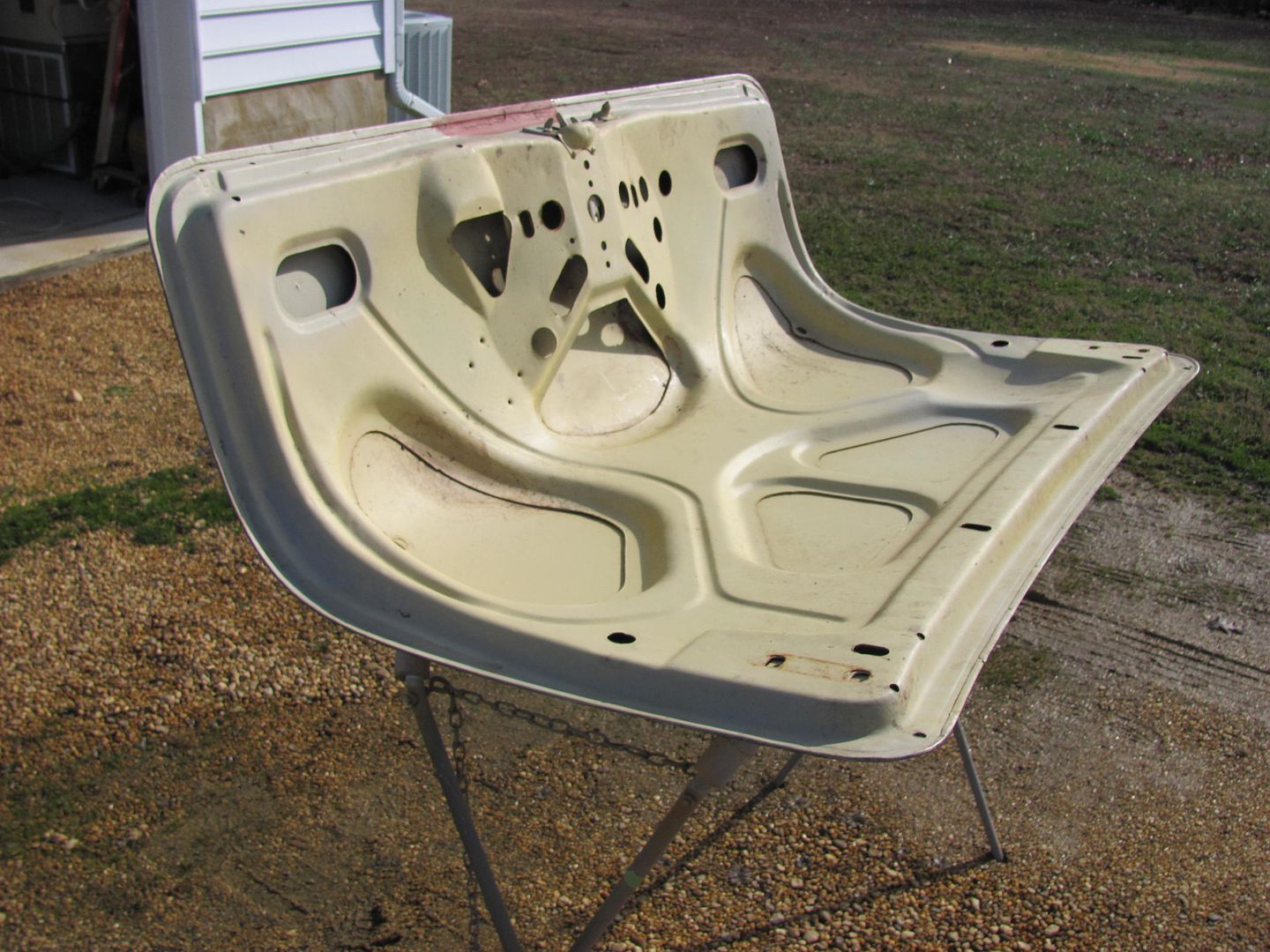
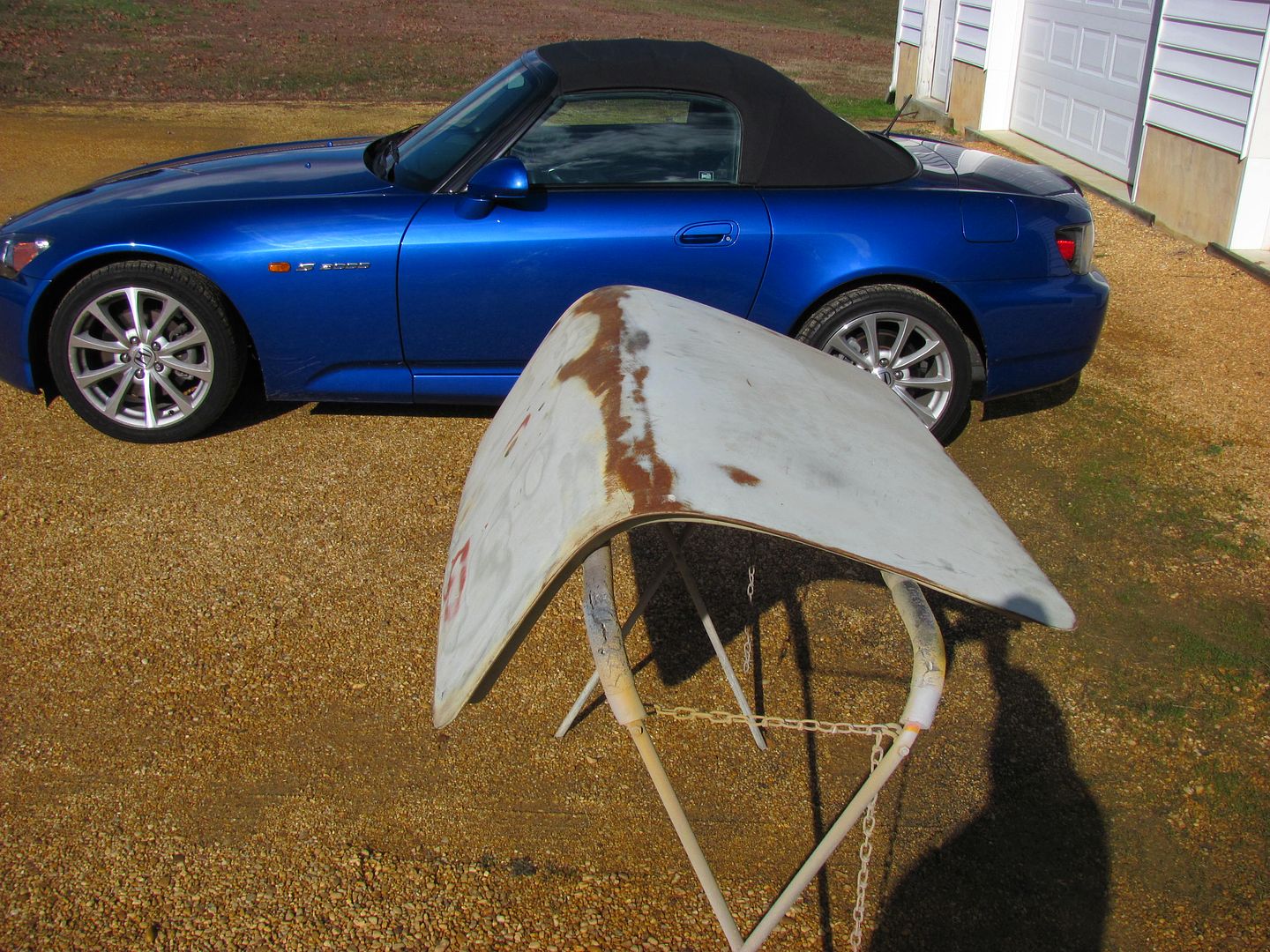
After various inputs, the owner of the car is rather timid to try anything until a concensus is reached. So in the interest of learning something, I decided to help the guy out by conducting a test of both theories, and see what plays out. A local test subject was obtained, and also picked up a bag of medium grit Black Beauty from United Rentals.


Picture005-4.jpg


Picture008-3.jpg


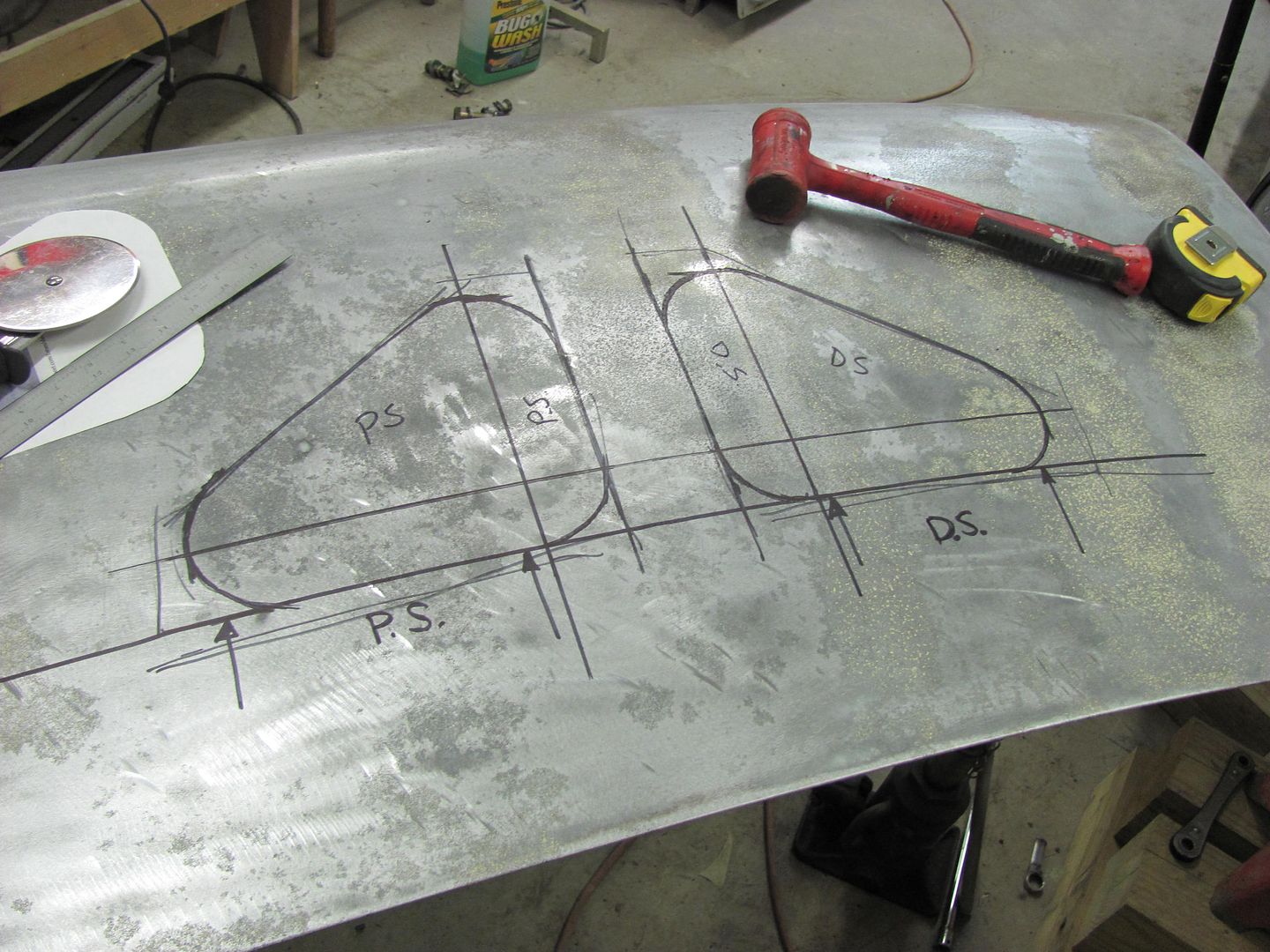
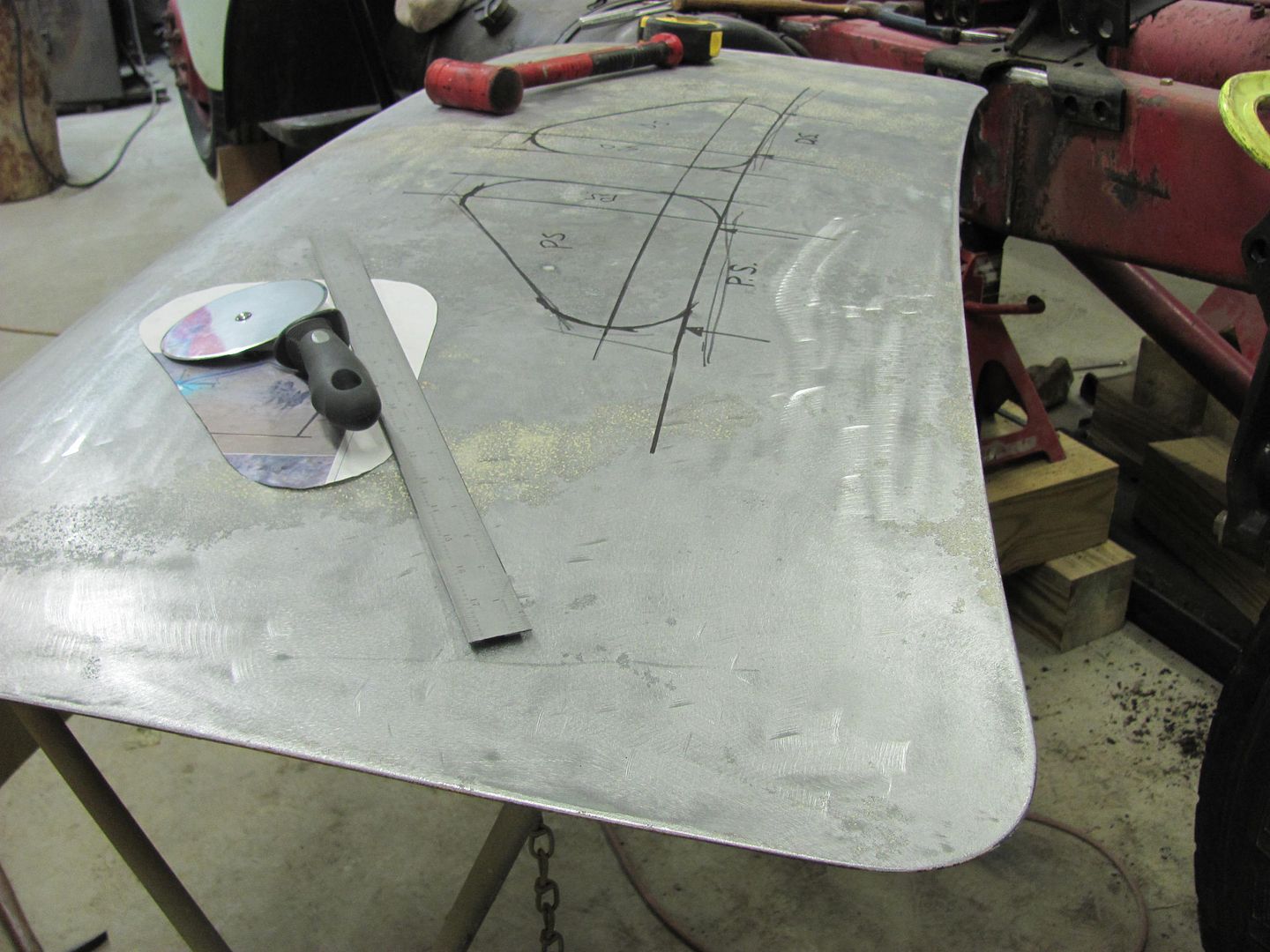
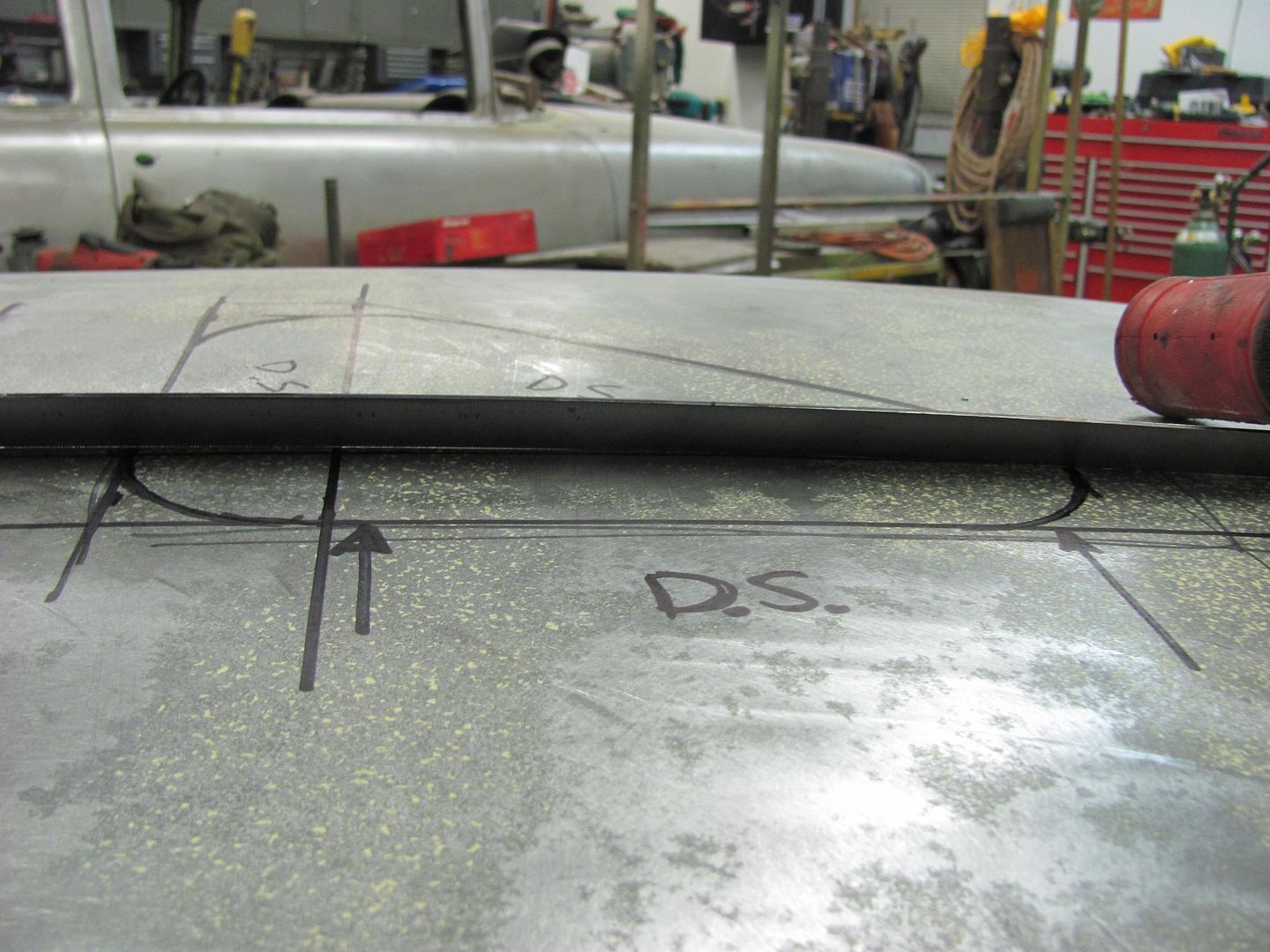
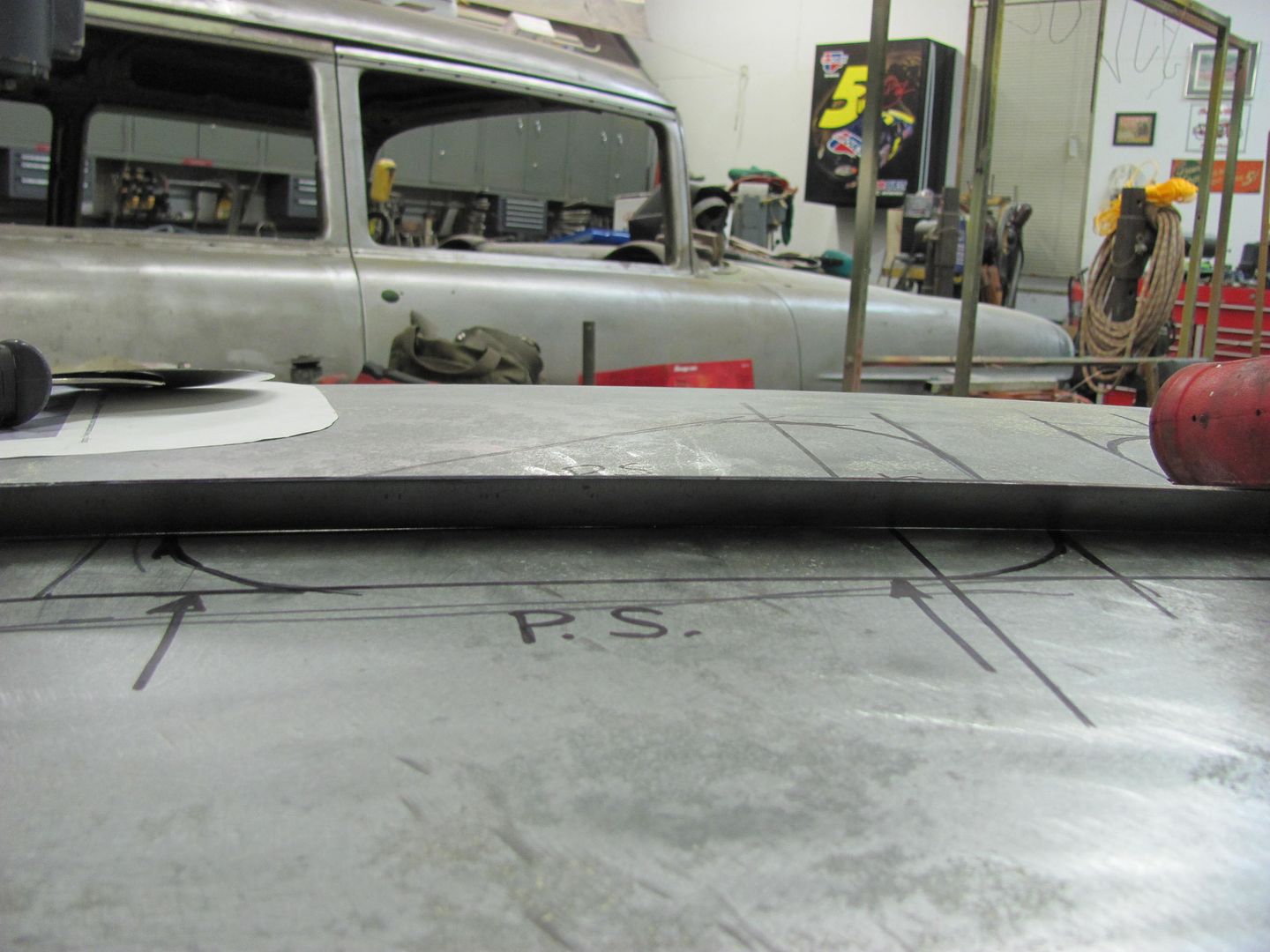
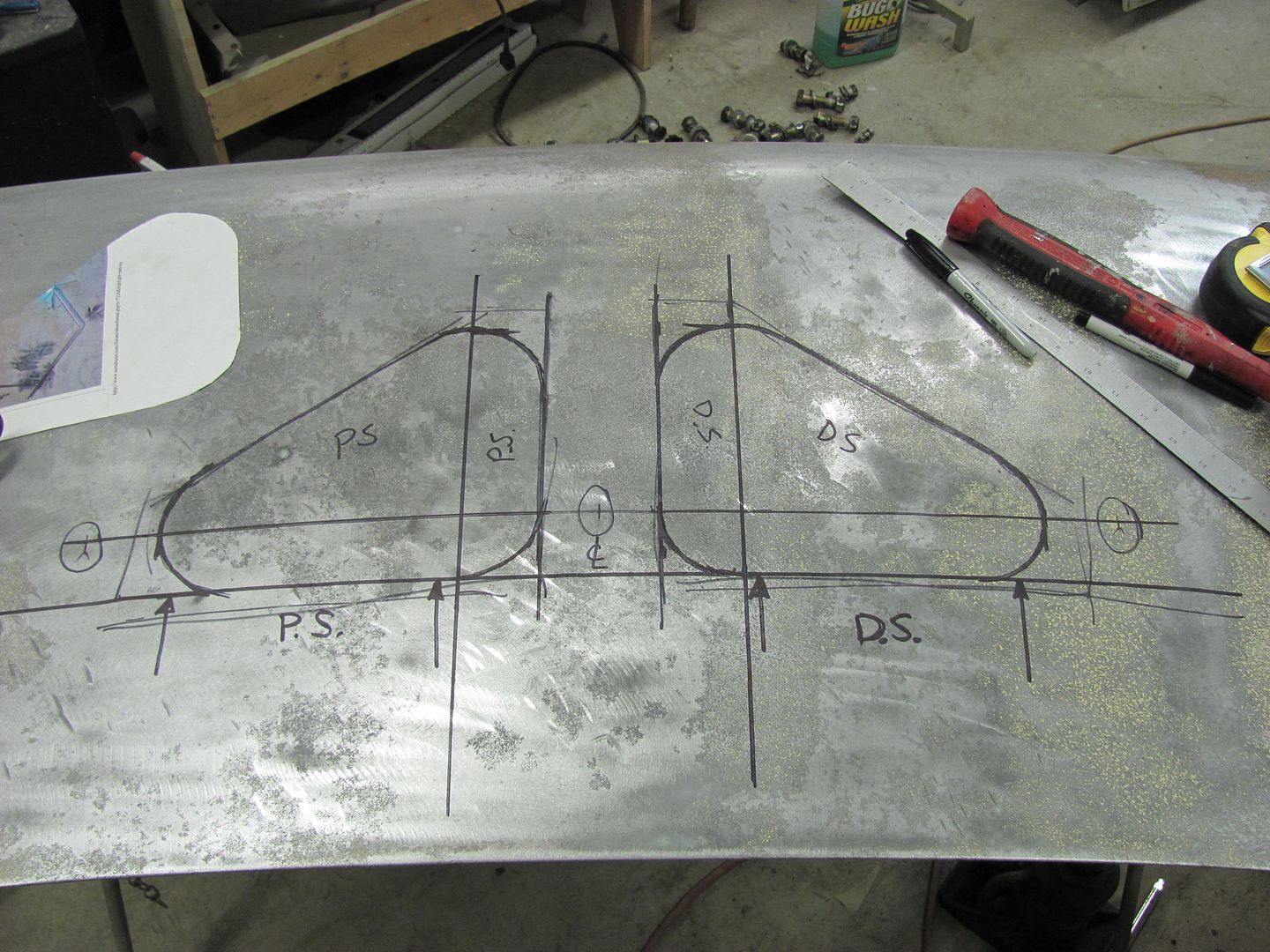
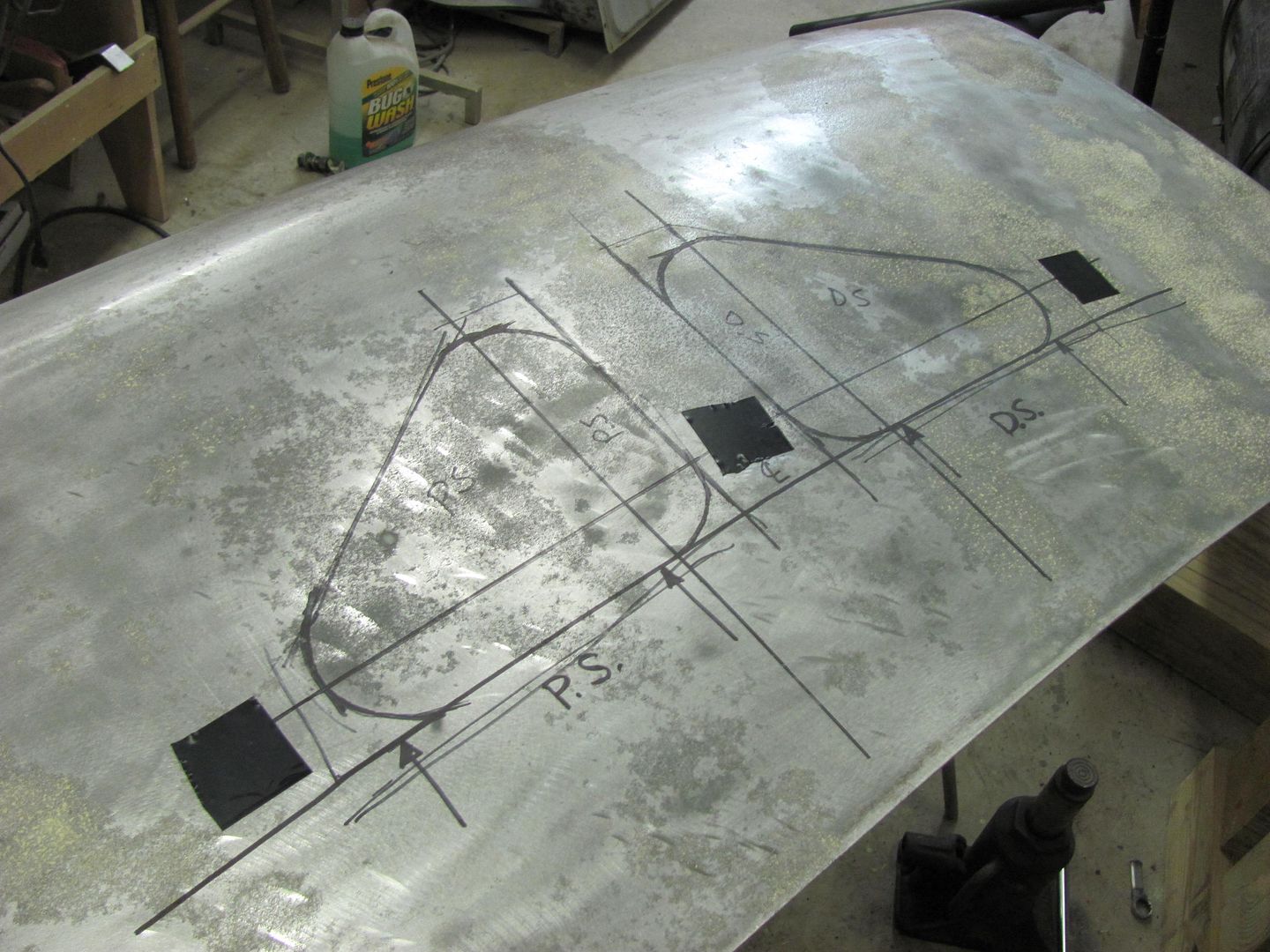
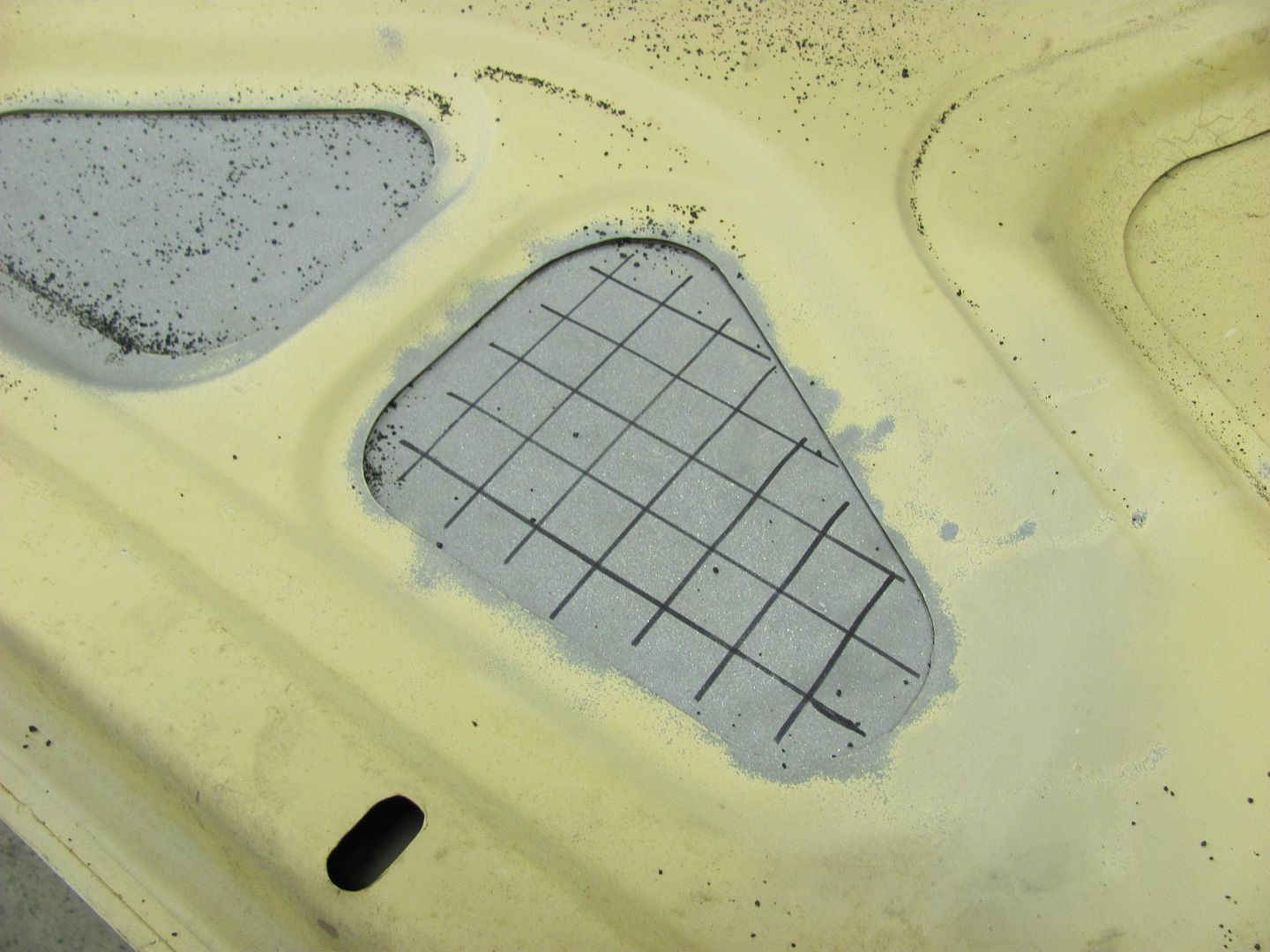
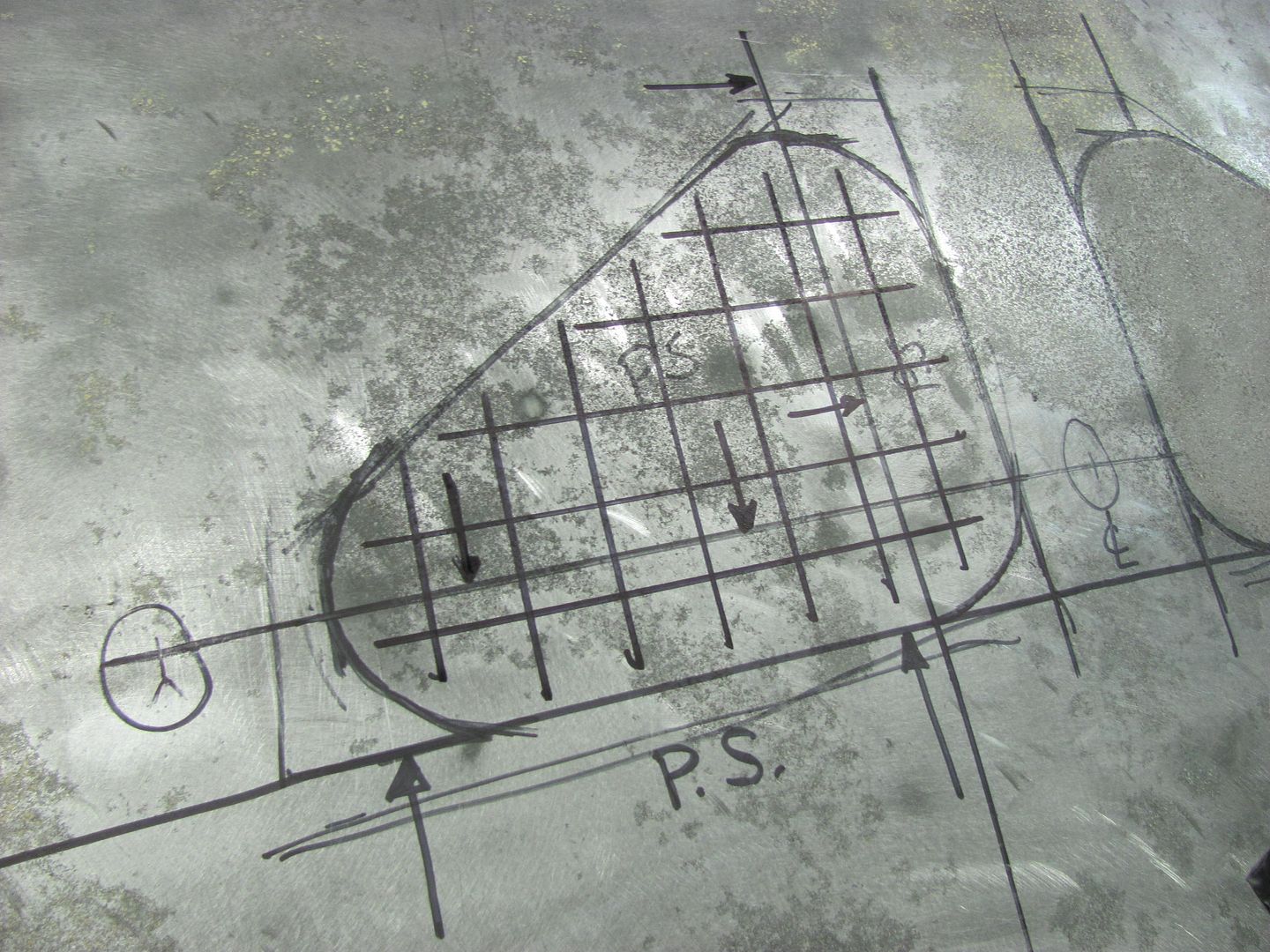
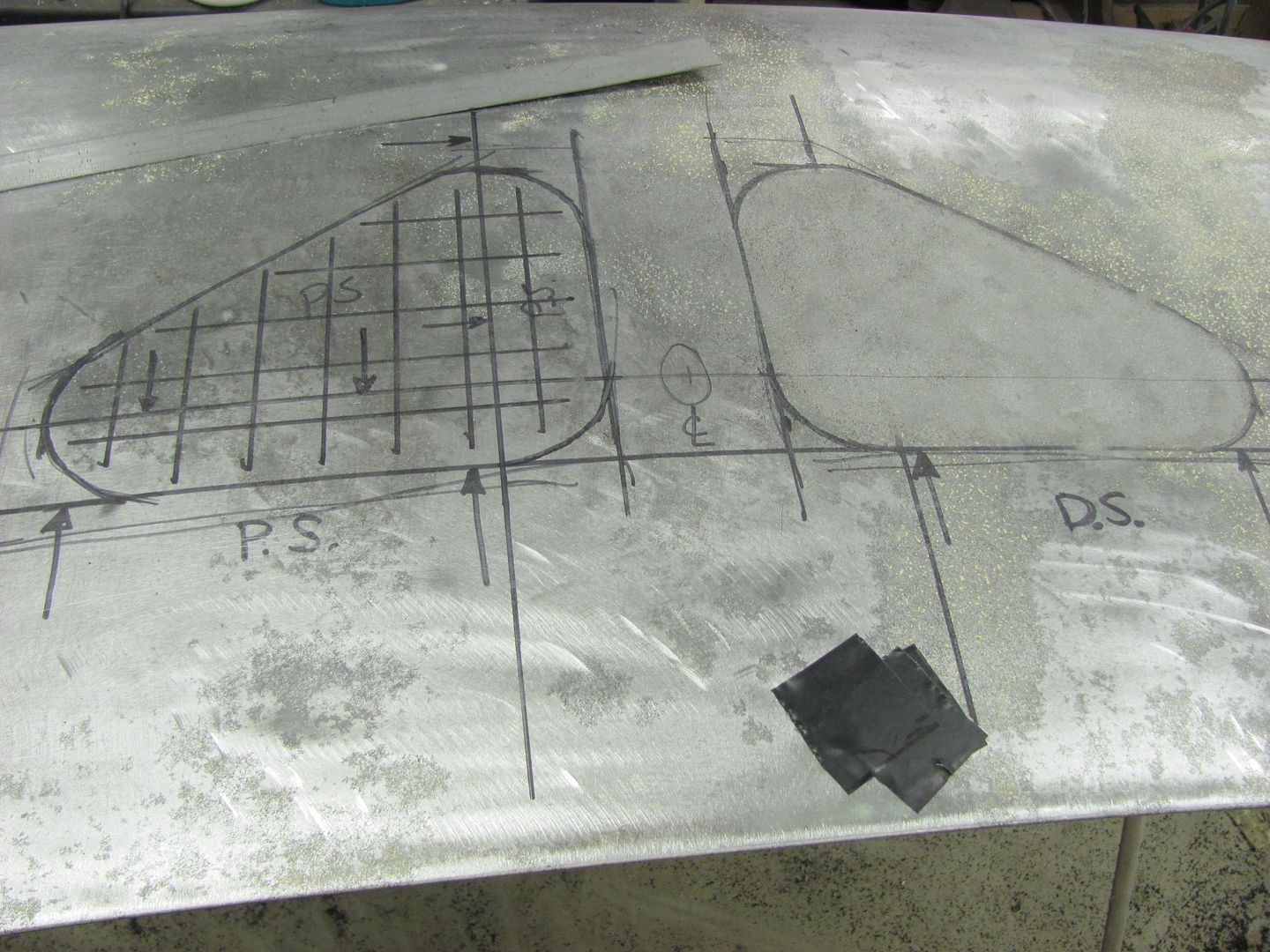
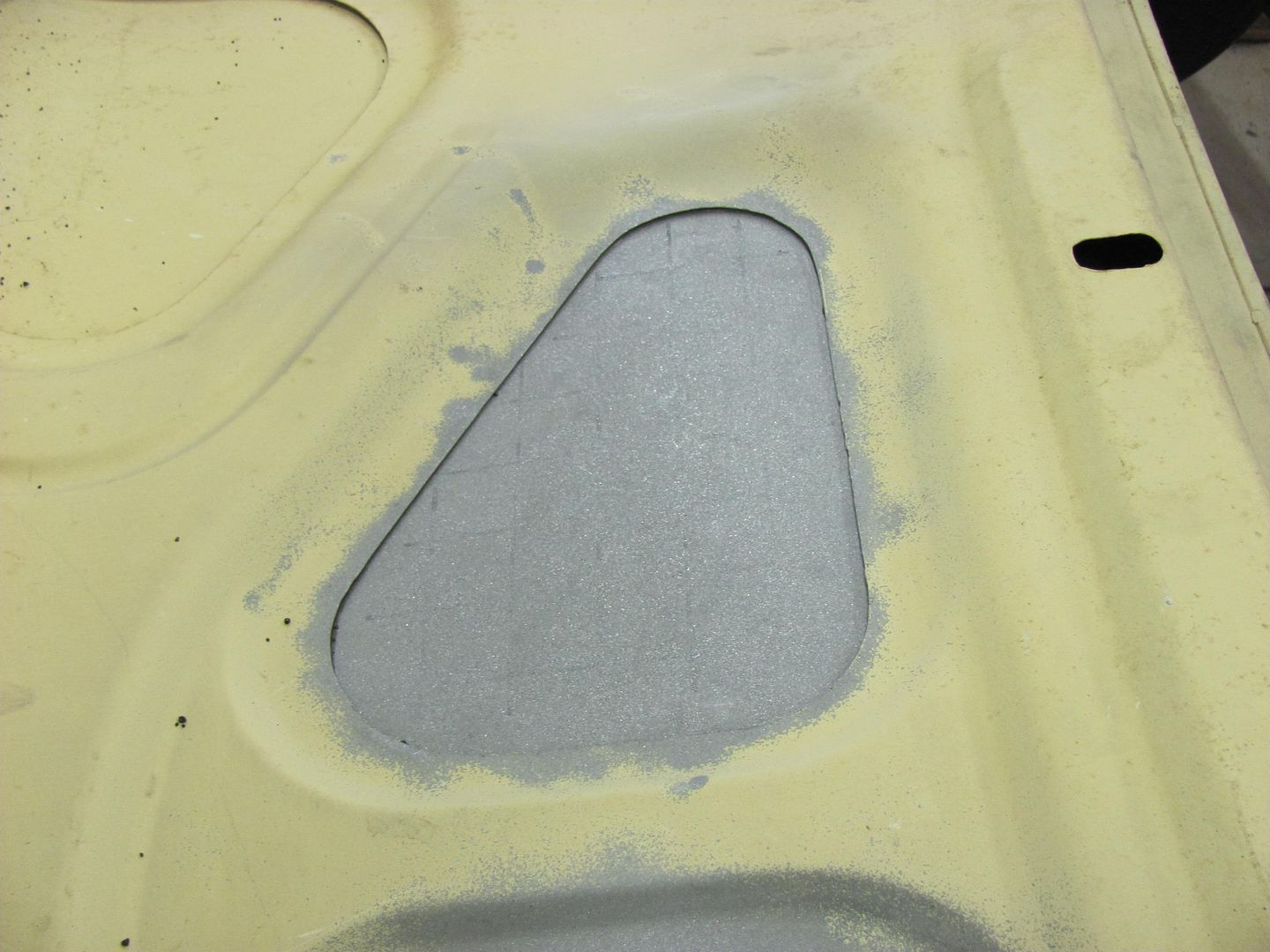
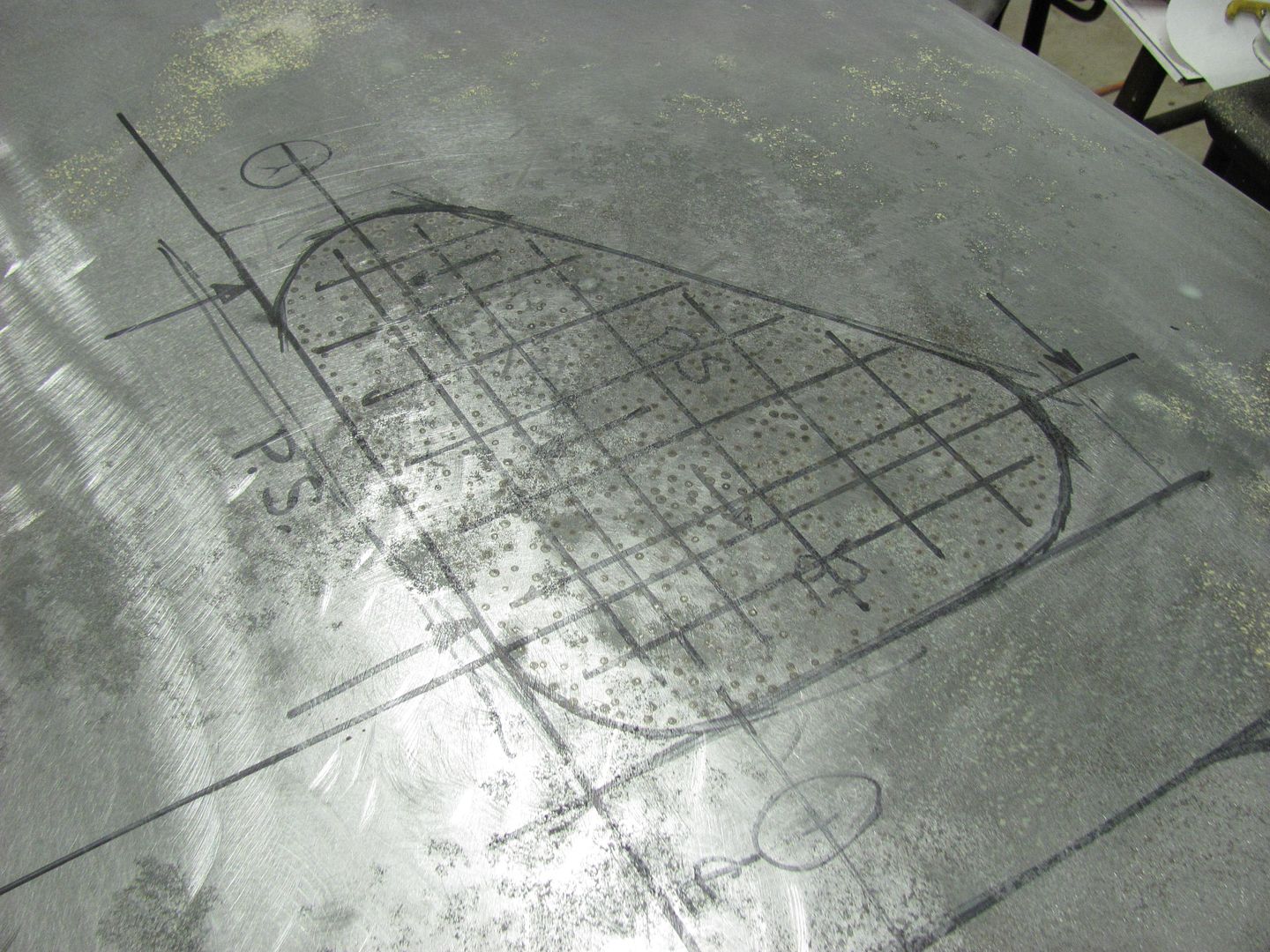
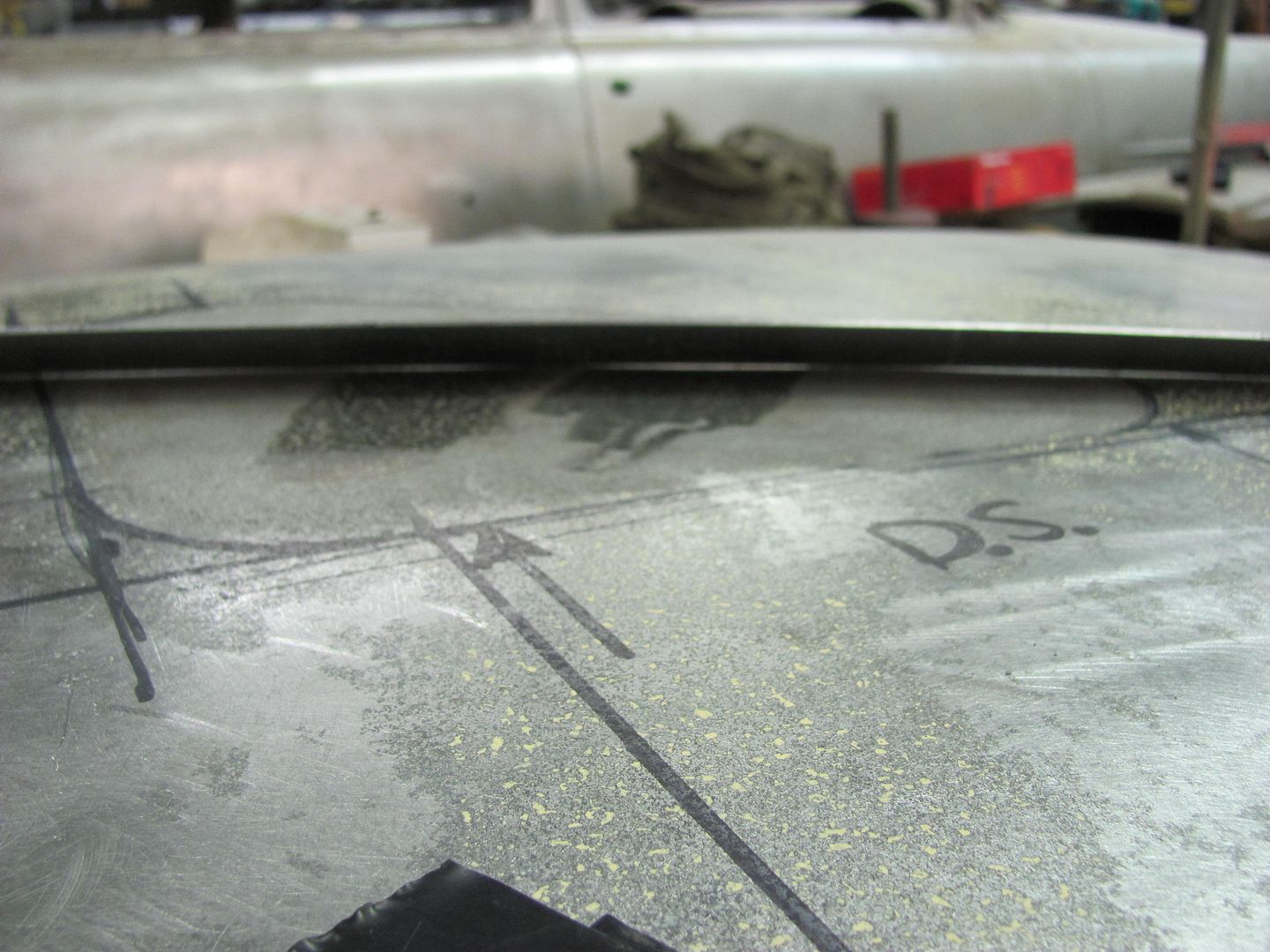
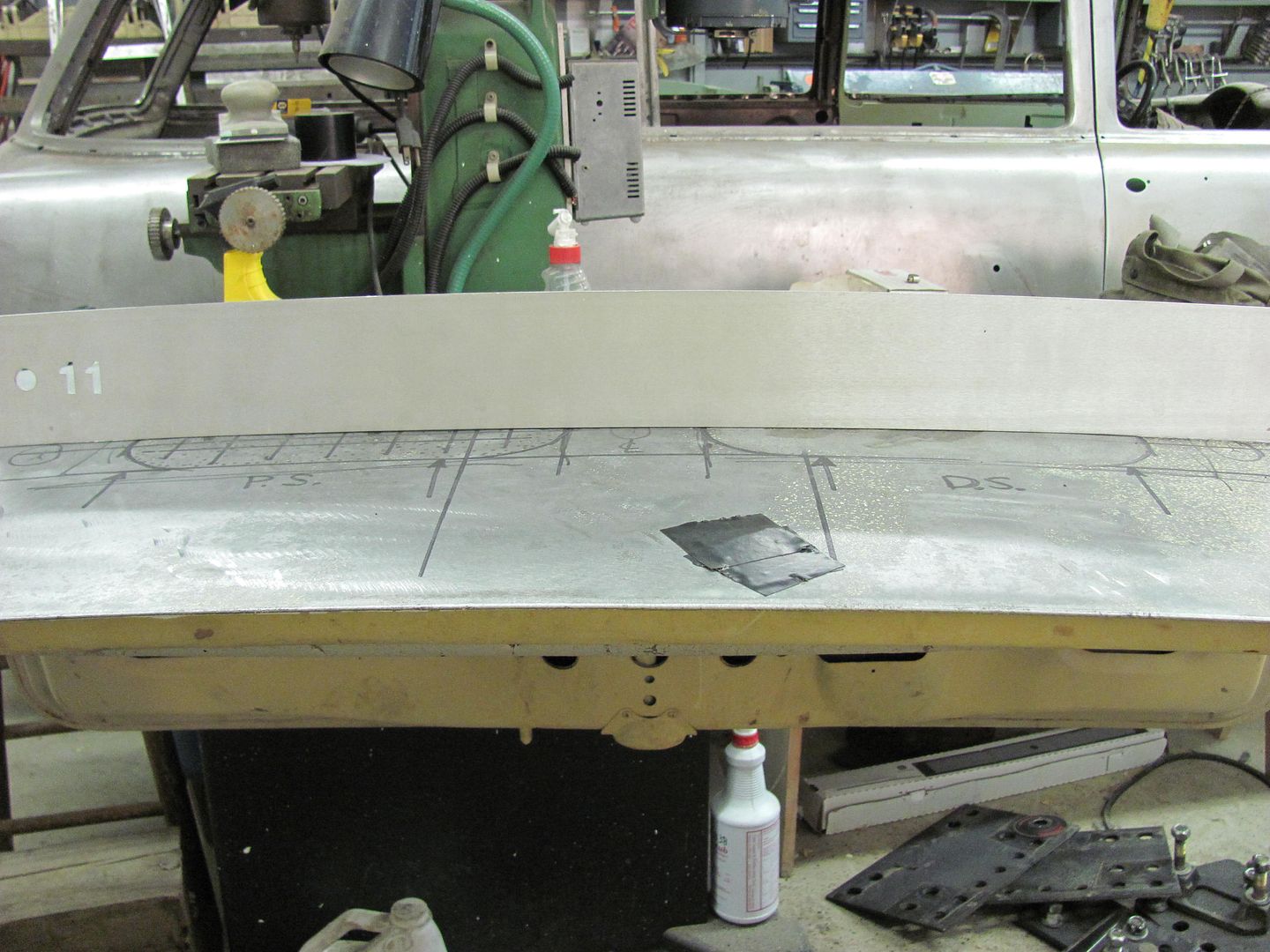
I got a chance today to sand all the bondo off the top part of the sample trunk lid. I took some measurements, made a template of the inner brace opening we will be using, and laid out the pattern on the outside so we can monitor the progress of the different methods. A datum was drawn about 2" in from the forward edge and the center edge of each hole. This was chosen as it is approximately the center of the radius on either end.


Picture146-2.jpg


Picture147-2.jpg


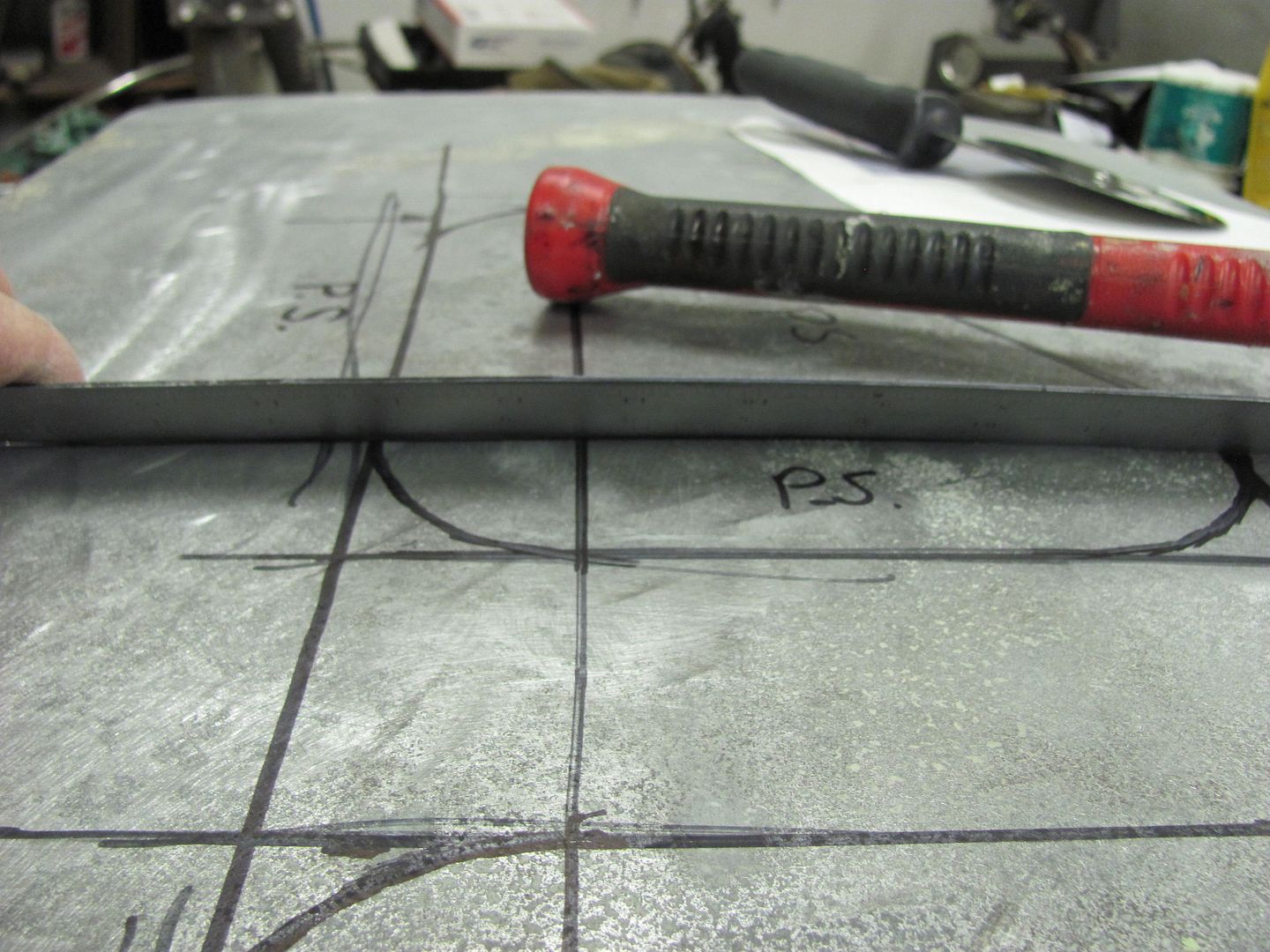
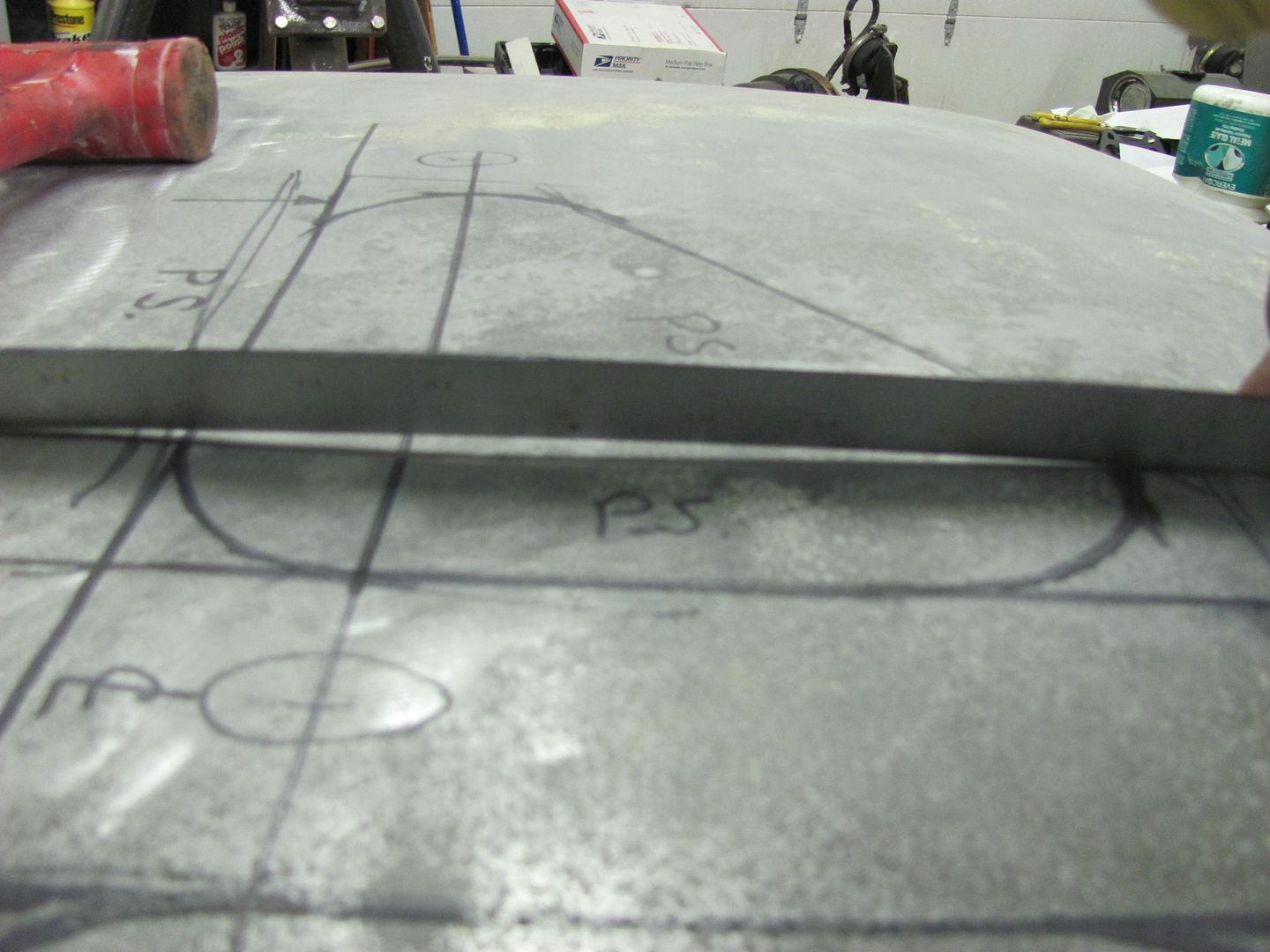
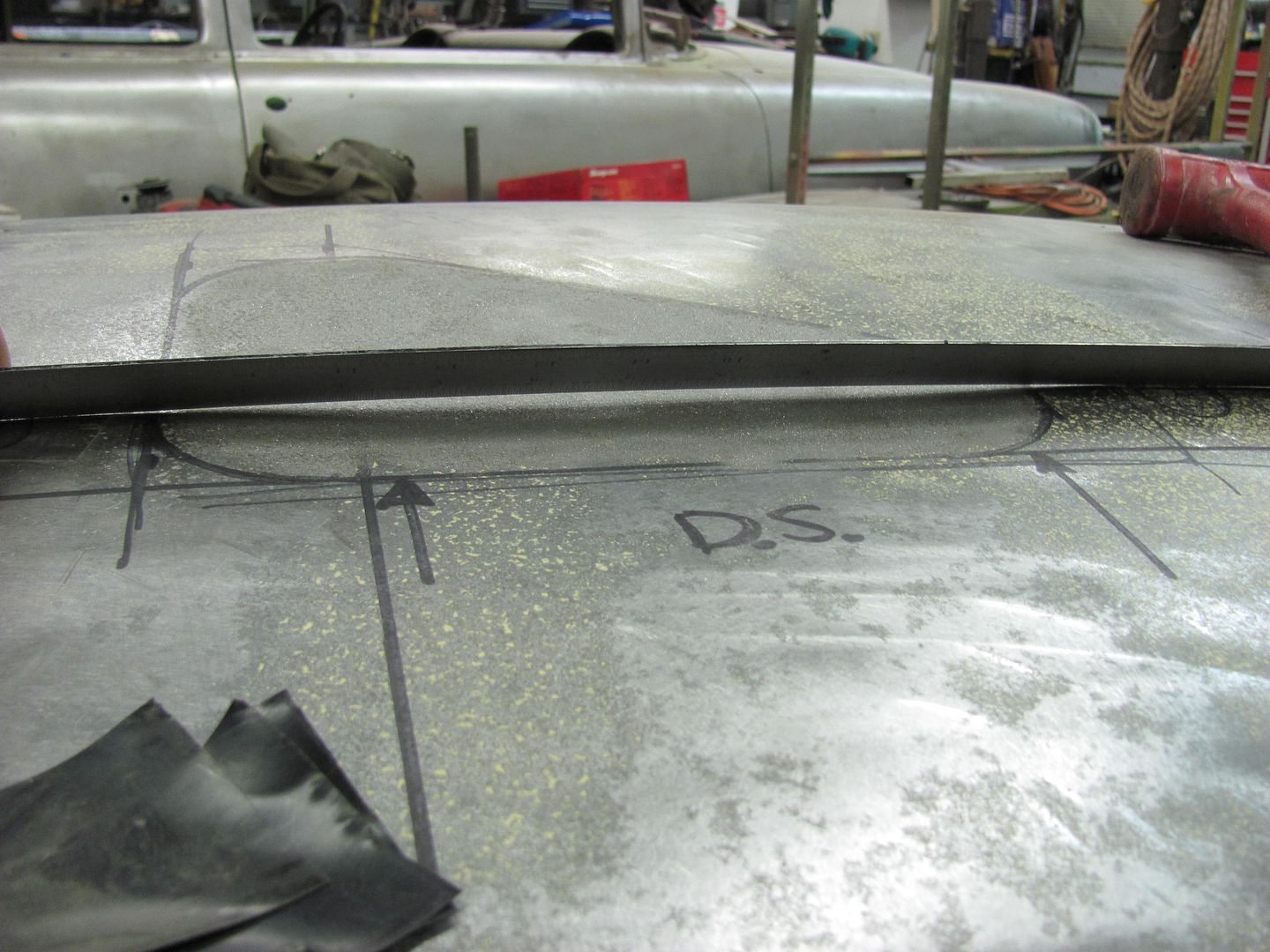
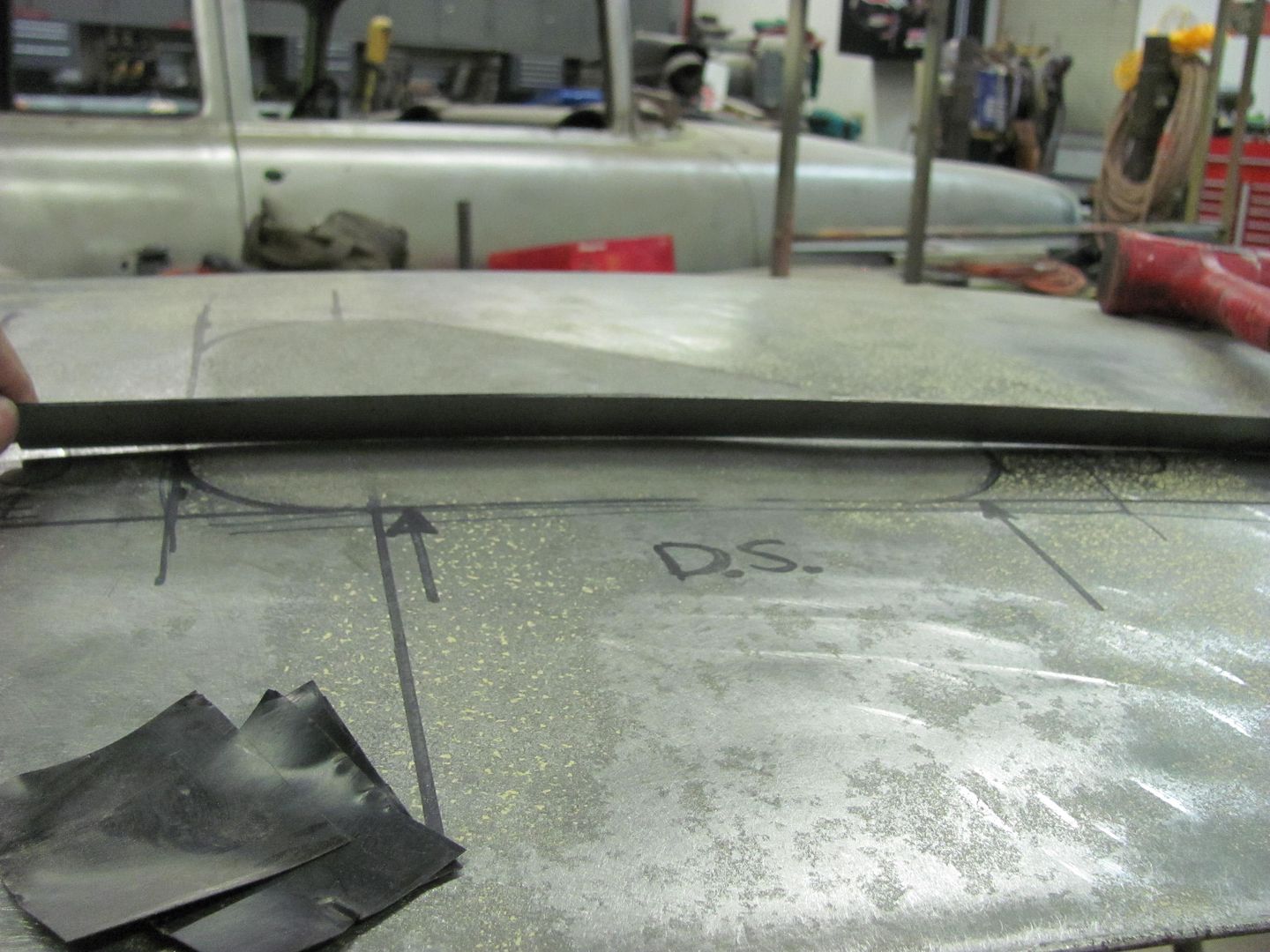
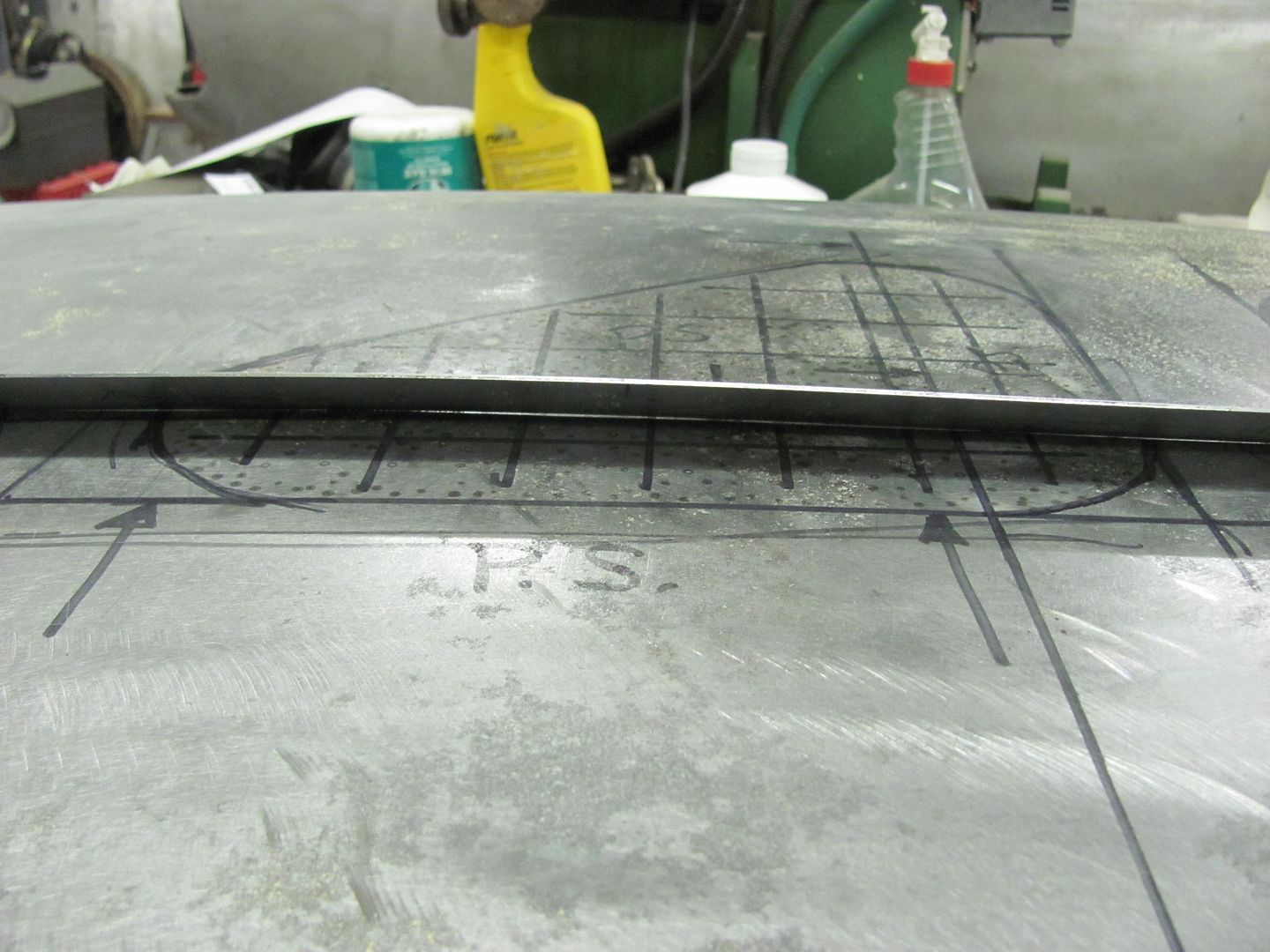
Next, the panel was checked along the datum lines in both directions to give us a baseline for panel straightness, and we'll check along these lines after sandblasting to see what damage occurs. Where there was a bit of waviness, it was a minimal amount that would have disappeared with some high build primer and block sanding. Given our 57 year old test subject, I guess we're lucky it's that close.


Picture148-2.jpg


Picture149-2.jpg


Picture150-1.jpg


Picture151-1.jpg


And here's our test subject, awaiting sandblasting.


Picture157-1.jpg


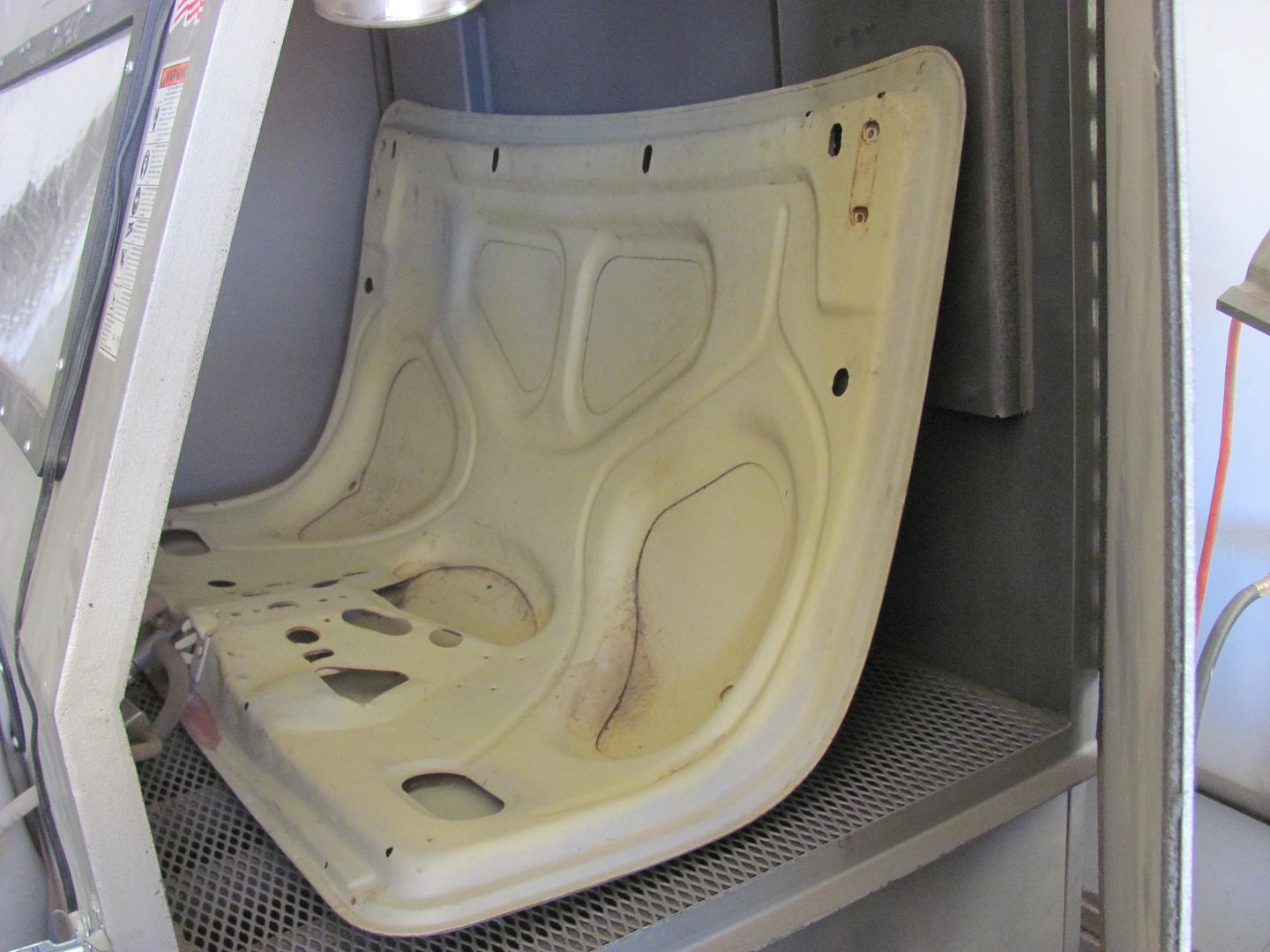
Well here's phase two of the test. The trunk lid was fitted into the blast cabinet.


Picture158-1.jpg


You always hear about how the heat from sandblasting is what causes the stretching and warping of the metal. I never gave that theory much thought before, but while we are testing, this would be a good opportunity to add that in the mix. In an attempt to minimize any outside influence while we measured temperature, the flood bulbs inside the cabinet were unscrewed enough to keep them turned off...


Picture159-1.jpg


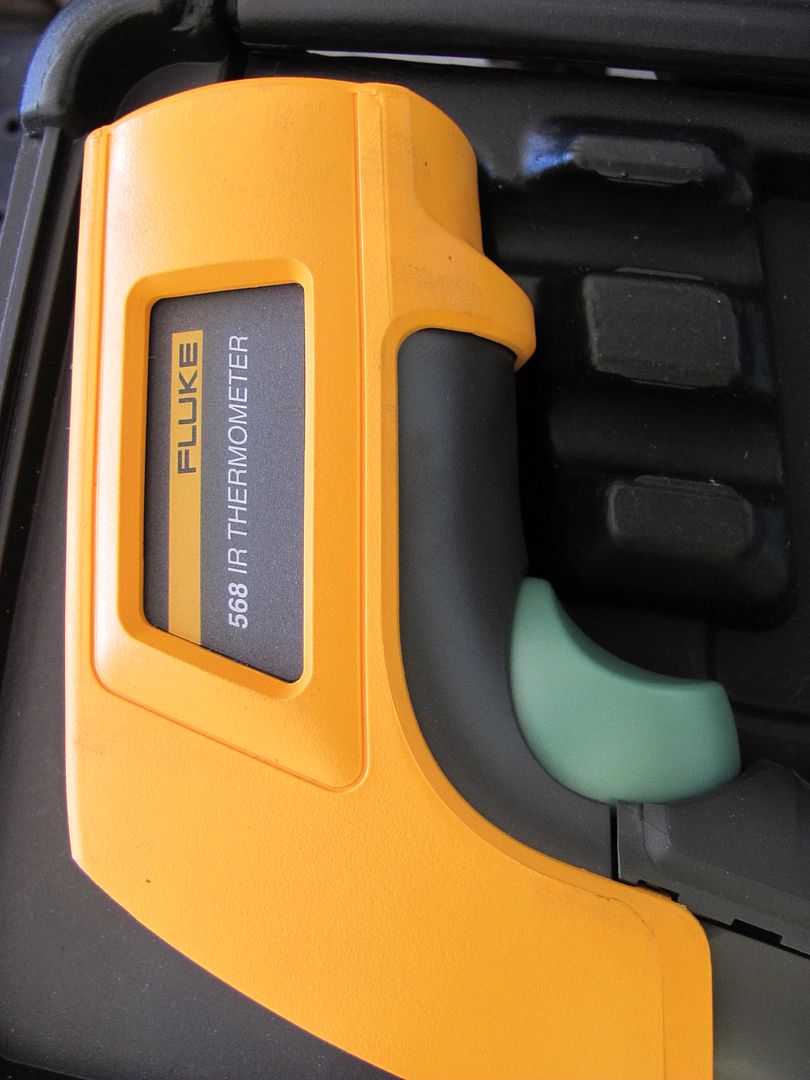
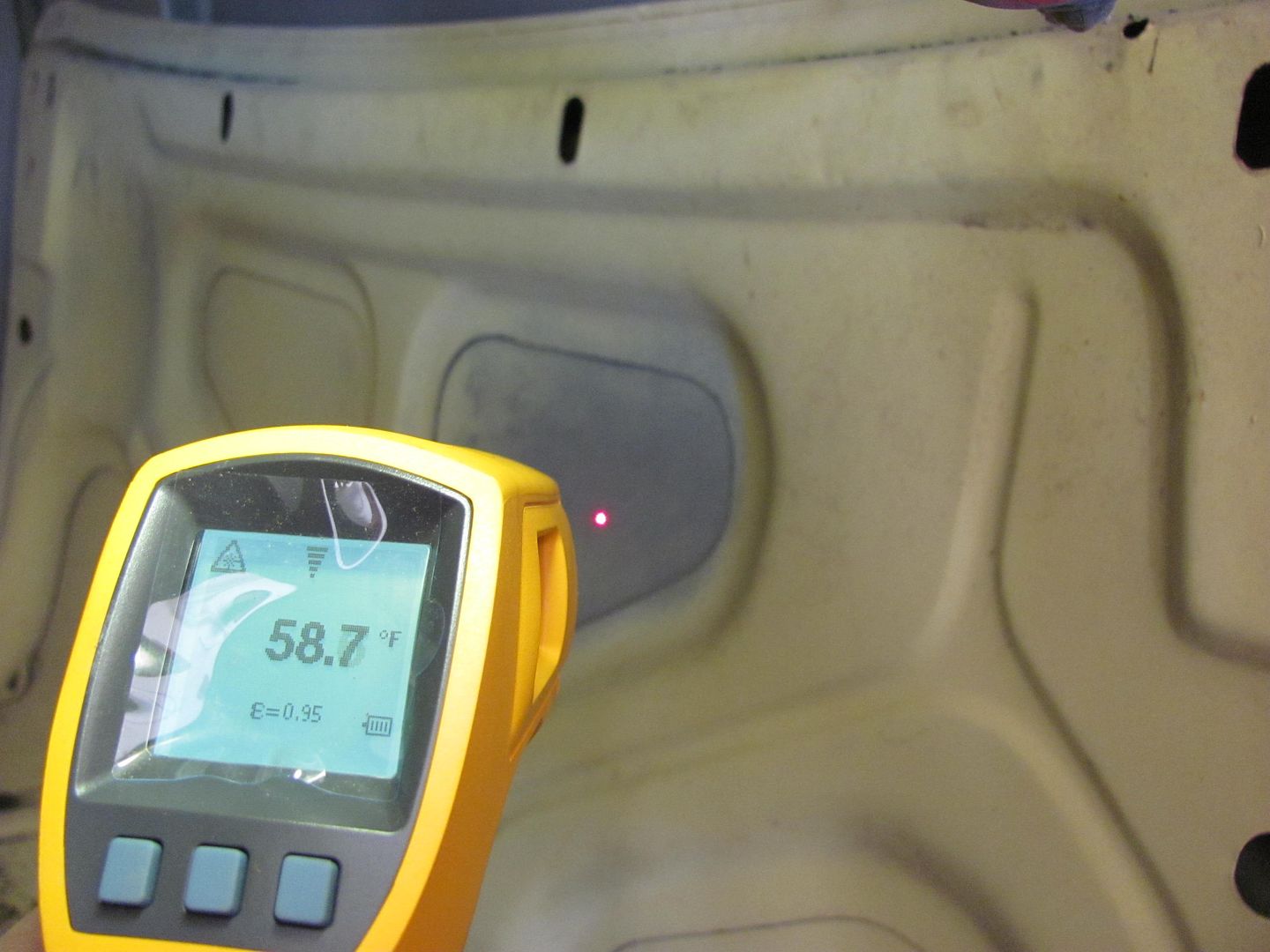
Here is the thermometer we'll be using today....


Picture160-1.jpg


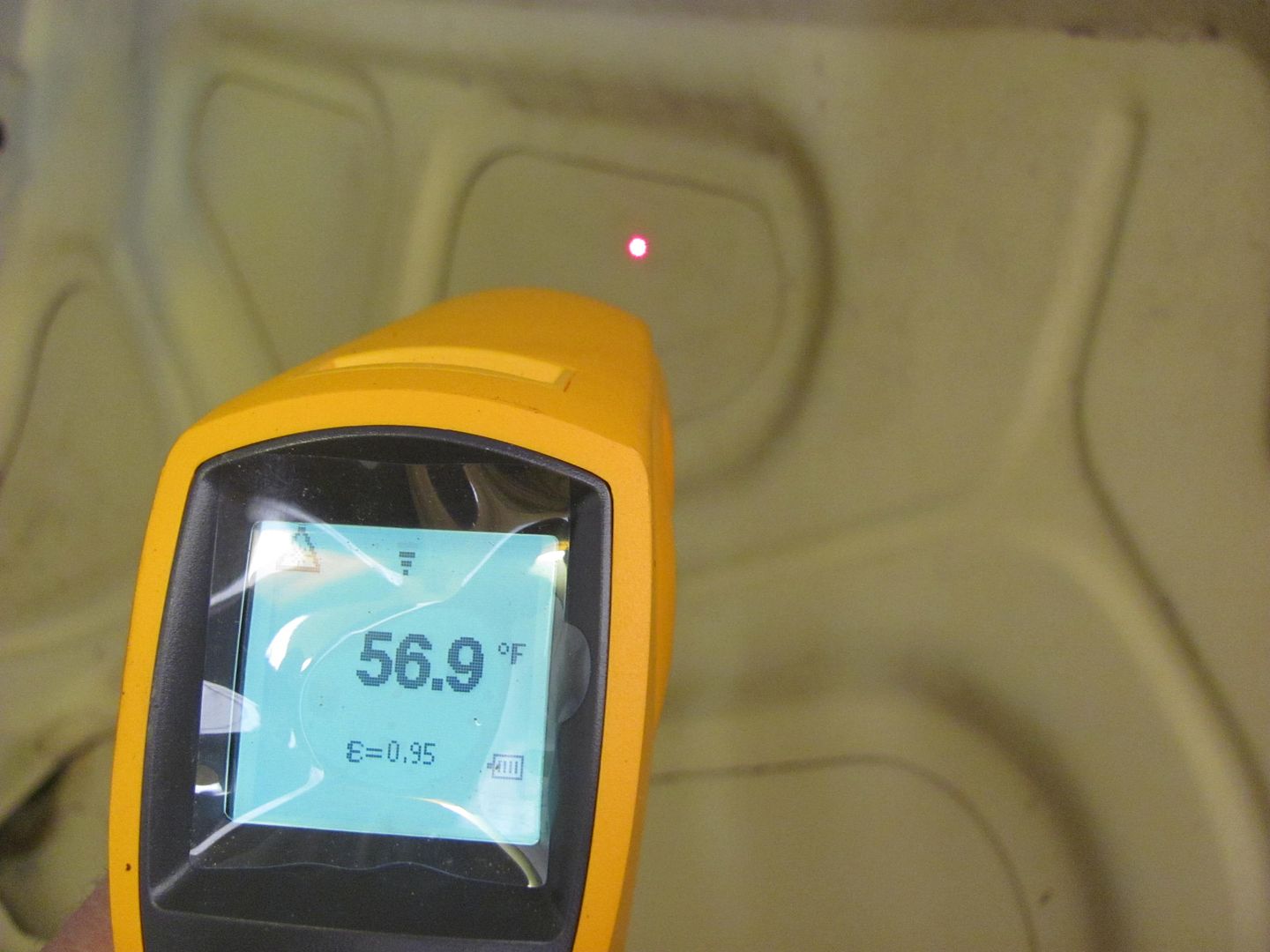
And here is the baseline temp.....


Picture161-1.jpg


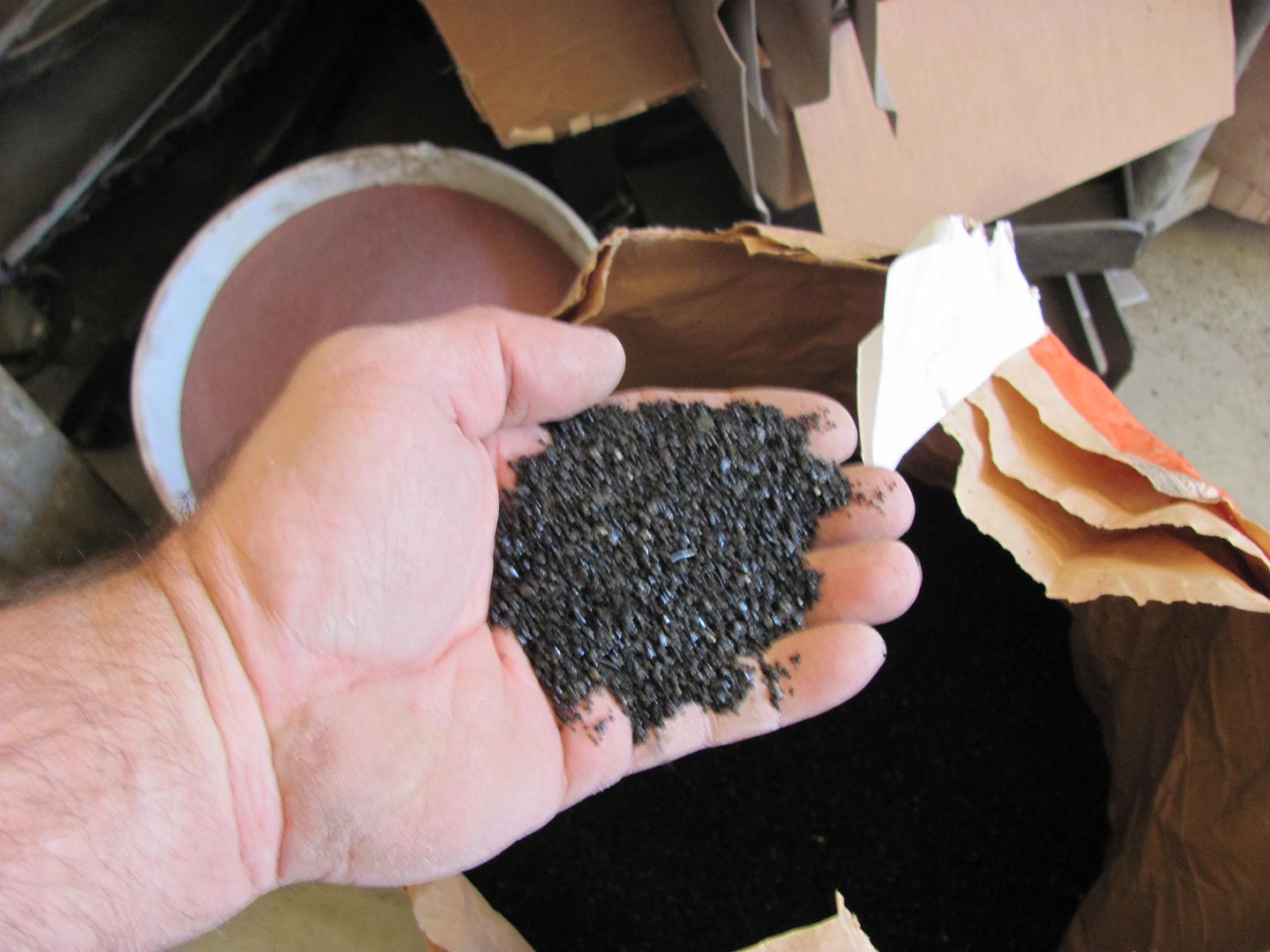
This is the media we'll be using today, Black Beauty medium grit. A bit coarse for sheet metal, but we're trying to duplicate the damage seen on Joe's trunk lid, so we'll give it a go.....


Picture162-1.jpg


Then I changed out the media in the cabinet, and started blasting. As I had opened the garage door and it's rather warm out, and I was rather slow in getting the media changed out, I thought I should check the temp again.


Picture163-1.jpg


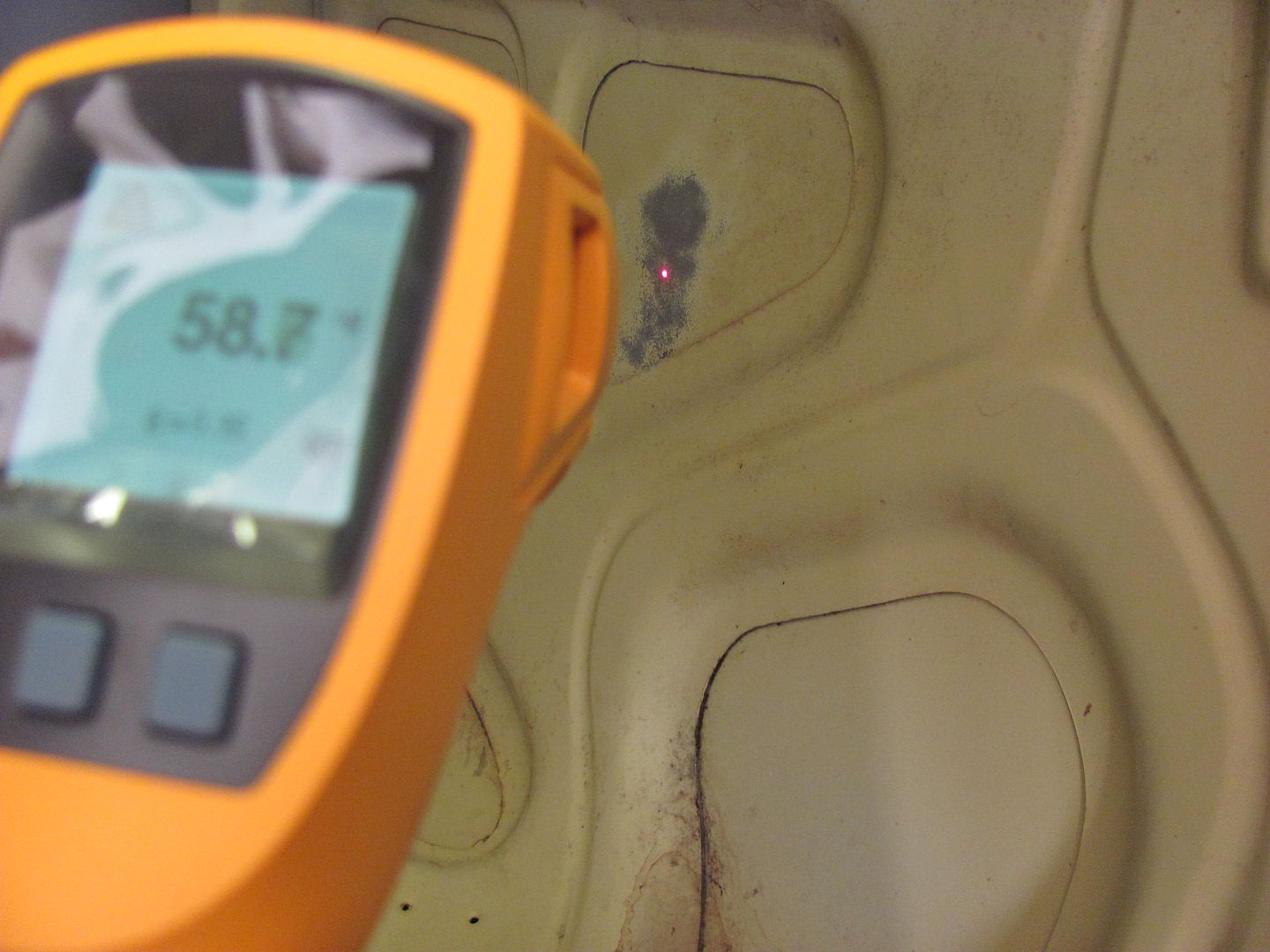
After clearing off the one hole, we had noticeable panel distortion from the outside. In checking the temp again, it had not moved since the last check.


Picture164-1.jpg


So in essence, the temp of the panel did not change from the time we started blasting the one hole until it was finished. If you want to scream conspiracy, well it has gone up a whopping 1.8 degrees since the trunk lid was placed in the cabinet. I doubt seriously this can be attributed to a heat issue. I do have a refrigerant dryer on my air system, so that helps to keep the compressed air from getting warm, and yet the panel stretched still, despite the absence of any significant heat increase. It should be safe to say the damage is caused due to the peening action of the media against the panel surface. Stretching has long since occurred by the time any heat has finally shown up.


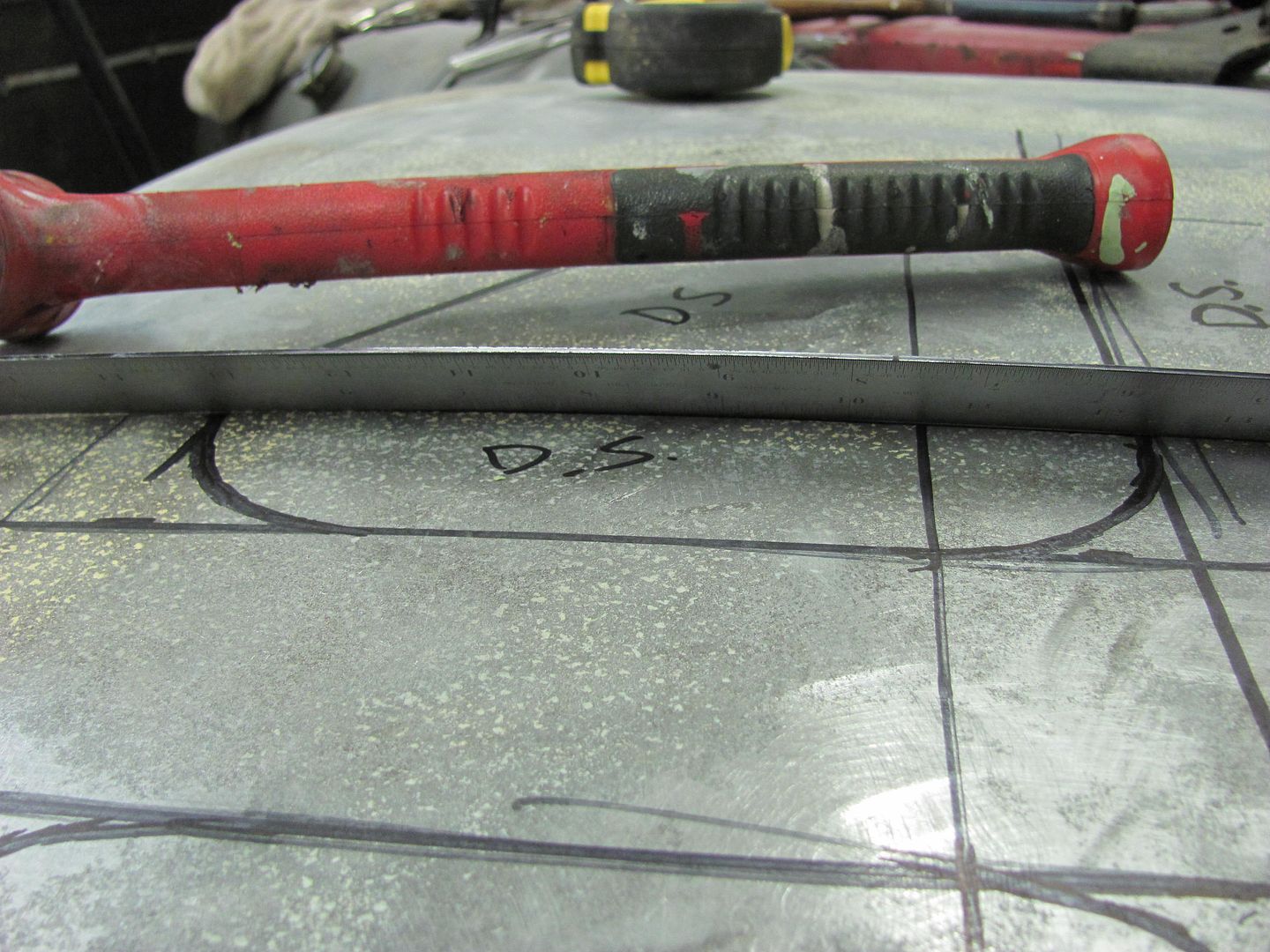
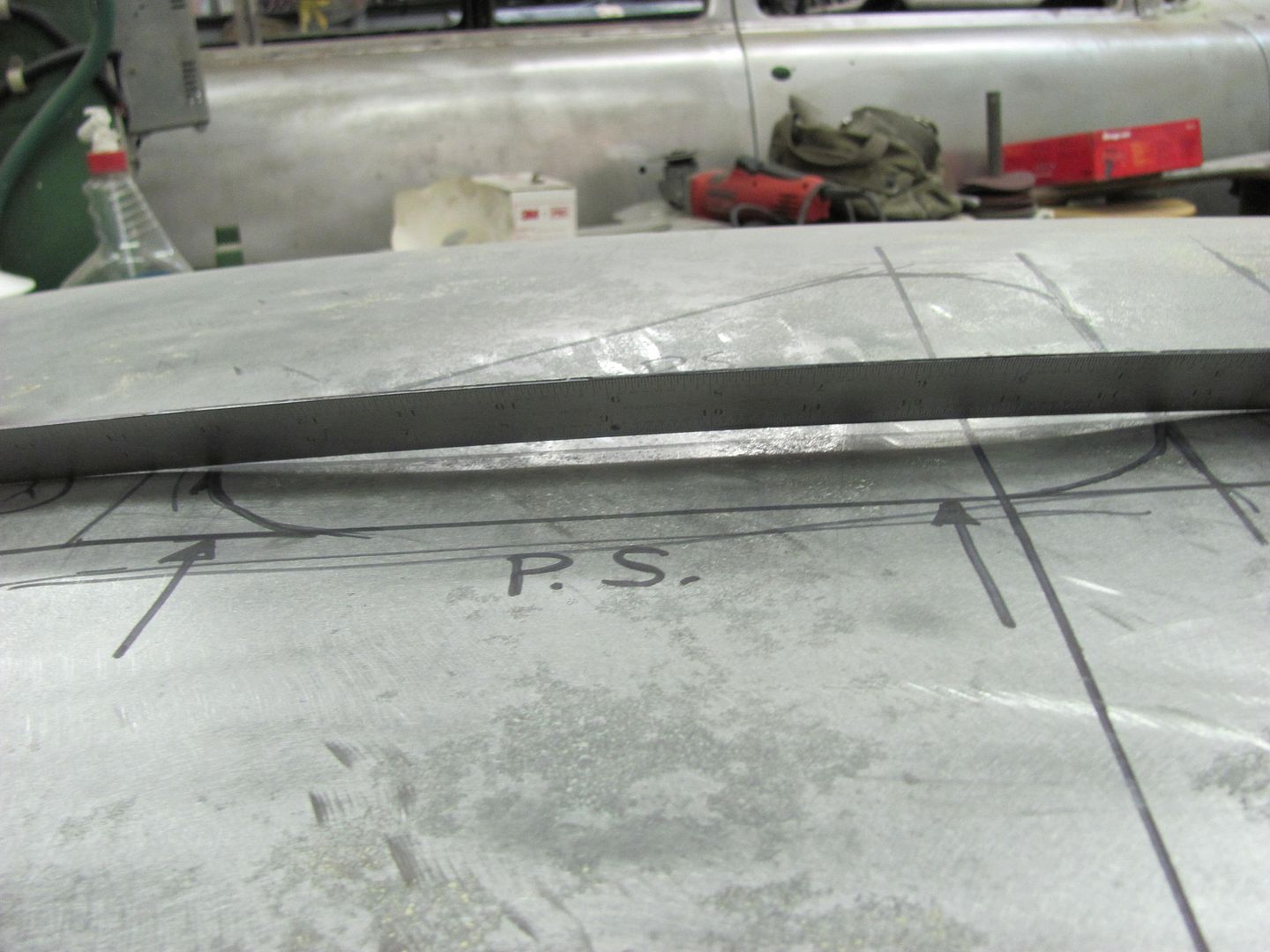
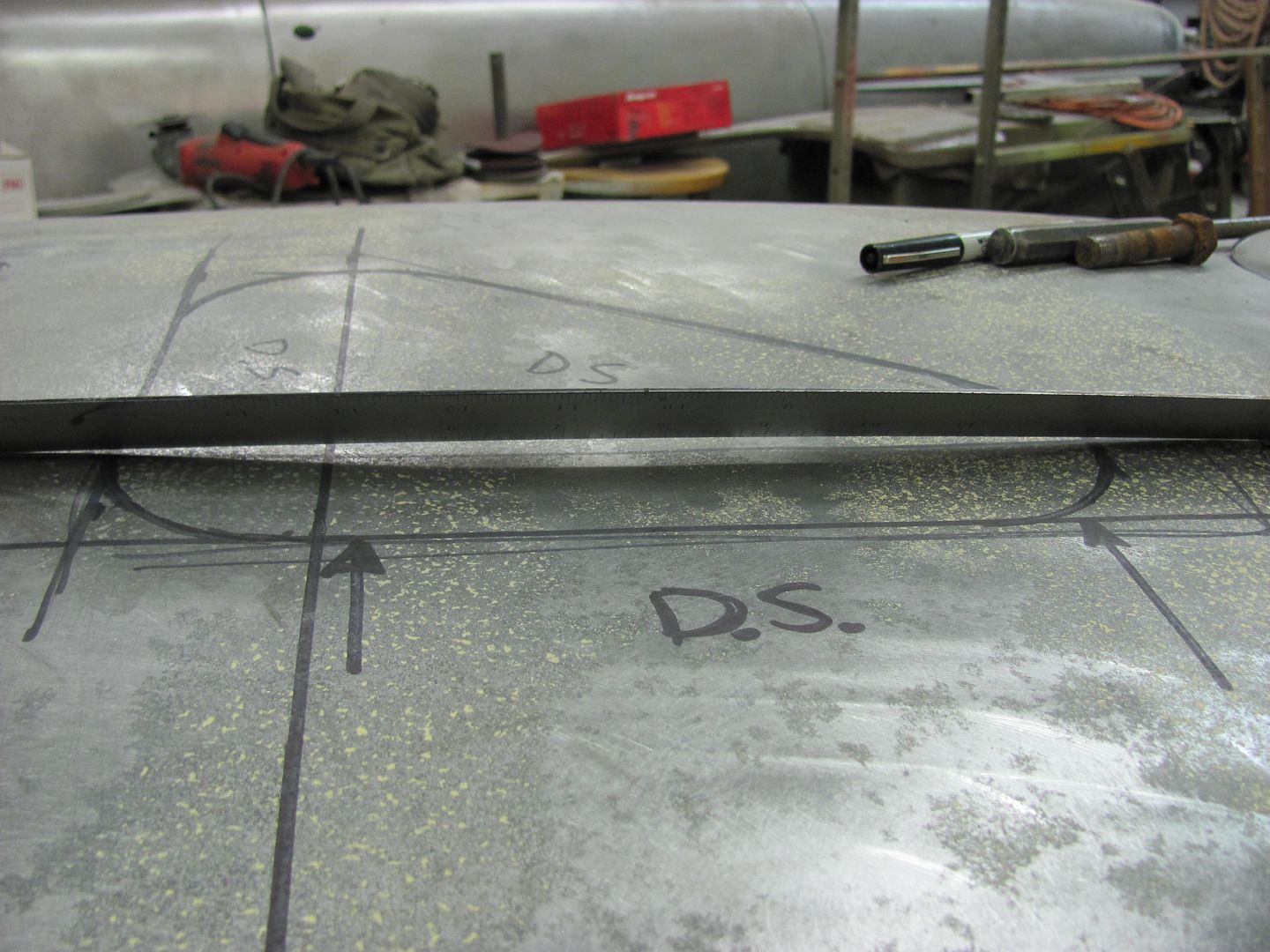
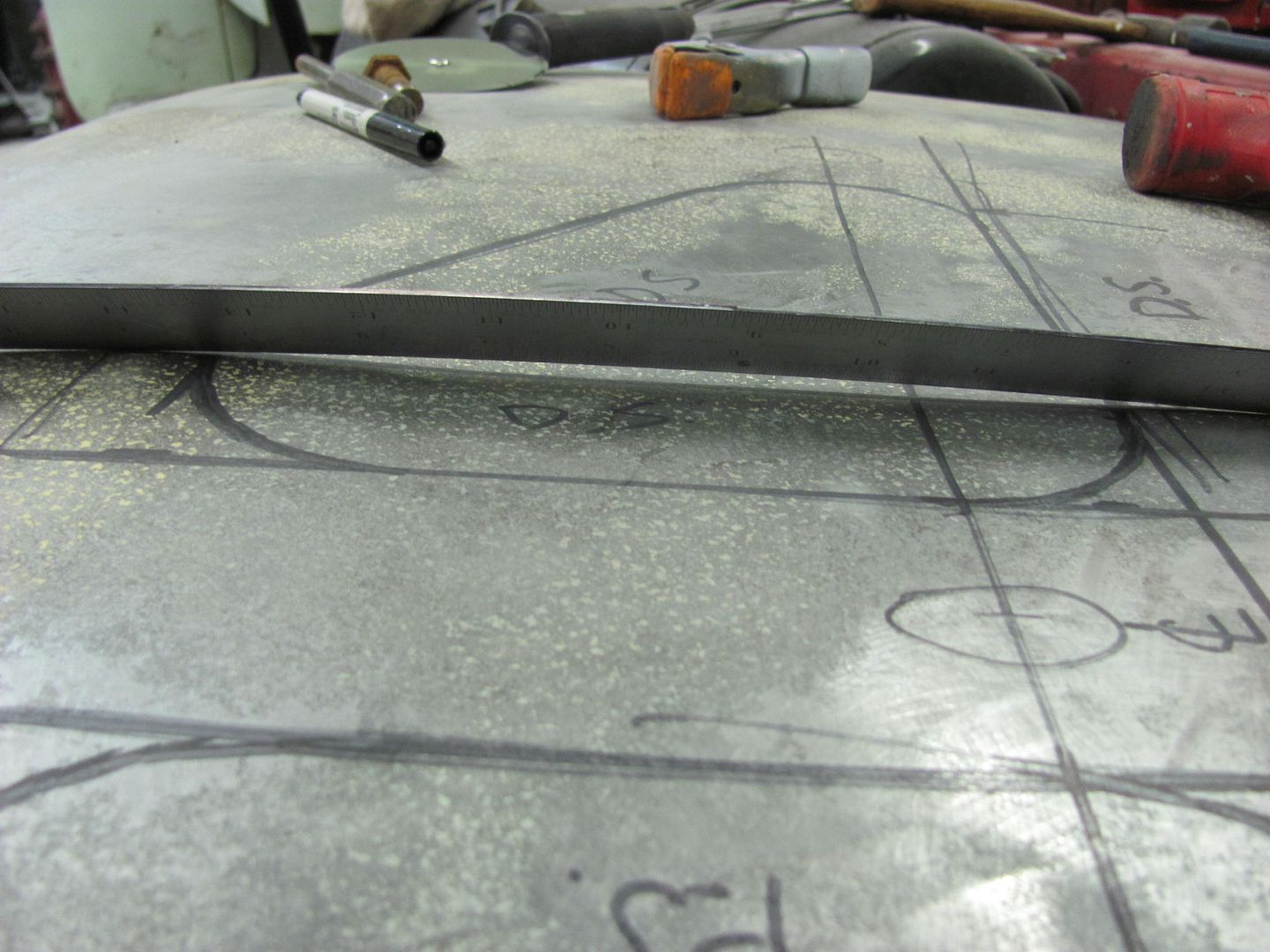
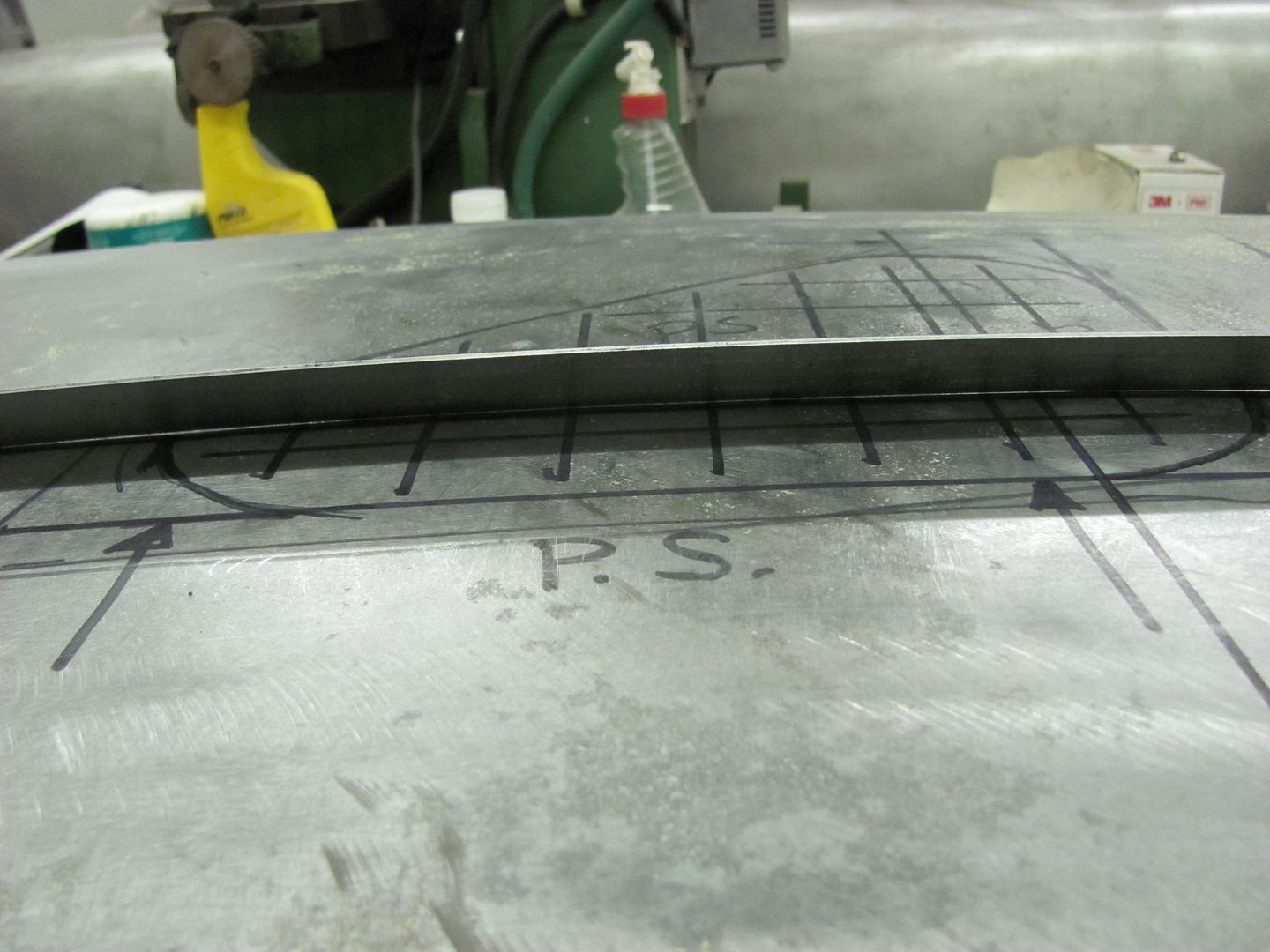
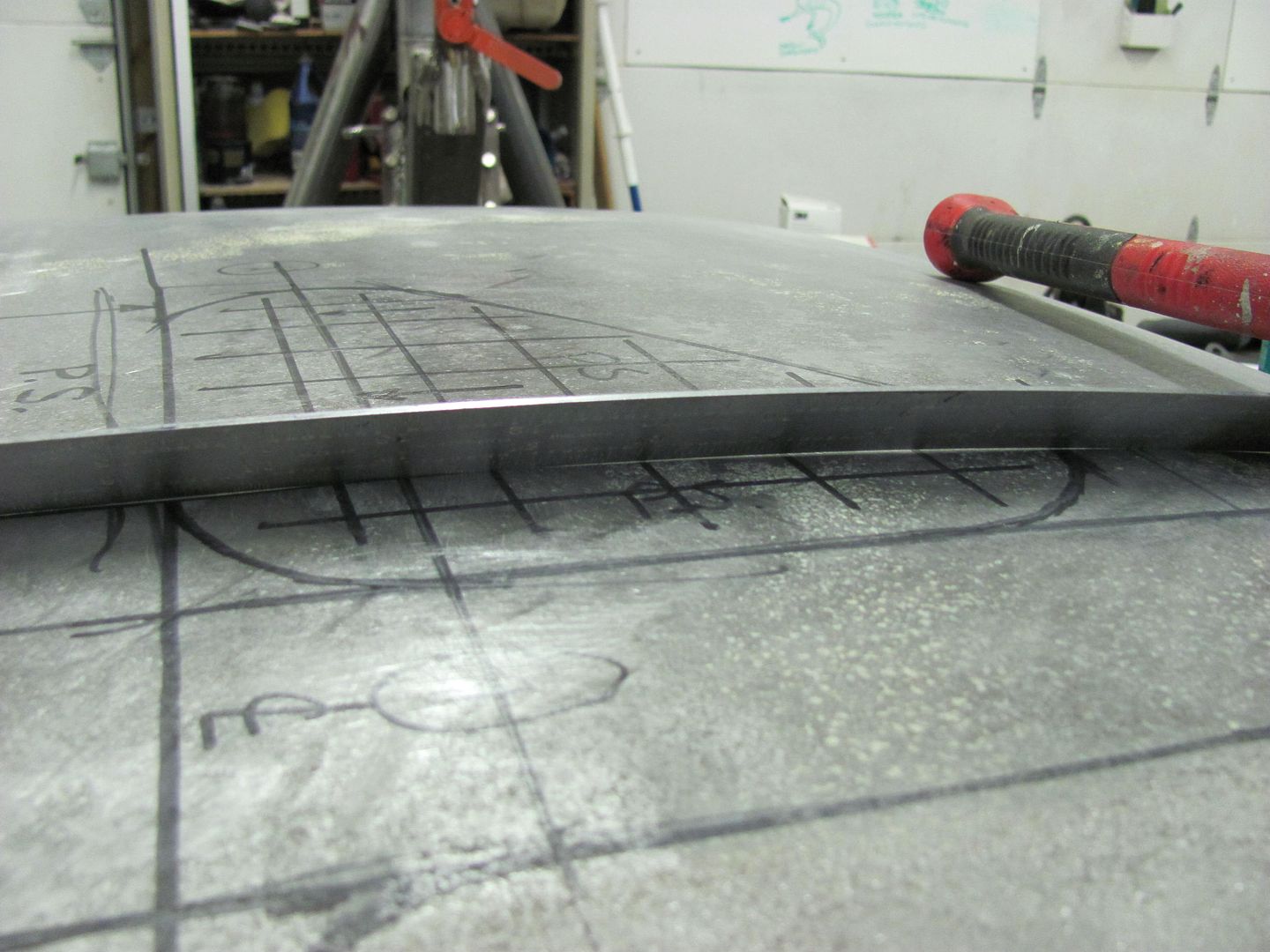
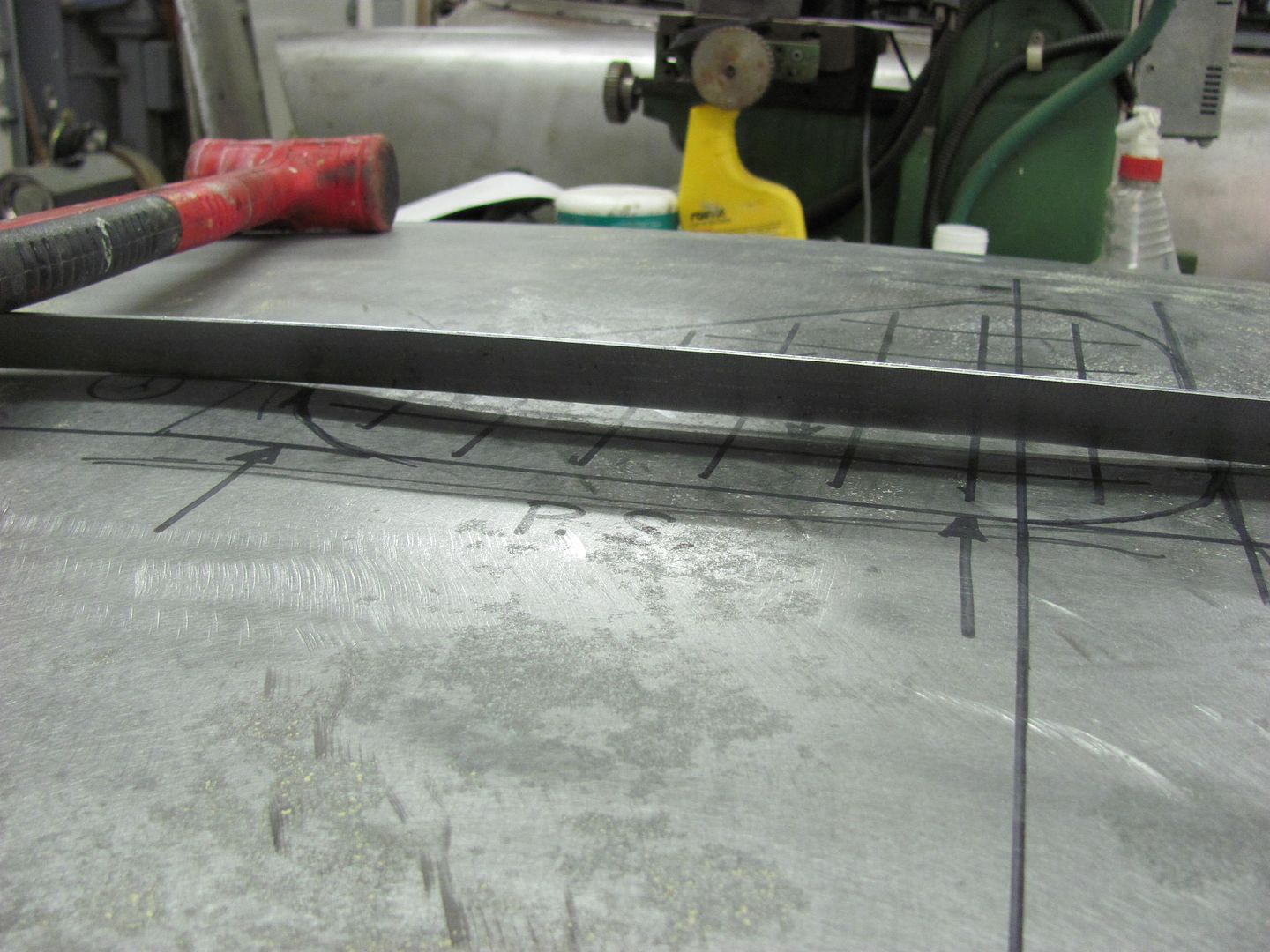
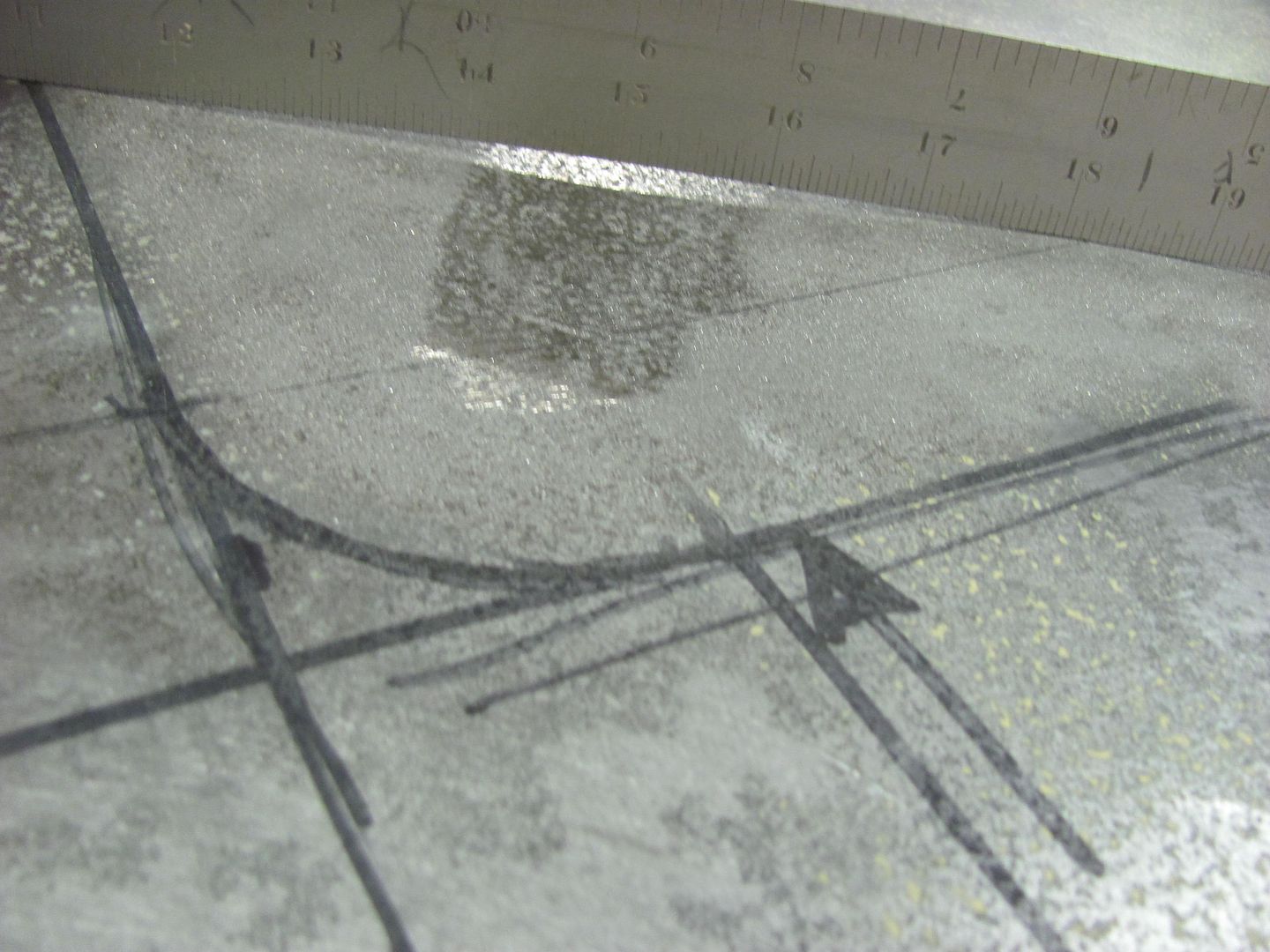
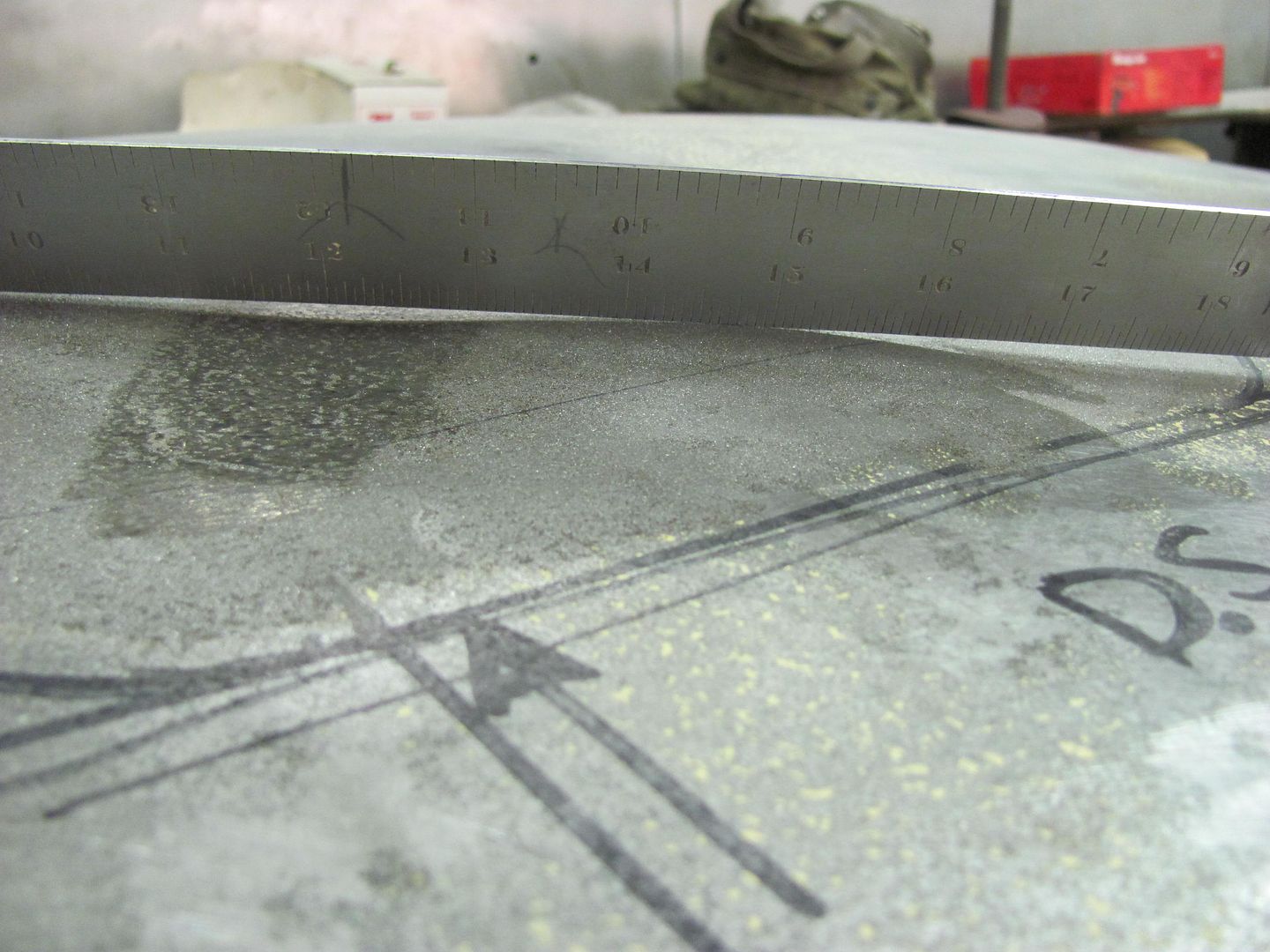
Lastly, here is the noticeable damage to the panel, measured along the datum lines as before....


Picture168-1.jpg


Picture169-1.jpg


Picture170-1.jpg


Picture171.jpg


Just to show a comparison before and after........


Picture149-2.jpg


Picture168-1.jpg


Picture148-2.jpg


Picture169-1.jpg


Next phase of the test will be to sandblast one of the damaged areas from the outside to attempt to relieve the compression/stresses of that side of the panel and see how the panel reacts... I'll use our driver's side as that one showed a decrease in length, and well monitor what happens.....
 
Last edited:
OP
M

MP&C

Well-known member
Joined
Oct 21, 2009
Messages
4,396
Location
Leonardtown, MD
On to some "repairs" ?

To preface, both test holes were bulged toward the inside. When I tried to push either out, they would oilcan out, but the stresses in the metal would bring them right back in once released. This is an indicator of what I call a tight oil can, or one that has resulted from a stretch.


Picture172-1.jpg


The driver's side test hole was sandblasted, and I stayed within the perimeter as marked so as not to stretch anything that was behind the inner panel and thus would be less accessible for any repairs. Once complete, you could tell the sandblasting had indeed relieved the stresses, as it would now oilcan in and out freely, and would stay where you put it.

Pushed in, it does appear that the panel is about where it was before......


Picture173-1.jpg


Pushed out, it shows some stretch as the panel assumes a sinusoid wave of sorts......


Picture175-1.jpg


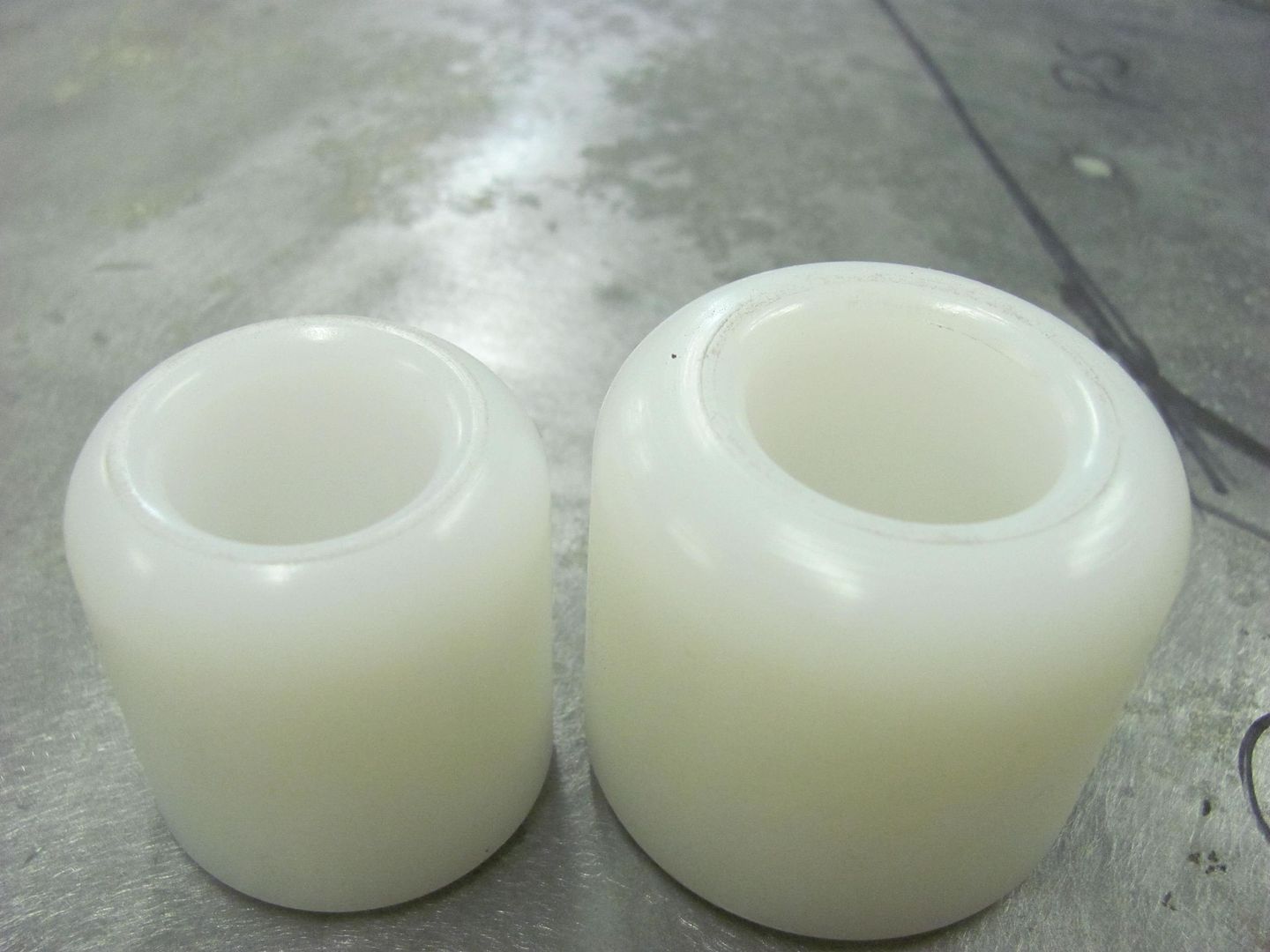
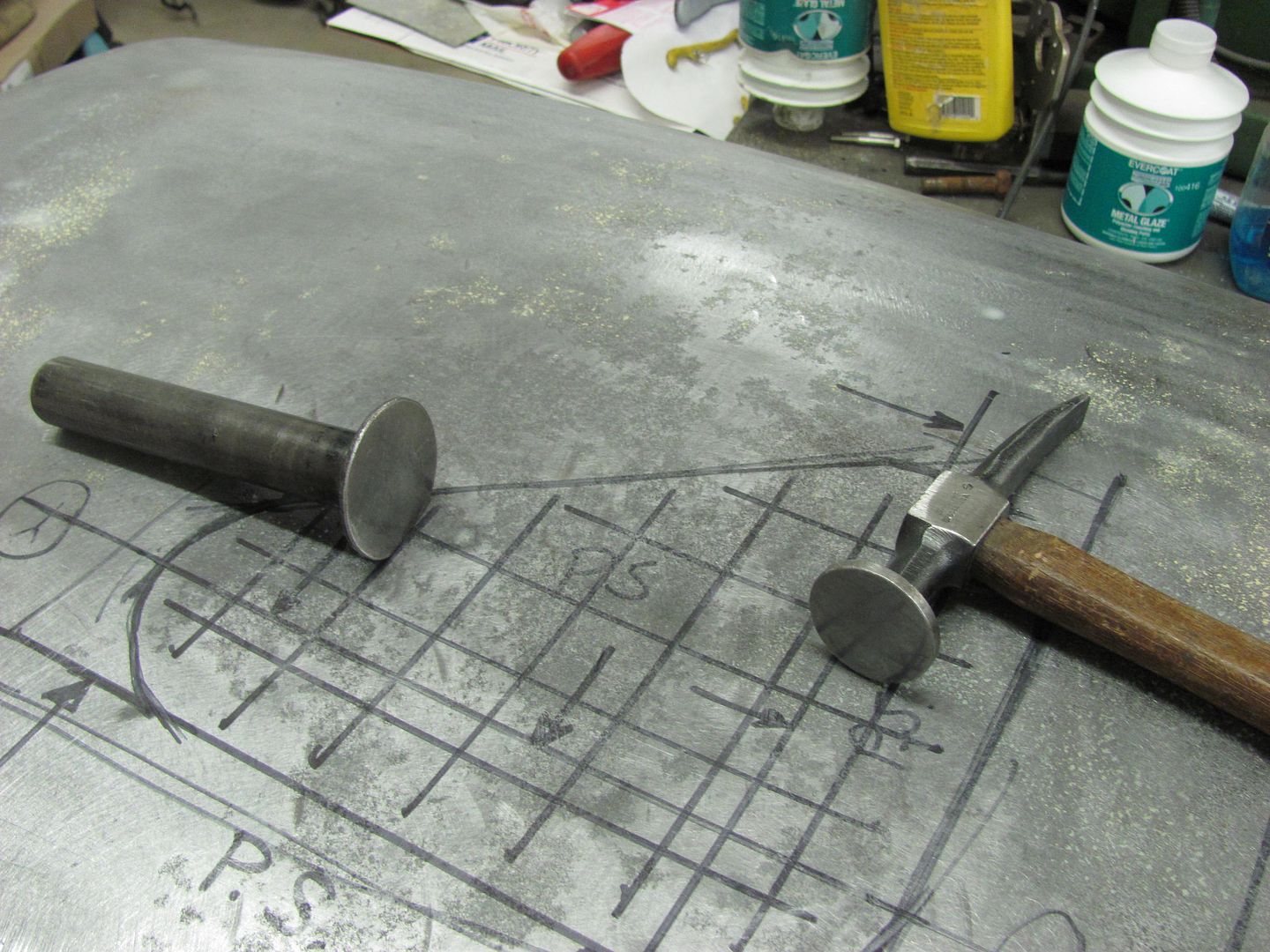
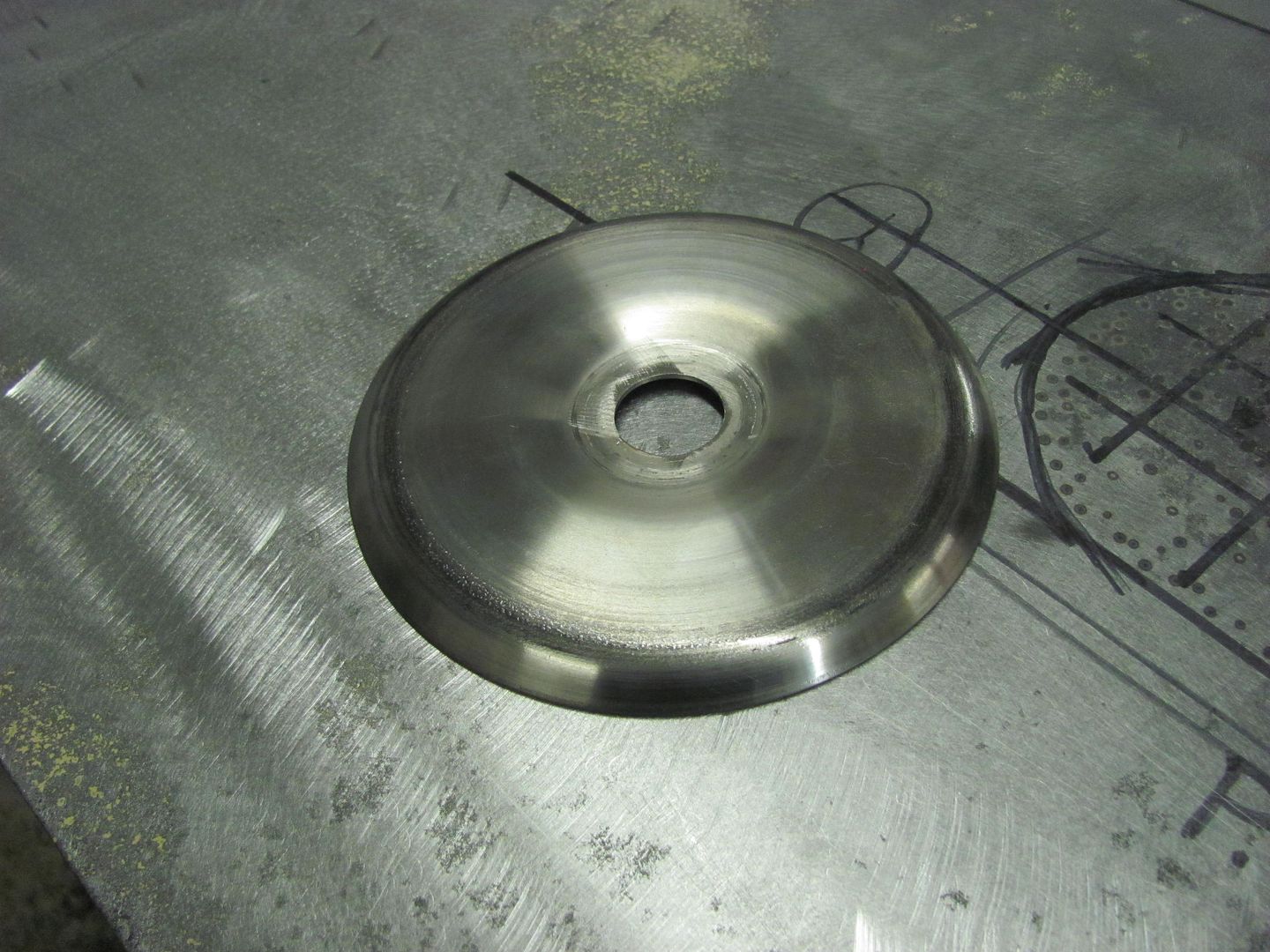
On to the passenger side test hole, this one is going to be addressed using the official Donut Dolly (produced by Daniel Gunderson). These have a concave feature on one end and convex on the other.


Picture177-1.jpg


Picture178-1.jpg


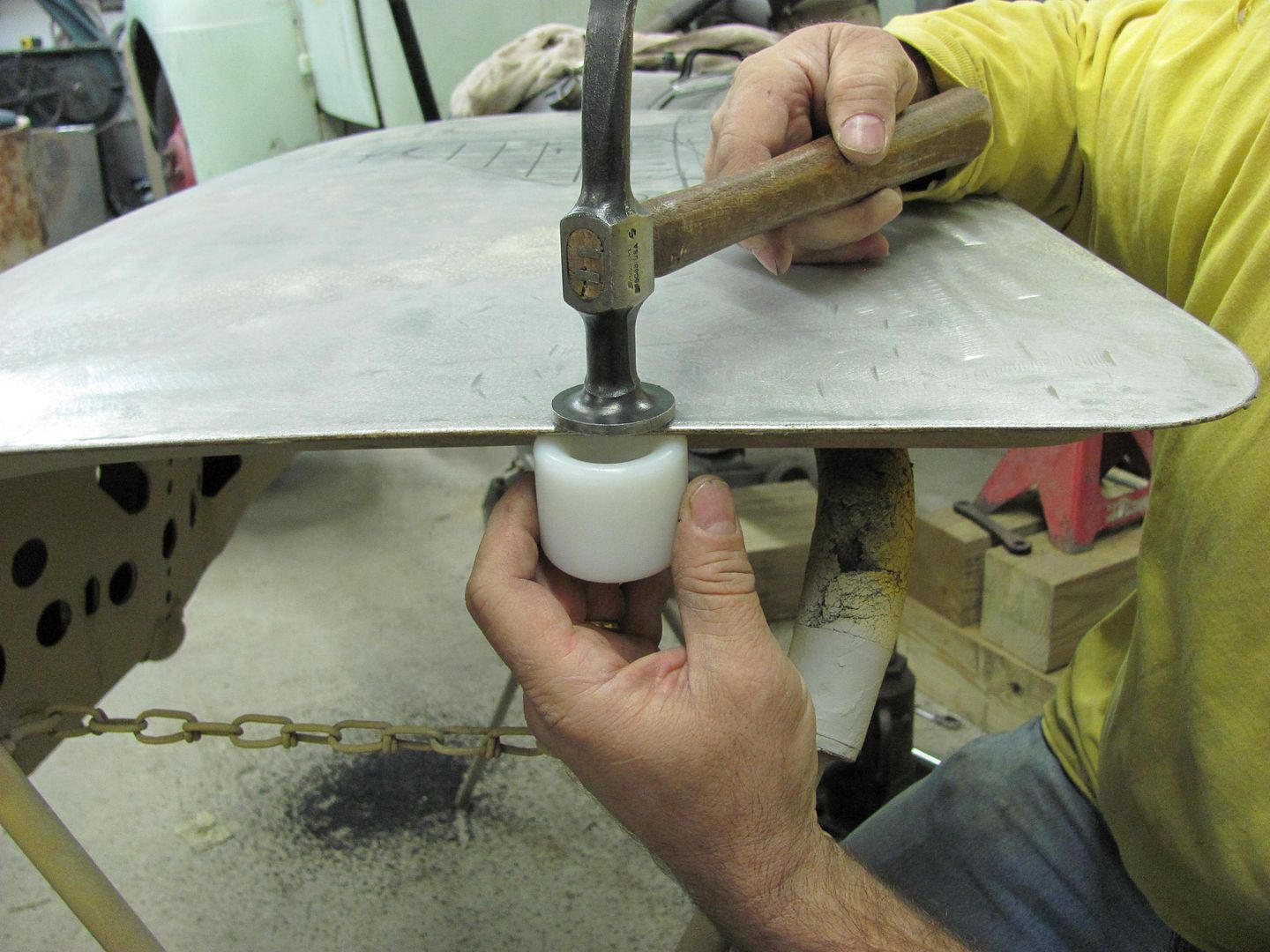
The basic principle is that the body hammer is used on the high or convex side, and the dolly is placed against the low or concave side. The dolly, as opposed to typical off dolly work, provides support completely around the hammer strike, instead of just to one side.


Picture182-1.jpg


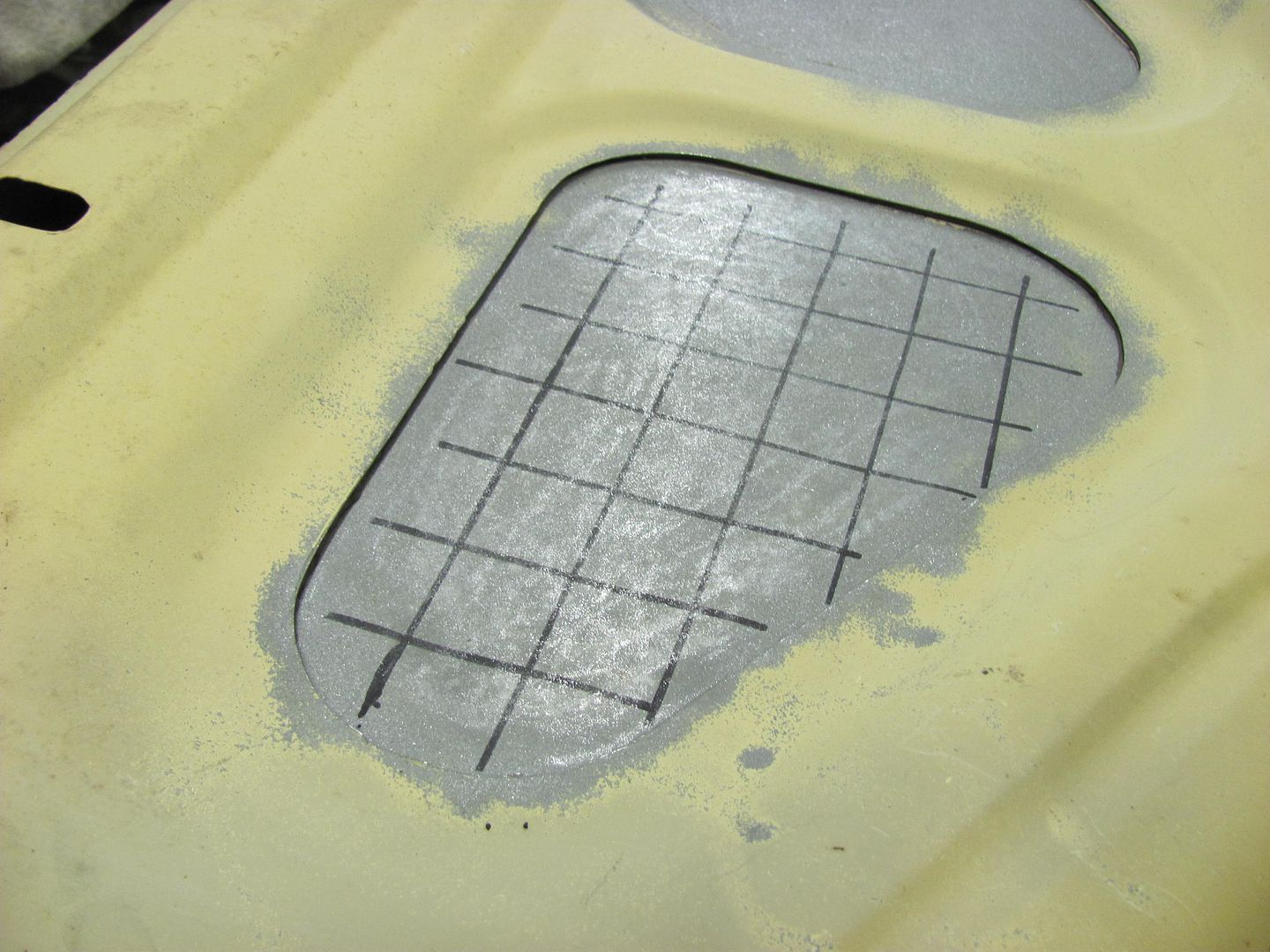
In order to keep track of things, I've found it best to lay out identical grids on either side of the panel. Align the dolly on two crossing lines on the bottom, align the hammer strike to the corresponding one above, and slowly move both across the panel as you use moderate hammer strikes, stopping every so often to verify alignment top and bottom......


Picture180-1.jpg


Picture181-1.jpg


Picture184-1.jpg


After about 5 minutes of shrinking, using a uniform pattern within the test hole, the panel now appeared to be relieved of its stresses as the panel would easily oil can back and forth. It appeared well shrunk, as it was a loose oilcan. At this point, I used my fancy hitch pin dolly and switched between the flat faced body hammer and a ******* to stretch things back and restore the crown...


Picture189-1.jpg


Picture190-1.jpg


After about a half hour or so of bumping things around, the panel had been restored fairly well to the original crown. It would oil can inward if pressed, but once pressure was released it popped back up again.


Picture191-1.jpg


Picture193-1.jpg


Picture197-1.jpg


A bit more work would have gotten things closer, but how close do you need for a test, right?

Here's the bottom side to show the hammer/dolly marks during stretching...


Picture198-1.jpg


In using the donut dolly, given the nice loose oil can that resulted, it appears the process of forcing the expanded/sandblasted area into the hollow of the dolly compresses the panel back similar to where it was, relieving the stresses.

While using the hammer and dolly to planish the passenger side test hole, I did notice an ever so slight bulge around the outer perimeter of the test hole on the outside in much the same way as the force from a dent causes a bit of springback and resulting bulge around that dent, toward the opposite side. So part of the repair process was to use the hitch pin dolly on the underside, just inside the edge of the hole opening, and to use the ******* on the topside in an off-dolly to help bump this back down. As with many dent repairs, there will be shrinking done from both sides of the panel.

We'll have to see if we can use a different shrinking method for finishing the driver's side and see how that reacts.....
 
OP
M

MP&C

Well-known member
Joined
Oct 21, 2009
Messages
4,396
Location
Leonardtown, MD
I had received various comments and feedback from the original post, so here's a review to see what if anything we may have missed, or anything that may need further clarification. I did find a few things to bring up for discussion...

I think the stretching caused by sandblasting is unique, and not like that caused by using a hammer and dolly. The metal isn't affected all the way through the panel, only one side. So if you could shrink that one side somehow, I can see how shrinking would work. But IMO you need to get the entire area of the panel stress-free or uniformly stressed and ready to shrink.

I read that part and then, in reading the part highlighted in blue, I was wondering why the donut dolly seemed to work, both in shrinking the panel, and in relieving stresses, as seen by the loose panel oil can. I glanced back at my drawing I did of somewhat exaggerated damage resulting from the sandblasting, and thought of this:

DocHarleyTrunk3.jpg


As a result of the damage to one side only, the inside has stretched, and the outside, unchanged, would be in compression by comparison. (likely until there is so much stretch involved, if the blasting had continued, that it would return to a relaxed/it's original state. This may explain the driver's test side showing a decrease in length, where the passenger side remained the same length) Moving on to shrinking, as the donut is placed against the concave part of the arc, it supports along the perimeter of the dolly and helps to "trap" the metal where is sits. As the hammer strikes from above, you are forcing the sheet into that hollow. Where the inside of the skin is stretched, and the outside is not, by forcing more length of the inside of the skin into the same distance of the outside (i.e.: into the hollow of the donut) are we not in essence equalizing the differing forces that exist on opposite sides of the panel?

How about sandblasting it on the outside to stretch the metal evenly on both sides? It will probably oilcan and need shrinking after that, but at least it wouldn't be stretched on only one side and you could use the shrinking disc to bring it back down. I still think a hammer and dolly would work too...that's what I would try anyhow.

The sandblasting of both sides has shown to relieve some of the stresses of the differing forces, as we did show the oilcan is now more equalized in force, it will stay where you push it to without popping back to the original position.
Keep in mind that the shrinking disc works best when you lay the disc on the center of a high spot. I have not found it to be very useful when using the edge on a low spot.
Where the driver's side test area does still show a stretch in the sinusoid wave, I don't think the stretch in this type of surface feature can be effectively removed using the shrinking disc, as the highs (in reference to the side the disc is working) that the disc is looking for alternate from one side to the other, where the inner structure may get in the way of effective work from that side. Perhaps that side could be pushed and held somehow toward the outside of the trunk lid to promote better access for the disc. As I've had limited exposure to this tool, I'll defer those thoughts to someone else with more experience to answer....

How about sandblasting it on the outside to stretch the metal evenly on both sides? It will probably oilcan and need shrinking after that, but at least it wouldn't be stretched on only one side and you could use the shrinking disc to bring it back down. I still think a hammer and dolly would work too...that's what I would try anyhow..............I believe the right thing to do is to stretch the outside of the sheet while pushing up on the dolly, which is held on the inside. I think that action will tend to compress the inside (or stretch it less) and stretch the outside, resulting in a more evenly stretched area. Then you can shrink the whole area back to where it belongs with a shrinking disc. That's my thinking anyhow.........

While we did not attempt the hammer and dolly to relieve stresses as part of our experiment, I think the repaired passenger side could serve to investigate this theory, to see how the panel reacts. Still have media left, so I'll proceed with this so we can see how the differing stresses will react, if the hammer and dolly will help to equalize them..


if I hold the panel and use the propane torch method how long should I apply heat? Also should I heat just the center or the complete warped area?
Not long at all, very short, you can see the metal move. Too little is better than too much.
I moved the torch around in a circular pattern over the area for just a few seconds.
I did enough just so the panel would stay in the out position on it's own. Then I used the shrinking disc from there. Used the ******* and dolly if I got too much shrinkage.

Having shrunk the one side to a loose panel oilcan, it did planish back out fairly easily to restore the crown. I think as long as your heated torch spots stayed well away from the edge of the hole opening, where you don't risk shrinking under the inner structure with no access for planishing, then you should be fine using a torch. As with all processes, consistency should be a focus..

You can get lucky on a few small pieces but when a large panel is damaged that bad you can chase an oil can all day.

Very true, the progress needs to be closely monitored to better know when to stop or move elsewhere.. And don't let tunnel vision keep your focus on the damaged area, monitor all the surrounding panel for any changes/damage..

Having absolutely no knowledge in body work probably tints my comments, but here goes.... Wouldn't it be cheaper to buy another trunk lid? Seems like a lot of man hours into R&D to save a trunk lid that can't cost more than $500 to replace.

If accurate replacement parts are available for said vehicle, then it is a viable consideration for the owner. If the parts are inaccurate, as is many times the case, many man hours will be expended to use those parts but make them and/or the adjoining panels suitable (think gap joints, etc). If someone is tackling sand blast damage repairs themselves, then it would be their time and effort. If parts are not available, then you either need to reproduce that part or fix what you have. I am conducting this test in hopes of finding the most effective method(s) of repair so that the owner of the car in FL can determine if this is a repair he can do on his own, whether it is one he should farm out, or as you suggest, buy a replacement.

We've got a shrinking disc on the way, to use on a test of one of the remaining stretched areas. Once I re-damage the passenger side for the hammer and dolly "equalization", that would even give me one sample to use with the disc, one with a torch.
 
Last edited:
OP
M

MP&C

Well-known member
Joined
Oct 21, 2009
Messages
4,396
Location
Leonardtown, MD
Time for the next phase of the test. With the passenger side repaired with the use of the donut dolly, we sandblasted the inside once more to use for another test.


Picture201-1.jpg


Sandblasted, the panel once again showed a bulge to the inside.... A test of the oil can effect showed it would pop toward the inside once released.


Picture202-1.jpg


Picture203-1.jpg


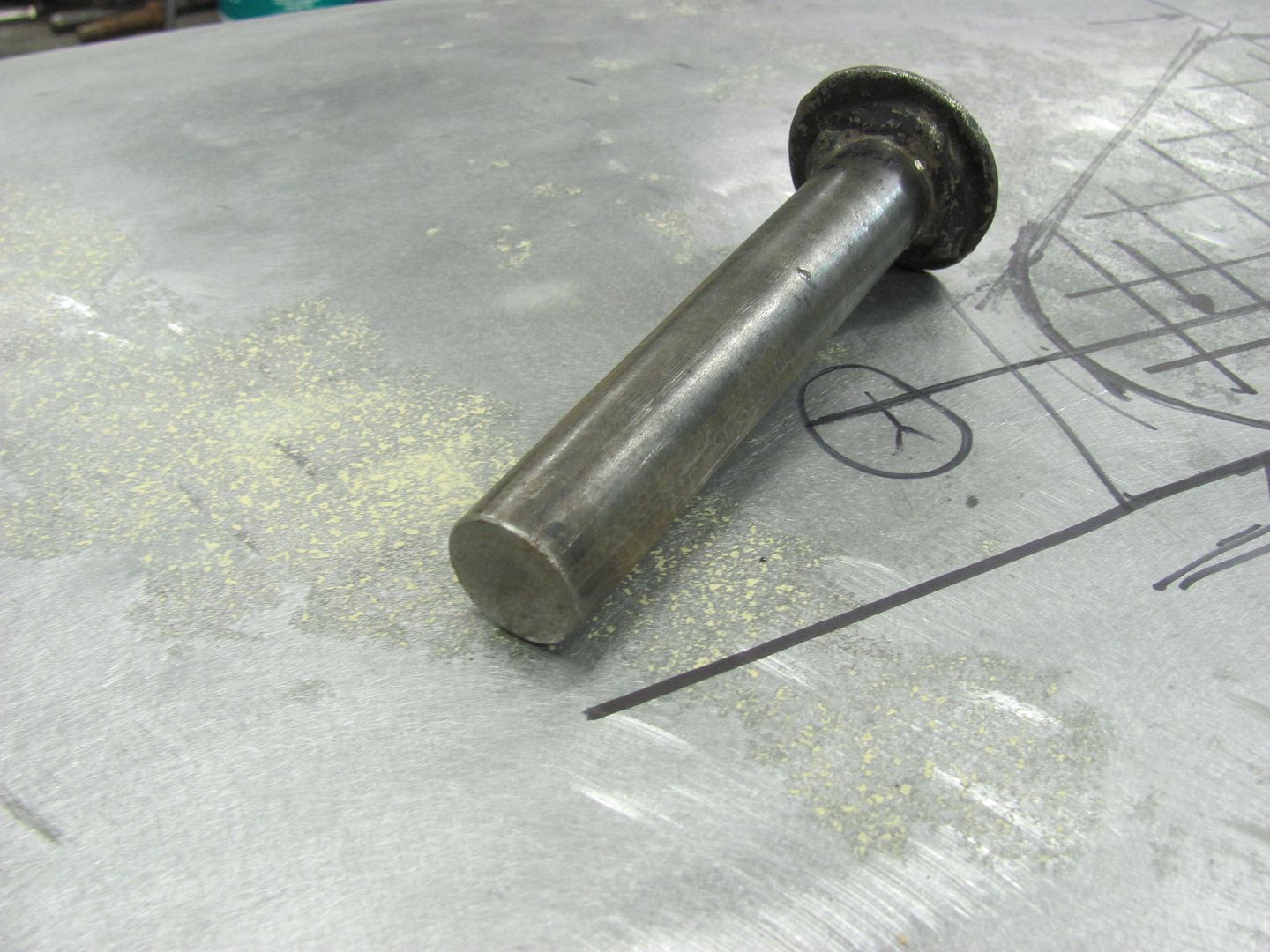
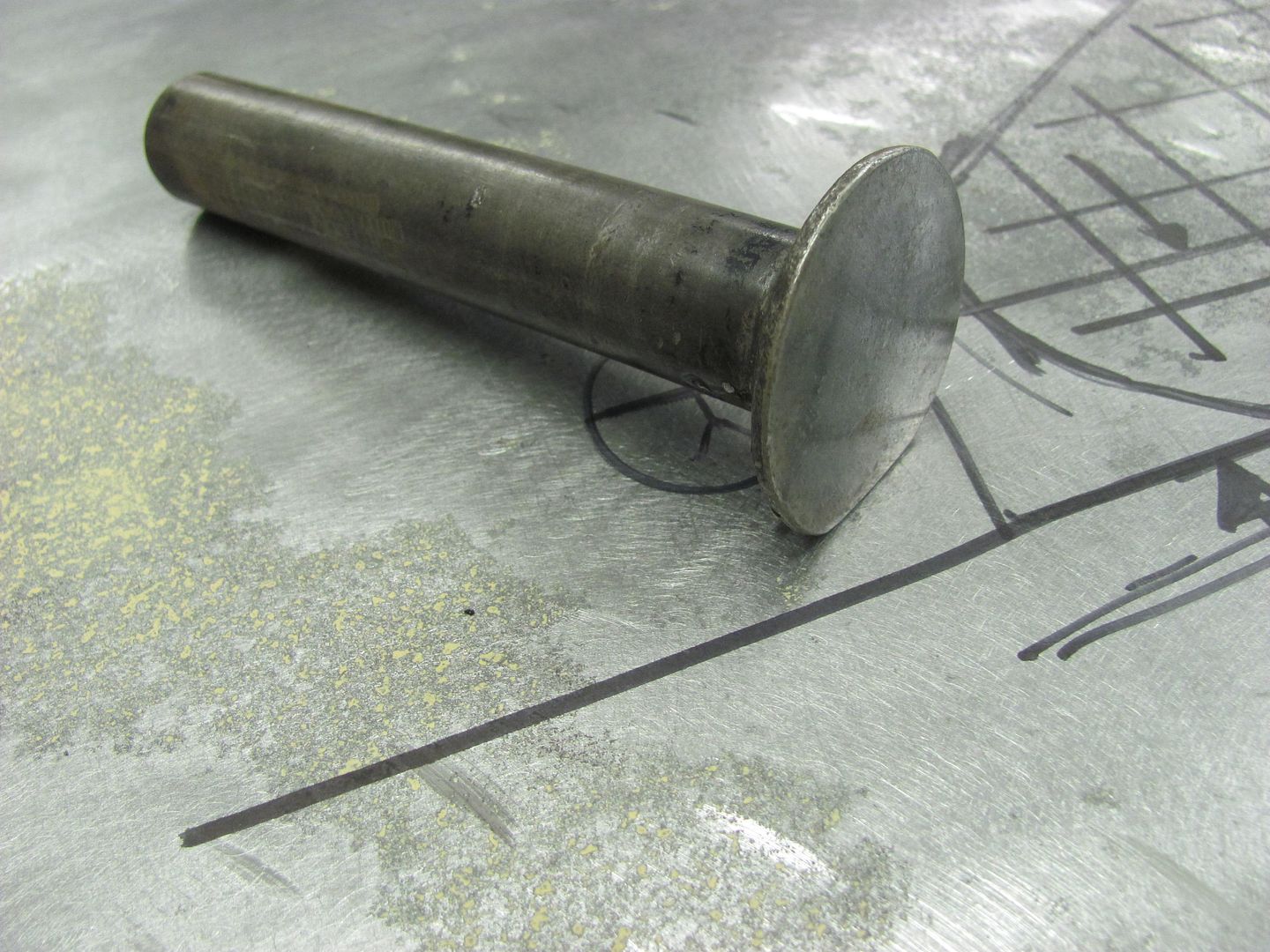
Now we'll use a hammer and hitch pin dolly to attempt to stretch the outside skin to equalize some of the stresses. The hitch pin was pressed against the inside to raise the panel as the hammer was used from the outside..

Picture204-1.jpg


Once complete, the oil can effect seemed more equalized in that it would stay to which side you pushed it. The panel also shows the sinusoid wave... indicating a stretch within the opening on both sides...


Picture205-1.jpg


to attempt the repair to this side (again), we'll use heat in the form of the heating tip on the dent puller.


Picture206-1.jpg


Picture207-1.jpg


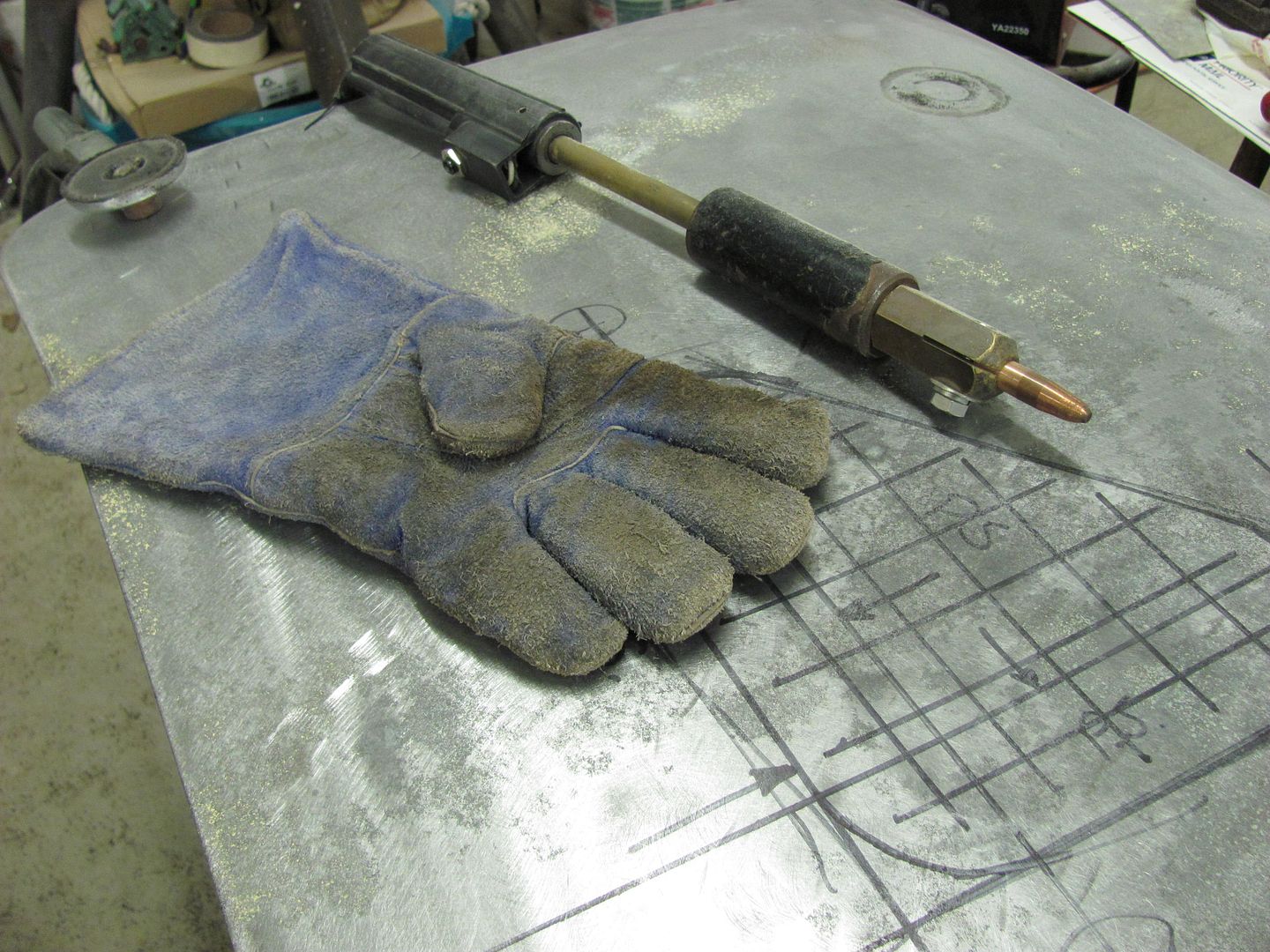
I used the glove to push the panel outward while shrinking with the heat tip from the outside, and the panel just didn't seem to be responding. Then it hit me, the damage was caused by stretching from the inside, so let's shrink from that side.....


Picture208-1.jpg


This appeared to do the trick, shrinking from the inside. Likely in addition to the weight of the dent puller pushing the direction we want to go, you could see the panel moving slightly outward around the perimeter of the tip as the panel was heated.


Picture209-1.jpg


Picture210-1.jpg


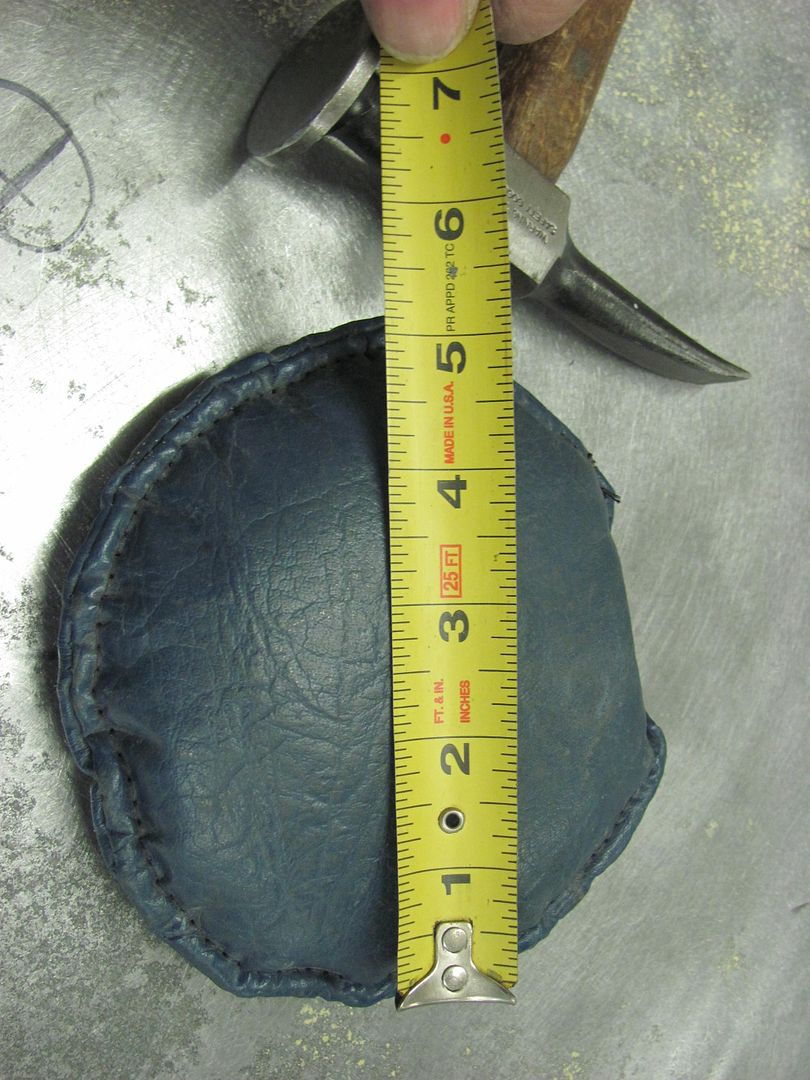
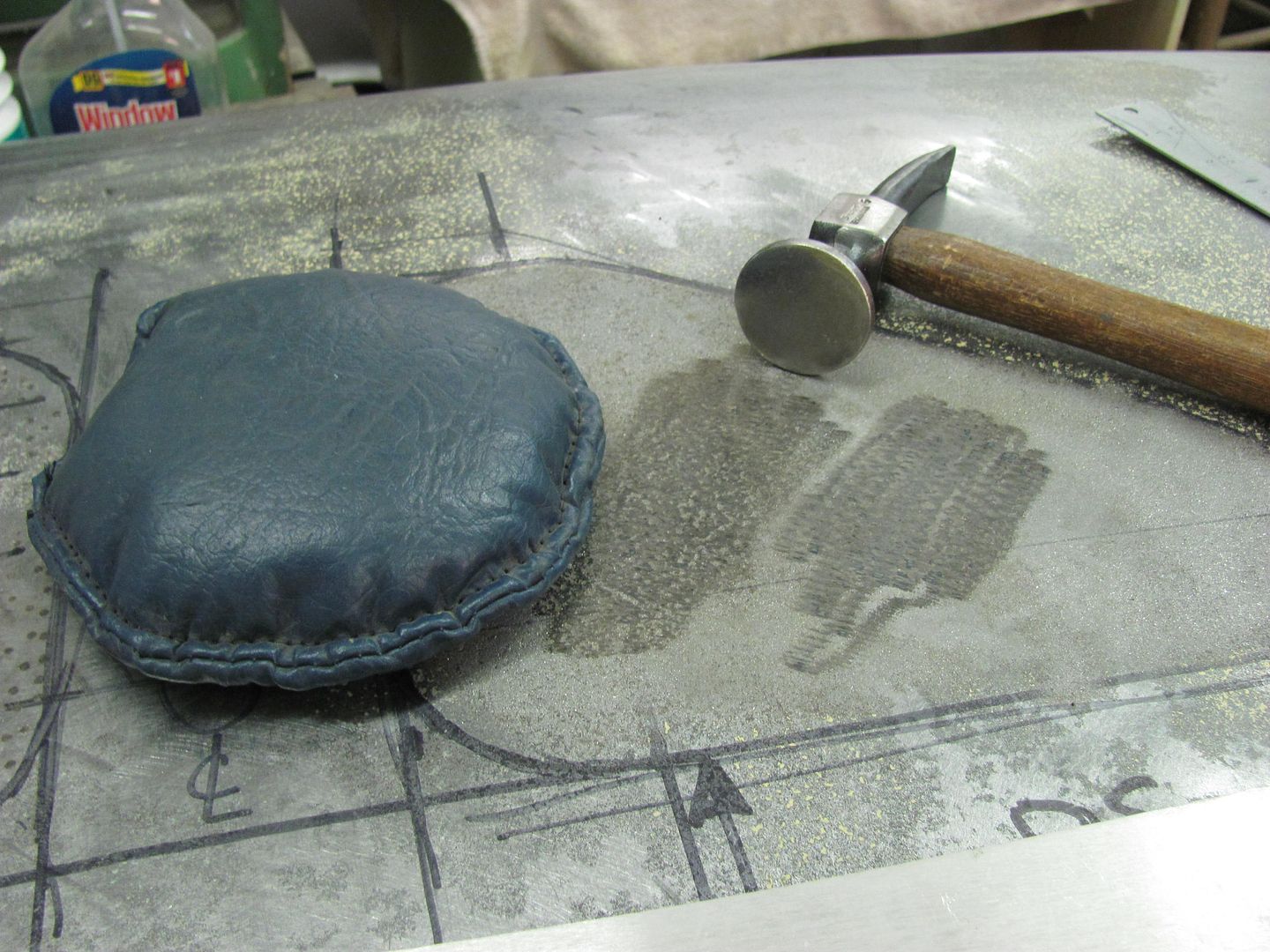
This process, with the majority of the heat now concentrated on the inside, was moving the panel outward as it was shrinking. Kept going until the panel seemed to stop responding to the heat shrinks, and then thought we'd planish to bring the crown up the little bit that was needed. Started again with the hammer and dolly, but it did not appear to work as well as it had after using the donut dolly. Keeping in line with the thoughts of the shrinking was more concentrated on the inside, what could we use to keep any stretch concentrated on the outside? Thought I'd give this small shot bag a try as the dolly....


Picture213-1.jpg


Picture211-1.jpg


The panel once again seemed to respond well to the tool selection, again bumping the panel the direction we needed.


Picture214-1.jpg


Not perfect, but looks like we're doing the right thing. A bit more work and it would be to a high build primer fix state.

The care package also showed up, so next we will try the shrinking disc for its results on the drivers side test area...


Picture216-1.jpg
 
OP
M

MP&C

Well-known member
Joined
Oct 21, 2009
Messages
4,396
Location
Leonardtown, MD
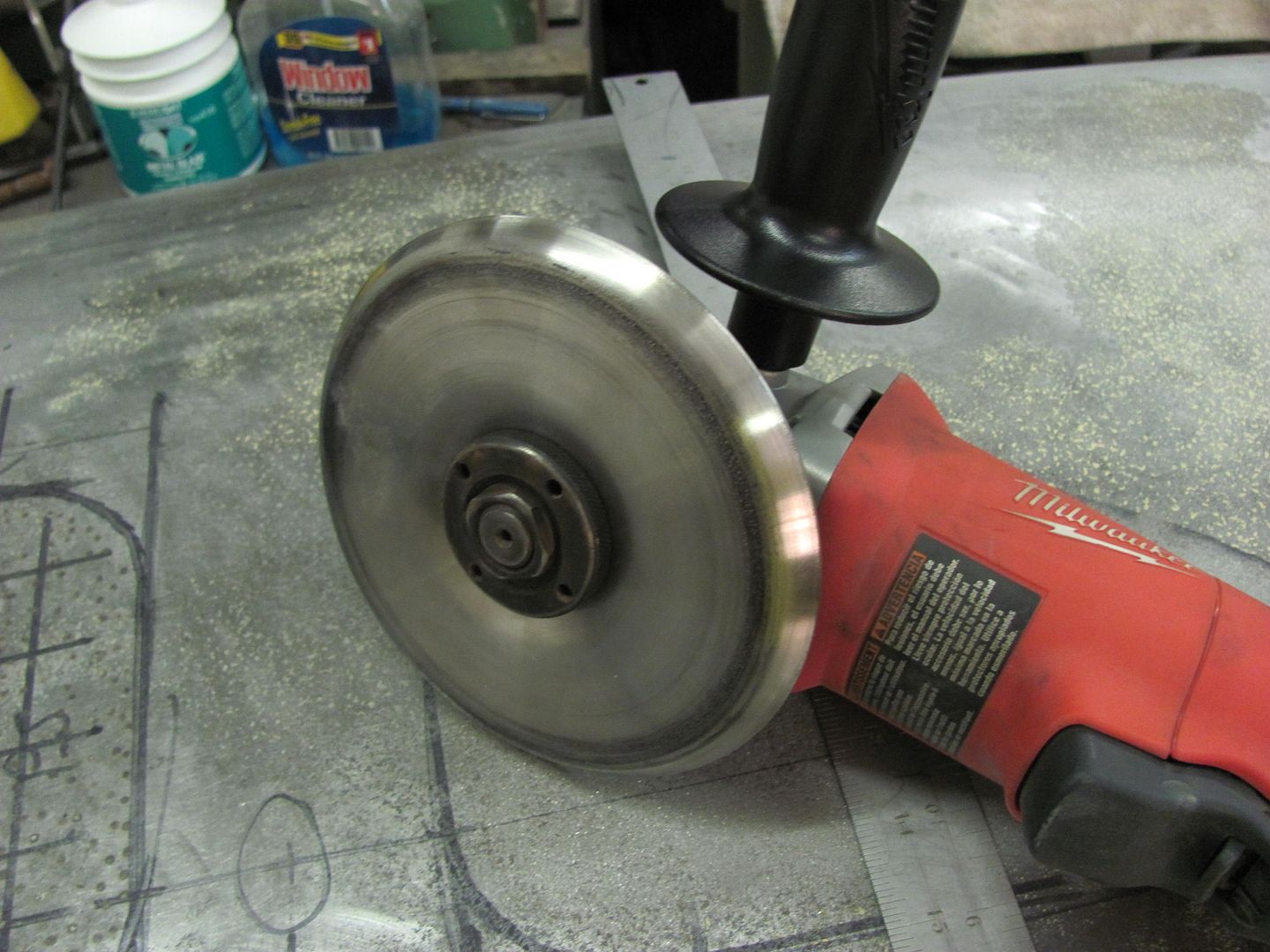
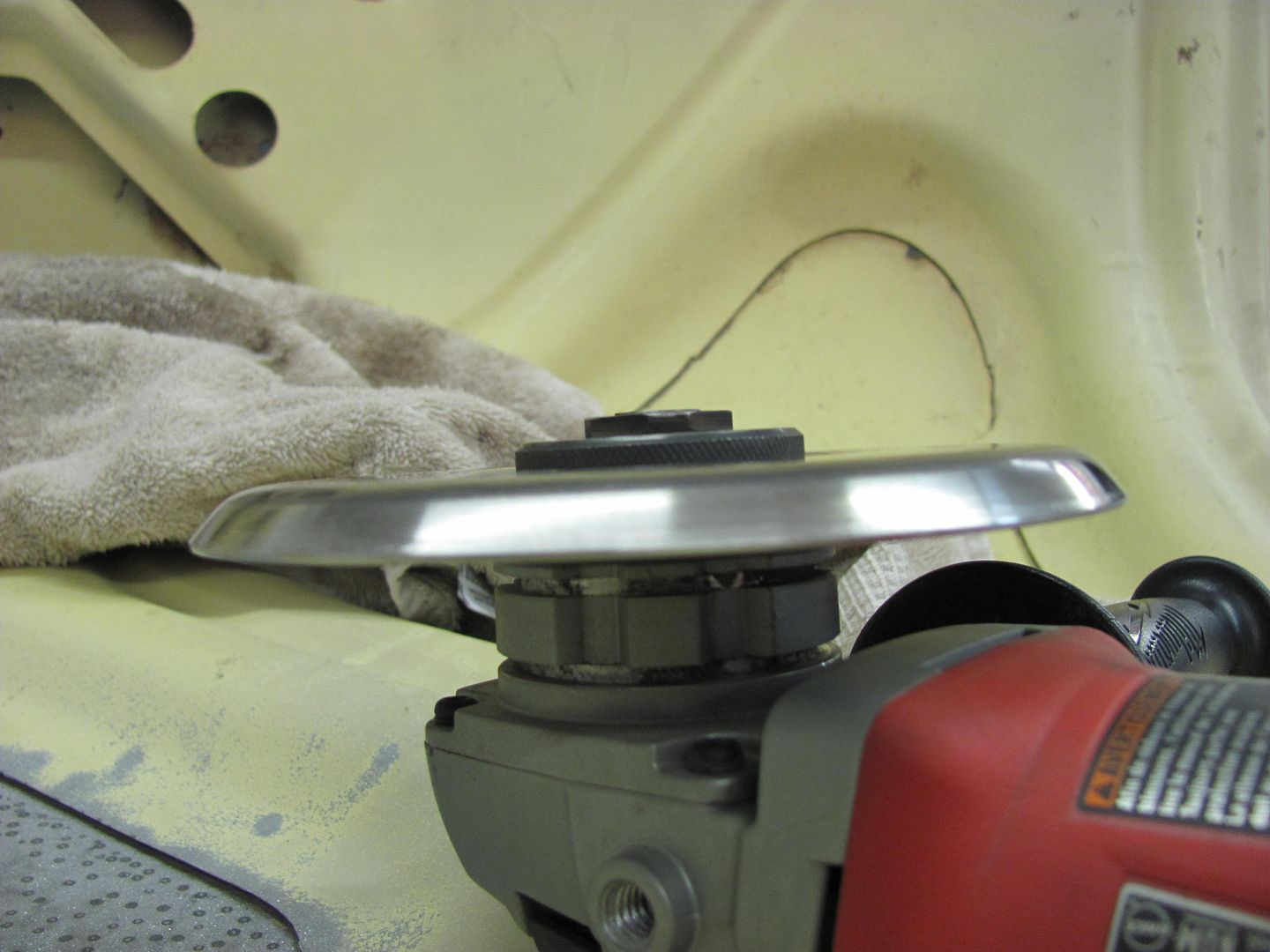
Moving on to the next phase of the test, the shrinking disc. The disc is a 5" diameter, and kinda gets in the way of using the 4-1/2" guard. To promote the retention of digits, I did install the side handle...


Picture217-1.jpg


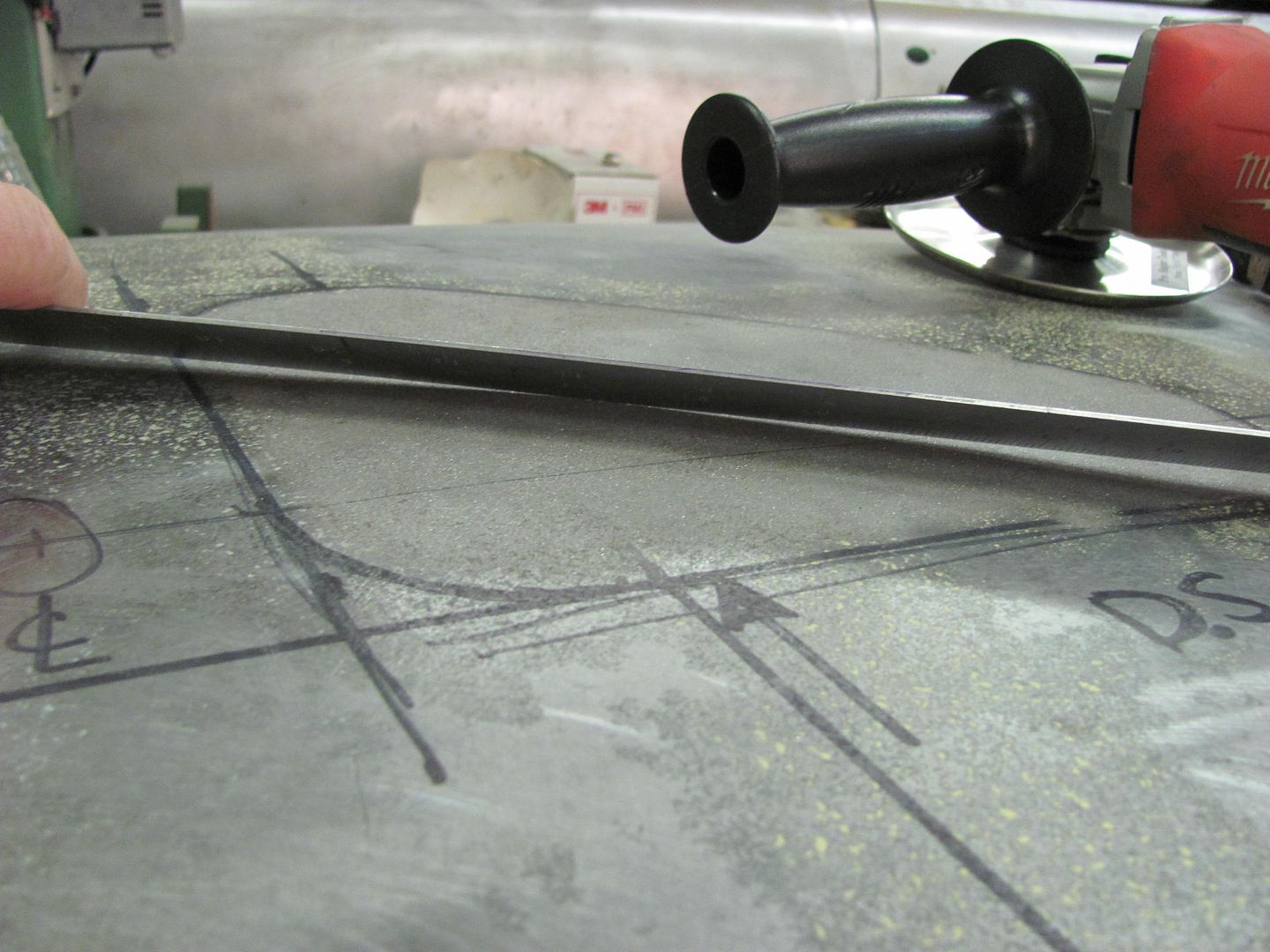
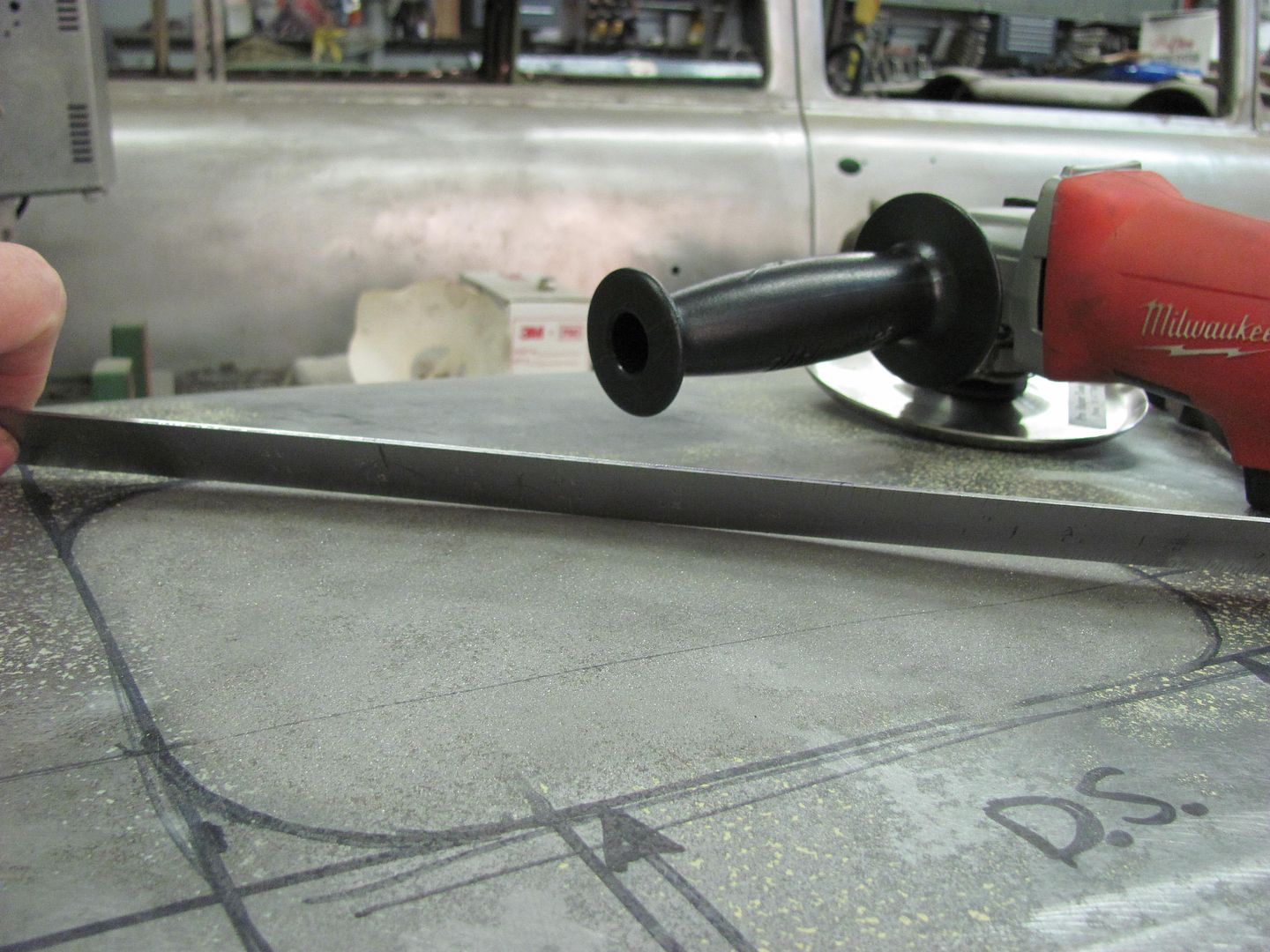
A quick check of our panel to find the high spot...


Picture218-1.jpg


Picture219-1.jpg


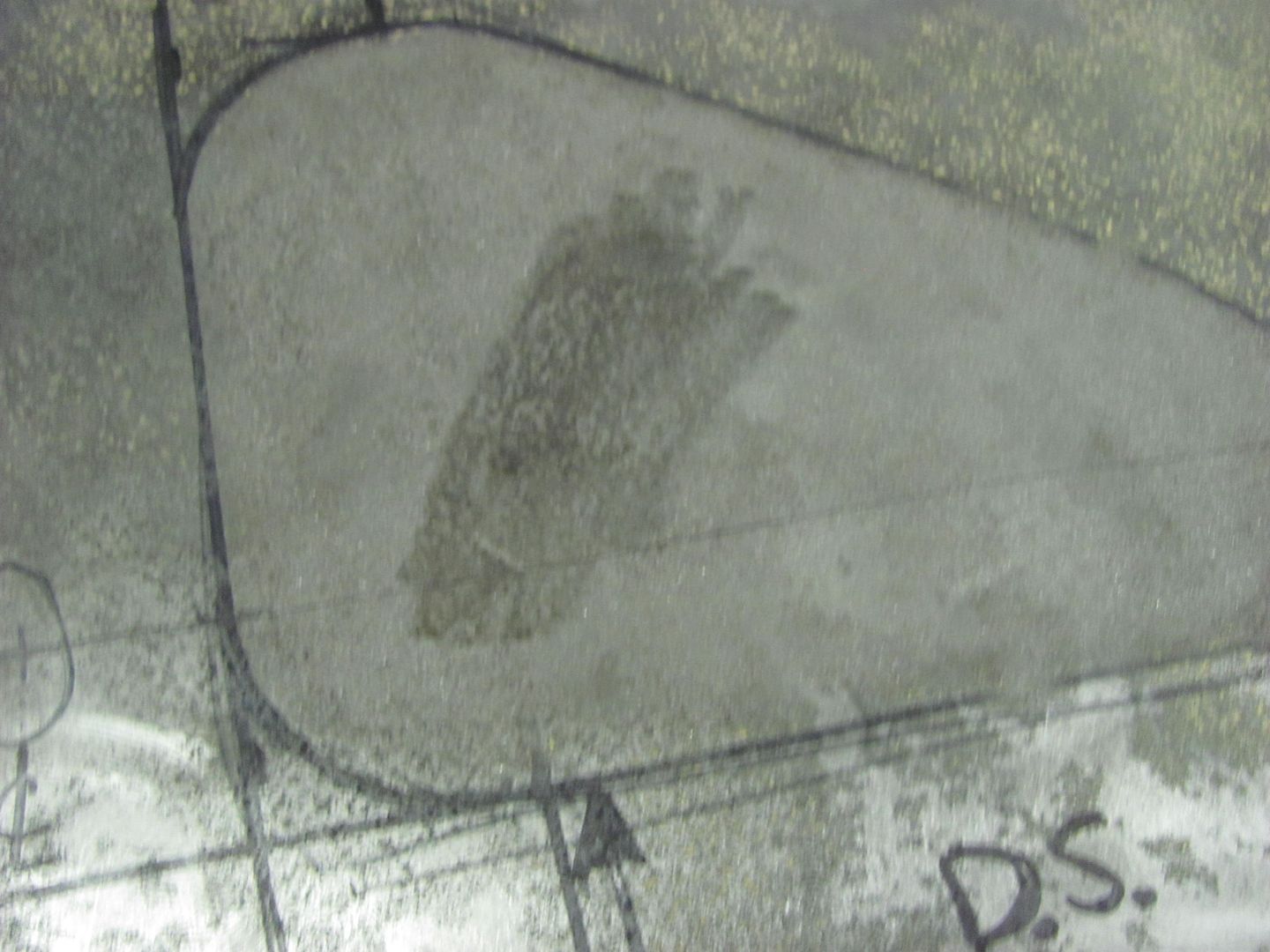
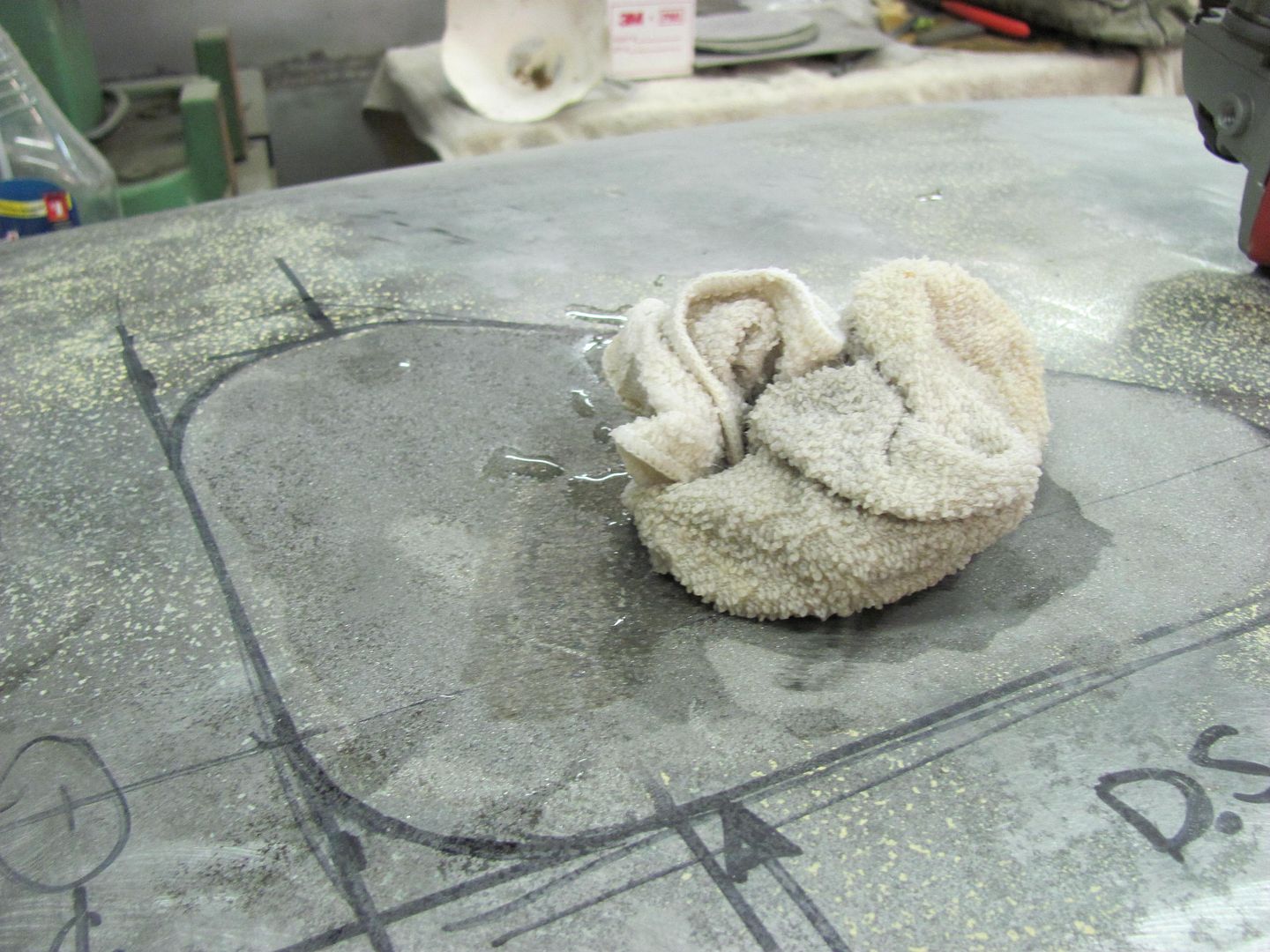
The panel was heated to a light brown color and cooled with a damp rag.


Picture220-1.jpg


....and quickly found that the stud/nut of the grinder hangs too far down to use the disc flat to the panel.


Picture227-1.jpg


So because the grinder is held to an angle to the panel to clear the stud/nut, the panel has a tendency to assume the rounded shape of the leading edge of the disc...


Picture221-1.jpg


So right off the bat, my results will likely not be optimal, than if the spindle area of the disc were better offset to accommodate the spindle nut and permit the use of the flat area. Here is the next high area...


Picture223-1.jpg


...and our cooling device..


Picture224-1.jpg


Looking at the results of the shrinking disc, the use of the disc at an angle appears to have gotten rid of the high spots, but created other issues....


Picture226-1.jpg


It's as if, in much the same fashion as the shrinks from the dent puller's heating tip, we would be better served by working this issue from the back side to better shrink the side that was damaged initially. Flipping the trunk lid over, here is what we see from the back side...


Picture228-1.jpg


Picture229-1.jpg


Since our tool has to be used at an angle due to the spindle, we should have clearance around the inner trunk lid structure. I'm not sure that a larger shrinking disc would permit this ability, but using the tool in the flat configuration would likely not cause the concave issue either. After using the disc from the inside of the trunk, here are the results....


Picture230-1.jpg


Picture231-1.jpg


Picture232-1.jpg


Picture236-1.jpg


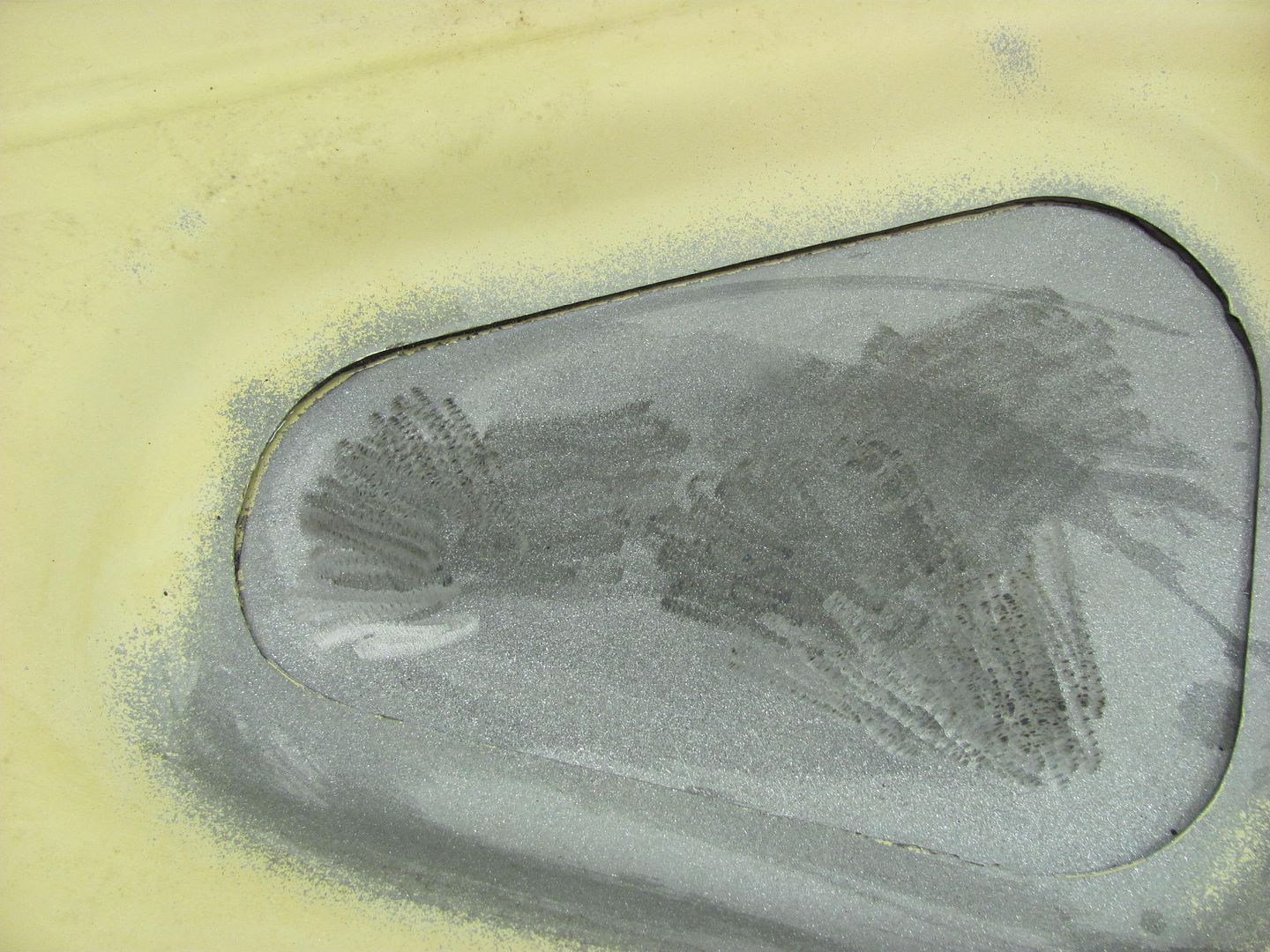
The initial check on the outside shows some minor concave issues where we used the disc from that side...


Picture234-1.jpg


Following the success I had with the hammer and shot bag on the other test area, I thought I'd use it here as well


Picture241.jpg


Picture237-1.jpg


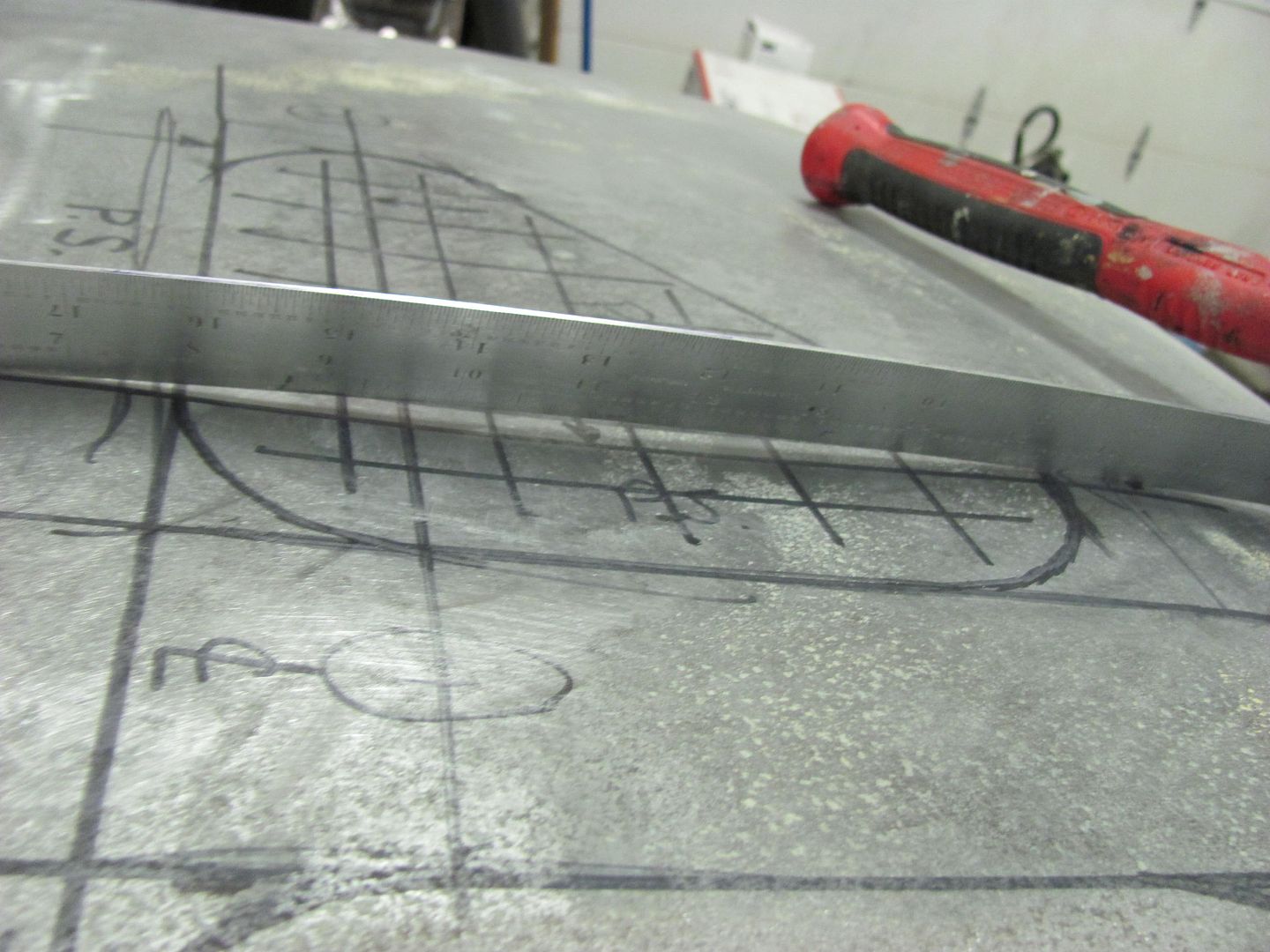
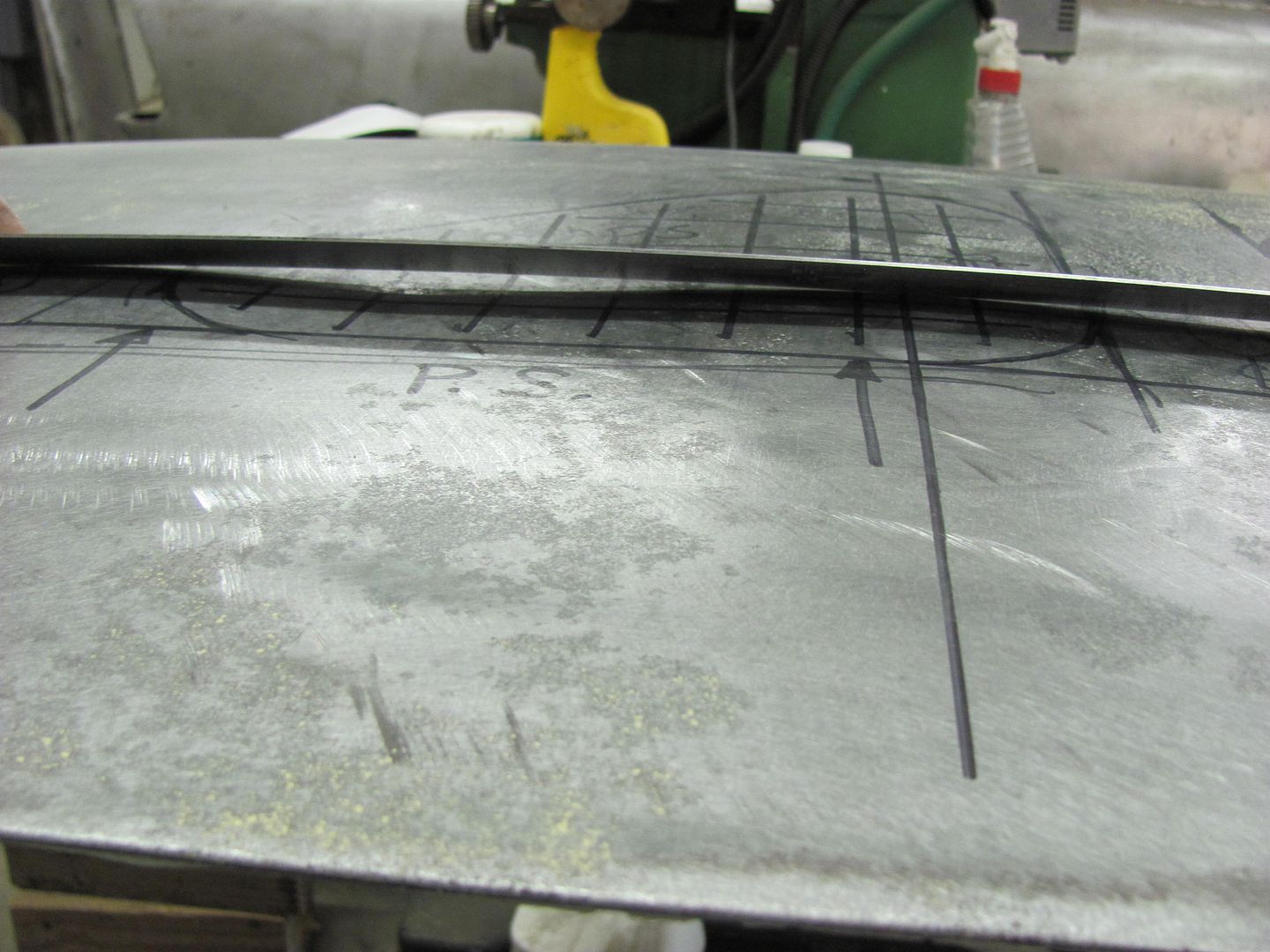
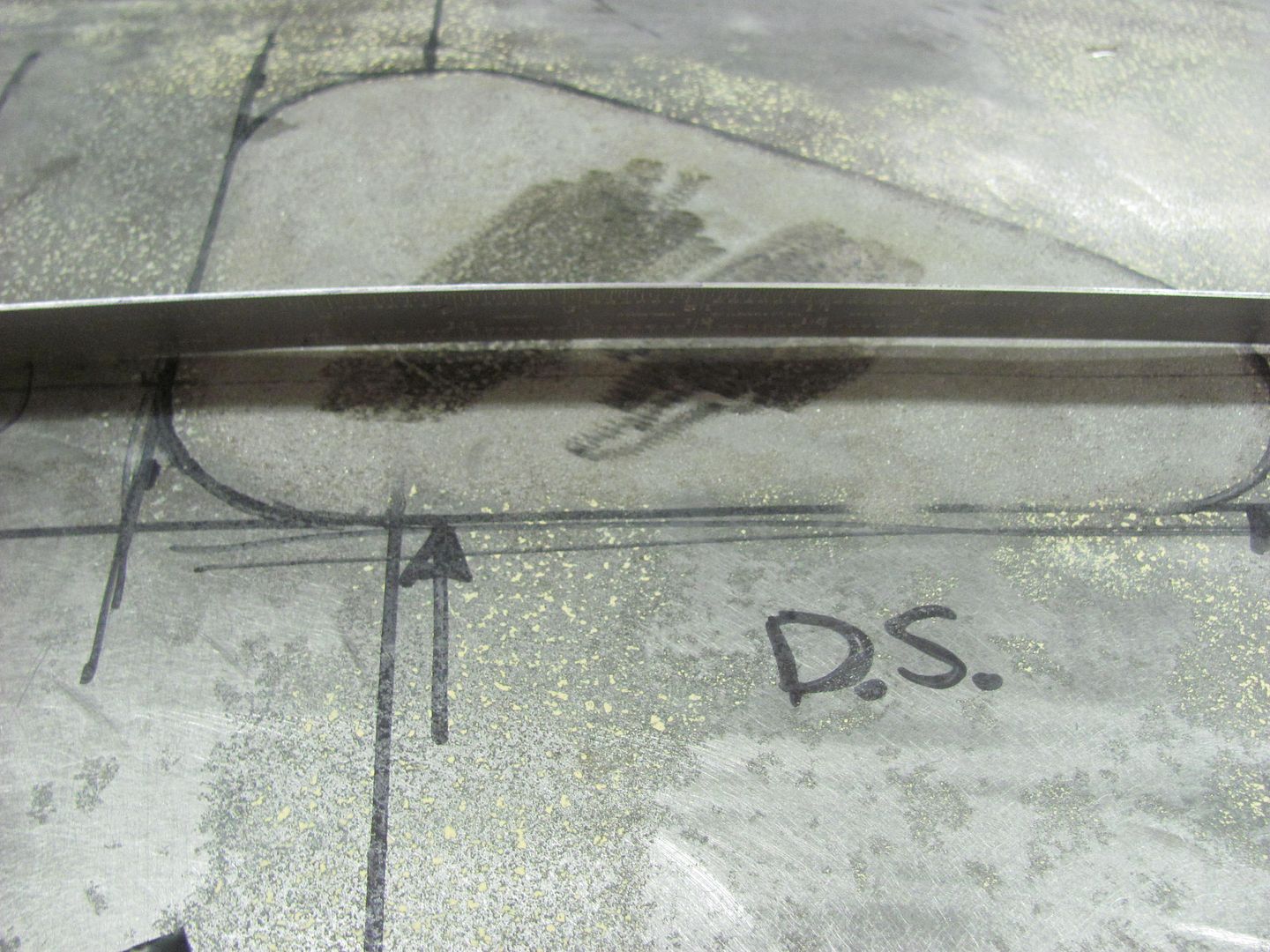
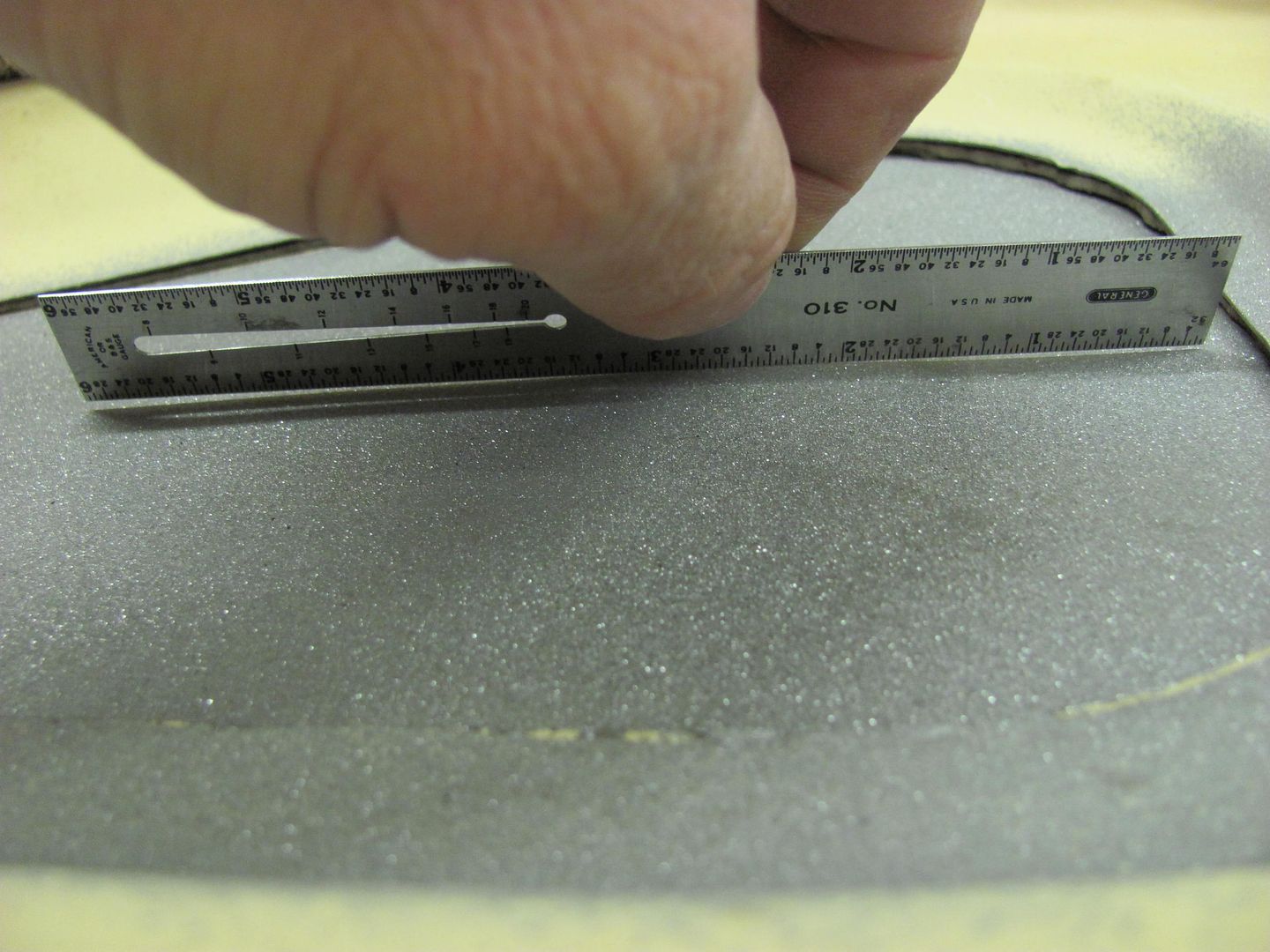
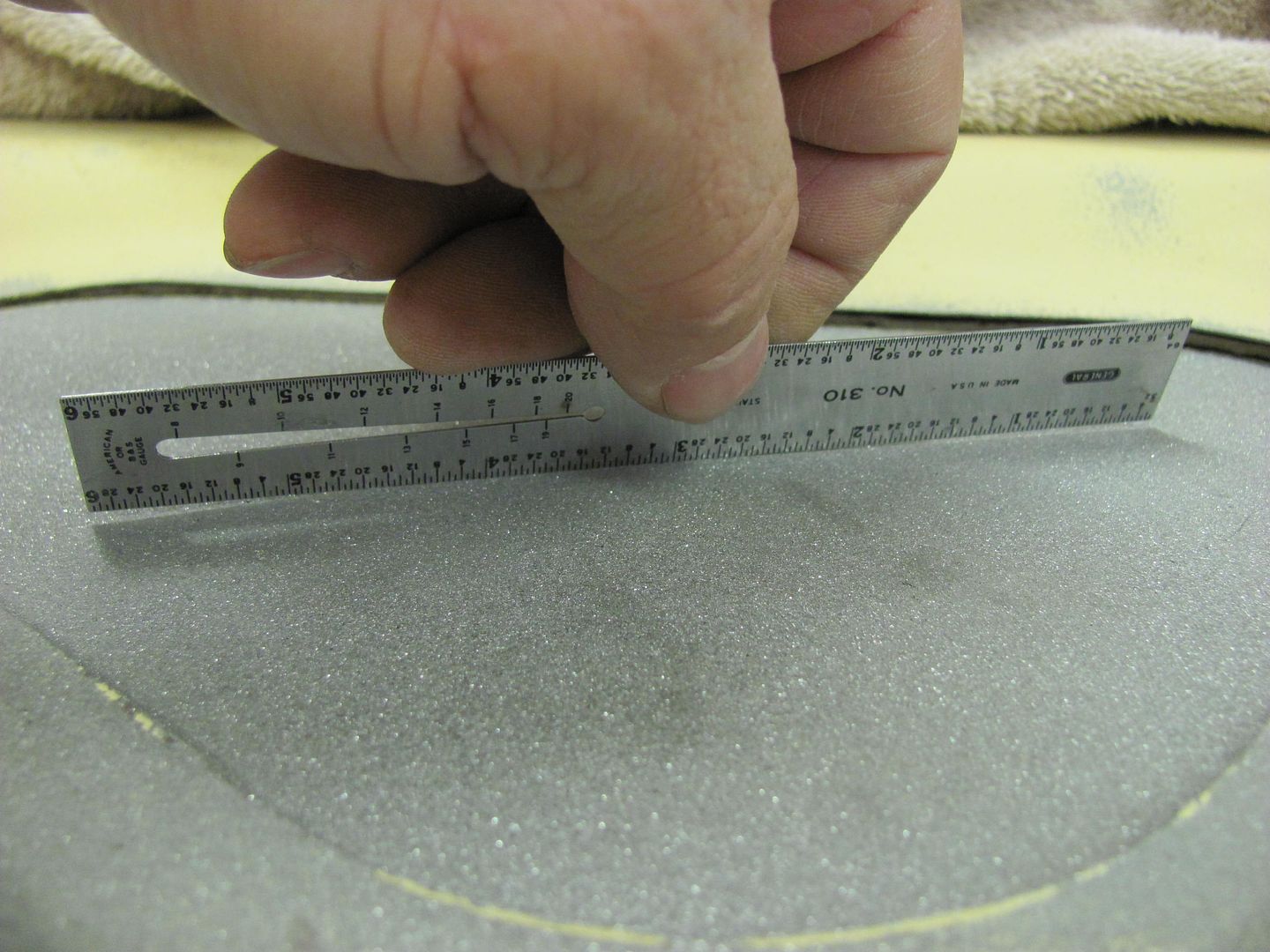
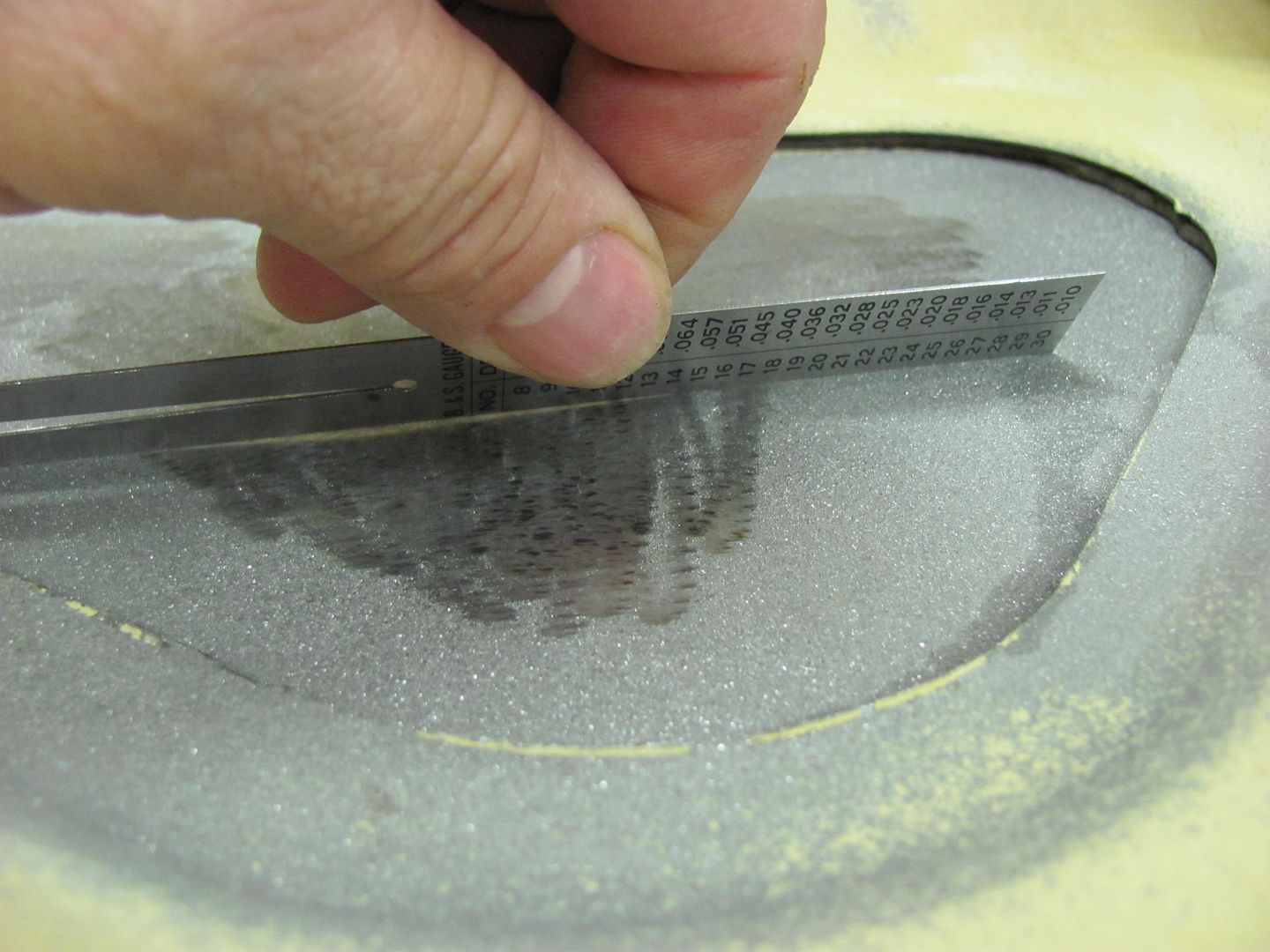
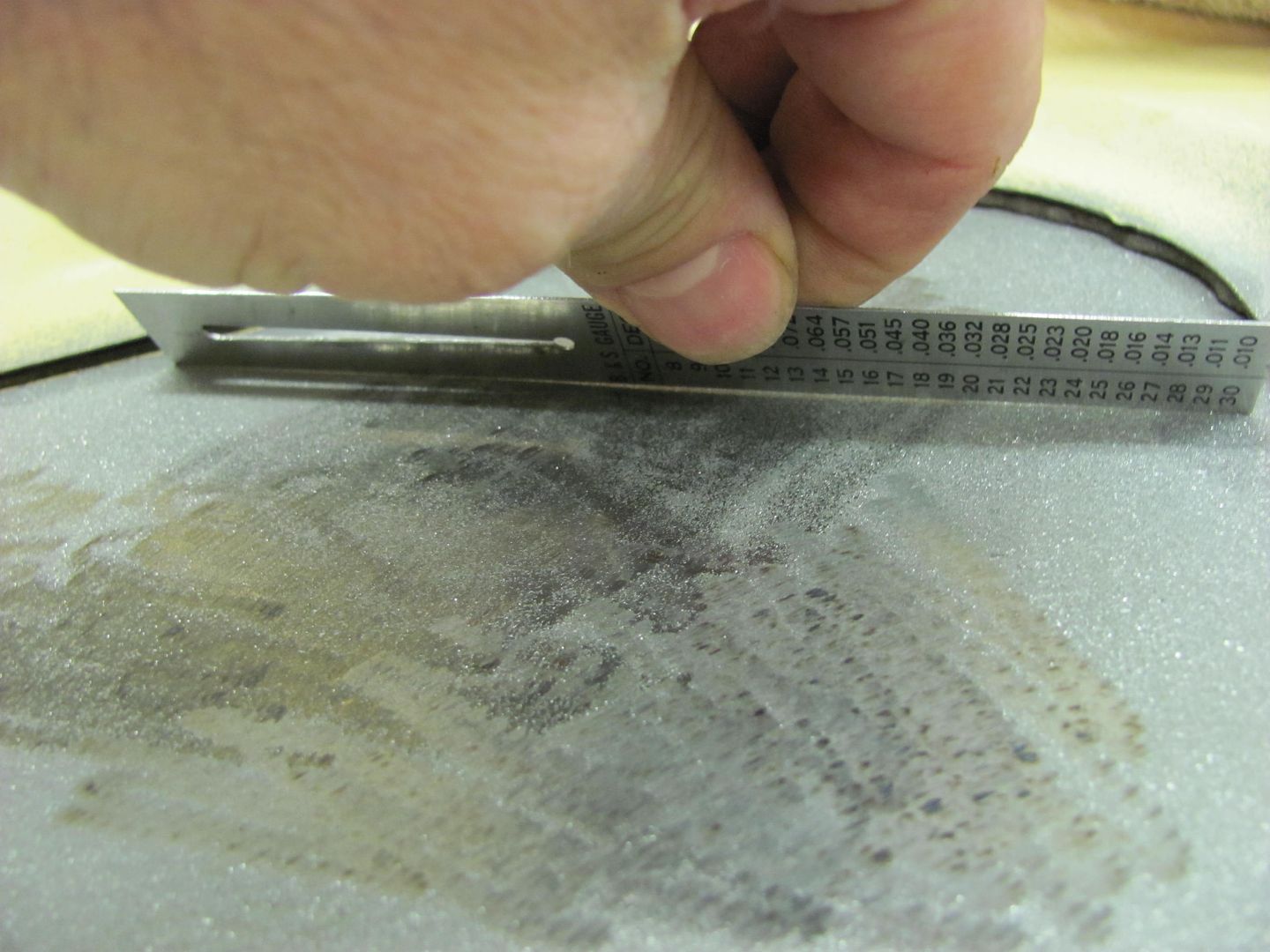
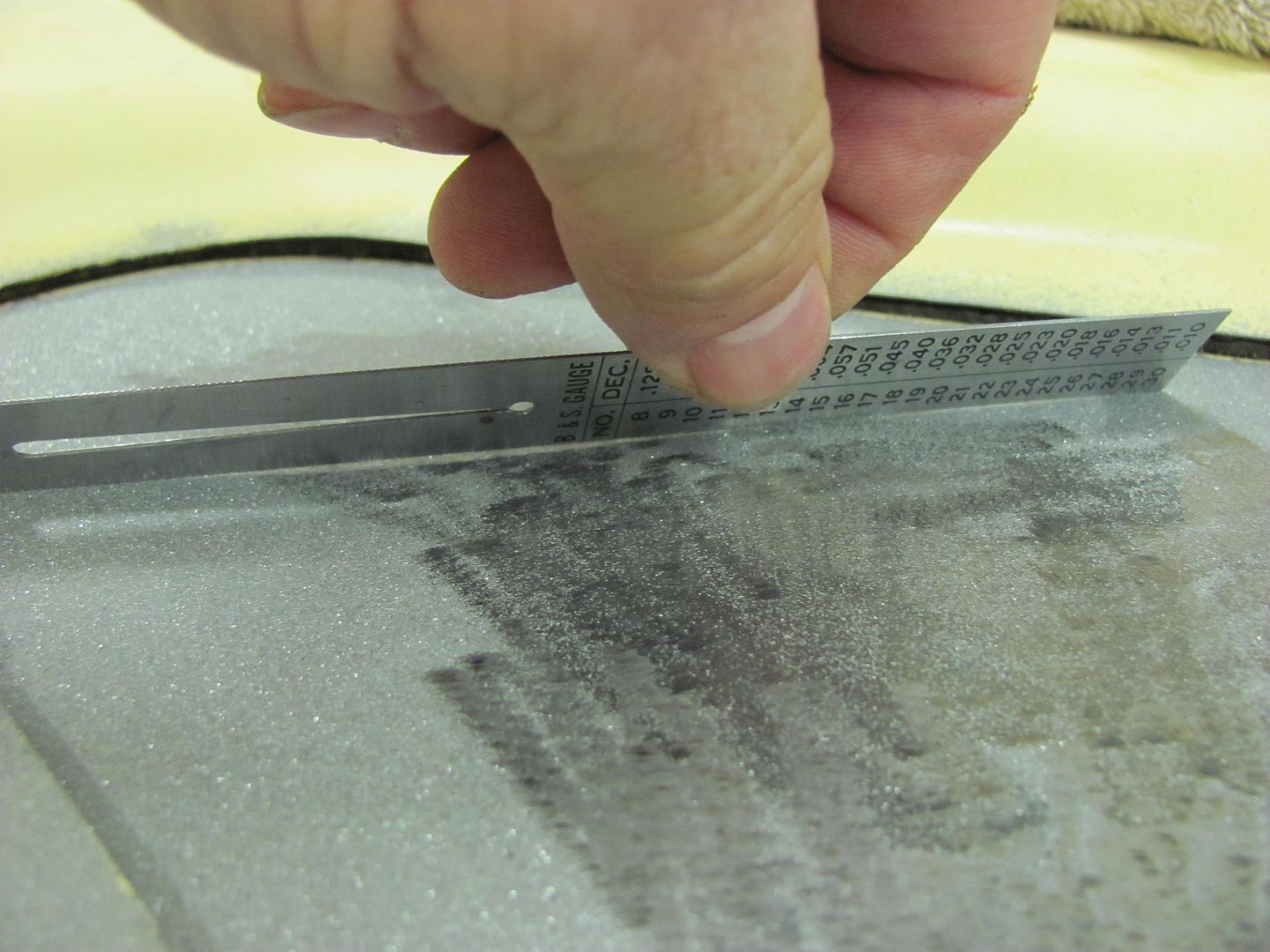
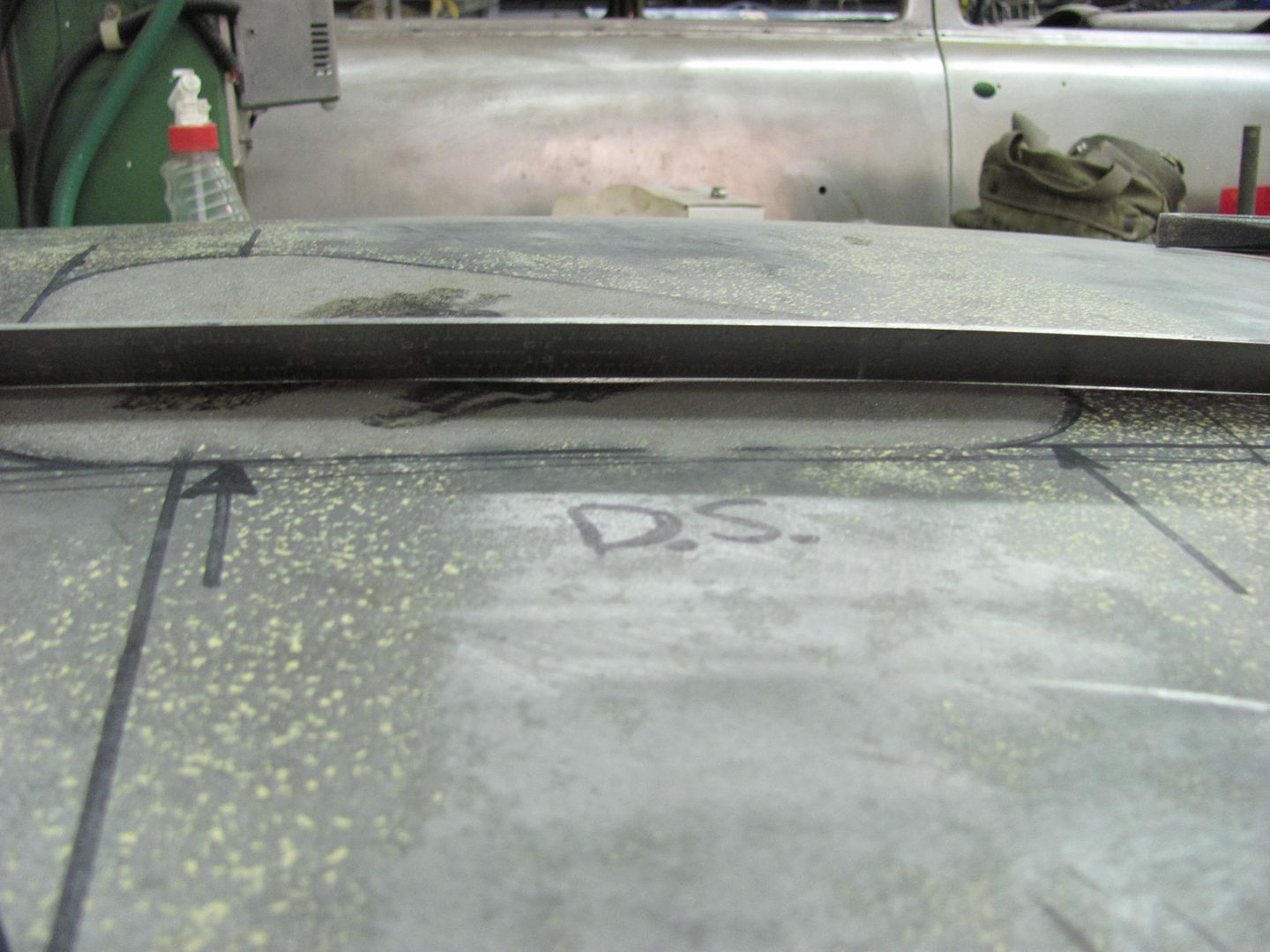
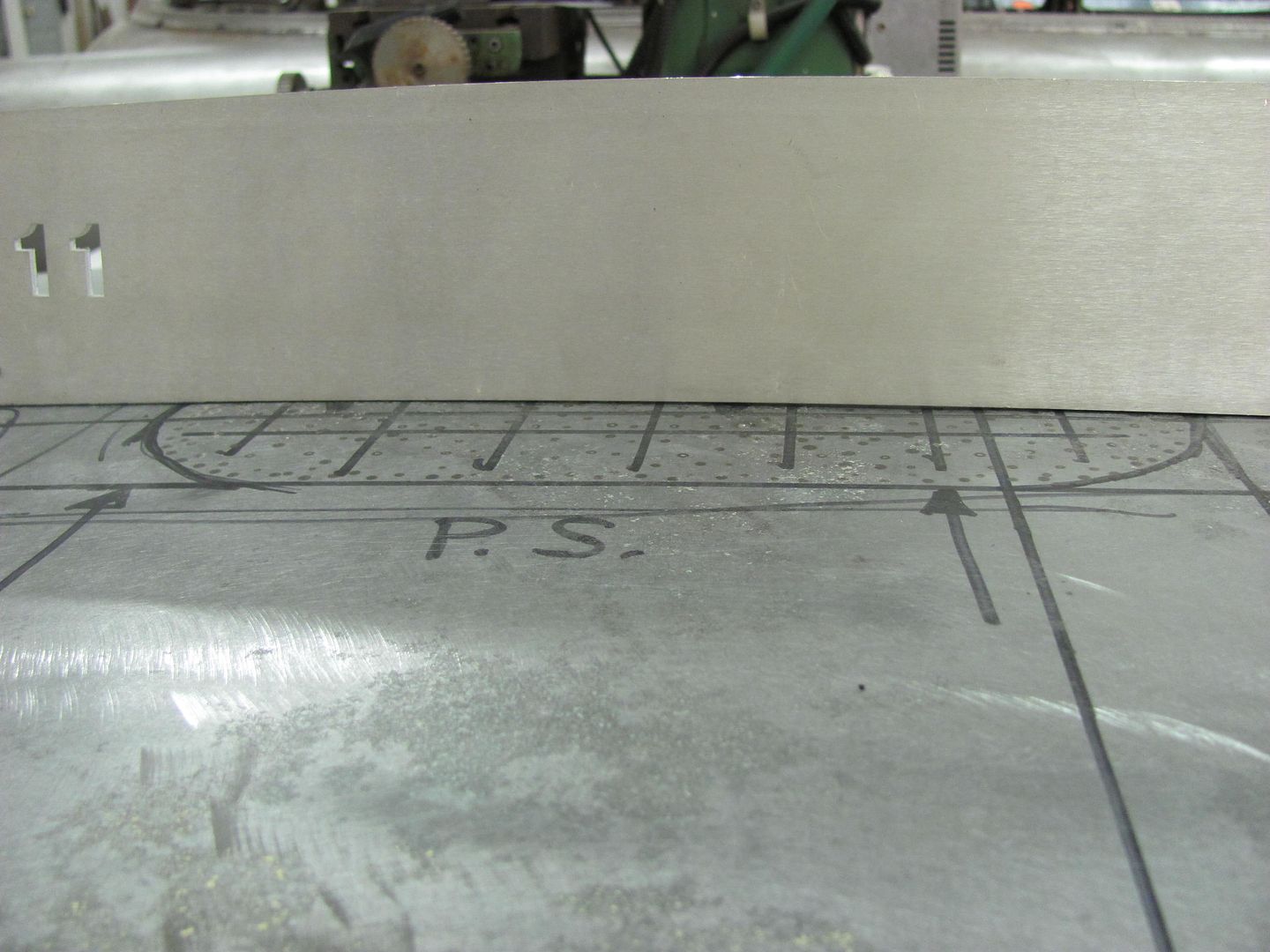
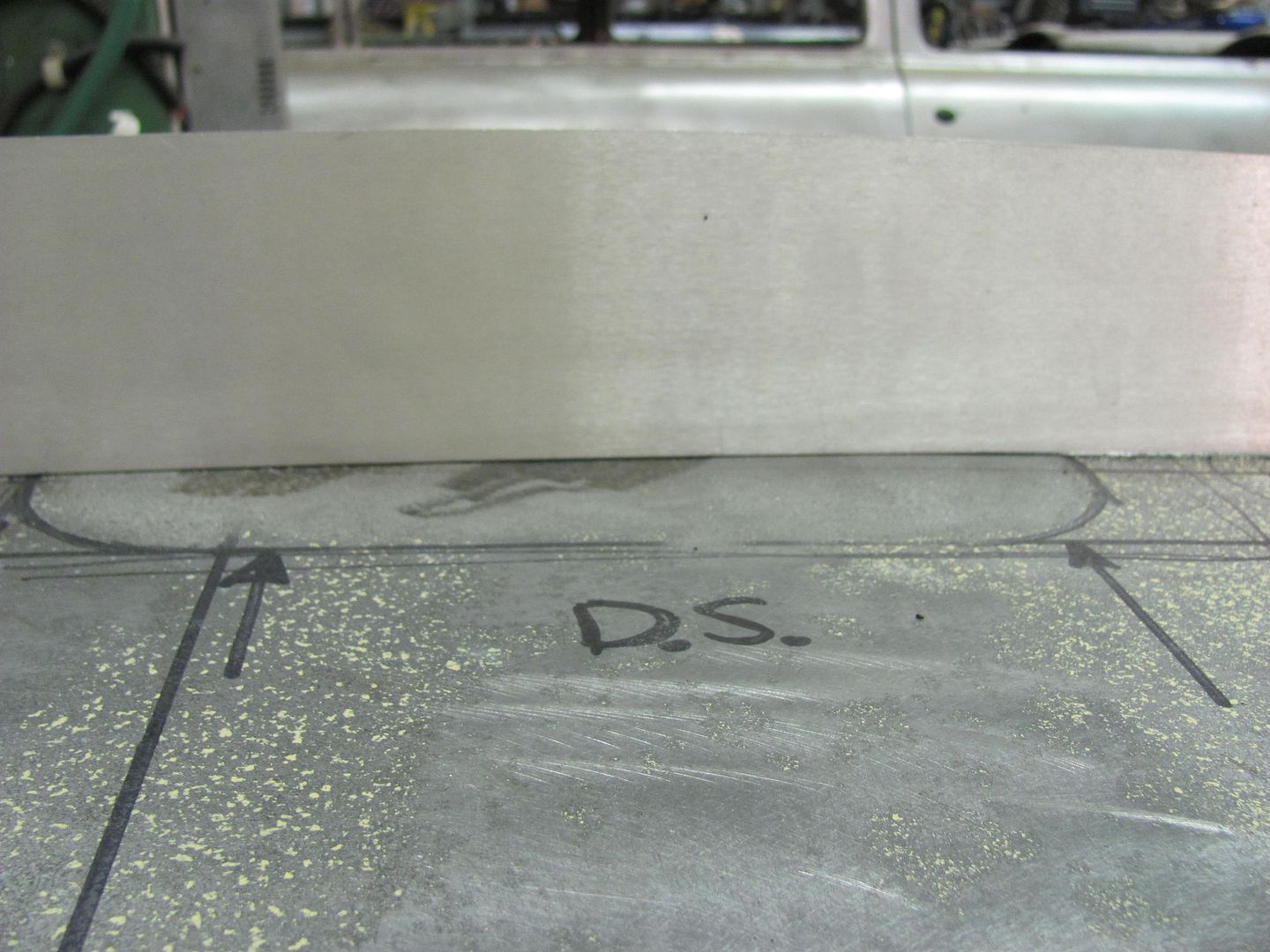
In checking the area towards the forward edge of the trunk lid, a number 11 sweep seemed to match it pretty well, so we'll use that to check across the entire area...


Picture238-1.jpg


Picture239.jpg


Picture240.jpg


Where it's certainly not perfect, it wouldn't take much more to get it to that "high build fix" stage.


Having used the three different methods, I think the shrinking disc was the quickest at showing results, but due to the fact we couldn't use it flat, it did cause other issues to address. But, this also allowed us to use it from the back side, where a flat only disc (or one of the larger ones) may have been a challenge. One of the larger discs used flat, may have been more suitable if you could hold the oil can in the outward position. Overall, IMO the disc works too quickly to be able to closely monitor the operation and keep results consistent throughout.


Using the heating tip on the dent puller from the damaged side, IMO was very effective at returning the damage area to the original crown, with a small shot bag coming in handy for some of the "fine tuning". With as many shrinks as were needed, it is a slow, controlled process, and thus a bit easier than the shrinking disc in monitoring the progress. One would need a quality tool for as many shrinks as were used, or be sure to let it cool off once it gets good and warm. Where this process did show more promising results when used on the damaged side, you can also fix this type of damage with a torch. But if you have access enough to the backside with a sandblaster to damage something, then it should also leave plenty of room for the dent puller's heating tip for repair.


The donut dolly works well in that the nature of the operation is moving the panel back in the direction the panel belongs. This also is a slow, controlled process as compared to the disc, so it makes it easy to monitor the progress. This does require access to both sides of the panel, and is most effective with accurate alignment of the hammer strikes centered on the dolly. So if you see yourself having difficulty in this alignment, perhaps one of the other "one sided" repair apllications would work best for you. The only thing I think may have helped more in using this tool would have been to use the small shot bag instead of the hard dolly when I was attempting to planish remaining low spots.
 

JTH

Well-known member
Joined
May 4, 2012
Messages
167
Location
MO Ozarks
Wow! I've learned more about sheet metal work from you than years of being around folks in the business. They were competent and knew what worked, they just didn't have the ability communicate what they were doing like you have here. Thank you very much! I sure hope there's a young person around you learning all you do. It's a shame there are so few craftsmen left in many fields. Thanks again. JT
 

TimeWarpF100

Well-known member
Joined
Aug 21, 2010
Messages
6,784
Location
not here
I am not a proponent of using POR type products except in the case of inaccessibility in void areas where you can't get to for proper media blasting or abrading for using epoxy primer. So this would limit their use to areas that are not exposed or areas that will not get top coated. Even then there is no guarantee for success as these type products promote shortcuts.
;)

I am totally with you on that Robert. Any time I see use of POR type products it makes me cringe.

If I am reading a post and I see it being used on a frame etc I just skip to next post. Its all about making a shortcut. Covering over rust is just not my cup of tea . .

I did something similar but not nearly to the extent as your '55 decklid.

I have seen numerous pieces ruined by blasting. The deck lid on my current '56 Belair project was blasted and really messed it up. Another on a 427 Galaxie deck lid and hood were pretty much ruined and ended up replacing them. At the time here in az I bought another very nice and complete 64 Galaxie for 400.00 took what I needed and sold the rest for more than 400.00

All the Stainless trim was pretty much perfect too so made quite the haul in parts source.

Love your work!
 

awdblazer

Well-known member
Joined
Oct 17, 2011
Messages
1,100
Location
winnipeg, manitoba, canada
MP&C dont take this the wrong way dont know how to say it properly
but your lazer thermometer you are using it wrong
you had your emissivity set to .95 for the painted metal and the same for bare metal
i took a week long course of infrared training
you have to change the emissivity for every different type of finish out there
if you wanted to just leave it at .95 put a piece of 3m 33 or 88 and point the gun at that
you might have had more than 1.8 degrees of difference there
not trying to knock you your work is always amazing
 
OP
M

MP&C

Well-known member
Joined
Oct 21, 2009
Messages
4,396
Location
Leonardtown, MD
Thanks for the clarification, I had a one minute crash course when I borrowed it that basically showed me how to turn it on. I didn't cover the methods I used in the measurement in very good detail, but the first temperature was taken on painted surface. I then changed out the media, blasted a small area, and stopped. I paused as I thought about the temperature change that may have occurred with me having the garage door open, as well as the media cabinet while I changed the media to the black beauty. So the second temperature was taken with the laser pointed at the small bare spot I had just made, with no visible deformity to the panel. The third temp taken was aimed at a larger, now warped bare spot. I would add that I did check it by finger touch as well, and as cool as the panel still was after showing the warping effects, the thermometer couldn't have been too far off if it was off at all. So throwing out the first temp, the second two were in fact tested on the same bare metal. Given that, would the second two temps have been accurate in your opinion?

Thanks!

Here is the thermometer we'll be using today....


Picture160-1.jpg


And here is the baseline temp.....


Picture161-1.jpg


This is the media we'll be using today, Black Beauty medium grit. A bit coarse for sheet metal, but we're trying to duplicate the damage seen on Joe's trunk lid, so we'll give it a go.....


Picture162-1.jpg


Then I changed out the media in the cabinet, and started blasting. As I had opened the garage door and it's rather warm out, and I was rather slow in getting the media changed out, I thought I should check the temp again.


Picture163-1.jpg


After clearing off the one hole, we had noticeable panel distortion from the outside. In checking the temp again, it had not moved since the last check.


Picture164-1.jpg
 
Last edited:
To avoid these ads, REGISTER NOW!
OP
M

MP&C

Well-known member
Joined
Oct 21, 2009
Messages
4,396
Location
Leonardtown, MD
Some more cleanup work on the roof weld, didn't get much for in process pictures, but then this part gets pretty boring anyhow...


Picture675.jpg


Picture676.jpg


Inside...


Picture677.jpg


I'm pretty pleased with how it turned out this time. Still has some metal bumping needed to address some highs and lows, which we'll work on next time in the shop, as well as welding in the last pieces of the lift gate..
 
OP
M

MP&C

Well-known member
Joined
Oct 21, 2009
Messages
4,396
Location
Leonardtown, MD
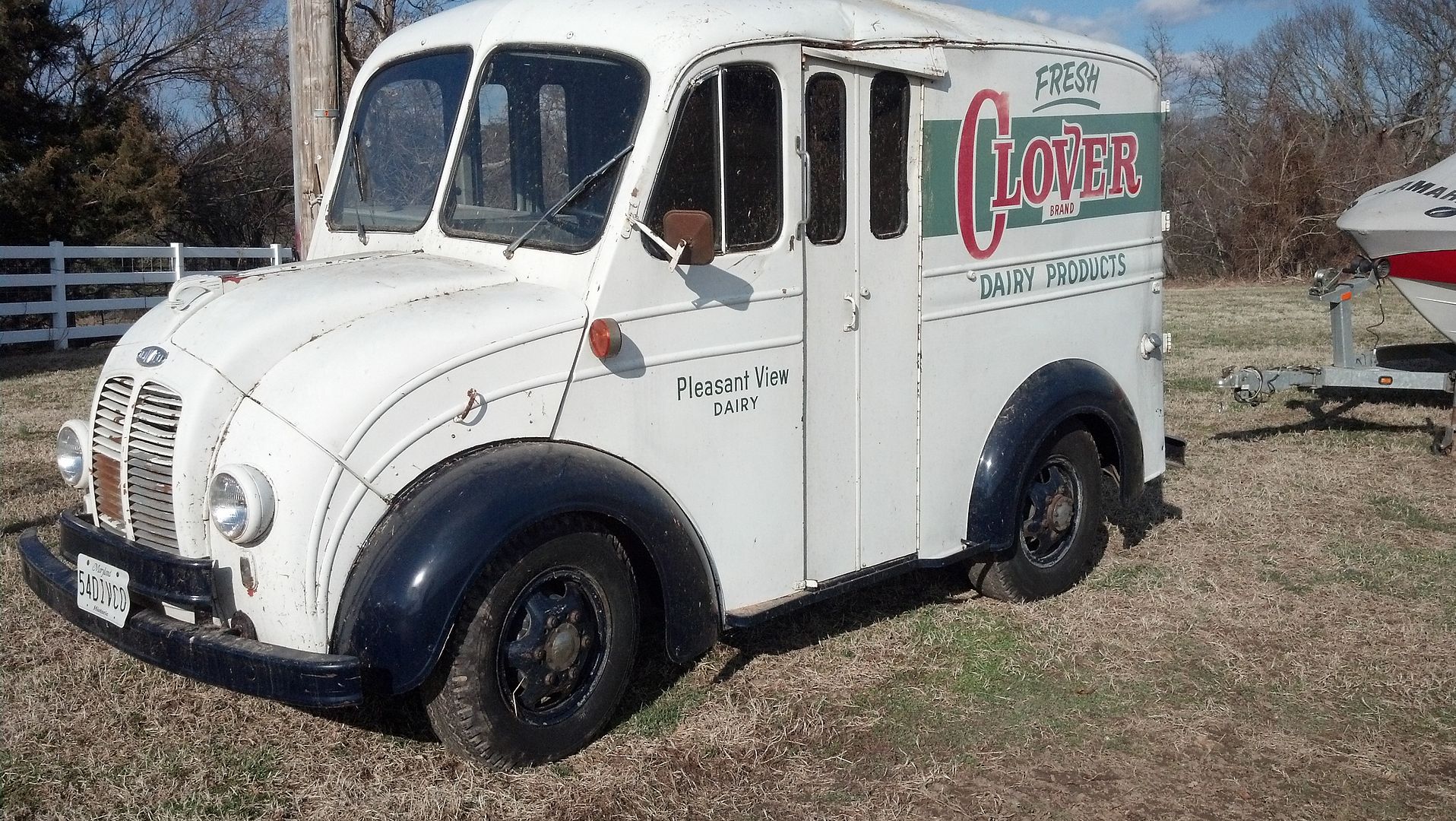
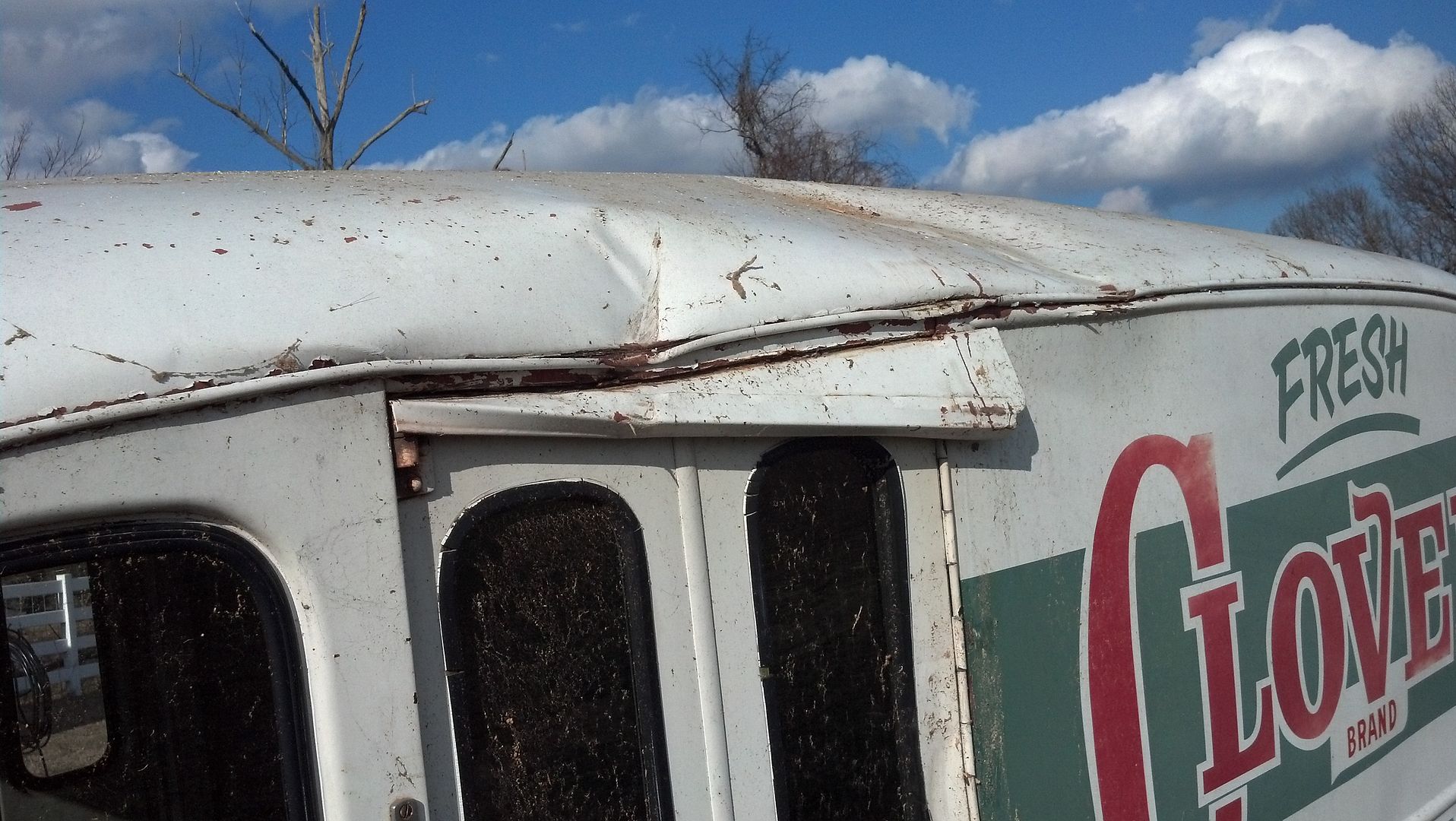
Well the Divco has been removed from the barn rubble so I went and got a better overview of the damage. To give a perspective, this is the truck.....


2014-02-26_017.jpg


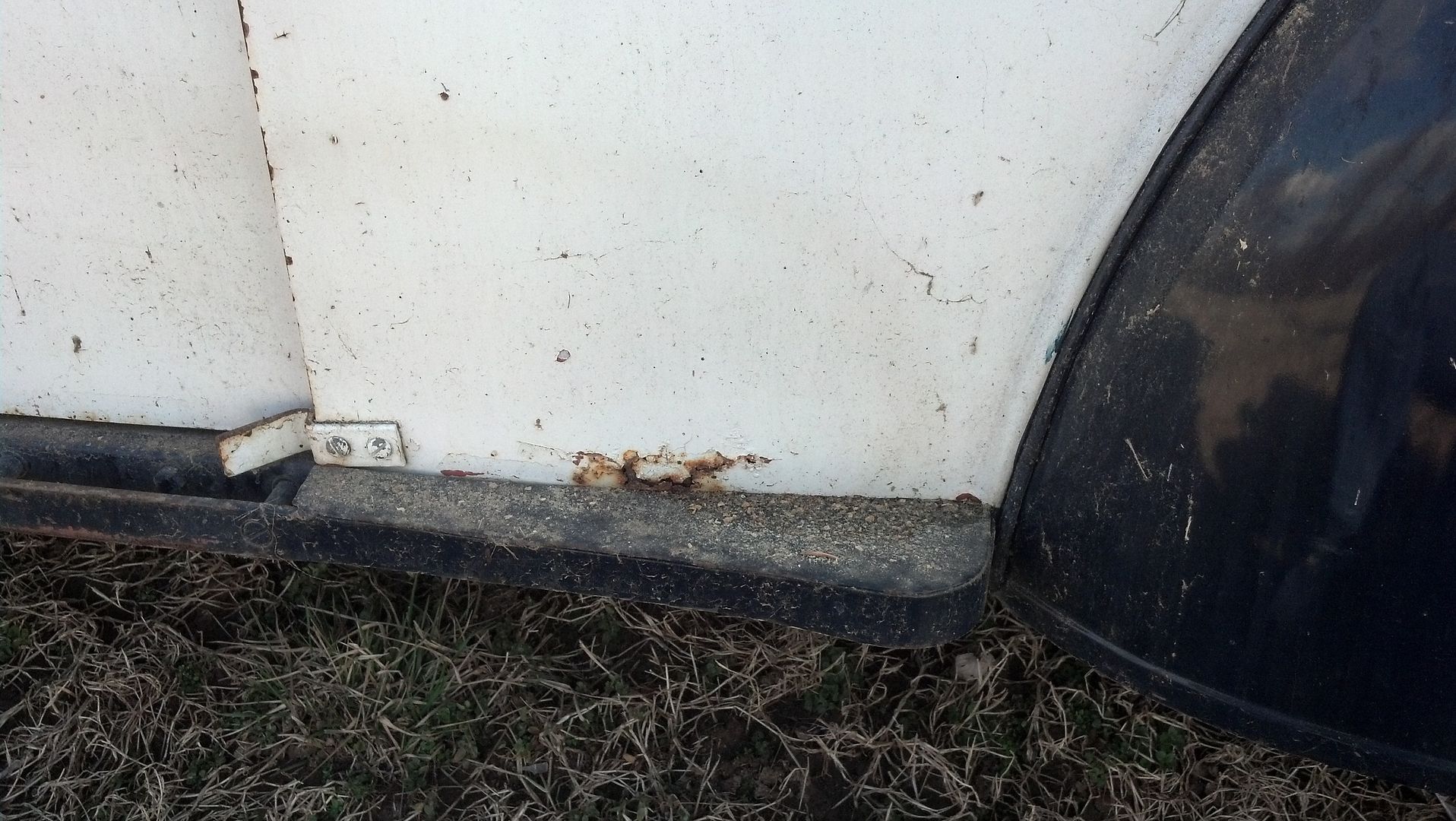
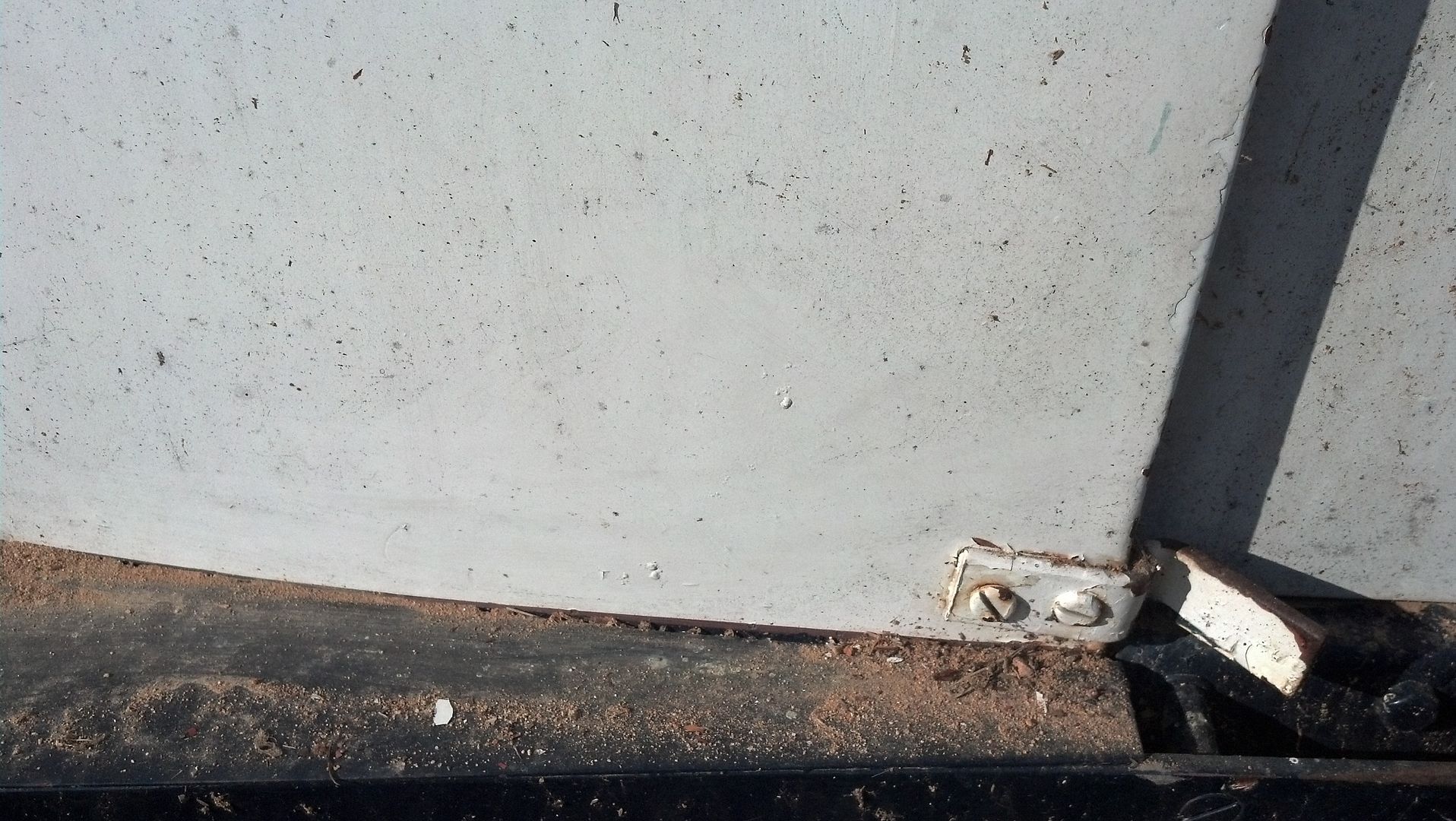
The only damage that needed repair prior to the barn blowing over, were these two rust spots, the first in front of the passenger side door, and the second, the bubbling coming through just in front of the driver's door...


2014-02-26_018.jpg


2014-02-26_021.jpg


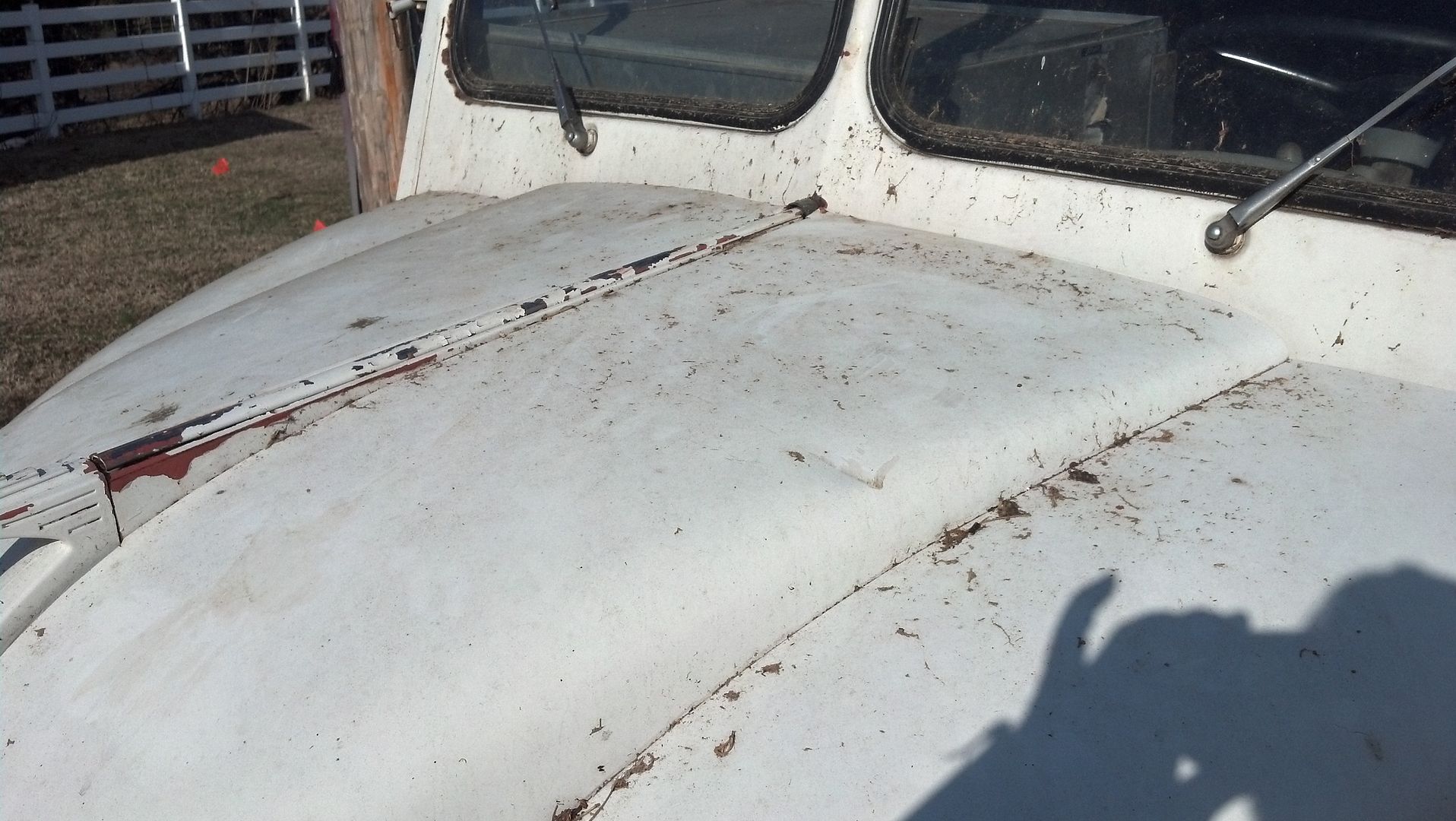
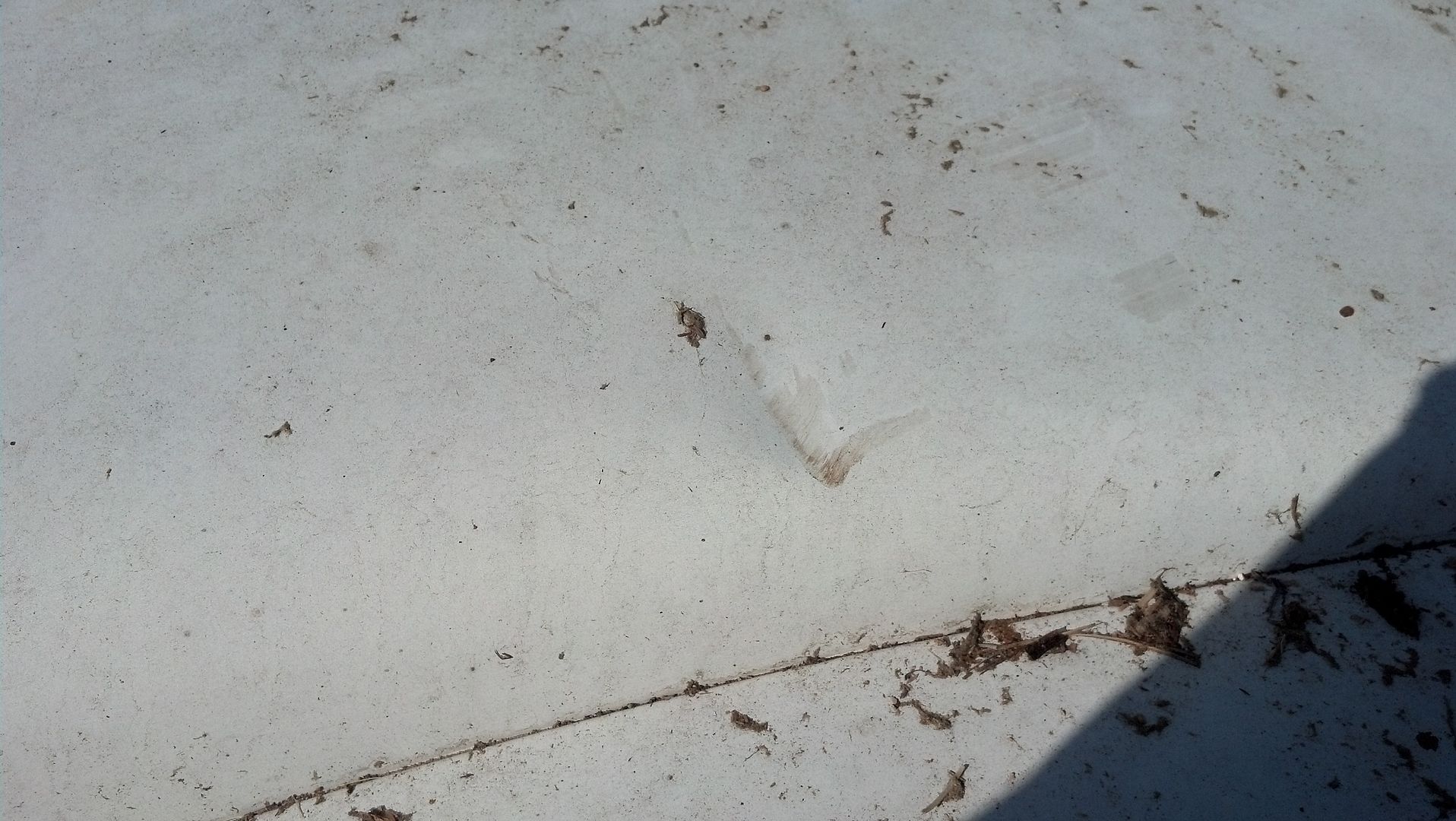
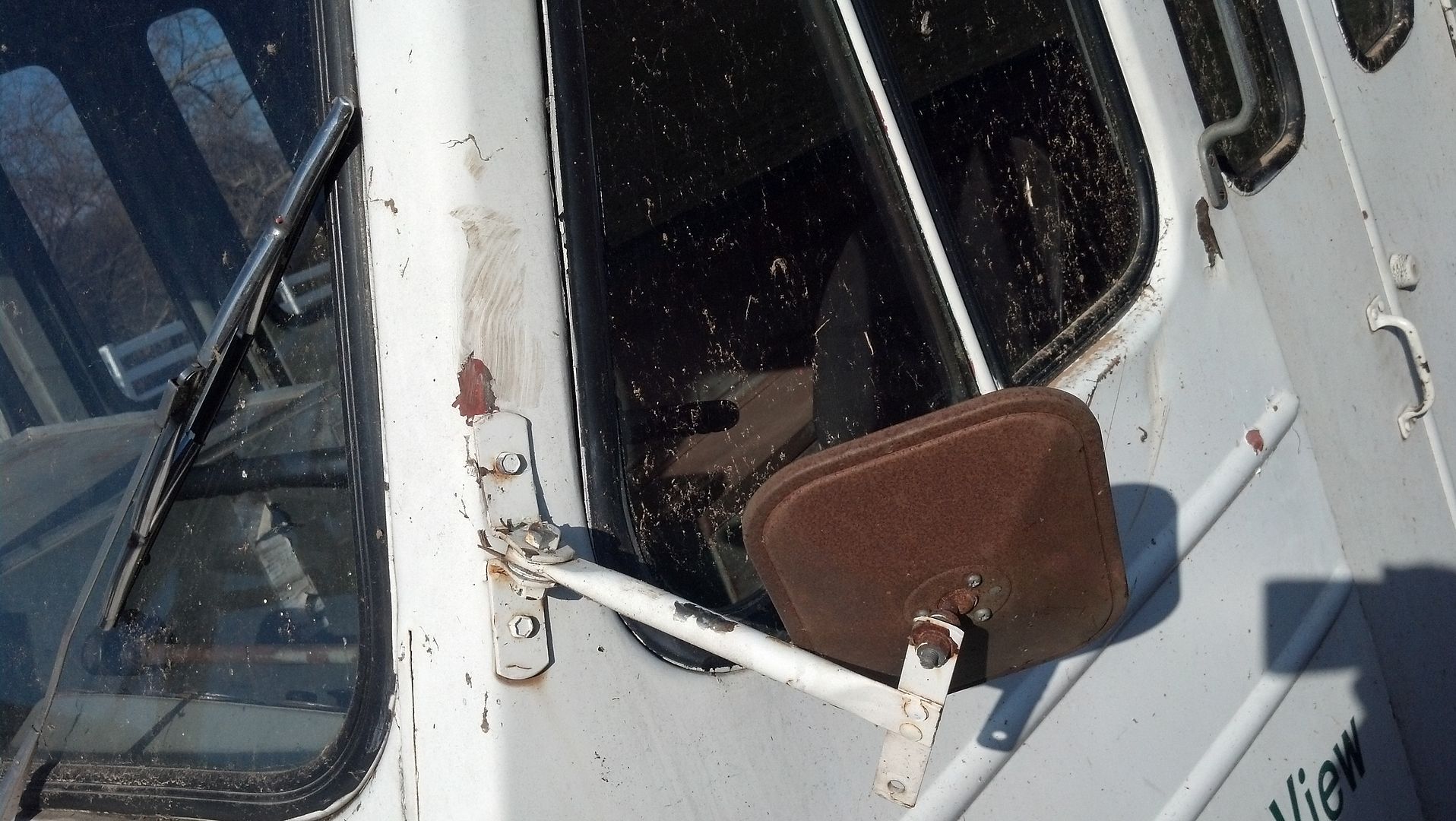
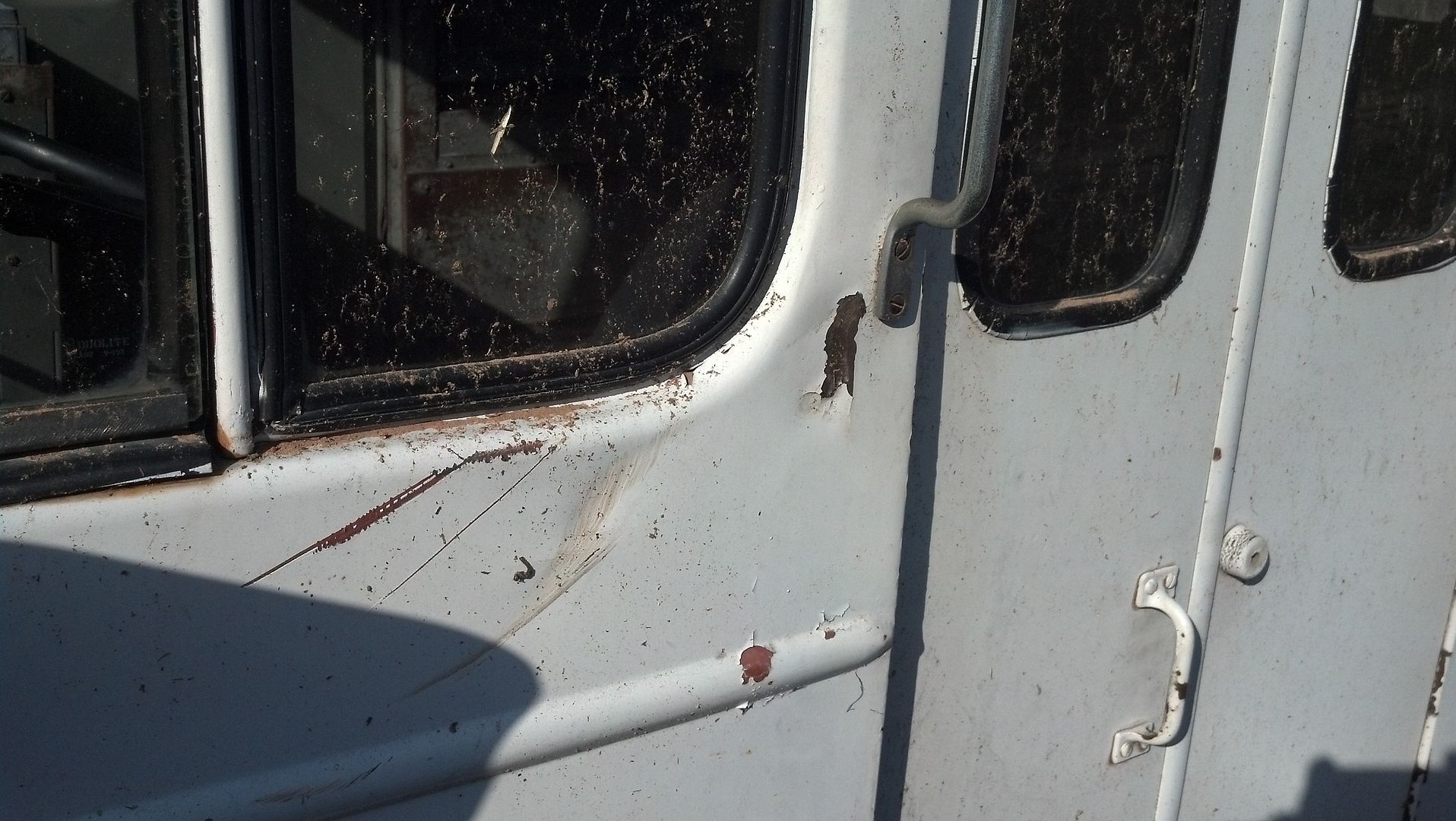
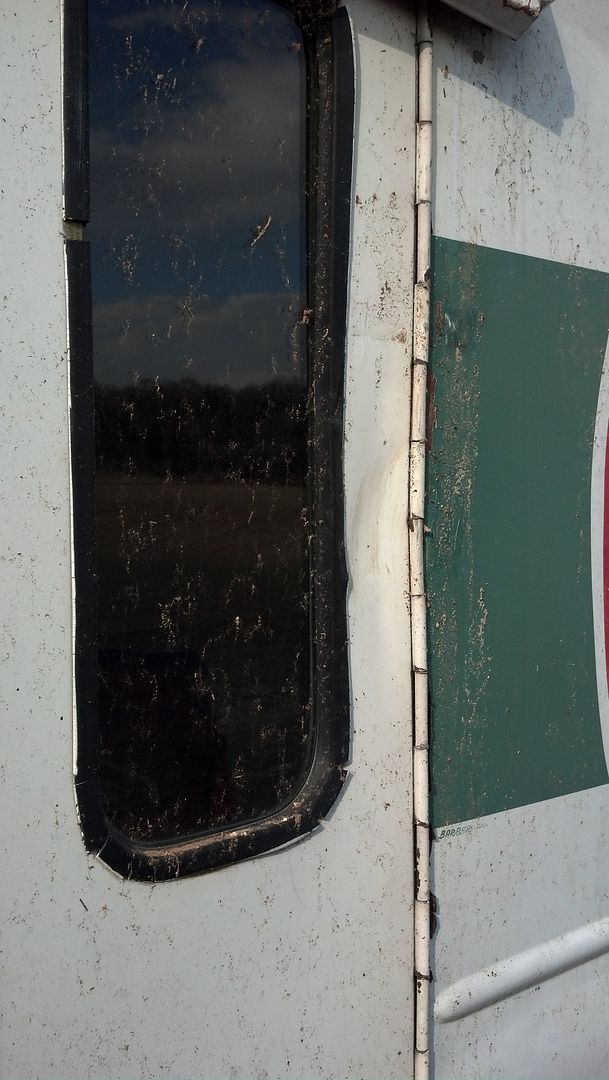
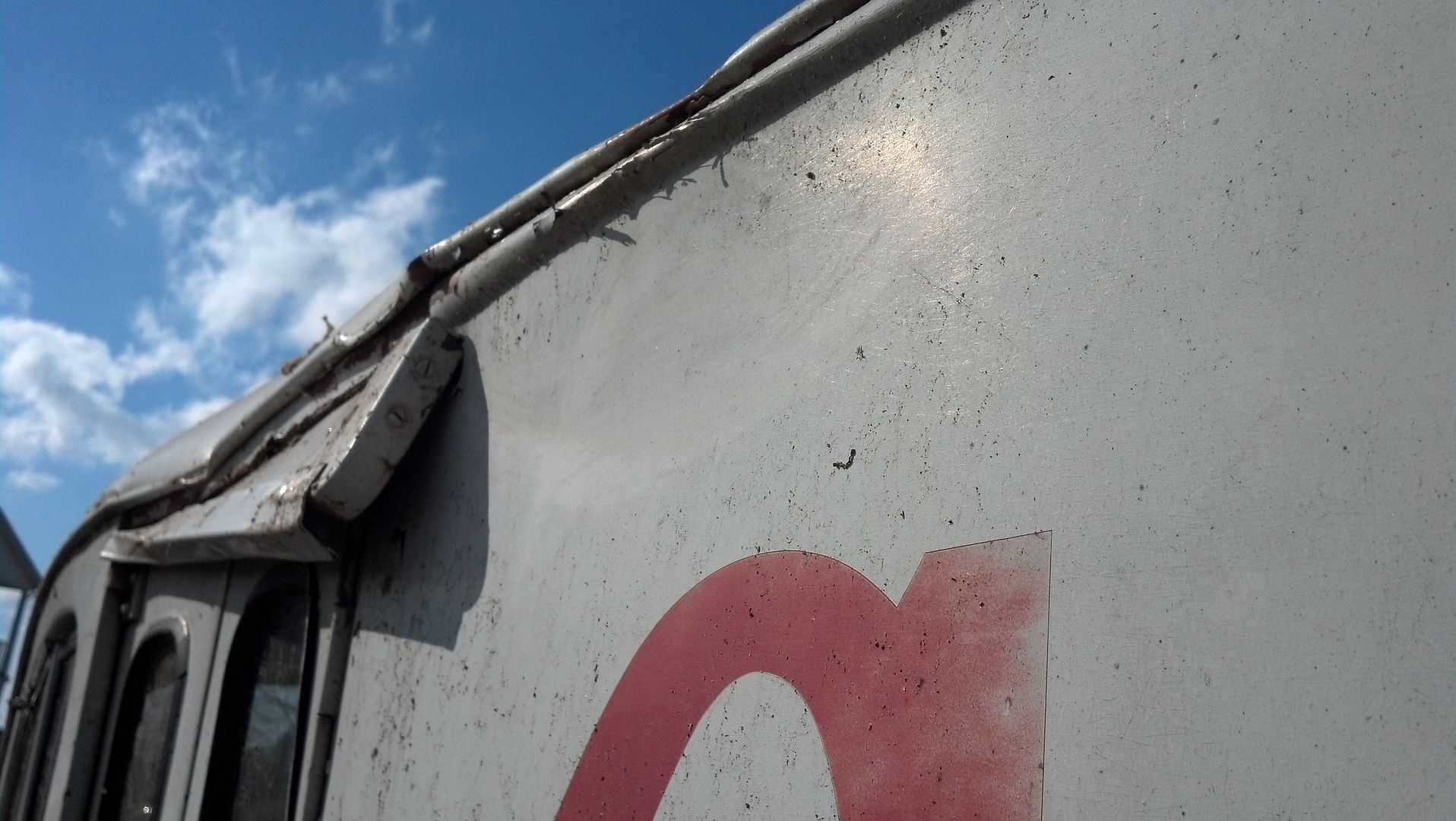
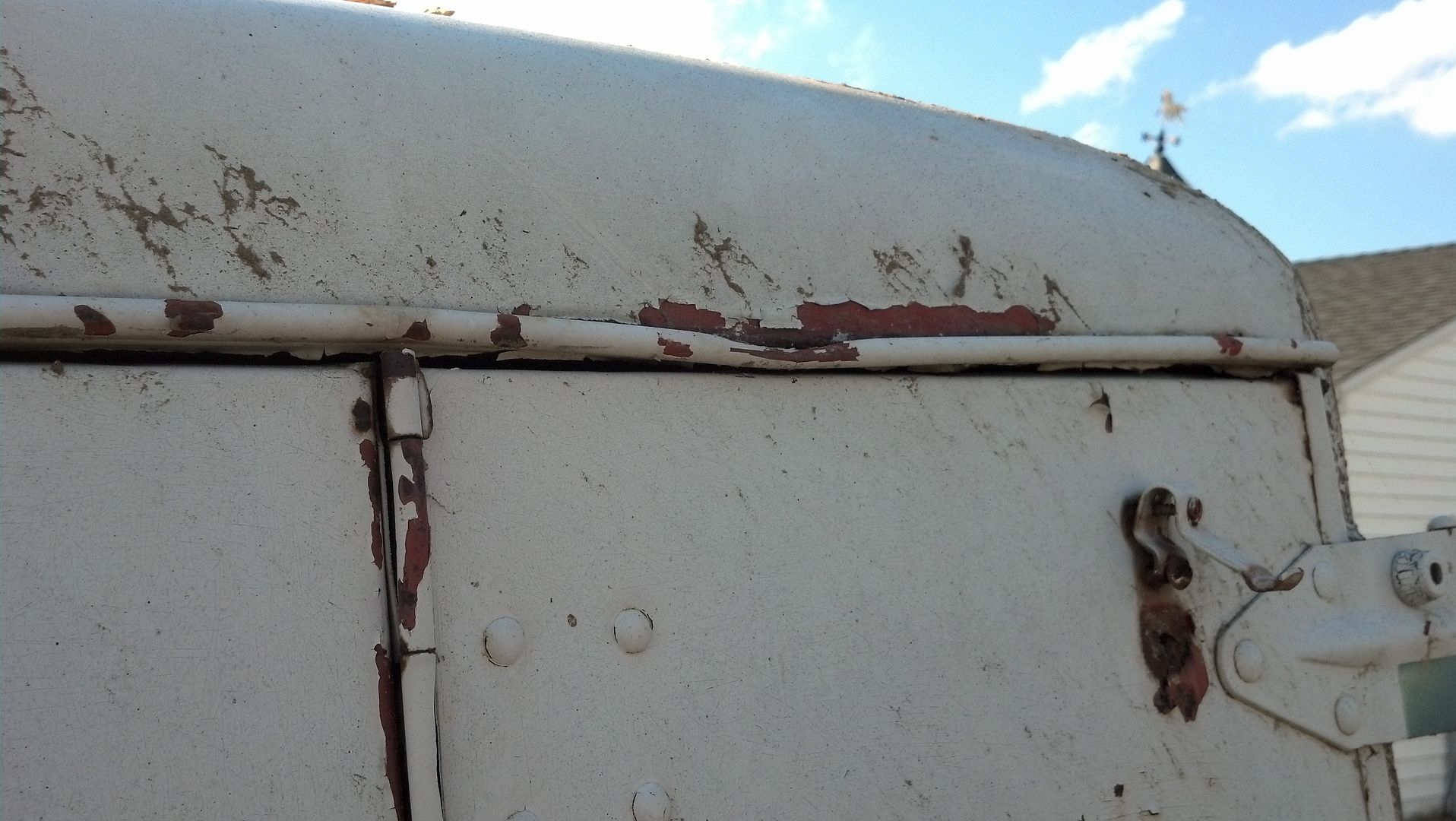
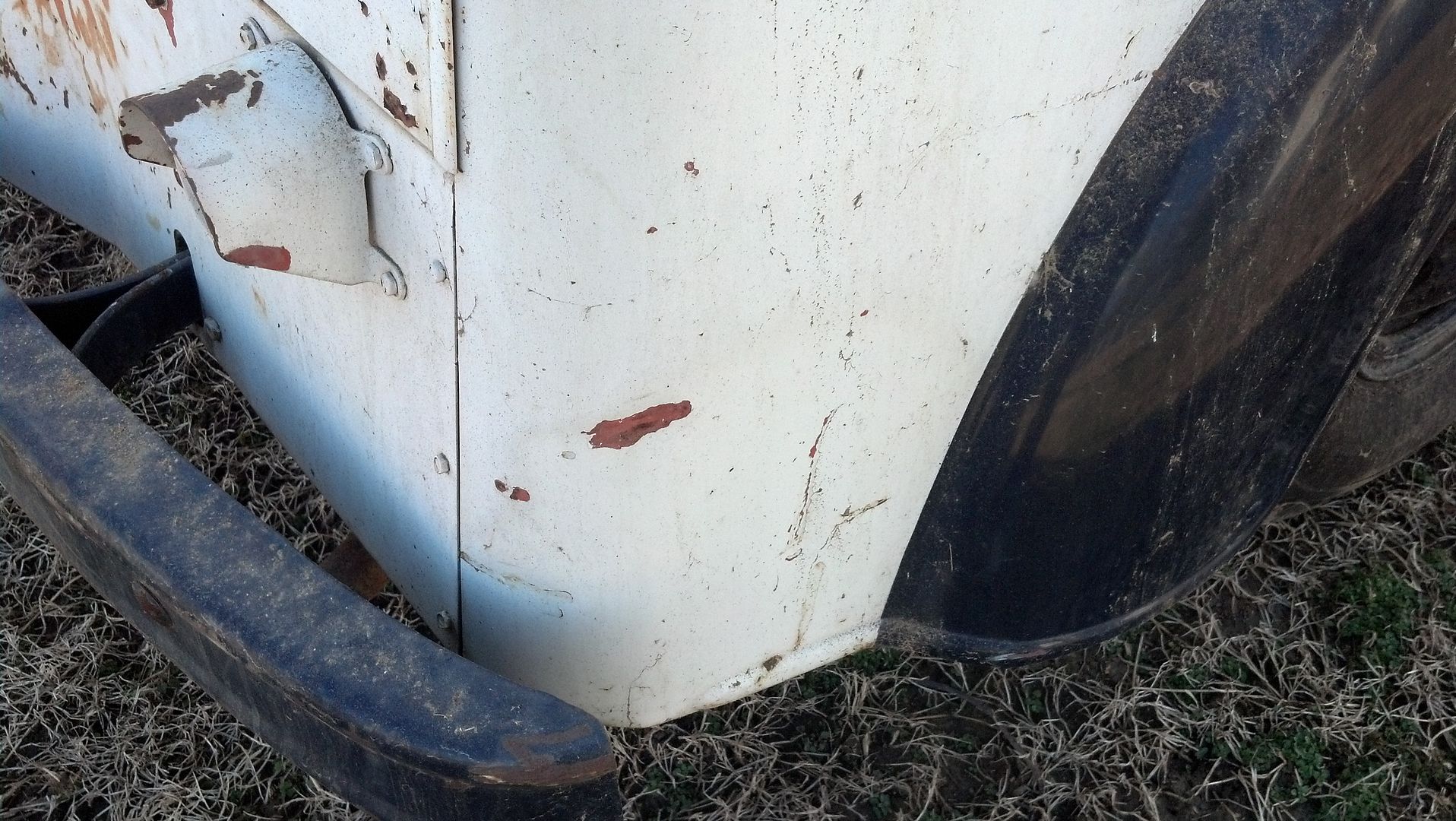
Other than that, natta, zilch. The roof was perfect, all the other panels were perfect, just needed paint. Here's the extent of the storm/barn damage, starting at the driver's front corner..


Hood....


2014-02-26_014.jpg


2014-02-26_025.jpg


Drivers A-post at the windshield, also about peeled off the mirror....


2014-02-26_027.jpg


Panel in front of driver's door...


2014-02-26_029.jpg


Driver's door buckled at hinge....


2014-02-26_031.jpg


Bracket and door track that supports the driver's door...


2014-02-26_015.jpg


Also note outward buckle behind the driver's door at the top..


2014-02-26_020.jpg


Drip rail on rear.....


2014-02-26_024.jpg


Passenger rear corner....


2014-02-26_026.jpg


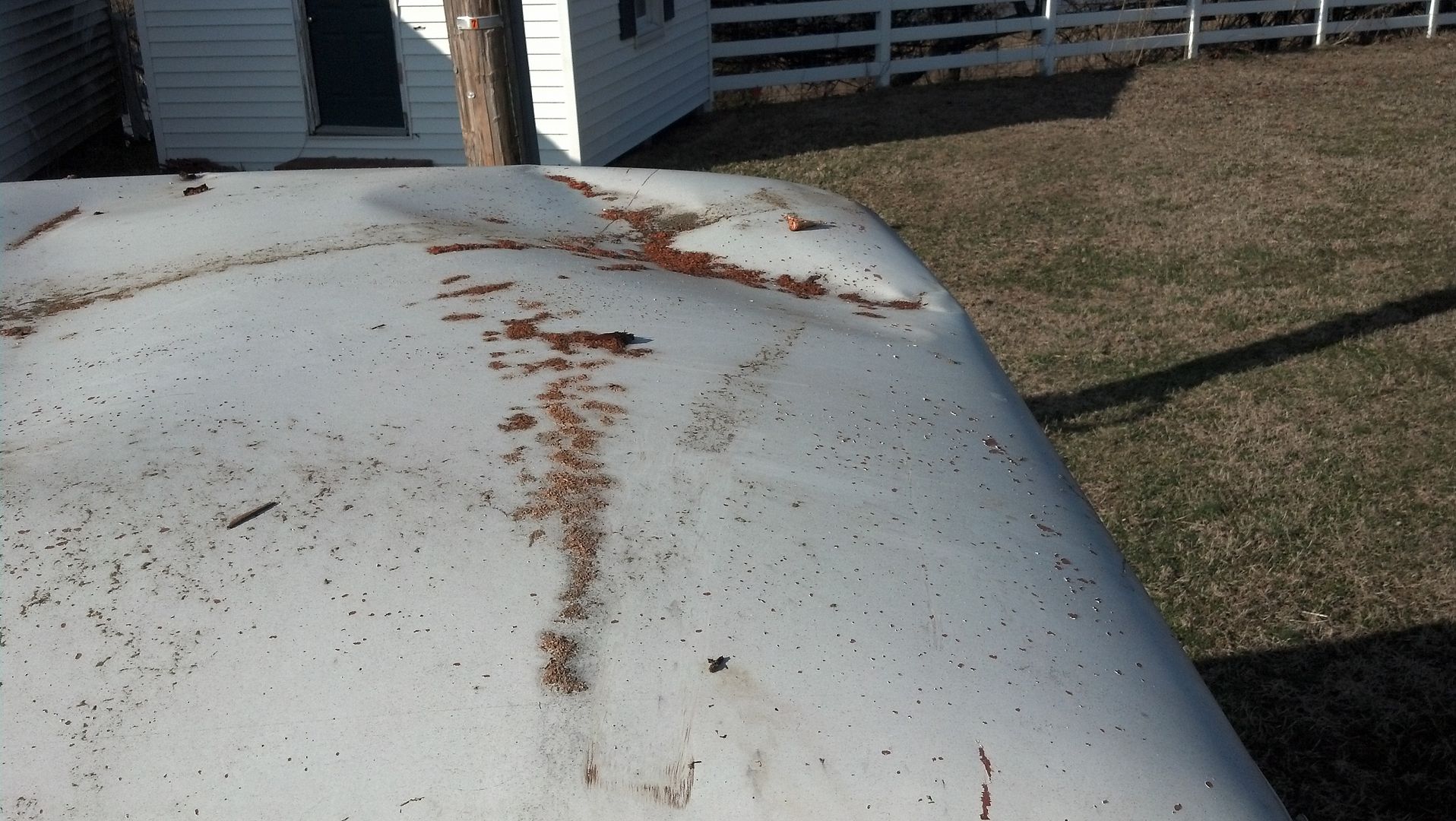
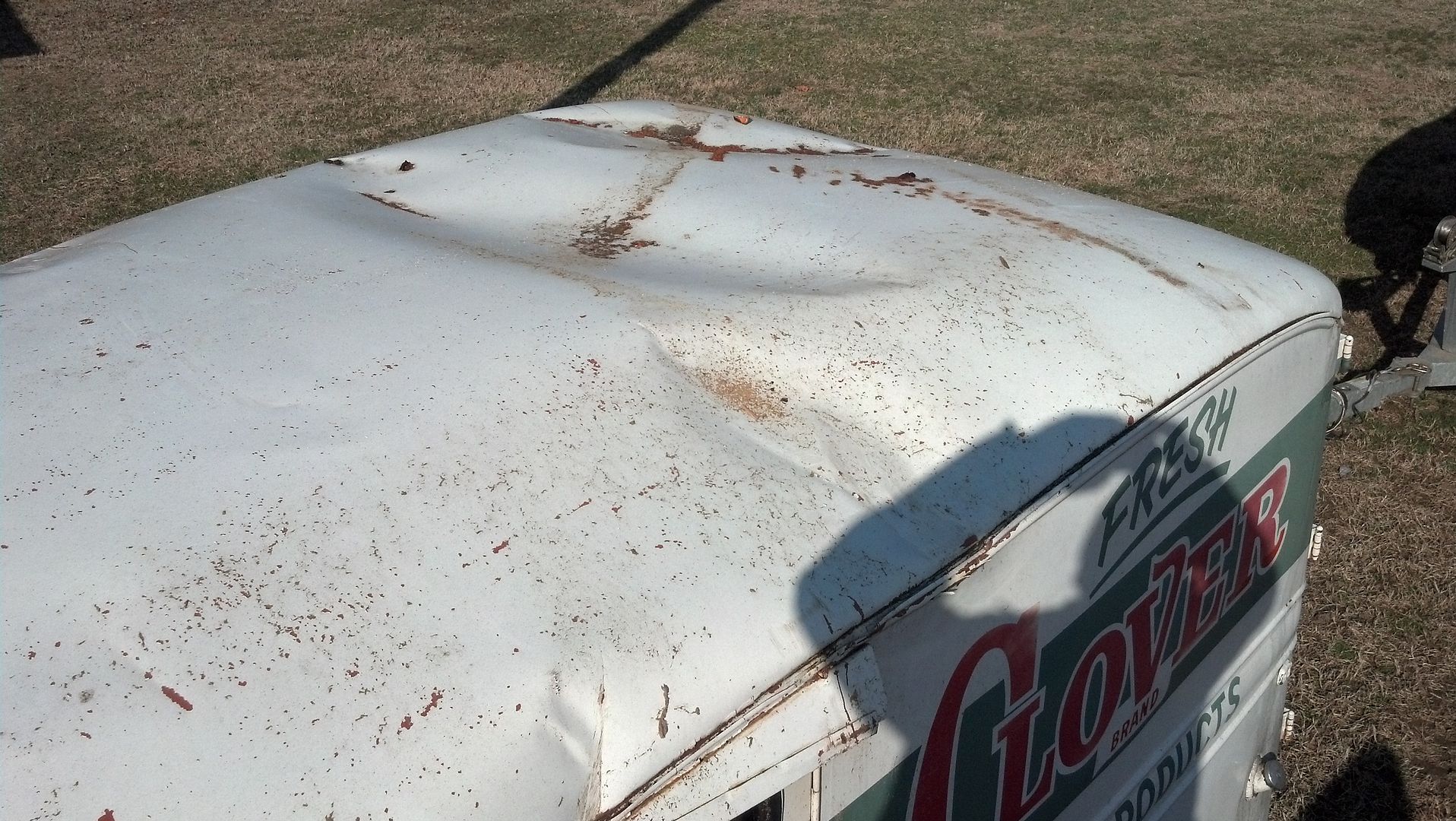
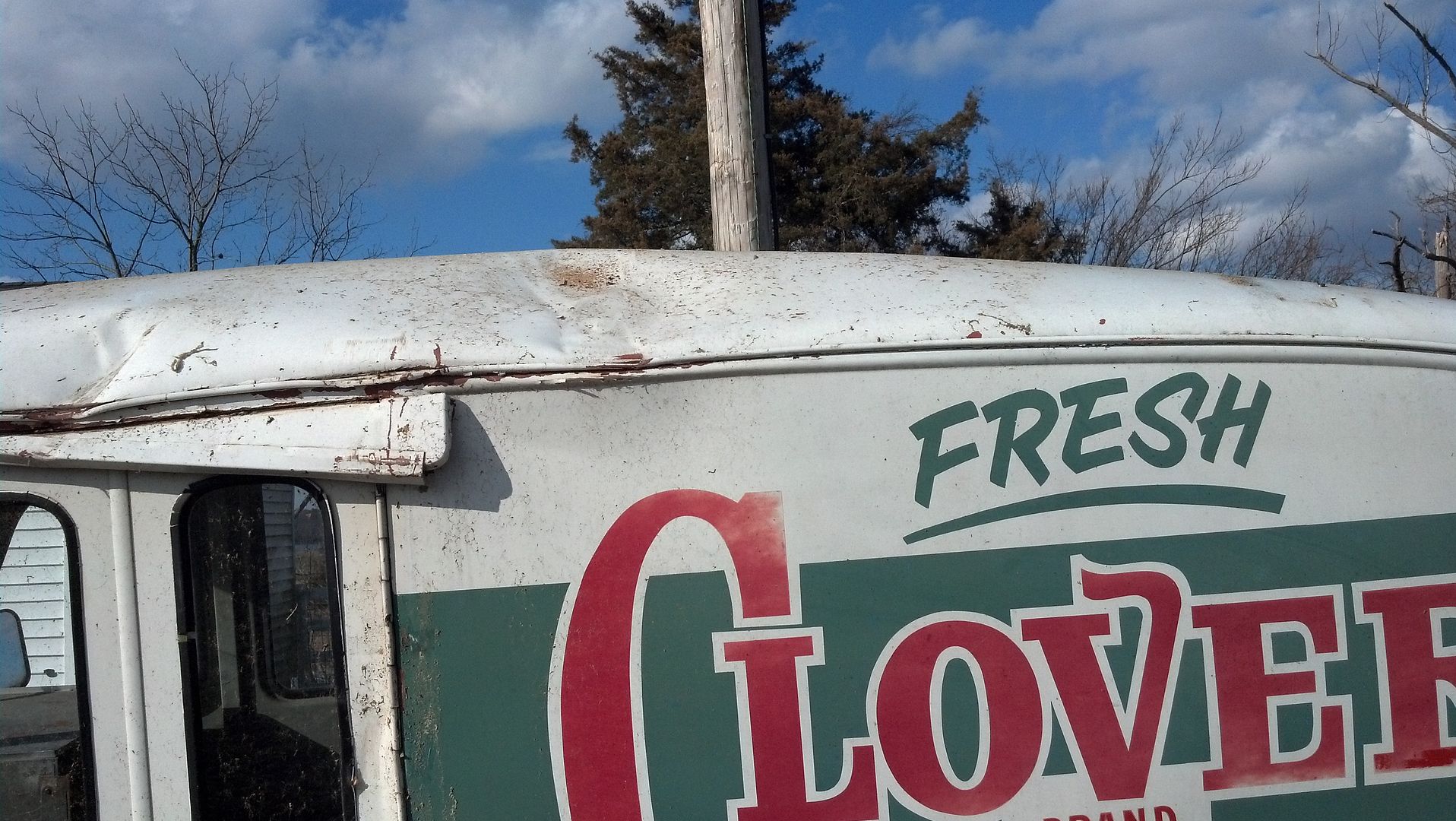
Roof....


2014-02-26_022.jpg


2014-02-26_023.jpg


2014-02-26_016.jpg


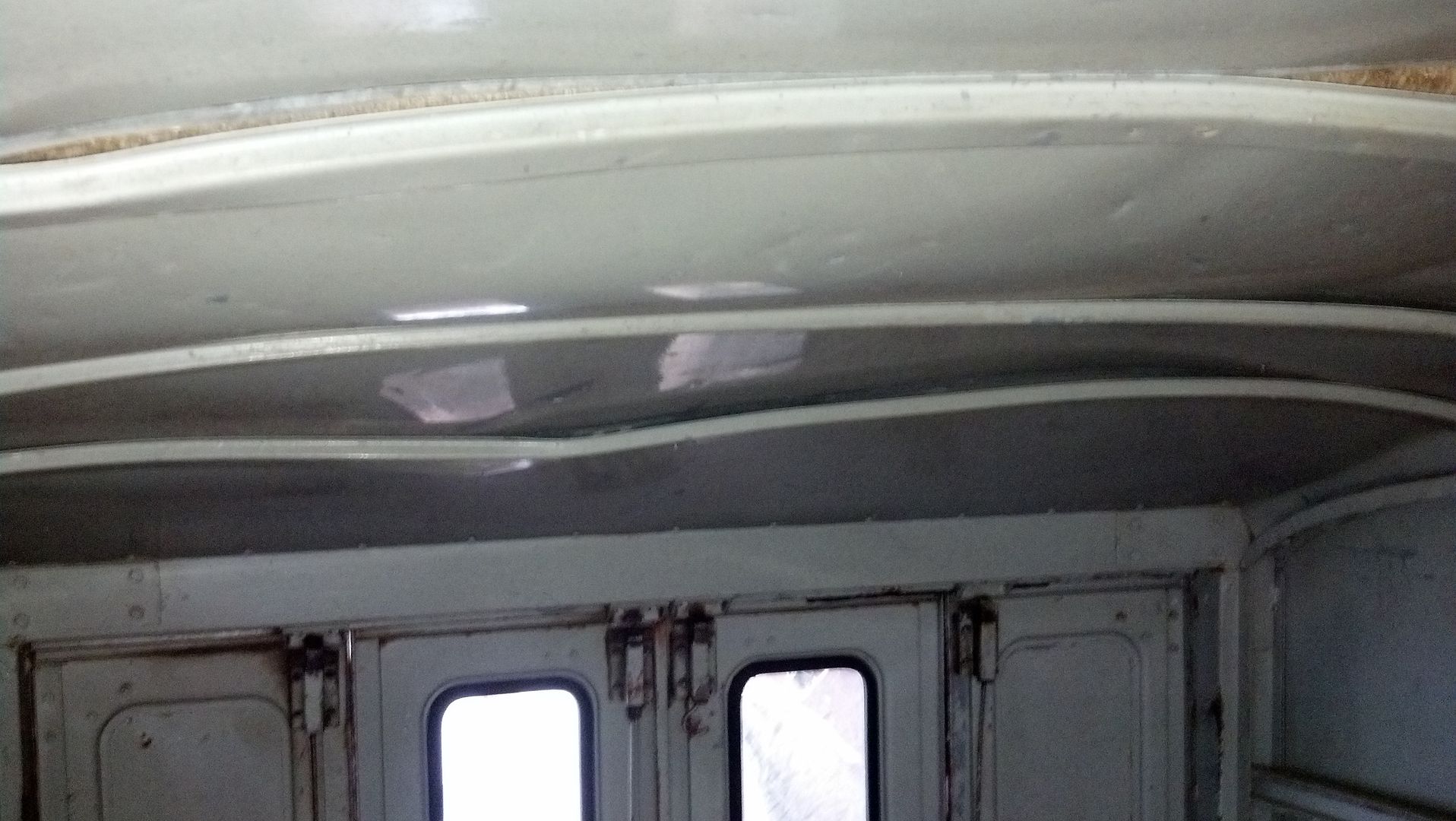
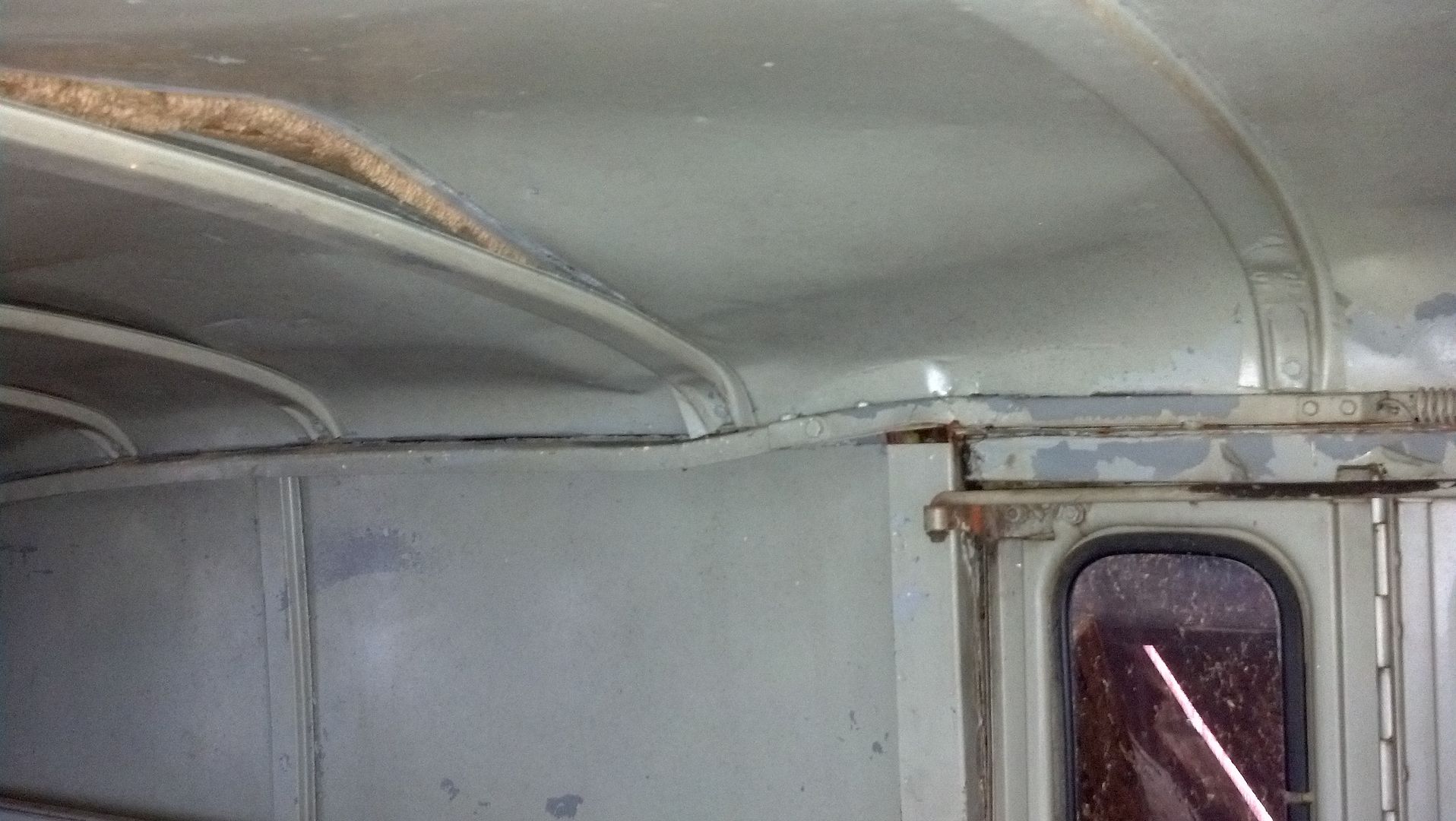
Ceiling panels and supports....


2014-02-21_004.jpg


2014-02-21_005.jpg


The passenger side seems to have gone virtually unscathed. Looks like we have our work cut out for us...
 

NASTYZEN

Well-known member
Joined
Jun 11, 2010
Messages
2,823
Location
St-Colomban,Que. Canada
Oh,Oh! I foresee many surprises along the way on this one...
Absolutely beautiful old style truck though, well worth saving.
Great work on that wagon Robert. I hope it was one of the last issues on it and we can see this truck getting the MP&C treatment soon.:thumbup:
 

Kevin54

MEMBER EMERITUS
Joined
Jan 12, 2005
Messages
29,341
Location
Urbana, Ohio
Wow, what an unfortunate shame for the owner. Hopefully he had some sort of insurance to cover the extra work and at least to cover his barn. I'm looking forward to seeing this project get started, although, if it were me, I'd twist the owners arm to tell him that it's in too bad of shape to restore it to the original condition. Then tell him that it now needs to be a Resto-Mod with a larger engine, some chrome wheels, and some killer paint. Surely he can understand that. :thumbup::lol:
 

N0tt0N

Well-known member
Joined
Sep 26, 2013
Messages
229
Location
DC
That'll buff right out...

Sounds like work right up your alley, though! He couldn't wish for a better person to work on it. Plus, with your apparent productivity that's like, what, a long weekend of work? ;)
 
OP
M

MP&C

Well-known member
Joined
Oct 21, 2009
Messages
4,396
Location
Leonardtown, MD
We'll probably be a long weekend just taking it apart. Good parts (free of rust) for these are like hens teeth. There are still donors out there but they will likely have rust issues. As solid as this one is, we're going to straighten the existing panels..
 

stinkity stoink

Well-known member
Joined
Apr 8, 2007
Messages
729
Location
New Jersey
looks like it is going to be tough. I wish you were closer I would be there watching. Keep us posted on the progress and techniques. It's always informative.
 

L&L CUSTOM

Member
Joined
Feb 26, 2014
Messages
5
Robert. Don.t know if you remember me? We use to talk a lot on tri five .com back in 2006-7 when I still had my big restoration shop L&L Custom Performance. glad to see your still at it, your work just gets better and better. I sold the big shop and went back to my old shop out at the house. All by myself and much happier. Hope to share some posts and idea's again. Later Larry
 
OP
M

MP&C

Well-known member
Joined
Oct 21, 2009
Messages
4,396
Location
Leonardtown, MD
Larry, Good to hear from you again. How's the global warming in Wisconsin? I think at one time after selling your shop you had gone to work for a high end restoration shop.. Still there or strictly at the home shop now?
 

L&L CUSTOM

Member
Joined
Feb 26, 2014
Messages
5
Robert. Just me, myself and I and Red my 24lb shop cat, [he eats a lot]. The hemi cuda market has suffer the same set back as everyone else. So the high end shop cut way back to. I only need three or four car's a year to keep me happy . I still miss the room of the big shop and the media blaster and my heated down draft booth, but I don't miss the stress or the overhead. talk again soon Larry
 

e-tek

Well-known member
Joined
Dec 19, 2007
Messages
10,690
Location
Saskatoon, SK
Some more cleanup work on the roof weld, didn't get much for in process pictures, but then this part gets pretty boring anyhow...

I'm pretty pleased with how it turned out this time. Still has some metal bumping needed to address some highs and lows, which we'll work on next time in the shop, as well as welding in the last pieces of the lift gate..

NICE!! Time for primer and paint soon? What colors is she going with?
 
OP
M

MP&C

Well-known member
Joined
Oct 21, 2009
Messages
4,396
Location
Leonardtown, MD
I even did some arm twisting and the owner will be here tomorrow to help with some of the grunt work. She said she wanted a green metallic with charcoal metallic on the roof.
 

Kevin54

MEMBER EMERITUS
Joined
Jan 12, 2005
Messages
29,341
Location
Urbana, Ohio
Robert....question....on the Divco, how are you going to go about repairing the roof? Are you going to try pushing it back out and maybe go over it with a shrinking disk, or will you be cutting panels out and repairing them that way? You need a couple GoPro Cameras set up in your shop to record a lot of this or put video clips up. I'm looking forward to the Divco job though. Even though it's going to be stock :rolleyes: At least try to talk him into some chrome wheels and some wider skins.

Also, does that have seats in it already, or do you have to put seats in it? I know some of the early Divco's were stand up drivers or had a little tiny seat for the driver only.
 

Kevin54

MEMBER EMERITUS
Joined
Jan 12, 2005
Messages
29,341
Location
Urbana, Ohio
I even did some arm twisting and the owner will be here tomorrow to help with some of the grunt work. She said she wanted a green metallic with charcoal metallic on the roof.

Pics.....we will need pics of the owner cleaning things up and turning some wrenches. Not too many times a woman makes it into the garage other than to *****, or bring a sammie out, or getting back from the grocery with some more beer :lol_hitti That is unless it's Jessi Combs :drool:
 

Kevin54

MEMBER EMERITUS
Joined
Jan 12, 2005
Messages
29,341
Location
Urbana, Ohio
I just thought of one more thing too.....when blasting a panel, I know that everyone says the heat from blasting will warp a panel. A number of years back, I took some sheet metal to a guy to have blasted. He had a large outdoor facility with a diesel powered compressor (Ingersoll) that you see when they are blasting bridges and such. He was explaining the finer aspects of blasting and he was telling me that to properly blast a panel, you want to attack it sideways instead of straight on. He was telling me that by hitting it straight on, although it does generate heat, it's the constant pressure of the media pounding against the metal that is actually denting it. By going at it sideways, you don't have the direct hit into the metal. Does that make sense?

He was pretty handy to have as a go to guy for sandblasting and was very reasonable, but he's doing 25 in the big house for banging his 14 year old daughter on a continual basis. I guess he had been doing it since she was 9 or 10. The stuff you find out about people. They arrested him the same day I was there but after I had left.
 
OP
M

MP&C

Well-known member
Joined
Oct 21, 2009
Messages
4,396
Location
Leonardtown, MD
Robert....question....on the Divco, how are you going to go about repairing the roof? Are you going to try pushing it back out and maybe go over it with a shrinking disk, or will you be cutting panels out and repairing them that way? You need a couple GoPro Cameras set up in your shop to record a lot of this or put video clips up. I'm looking forward to the Divco job though. Even though it's going to be stock :rolleyes: At least try to talk him into some chrome wheels and some wider skins.

Also, does that have seats in it already, or do you have to put seats in it? I know some of the early Divco's were stand up drivers or had a little tiny seat for the driver only.


Roof repair will be a play it by ear. I've got my hunches but we'll see how it plays out... That's what this one has, the small seat for driver only.


Pics.....we will need pics of the owner cleaning things up and turning some wrenches. Not too many times a woman makes it into the garage other than to *****, or bring a sammie out, or getting back from the grocery with some more beer :lol_hitti That is unless it's Jessi Combs :drool:

I've got pictures of her sandblasting the inside of a door....


I just thought of one more thing too.....when blasting a panel, I know that everyone says the heat from blasting will warp a panel. A number of years back, I took some sheet metal to a guy to have blasted. He had a large outdoor facility with a diesel powered compressor (Ingersoll) that you see when they are blasting bridges and such. He was explaining the finer aspects of blasting and he was telling me that to properly blast a panel, you want to attack it sideways instead of straight on. He was telling me that by hitting it straight on, although it does generate heat, it's the constant pressure of the media pounding against the metal that is actually denting it. By going at it sideways, you don't have the direct hit into the metal. Does that make sense?

He was pretty handy to have as a go to guy for sandblasting and was very reasonable, but he's doing 25 in the big house for banging his 14 year old daughter on a continual basis. I guess he had been doing it since she was 9 or 10. The stuff you find out about people. They arrested him the same day I was there but after I had left.


The damage is caused by the peening effect of too large a media and too much force pushing said media into the panel. PERIOD. Any heat is a by product of this peening action and stretching has already occurred before the heat shows up. You eliminate the stretch possibility by keeping air pressure reduced to about 35psi or less, using finer media, and like your guy said, blasting at an angle to reduce the direct force.
 
Last edited:

Kevin54

MEMBER EMERITUS
Joined
Jan 12, 2005
Messages
29,341
Location
Urbana, Ohio
Roof repair will be a play it by ear. I've got my hunches but we'll see how it plays out... That's what this one has, the small seat for driver only.


I've got pictures of her sandblasting the inside of a door....


The damage is caused by the peening effect of too large a media and too much force pushing said media into the panel. PERIOD. Any heat is a by product of this peening action and stretching has already occurred before the heat shows up. You eliminate the stretch possibility by keeping air pressure reduced to about 35psi or less, using finer media, and like your guy said, blasting at an angle to reduce the direct force.

I know when machining and material, and especially aluminum, I could flycut a part and the part would bow because of stress relief. So if I had a 1" piece of aluminum, say for instance 6" wide and 12" long.....If I had to take it down to .950 thick, I would remove .025 from each side to keep the material flat. If I removed the whole .050 from one side. I may have anywhere from a .010 to a .020 bow in the material.

It's interesting how the characteristics of metal works. With the example that you were showing, along with your drawing, when you blast from one side, you get warpage. What happens when you blast it from the other side afterwards? Have you ever tried that to see the results? I wonder if it would peen it back or if hitting it with media from the other side would then have the metal stretched really bad by hitting it from both sides?
 

Kevin54

MEMBER EMERITUS
Joined
Jan 12, 2005
Messages
29,341
Location
Urbana, Ohio
This is sort of odd. I was going though eBay this morning and there was a '55 Nomad for sale. The rear window glass looks correct, but the rear wheel wells look incorrect. Nomads usually show the complete tire with a more of a rounded arch. This looks like the body style of the one you are working on. The one on ebay states it is a Nomad. I've never seen a Nomad with rear wheel arches like that, but then again, I've never seen a wagon with Nomad sliding glass in the back before, plus a roof like that.:dunno: http://www.ebay.com/itm/1955-Chevro...reet-Rod-/390786393446?_trksid=p2054897.l4275

IMG_9288_zps72021ee4.jpg
 

TimeWarpF100

Well-known member
Joined
Aug 21, 2010
Messages
6,784
Location
not here
That Divco is a way cool project. Really looking forward to seeing progress reports!

My wifes Uncle delivered Milk in one for years. Probably a few of them still sitting on farm. He just passed away recently (he was in his 70's) Only job he ever had.
 
OP
M

MP&C

Well-known member
Joined
Oct 21, 2009
Messages
4,396
Location
Leonardtown, MD
With the example that you were showing, along with your drawing, when you blast from one side, you get warpage. What happens when you blast it from the other side afterwards? Have you ever tried that to see the results? I wonder if it would peen it back or if hitting it with media from the other side would then have the metal stretched really bad by hitting it from both sides?


Yes I have, it will stretch that side as well, you end up with a sinusoidal wave due to the extra metal.. Best to just leave that side alone, and go ahead with the shrink process.

On that Nomad, the rear quarters have had wagon wheel openings added. Everything else still looks correct to the Nomad. There are quite a few differences between them..


That Divco is a way cool project. Really looking forward to seeing progress reports!

My wifes Uncle delivered Milk in one for years. Probably a few of them still sitting on farm. He just passed away recently (he was in his 70's) Only job he ever had.

Are you sure you don't need to visit the farm for some more projects? :p
 
Last edited:
To avoid these ads, REGISTER NOW!
Top Bottom