Thanks!
I had a request to show more details of the louver punching process, so I'll just post it here for others to see as well.
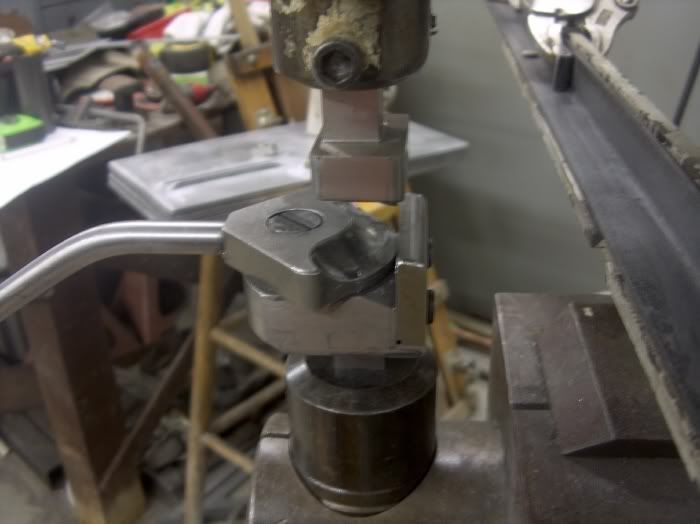
My Lennox Tru-edge had a dovetail fixture and a fence, where it can be moved forward and backward, and clamp to set the backstop distance. Shown here, we also have a 1x1x1/8 steel angle bolted in to extend the fence length, then some bent stops clamped in with vise grips. This allows us to set the width distance of our louver.

The duck bills were clamped on to have a handle for better control. Even though the fence helps out, the panel does have a tendency to bounce/oscillate a bit, which may affect the accuracy of the louvers if it can't be controlled. For the forming process, the initial cut is done just enough to slit the panel. If the punch presses through too far on the initial cut, it will stretch too much and you'll end up with a wavy louver, with little chance of success in removing the distortion. It's here that test panels are beneficial, to see what depth setting brings in that distortion, then back up a bit on the adjustment and use this for the initial. Then additional passes are made, incrementally increasing the depth with each pass, until you get to a depth you're happy with.
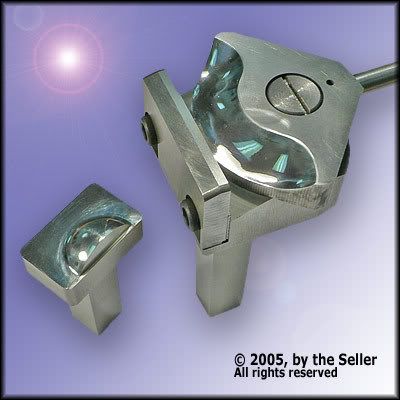
The tooling was purchased from Neil Dunder,
www.gogitzit.com and the design works well in punch varying length louvers. If you're looking for a specific size with all the same size, a fixed die punch will be quicker. For the option of varying the length, this die is the cat's meow.
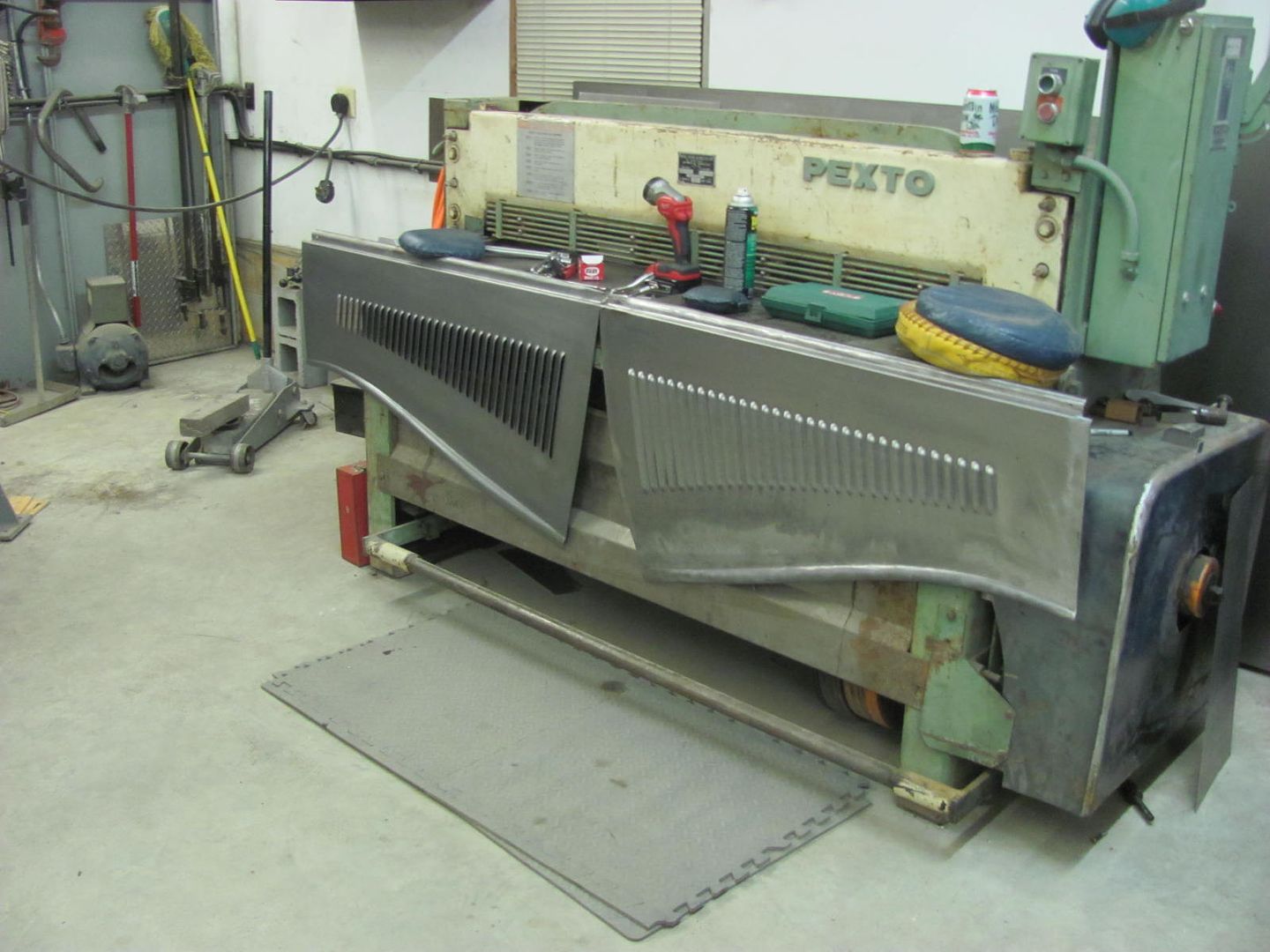
The straight through feature allows you to make the louver however long you'd like, then on the VERY LAST pass, the handle is rotated to the side to "coin" the ends. Here's some panels that we did with using the manual fence and the clamped stops.

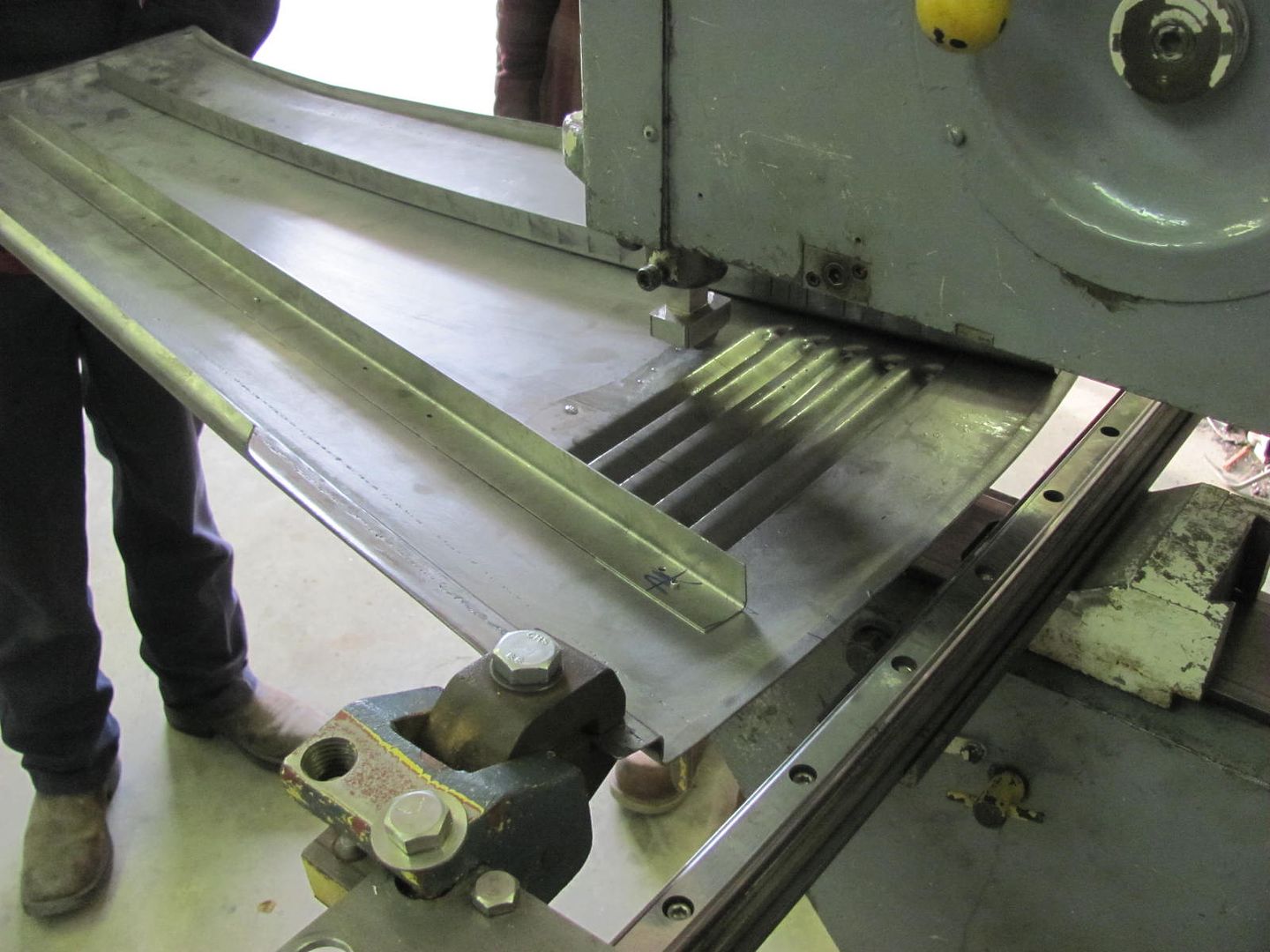
Recently I was contacted by David Thomas and Cody Walls about punching louvers on the hood sides of the 35 Chevy that Cody is building for David. Now I'd never had much issue with using the fence as a backstop before, but I'd seen Cody's work thus far on the 35 on the HAMB, and didn't feel we needed to take a chance. I had some material clamps in the shop from a duplicator that went to another machine, and started surfing CL for a used linear slide. This would allow us to still use the dovetail to set the backstop distance, but the work would be clamped in place for better accuracy (less chance of a screw-up) for the side to side travel. Also, I hoped that the clamps would help to limit some of the chattering/oscillation that this process would tend to inflict on the panel as you formed the louvers (which it did). I struck gold with a pair of 48" linear slides for $50. To attach to the dovetail fixture, the fence was removed, and I used this "U" channel, attached to the dovetail fixture with some countersunk 1/4-20's.


......followed by a piece of flat bar that fit fairly snugly inside the bottom of the U channel....
......which was then drilled to match the linear slide's hole pattern..
I also used some 1/4-20 bolts and riv-nuts as end stops, as it saves on sudden uptakes. (yeah, I did that....)
The material clamps are bolted via an interface plate, which also allows us to put the clamp above or below for some adjustability to the tooling height in the machine. For flat panels it worked out hanging below the plate, for stepped flange panels like Cody had on the hood sides, we had to move the clamp as shown.
To set the louver widths (varying lengths) we used 1 x 1 bent angle out of 18ga sheet metal, and used the shrinker to add a radius to the lower line.
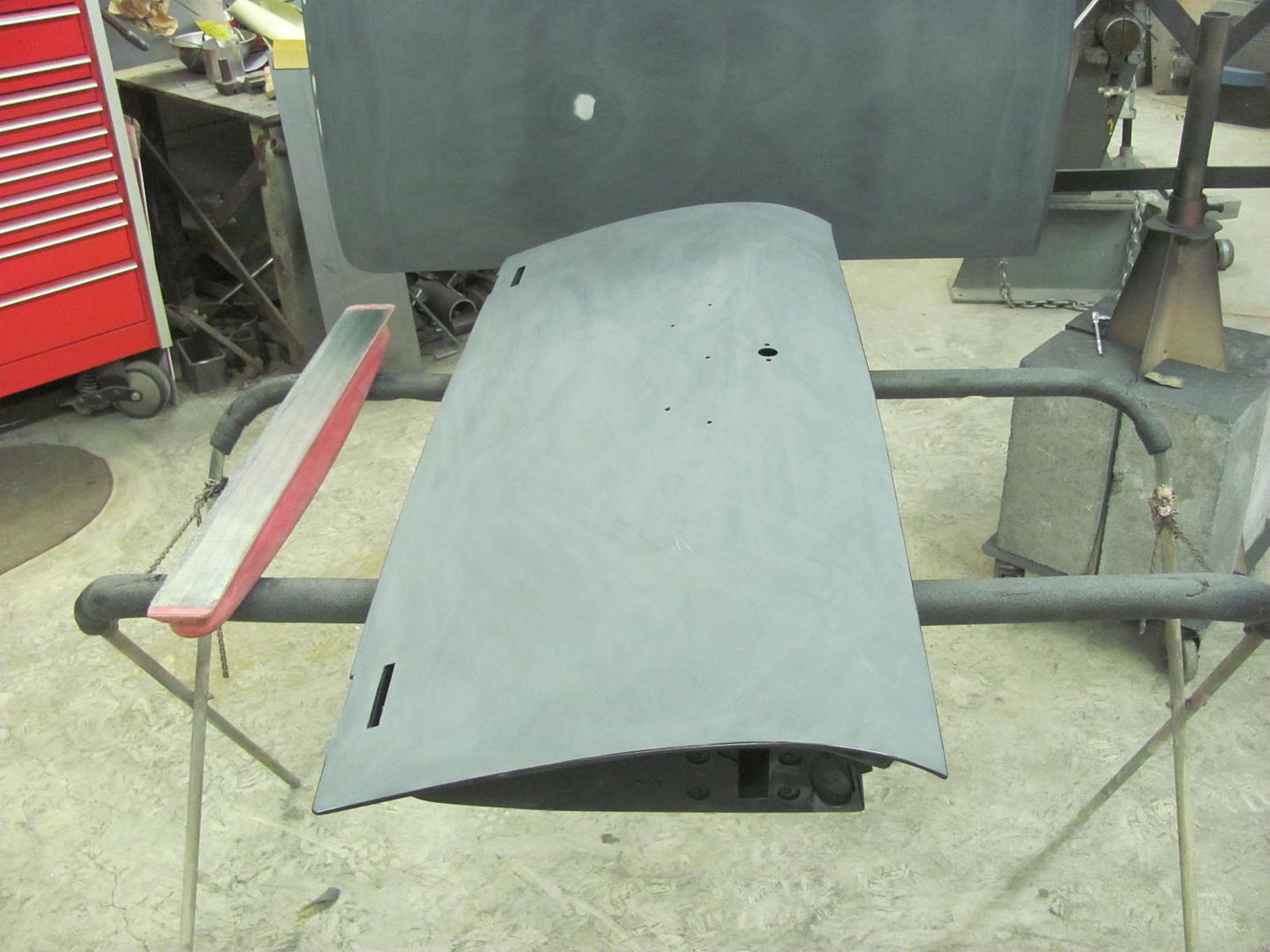
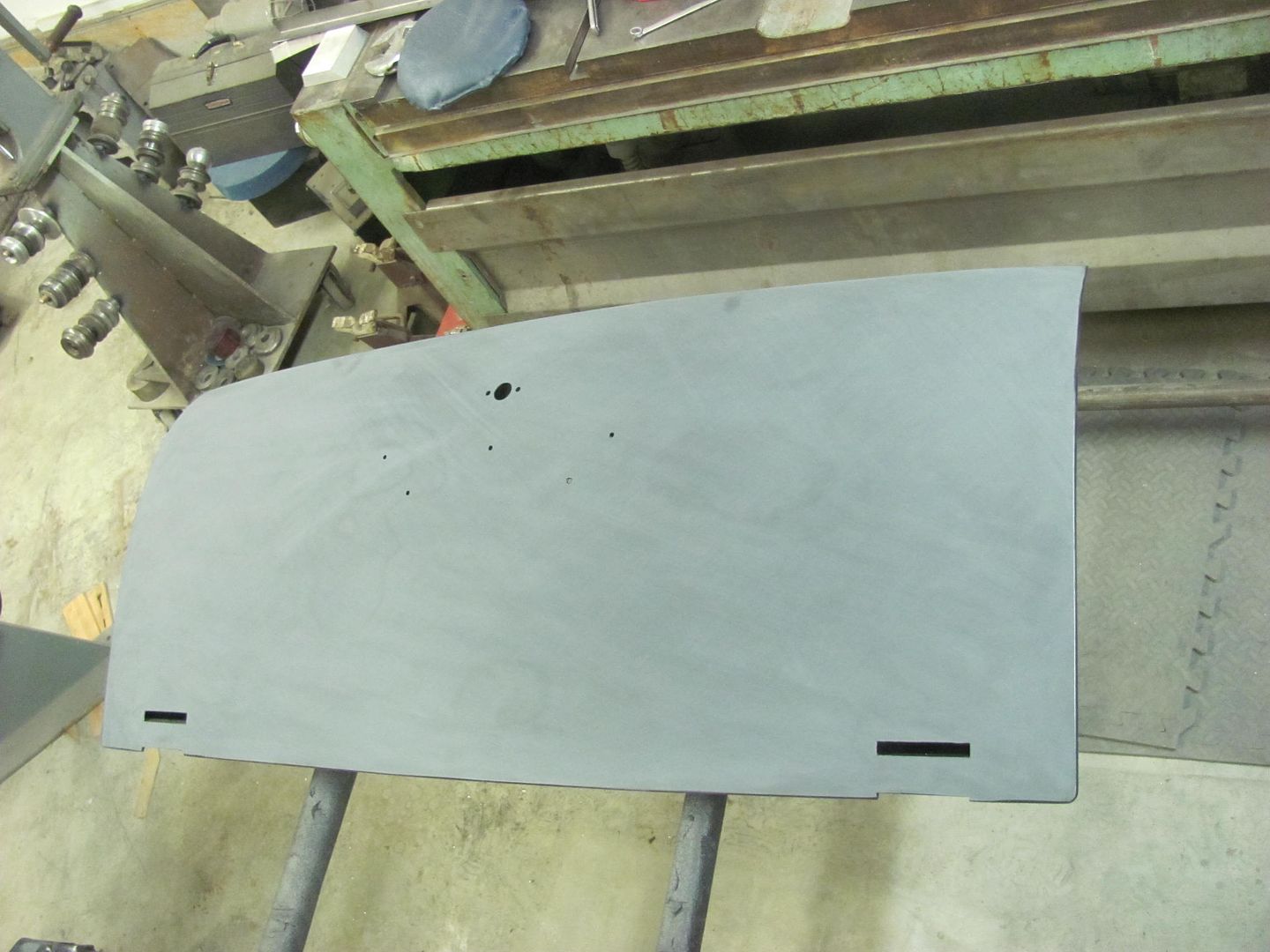
It always pays to do a test panel, here clamped in place, before punching the real thing that someone has countless hours into it fitment perfection..
Then jump on the good stuff..
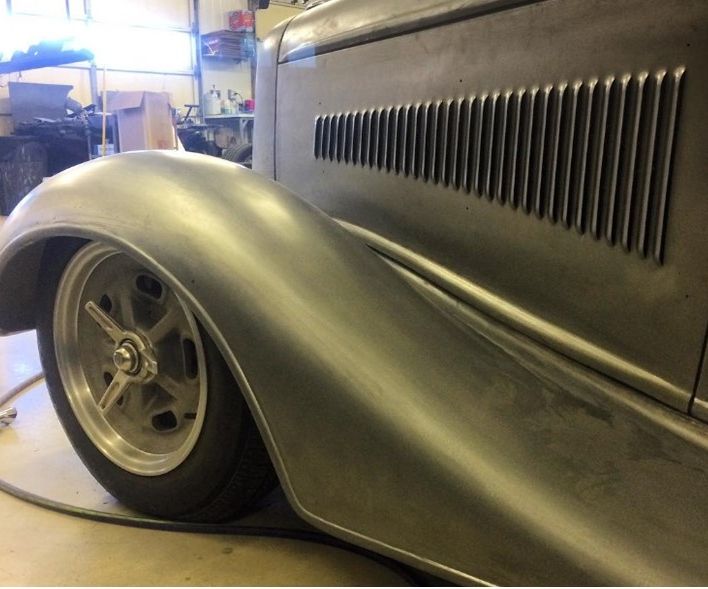
Finished panels...
As fitted to the car....
As stated in earlier thread, Cody is the one who did all this beautiful metalwork on the 35, the only thing we did was to put a bunch of controlled holes in his work....

Also, to those who don't follow Cody on IG, it looks like the 35 will be headed to GNRS in about a month. Very fitting for all of Cody's hard work and eye for detail.