76 Regency
Member
Hello,
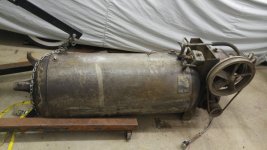
So long story short, I was given this compressor years ago and I finally have the space to use it in and so I brought it home from storage yesterday. Here are a few pics of it laying on the floor of my garage (my dad and I were too wiped out to try to lift it back up at the end of a long day).
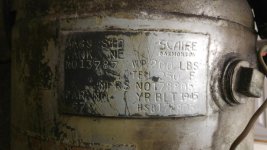
After wiping off the badges on it, I discovered it was manufactured in 1945! That explains a big part of why this thing is such a beast. It's built like a WWII tank! It's a Kellogg-American and I'm guessing the tank is 100 gallons but I haven't found a size marking yet.
Here's what I know I need to do to it at the bare minimum:
- Rewire it back to the correct 220V as a previous owner rigged it to 110V
- Fix the air line that broke off when the beast rolled over
- Clean the heck out of it and give it a nice coat of paint
I admittedly don't know a ton about compressors like this as I've only really had a 25 gallon Craftsman for the last 20 + years. Any input would be greatly appreciated it.
Thanks!
So long story short, I was given this compressor years ago and I finally have the space to use it in and so I brought it home from storage yesterday. Here are a few pics of it laying on the floor of my garage (my dad and I were too wiped out to try to lift it back up at the end of a long day).
After wiping off the badges on it, I discovered it was manufactured in 1945! That explains a big part of why this thing is such a beast. It's built like a WWII tank! It's a Kellogg-American and I'm guessing the tank is 100 gallons but I haven't found a size marking yet.
Here's what I know I need to do to it at the bare minimum:
- Rewire it back to the correct 220V as a previous owner rigged it to 110V
- Fix the air line that broke off when the beast rolled over
- Clean the heck out of it and give it a nice coat of paint
I admittedly don't know a ton about compressors like this as I've only really had a 25 gallon Craftsman for the last 20 + years. Any input would be greatly appreciated it.
Thanks!