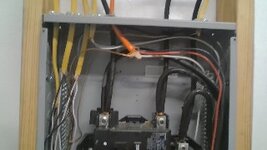
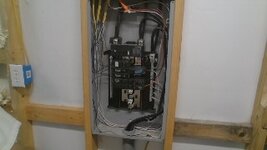
Fault current should never go back through the neutral wire. Any fault current goes back through the ground wire only, and it should never carry any current in normal operation.
It may help for some background:
240V system only:
-
Two hots on different phases to give you 240V. The return path for current for each hot wire is the other hot wire. Hey, welcome to alternating current on different phases.

-
One ground wire for fault currents. For example, say inside your welder one hot wire gets shorted to the welder case. You'd much prefer to have that hot/ground short trip the breaker instead of electrocuting you when you touch the welder case.
120V system only:
-
One hot (could be either phase) for 120V
-
One neutral that serves as the return current for the 120V hot.
-
One ground wire for safety.
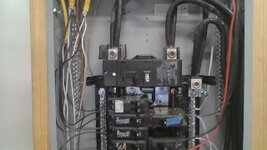
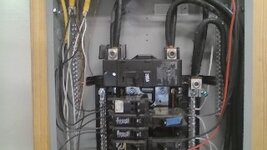
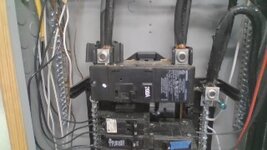
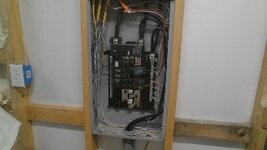
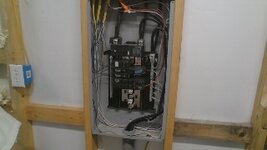
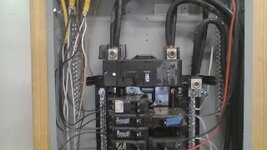
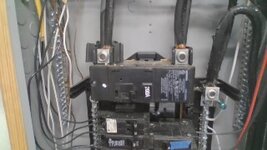
Where things get interesting is that sub panels are generally 240V in, so two hot wires on different phases. A ground wire to the sub panel is also required. As noted earlier, a neutral is required for sub panels in the same building. However, if, and only if, you only have 240V breakers and equipment hooked up to that sub panel then the neutral is required by the NEC but it isn't used for your equipment.
Most panels (all?) will support 120V or 240V breakers. A 240V breaker will have two contacts so you can connect up each hot phase. A 120V breaker will have a single hot phase and it will rely on the neutral for the return current path.
If it was me, I'd replace the 30' of wire to the sub panel with the right gauge and type of wire. Use 4 wires (2 hots, neutral, ground) and hook them up appropriately at both ends.
I should add that if you're using the right type of metal conduit, you can use the conduit yourself for the ground connection. This is OK according to the NEC, but it does require that the conduit be installed and connected properly. Personally, I've seen enough damaged or poorly installed conduit in my life that I prefer to run a ground wire even if I am using EMT. YMMV.
Ground rods, ufers, etc are used for two reasons. The first reason is to provide some amount of lightning protection. Not direct strikes per se, but rather ground surges and currents due to nearby lighting hits. They also provide some amount of short circuit protection if something is shorted to the earth. Although in the latter case, the resistance of the ground connection is likely too high for that to help much for anything other than high voltages and currents.
There is also equipment that requires 240V and 120V at the same time. The classic example is a dryer that uses 240V for the heating coils but also uses 120V for the front panel and controls. In this case the outlet will be wired with two hot wires (different phases), a neutral, and a ground.