Question: can these be machined rather than forged because of the relatively low torque
needed to turn fasteners as people have pointed out?
Machined vs. forged doesn't really mean anything in terms of strength. In certain situations a forged part
can be stronger than a part machined out the same alloy steel, but not always. There are so many different steel alloys, heat treating techniques, etc.. that I'm sure these machined wrenches are just as stronger if not stronger than a forged equivalent.
The biggest reason companies use forgings and castings is to save money over long production runs. With a forging, you start with a block of steel and hammer it into the final shape. It wouldn't surprise me if companies like Snap-On have their forging process down so well, that they don't even need to do any kind of finish machining to the jaws or box end on a wrench. It's fast and cheap, and most of the work probably happens in a single machine with multiple forging dies.
These Tekton wrenches on the other hand require a lot of handling. They start out with plate stock, which is more expensive than raw steel chunks you'd forge with. You need then to cut the blank out of the sheet, and no matter you're going to have gaps between the wrenches, meaning wasted material - further increasing material costs.
Then you need to set the wrenches up in a machine to be engraved, have the handle profile milled, and chamfer all the edges. It wouldn't surprise me if it requires two setups, meaning the operator has to flip the parts to do the other side.
To machine a tool like a wrench is a lot more labor intensive, and generally more expensive per unit. However, forging has extremely high setup costs, and you really need to move a certain volume of tools before it becomes practical.
For Tekton, starting out with plate stock of just about the right thickness likely allows them to keep machining and material costs under control.
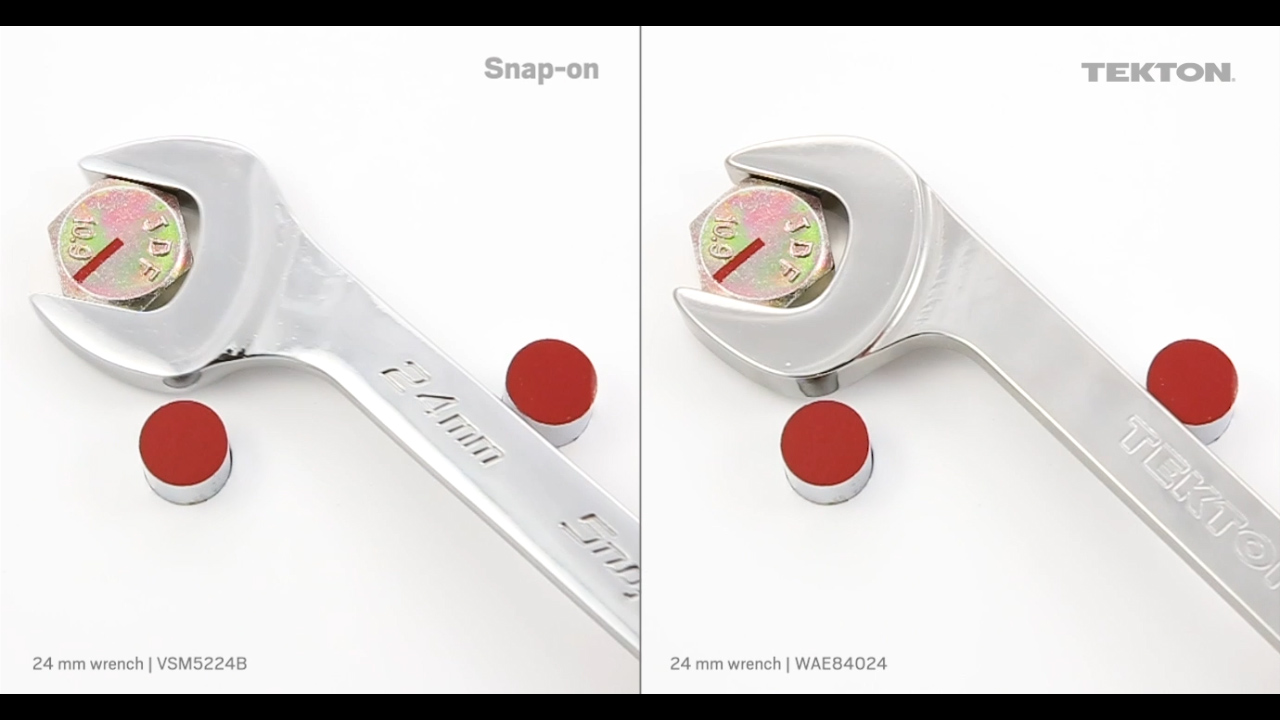
The vid on the website directly comparing to snap on is a bit cheeky. Normally companies would cover the competitor's logo and refer to them indirectly. Is it legal for them to show this?
The only time you see competitor's logos being covered and referred to indirectly is when the comparison is dishonest, because otherwise you could be sued for libel/defamation. If the comparison is truthful and honest, then there is no problem with showing a competing brand and calling them out by name.