Thanks for that information on the ISOs. It is a Sony DSLR that I got last Christmas and I really haven't had time to check out all the features it has, don't remember the model but it takes better pictures than anything I have had in the past. It was about $350.00 at the time. If I set it on auto it does a great job so I guess I should not try to fool it. The pic in my avatar was taken with this camera btw. Attached is another with the camera doing it's own thing. One of my favorite pics! Sophie guarding the Cobra.
Nice looking dog and car!
A camera can be WAY more capable when you learn how to use it and take it off the AUTO setting, don't be scared to venture away from AUTO, it's a learning process. Take some time to read a couple articles or watch a couple YouTube videos on how photography works, I bet you will find it interesting.
There is way more to photography (composition, etc.) but the most basic thing to understand is how exposure works, and it will serve you well even if you aren't trying to create works of photographic art.
Long-story-very-short: to get a properly exposed photo, the right amount of light needs to be captured - too much or too little is bad (unless that is a particular artistic effect you want to achieve). The three items that work in conjunction to achieve that goal are
1. Aperture: how wide the lens opens (more open = more light)
2. Shutter Speed: how long the lens is open (longer = more light)
3. ISO: how sensitive the film/sensor is to light (higher ISO = more sensitive)
All three work in a give-and-take relationship to get the right exposure. If you open the aperture, you would need to increase (make faster) the shutter speed (for the same given ISO) to compensate for the extra light through the larger lens aperture. You can use a flash to provide extra light of course, but I bet the reason that you chose to not use the flash is that you noticed the on-camera flash tends to make harshly lit pictures with distinct shadows – naturally lit photos are often much more pleasing.
What likely happened with your camera, in a dimly (relative to sunlight, or strobe flashes) lit garage, was that the camera’s exposure calculator had to slow the shutter speed in order to gather enough light to make a properly exposed photo – and it probably only did this after it had already also maxed out the aperture to the largest available on the lens you were using, and the ISO to the highest that is currently “allowed” for AUTO in the internal camera settings (this can be changed). Unfortunately the shutter speed was slowed to the point at which you were unable to hand-hold the camera steady enough for the duration of the picture, and the picture came out blurry. The solution could be a tripod as mentioned, or manually increasing the ISO. Increasing the ISO would mean that since the camera sensor is now more sensitive to light, the shutter speed does not need to be so long, and the risk of camera shake blur is reduced.


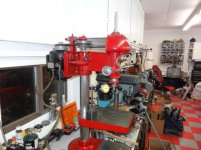
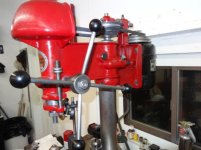


 ), I'll assume that "very good camera" means a DSLR of less than say, 3 years old. In that case OP, you could easily use ISOs of 1600 or even 3200+ depending on your camera, in order to get a totally acceptable picture (for posting on a message board) in a garage without a flash.
 I thank you for taking the time to explain all this. You get reps +
