To avoid these ads, REGISTER NOW!

New to machining, is lathe tooling interchangeable

tbirkey214

Well-known member
Joined
Mar 24, 2025
Messages
173
I've done a little research and can somebody just point me in the right direction or give me the 101 basics on interchangeability and tooling. My buddy told me that if I buy a lathe make sure it comes with a lot of tooling. What exactly do I need to have and what can I by later on down the road? I don't really understand what I need to have and what is interchangeable as far as tooling goes
 
To avoid these ads, REGISTER NOW!

loganb

ALLIANCE MEMBER
Joined
Dec 29, 2011
Messages
5,550
Location
Omaha, NE
What type of lathe are you looking at and what do you want to make on it?

What you're probably wanting is a lathe with a quick change tooling setup and lots of tool holders. The actual cutting part(likely carbide inserts) are consumables and generally not super expensive for how long they last in a hobby application, but the tool holders are more expensive when bought new. If you can get a machine that already has a quick change post and a bunch of tool holders, boring bars, thread tools etc in reasonable shape it'll be faster and cheaper path to starting to make chips then buying a quick change setup new or browsing forums/eBay/marketplace for a used setup that's right for the machine

With more details on the machine size and desired work, members can give better guidance on what is likely going to be needed
 

tominboise

Well-known member
Joined
Jan 17, 2022
Messages
195
Tooling is a pretty broad subject. Chucks are tooling. Steady rests are tooling. Dial indicators are tooling. Etc, etc. Some tooling is more expensive to acquire then others. For instance, a 4 jaw chuck or a collet chuck could be $300 to $1500 depending on the quality and size of the chuck. So your buddy is right - buying something with a lot of tooling can save some significant money. But focus of finding one that has the major pieces and all the gears with it, along with the steady rest(s) and chucks. Other stuff can be acquired more reasonably. Indexable tools and tool posts and stuff like that can be found later and ebay and the Chinese have a lot of stuff available at reasonable pricing.
 

gregs

Well-known member
Joined
Mar 16, 2007
Messages
1,602
I would say its sorta hard to understand what "tooling" you need if you have never ran a lathe before. There a various operations you can do and each may require different tooling to make it happen. I would recommend at the very least watching some You Tube videos to see how things happen. Then if you are looking at used lathes you need some understanding as to what to look for in ways of condition, size, and capabilities. Many moons ago I took some "adult ed" classes over the course of a few years that where offered in the evenings at some of the high schools that had industrial arts classes. The old fellow that was the "teacher" was a retired machinist that knew more than I could ever learn, but taught me the basics and then let us loose to make things and learn from experience. After that a few years later I bought the lathe I still have today.
 
OP
T

tbirkey214

Well-known member
Joined
Mar 24, 2025
Messages
173
What type of lathe are you looking at and what do you want to make on it?

What you're probably wanting is a lathe with a quick change tooling setup and lots of tool holders. The actual cutting part(likely carbide inserts) are consumables and generally not super expensive for how long they last in a hobby application, but the tool holders are more expensive when bought new. If you can get a machine that already has a quick change post and a bunch of tool holders, boring bars, thread tools etc in reasonable shape it'll be faster and cheaper path to starting to make chips then buying a quick change setup new or browsing forums/eBay/marketplace for a used setup that's right for the machine

With more details on the machine size and desired work, members can give better guidance on what is likely going to be needed

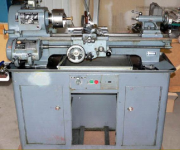
Ive started looking last week and came apon a standard modern 11" 2000. Guy doesn't have tooling other than what's on it. Down the road i qould like to make hopefully all kinds of stuff but right now I need to make bushings and pins to help fix tools and things I have in my shop.

I RENT my house and have a fab shop in the garage, this is easier to move, $2k (want ro get lower), and looks decent, but i dont know what really is or isnt interchangeable as far as tooling goes. Won't be doing much other than very simple things for a while.
 

Attachments

  • Screenshot_20251231_223540_Facebook.jpg
    Screenshot_20251231_223540_Facebook.jpg
    184.9 KB · Views: 138
OP
T

tbirkey214

Well-known member
Joined
Mar 24, 2025
Messages
173
Tooling is a pretty broad subject. Chucks are tooling. Steady rests are tooling. Dial indicators are tooling. Etc, etc. Some tooling is more expensive to acquire then others. For instance, a 4 jaw chuck or a collet chuck could be $300 to $1500 depending on the quality and size of the chuck. So your buddy is right - buying something with a lot of tooling can save some significant money. But focus of finding one that has the major pieces and all the gears with it, along with the steady rest(s) and chucks. Other stuff can be acquired more reasonably. Indexable tools and tool posts and stuff like that can be found later and ebay and the Chinese have a lot of stuff available at reasonable pricing.
Toolposts are basically.universal?
 
OP
T

tbirkey214

Well-known member
Joined
Mar 24, 2025
Messages
173
I would say its sorta hard to understand what "tooling" you need if you have never ran a lathe before. There a various operations you can do and each may require different tooling to make it happen. I would recommend at the very least watching some You Tube videos to see how things happen. Then if you are looking at used lathes you need some understanding as to what to look for in ways of condition, size, and capabilities. Many moons ago I took some "adult ed" classes over the course of a few years that where offered in the evenings at some of the high schools that had industrial arts classes. The old fellow that was the "teacher" was a retired machinist that knew more than I could ever learn, but taught me the basics and then let us loose to make things and learn from experience. After that a few years later I bought the lathe I still have today.

I have taken machine classes but we all had the same machine. Is tooling specific to brand??
 

The Cobbler

Super Moderator
Staff member
Joined
Oct 24, 2013
Messages
25,927
Location
Niagara Region, Ontario, Canada
I have a sister lathe but mine is a 13" . looks like yours has a different base looks like you have an aloris type quick change tool holder . the tailstock is a morse taper, the chuck is a standard d something cam lock mount. so basically your tooling is standard ,easy to get. but it can cost $$$$
 
Last edited:

drmarkr

ALLIANCE MEMBER
Joined
Feb 5, 2006
Messages
4,215
Location
Tucson
I have taken machine classes but we all had the same machine. Is tooling specific to brand??
No. But it's generally sized for the size of your lathe. Larger toolposts/tool holders/etc for larger machines. The lathe in the pic is small enough you'll be able to get consumables pretty cheap. But you are definitely going to want to get it mounted on an actual stable/sturdy stand. Is that 115 or 220v?

If your community has a Machining Club, join up and you can learn a lot. Plus, those guys are generally willing to come to show you in's/out's on your particular machine.
 
OP
T

tbirkey214

Well-known member
Joined
Mar 24, 2025
Messages
173
No. But it's generally sized for the size of your lathe. Larger toolposts/tool holders/etc for larger machines. The lathe in the pic is small enough you'll be able to get consumables pretty cheap. But you are definitely going to want to get it mounted on an actual stable/sturdy stand. Is that 115 or 220v?

If your community has a Machining Club, join up and you can learn a lot. Plus, those guys are generally willing to come to show you in's/out's on your particular machine.

Dont know the electrical on it, why that matter?
OK this is starting g to make sense that it is dependant more on size.

I looked at pics and this does not seem to be a cabinet that it comes on, do you think k this is a random cabinet?
 

drmarkr

ALLIANCE MEMBER
Joined
Feb 5, 2006
Messages
4,215
Location
Tucson
Dont know the electrical on it, why that matter?
OK this is starting g to make sense that it is dependant more on size.

I looked at pics and this does not seem to be a cabinet that it comes on, do you think k this is a random cabinet?

Looking at that chuck, I'm betting that will be 220, so you'll need that close to where it's going to reside in your shop. Putting this on a proper, stable base will be key to getting it to run true and hold tolerances.

There are probably some good YT's, or even some web pages that have FAQ sections on purchasing your first lathe. I'd recommend checking them out.
 

ez-duzit

Well-known member
Joined
Jun 24, 2013
Messages
5,101
Location
Marina del Rey
Your friend gave you very good advice. Do NOT buy a bare machine at any price! You will regret it.

Keep shopping until you find a comprehensively equipped lathe; someone getting out of machining, or a machinist's estate.

Generally avoid all Chinese imports. Buy quality. Check this site before you buy anything:


LopezBart

Well-known member
Joined
Oct 13, 2023
Messages
2,547
Location
Lopez Island, WA
Generally avoid all Chinese imports. Buy quality. Check this site before you buy anything:
This is an over-simplification. A Grizzly or Jet lathe can provide fine service, despite being made in China. A newer Grizzly will likely be easier for the novice to use than a worn American machine.

A 3 jaw and 4 jaw chuck and faceplate, plus tail stock drill chuck and live center are basic requirements. A quick-change tool post holder is nice, but not too expensive to purchase. A collet adapter & collets are nice to have, and a taper attachment is a rare extra.
 

The Cobbler

Super Moderator
Staff member
Joined
Oct 24, 2013
Messages
25,927
Location
Niagara Region, Ontario, Canada
that's a good solid machine if it's not badly worn . the ways are plated so they might be not bad. the cross slide nut will probably have a fair bit of backlash in it .
another thousand in accessories would go a long way to building an amateur collection
 

ez-duzit

Well-known member
Joined
Jun 24, 2013
Messages
5,101
Location
Marina del Rey
I've done a little research and can somebody just point me in the right direction or give me the 101 basics on interchangeability and tooling. My buddy told me that if I buy a lathe make sure it comes with a lot of tooling. What exactly do I need to have and what can I by later on down the road? I don't really understand what I need to have and what is interchangeable as far as tooling goes
In bold is the very best advice you've received so far. If you choose to ignore that advice, you will certainly deserve the hard lessons that will inevitably follow.

In the attached photo you will see my lathe flanked by 2 rollaway cabinets which are crammed full of mostly lathe tooling. Their contents are not nearly enough, and I frequently still need to add to that.

You need not buy the very best, but buy quality, not cheap Chinese ****. Take the time it takes to learn about what you're getting into before just buying anything that happens to come along.

IMG_2247.jpg
 

RoninB4

Well-known member
Joined
Jul 22, 2020
Messages
3,568
Location
Under My House
Ive started looking last week and came apon a standard modern 11" 2000. Guy doesn't have tooling other than what's on it. Down the road i qould like to make hopefully all kinds of stuff but right now I need to make bushings and pins to help fix tools and things I have in my shop.
-I have a few thoughts and hope they help. I'm a retired machinist/toolmaker/die&mold maker. I've run more lathes than I can remember but there's still a few I'd love to take for a spin. The lathe in your photo is a decently made one, all the Standard Modern lathes I've run have been much larger and they were stout beasts. Your desired entry into machining is something I'd like to encourage....and offer a few cautionary comments on. Machining is a LARGE subject so do bear with me. You'll want to do a lot of reading about the machinery, how it operates, and what to avoid.

-Machining has a lot of rules despite the perceived simplicity of it. The first, and most important priority is SAFETY. I've seen several horrible industrial accidents that left the operator disfigured for life. Machinery doesn't care what's in the way and the accident will happen so fast you won't even have time to react. This is not just the usual "Be careful" disclaimer, the lathe is one of the more dangerous machines in the shop. Yes even a tiny hobby lathe can break bones, gash blood vessels, throw chips into your eyes, or even drag you into the whirling chuck face first if it's got enough HP. Many lathes you'll consider have enough power to kill you and anybody that thinks it's not possible doesn't know what they're talking about. Everybody new to machining has an accident. It's not a matter of IF...it's a matter of WHEN and how severe the damage will be. There's at least 5-6 rules off the top of my head to stay safe but I want you to look them up. If you don't know how to stay safe you really shouldn't even turn the lathe on. It really is that important.

-Manual lathes are grouped by function and size, we'll leave CNC lathes aside for now. Lathes are sized by swing (largest diameter that will rotate unobstructed) and bed length. To reply directly to your question about tooling interchangeability, the critical tooling will NOT be interchangeable. What I consider critical tooling is the chuck, tailstock, and steady/follow rests. You cannot mount just any chuck to the headstock, they all have different mounting methods. The tailstock/steady rest/and follow rest are for one specific machine. They can even be slightly different than others from the same maker. Beware of lathes that have mixed components. Can the different components be made to fit? Possibly yes but you don't want to do that unless you have more skills and machinery. If a lathe doesn't have the correctly matching tailstock I wouldn't consider it. The steady rest and follow rest are nice to have if working with long shafts but not a deal breaker. When I called them critical I meant that they absolutely have to match the bed-ways or they'll be useless. Lathe bed-ways are different widths and configurations for each machine maker.

-Your buddy told you to get one with a lot of tooling. What he meant to say was to get the cutting tools, tool holders, QC tool-post, and live centers. He's right, it's expensive, but the tooling is less important than the condition of the lathe itself. When considering any machine the condition it's in is everything. Machinery that has bad bearings, excessive play (wear), worn out bed-ways, or broken gear teeth (back gear) is a repair project, won't hold size, or produce bad machined surface finishes.

-Can you just replace parts for an adequate repair? Yes and no. Factory parts for a specific lathe are almost a given. Ford parts don't fit a Chevy and this is no different. Bearings can be be replaced but it's often expensive and a huge PITA for a beginner. Since we're on Ford/Chevy parts the machinery made outside of the U.S. will be almost entirely in metric and won't fit to an American made machine. Is a Chinese made lathe ok for a beginner? I don't like lower end Chinese made things but a new model might work as a hobby grade machine. Your budget and location will dictate your choices available.

-What type of lathe should the OP get? Here's a couple of groupings:

1) Secondary operations (sometimes called a speed lathe)- Spins and makes short cuts on smaller parts, usually no tailstock. Works ok for fast operations but most people will quickly outgrow the limitations. They work fine if the extra capabilities aren't needed.

2) Turret lathe- Predecessor to CNC, works well for production. Would not advise for a hobby lathe unless dirt cheap and not worn out.

3) Engine lathe- Most common type encountered, several subsets. Will often be the best suited for hobby type work.

I RENT my house and have a fab shop in the garage, this is easier to move,
-This is a BIG factor in choosing a lathe. You don't want to move a lathe more than a few times and renting may mean unexpected changes. I rented too so when the landlord sold the house I had to sell all the smaller machinery I couldn't easily move/store myself. Lathe size should also be matched to the size/length of what you expect to work on. If you're not working a driveshafts or long spindles there's no need to pay for a bed length you won't use, especially if you have to consider moving it in the future.
$2k (want ro get lower), and looks decent,
-It appears to be ok although that chuck looks vastly oversized/overweight for that lathe. An overweight lathe chuck leads to headstock bearings/bushings getting worn-out. Condition of the machine is everything so if you don't know how to evaluate machinery take someone that does.
but i dont know what really is or isnt interchangeable
-The components that came with the lathe are usually NOT interchangeable. Tool-posts are if they can match the spindle center height.
as far as tooling goes.
-All the other "tooling" (twist drills, cutters, etc.) are interchangeable, chucks/collets will be dependent on the lathe itself.
Won't be doing much other than very simple things for a while.
-The lathe in the photo will work just fine but the condition of the lathe is the most important. If you want opinions about a different candidate you can post here. Electrical requirements are quite important. Most industrial grade machinery runs on 3 phase power, residential areas usually only have single phase. Three phase machinery can be made to run on single phase with a VFD (not really expensive) or RPC system that can be more expensive. There's fairly inexpensive ways for 3 phase power but that's something to read about. Most hobbyists will insist on single phase machinery for the plug-and-play aspect but that often commands a higher price due to the greater number of people seeking it. Three phase machinery is less sought after, a better grade of machinery, and usually at a lower cost than single phase machinery. It's not a show stopper but you should know the power requirements for any machine you consider purchasing. Hope this helps.
 

cvairwerks

Well-known member
Joined
Aug 12, 2016
Messages
7,228
Location
Within hearing distance of Texas Motor Speedway
it sort of looks like a cabinet from an older Standard Modern lathe , but in some ways it loos to be wood too, which wouldn;t have been a lathe cabinet
Same cabinet shows up in the SM maintenance manual for the 2000 series lathes.....There was probably two different ones available as options when ordered.
 

Aaron_W

Well-known member
Joined
Feb 6, 2018
Messages
2,924
Location
Northern California
I have taken machine classes but we all had the same machine. Is tooling specific to brand??

Some yes, some no. Steady rest, follower rest, taper attachments will generally be brand and size specific.

Collet closers are often unique to a model of lathe.

Tail stock tooling like drill chucks, and centers will usually use a Morse taper, so most any of the same Morse taper will work. Morse Taper is listed as MT2, MT3, MT4 etc. Sometimes shown as MK instead of MT on some European brands.The taper of the spindle and tail stock are usually different. Mosre taper is very common, but some lathes use a proprietary taper, and some (usually small or very old) may not use a taper in the tailstock.

Lathe chucks generally use a standard type of mounting, threaded, and cam lock types are common, and any chucks with the same style should fit. The D series of cam lock (D1-4, D1-6 etc), is commin on better quality lathes, the L type (L0, L00) is another but seems to be found mostly on older lathes.

Some lathes use a flange and plate mount for the chuck and these are often proprietary.

Lathes with threaded spindles frequently used either 1-1/2"-8 or 2-1/4"-8 which are easy to find, but some used a proprietary thread. Lathes with a metric threaded spindle are almost always proprietary and often specific to the model of lathe.

Getting more tooling with the lathe is almost always a better deal, but some things are fairly easy to get after the fact and others may be a long and expensive ordeal.

At a minimum I'd be looking for a lathe to come with a 3 and 4 jaw chuck, a steady rest and a tool post of some type so you can do basic work right away.
Less is OK if the price is right, but tooling adds up quickly. Assuming a base price of $1000-2000 (typical for a decent used 10-12" lathe) I'd be much more willing to pay another $500-1000 for a well tooled lathe, than save $500 on one with very little tooling. Unless it was an amazing specimen or practically free I'd pass on a bare lathe. Even on a free lathe the cost of tooling would quickly add up to the cost of buying a lathe with tooling.
 
To avoid these ads, REGISTER NOW!

MushCreek

Well-known member
Joined
Jan 14, 2015
Messages
9,785
Location
Upstate South Carolina
Despite being a tool maker, I made a mistake buying the lathe I have. It's an 11" Japanese-made Summit. Very solid, and does good work. BUT- the spindle size is an oddball, with a metric thread. I can't find anything that fits it. I would have to custom machine backplates for it. The tool post is actually part of the compound slide. There's no slot; the post doesn't come off. It came with a four position tool holder, but you have to shim tools to get the right height, which is a PITA compared to a quick-change tool post. But I did get the lathe cheap. I'll sell it if I ever find a more standard machine that I can afford. Live and learn.
 
OP
T

tbirkey214

Well-known member
Joined
Mar 24, 2025
Messages
173
In bold is the very best advice you've received so far. If you choose to ignore that advice, you will certainly deserve the hard lessons that will inevitably follow.

In the attached photo you will see my lathe flanked by 2 rollaway cabinets which are crammed full of mostly lathe tooling. Their contents are not nearly enough, and I frequently still need to add to that.

You need not buy the very best, but buy quality, not cheap Chinese ****. Take the time it takes to learn about what you're getting into before just buying anything that happens to come along.

IMG_2247.jpg

Dang thag looks like alot. My original idea was to get a lathe as cheap as possible ( i have a small budget right now, but need to make some si.ple parts to fix the tools I have and get my shop going), and then scour auctions for bulk tooling down the road. I do very little machining now and won't to a to a ton down the road. I used to use other hom3 shop guys to make me parts i needed but it was always "my wife is pregnant " , " I'll get to it next month " , "try someone else", "too small a project for me" and it really wore me out and I had to abandon what I was working on
 

My Old Tools

Well-known member
Joined
Jun 4, 2014
Messages
5,441
Location
Hamrick Lake, TX
My advice, buy a small lathe with a 4 jaw chuck and a tool post and start turning. After a while, you'll know what you really need. Sell it and buy a better one if you need to. A South Bend 9 or 10 inch is a good starter lathe and may be all you ever need.
 

firebirdparts

Well-known member
Joined
Jun 8, 2016
Messages
10,633
Location
Kingsport, TN
I would have used the word "accessories" and not tooling. On a milling machine, I would use the word "tooling" and not "accessories."

Lathe tooling is simple. In fact, there was an entire profession devoted to making customized tooling in a few minutes at a grinder using dirt cheap material. That stuff might not cut case hardened material, but you don't need to.
 

jar944

Well-known member
Joined
Jul 26, 2010
Messages
5,932
Location
Northern VA
I used to use other hom3 shop guys to make me parts i needed but it was always "my wife is pregnant " , " I'll get to it next month " , "try someone else", "too small a project for me" and it really wore me out

Once you have the lathe, you'll understand those guys not wanting to do anything for you.
 
OP
T

tbirkey214

Well-known member
Joined
Mar 24, 2025
Messages
173
OK yall, i might go take a look at this instead. I just need something to get going to make simple stuff and something that I can sell easily when I'm ready to move on to a bigger machine.

I have used lathes a bit before at makerspaces for what I need and I have never used more than a drill bit in the tailstock and a carbide cutter.

I am starting to understand how important all that other stuff is, and am starting on having ideas on why I would need it. This is helping a ton
 

Attachments

  • Screenshot_20260101_083945_Facebook.jpg
    Screenshot_20260101_083945_Facebook.jpg
    601 KB · Views: 80
  • Screenshot_20260101_083955_Facebook.jpg
    Screenshot_20260101_083955_Facebook.jpg
    676.6 KB · Views: 78

Whitworth

Well-known member
Joined
Dec 26, 2011
Messages
2,094
That Atlas lathe is way too small, don't waste your time. Especially at $1000.
 

Whitworth

Well-known member
Joined
Dec 26, 2011
Messages
2,094
Tooling defs:

Chuck; holds things.

Backplate; holds the chuck to the spindle.

QC post; holds QC tooling holders. Tooling holders can hold either hss, ground to the shape you need. Or specific carbide inserts. Carbide is very expensive but lasts a long time. If a lathe comes with alot of carbide that's a good bonus. Tool holders and the posts are kind of standardized, based on size: example AXA, BXA is bigger, CXA is bigger still. Brands should be interchangeable, Dorian versus Aloris, versus Phase II, versus generic import, etc.

Steady rest and follower rests are specific to the lathe make and model.

HSS blanks and small chunks have value if there's enough left to grind.

Drill chucks that fit the tailstock are invaluable.

Dogs and dead centers; maybe of value if you're doing between centers work.

Every lathe I've bought has had alot of junk included. Some good junk, some useless junk. V belts, oils and lubes, instrux sheets (nice and greasy), coolant nozzles, drill bits of various conditions, etc, etc.
 
OP
T

tbirkey214

Well-known member
Joined
Mar 24, 2025
Messages
173
That Atlas lathe is way too small, don't waste your time. Especially at $1000.
I agree that 1000 is too much, maybe 600, maybe.

What makes it too small?? The power of motor? I really only need small bushings and such NOW but I jave done work on a larger belt driven lathe and the power was terrible and it felt like I could really only do brass on it. Also the main guy on YouTube who talks about these lathes says it's basically impossible to knurl steel so maybe by small.you meen regitiry and power?
 

Rst277

Well-known member
Joined
Oct 25, 2013
Messages
1,719
Location
Winnipeg, Manitoba, Canada
I agree that 1000 is too much, maybe 600, maybe.

What makes it too small?? The power of motor? I really only need small bushings and such NOW but I jave done work on a larger belt driven lathe and the power was terrible and it felt like I could really only do brass on it. Also the main guy on YouTube who talks about these lathes says it's basically impossible to knurl steel so maybe by small.you meen regitiry and power?
Lathes are sized by the "swing" meaning the diameter of material you can turn with it. A 12" swing / lathe can turn a piece about 12" in diameter so the center of the chuck is about 6" above the bed. IF you are only making bushings it is unlikely you need more than 11" or 12" but you won't be turning your own rotors or brake drums.

I'll go against the grain here and recommend buying an entry level machine new. You can get a small lathe (7"x12") for a grand new and it will come with everything (for a beginner) that you will need: 3 jaw chuck, 4 jaw chuck, faceplate, steady rest.

To knurl steel you are using the cross screw to force the knurling tool into the metal. That requires power and rigidity which a small lathe usually lacks.
 
OP
T

tbirkey214

Well-known member
Joined
Mar 24, 2025
Messages
173
Lathes are sized by the "swing" meaning the diameter of material you can turn with it. A 12" swing / lathe can turn a piece about 12" in diameter so the center of the chuck is about 6" above the bed. IF you are only making bushings it is unlikely you need more than 11" or 12" but you won't be turning your own rotors or brake drums.

I'll go against the grain here and recommend buying an entry level machine new. You can get a small lathe (7"x12") for a grand new and it will come with everything (for a beginner) that you will need: 3 jaw chuck, 4 jaw chuck, faceplate, steady rest.

To knurl steel you are using the cross screw to force the knurling tool into the metal. That requires power and rigidity which a small lathe usually lacks.

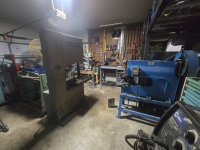
I keep telling these guys that I will only be doing small parts and I keep hearing the same thing. Maybe I am missing the point and it is not just the size of things, but I guarantee you I will never need to be doing rotors or anything like that in the first probably 5 years that I own this machine. I RENT and am not only low on space (i have lots of metalfab stuff, but I also dont want any more uktra large or heavy equipment.


Heres my shop. Im about to build some rollers for my Scotchman saw, the motorcycle is getting moved out in a Bridgeport Mill is getting moved in, and I already have a Fab table, a lift, and some jigs outside. I had to move my wood shop tools and all my motorcycle parts to a spare room in this house.
 

Attachments

  • 17672883354034914772204829602504.jpg
    17672883354034914772204829602504.jpg
    799.3 KB · Views: 50
  • 17672884042067015457982314681991.jpg
    17672884042067015457982314681991.jpg
    678.3 KB · Views: 74

larry_g

Well-known member
Joined
Apr 28, 2007
Messages
16,887
Location
oregon
I agree that 1000 is too much, maybe 600, maybe.

What makes it too small?? The power of motor? I really only need small bushings and such NOW but I jave done work on a larger belt driven lathe and the power was terrible and it felt like I could really only do brass on it. Also the main guy on YouTube who talks about these lathes says it's basically impossible to knurl steel so maybe by small.you meen regitiry and power?
I started with a Atlas 618 probably 30 years ago. It will do your small bushings and such but not much more. Get a project that is steel more than 2" dia and the machine does not have the power or rigidity to do what you want to do in a timely manner. Over the years I've had maybe 9-10 lathes go through my possession. Each a learning experience. Each one I was able to get my purchase price out of when it moved on. I bought a couple just to get the tooling and stuff that went with it and sold the bare lathe on. I finally have a pair of lathes that serve me OK. What I do doesn't often require tenths precision so I make do with the machines I have. Buy a lathe and consider it a learning tool, not the end all of lathes. When you outgrow it sell it on and get what you need using the education you got from the first lathe.
Here is also where sharing your location is useful. I or another member may be local and willing to have you in the shop to learn hands on. May also know of machines that are for sale.

lg
no neat sig line
 

larry_g

Well-known member
Joined
Apr 28, 2007
Messages
16,887
Location
oregon
I keep telling these guys that I will only be doing small parts and I keep hearing the same thing. Maybe I am missing the point and it is not just the size of things, but I guarantee you I will never need to be doing rotors or anything like that in the first probably 5 years that I own this machine. I RENT and am not only low on space (i have lots of metalfab stuff, but I also dont want any more uktra large or heavy equipment.


Heres my shop. Im about to build some rollers for my Scotchman saw, the motorcycle is getting moved out in a Bridgeport Mill is getting moved in, and I already have a Fab table, a lift, and some jigs outside. I had to move my wood shop tools and all my motorcycle parts to a spare room in this house.
Ok I'm going to shift a bit on the above post of mine seeing your not a raw beginner in the metal working world. The above post of mine still applies but seeing the extent of your operation and the inclusion of a mill then I say; Get a lathe that compliments the size of your mill. By this I mean work envelope size. The Bridgport will handle a 10" cube easily and your lathe should compliment this work piece. A lot of project pieces will require both lathe and mill work. A 6" lathe is not complimentary to a Bridgeport. A 10" lathe will help but a 13"-15" lathe will do nicely.

Just a thought to keep in mind as you select machines to work on the projects you may have in the future.

lg
 
OP
T

tbirkey214

Well-known member
Joined
Mar 24, 2025
Messages
173
I started with a Atlas 618 probably 30 years ago. It will do your small bushings and such but not much more. Get a project that is steel more than 2" dia and the machine does not have the power or rigidity to do what you want to do in a timely manner. Over the years I've had maybe 9-10 lathes go through my possession. Each a learning experience. Each one I was able to get my purchase price out of when it moved on. I bought a couple just to get the tooling and stuff that went with it and sold the bare lathe on. I finally have a pair of lathes that serve me OK. What I do doesn't often require tenths precision so I make do with the machines I have. Buy a lathe and consider it a learning tool, not the end all of lathes. When you outgrow it sell it on and get what you need using the education you got from the first lathe.
Here is also where sharing your location is useful. I or another member may be local and willing to have you in the shop to learn hands on. May also know of machines that are for sale.

lg
no neat sig line

Just moved down to Dallas area . Need small lathe, collets and tooling for brisgeport mill, and a rotary phase converter to get things going over here. I have had to beat people do death to afford what I have, but came from Tucson, Arizona where I never had money or decent options for machinery. Has been a dream of mine for past 10 years to have a little shop and have had a decade of absolute heartache trying to build things with a hand grinder and a stick welder.. last business I had was doing ornamental steel stuff for garden type areas and I lasted 2 years trying to move the operation of of my backyard ( which sucked! )
 

bmwrd0

Well-known member
Joined
Nov 7, 2010
Messages
5,482
Location
Beaver Fever Oregon
OK yall, i might go take a look at this instead. I just need something to get going to make simple stuff and something that I can sell easily when I'm ready to move on to a bigger machine.

I have used lathes a bit before at makerspaces for what I need and I have never used more than a drill bit in the tailstock and a carbide cutter.

I am starting to understand how important all that other stuff is, and am starting on having ideas on why I would need it. This is helping a ton


A six inch Atlas/Craftsman is what I started on (outside of shop classes in HS) and is perfect if it will do things the size you need. We used the 12 inch version of that in a very active auto electricians shop I worked at, no issues with it at all. If that one comes with, say, a steady rest, two chucks, the taper attachment, etc., it is worth $1K easy.

There is an urge in the lathe community to tell everyone to go as big as possible, and that is not what you need to hear. That lathe is more than capable of making bushings and pins, as you say you want to start with, and can be sold very easily later on if you feel that it is too small.
 

Rst277

Well-known member
Joined
Oct 25, 2013
Messages
1,719
Location
Winnipeg, Manitoba, Canada
I keep telling these guys that I will only be doing small parts and I keep hearing the same thing. Maybe I am missing the point and it is not just the size of things, but I guarantee you I will never need to be doing rotors or anything like that in the first probably 5 years that I own this machine. I RENT and am not only low on space (i have lots of metalfab stuff, but I also dont want any more uktra large or heavy equipment.


Heres my shop. Im about to build some rollers for my Scotchman saw, the motorcycle is getting moved out in a Bridgeport Mill is getting moved in, and I already have a Fab table, a lift, and some jigs outside. I had to move my wood shop tools and all my motorcycle parts to a spare room in this house.
A brand new Grizzly 7"x12" is a $1000 USD. You will not lose money on it. New and comes with everything you will need.
 

Hank11

Well-known member
Joined
Aug 19, 2019
Messages
1,153
Location
Tennessee
My advice, buy a small lathe with a 4 jaw chuck and a tool post and start turning. After a while, you'll know what you really need. Sell it and buy a better one if you need to. A South Bend 9 or 10 inch is a good starter lathe and may be all you ever need.
Best advice of the thread. ^^^^^^^

I will also suggest that you buy at least a 9 or 10” lathe that comes with some tooling. If the person you are buying from can show you it works, or a friend with knowledge can go with you, and the machine runs and looks pretty good, just buy it. You can get a better one later if needed. There are always guys looking for a small lathe, so selling won’t be a problem.

Almost any lathe is better than not having one.
 

drmarkr

ALLIANCE MEMBER
Joined
Feb 5, 2006
Messages
4,215
Location
Tucson
OK yall, i might go take a look at this instead. I just need something to get going to make simple stuff and something that I can sell easily when I'm ready to move on to a bigger machine.

I have used lathes a bit before at makerspaces for what I need and I have never used more than a drill bit in the tailstock and a carbide cutter.

I am starting to understand how important all that other stuff is, and am starting on having ideas on why I would need it. This is helping a ton

I'm going to say it again. I would recommend taking a class at the local Vo-Tech. If you've taken one before maybe take another more advanced one, based on the comments you've made.

Sure, you can get a lot of this from YouTube videos, but you're going to get so much more by having someone with experience educate you and coach you on some of these decisions. I would do this before I made the purchase you're considering.

This is my advice and your mileage may vary...
 

tool_scrounge

Well-known member
Joined
Jul 20, 2010
Messages
4,199
Location
Southern California
As a small child we had a 6” Craftsman (Altas) lathe. It was pretty wimpy and really only stiff enough for cutting smaller diameter aluminum or plastic parts. Dad later upgraded to the Craftsman Professional (Atlas) 12x36 lathe with the motor and speed control integrated into the base. While a definite improvement, it still was not the greatest for getting nice finish on steel parts. These days I use something the weight of a small car and still would like something with more weight and stiffness.
 
To avoid these ads, REGISTER NOW!
Top Bottom