To avoid these ads, REGISTER NOW!

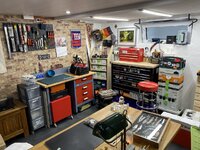
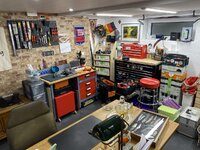
Below 265 SQ/FT Nobody’s tool storage, maintenance & recreation lair.

All workspaces below 265 squarefeet.

Nobody-named-Olli

Well-known member
Joined
Jan 9, 2025
Messages
1,606
Location
North Rhine-Westphalia; Germany
Hi everyone!

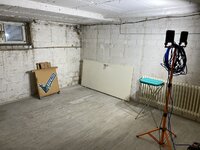
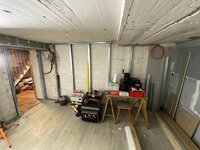
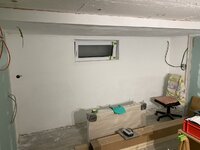
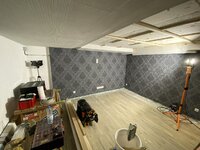
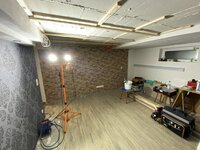
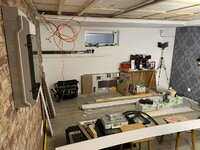
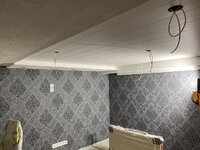
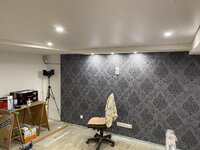
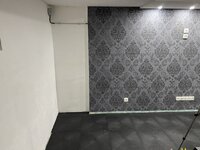
Before diving into the rest of the forum, I’d like to introduce myself and show the first, completed, part of my little lair. It is only missing some trim on the ceiling, that I wasn’t able to install yet because other projects needed completion first.

My name is Olli, will be 39 this year, and I’m first and foremost a DIY’er with a primary focus on house & garden. But have a interest in (and do quite a bit of) other stuff as well.

As per the title, this is where I keep most of my tools, do maintenance on tools that require it, do office work & relax. I do have two more rooms, one for project work and one for storage. These are currently still undergoing remodel - so not to be shown yet.

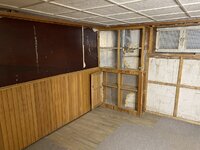
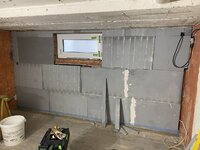
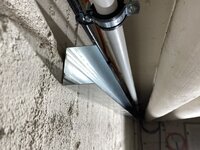
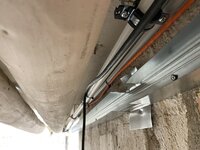
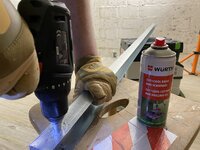
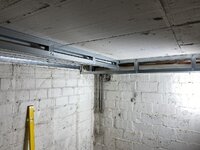
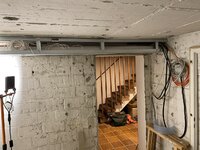
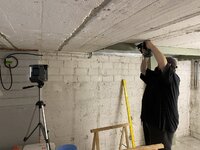
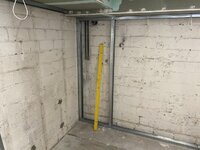
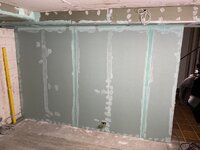
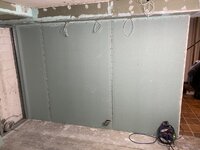
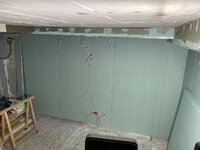
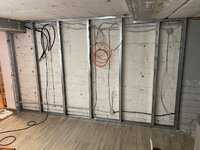
I outfitted/build this room basically from scratch. Meaning that after tearing everything out that was in this room before, it was down to 4 rough brick walls & some pipes (heating) that needed to stay. 3 walls and the ceiling mounted piping were cladded by placing metal studs/framework and drywall. The fourth wall was cladded with mineral materials only, since it is an outside wall that had some humidity issues and I didn’t want to risk anything - although the underlying issues were rectified in the whole process of building this room. The materials used are calcium silicate boards, corresponding mineral based adhesive/plaster and mineral based silicate paint.

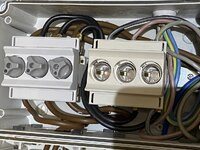
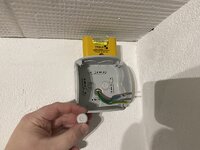
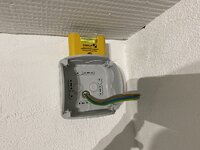
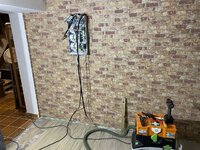
It has it‘s own electrical distribution panel that is fed from the main line.

IMG_3539.jpeg

IMG_3066.jpeg

IMG_3167.jpeg

Kind regards,
Olli
 
To avoid these ads, REGISTER NOW!
OP
N

Nobody-named-Olli

Well-known member
Joined
Jan 9, 2025
Messages
1,606
Location
North Rhine-Westphalia; Germany
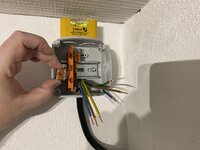
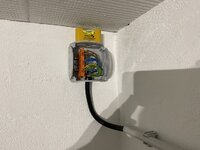
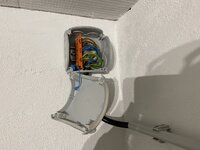
My electrician prepared the second feed, so I could do everything else myself when time came.

IMG_6136.jpeg

IMG_6130.jpeg

Oh yeah, the good stuff. ;)

IMG_6123.jpeg

IMG_6124.jpeg

Terminated and waiting. Lot of slack, as I wanted as much flexibility as possible at this stage. I had not decided where I would put the new distribution panel yet, except for a pretty rough estimate.

IMG_6155.jpeg
 
OP
N

Nobody-named-Olli

Well-known member
Joined
Jan 9, 2025
Messages
1,606
Location
North Rhine-Westphalia; Germany
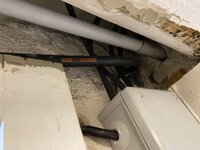
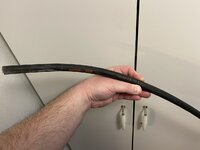
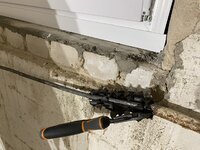
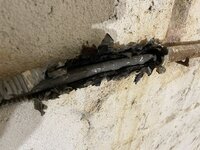
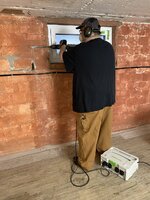
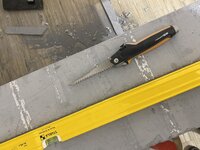
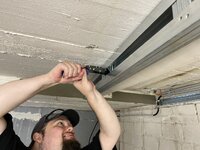
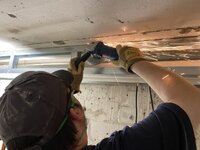
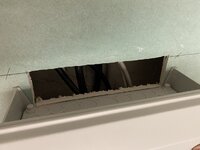
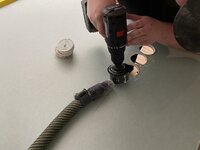
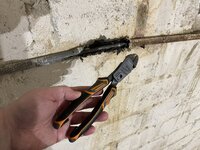
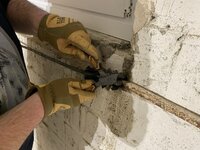
A small, incredibly tedious, job was to remove the old, rotten, conduit off a telecommunication line that could not be removed/ disconnected. The reason for manually cutting this off was that there is a lot of “bad stuff” in this conduit and I absolutely didn’t want to create fine particles/dust while cutting. So using a small angle grinder i.e. was out of question. And, the cable that was used back then is lead mantled. You don’t want lead dust either …

IMG_6271.jpeg

IMG_6279.jpeg

IMG_6280.jpeg

IMG_6274.jpeg
 
OP
N

Nobody-named-Olli

Well-known member
Joined
Jan 9, 2025
Messages
1,606
Location
North Rhine-Westphalia; Germany
Thank you very much, @slim_grim !


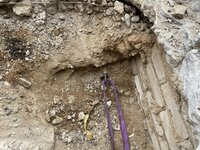
Next came the first try to rectify a larger problem. The pre-owners of this house had a pool in the garden. A pool needs water, so they run a water line through the basement into the garden. They used a massive steel tube to guard that line. Now the line itself needed to be pitched back to basement to allow for it to be drained come winter. The issue with the steel tube used as conduit/guard was that the diameter was too small, to allow for the line to be pitched in the direction of the basement, and the steel tube pitched in direction of the garden - so that no water from the garden would ever travel to the basement through that guarding tube. …

I had capped off both ends of that steel tube with water tight expanding foam. Now I would find out that it was not water tight.

IMG_6427.jpeg

IMG_6443.jpeg

In the corner of this picture you can see the remainder of the 1/2” water line that went through the steel tube.

IMG_6444.jpeg

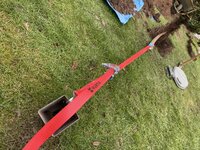
And pulling the tubing from the garden.

IMG_6451.jpeg

IMG_6459.jpeg

IMG_6486.jpeg

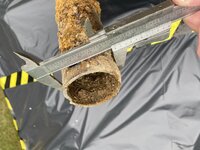
I realized quickly that the part in the garden was not steel. I pulled it, and realized it had separated from the steel tubing - so that would remain for now.
 
OP
N

Nobody-named-Olli

Well-known member
Joined
Jan 9, 2025
Messages
1,606
Location
North Rhine-Westphalia; Germany
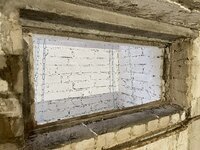
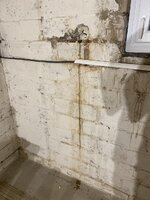
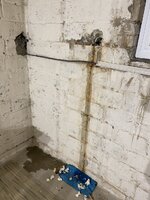
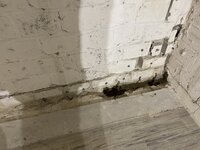
On another occasion I had found another water/humidity related issue on that very same wall.

IMG_6195.jpeg

This is a classic with basements build from bricks. Back in the day they would use tar paper to isolate the first layer of bricks from the rest. On corners, that would overlap. A little over 50 years later thats the prime culprit for water ingress.

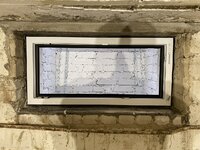
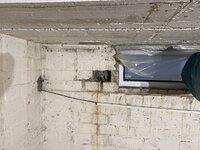
Gladly I know a specialist for isolating/sealing of basements and this was to be rectified by high pressure injecting of an expanding resin. He also had an idea for the steel tube that had remained inside the wall and was still a headache. He asked me to prepare a little and he would do the rest.

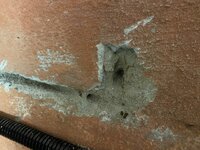
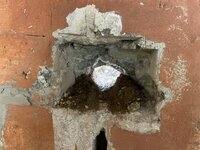
So I quickly cut and then chiseled away a bit of brick all around that pipe.

IMG_6522.jpeg

IMG_6523.jpeg

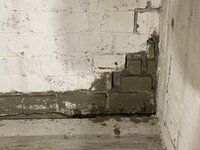
Then a bit more removed, brick as well as steel tube.

IMG_6552.jpeg

And time for injection.

IMG_6553.jpeg

IMG_6554.jpeg

IMG_6565.jpeg

IMG_6588.jpeg

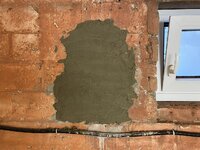
Water tight, non-shrinking, mortar for the steel tube issue.

IMG_6592.jpeg

IMG_6610.jpeg
 
OP
N

Nobody-named-Olli

Well-known member
Joined
Jan 9, 2025
Messages
1,606
Location
North Rhine-Westphalia; Germany
So because of the time that passed, which in retrospect was a God’s send, I realized that the steel tubing issue was still not rectified. While the sealing that was done worked in that very area, water managed to still get by and would now cause humidity in other areas. I was aware of the fact that sealing of the tubing would be more of an experiment than anything else. There was a chance it would work, it didn’t. You will see in the next post(s), why we gave it a try in first place.

IMG_8475.jpeg

IMG_8539.jpeg


IMG_8520.jpeg

IMG_8516.jpeg
 
OP
N

Nobody-named-Olli

Well-known member
Joined
Jan 9, 2025
Messages
1,606
Location
North Rhine-Westphalia; Germany
Solution: The steel tubing has to come out. Where it penetrates the wall, the wall has to be dug out. It has to be filled and the wall needs to be isolated.

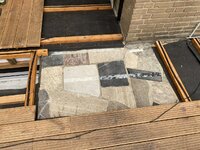
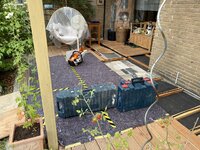
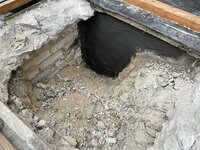
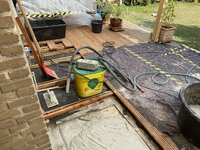
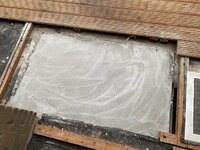
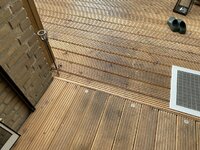
That meant: Removing part of the deck I had built only a year or two prior. Going through the natural stone tiles and concrete foundation of the old patio that I had built the deck on - and brick removal in the basement, once more with feeling. ;) Gladly my specialist was in for the ride. I removed part of the deck and did the inside work, he cut the stone and concrete & did the digging in a first step.

IMG_8810.jpeg

IMG_8833.jpeg

IMG_8864.jpeg

Sure enough, once I penetrated the seal and steel tube, water startet flowing.

IMG_8881.jpeg

IMG_8915.jpeg

IMG_8918.jpeg

IMG_8936.jpeg

IMG_8940.jpeg

First part of the steel tubing already out, trying to loosen the rest of it with a smaller pipe.

IMG_8947.jpeg

First part of the culprit.

IMG_8956.jpeg
 
OP
N

Nobody-named-Olli

Well-known member
Joined
Jan 9, 2025
Messages
1,606
Location
North Rhine-Westphalia; Germany
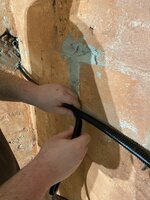
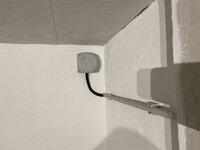
Now confident that the water ingress/humidity problem was solved. I could continue. Next was that old water line. Since it ended exactly where I needed to come out with a CAT (network) and antenna cable and was also in a convenient height. I decided to line it with conduit on the inside and keep it in place.

Just to illustrate that it really used to be a water line.

IMG_9265.jpeg

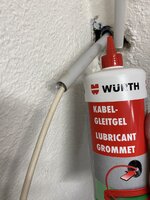
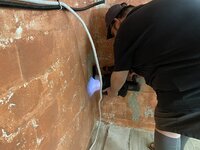
Cut, lined with conduit, antenna cable in using lubricant.

IMG_9270.jpeg

IMG_9271.jpeg

IMG_9279.jpeg

(Yes, I do need compression stockings after having suffered from “open leg” on both legs.)

IMG_9278.jpeg

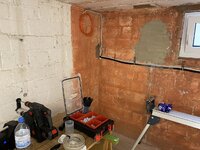
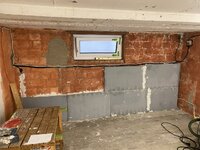
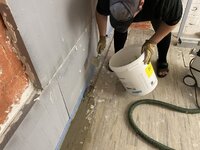
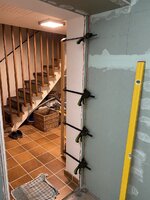
Ready to apply the calcium silicate boards.

IMG_9284.jpeg
 
To avoid these ads, REGISTER NOW!
OP
N

Nobody-named-Olli

Well-known member
Joined
Jan 9, 2025
Messages
1,606
Location
North Rhine-Westphalia; Germany
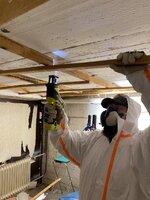
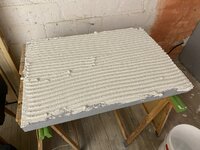
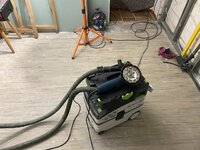
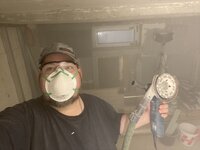
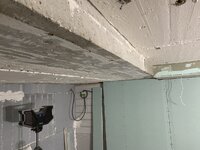
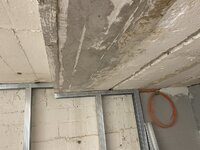
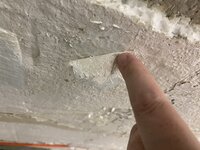
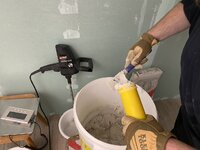
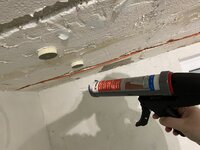
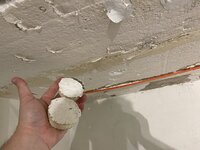
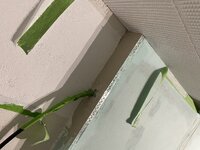
Some more adhesive testing revealed there was no adhesive available that would penetrate/bond through the layer of paint on that styrofoam insulated ceiling. But without the paint, it would create the perfect bond. So the layer of paint ultimately had to go.

IMG_0237.jpeg

IMG_0239.jpeg

IMG_0244.jpeg

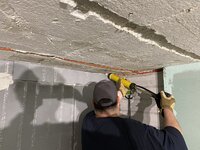
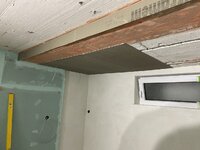
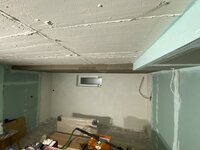
Expansion foam concrete layered boards going onto that part of the ceiling.

IMG_0257.jpeg

IMG_0261.jpeg

IMG_0266.jpeg
 
OP
N

Nobody-named-Olli

Well-known member
Joined
Jan 9, 2025
Messages
1,606
Location
North Rhine-Westphalia; Germany
IMG_0752.jpeg

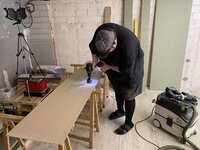
Adding a 40mm plywood to to my Snap-On box as worktop.

IMG_0737.jpeg

IMG_0743.jpeg

IMG_0746.jpeg

From there it still took a bit to get to what you see in the first post, but the build was finished a couple of days before Christmas ‘23. The pictures in post #1 were taken after Christmas ’24 and reflect the condition of “as is”.

The whole build, with life intervening here and there, having to fast lane other projects in between, Material delivery delays, waiting on appointments with tradespeople that I utilized here and there as described, took a good year and a half.

Hope this was interesting and you enjoyed reading & looking at the pictures. Thank you for the chance to add my little lair here - I will now start participating in the other sections as well. If there is any interest, I will add for the actual workshop and storage room to this thread.

Happy New Year & kind regards,
Olli
 
Last edited:
To avoid these ads, REGISTER NOW!
Top Bottom