To avoid these ads, REGISTER NOW!

Non-rust OEM fasteners

jives

Well-known member
Joined
Jan 4, 2013
Messages
2,804
Location
Central NY
Why are OEM fasteners on replaceable parts not rust proof? Case in point; I'm swapping out the shocks on my E350 van and the only problem is rust. Cannot get the nut off the shock mount, cannot get a wrench or socket to fit, and being in a really difficult spot means I cannot just cut or torch it. Had similar problems with lug nuts, with bumper mounts, the list is long. Maybe bumper bolts are not commonly removed, but think of all the brake and suspension parts that are made near impossible simply due to rust. Why, why why?
 
To avoid these ads, REGISTER NOW!

4xdog

Well-known member
Joined
Aug 18, 2012
Messages
5,601
Location
Santa Fe, NM
Can't help ya with the OEM's logic, because it certainly would appear corrosion-resistant treatments are available and well known for high-strength steels. Seems like a false economy to get cheap here, although the cost pressure on every choice in the auto industry is almost beyond imagination.

My solution -- hit everything with Fluid Film as soon after new as one is able, and then every autumn (at least). The underside will be near new under the Fluid Film, including the fasteners.
 
Last edited:

Beanscoot

Active member
Joined
Jul 25, 2018
Messages
41
Location
Vancouver Island, Canada
I like to oil every fastener when I take something apart and reassemble it. And what I don't take apart, I put a little oil on the exposed threads, such as shock absorber fasteners, wheel studs etc. It really makes a difference.
I used to put never seize on everything but now only put it on exhaust or other parts that get really hot.
 

Showkey

"MEMBER EMERITUS"
Joined
Aug 9, 2014
Messages
8,638
Location
Wausau WI
OEM thought process…….all products consider design decisions.

COST
COST benefit when severe rust is really only an issue in the 20 rust belt states. That rust really only becomes a problem after 10 years and then all some service parts are effected not all.

Example the thread on fuel pump access panel……some manufacturers still use a panel and othersQ do not. The regular customer or user could care less and would NOT be a “thing” they base there buying decision on.

Things that has improved in the last 20 years
“stainless” exhaust“ that is not uncommon to last 15-20 years
double galvanized steel panels
ecoat dip
fastener coating/plating
 
Last edited:

HPRifleman

Member Emeritus
Joined
Nov 18, 2019
Messages
767
Location
Wayne, IL
What does the OP considers a "rust-proof" fastener?

I work for a Tier 1 and we specify our zinc-plated fasteners to not show red corrosion during a 96 hour ASTM B117 salt fog test. Other plating techniques could deliver no corrosion up to 600 hours in that same test. What level is considered "rust-proof"?

Nobody can predict the exact environment a fastener is subjected to, so a standardized specification is used instead. How much plating (in hours of a salt fog test) would keep those shock mount nuts from rusting?
 

firebirdparts

Well-known member
Joined
Jun 8, 2016
Messages
10,588
Location
Kingsport, TN
I have a 1970 Datsun Pickup, actually two of them, one is rusty and one is non-rusty. These had cadmium plated bolts throughout the chassis. I don't know why they used them, but on my non-rusty truck, they're still yellow.

I know they cost more, but you have to think bolts are cheap. But ultimately, I have no idea what they were thinking when they built it.
 

slow

Well-known member
Joined
Feb 26, 2006
Messages
2,596
Location
near Orlando
cost, remember vehicles are designed for manufacturing, not servicing. Stainless steel is significantly more expensive and the rust proof formulas might be too brittle for a component like that without major redesigning. I feel bad for those who live in salt states, I was doing suspension work on my 2006 GTO last weekend that has been in FL since it had 100 miles on it, and no rust at all on any pieces of hardware in the rear suspension. I see videos of 3-4 year old vehicles in michigan and it looks like it is 20 year old junk.
 

reader2580

Well-known member
Joined
Dec 31, 2014
Messages
14,516
Location
Minneapolis, MN
OEM thought process…….all products consider design decisions.

COST
COST benefit when severe rust is really only an issue in the 20 rust belt states. That rust really only becomes a problem after 10 years and then all some service parts are effected not all.
My vehicle just turned six years old with 72,000 miles. I live in the Minneapolis area and I already have nuts on my exhaust that are more round than hexagonal from rust. Most of the vehicle is not that bad and no body rust. I could only wish that my car was only slightly rusty once it hits ten years old.

Over on Youtube Eric at South Main Auto pretty much expects vehicles he works on to be quite rusty underneath at 10 years old. At 12 years old or so most are one step from the scrap yard due to rust.
 

F-22

Well-known member
Joined
Jan 23, 2022
Messages
1,830
Most car fasteners nowadays seem to be hot dip zinc coated which is very scratch and rust resistant. Sure there are some ways to achieve better rust protection, but this is already a major step forward from simple galvanized fasteners.

Stainless fasteners are also a lot weaker. If engineered to use them from the start, they could work (as would titanium screws), but it'd cost notably more for next to no benefits. In salt, the stainless fastener will also rust, and sometimes even form a worse form of rust than normal steel.
 

p00p

Well-known member
Joined
Nov 23, 2019
Messages
1,997
Location
42.4974° N, 82.8964° W
things from OEMs are not designed to last forever, otherwise, that OEM would put themselves out of business either by design, by competitors, all the above.

Many things I wished would have lasted longer than they did, but looking back, I generally was able to use the item beyond its' engineered life expectancy.
 

msharley

Well-known member
Joined
Sep 20, 2021
Messages
14,005
Location
Central Pennsylvania
Why are OEM fasteners on replaceable parts not rust proof? Case in point; I'm swapping out the shocks on my E350 van and the only problem is rust. Cannot get the nut off the shock mount, cannot get a wrench or socket to fit, and being in a really difficult spot means I cannot just cut or torch it. Had similar problems with lug nuts, with bumper mounts, the list is long. Maybe bumper bolts are not commonly removed, but think of all the brake and suspension parts that are made near impossible simply due to rust. Why, why why?
That would cost money!

The shareholders are "hurting" ....

Same with GREASE FITTINGS! They cost a dime a pop! Figure about TEN? Maybe TWELVE? on a car?

That is $1.20/per car! At $50,000/car? How do you expect the Big Wigs to get the PLATINUM WHEELS for their Gulf Streams?

Crazy talk!
 

firebirdparts

Well-known member
Joined
Jun 8, 2016
Messages
10,588
Location
Kingsport, TN
Stainless is not really the ideal material for a car chassis. Grease fittings, on the other hand, are an ideal way to put grease in something.
 

tez929rr

Well-known member
Joined
Dec 26, 2005
Messages
3,753
Location
Welfare, TX
That would cost money!

The shareholders are "hurting" ....

Same with GREASE FITTINGS! They cost a dime a pop! Figure about TEN? Maybe TWELVE? on a car?

That is $1.20/per car! At $50,000/car? How do you expect the Big Wigs to get the PLATINUM WHEELS for their Gulf Streams?

Crazy talk!
In 2018 GM produced over 8 million cars. So if your numbers are even close to correct that’s almost ten million dollars.
 

msharley

Well-known member
Joined
Sep 20, 2021
Messages
14,005
Location
Central Pennsylvania
In 2018 GM produced over 8 million cars. So if your numbers are even close to correct that’s almost ten million dollars.
You are correct...

Now, from a buyer's perspective?

Wouldn't it be swell...if you laid out $75,000 for a pick up...and .......it actually had grease fittings where needed....?? (ball joints, tie rod ends, u joints)....

The last "100 pack" assortment of grease fittings I bought, was about $10....(that is where I came up with a dime a pop)...

Of course, if you can not grease your truck, you will get to purchase ball joints & such...much sooner (any idea what GM ball joint is? $25? $35?)
 

reader2580

Well-known member
Joined
Dec 31, 2014
Messages
14,516
Location
Minneapolis, MN
I suspect the main reason for not including grease fittings is to be able to advertise less maintenance. 100,000 mile spark plugs are also to reduce maintenance. Most drivers hate the time and money required for routine maintenance. If an automaker had an internal combustion car that required no oil changes they would sell a lot of them to people who don't like dealing with the hour or two it takes to get an oil change.

Of course, GJers would love grease fittings, but the average driver would not. My converted coach bus has 15 to 20 grease fittings that have to be greased yearly. If I pay a shop it is several hundred dollars for them to put it on their giant lift and grease it. I did it myself last year and it is a pain to do on your back on a creeper. Jacking up the front end and bracing it properly to grease the king pins is a lot of work too.
 

reader2580

Well-known member
Joined
Dec 31, 2014
Messages
14,516
Location
Minneapolis, MN
Stainless fasteners are also a lot weaker. If engineered to use them from the start, they could work (as would titanium screws), but it'd cost notably more for next to no benefits. In salt, the stainless fastener will also rust, and sometimes even form a worse form of rust than normal steel.
Okay, I am not a fastener or metal expert by any means. How does a 316 stainless fastener rust or corrode? Don't they use 316 stainless all over boats used in salt water?
 
To avoid these ads, REGISTER NOW!

F-22

Well-known member
Joined
Jan 23, 2022
Messages
1,830
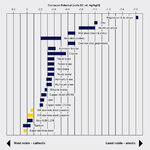
316 is I think the A4 grade stainless for screws, which is indeed the marine-approved stainless steel. The much more common A2 grade stainless steel screws are not.

Stainless loves to form galvanic corrosion.

corrosion-potential_570.jpg

The further the materials are apart on that chart, the more they want to rust when in contact with eachother.

Stainless steel screws in aluminium alloys can rust really bad over time.

Inox-galvanic-corrosion.jpg
 

slidehammer

Well-known member
Joined
Feb 4, 2010
Messages
169
Location
California Central Coast
What does the OP considers a "rust-proof" fastener?

I work for a Tier 1 and we specify our zinc-plated fasteners to not show red corrosion during a 96 hour ASTM B117 salt fog test. Other plating techniques could deliver no corrosion up to 600 hours in that same test. What level is considered "rust-proof"?

Nobody can predict the exact environment a fastener is subjected to, so a standardized specification is used instead. How much plating (in hours of a salt fog test) would keep those shock mount nuts from rusting?

The OEM bolts on my Chevy are some of the nicest fasteners I've encountered. They have what looks like a zinc-aluminum coating that does a great job resisting corrosion and galling. They use flange heads everywhere instead of washers. Where necessary they have rounded pilot points. Class 10.9 and 12.9 all over the place. If only the hardware store stocked fasteners like these.
 
Last edited:

npp

Well-known member
Joined
Dec 6, 2012
Messages
296
And these are the nuts off the exhaust on my 23 year old ZRX11... Corrosion is an result of where you live. I'm in the Mojave Desert.


IMG_20220609_123547240.jpg
So true about where you live, I live in the province of Ontario Canada 🇨🇦 and drive on a road that has been plowed the snow and sprinkled with lots of salt.
 

npp

Well-known member
Joined
Dec 6, 2012
Messages
296
Why are OEM fasteners on replaceable parts not rust proof? Case in point; I'm swapping out the shocks on my E350 van and the only problem is rust. Cannot get the nut off the shock mount, cannot get a wrench or socket to fit, and being in a really difficult spot means I cannot just cut or torch it. Had similar problems with lug nuts, with bumper mounts, the list is long. Maybe bumper bolts are not commonly removed, but think of all the brake and suspension parts that are made near impossible simply due to rust. Why, why why?
I was a tech for 50 years in the salt belt, welcome to my world. There is a reason that the oxy/acetalyne torch is called the liquid wrench.
 

dchawk81

Well-known member
Joined
Jul 31, 2014
Messages
14,346
Easier to sell the newest model when your old one is rusted to **** and too hard to repair.
 

dchawk81

Well-known member
Joined
Jul 31, 2014
Messages
14,346
I have a 1970 Datsun Pickup, actually two of them, one is rusty and one is non-rusty. These had cadmium plated bolts throughout the chassis. I don't know why they used them, but on my non-rusty truck, they're still yellow.

I know they cost more, but you have to think bolts are cheap. But ultimately, I have no idea what they were thinking when they built it.
It's cheap per bolt but add them all up and you're getting into some big numbers.

It's like dollar an hour wage raises. Sounds like chicken feed to the recipient but when you have 4,000 employees...that's big $.
 

dchawk81

Well-known member
Joined
Jul 31, 2014
Messages
14,346
You are correct...

Now, from a buyer's perspective?

Wouldn't it be swell...if you laid out $75,000 for a pick up...and .......it actually had grease fittings where needed....?? (ball joints, tie rod ends, u joints)....

The last "100 pack" assortment of grease fittings I bought, was about $10....(that is where I came up with a dime a pop)...

Of course, if you can not grease your truck, you will get to purchase ball joints & such...much sooner (any idea what GM ball joint is? $25? $35?)
People don't grease their joints religiously when they are serviceable anymore, so that argument doesn't work these days.

The greaseless ones usually last to the original expected life of the car anymore so you're basically in the second life cycle of that vehicle by the time you're replacing them, and ball joints are just one of many things you're replacing.
 

F-22

Well-known member
Joined
Jan 23, 2022
Messages
1,830
Why should we think this rusty left hand thread screw is stainless steel?


And why would we think that the slightly rusty steel bar it goes through is aluminum?

Those probably aren't, hence the rust. But the galvanic rust also spreads on the stainless steel. It also even happens between different types of stainless steel.
 

mikedodge

Well-known member
Joined
Jun 27, 2017
Messages
2,764
Simplest reason is cost. Not to mention usually those bolts and threads only really have problems in road salt areas so it would be an extra cost for no reason in a lot of areas. Plus as long as they are still easily removable during the warranty period most car manufacturers probably don't care.
 

finn

Well-known member
Joined
Mar 27, 2005
Messages
16,203
Location
The UP, God's country
I suspect the main reason for not including grease fittings is to be able to advertise less maintenance. 100,000 mile spark plugs are also to reduce maintenance. Most drivers hate the time and money required for routine maintenance. If an automaker had an internal combustion car that required no oil changes they would sell a lot of them to people who don't like dealing with the hour or two it takes to get an oil change.

Of course, GJers would love grease fittings, but the average driver would not. My converted coach bus has 15 to 20 grease fittings that have to be greased yearly. If I pay a shop it is several hundred dollars for them to put it on their giant lift and grease it. I did it myself last year and it is a pain to do on your back on a creeper. Jacking up the front end and bracing it properly to grease the king pins is a lot of work too.
Don’t understand the infatuation with grease zerks. I’m old enough to remember cars from the fifties that had a plethora of zerks. Guess what.. Life expectancy of those cars was a fraction of what a modern car will run, even though the modern cars have no zerks. Ball joints, u joints, etc were regularly replacer at 50k miles, sometimes less.

plus, they all needed grease jobs every six months or a year. Think all that maintenance is free?

My dad got rid of his 46 Ford in 1950. The front end (kingpins) was already shot.
 

Wiz02

Well-known member
Joined
Jul 13, 2007
Messages
2,399
Location
Southeastern PA
Can someone explain how you can have multiple oem "identical" fasteners on the same part that are in close proximity to each other, and some have no corrosion while others are corroded? I have seen this multiple times on different vehicles and it's always a headscratcher.
 

F-22

Well-known member
Joined
Jan 23, 2022
Messages
1,830
Until the rustproofing method is "breached", they won't rust. Once a tiny part of it starts to rust, it just spreads underneath the top rustproofing layer of steel.

So a minor scratch can make a screw start to rust after a little while.
 

gba2331

Well-known member
Joined
Sep 22, 2021
Messages
762
Ha, I wish that I only had to worry about rusty bolts.

Chevy used unpainted steel BRAKE LINES on my 2002 Tahoe - that was a $3k bill to fix 15 years later. I find this to be almost inexcusable, rusted out brake lines are a safety issue, though the DOT has never issued a recall (probably due to the exorbitant cost).
 

nbpt100

Well-known member
Joined
Oct 19, 2016
Messages
2,301
Location
Massachusetts
Ha, I wish that I only had to worry about rusty bolts.

Chevy used unpainted steel BRAKE LINES on my 2002 Tahoe - that was a $3k bill to fix 15 years later. I find this to be almost inexcusable, rusted out brake lines are a safety issue, though the DOT has never issued a recall (probably due to the exorbitant cost).
yes. Serious consequences. I often use the Cu-Ni brake line as a replacement. More money but easy to bend and will not rust like steel. They can corrode but it is that green copper corrosion and takes a long time.
Things that has improved in the last 20 years
“stainless” exhaust“ that is not uncommon to last 15-20 years
double galvanized steel panels
ecoat dip
fastener coating/plating
Yes, My 96 Sable had a stainless exhaust that lasted the cars lifetime. Exhaust still in good condition when it sold for junk. That was a good move by Ford. As the dealers have been trying to get customers to use their service departments, I always wondered if it was a strategy to keep people from running to the Muffler chains for the cheap exhaust repair. You know the free life time replacement on the muffler? Then people getting use to going to them for all car repairs and maintenance.
Stainless fasteners are also a lot weaker. If engineered to use them from the start, they could work (as would titanium screws), but it'd cost notably more for next to no benefits. In salt, the stainless fastener will also rust, and sometimes even form a worse form of rust than normal steel.
I believe stainless hardware is close in strength properties as a Grade 5 or class 8.8. Lots of those used on vehicles and farm equipment. You do have to worry about the threads galling in some applications. I always use antisieze... Especially if used with a stainless nylock nut. I will always replace the nuts/bolts with stainless (as practical) when doing exhaust work on my cars. Always easier to get them off if need be. Never had a problem.
Easier to sell the newest model when your old one is rusted to **** and too hard to repair.
Yes, being a bit cynical I have always thought that was part of their business model. To help their parts businesses and keep new sales strong. The cost to repair drives people to new or new used. Right now with the high replacement cost people are doling out the money to repair where in past times they would have traded it in.
Can someone explain how you can have multiple oem "identical" fasteners on the same part that are in close proximity to each other, and some have no corrosion while others are corroded? I have seen this multiple times on different vehicles and it's always a headscratcher.
That's a Good question. I would guess it has to do to the path of the micro currents caused by dissimilar materials. It follows the path of least resistance. It may just be a result in variations in plating quality.

Use surface shield or fluid film on vulnerable areas on the car, truck or machine.
 
Last edited:

Beanscoot

Active member
Joined
Jul 25, 2018
Messages
41
Location
Vancouver Island, Canada
There's a huge variety of stainless steel fasteners, ARP makes some very strong ones. Here's a blurb from the ARP website:


The chart below should remove any lingering doubts that ARP Stainless is the best choice for your ride – whether it’s a hot rod, classic or a land speed car.
tensile-strength.jpg

Call or email us to discuss ARP Stainless for your next project.
800-826-3045 or email us.

As for rusty brake lines, it is kind of surprising that the evil meddling US Federal Government still allows steel lines. Volvo switched to copper nickel in 1976 and a few other European makers also use it (or similar copper nickel alloy) now.
If there were a federal mandate that all cars sold shall have CuNi brake lines, then all car prices would go up a little bit, not just the ones that chose to use good brake line material.

It seems odd that with all the safety mandated equipment in new cars that corrosion proof brake lines, which seem like a simple, cost effective way to preserve braking particularly in salt belt areas, are not required.
 

American Locomotive

Well-known member
Joined
Jan 8, 2017
Messages
10,937
Location
Rhode Island
Most fasteners on vehicles are plated. Many of the cadmium (yellow) plated bolts on my old Land Cruiser still look great even though the frame dissolved around them.

The issue is salt water spray is highly corrosive, perhaps even more corrosive than just being dunked in salt water.

Once the plating has been compromised, it's all over.

Stainless fasteners are great, but there are more to material properties than just ultimate tensile stength. There are a variety of reasons why stainless fasteners are not appropriate, besides the fact they are significantly more expensive.

If you want less corrosion, write to your local lawmakers that you want a reduction of road salt usage, increased sanding, and mandatory winter tires.
 

nbpt100

Well-known member
Joined
Oct 19, 2016
Messages
2,301
Location
Massachusetts
Stainless fasteners are great, but there are more to material properties than just ultimate tensile stength. There are a variety of reasons why stainless fasteners are not appropriate, besides the fact they are significantly more expensive.
Yield strength is the property considered first and formost for design strength. If a Grade 5 or class 8.8 will do, educate us why a stainless bolt or nut would be inappropriate? Cost aside. Fatigue?
 

American Locomotive

Well-known member
Joined
Jan 8, 2017
Messages
10,937
Location
Rhode Island
Tensile strength is simply the maximum tensile stress the material can take before it ruptures. You also have properties like yield strength, modulus of elasticity, fatigue life. While there is obvious correlation between all of those properties and ultimate tensile strength, it's not 1:1, and those properties do matter in many applications. Many SS alloys are very prone to work hardening, which could be problematic in a highly stressed bolt.

Stainless steel can also have galvanic corrosion with dissimilar metals (the not stainless metal will corrode more aggressively), and stainless bolts being tightened into stainless nuts will often result in severe galling and the threads basically cold-welding together.
 
To avoid these ads, REGISTER NOW!
Top Bottom