To avoid these ads, REGISTER NOW!

Not this again. What’s this tool?

Jack84

Well-known member
Joined
Jul 30, 2016
Messages
516
Location
Netherlands
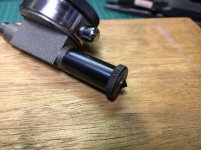
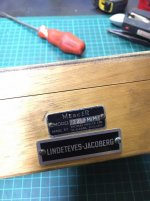
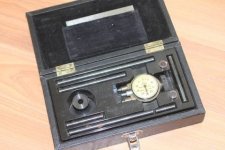
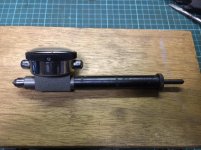
Recently I picked up a Mercer dial gauge, it’s old but I can’t figure out what it was used for. Pretty sure it ain’t a bore gauge though because the measuring cone and bits would marr up the surface of the bore you’re measuring.
You also need quite some force to actuate it, it has a strong spring in it. Unlike any other dial gauge I know.
Adjustments.jpg
Adjustments.jpg
IMG_0413.jpg
IMG_0409.jpg
Adjustments.jpg

Any help identifying it would be appreciated.
 
Last edited:
To avoid these ads, REGISTER NOW!

Strouty

Well-known member
Joined
Mar 21, 2010
Messages
38,215
Location
Southern Maine
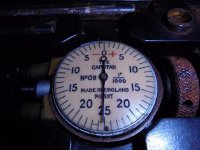
Something for hardness? Could the dial indicate something that gets extrapolated? Can we get a picture of the dial? Also I am not doing the obvious search, I find this to be more interesting to try and figure it out by the tool itself.
 
OP
J

Jack84

Well-known member
Joined
Jul 30, 2016
Messages
516
Location
Netherlands
Something for hardness? Could the dial indicate something that gets extrapolated? Can we get a picture of the dial? Also I am not doing the obvious search, I find this to be more interesting to try and figure it out by the tool itself.


I added a picture.

The dial is just a normal, nothing special.
I did a search already and can’t find anything useful.
 

Provincial

Well-known member
Joined
Sep 21, 2011
Messages
6,870
Location
Near Salem, OR
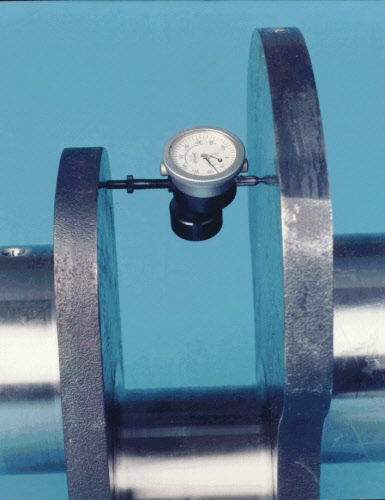
It looks like a crankshaft distortion gauge. They are put between the throws of a crankshaft, which is then rotated in the main journals. If the gauge indictates movement, it means that the main journals are not in line, and the crank is having to flex as it rotates.
 
OP
J

Jack84

Well-known member
Joined
Jul 30, 2016
Messages
516
Location
Netherlands
It looks like a crankshaft distortion gauge. They are put between the throws of a crankshaft, which is then rotated in the main journals. If the gauge indictates movement, it means that the main journals are not in line, and the crank is having to flex as it rotates.


Thanks! This one had me baffled. Explains the spring pressure and hardened tips.
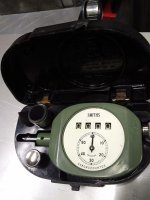
Found an image of it, easy when you know what it is.
l_kp_inkw1.jpg
 
To avoid these ads, REGISTER NOW!

isb cornbinder

Well-known member
Joined
Nov 3, 2010
Messages
7,073
Location
Pacific South West, BC, Canada
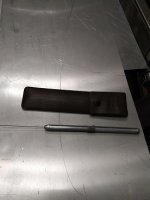
I found a similar tool on Craigslist. I was told the tool I bought is to measure connecting rod to crank accuracy. More of the same thing, maybe a little different.
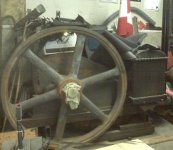
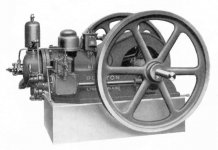
The tool I bought is made by Ruston Hornsby for use on the engines they built.
My Ruston is a Canadian Elevator Engine. 640 cubic inches single cylinder Diesel.
 

Attachments

  • Ruston HR 2.jpg
    Ruston HR 2.jpg
    46.1 KB · Views: 32
  • Ruston Hornsby.jpg
    Ruston Hornsby.jpg
    57.5 KB · Views: 29
  • Ruston crank gauge.jpg
    Ruston crank gauge.jpg
    54.2 KB · Views: 33
  • RUSTON DEFLECTION GAUGE.jpg
    RUSTON DEFLECTION GAUGE.jpg
    62.7 KB · Views: 34
Last edited:
OP
J

Jack84

Well-known member
Joined
Jul 30, 2016
Messages
516
Location
Netherlands
I found a similar tool on Craigslist. I was told the tool I bought is to measure connecting rod to crank accuracy. More of the same thing, maybe a little different.

The tool I bought is made by Ruston Hornsby for use on the engines they built.

My Ruston is a Canadian Elevator Engine. 640 cubic inches single cylinder Diesel.


Nice find!
I love those oddball tools from yesteryear.
 

Sevenhills1952

Well-known member
Joined
Aug 30, 2018
Messages
1,750
Location
Virginia
And you know these quality tools were very expensive new. Really nice things!

Sent from my SM-S320VL using Tapatalk
 
To avoid these ads, REGISTER NOW!
Top Bottom