To avoid these ads, REGISTER NOW!

Now That I Have a Plasma Cutter......

Heavy Metal Doctor

Well-known member
Joined
May 26, 2010
Messages
5,417
Location
Mason Dixon Line
My hand isnt so steady so Im seeing making some 'aids' will be in order. Im kinda thinking something that will hold torch thats drug against straight edge. Then again not having used one maybe it will less prone to my 'input' than oxy torch. Well see., just getting anxious suppose.

I'm kinda the same way - not real great burning smooth lines with and oxy-torch. I would say the plasma work is significantly finer / smoother, although, the cut can get rough no matter how steady you are when the tip is wearing out.
I have never bothered with a circle cutter / guide, but I might want it for very large diameter arcs. I'm usually doing under a 10" diameter, so I just use whatever matching round stuff is handy laying around the welding area / scrap metal bin.
Also, keep in mind that the arc is pretty well on center when the tip is brand new, but once it cuts for a bit, it sort of leans off to one side a tad bit. This is no big deal cutting straight where the direction of travel stays the same, but can effect cutting and circle a lot. If you use a round guide and just run the cutter around it while holding it in the same orientation to you, it makes the cutting path rotate around as you go. The off-center tilt of the arc will essentially make your round cut just a tiny bit oval. This is no big deal when you will be welding over it (like burning a round hole in a flat plate and then welding in a pipe through the hole), but can make a world of difference if you want a finished circle with no other work after the cut is made. For this situation I just mark the plate and free-hand follow the line adjusting the arc to the line as I go. A light touch up with a grinder and that 's it.
 
To avoid these ads, REGISTER NOW!

Ben Buck

Well-known member
Joined
Dec 30, 2010
Messages
7,265
Location
S. W. Ohio
Well don't have the cutter yet, **** I have been trying to get some items I thought would be helpful?

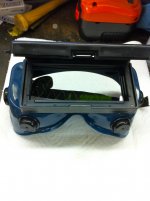
Googles from Rural King, grade 5, flip lense $10.99.

A filter regulater, I found at Agi Supply in Statesboro, Ga a couple of weeks ago when I was there on vacation. After tax and stuff $13.00.


This is a backup, incase the one that comes with the unit is a piece of ( ? )
I'm getting excited about this unit, don't have too much experince with it, **** look out !!!!
 

Attachments

  • IMG_1844.jpg
    IMG_1844.jpg
    138.1 KB · Views: 36
  • IMG_1841.jpg
    IMG_1841.jpg
    136.4 KB · Views: 36
  • IMG_1840.jpg
    IMG_1840.jpg
    139.6 KB · Views: 35
  • IMG_1839.jpg
    IMG_1839.jpg
    141 KB · Views: 40

KyleQ

Well-known member
Joined
Jul 6, 2011
Messages
147
Location
Twin Cities, MN
I really like that hand truck idea - most carts have lame wheels that just don't handle much of anything on concrete, let alone dirt. I'll have to find myself a hand truck now-

As for those goggles - if you have ever used them before... yuck. I'm totally going to rock a set of these-
235657_Blue_Shd_5_Glasses.jpg


My father's machine has been flawless for 6+ years with the crappy cheap looking pressure regulator, so I'm not worried about that yet.

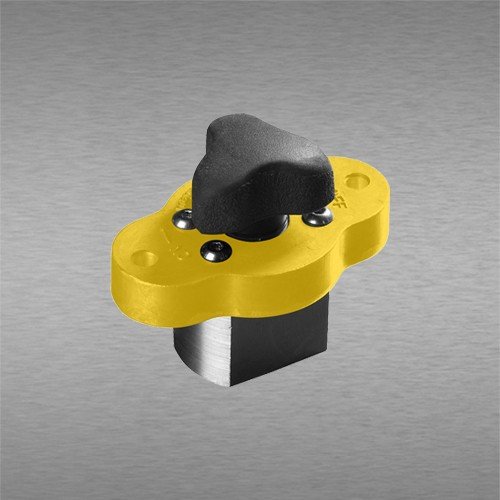
I do plan on making some sort of quick release guide or straight edge - something along the lines of a piece of oak end trim (it doesn't burn or start on fire easily, not to mention it's hard as a rock) and something similar to these Magswitch magnets-
51QpLjFdjfL.jpg


I figure if I make a few lengths of oak trim with the slots in them for these I can quickly grab whatever length of fence I need and quickly square it up and start cutting.

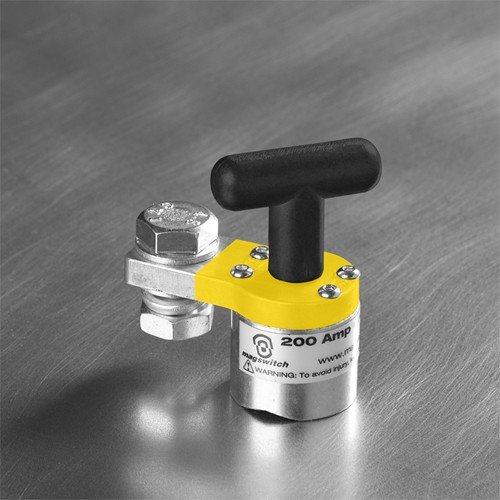
Not to mention they make these too - magnetic ground "clamps"!

51LQEsqTadL.jpg
 

gungatim

Well-known member
Joined
Jan 8, 2013
Messages
8,101
Location
west mich
sub'd for when mine comes in...never used one so need to learn.

I do have some curv-o-mark cutting guides (freebies when I worked for the company), so I am good there...

on the Acetylene torch, no way I have ever gotten close to 500 hrs. on my full size tanks...I must be doing something wrong, my tanks are close to empty and since filled 2 yrs. ago, I cut apart a scrap quad, some scrap steel angle stock, some brazing, and some soldering. 50 hrs. maybe but 500, no way...

and if mine does arrive DOA, it will be a good excuse to learn how to fix one : )
 

KyleQ

Well-known member
Joined
Jul 6, 2011
Messages
147
Location
Twin Cities, MN
If it shows up DOA it is probably due to the inter contacts not being spaced correctly. I believe when the machine activates it generates a magnetic field around two plates and pulls them together - like an electric clutch. We had to adjust ours when we got our first China box.
 

beelsr

Well-known member
Joined
May 6, 2007
Messages
1,324
Location
NE PA, USA
rule #9 - overhead cutting WILL put hot **** down your neck and in your ear drums no matter how much protection you wear!

true dat! :(

Gravity dropped a chunk of lava down my father-in-law's eardrum and it burned through the drum and roasted his anvil & hammer. Rushing to finish a job and not dressing up for the work cost him hi shearing in one ear. But on the bright side, he's had 4 or 5 inner-ear reconstructive surgeries of the last decade. Still can't hear but at least he can close his eyes in the shower and not fall over.
 
To avoid these ads, REGISTER NOW!

eddiemeddiem

Well-known member
Joined
Dec 19, 2011
Messages
153
I know people use plasma tables for cutting. It'll be nice to build one eventually.

I assume it's safe to use the plasma to cut metal that's a few inches above a concrete floor (ie supported by 2x4s or 4x4s? Are there tons of sparks that go everywhere? I watched several videos on YouTube, but they mainly focus closeup on the cut. Will a couple welding blankets be needed to help contain the sparks?
 

sberry

Banned
Joined
Jun 18, 2005
Messages
35,747
Location
Brethren, Michigan
I am not always perfect but rarely use a guide. For long fast straights have a yardstick I grab up.
 

Attachments

  • channel cuts.JPG
    channel cuts.JPG
    48.9 KB · Views: 132
  • Cary cut.JPG
    Cary cut.JPG
    56.1 KB · Views: 123
  • cut slag chip.jpg
    cut slag chip.jpg
    142.5 KB · Views: 116
  • cut typ 2.jpg
    cut typ 2.jpg
    142.6 KB · Views: 106

Aquamoose

Well-known member
Joined
Jan 28, 2014
Messages
365
How'd I miss this discussion? Good points & suggestions! Thanks to all!


Sent from my iPhone using Tapatalk
 

DekeT

Well-known member
Joined
Aug 12, 2011
Messages
2,234
Location
USA
In a previous life I had taught students to use both a handheld and a cnc table.

Rule 1. It is expensive to operate. Torches and saws are cheaper. It should definitely be a tool in your arsenal but it shouldn't be the first one you always grab.

Rule 2. Use a guide. Even if it is just a scrap of material vise gripped down that you run the torch against, you'll have much better results. Freehand cutting usually looks like ****.

Rule 3. Try to get used to holding the torch just above the material with minimal gap. You can usually drag it as well but it is harder on the consumables.

Rule 4. If you go too fast and the torch quits cutting, the gap will fill with dross. This is charcoal like and not metal like so it will be hard to restart the cut. Sometimes it is better to try to start with a new pierce in a different location and go backward to where your cutting stopped.

Rule 5. With a pilot arc torch (which you have purchased) you can burn a deep nasty hole in your leg quite easily. If you pull that damn trigger with the gun resting against your leg you will be in a whale of hurt. Keep your finger off the safety.

Rule 6. Get a tinted faceshield or glasses. The arc is too bright to just look at if you want to be able to see but a full helmet is too dark. I used to use a #5 shield with the students and it worked well to protect them from sparks and be dark enough they could see what was going on. Faceshields are better than glasses as they allow you to be wearing safety glasses underneath for double protection and leaves your eyes still protected when you raise it (as opposed to taking off just glasses).

Rule 7. Ventilation is important. You are essentially burning metal and blowing the leftovers out to create a gap. The smoke is nasty ****. Breathe as little of it as possible.

Rule 8. Don't try to be a manly man. Wear a glove. That **** is hot and you are inches away.

Thank you very much for these great tips. :thumbup:
 

nonhog

Well-known member
Joined
Nov 6, 2007
Messages
2,449
Location
Arizona (Tucson)
Just got 220 installed last night. Need to study up some more before farting around anymore with my Lotos. Was curious about it not liking to arc unless I waited a few seconds. Not running it for a long time at all.
Not yet concerned. All very new to me.
My head is spinning with all the uses I do (and will) have. :thumbup:
 

jimcolt

Active member
Joined
Apr 19, 2013
Messages
34
Location
NH
Rule 1. It is expensive to operate. Torches and saws are cheaper. It should definitely be a tool in your arsenal but it shouldn't be the first one you always grab.

This depends on the plasma cutter. Many of the older technology plasma's and low cost imports eat consumables at as much as 10x that of the major brand, latest technology systems. I can guarantee that with a new Hypertherm Powermax that the cutting cost per foot of cut will be far less expensive as compared to oxy-fuel, saws and abrasive cutoff wheels. The typical cost per foot of cut with a good quality air plasma is about 1/2 cent per foot on 1/2" steel, this includes the cost of compressed air and consumables.

Rule 2. Use a guide. Even if it is just a scrap of material vise gripped down that you run the torch against, you'll have much better results. Freehand cutting usually looks like ****.

Freehand is tough with plasma's that have exposed, unshielded nozzles as you must hold a standoff. With a shielded torch you can drag the torch right on the material or alongside a template or straightedge with no affect to consumable life. Better technology, the shielded torch, comes on major brand modern technology plasma.

Rule 3. Try to get used to holding the torch just above the material with minimal gap. You can usually drag it as well but it is harder on the consumables.

See rule two above!

Rule 4. If you go too fast and the torch quits cutting, the gap will fill with dross. This is charcoal like and not metal like so it will be hard to restart the cut. Sometimes it is better to try to start with a new pierce in a different location and go backward to where your cutting stopped.

If the above happens you can cut right over the dross...it is simply resolidified metal and cuts just as well as the base material. Generally if your plasma produces adequate power for the material thickness being cut you will not have this issue.

Rule 5. With a pilot arc torch (which you have purchased) you can burn a deep nasty hole in your leg quite easily. If you pull that damn trigger with the gun resting against your leg you will be in a whale of hurt. Keep your finger off the safety.

The major brand plasma's all have safety triggers that make it difficult to fire the torch in situations like this. There are many safety features on the major brand systems that you will not find on older technology plasmas and low cost imports. Be careful!

Rule 6. Get a tinted faceshield or glasses. The arc is too bright to just look at if you want to be able to see but a full helmet is too dark. I used to use a #5 shield with the students and it worked well to protect them from sparks and be dark enough they could see what was going on. Faceshields are better than glasses as they allow you to be wearing safety glasses underneath for double protection and leaves your eyes still protected when you raise it (as opposed to taking off just glasses).

AWS shade 5 is good for up to 45 amp plasma cutting. Above this refer to the charts for suggested shade. When cutting the majority of the cutting arc is between the edges of the cut....so with plasma there is way LESS exposure than with welding processes, and usually much lower amperage.

Rule 7. Ventilation is important. You are essentially burning metal and blowing the leftovers out to create a gap. The smoke is nasty ****. Breathe as little of it as possible.

The fumes are simply particles of the material being cut. Fume control is important....plasma appears to make more smoke as compared to oxy-fuel cutting.....because it is so much faster and hotter.

Rule 8. Don't try to be a manly man. Wear a glove. That **** is hot and you are inches away.

Personal protective gear is a must!

Jim Colt Hypertherm
 
Last edited:

oldtractors

Well-known member
Joined
Nov 19, 2007
Messages
375
Location
Iowa
I know people use plasma tables for cutting. It'll be nice to build one eventually.

I assume it's safe to use the plasma to cut metal that's a few inches above a concrete floor (ie supported by 2x4s or 4x4s? Are there tons of sparks that go everywhere? I watched several videos on YouTube, but they mainly focus closeup on the cut. Will a couple welding blankets be needed to help contain the sparks?

Tried that. It is too hot and will blow up or gouge your concrete. You want it a foot or so above the concrete. Plus you won't have to do the cutting on your knees.
 
To avoid these ads, REGISTER NOW!
Top Bottom