To avoid these ads, REGISTER NOW!

OK to cut metal with most circular saws?

iwoodsman

Member
Joined
Dec 20, 2024
Messages
8
I'm mostly looking for folks to confirm or deny what I have been reading: the official manuals for all the DeWalt cordless circular saws say clearly, "WARNING: Do not cut metal, plastic, concrete, masonry or fiber cement materials with this saw."

Yet, it seems that everyone is putting Diablo blades into their woodworking saws and cutting sheet metal without hesitation. DeWalt has a few 5-1/2" saws marketed for metal work that default to lower rpms, but it seems like the larger more popular models are doing lots of double duty.
Is there a reason why DeWalt says not to do a thing that plausibly could be a legitimate warning, yet so many folks do it anyway? Is it just common knowledge that the warning is for unrealistic caution for liability purposes?
Is anyone aware of instances when someone really did get injured simply by using a metalwork blade on a typical 7-1/4" saw?
I did consult ChatGPT about this, it's description of the dangers is pasted below. Comment from humans who actually use the tools whether these issues are real?

Potential Dangers

  1. Excessive Heat and Sparks:
    • Cutting metal generates significant heat and sparks, which can damage the saw or cause injuries.
    • Sparks can ignite flammable materials nearby.
  2. Blade Compatibility:
    • A standard circular saw may not have the appropriate speed or torque for metal-cutting blades. Metal blades often require lower RPMs to operate safely.
  3. Kickback:
    • Metal cutting creates more resistance than wood. If the saw isn't designed to handle that resistance, the risk of kickback increases.
  4. Lack of Guarding:
    • Standard circular saw blade guards are not optimized for metal cutting and may not properly contain flying metal debris.
  5. Wear and Tear:
    • Prolonged use of a regular circular saw for metal can damage the motor, bearings, and other components.
 
To avoid these ads, REGISTER NOW!

alwaysFlOoReD

Well-known member
Joined
Sep 24, 2013
Messages
2,409
Location
Airdrie, Alberta, Canada
I've used makita 7.25" circular saws for decades with regular carbide tip wood blades for cutting aluminum sheet (soffit). Using wd-40 I can and have cut up to 5/8" aluminum stock (edit; with a 10" table saw). Never had a saw conk out because of that.
Using the same saw and a metal cutting blade, I've cut lots of 28(?)gauge roofing sheet metal and siding. Again no harm to saw but lots of metal shards flung everywhere. I have cut thicker, up to 1/4", but very seldom. The saw struggles a bit with that.
As far as injuries, very minor. Digging out metal shards from my forearms... I wear safety glasses and leather gloves.
 

alwaysFlOoReD

Well-known member
Joined
Sep 24, 2013
Messages
2,409
Location
Airdrie, Alberta, Canada
I cut metal with my worm drive. I've never tried one of those battery powered saws. You'll need a face shield for sure.
Yes, the blade is on the side towards your body on cordless saws (if you're right handed) and opposite on corded saws. Less likely to get hit in the face with corded saws. But a full face shield is a very good idea.
 

seber

Well-known member
Joined
May 31, 2016
Messages
4,207
Location
Deep East Tx.
I have a dedicated worm drive with abrasive blade. The grit is pretty bad and I'm surprised at how well it has held up. But you definitely want a full face guard and heavy duty hearing protection. Goggles would not be a bad idea.
 

JradM

Well-known member
Joined
Sep 4, 2019
Messages
1,821
Location
Alberta
For those of you who've done this, how thick of metal are you cutting?

The 28ga and aluminum that AlwaysFloored mentions are very thin. Is that because that's the limit of what's possible or prudent?
 

alwaysFlOoReD

Well-known member
Joined
Sep 24, 2013
Messages
2,409
Location
Airdrie, Alberta, Canada
For those of you who've done this, how thick of metal are you cutting?

The 28ga and aluminum that AlwaysFloored mentions are very thin. Is that because that's the limit of what's possible or prudent?
For me, its because it's the work that I do; siding and roofing. Thicker stuff I've cut is for hobbies.
If I was cutting thicker stuff for work, I'd get the appropriate tool. Perhaps a plasma cutter or oxy-acet. Or a dedicated metal cutting circular saw.
 

bwringer

Well-known member
Joined
Jan 1, 2013
Messages
10,328
Location
Indianapolis
I think another factor is that the dust and debris that can get into the motor is pretty harmful. Metal dust is conductive, which could get exciting. And of course concrete, masonry, etc. generate dust that's very harmful to lungs.

Basically, the manufacturer's main goals are to avoid expensive warranty claims and liability. The tool and its safety features are designed for cutting wood, so any "off-label" use will cause early wear and could exceed the ability of the safety features to protect the user.
 

geneg

Well-known member
Joined
Oct 19, 2020
Messages
468
Location
Midwest
I've done it over the years. Aluminum soffit- just use a smaller tooth sharp carbide blade.
Steel roof & wall panels- same approach, sharp carbide blade, abrasive blades make too much dust. But I use an older saw for steel. Just concerned about the effect on brushes & bearings. If using a table saw, use a zero clearance blade insert to avoid pulling the metal edges.

All of the options are TOO loud & make a big mess. Face shield or goggles req'd.! A power shear or a nibbler are made for this.
 

alwaysFlOoReD

Well-known member
Joined
Sep 24, 2013
Messages
2,409
Location
Airdrie, Alberta, Canada
I think another factor is that the dust and debris that can get into the motor is pretty harmful. Metal dust is conductive, which could get exciting. And of course concrete, masonry, etc. generate dust that's very harmful to lungs.

Basically, the manufacturer's main goals are to avoid expensive warranty claims and liability. The tool and its safety features are designed for cutting wood, so any "off-label" use will cause early wear and could exceed the ability of the safety features to protect the user.
There is no dust when using a carbide tip blade. Lots of metal shards...
I cant speak to abrasive blades as they were much too slow cutting for me.
 

seber

Well-known member
Joined
May 31, 2016
Messages
4,207
Location
Deep East Tx.
For those of you who've done this, how thick of metal are you cutting?

The 28ga and aluminum that AlwaysFloored mentions are very thin. Is that because that's the limit of what's possible or prudent?
I've cut 1/4" steel plate for a bench grinder stand but it is pretty slow going.
 

neophyte

Well-known member
Joined
Apr 23, 2012
Messages
9,812
Location
Pennsylvannia
I'm mostly looking for folks to confirm or deny what I have been reading: the official manuals for all the DeWalt cordless circular saws say clearly, "WARNING: Do not cut metal, plastic, concrete, masonry or fiber cement materials with this saw."

Yet, it seems that everyone is putting Diablo blades into their woodworking saws and cutting sheet metal without hesitation. DeWalt has a few 5-1/2" saws marketed for metal work that default to lower rpms, but it seems like the larger more popular models are doing lots of double duty.
Is there a reason why DeWalt says not to do a thing that plausibly could be a legitimate warning, yet so many folks do it anyway? Is it just common knowledge that the warning is for unrealistic caution for liability purposes?
Is anyone aware of instances when someone really did get injured simply by using a metalwork blade on a typical 7-1/4" saw?
I did consult ChatGPT about this, it's description of the dangers is pasted below. Comment from humans who actually use the tools whether these issues are real?

Potential Dangers

  1. Excessive Heat and Sparks:
    • Cutting metal generates significant heat and sparks, which can damage the saw or cause injuries.
    • Sparks can ignite flammable materials nearby.
  2. Blade Compatibility:
    • A standard circular saw may not have the appropriate speed or torque for metal-cutting blades. Metal blades often require lower RPMs to operate safely.
  3. Kickback:
    • Metal cutting creates more resistance than wood. If the saw isn't designed to handle that resistance, the risk of kickback increases.
  4. Lack of
There is no dust when using a carbide tip blade. Lots of metal shards...
I cant speak to abrasive blades as they were much too slow cutting for me.
Circular saws for metal are designed slightly differently than circular saws for wood, especially nowadays.
The better current circular saws gor eood usually have a much higher RPM rating than saws made for metal, possible a couple thousand RPMs higher than the metal specific saws, however this varies with the brand of saw, and when the saw was made, and the type of circular saw.
Worm drive saws and similar such as Skil saws usually run at a lower RPM rating, and would likely not be an issue.
Higher RPM saws such as theMilwaukee Tilt-Lok saws might run faster than is optimal.
The guards on Metal Cutting circular saws are also usually way more enclosed, which I presume was to do with protecting both the user, and saw, from the metal chips sheared by the metal blades.
The design of most metal cutting circular saws enclose the blade more similar to a plunge cutting track saw, rather than the more open design found on most circular saws.
The saw designs may also be more solid similar to the older Festool style track saws.
A lot of the metal cutting saws also have a container to catch the metal chips, sheared off while cutting.
Festool used to make metal cutting blades as accessories for their track saws, although they might not have sold those blades in the USA.
The Festool saws as I’ve mentioned, did have a way more protective cover over the blades though, and the saw RPMs were probably perfect for metal blades, if too slow for wood products.

I wouldn’t worry too much about kickback, at least not if cutting flat sheet or plate metal.
Cutting tube or box might be different.
Most circular saw blades designed for metal cutting, have a negative cutting angle on the blade, and I doubt most blades are designed to cut any plate over 5/8” thick, unless it’s thin wall tube or box material.
 

rancherbill

Well-known member
Joined
Oct 18, 2007
Messages
5,336
Location
Foothills County, Alberta, Canada
Yet, it seems that everyone is putting Diablo blades into their woodworking saws and cutting sheet metal without hesitation. DeWalt has a few 5-1/2" saws marketed for metal work that default to lower rpms, but it seems like the larger more popular models are doing lots of double duty.
It is not a good thing to hit something with an ordinary carbide tipped blade. A simple nail in wood will chip / shatter or even take the whole tooth off.

The saw manufacturer has no idea what kind of blade you will put on the saw. Thus they will say do not cut metal.
 

RMERR

Well-known member
Joined
Mar 22, 2017
Messages
429
Location
Northern CA
I have cut 1 1/4" thick Aluminum plate with a 7 1/4" Diablo non-ferrous metal cutting blade in my Craftsman corded circular saw. It was a 60" X 60" piece of Aluminum that I cut in half. Laid it on 2 X 4s in my driveway, set up a fence and cut it. Slow going to be sure, but it worked just fine with no issues. Lots of chips, but mostly contained in the gap under the piece. Might not be ideal for all the reasons mentioned, but for a one time cut, worked great. I still have one of the halves, see photos.
 

Attachments

  • IMG_1742.JPG
    IMG_1742.JPG
    584.2 KB · Views: 49
  • IMG_1743.JPG
    IMG_1743.JPG
    775.2 KB · Views: 49

jives

Well-known member
Joined
Jan 4, 2013
Messages
2,812
Location
Central NY
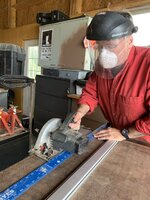
I have an old Skilsaw, 7.25" blade, that is dedicated to metal with a Diablo metal cutting blade. I had no problem cutting a 3' long rip in a piece of 1/4" sheet steel. Go slow, double eye/face protection. Ripping steel that thick requires slow precision with a guide rail to prevent wavering of the saw that can lead to binding. (BTW, the photo is staged, otherwise you would see a lot of chips flying.)

Tanker Table Top Cutting.jpg
 

Beerhippie

Well-known member
Joined
Oct 13, 2023
Messages
10,050
Location
Far NE Oregon
I have no idea how much aluminum (up to 1"), copper and steel roofing I've cut with my Skil 77--but LOTS.

For Al and Cu, I just use a carbide-tipped general purpose wood blade--NOT a thin-kerf! For steel roofing, I use abrasive.
 

theoldwizard1

Well-known member
Joined
Feb 22, 2011
Messages
43,344
Location
SE MI
The problem with cutting concrete, masonry or fiber cement material is that they create very fine dust which can get into the grease inside the saw. Not good for the bearings !
 
To avoid these ads, REGISTER NOW!

seber

Well-known member
Joined
May 31, 2016
Messages
4,207
Location
Deep East Tx.
The problem with cutting concrete, masonry or fiber cement material is that they create very fine dust which can get into the grease inside the saw. Not good for the bearings !
Not to mention your lungs. Masonry and concrete should only be cut wet.
 

KenC

Well-known member
Joined
Dec 20, 2009
Messages
2,598
Location
oklahoma
I've cut concrete with an abrasive blade, metal with metal blades. My roofing steel supplier does not recommend abrasive for painted metal as the hot particles damage the paint and cause little dots of rust over time.

I use a disposable quality saw with abrasives on concrete or stone, (pawn shop Makita). The dust is a killer on brushes and any saw with aluminum/plastic parts in the path of the sparks.

I've also cut up to 1" aluminum plate on my table saw with carbide tipped woodworking blades. A little lube , beeswax or kerosene, on the blade helps with sticking and noise.

My trailer has a damaged tail light bracket. Damaged when I cut through 3" of 1/4" thick angle when using the trailer as a saw horse! 7 1/4" blade appeared to suffer no damage.
 

SMOKEYBEAR

Well-known member
Joined
Jan 3, 2016
Messages
467
I have a Diablo metal blade on an old Porter cable, through aluminum up to 1/2" it doesn't even break a sweat, I have not put it to steel yet, I don't mess with much steel. Ive cut thinner aluminum, up to 1/4" with my Milwaukee 18 fuel, regular wood blade. 60 tooth, zero issue. Straight edge guide for better accuracy.


Lots of hot chips with both, they will ruin your favorite sweatshirt. The chips fly hot, stick and melt into the fabric.
 

Beerhippie

Well-known member
Joined
Oct 13, 2023
Messages
10,050
Location
Far NE Oregon
Aluminum plate from 1/8" up to 1/2" with regular carbide wood blade, model 77 worm drive.
Wear serious hearing protection - ear plugs + over-the-ear protection as well advised.
Full face shield.
Full-gauntlet welding gloves and a leather apron isn't overkill.

A boss once had me turn the blade on my Skil 77 backwards to cut some tin roofing. I don't know if he was aware that I had a carbide blade on the saw or didn't know better, but I spend an hour prying and cutting carbide chips out of my legs. After the chips were gone, it worked just fine!

For a while, long ago, you could buy blades for circular saws meant for cutting tin roofing. They looked like a wood saw blank disk with about 1" deep X 1/16" wide slots cut in the edge--no set, no teeth, They went through tin like a hot knife through butter and were fairly quiet--by comparison. I could even gang-cut up to three or four sheets--been awhile so I don't recall how many. I haven't seen those in many years. We used to get them at the lumber yard.
 

Beerhippie

Well-known member
Joined
Oct 13, 2023
Messages
10,050
Location
Far NE Oregon
I have a Diablo metal blade on an old Porter cable, through aluminum up to 1/2" it doesn't even break a sweat, I have not put it to steel yet, I don't mess with much steel. Ive cut thinner aluminum, up to 1/4" with my Milwaukee 18 fuel, regular wood blade. 60 tooth, zero issue. Straight edge guide for better accuracy.


Lots of hot chips with both, they will ruin your favorite sweatshirt. The chips fly hot, stick and melt into the fabric.
Try an angle grinder while wearing a micro-fiber sweater... first time you touch the disk to metal you have a former sweater.

Cotton. Wool.
 

Whitworth

Well-known member
Joined
Dec 26, 2011
Messages
2,100
I’ll never cut any metal with a circular saw. There are better tools. Bandsaw, oxy-acetylene, abrasive blade.
 

KnurledNut

Well-known member
Joined
Jan 28, 2011
Messages
8,214
Location
n/a
I have a Milwaukee metal cutting circular saw at work.
Its satisfying and safe to use. I’ve cut up to 3/4 plate steel with it. For roofing metal, Malco Turboshears HD are a great tool.

Not my video but like this saw:
 

ronkz650

Well-known member
Joined
Oct 29, 2022
Messages
221
Location
Denver, CO
I cut steel and aluminum all the time with an old circular saw. Don't even remember the brand even though it's a 1970s model I've been using for 50yrs. It works fine. I just wear an old junk motorcycle helmet with a face shield as yes, the fragments fly. Sure beats the heck out of a cutoff saw if space permits.
 

dnschmidt

Well-known member
Joined
Oct 3, 2014
Messages
7,294
Location
Phoenix, AZ
I have MIlwaukee metal cutting saws built specifically for this purpose. If I were forced to use a normal circular saw to cut steel I would only use a worm drive Skil 77 as it has a relatively slow speed of about 2,000 rpm lower when compared to a sidewinder. Cutting aluminum can be done with a normal sidewinder using sick wax on the teeth and blade body, I like Relton StickKut, or WD40 on the cut line. If you're going to do this I would recommend a triple chip grind saw blade which the Diablo blade may or may not already be. I don't know because I've never needed to use one having the Milwaukee's. Triple chip blades work a lot better than an alternate top bevel blade for cutting metal.
 

ipgenie

Well-known member
Joined
Jan 29, 2020
Messages
562
Location
Idaho
I haven't used the Milwaukee, but I have the Skill metal cutting worm drive saw. I use Diablo blades and have cut up to 1" several times. It makes such a nice clean cut that I prefer it to my torch or plasma for longish straight cuts, especially in 1/4 and 1/8 thick metal.

For roofing/wall metal I use my Watchtel panel cutter. Fastest tool for the job. Cuts right over the ribs. My sheers and nibblers just collect dust these days.


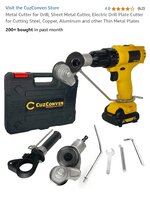
My dad has a similar tool that attaches to a drill or impact. Lots cheaper and he says it's not as good but is good enough for his occasional use.


Screenshot_20250121_024838_Amazon Shopping.jpg
 
Last edited:

autobon7

Well-known member
Joined
Oct 27, 2010
Messages
732
My M12 nibbler is fantastic. If not going to cut much try used shears on ebay. Passed on a corded Bosch recently that went for $35
 

AEAdam

Well-known member
Joined
May 27, 2023
Messages
2,817
Location
SE PA
WOW A ton of replies and no one asked why the OP wants to cut metal with a circular saw instead of some other tool better sorted?

I have accidentally cut all sorts of things with ALL of my saws, but I don't get why one would purposely cut steel with a circular saw as opposed to a reciprocating saw like a jig saw or a sawzalll with a metal blade. For sheet metal, use shears. If not back it up on plywood and use a jig saw with a metal blade. As @neophyte correctly pointed out, the RPM of a wood circ saw is much too fast for metals.

In case this helps:
  • Engineered flooring destroys most blades. One day of cutting engineering floor will destroy a blade.
  • I've cut a LOT of Boral, which is like fiber cement. That destroys blades and makes a fine dust that gets everywhere. Be careful blowing off the tool with compressed air. That dust is abrasive and will wreck your bearings.
  • cPVC like Azec or plywood plastics cut fine. But you want a sharp blade. A dull blade will generate heat and melt the plastic in the cut.
This is one complaint I have abut this forum. Someone asks "I want to fly to Mars in a lawn chair with weather balloons attached. What are the best kind of shoes to wear?" and you guys try to answer. With love and respect, I'm not sure who the bigger dumb asses are, the OPs or us who answer the questions they ask? You aren't obligated to answer their question. Tell them what you think is best. They ask because they don't know.

PS- the answer is Wellington boots
 

txvwnut

Well-known member
Joined
Jan 1, 2015
Messages
7,667
Location
Bedford, Texas
For a once in while cuts sure get a metal cutting blade rated for an off the shelf circ saw and the proper PPE and go for it. If you have a need to make multiple cuts back to back or cuts in thick metal get a dedicated metal cutting circ saw. They're still noisy as hell but they're rated for the job. Sure there are many ways to skin this cat but for me if I am doing a long cut and I want it as precision as I can get it, I use my metal cutting circ saw as I can set up a guide and go for it.
 

GCS

Well-known member
Joined
Dec 12, 2014
Messages
315
Location
Oklahoma
I know it sounds crazy but a carpenter I knew said regular circular saw with the blade mounted backwards.

They used to build a lot of pole barns.

when I built mine I did the same and it worked great cutting the “R” panels
 

SMOKEYBEAR

Well-known member
Joined
Jan 3, 2016
Messages
467
WOW A ton of replies and no one asked why the OP wants to cut metal with a circular saw instead of some other tool better sorted?

I have accidentally cut all sorts of things with ALL of my saws, but I don't get why one would purposely cut steel with a circular saw as opposed to a reciprocating saw like a jig saw or a sawzalll with a metal blade. For sheet metal, use shears. If not back it up on plywood and use a jig saw with a metal blade. As @neophyte correctly pointed out, the RPM of a wood circ saw is much too fast for metals.

In case this helps:
  • Engineered flooring destroys most blades. One day of cutting engineering floor will destroy a blade.
  • I've cut a LOT of Boral, which is like fiber cement. That destroys blades and makes a fine dust that gets everywhere. Be careful blowing off the tool with compressed air. That dust is abrasive and will wreck your bearings.
  • cPVC like Azec or plywood plastics cut fine. But you want a sharp blade. A dull blade will generate heat and melt the plastic in the cut.
This is one complaint I have abut this forum. Someone asks "I want to fly to Mars in a lawn chair with weather balloons attached. What are the best kind of shoes to wear?" and you guys try to answer. With love and respect, I'm not sure who the bigger dumb asses are, the OPs or us who answer the questions they ask? You aren't obligated to answer their question. Tell them what you think is best. They ask because they don't know.

PS- the answer is Wellington boots
So are my white Velcro New Balance with black socks the right ones or not?! I want to travel safely and impress the martians when I arrive.
 

CGT80

Well-known member
Joined
Aug 29, 2014
Messages
868
Location
IE, SoCal, USA
I’ll never cut any metal with a circular saw. There are better tools. Bandsaw, oxy-acetylene, abrasive blade.

My 6.5" left blade m18 circular saw with a diablo blade beats all of those options. In a few seconds I can cut 1/4" x 6" steel flat stock from a long stick or structural aluminum shapes.

Recently, I made some brackets from that aluminum and it was easier to cut a chunk off the 24' stick and then do the angled cuts on my miter saw stand. I do have a horizontal band saw, but the miter saw is better for aluminum.

The cordless circular saw easily and quickly goes to the material. Cuts that I would have done on my cnc plasma table, can quickly be done with the circular saw. Straight cuts with a sawzall or cut off wheel ****.

It took me a little while to wrap my head around the new option of using the cordless saw for heavier steel material. Aluminum cutting with wood saws is already an old habit for me.

People say those diablo blades can wear out quickly and the saw isn't ideal for constant ferous cutting, but it has some great uses.

I use the same m18 saw for cutting concrete hardie siding, with a proper cement siding blade. How else would a person cut 4x8 sheets of that siding? My miter saw was used for the hardie trim and I used it with an abrasive blade to cut steel stick material, before getting a band saw. It has held up great and is a 12" single bevel dewalt.....minus the dust chute that melted away.

The correct tool can be dictated by the job location and material you are working with. I prefer to think outside the box and consider the pros and cons to an option. Also, 30 years in the trades has given me a bunch of practice figuring out the best options at hand and what the manufacturer states is just advice, since they don't know anything about me or the job at hand and I am not concerned with them legally covering their *** or warranty and I am capable of working safely.
 
To avoid these ads, REGISTER NOW!
Top Bottom