...Is a replaced torch on this machine better than a $130 harbor freight welder?...
She'll probably be a good welder, provided there is nothing wrong with it. Comparing it to the $140 Chicago Electric Flux 125 isn't a fair comparison because that machine is only capable of running flux core wire and I don't believe there is an option to add gas later to those machines. It looks like cheapest machine in HF's lineup that can do both is $230, which is a little bigger of a machine than what you have, and also requires 240v.
I would give her a good cleaning and look-over before spending any money on the torch. Leave it unplugged for a few days to let the capacitors discharge and then take the cover off and blow everything out with compressed air. Be careful to not be too aggressive - you don't need it to be showroom clean, good enough is good enough in this case. Take a look at the components and look for any signs of damage - bulging capacitors, corrosion, loose connections, etc. If you do find something needing repair (I'd be surprised, these older machines tend to be pretty basic and reliable, but you never know), you can see if replacement parts are available, what they cost, and decide which path you want to take.
Assuming everything is good, I'd get one of those switches that
@consti2tion linked and make sure the torch works (probably will given that jumping the contacts seemed to work for you). At that point, you'll have a functioning weld machine for less than $30. But you'll need to spend a little more if you want to weld with it.
Once you know the torch functions, then check the liner for any surface rust and replace if questionable. For what they cost, I'd be tempted to just replace it outright not knowing its condition or age. Same goes for the wire - if there is any surface rust on it, just scrap the roll and replace with another name brand spool (Lincoln, Hobart, ESAB, etc.). Also be sure to get a handful of contact tips, a spare diffuser, and a nozzle or two. All in, you'll probably have spent around $100 or so, but keep in mind those are consumable items that you'd need to buy regardless of what machine you have.
Regarding gas, I like using this company.

www.gaspony.com
It works just like a propane exchange - you buy the bottle, and then swap out when empty. Prices are competitive with the weld shops (at least around here). The nice thing is you can swap your bottle on the weekend during retail hours, instead of the 8-5, M-F that most weld supply shops are open. It looks like they've got locations in Sioux Falls and Sioux City. The other neat thing is you can buy a small bottle to start, but if you decide you want to up-size later, you can get credit for what you spent on the smaller bottle and apply it to the larger one. The larger bottles are cheaper when it comes to cubic-foot per dollar, so if you can afford it, get the big bottle right away.
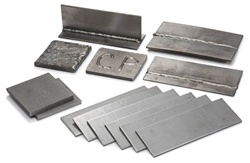
Finally, if you don't have access to metal for practicing, the JLF has pretty good prices on test plates bundles.