theamcguy
Well-known member
Lots of great info here


Got the uScope - neat little thing and can already tell the support is very solid.
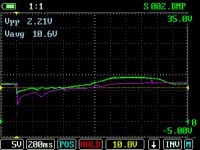
The first test I wanted to do (AC ripple)... already requires an adapter I didn't get in the basic kit: https://www.aeswave.com/AC-Pass-Filter-Adapter-p9178.html
While I'm ordering... are there other must-have attachments?
Basic kit. Good call on the 10:1

Current probes can be had in banana jack, or BNC flavor.
https://www.aeswave.com/Current-Probe-Low-range-with-Banana-Plugs-p9501.html
https://www.aeswave.com/Current-Probe-Low-range-with-BNC-p9500.html
To use them, you really want fuse break-outs, and a fused jump wire. About $30 additional investment to buy the break-outs and make a fused jump wire.
I originally had a snap-on Modis as my main scope, it uses banana jacks. So basically everything I own is banana jack, which I adapt to the BNC port the Picoscope uses. Most of the time, you can get accessories in either termination, BNC or banana. I'm partial to banana, as all my leads can fit meters and snap-on scopes. Pico just lives with adapters on its main use leads, and I have extras banana to BNC adapters if need be. Some stuff that really only makes sense to use on the Pico, I bought in BNC.
Ideally, I would recommend buying all of 1 style, either BNC on Banana.
Can you explain what you mean by fuse break-outs and fused jumper wire?
I have a strange breaker trip I am trying to diagnose and may buy the current probe sooner rather than later.
Got it so this is purely to gain access to a single conductor to do the test. If access were easy (ie: residential panelboard or loose wires to a fuel pump) there would be no need for the fuse break out, right?
Got it so this is purely to gain access to a single conductor to do the test. If access were easy (ie: residential panelboard or loose wires to a fuel pump) there would be no need for the fuse break out, right?
Correct, look at vehicle fuseboxes as an "easy" access point
Usually wiring harnesses are either tough to get at or very well protected
Any kind of "non intrusive" testing is always a good thing
Exactly, if the wires are easy and accessible, forget the fuse break-outs. However, lets take the example of the ignition coils, 6 cylinder engine with COP coils, 6 total.
We want to see the current flowing to each coil, and each coil shares a common power supply. Somewhere in the harness, is a splice pack which makes a single wire into the 6 inputs to our coil. If you know what fuse powers the coils, you can simply tap in there, and not worry about tearing the harness apart, or sticking the clamp on each coil one at a time.
You're tellin' me!
Some of these fuse boxes ain't too peachy either.