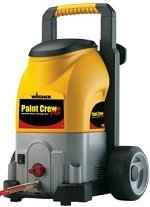
Power rollers **** for the most part. I have one for my Graco 190es. I have sprayed so much paint through that airless in 10 years or so that I had to buy a new motor for it and rebuild the pump and replace the gun. For the first 5 years or so, I only used it for my side jobs since I used my uncle's gas/hydraulic airless sprayers while working for him. I later switched jobs and used the baby airless for my daily work when needed.
When I switched jobs, I went to doing mostly manual painting. In finished buildings, an airless can be more work than it is worth. I was very good and fast at brushing and rolling. A 5 gallon bucket and 9" lambs wool roller cover and 3.5" angled sash brush made quick work of the offices I worked on. Warehouses and complete rebuilds or new work would get the airless.
Backrolling is the way to go. Use PVA or water based cover stain primer on new drywall and 2 coats of finish. I used ONLY the Behr Ultra (swiss coffee color) on the slick walls that I put up in my garage. It looks like **** to me. I sprayed and back rolled it as well. At one point, the Ultra worked well on exterior wood for me, but the behr paint isn't what it used to be. The 0 voc stuff *****. It would have been cheaper to use pva and then Behr premium plus, but it meant cleaning out the airless and roller twice, if I had done that. I rarely had to do any back brushing. There is an art to spraying. It took me a few years of doing it all of the time to get good at it, when I started in the industry. I also started at the age of 14 and worked on remodeling my uncle's house, so I only worked on vacations until I was out of high school and college.
If the garage is already painted, in decent shape, and was done with water based product, you might be able to skip the primer. The best would be to use primer (tinted if going dark) and 2 finish coats. It is much easier to brush and roll previously painted surfaces than new drywall or texture. The other advantage to rolling is the texture. On commercial work, I often used a 3/4" nap lambs wool cover to create additional texture in the paint. The walls had a fine/light orange peel and the texture helped hide imperfections. There were some jobs that I finished with a 1/4" nap roller on a level 5 drywall finish to prevent texture, but that wasn't the norm and it wasn't a garage.
I never bothered with Behr ceiling paint. I didn't see a point to it. Behr premium plus was my go to for the last 10 years. On a new home or complete remodel, I would spray and backroll the primer and ceiling color, and then brush and roll the walls in the colors that were picked.
Most people don't use enough paint on their roller and they don't get enough on the wall. I loaded the roller and did 1-3 swipes for the height of the wall, dipped and did another few, until I had roughly 4 feet or so covered. Then, I rolled back over it without dipping to even out the paint, while maintaining a nice wet coat, and I kept a wet edge as I worked. Amateurs tend to push hard on the roller to try and squeeze the paint out of it. I was not a fan of masking either, but was thorough when masking for spraying, and when rolling, I did almost everything free hand. It looks better when you can cut in a nice line where colors or trim meet your painted surface and it saves on the masking. If I did use tape, I had to clean up the line with a brush afterward. Most surfaces on buildings are not ideal for taping clean lines, like you could do on auto paint.
Airless sprayers are great for lattice, shutters, stucco, siding, garage doors or anything that needs multiple coats. If it need one or two coats over existing paint, I considered doing it by hand. If it was complex or needed more coats, especially on a new surface, I would consider the effort of masking and cleaning the airless vs. all of the slow manual labor.