To avoid these ads, REGISTER NOW!

Panel and subpanel configuration questions

kasander

Well-known member
Joined
Jun 7, 2016
Messages
424
Location
Wilmington, NC
Hi all,

I'm trying to figure out what I need to purchase for my electrical service for my detached garage. It will have a new 200A service (completely separate from my house). I am planning to have the power company run underground service to it.

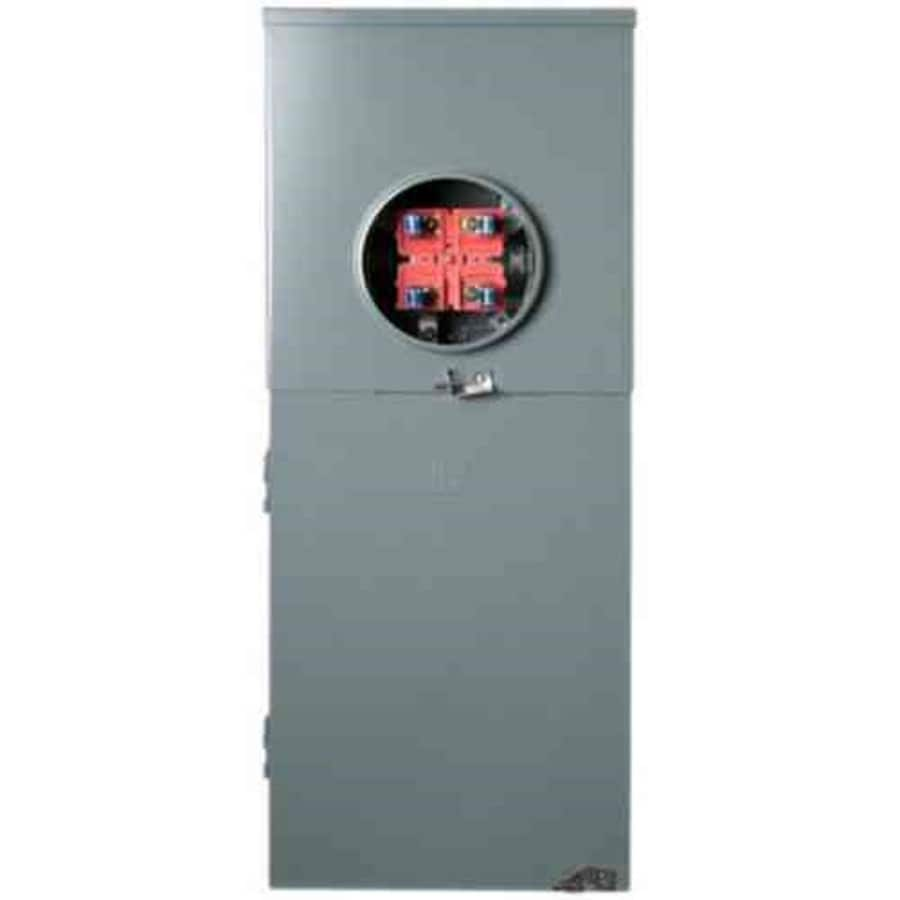
I was thinking of installing a meter base combination panel outside, then mounting a 200A subpanel inside the garage, approximately 6-8 feet away.

The garage is 26x30, with a one bedroom apartment upstairs. Here is what i was planning to supply from each panel:

Outside meter/combo panel (I just need ~7 spaces)
Feed through to inside subpanel
220V - HVAC A/C compressor - 20A
Future lighting for lean-to addition - 15A
Possibly sump pump for sewage - 20A
Possibly supply to a small subpanel in separate shed ~60A max
220V Possibly future mini-split HVAC unit for garage - 30A

Subpanel (looks like I will need around 21 spaces):
Garage lighting - 15A
Garage outlets - 20A
Apartment lighting - 15A
Apartment outlets - 20A
Kitchen outlets - 20A
Refrigerator - 20A
220V supply for future air compressor - 40A
220V supply for future welder - 40A
220V supply for range - 50A
220V Air handler (5kW heater coils, 20A circuit)
Garage door openers - 20A
220V Instantaneous water heater (18kW) (3 x 30A double pole breakers)https://www.amazon.com/gp/product/B01LYBDKWY/ref=oh_aui_search_detailpage?ie=UTF8&psc=1


Questions:
General:
Is it ok to have the subpanel in the garage supply the upstairs apartment? Any tenant would have access to the garage and the subpanel, as well as the combo panel outside.


Combo Panel:
Ring type or ringless? (I think ringless, as these are the approved ones I found for the power company)
Feed through lugs? Do I need these on the combo panel to feed the subpanel? I am thinking yes.
5th jaw? Do I need this? I am thinking yes here as well.
Horn or bypass lever? I don't think this matters.

Subpanel:
I'm assuming I need to buy a 200A panel with a main breaker.

Here is what I was thinking about purchasing. Not sure why Siemens, just what I found.

Combo panel:
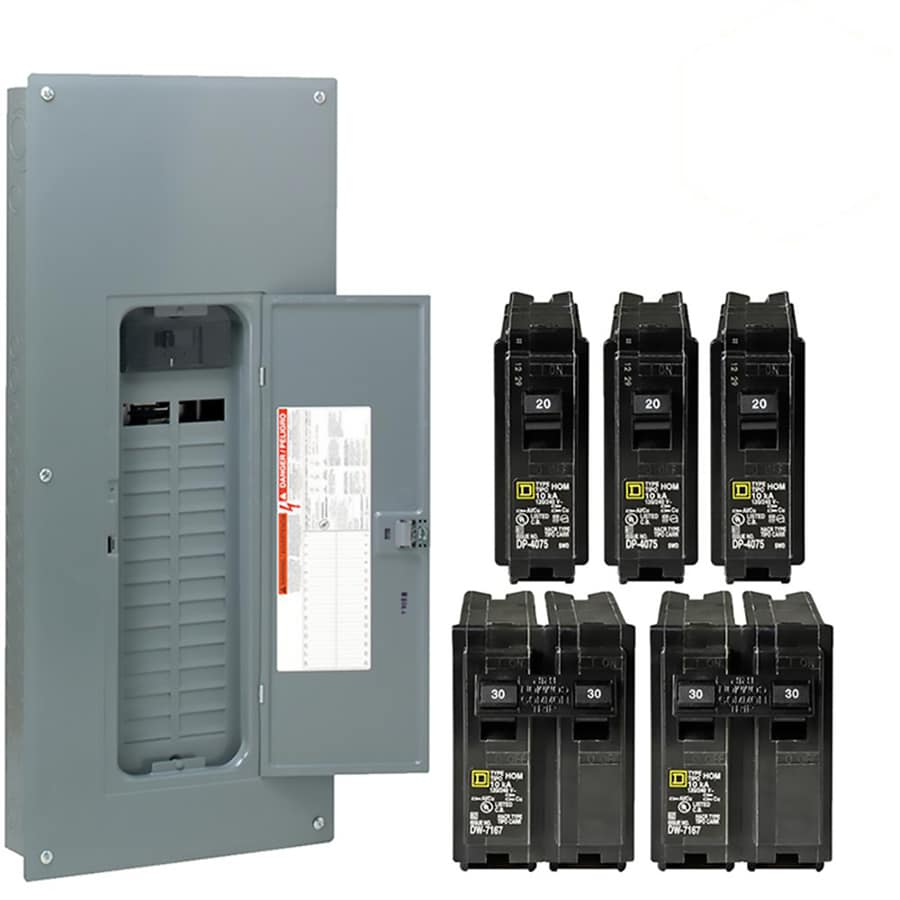
Siemens MC2040B1200RJBC (20 spaces, horn bypass, 5th jaw installed)

Subpanel:
Siemens P3040B1200CU (30 spaces 40 circuits)

Any comments/suggestions?

Thanks!
 
To avoid these ads, REGISTER NOW!

Norcal

Well-known member
Joined
Mar 16, 2008
Messages
13,755
I would have a apartment on it’s own panel, a separate meter even better.
 

Fasthotrod

Well-known member
Joined
Dec 14, 2015
Messages
218
Location
Oklahoma
It all depends on what your local POCO requires when it comes to the ring/ringless, 5th jaw, and/or horn/bypass lever. If you have the list of approved meter/main boxes from them, then just pick one and roll with it.

I recently installed a Square D meter main that I got through Lowes:

https://www.lowes.com/pd/Square-D-1...-Amp-Main-Lug-Convertible-Load-Center/3128195

Home Depot also carries it:

https://www.homedepot.com/p/Square-...{0:0}+cnb:{0:0}+oos:{0:1}+qu:{rc816f200ch}:qu

POCO said that they hadn't seen it before, but it was on the approved list and the installation was flawless. I'd recommend it if it's on your approved list.

Hope this helps.

Mark
 
OP
K

kasander

Well-known member
Joined
Jun 7, 2016
Messages
424
Location
Wilmington, NC
I would have a apartment on it’s own panel, a separate meter even better.

I don't want 3 power bills with fixed base charges... I may do short term vacation rentals anyway. I am guessing the base charge would be more than the power usage charges on both the garage portion and the apartment portion.

Here is the approved meter list: https://www.duke-energy.com/_/media/pdfs/partner-with-us/meg-approved-sockets.pdf

The one you linked is RC816F200CH which is not on the list, but RC816F200C is on the list. Looks like the CH version has a horn bypass and the C has no bypass. These also have aluminum buss bars. Does it make any difference whether they are aluminum or copper?

Is my thinking correct that I need pass-through lugs on the combo panel and a sub panel with a main disconnect?
 
OP
K

kasander

Well-known member
Joined
Jun 7, 2016
Messages
424
Location
Wilmington, NC
Looks like the most economical is the RC816F200C for $132 and the HOM2040M200PCVP for $87 at Lowes.


https://www.lowes.com/pd/Square-D-16-Circuit-8-Space-200-Amp-Main-Breaker-Load-Center/1196613

785901863922.jpg


https://www.lowes.com/pd/Square-D-40-Circuit-20-Space-200-Amp-Main-Breaker-Plug-On-Neutral-Load-Center-Value-Pack/50311179

785901977063.jpg


The panel only has 20 spaces, but I can double up and use tandem breakers on some of the lighting circuits to save room. Or can I? I don't see AFCI breakers in the tandem style. I only see them in 15A and 20A ratings also.

On second thought, maybe this one is a better option for $109 HOM3060M200PCVP

https://www.lowes.com/pd/Square-D-Homeline-60-Circuit-30-Space-200-Amp-Main-Breaker-Plug-On-Neutral-Load-Center-Value-Pack/50311159

785901977827.jpg


As a bonus, I should be able to use the 30A breakers for the water heater, and can use the 20A breakers for some of my outlet circuits. (I'm using 12/2 wire for them and 14/2 for the lighting circuits).
 

FordTruckWench

Well-known member
Joined
Jan 8, 2015
Messages
539
Location
California
Apartment lighting - 15A
Apartment outlets - 20A
Kitchen outlets - 20A
Refrigerator - 20A
220V supply for range - 50A
220V Instantaneous water heater (18kW) (3 x 30A double pole breakers)

Is it ok to have the subpanel in the garage supply the upstairs apartment? Any tenant would have access to the garage and the subpanel, as well as the combo panel outside.

You're forgetting about GFCI bath outlets.

Consider what's easier, running all the apartment wires back to the garage sub, or to a sub mounted somewhere in the apartment. Also, what if in the future you don't want the apartment dweller to have access to the garage.

Is there some reason you want some circuits on the meter/combo panel, and not in the garage sub? Seems to me to be simpler to have just a shutoff at the meter and everything fed from the sub. Or even just a plain meter pan outside that feeds a main (not sub) in the garage.

[I'm investigating what it'll take to underground my home service. I downloaded a requirements document for my utility: They have some rather onerous requirements for underground connected meter panels. They require a test device to be drug through the conduit. This needs something like a foot (vertical) of clear space in the panel.]
 
OP
K

kasander

Well-known member
Joined
Jun 7, 2016
Messages
424
Location
Wilmington, NC
Ah yes, forgot to add bathroom outlet circuit.

The reason I want some circuits on the outside combo panel is that i want as few as possible wall penetrations. The AC unit, sump pump, separate shed, lean-to lighting are all located outside, so why would I feed them from an interior subpanel? I can drop down out of the combo panel, then go underground for a much cleaner installation than random pieces of conduit piercing through the siding in various places.

Also, all the wiring will be routed through the open web trusses above the garage/below the apartment, so wire runs will not really be any shorter with a subpanel in the apartment area.

I have tossed around the idea of a washer and dryer, which would have to be in the garage because there is no space in the apartment, so giving the tenant access to the garage is not a big deal to me.

I am not totally opposed to a subpanel for the apartment. Does that mean I would have to install a big 150-200A breaker in my garage sub panel and feed from that? I know those breakers are not cheap. Or would I need my garage panel to have pass through lugs? I could put these circuits on the apartment sub-panel.

15A - Apartment lighting
20A - Apartment outlets
20A – Bathroom outlets (GFCI)
20A - Kitchen outlets (GFCI)
20A – Refrigerator
50A, 220V - Oven/Range
20A, 220V - Air handler, 5kw heater
 

TRWham

Well-known member
Joined
Aug 11, 2017
Messages
1,961
Location
East Cobb County, Georgia
...

15A - Apartment lighting
20A - Apartment outlets
20A – Bathroom outlets (GFCI)
20A - Kitchen outlets (GFCI)
20A – Refrigerator
50A, 220V - Oven/Range
20A, 220V - Air handler, 5kw heater

You will need a second 20A Small Appliance circuit for the kitchen, and the apartment will need AFCIs.
 
OP
K

kasander

Well-known member
Joined
Jun 7, 2016
Messages
424
Location
Wilmington, NC
I knew about AFCIs, just didn't list them. I didn't realize I need yet another 20A circuit in the kitchen. I already have a 20A circuit for the refrigerator. Why do I need 3 circuits in the kitchen? The only 110V receptacles will be the refrigerator and maybe 2 on the countertop. (It is a small kitchen).
 

TRWham

Well-known member
Joined
Aug 11, 2017
Messages
1,961
Location
East Cobb County, Georgia
I knew about AFCIs, just didn't list them. I didn't realize I need yet another 20A circuit in the kitchen. I already have a 20A circuit for the refrigerator. Why do I need 3 circuits in the kitchen? The only 110V receptacles will be the refrigerator and maybe 2 on the countertop. (It is a small kitchen).

The counter receptacles must be supplied by 2 or more circuits, but you could share the fridge circuit with some of those and avoid the additional circuit. It's all in 210.11 and 210.52.

We usually provide a separate circuit for the fridge, but it's not required.
 
Last edited:
OP
K

kasander

Well-known member
Joined
Jun 7, 2016
Messages
424
Location
Wilmington, NC
Thanks TRWham. Noted

Ok guys, pick this apart for me. I know the 100A sub-panel (protected by a 60A breaker) for the A/C components is overkill, but I could not find anything suitable. I don't want to mount 2 disconnect boxes on the wall, I would rather mount 1 box for both units. So, ideally, I need a 4 space panel for the 2 220V breakers right? I figured this would be a common issue, but couldn't really find anything that fits the bill. Technically, I don't need a separate disconnect because the HVAC unit is within sight of the main panel. However, in the future, my lean-to addition will be between them so at that point they will not be within sight of each other.

One more question, is there any issue with mounting the apartment panel in the stairway area? It's the only good space for it that is close to the garage panel.


garage_panel_layout.PNG
 
Last edited:

Fasthotrod

Well-known member
Joined
Dec 14, 2015
Messages
218
Location
Oklahoma
The one you linked is RC816F200CH which is not on the list, but RC816F200C is on the list. Looks like the CH version has a horn bypass and the C has no bypass. These also have aluminum buss bars. Does it make any difference whether they are aluminum or copper?

Nope. Either one is sufficient for your needs.

Is my thinking correct that I need pass-through lugs on the combo panel and a sub panel with a main disconnect?

Yes, pass through lugs will make your life much easier for running a sub panel. Mine has feed through lugs as well, which made it easy to run the two phase conductors, a parity sized neutral, and a ground. The meter/main has the only neutral/ground bond in your system, everything downstream from there must be separate. You'll likely need to buy a ground bar kit for your sub panel, along with a large lug for the ground wire/ground bar connection.

Mark
 

TRWham

Well-known member
Joined
Aug 11, 2017
Messages
1,961
Location
East Cobb County, Georgia
You will also need to provide a receptacle outside near the HVAC units. As for the panel in the stairwell, as long as you satisfy the working space requirements I think you are good. We did have a job where the panels were located in a garage in a wall by a stair landing. I don't remember the details, as I was not running that project, but the inspector had some issue with the landing not being large enough to provide working space.
 

TRWham

Well-known member
Joined
Aug 11, 2017
Messages
1,961
Location
East Cobb County, Georgia
After looking at this again, I would kill the HVAC sub and run those circuits out of the combo panel, move the 2 pole apartment loads into the garage panel and put a MLO panel in the apartment for the single pole apartment loads. This eliminates one panel and 2 large breakers.

I doubt you need 50 amps for the stove. 40 is probably enough. I would also saw my leg off before I installed 75 amps of instant water heater but I know some people like them.
 
OP
K

kasander

Well-known member
Joined
Jun 7, 2016
Messages
424
Location
Wilmington, NC
I can't run the HVAC units directly from the combo panel because then the breaker would not be within sight from the HVAC unit once I add a lean-to on the back. Like I said, the only reason I put a sub panel there is because I only want to screw one box onto the side of the wall, not two. Does anyone know if there is such a thing as a HVAC disconnect box that has two disconnects in it?

The reason I included all the apartment loads in the apartment subpanel is so everything could be shut off from within the apartment. If I move the 2 pole loads into the garage, then I might as well put everything in the garage panel, right?
 
OP
K

kasander

Well-known member
Joined
Jun 7, 2016
Messages
424
Location
Wilmington, NC
Doing some research, looks like a panel in the stairwell is a no-go. I don't have a landing because I added winders around the corner so that I save space on the stair risers that intrude into the garage space.

I'm leaning towards not putting a panel in the upstairs apartment because there is just really no good place to put it. Maybe I'll snap some pics and post for comment.
 

vavet

Well-known member
Joined
Mar 6, 2012
Messages
5,323
Location
Ashland, VA
Put your indoor garage lighting on at least 2 circuits. I'm in the middle of drywall my garage. After drywall the first half, my helper went home for the night. I was out there with my headlamp and flashlights reconnecting ceiling lights so I could remove the lights on the other side where we needed to start drywalling the next day. I so wished I'd had the ceiling lights on two circuits.
 

TRWham

Well-known member
Joined
Aug 11, 2017
Messages
1,961
Location
East Cobb County, Georgia
I can't run the HVAC units directly from the combo panel because then the breaker would not be within sight from the HVAC unit once I add a lean-to on the back. Like I said, the only reason I put a sub panel there is because I only want to screw one box onto the side of the wall, not two. Does anyone know if there is such a thing as a HVAC disconnect box that has two disconnects in it?

The reason I included all the apartment loads in the apartment subpanel is so everything could be shut off from within the apartment. If I move the 2 pole loads into the garage, then I might as well put everything in the garage panel, right?

I think installing another sub to avoid 2 disconnects is extreme, but if you strongly prefer it, it's your money. Yes, running everything to the garage panel is certainly an option. I doubt most renters would really care, especially if it's short term.
 
To avoid these ads, REGISTER NOW!

theoldwizard1

Well-known member
Joined
Feb 22, 2011
Messages
43,174
Location
SE MI
I'm trying to figure out what I need to purchase for my electrical service for my detached garage. It will have a new 200A service (completely separate from my house). I am planning to have the power company run underground service to it.

I was thinking of installing a meter base combination panel outside, then mounting a 200A subpanel inside the garage, approximately 6-8 feet away.
This would be very expensive ! 200A is overkill unless you have huge A/C loads or are planning or running multiple welders.

A second meter will have a second monthly fee and some POCOs charge a premium.

IMHO, it you decide to go this way, install the meter base/load center with just a few space. Run cable into the garage for the garage load center and more cable to a second load center upstairs.
 
OP
K

kasander

Well-known member
Joined
Jun 7, 2016
Messages
424
Location
Wilmington, NC
Decisions, decisions...

Sub for the two HVAC units would mean only pulling 1 60A cable from the combo panel vs. 2 30A cables. Panel would be $35 vs. 2 disconnect boxes at $15 each.
 
Last edited:
OP
K

kasander

Well-known member
Joined
Jun 7, 2016
Messages
424
Location
Wilmington, NC
This would be very expensive ! 200A is overkill unless you have huge A/C loads or are planning or running multiple welders.

A second meter will have a second monthly fee and some POCOs charge a premium.

IMHO, it you decide to go this way, install the meter base/load center with just a few space. Run cable into the garage for the garage load center and more cable to a second load center upstairs.

My house was built in 1967, no room for more breakers, aluminum wiring throughout, blah blah. The garage is 50+ feet away and also possible rental so I want to have it on a separate meter to monitor power consumption.

It's funny, one guy recommended adding 2 meters, 1 for the garage, and 1 for the upstairs apartment...
 

Norcal

Well-known member
Joined
Mar 16, 2008
Messages
13,755
My house was built in 1967, no room for more breakers, aluminum wiring throughout, blah blah. The garage is 50+ feet away and also possible rental so I want to have it on a separate meter to monitor power consumption.

It's funny, one guy recommended adding 2 meters, 1 for the garage, and 1 for the upstairs apartment...

If someone is not paying the bill there is little incentive to conserve.
 
OP
K

kasander

Well-known member
Joined
Jun 7, 2016
Messages
424
Location
Wilmington, NC
Not necessarily trying to conserve, just monitor. If I use it as a short term rental, makes it easier to split expenses toward the 'business' from 'home.'

Will be much cheaper to add a new service than to upgrade my house panel which is tied into all the aluminum wiring branch circuits.
 

mike93lx

ALLIANCE MEMBER
Joined
Dec 9, 2013
Messages
37,570
Location
Richmond, VA
If it is just short term rentals, then probably not worth a separate meter, but if that changes to long term, i think you would want it. I would put the entire apartment on a separate sub, in the apartment, to facilitate a change later.
 
OP
K

kasander

Well-known member
Joined
Jun 7, 2016
Messages
424
Location
Wilmington, NC
Another quick question. I am using this water heater:

https://www.amazon.com/gp/product/B01LYBDKWY/ref=oh_aui_search_detailpage?ie=UTF8&psc=1&tag=vglnkc3018-20


It requires 3 30A DP breakers. I am planning to mount the water heater under the stairway. The 200A load center panel will be adjacent to an access door into this area. (The area under the stairway is about 4 ft tall). So the panel will be about 3 feet away from the water heater.

My question is do I need a water heater disconnect inside the area under the stairs? And if so, does that mean I will need 3 disconnects, one for each breaker?
 
OP
K

kasander

Well-known member
Joined
Jun 7, 2016
Messages
424
Location
Wilmington, NC
I think I'm ok on the water heater. One more question though. I'm planning to put a 220V outlet outside which will be covered under the lean-to for a compressor. I was thinking I may also use this outlet to backfeed with a generator. I was planning to size the wire and breaker for 40A circuit to handle the generator. (I can install a 20A breaker for the compressor and swap it to a 40A if I want to use the generator).

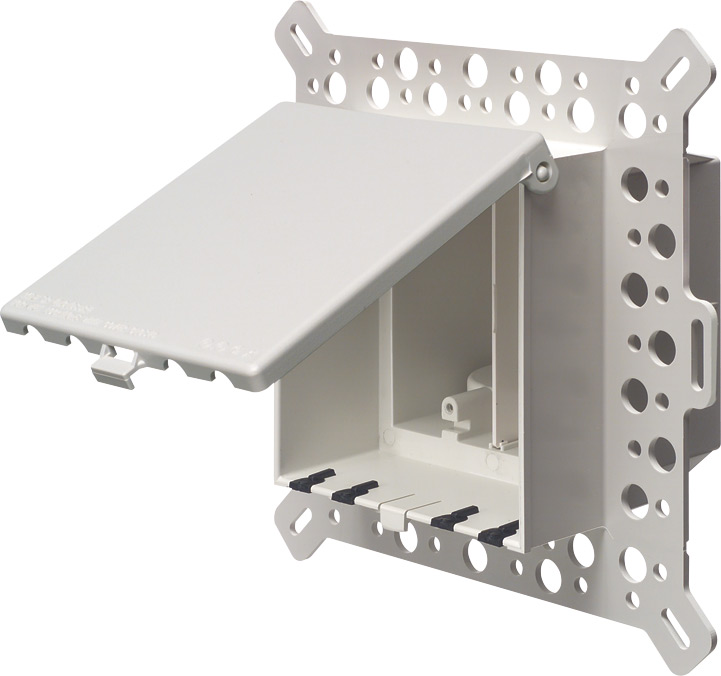
Does this sound like a good plan? Also, can I mount the outlet in this box? It says it is rated for 15A or 20A receptacles.

http://www.aifittings.com/catalog/inbox/two-gang-low-profile-in-box/DBVM2W

Note: Meets 2015 CEC (Rule 26-702), NEMA 3R, NEC 406.9 (b); Where a weatherproof-in-use cover is
required for 15 or 20 AMP receptacles installed outdoors


DBVM2W.jpg
 

exranger06

Well-known member
Joined
Aug 9, 2015
Messages
1,686
Location
CT
I think I'm ok on the water heater. One more question though. I'm planning to put a 220V outlet outside which will be covered under the lean-to for a compressor. I was thinking I may also use this outlet to backfeed with a generator. I was planning to size the wire and breaker for 40A circuit to handle the generator. (I can install a 20A breaker for the compressor and swap it to a 40A if I want to use the generator).

Does this sound like a good plan? Also, can I mount the outlet in this box? It says it is rated for 15A or 20A receptacles.

http://www.aifittings.com/catalog/inbox/two-gang-low-profile-in-box/DBVM2W

Note: Meets 2015 CEC (Rule 26-702), NEMA 3R, NEC 406.9 (b); Where a weatherproof-in-use cover is
required for 15 or 20 AMP receptacles installed outdoors

No, that's a bad idea. First, you don't use an "outlet" to connect a generator. You use an inlet. Because the power is coming from the generator, INTO the INlet on the building. OUTlets send power OUT from the building to an appliance or receptacle. Outlets have female terminals, which you insert a male plug into. The male end is not energized until it's connected to the female end. Therefore there is no danger of accidentally touching the male prongs while they're energized :shocking: . Inlets have male terminals, which you plug a generator cord with a female end into. This cord may already be energized (if the generator is already running) when you plug it in, but again, the male end is not energized until it is already connected to the female end. (There's a reason generator cords are sold ONLY with a male plug on one end, and a female plug on the other. You won't find one with a male plug on both ends, which is what you'd need to connect one to a female OUTlet. People have been known to make their own "suicide cords" themselves though.)
You need a dedicated generator inlet installed if you want to connect a generator. You need an outlet for the compressor. And depending on the HP rating of the compressor, you may not be able to use an outlet either; you may need to hardwire it.

Also, if you're connecting a generator via a back-fed breaker, you must install an interlock that will allow you to turn on the generator breaker ONLY if the main breaker is already turned off. This prevents dangerous backfeeding to the utility lines. You can't run the compressor if the main breaker is off, therefore, you cannot use the generator breaker for the compressor.
 
Last edited:
OP
K

kasander

Well-known member
Joined
Jun 7, 2016
Messages
424
Location
Wilmington, NC
10-4. If I go this route, I'll make up a "suicide cord" later and make sure main breaker is off and cord is plugged in before I start up the generator. I only have a 2kW generator at the moment, so usually I just pull extension cords all over the house to a few lights, tv, and fridge.
 

mike93lx

ALLIANCE MEMBER
Joined
Dec 9, 2013
Messages
37,570
Location
Richmond, VA
10-4. If I go this route, I'll make up a "suicide cord" later and make sure main breaker is off and cord is plugged in before I start up the generator. I only have a 2kW generator at the moment, so usually I just pull extension cords all over the house to a few lights, tv, and fridge.

That is a terrible idea.do it right with an inlet and an interlock or a transfer switch
 

wyliesdiesels

Well-known member
Joined
Aug 14, 2012
Messages
20,016
Location
Modesto, CA
Another quick question. I am using this water heater:

https://www.amazon.com/gp/product/B01LYBDKWY/ref=oh_aui_search_detailpage?ie=UTF8&psc=1&tag=vglnkc3018-20


It requires 3 30A DP breakers. I am planning to mount the water heater under the stairway. The 200A load center panel will be adjacent to an access door into this area. (The area under the stairway is about 4 ft tall). So the panel will be about 3 feet away from the water heater.

My question is do I need a water heater disconnect inside the area under the stairs? And if so, does that mean I will need 3 disconnects, one for each breaker?

If the panel is not within sight of the water heater when servicing then yes you need disconnects. and yes you would need 3.

This is to protect a person while servicing it.

I think I'm ok on the water heater. One more question though. I'm planning to put a 220V outlet outside which will be covered under the lean-to for a compressor. I was thinking I may also use this outlet to backfeed with a generator. I was planning to size the wire and breaker for 40A circuit to handle the generator. (I can install a 20A breaker for the compressor and swap it to a 40A if I want to use the generator).

Does this sound like a good plan? Also, can I mount the outlet in this box? It says it is rated for 15A or 20A receptacles.

http://www.aifittings.com/catalog/inbox/two-gang-low-profile-in-box/DBVM2W

Note: Meets 2015 CEC (Rule 26-702), NEMA 3R, NEC 406.9 (b); Where a weatherproof-in-use cover is
required for 15 or 20 AMP receptacles installed outdoors


DBVM2W.jpg

If the compressor is more than 3HP it will need to be hardwired and that is a horrible idea to use it for a generator.

Generators need inlets not outlets. Also need a transfer switch or interlock.

10-4. If I go this route, I'll make up a "suicide cord" later and make sure main breaker is off and cord is plugged in before I start up the generator. I only have a 2kW generator at the moment, so usually I just pull extension cords all over the house to a few lights, tv, and fridge.

why do you want to keep adding more dangerous stuff to the already dangerous ideas you put on here?

Please do it right or dont do it at all...

If you want approval for your dangerous ideas, this is not the correct forum to seek that on.
 
OP
K

kasander

Well-known member
Joined
Jun 7, 2016
Messages
424
Location
Wilmington, NC
Ok, scrapping the generator wiring.

Next question. I want to install this combo 120/240 outlet in the ceiling to use for plugging in a 4 post lift. I also want to continue from this receptacle to another 120V outlet for a garage door opener. From my research, now GFCI protection is required on all outlets in a garage, even if it is in the 10' ceiling.

Here is the outlet I'm planning to use:

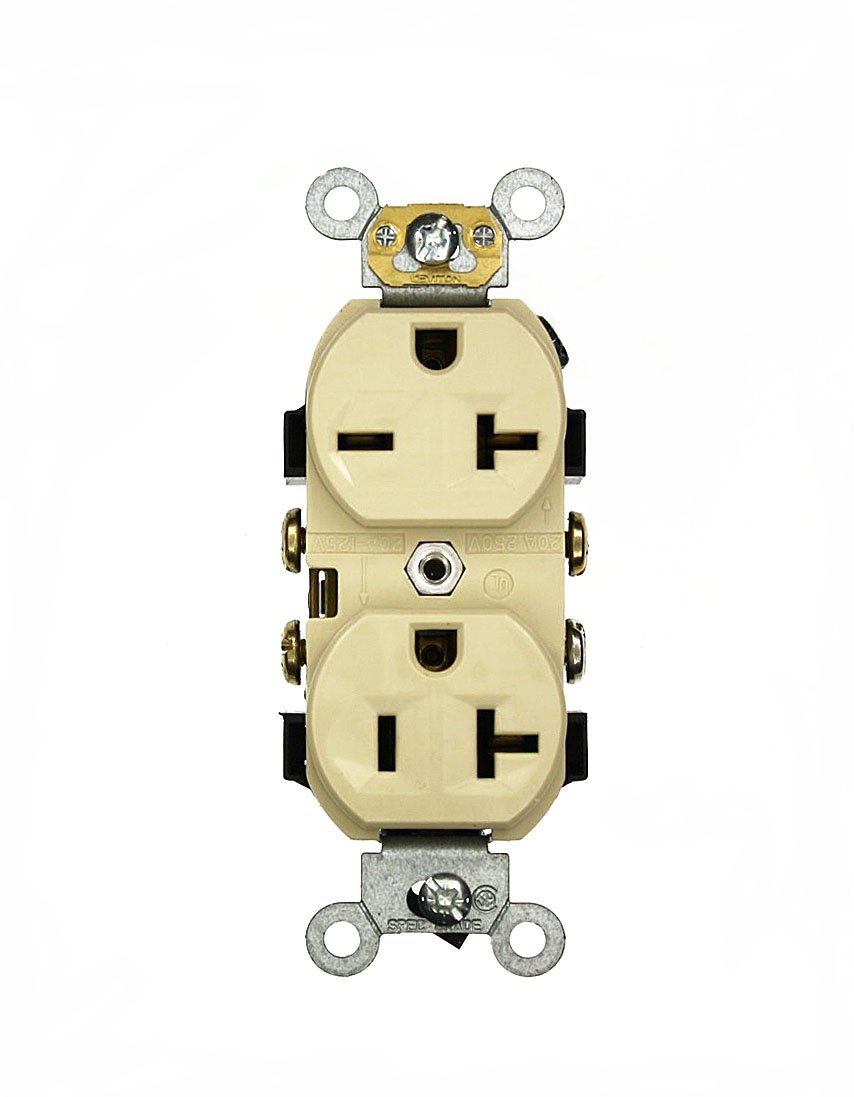
Leviton 5842-I 20 Amp, 125/250 Volt, Narrow Body Duplex Receptacle, Straight Blade, Commercial Grade, Self Grounding, Dual Voltage, Ivory

512dvQ84YhL._SL1097_.jpg


https://www.amazon.com/gp/product/B000U3BVMI/ref=ppx_yo_dt_b_asin_title_o02_s00?ie=UTF8&psc=1

Can I run 12/3 wire from panel to this receptacle, then 12/2 to a 20A 120V receptacle from there?


Also, is this breaker the only way to achieve GFCI protection on both the 120V and 240 receptacles? This is the conclusion I have come to after my research.

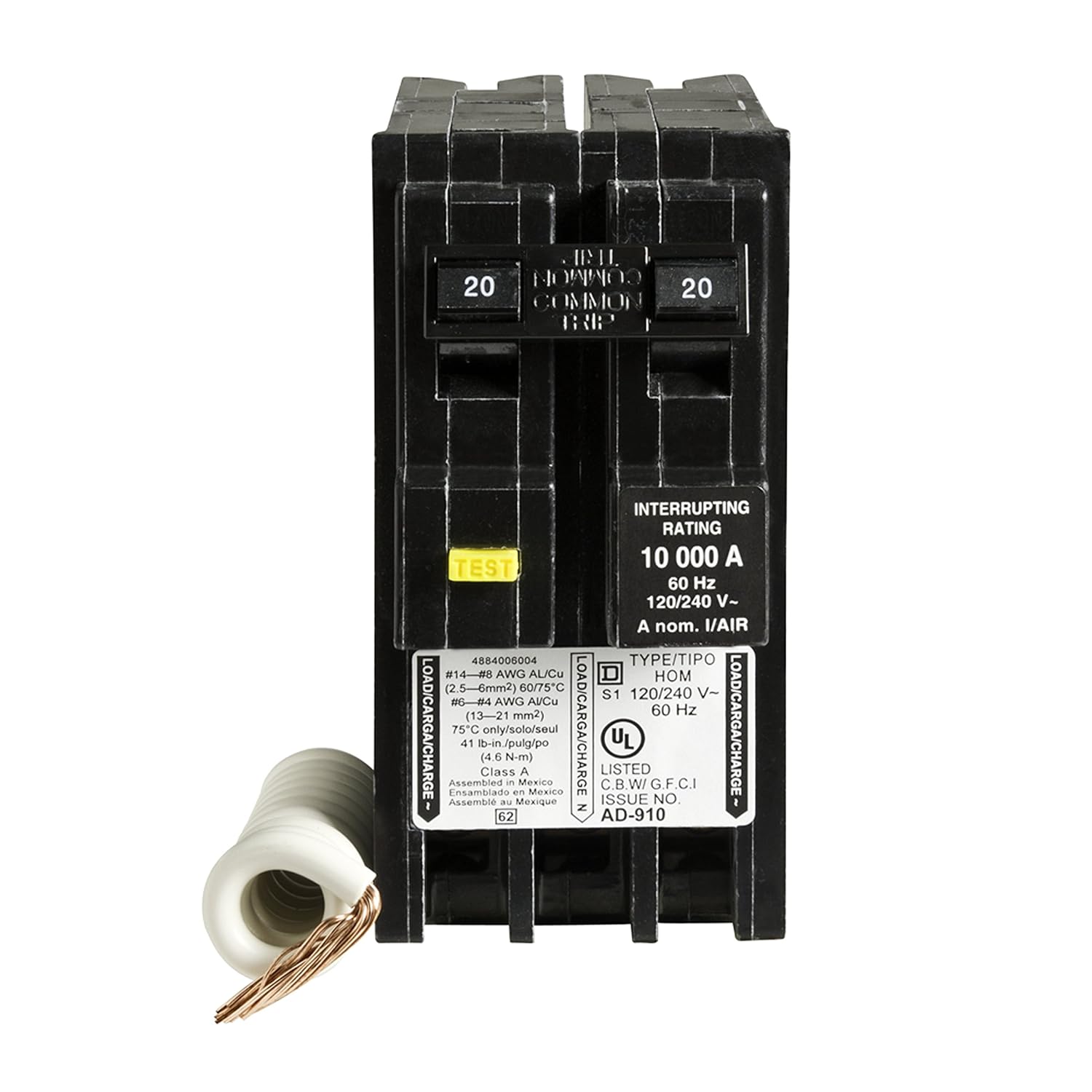
Square D by Schneider Electric HOM220GFIC Homeline 20 Amp Two-Pole GFCI Circuit Breaker

81s9gQIxw5L._SL1500_.jpg


https://www.amazon.com/Square-Schneider-Electric-HOM220GFIC-Homeline/dp/B00L40PKFK/ref=sr_1_1?keywords=HOM220GFI&qid=1552919466&s=gateway&sr=8-1


Thanks for any help!
 

pattenp

Well-known member
Joined
Jun 4, 2008
Messages
10,175
Location
Virginia - USA
250V don't need GFCI protection unless changed in 2017 NEC. It may be cheaper to run regular 240V circuit for lift. And extend off an existing 120V circuit using a dead front GFCI for the garage door opener. The 2pole GFCI breakers are expensive. Also what is the HP rating of the lift motor?
 
OP
K

kasander

Well-known member
Joined
Jun 7, 2016
Messages
424
Location
Wilmington, NC
250V don't need GFCI protection unless changed in 2017 NEC. It may be cheaper to run regular 240V circuit for lift. And extend off an existing 120V circuit using a dead front GFCI for the garage door opener. The 2pole GFCI breakers are expensive. Also what is the HP rating of the lift motor?

I haven’t decided on a lift but I know it won’t draw 20 amps. It will be a typical 4 post storage lift. The receptacle above would work if I decide on a 120V lift or if I want to install a drop cord reel at the same location as the 240V lift power.

So, to power the 120V side of the combination outlet, I would need a separate 12/2 cable from the load center, run through a GFCI, then into this receptacle box. I was hoping for a cleaner installation using fewer breakers and fewer wires. Although a $10 2 pole breaker + a $5 1 pole breaker + a $15 GFCI + 20 ft of 12/2 romex is much cheaper than the $100 2 pole GFCI breaker.

Am I allowed to run 2 12/2 cables into and 2 12/2 cables out of a 1 gang box? (I plan to install multiple 120V240V outlets in case I move the lift from one bay to the other.)
 
OP
K

kasander

Well-known member
Joined
Jun 7, 2016
Messages
424
Location
Wilmington, NC
A cleaner installation would be using 2 separate receptacles. youre trying to cram too much into one j box.

How is 2 breakers, 2 cables, and 2 receptacles cleaner than 1 breaker, 1 cable, and 1 combo 120/240 receptacle as in my original (albeit expensive) proposal?

Cheaper, yes, but takes up an additional slot in my panel and uses twice as much cable.
 

pattenp

Well-known member
Joined
Jun 4, 2008
Messages
10,175
Location
Virginia - USA
Personally I don't like MWBC's. I like circuits to be independent based on use. If you don't mind having to put out $100 for a GFI breaker then go for it. You just need to be mindful of the possible total amp load you'll have on that circuit. Use a large box with a single outlet face plate so you are not fighting for space to connect wires.
 
OP
K

kasander

Well-known member
Joined
Jun 7, 2016
Messages
424
Location
Wilmington, NC
10-4. The only thing on this circuit will be ceiling outlets for a lift and 2 garage door openers. I also would rather not mount a GFCI plate on the 10’ ceiling.
 

pattenp

Well-known member
Joined
Jun 4, 2008
Messages
10,175
Location
Virginia - USA
The GFCI device can't go on the ceiling anyway. You'd have to add a box down on the wall for the dead front GFCI or a GFCI outlet. GFCI device has to be in a readily available spot.
 
To avoid these ads, REGISTER NOW!
Top Bottom