To avoid these ads, REGISTER NOW!

Pay the man, or...

grizzlebar

Well-known member
Joined
Jan 14, 2016
Messages
93
So the garage project is going to start soon and I’m beginning to think of electrical needs

(New detached garage being built within 6 feet of existing house)

I’m new to this whole thing and just met with an electrician to discuss installing a sub panel in the new garage tied to the current panel in the existing garage. He quoted me $2200 for all the parts, labor, and concrete work. Since I have no frame of reference, I have no idea if this is a good price, but more on that for a later post I guess.

Obviously I need permits/inspections to tie it in and wire it up, looking at the county’s website that seems like a straightforward enough process. I’m decently mechanically, and electrically inclined so I had a thought - is this something I can do?

I’d need a trench done to the right depth - easy.

I’d have to cut, relay concrete - easy.

Bringing the wire up into the new garage - sounds easy enough - nothing is built yet so it should be straight forward.

Bringing the wire up into the existing garage and panel - not sure, would have to look into that one.

Total run of wire between the panels is less than 20ft, btw and would require 2x 50amp breakers in the last remaining spots.

Anyone have recommendations and or guidance? Videos and write ups are helpful.
 
To avoid these ads, REGISTER NOW!

thewatusi

Well-known member
Joined
Dec 27, 2013
Messages
1,256
Location
Philly Burbs
So the garage project is going to start soon and I’m beginning to think of electrical needs

(New detached garage being built within 6 feet of existing house)

I’m new to this whole thing and just met with an electrician to discuss installing a sub panel in the new garage tied to the current panel in the existing garage. He quoted me $2200 for all the parts, labor, and concrete work. Since I have no frame of reference, I have no idea if this is a good price, but more on that for a later post I guess.

Obviously I need permits/inspections to tie it in and wire it up, looking at the county’s website that seems like a straightforward enough process. I’m decently mechanically, and electrically inclined so I had a thought - is this something I can do?

I’d need a trench done to the right depth - easy.

I’d have to cut, relay concrete - easy.

Bringing the wire up into the new garage - sounds easy enough - nothing is built yet so it should be straight forward.

Bringing the wire up into the existing garage and panel - not sure, would have to look into that one.

Total run of wire between the panels is less than 20ft, btw and would require 2x 50amp breakers in the last remaining spots.

Anyone have recommendations and or guidance? Videos and write ups are helpful.
Get three estimates, if they're all in the same ballpark, that's the going price. Impossible to know otherwise.
 

LXCam

ALLIANCE MEMBER
Joined
Apr 23, 2013
Messages
19,109
Location
AZ
Take some pictures of everything and post them up. We can walk you thru it. Or as suggested get a couple more prices and make a choice. It kind of sounds like you could knock that price in half by doing the trenching and concrete yourself so sparky boy is in and out in a half a day and not making 2-3 trips.
 

Citation

Well-known member
Joined
Jan 20, 2016
Messages
3,214
Location
Indy
If the trench work is easy you might ask how much you can save by doing that dirty work and leave just the electrical work to him.
 

Shootinok

Well-known member
Joined
Aug 16, 2016
Messages
710
Location
Oklahoma USA
^ I agreed with Citation, and LXcam^
If you’re willing and able, do the trenching and backfill yourself, concrete cutting and demo too. Your other thread said you need to redo part of the drive, can the concrete pour-back be done when you replace the drive?.
You need the licensed electrician to make the connections at both panels.

I can’t speak for your jurisdictions requirements, but to satisfy mine, a licensed electrician had to make connections to the main and had to connect at least one device.
I paid a local licensee registered in my county to do the main, one 220v outlet and a single GFI. That got me a final inspection.
I have a electrician buddy that has advised me after that.


Sent from my iPad using The Garage Journal mobile app
 
Last edited:
OP
G

grizzlebar

Well-known member
Joined
Jan 14, 2016
Messages
93
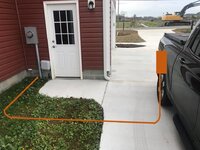
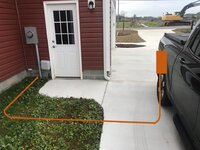
My biggest question at the moment is how do I bring it into the current panel?

As you can see, there’s block at the base. I’m assuming I bring the conduit up - drill through the siding, paneling, and open up a spot in the drywall then bring it up the wall and into the panel that way.
 

LXCam

ALLIANCE MEMBER
Joined
Apr 23, 2013
Messages
19,109
Location
AZ

You'll need to add a piece of flex between the riser and the truck mounted panel before it'll pass inspection. :spit:


This is a really simple install. I take it sparky is supplying the sub panel in his quote? You're looking at maybe $400 bucks in material if doing it yourself.
 

Attachments

  • 122d3a81dbdd2fa4eff5c736a556cd43.jpg
    122d3a81dbdd2fa4eff5c736a556cd43.jpg
    143.5 KB · Views: 0
Last edited:

LXCam

ALLIANCE MEMBER
Joined
Apr 23, 2013
Messages
19,109
Location
AZ
My biggest question at the moment is how do I bring it into the current panel?

As you can see, there’s block at the base. I’m assuming I bring the conduit up - drill through the siding, paneling, and open up a spot in the drywall then bring it up the wall and into the panel that way.


how does the meter enclosure align with the panel. If it's off to one side or sits below the meter you might be able to just use a LB and ****** into the back of it. But you'll need to draw it up plus remove the panel cover so we can see the interior.
 
OP
G

grizzlebar

Well-known member
Joined
Jan 14, 2016
Messages
93
how does the meter enclosure align with the panel. If it's off to one side or sits below the meter you might be able to just use a LB and ****** into the back of it. But you'll need to draw it up plus remove the panel cover so we can see the
edffec81e5def2896f12102412e8df53.jpg

Dead center of the meter is about four inches up from the big wires heading to the main breaker
 

Attachments

  • edffec81e5def2896f12102412e8df53.jpg
    edffec81e5def2896f12102412e8df53.jpg
    658.8 KB · Views: 0
OP
G

grizzlebar

Well-known member
Joined
Jan 14, 2016
Messages
93
how does the meter enclosure align with the panel. If it's off to one side or sits below the meter you might be able to just use a LB and ****** into the back of it. But you'll need to draw it up plus remove the panel cover so we can see the interior.


Can I bring the wire through the meter box and into the panel on the backside?
 
Last edited:

LXCam

ALLIANCE MEMBER
Joined
Apr 23, 2013
Messages
19,109
Location
AZ
I'd remove a small chunk of drywall, notch the stud and come into the side of the panel using a telephone 90. ****** thru the exterior and use a LB on the riser. That's assuming there's sufficient space between the stud on the side and it's not doubled up for some reason. You might get lucky and it's only got a stud on one side, but I doubt it.


You could come in from the bottom using back to back LB's but you'll need to leave the cover of the interior LB accessible. That can be done cleanly but I wouldn't want to look at. But along this lines you could install a junction box for the interior and come into the back of it then just use a blank plate, that might be the cleanest solution.
 
Last edited:

LXCam

ALLIANCE MEMBER
Joined
Apr 23, 2013
Messages
19,109
Location
AZ
How much does the top of the breaker panel finish out over the meter panel? From what I'm guessing it appears to be maybe a foot?
 

LXCam

ALLIANCE MEMBER
Joined
Apr 23, 2013
Messages
19,109
Location
AZ
Well you could come up along the left side of the meter panel then kick the pipe over and LB thru the existing knock out in the upper corner of the panel. That's really simple it just won't look great outside.

Those KO's look to be 1" - 1-1/4". If you're running 3/4" conduit you'll need to use reducing washers at the panel connection. Or run 1" which is what I would do.
 
Last edited:
OP
G

grizzlebar

Well-known member
Joined
Jan 14, 2016
Messages
93
I’m ok with a little bit of drywall work, actually.

Sounds like I would bring it up the wall (outside) in conduit, through LB box into the wall, then into the panel through a 90 or other fitting.
 

LXCam

ALLIANCE MEMBER
Joined
Apr 23, 2013
Messages
19,109
Location
AZ
I'd opt for a junction box in that case but here's what a telephone 90 looks like. I highly suggest the tele 90 terminate at the panel and not be extended from it. Reason being is they can be a PITA getting #8 and larger conductors thru. But it's also not impossible either. A junction box to the exterior LB would be an easy conductor fishing solution.

IMG_7602.jpg
 

Norcal

Well-known member
Joined
Mar 16, 2008
Messages
13,754
I’m ok with a little bit of drywall work, actually.

Sounds like I would bring it up the wall (outside) in conduit, through LB box into the wall, then into the panel through a 90 or other fitting.

You cannot conceal a ninety degree fitting in the wall, mount a junction box below the panel bring the conduit in the back & pipe it between the box & panel.
 
To avoid these ads, REGISTER NOW!
OP
G

grizzlebar

Well-known member
Joined
Jan 14, 2016
Messages
93
Haha no kidding, been a few years since I’ve operated one of those though.

Can anyone recommend any guides or videos to show me the process of all of this?
 

tfi racing

Well-known member
Joined
Apr 19, 2008
Messages
2,907
Location
Cedar,BC
No way you will be able to 90 or LB into the side of the panel, there are studs on each side of it,nor do you want that amount of aggravation. LB or JB on the outside is the only realistic way to go. Another option may be to come through the bottom of the panel from the basement, but against code to go through the main breaker portion of the panel in these parts.
 

Bert_

Well-known member
Joined
Dec 24, 2016
Messages
9,717
Location
NW Iowa
but against code to go through the main breaker portion of the panel in these parts.

Keep in mind this is only for those in Canada. NEC in the US does not have this requirement.

What about a dual lug meter socket? Come right off the meter?

I see Milbank now makes a kit to add a lug to their meter sockets. I think it's design was driven by solar system installs but it is not specific to that use. Note that some utilities have rules that would affect this aproach.
2_Milbank.jpg
 
Last edited:

Bert_

Well-known member
Joined
Dec 24, 2016
Messages
9,717
Location
NW Iowa
I'd do some measuring, you might be able to use the lower right knockout in the back of the panel. Bring conduit up the outside wall and LB in next to the meter socket.
 

shaggyant

Well-known member
Joined
Oct 10, 2011
Messages
201
Location
North Idaho
Keep in mind this is only for those in Canada. NEC in the US does not have this requirement.


I see Milbank now makes a kit to add a lug to their meter sockets. I think it's design was driven by solar system installs but it is not specific to that use. Note that some utilities have rules that would affect this aproach.
2_Milbank.jpg

I think double lugging the meter would depend on the size of his meter panel and wire size the POCO has running in to it. Lugging like that would add to the size of the service since it’s not running through the main breaker.

I tried to do this on my house since my meter and main panel are not back to back like the OP. The inspector said I would need a 400 amp meter and the POCO would need to verify the lines. When they came and looked they said I would need to pay them to upgrade the wire and transformer to accommodate the new service at some big bucks. I passed and ran the long run from my main literally from the far other side of my house.
 
OP
G

grizzlebar

Well-known member
Joined
Jan 14, 2016
Messages
93
I’m on a slab so no basement to work through. Will measure that knockout in a bit.

Any recommendations for where to run the grounding rod off the sub panel?
 

Bert_

Well-known member
Joined
Dec 24, 2016
Messages
9,717
Location
NW Iowa
I think double lugging the meter would depend on the size of his meter panel and wire size the POCO has running in to it. Lugging like that would add to the size of the service since it’s not running through the main breaker.

I tried to do this on my house since my meter and main panel are not back to back like the OP. The inspector said I would need a 400 amp meter and the POCO would need to verify the lines. When they came and looked they said I would need to pay them to upgrade the wire and transformer to accommodate the new service at some big bucks. I passed and ran the long run from my main literally from the far other side of my house.

Per NEC, just because you have main's that add up to 300, 400, ect. does not mean you need that size of service. It is perfectly legal to have 300A worth of multiple main breakers on a 200A service. The service size is determined by the LOAD not the size of multiple breakers. The utility may have their own rules though. They also do not size wire per NEC.
 
Last edited:
OP
G

grizzlebar

Well-known member
Joined
Jan 14, 2016
Messages
93
Back on topic...

I’ve got some more electricians coming out for comparison quotes but am also continuing to give the idea of tackling this myself some serious consideration.

That being said, where would run the grounding rod?

My initial thought is to (in the new garage) bring the grounding wire out of the box and back down the wall next to the inbound power supply from the existing garage, lay it in the same trench going under the concrete, and pound the rod into the grass just on the other side burying the connection point down as far as I can get it.
 
OP
G

grizzlebar

Well-known member
Joined
Jan 14, 2016
Messages
93
Just measured off of the knockout - that will be tight - it’s almost to the other wall of the house, but I could bring the conduit up the corner right there
 

850xpeps

Well-known member
Joined
Aug 6, 2017
Messages
1,365
Back on topic...

I’ve got some more electricians coming out for comparison quotes but am also continuing to give the idea of tackling this myself some serious consideration.

That being said, where would run the grounding rod?

My initial thought is to (in the new garage) bring the grounding wire out of the box and back down the wall next to the inbound power supply from the existing garage, lay it in the same trench going under the concrete, and pound the rod into the grass just on the other side burying the connection point down as far as I can get it.


The dual meter socket was on topic I thought. And imo a better idea to avoid messing around going inside the house.

You can use a ground plate buried in the trench.
 

jeffmoss26

Well-known member
Joined
May 25, 2011
Messages
12,854
Location
Cleveland, Ohio
I'd opt for a junction box in that case but here's what a telephone 90 looks like. I highly suggest the tele 90 terminate at the panel and not be extended from it. Reason being is they can be a PITA getting #8 and larger conductors thru. But it's also not impossible either. A junction box to the exterior LB would be an easy conductor fishing solution.

IMG_7602.jpg

Why is it called a telephone 90? I've done a lot of low voltage and don't think I have seen that fitting.
 
OP
G

grizzlebar

Well-known member
Joined
Jan 14, 2016
Messages
93
No clue, couldn’t figure that one out either.

Anyone know of a good tool to plan/design the circuits?
 

LXCam

ALLIANCE MEMBER
Joined
Apr 23, 2013
Messages
19,109
Location
AZ
Why is it called a telephone 90? I've done a lot of low voltage and don't think I have seen that fitting.


Couldn't tell ya other then it's just become a standard saying. Kinda like a Myers hub (water tight hub) or Erickson for a three piece union. Just habit I guess. The true name is an elbow to which there is both a short elbow (which is a insanely tight 90) and the longer version I posted. But just saying elbow means a bunch of stuff. As far as being concealed and if memory serves me right I seem to remember it's 314.16 and states something to the effect of reduced wire size verses the maximum allowable fill. But I don't have a code book handy and I'm sure someone will correct me. :rolleyes:
 
OP
G

grizzlebar

Well-known member
Joined
Jan 14, 2016
Messages
93
Had a chance for another electrician to come out and talk powering the garage. Good news is I can save some money and do the trench myself. He’ll be on tap to make the final connections. He was also nice enough to give me a full run down of what they’re gonna look at for inspections so I’ll be ready.

My electrical permit was also approved and Miss Utility showed up not long after the electrician so I’m ready to head out and buy stuff.

For those of you have done this - any recommendations of best place to purchase? I get a 10% discount at HD/Lowe’s since I’m military, but I’m not sure that applies to wire.
 
To avoid these ads, REGISTER NOW!
Top Bottom