To avoid these ads, REGISTER NOW!

Pick my plans apart - What did you wish you did when you built?

rust in the eye

Well-known member
Joined
Oct 2, 2017
Messages
2,735
Location
Chicagoland
A few thoughts come to mind after reading most of this discussion. Windows, you want them, light, ventilation and perhaps egress in the event of something going very wrong.* Clerestory are nice but mine cause me some problems with glare when sun is at certain angles.
Check your codes before running water into this building as you may also be required to install elaborate drains. An outdoor spigot placed in a handy spot might be useful after completion.
Electrical recepticals are cheap and you can't have enough of them. Just thought I'd mention that. If any thoughts for future lift get your 220 to that location, probably ceiling above the operating post.
* A friend died in a garage fire
 
Last edited:

To avoid these ads, REGISTER NOW!

MushCreek

Well-known member
Joined
Jan 14, 2015
Messages
9,732
Location
Upstate South Carolina
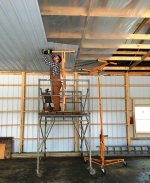
Insulate and finish the interior before you move all of your stuff in. I just did mine, 12 years after building it. I had to keep moving very heavy stuff from one area to another in order to be able to put up insulation and ceiling panels. By heavy, I mean things like a 1600 lb. lathe and a 2000 lb. mill, as well as all of the other stuff I've accumulated. I also had to take down all of the overhead lights and re-install them. It made the job 10 times harder.

I see no problem with having a sink plumbed to a French drain outside. It's just gray water; not considered a hazard. If I did that, though, I'd dig a nice big and deep pit and fill it with gravel.
 
OP
V

VietGnome

Well-known member
Joined
Feb 12, 2026
Messages
196
Location
Atlantic Canada
Again, as opposed to a lip at the doors, you can slope the pad from the door to the edge. This old photo is the best I have on-hand at the moment, and it may be hard to discern, but the pad slopes outward right at the door openings. It accomplishes the same as a step/lip without creating an obstacle.

IMG_2520 (Large).JPG


If that's the case, the overall cost difference between standing seam and typical R-panel roofing is minimal. The main adder is labor.
Sick setup. The whole slab is graded as well right?

Do you have a backing under the metal walls?
 

racecougar

Well-known member
Joined
Jan 26, 2021
Messages
4,971
Location
Missouri
Sick setup. The whole slab is graded as well right?

Do you have a backing under the metal walls?
Thanks. It's a floating slab with a full perimeter foundation. The slab is flat and level with the exception of the slope at the overhead door openings.

The liner panel on the walls/ceiling is attached directly to the framing. I did R-19 faced batts in the walls and ~R-55 worth of blown insulation above a vapor barrier in the attic.

Old pics from when I was sheeting and insulating it:

49753674_10100369123232093_2504584503347904512_o.jpg
49815633_10100370519124713_7847168617186590720_o.jpg

Insulate and finish the interior before you move all of your stuff in.
Agreed!
 
OP
V

VietGnome

Well-known member
Joined
Feb 12, 2026
Messages
196
Location
Atlantic Canada
Thanks. It's a floating slab with a full perimeter foundation. The slab is flat and level with the exception of the slope at the overhead door openings.

The liner panel on the walls/ceiling is attached directly to the framing. I did R-19 faced batts in the walls and ~R-55 worth of blown insulation above a vapor barrier in the attic.

Agreed!
Do you get much snow in your neck of the woods? Id like a flat floor, but feel it'd be a shitshow with snow melt off?
 

bwringer

Well-known member
Joined
Jan 1, 2013
Messages
10,242
Location
Indianapolis
I'd add network wiring to the list.

At least get ethernet from your router to the shop so you can set up a wifi access point inside the building (put it high up with power nearby). Getting wifi into a metal shop from the outside won't work very well.
 

ctandc72

Well-known member
Joined
Sep 19, 2020
Messages
1,085
Location
VA
I'll also suggest surface-mounted EMT for your wiring runs. It avoids weakening your framing with a bunch of drilled holes, makes insulation a snap, but most importantly, it allows you to easily make changes in the future. I've moved, and also added, several outlets over the past 7-1/2 years in my building.
This right here. It's a shop. Function over form. Allows you to cater your electrical to your needs after populating your shop with all the stuff you SWEAR you won't accumulate.
 

racecougar

Well-known member
Joined
Jan 26, 2021
Messages
4,971
Location
Missouri
Do you get much snow in your neck of the woods? Id like a flat floor, but feel it'd be a shitshow with snow melt off?
Yes, but not knowing where you are, I can't say how it will compare to your location. I prioritized a flat/level floor over a sloped floor for my purposes (automotive work and metal fab), but the only things that track snow in that building are the ATV's and SxS. As the building is heated/cooled, any meltwater disappears pretty quick, but I can easily squeegee it out if needed, too. The daily drivers that see snow are in another garage.
 

Codyboy

Well-known member
Joined
Jan 31, 2019
Messages
1,611
Location
S.E. TEXAS
Again, as opposed to a lip at the doors, you can slope the pad from the door to the edge. This old photo is the best I have on-hand at the moment, and it may be hard to discern, but the pad slopes outward right at the door openings. It accomplishes the same as a step/lip without creating an obstacle.

IMG_2520 (Large).JPG


If that's the case, the overall cost difference between standing seam and typical R-panel roofing is minimal. The main adder is labor.
How does that prevent windblown rain or forced water from a pressure washer from getting under the door and inside?
I mean for a garage or shop it probably doesn't matter much.
However, one would certainly not just have a little slope like that for an exterior door on the house. To me its no different.
 

racecougar

Well-known member
Joined
Jan 26, 2021
Messages
4,971
Location
Missouri
How does that prevent windblown rain or forced water from a pressure washer from getting under the door and inside?
I mean for a garage or shop it probably doesn't matter much.
However, one would certainly not just have a little slope like that for an exterior door on the house. To me its no different.
Well, it went through a direct hit from a EF-2 last year, along with 7-1/2 years of less scary weather. I've power washed the building, particularly the doors, a few times over the years. I've yet to get any water intrusion at the overhead doors. The only water issue I've had was the aforementioned roof screws, which I remedied over the last week with all new Atlas UltiMate screws.

I wouldn't put a sectional overhead door on a house. A normal man door is a better fit.

The trough design also lends itself to stuck/frozen doors in Northern climates. No idea how far north the OP is, but he/she has stated "snow load", so it's something to keep in mind.
 
OP
V

VietGnome

Well-known member
Joined
Feb 12, 2026
Messages
196
Location
Atlantic Canada
Not sure where you plan to have the heat pump located but code calls for a 120v outlet near the outdoor unit.
I'll have to dig into the code a little more specifically, I believe it might require a disconnect near the unit, but it doesn't require a 120V outlet near it.. Why would that be a thing?

I'm planning to mount it in the top "right" corner.
 

finn

Well-known member
Joined
Mar 27, 2005
Messages
16,175
Location
The UP, God's country
Maybe I'll reach out for a quote for standing seam to compare. The thought of tons of screws makes me a little uneasy, but everywhere seems to praise it over shingles.

I was under the impression that the screws were good for 10-15 atleast? Pending they're not overtight.

Surface mounting did cross my mind, but my main concern is I won't be finishing right away, so I dont see how it's possible if I don't have OSB up right away?

Doors are sectional, not sure why some have said rollup.
I have steel roofs on my shop and the large garage near the house. I wouldn’t recommend steel to my worst enemy. Too many leaks and ice jacks the screws out if it gets in the threads. The screw slowly backs itself out as the freeze/thaw cycle does its work.

Maybe standing seam is better, but I would probably go with architectural shingles.
 
Last edited:
OP
V

VietGnome

Well-known member
Joined
Feb 12, 2026
Messages
196
Location
Atlantic Canada
I have steel roofs on my shop and the large garage near the house. I wouldn’t recommend steel to my worst enemy. Too many leaks and ice jacks the screws out if it gets in the threads. She screw slowly screws itself out as the freeze/thaw cycle does its work.

Maybe standing seam is better, but I would probably go with architectural shingles.
Very interesting. You're the 1st person I've heard say that.
 

duneslider

Well-known member
Joined
Jan 20, 2013
Messages
2,243
Location
Riverton, Utah
I'll have to dig into the code a little more specifically, I believe it might require a disconnect near the unit, but it doesn't require a 120V outlet near it.. Why would that be a thing?

I'm planning to mount it in the top "right" corner.
It is NEC210.63 *Heating, Air-Conditioning, and Refrigeration Equipment Outlet. A 125-volt, single phase, 15- or 20-ampere-rated receptacle outlet shall be installed at an accessible location for the servicing of heating, air-conditioning, and refrigeration equipment. The receptacle shall be located on the same level and within 7.5 m (25 ft) of the heating, air-conditioning, and refrigeration equipment. The receptacle outlet shall not be connected to the load side of the equipment disconnecting means.

Yes, a disconnect is required at the unit as well.

The 120v is for the techinician to use to service the unit and the disconnect is to allow the tech to kill power to it for service.
 

dcg9381

Well-known member
Joined
Jun 20, 2018
Messages
11,627
Location
Austin, TX
Very interesting. You're the 1st person I've heard say that.
Yea, shocked me too. Here architectural shingles won't last due to hail. Standing seam is 100% the way to go. I get that "screw down" roofs require some fastener maintenance, but mine have held up on shops more than 10 years old.

There may be some more modern "composite" shingles that are impact resistant... but I haven't used them yet.
Standing seam was a cost swing of 3-4x when I built our house compared to architectural shingle. I wish I had pulled the trigger.
 
OP
V

VietGnome

Well-known member
Joined
Feb 12, 2026
Messages
196
Location
Atlantic Canada
It is NEC210.63 *Heating, Air-Conditioning, and Refrigeration Equipment Outlet. A 125-volt, single phase, 15- or 20-ampere-rated receptacle outlet shall be installed at an accessible location for the servicing of heating, air-conditioning, and refrigeration equipment. The receptacle shall be located on the same level and within 7.5 m (25 ft) of the heating, air-conditioning, and refrigeration equipment. The receptacle outlet shall not be connected to the load side of the equipment disconnecting means.

Yes, a disconnect is required at the unit as well.

The 120v is for the techinician to use to service the unit and the disconnect is to allow the tech to kill power to it for service.
I'm in Canada, we have the CEC, not the NEC.

I also have 3 heat pumps on my house and none of them had an outlet installed nearby.
 

bluedog225

Well-known member
Joined
Jan 31, 2012
Messages
3,237
Location
Texas
Guy talked me into snap lock in 1995. A little extra. Total around 6000 bucks. Hasn’t been touched this since.

I put double lock on my shop. It will outlast me by many years.
 
To avoid these ads, REGISTER NOW!

Steve W.

Well-known member
Joined
Mar 27, 2019
Messages
1,240
Location
Southwest oHIo
I'm in Canada, we have the CEC, not the NEC.

I also have 3 heat pumps on my house and none of them had an outlet installed nearby.
First of all, thanks for finally disclosing your location. :thumbup:

Next, even if the CEC does not require a service receptacle, why not be nice to the service tech and provide one anyway?

I had a mini-split installed in our family room conversion a couple of years ago and another mini installed in the shop last year. Same installer, he appreciated the available power both times. For the one on the house, there is another receptacle about 25-30 feet away, but he would have had to drag out a 50-foot cord to do the one on the shop.

IMG_6048[1].JPG
 

kwb

Well-known member
Joined
May 1, 2009
Messages
1,769
Location
PNW
You can do 14ft door and 14ft wall. You just need to use scissor trusses.

Do at 12ft wide door if you plan to put trailers in or a RV that isn't a long straight path in the door. I have 16ft but very tight turn and that's not always easy with long trailer.

The door incremental cost is nothing compared to repair cost of a slight miscalculated maneuver.
 
OP
V

VietGnome

Well-known member
Joined
Feb 12, 2026
Messages
196
Location
Atlantic Canada
First of all, thanks for finally disclosing your location. :thumbup:

Next, even if the CEC does not require a service receptacle, why not be nice to the service tech and provide one anyway?

I had a mini-split installed in our family room conversion a couple of years ago and another mini installed in the shop last year. Same installer, he appreciated the available power both times. For the one on the house, there is another receptacle about 25-30 feet away, but he would have had to drag out a 50-foot cord to do the one on the shop.
I thought I specified Atlantic Canada, my bad haha.

It's worth a consideration I suppose. while it's cheap and easy. My logic was units are DIY, so I likely won't be paying someone to service, and I don't mind running a 40' extension cord or moving a generator once every X number of years.

You can do 14ft door and 14ft wall. You just need to use scissor trusses.

Do at 12ft wide door if you plan to put trailers in or a RV that isn't a long straight path in the door. I have 16ft but very tight turn and that's not always easy with long trailer.

The door incremental cost is nothing compared to repair cost of a slight miscalculated maneuver.
Driveway is real long and a straight shot in. I don't ever see myself being a RV guy, and my dream boat is 4.5 feet wide.

I totally agree just on principal, I'd love taller ceilings. However anything over 12' means I'll need engineered plans, and that's an endeavor that will surely put me over budget.
 

racecougar

Well-known member
Joined
Jan 26, 2021
Messages
4,971
Location
Missouri
I totally agree just on principal, I'd love taller ceilings. However anything over 12' means I'll need engineered plans, and that's an endeavor that will surely put me over budget.
I'm not a RV guy either, but I wanted a little breathing room beyond 12' when using the lift. I kept my framed walls to 12', but used a stem wall to get some additional height.
 
OP
V

VietGnome

Well-known member
Joined
Feb 12, 2026
Messages
196
Location
Atlantic Canada
I'm not a RV guy either, but I wanted a little breathing room beyond 12' when using the lift. I kept my framed walls to 12', but used a stem wall to get some additional height.
Aaah. Yeah makes sense. I have an 8" stem wall which was included in my plans, I dont think I can deviate from that.

However I agree on all fronts. My FIL is around 12'6" and juat a little more room would be great
 

y'sguy

Well-known member
Joined
May 1, 2010
Messages
1,305
Location
Tulsa, Oklahoma
What do you mean by this? Ive done some research and some math and it seems that a 28K BTU should be more than enough to heat it?
I am not saying it won't work, but obviously, the higher the ceiling, the more work any heater will have to do to get things comfortable.
 

dcg9381

Well-known member
Joined
Jun 20, 2018
Messages
11,627
Location
Austin, TX
I am not saying it won't work, but obviously, the higher the ceiling, the more work any heater will have to do to get things comfortable.
OP: Make sure you get a "hyper heat" unit. 28k of heat pump is not 28k of heat pump below freezing unless you get the right one....

What is your insulation R value? 28k in Canada doesn't sound like a lot of heat to me.
 
OP
V

VietGnome

Well-known member
Joined
Feb 12, 2026
Messages
196
Location
Atlantic Canada
OP: Make sure you get a "hyper heat" unit. 28k of heat pump is not 28k of heat pump below freezing unless you get the right one....

What is your insulation R value? 28k in Canada doesn't sound like a lot of heat to me.
Planning for R40 blown into the ceiling, and R21 blown in the walls.

I'm definitely tracking getting one with the right temperature ratings.
 
OP
V

VietGnome

Well-known member
Joined
Feb 12, 2026
Messages
196
Location
Atlantic Canada
Even though I'm in relatively mild SC, I wish I had insulated under my slab. Money was just too tight at the time.
I was unsure if I wanted to do just edge and wing or full underslab, and I'm just gonna pull the trigger on full underslab + edge and wing.
 

Jazz1

Well-known member
Joined
Jan 3, 2016
Messages
4,184
Location
Thunder Bay On.
I was in such a hurry to get mine built i neglected to order 2x6 studs for walls added insulation here in the frozen tundra…still snowing today and 16F currently..
 

Attachments

  • IMG_5640.jpeg
    IMG_5640.jpeg
    899.5 KB · Views: 7

OccupantRJ

Well-known member
Joined
May 15, 2009
Messages
10,906
Location
Eastern North Carolina
On my previous shop I had a door on each side of the building to open as a breezeway when needed and it let me drive through with a load. Either door could be shut if wind was blowing, and I had a hoist rail over head for loading or unloading the truck or a trailer. It made an ultimate work space. In my present location the building was already here and distance from the rear lot line did not allow a second door for a drive through. If I was to build another shop that allowed that feature I would surely have it again.
 

dcg9381

Well-known member
Joined
Jun 20, 2018
Messages
11,627
Location
Austin, TX
Planning for R40 blown into the ceiling, and R21 blown in the walls.
I'm definitely tracking getting one with the right temperature ratings.
That sounds right to me. Will you be heating/cooling frequently? That's the other part that plays. I have 48k of HVAC in the shop, but I turn it on less than 30 times per year, so our cooling capacity is a little bit more than is actually needed. For me it was cheaper to install 2 x 24K units than a single 36k or 48k unit. 2 units distribute the air better than one.

FYI - I supplement "heat" with a propane via simple wall mounted heaters and a 100 lb propane tank. My split units were not designed for cold weather operation (my mistake when putting them in). But we heat with even less frequency than we cool... 2021 we had a massive cold snap (over a week below 25 degrees) and I hadn't planned for that extreme and we were living in the shop at the time...
 
OP
V

VietGnome

Well-known member
Joined
Feb 12, 2026
Messages
196
Location
Atlantic Canada
That sounds right to me. Will you be heating/cooling frequently? That's the other part that plays. I have 48k of HVAC in the shop, but I turn it on less than 30 times per year, so our cooling capacity is a little bit more than is actually needed. For me it was cheaper to install 2 x 24K units than a single 36k or 48k unit. 2 units distribute the air better than one.

FYI - I supplement "heat" with a propane via simple wall mounted heaters and a 100 lb propane tank. My split units were not designed for cold weather operation (my mistake when putting them in). But we heat with even less frequency than we cool... 2021 we had a massive cold snap (over a week below 25 degrees) and I hadn't planned for that extreme and we were living in the shop at the time...
Cooling not so much. Just to keep out the humidity in the summer and maybe turned up a bit when I'm working.

I plan to keep it around 10-15 in the winter. Really just as low as the heatpump will go, and maybe turn it up a bit if im working in there for extended periods.
 

racecougar

Well-known member
Joined
Jan 26, 2021
Messages
4,971
Location
Missouri
I plan to keep it around 10-15 in the winter. Really just as low as the heatpump will go, and maybe turn it up a bit if im working in there for extended periods.
Minimum heat setting varies from manufacturer to manufacturer, but typically isn't below 45F. For example, Gree units have a 46F setpoint in "away" mode.
 

Fav Onefour

Well-known member
Joined
Jul 14, 2022
Messages
685
Location
MN cold and hot
Do you get much snow in your neck of the woods? Id like a flat floor, but feel it'd be a shitshow with snow melt off?
It is a pain. My floor was nice and flat with a slope to the doors. My winter ritual was tiresome. With a lot of snow melt, the slop jammed against the doors. In long cold spells, it would freeze a couple inches deep and needed to be chipped away. I eventually learned to scrape and shovel the **** away almost daily before it froze. Salt slop is hard on floors and doors too.

I redid the floor awhile back. I centered a drain under each main parking spot with the new floor. The slope area is only under the parking spots. I poured the rest flat and level. It's not an easy pour to lay out but the results are worth the effort.

That little change in the floor made a huge difference in the space. The slop ends up under the vehicles and runs toward the drain. The rest of the space is not affected when I pull in to the building. That's a huge deal for me. I like clean and dry floors where I'm working. I've also found that the overall floor cleanup is easier. I pull the vehicles out and scrub the bay floors. The area outside the bays doesn't get gunked up.

Overall, the simple act of managing water and slop has changed how I use the space. It's drier overall because water is gone. I'm able to stage projects and use the floor now. It is a more functional work space.
 

finn

Well-known member
Joined
Mar 27, 2005
Messages
16,175
Location
The UP, God's country
It is a pain. My floor was nice and flat with a slope to the doors. My winter ritual was tiresome. With a lot of snow melt, the slop jammed against the doors. In long cold spells, it would freeze a couple inches deep and needed to be chipped away. I eventually learned to scrape and shovel the **** away almost daily before it froze. Salt slop is hard on floors and doors too.

I redid the floor awhile back. I centered a drain under each main parking spot with the new floor. The slope area is only under the parking spots. I poured the rest flat and level. It's not an easy pour to lay out but the results are worth the effort.

That little change in the floor made a huge difference in the space. The slop ends up under the vehicles and runs toward the drain. The rest of the space is not affected when I pull in to the building. That's a huge deal for me. I like clean and dry floors where I'm working. I've also found that the overall floor cleanup is easier. I pull the vehicles out and scrub the bay floors. The area outside the bays doesn't get gunked up.

Overall, the simple act of managing water and slop has changed how I use the space. It's drier overall because water is gone. I'm able to stage projects and use the floor now. It is a more functional work space.
I have a slight slope to a grate and drain in the center. The slope is mild, but enough to require a 3/8” plywood shim under one leg of the four post lift. Works well when washing a car, and it’s a good place to push ice that falls off the cars. I don’t typically park winter drivers in there though. The floor and building is heated. The drains go to an oil separator, then who knows where. Might be the septic. I don’t see a surface discharge. The health department required an oil separator since the original owner serviced his logging equipment in there.

My other garage has a smaller rectangular plastic trench drain like you see in the box stores. It’s more aesthetically pleasing, but not as effective as the ~18”x36” grate in the shop.

I had another, unheated garage with a round drain, maybe about 8” or so. That was a disaster. The slab was at least 6 or 8 “ thick, and water would freeze solid in the drain by mid January, and continue to pool On the floor, eventually freezing. The drain would remain plugged till late May, with an ice rink above it for much of that time. Not sure if it had a trap that froze or ice just built up on the walls like plaque on your arteries.

Moral: drains are nice, but go for a big grate over the dainty box store versions, and make sure it can drain adequately in freezing weather.
 
OP
V

VietGnome

Well-known member
Joined
Feb 12, 2026
Messages
196
Location
Atlantic Canada
To be honest, I'd love a drain. One drain centered under each bay with a slight grade towards them. Unfortunately I'm 99% sure any drain in my area will require oil separators, proper traps, and discharge into the septic, which would be a bit of a shitshow to get done properly.

I think my best realistic option is to just buy a big squeegee and embrace the ****. Fortunately (and unfortunately?) I have a gravel driveway so any ice build up can be routinely chipped up with a pick and tossed aside.
 
To avoid these ads, REGISTER NOW!
Top Bottom