If you will take a larger drill size and look straight on at the center of it with it pointing at you, you will see that the web is rather wide. Then imagine this web as a rotating spot of that diameter. Other than a scraping action, you are essentially trying to push a steel rod of that diameter through a piece of steel when you are drilling. That is why a pilot drill makes it easier to drill. As a machinist I rarely ever drill a hole through most materials without a pilot drill, due to the required hole location accuracy. This becomes more important as the number of holes in a bolt pattern increases. A simple way around this for most people is to drill your first hole, bolt on your part, then spot drill the remaining required holes with a drill the size of the bore you are trying to go through. Then remove part, pilot drill, then drill the holes to the needed size. This will save you much heart ache, over-drilling, and rat-tail file usage. Best pilot drill for field work I have used is a 5/32" polished flute stub length. They cut relatively fast, and the short length will let you push harder with less chance of bowing or breaking the drill while in action.
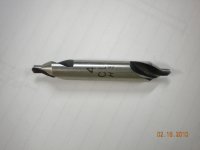
Center drills are also known as combined drill and countersinks, and are available in various degrees of countersink angle. Most countersunk head bolts have an 82* angle.
RJ