theoldwizard1
Well-known member
I can see why you are getting confused with INFORMATION OVERLOAD ! If you get a "whole house" standby generator it should come with an automatic transfer switch.Thank you. I have an issue I didn't think about it.
Not stupid, just over thinking it.The location I want to put the generator, is no where near my panel. Lets see, for reference, the panel is essentially 3 floors above the generator, and 40' to the side. I can possibly run a riser all the way to the panel, this is going to cost me, I am sure.
Now 30', on the same floor as the generator, I have the city service, and meter. It then goes into a main kill breaker, that feeds the panel upstairs. Can I just wire the transfer panel to that main breaker, and if the power goes out, I manage the load from the breakers on the third floor? I figure, if the power goes, out, I kill all the lights and stuff, go turn off the breakers, and let the generator do its thing. If I am not home, there really isn't much for the generator to power. Just the boiler (Winter Only) and 2 fridges. Is this doable (I'm sure it is), or am I being stupid?
First, this is not a DIY job. Hire a pro. Even if you are an electrician, installing a generator and transfer switch and controller is not something you want to tackle on you own if you have not done it before.
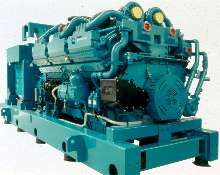
Second, whole house standby generators are "smart". Their computer senses that the power is out, waits a short period of time (30-120 seconds ?), starts the generator, waits for it to warmup (30-120 seconds ?), then switches the whole house to the generator. This switch is located between the meter and the main breaker panel.
BTW, the computer does a couple of other nice things for you. About once a month it starts the generator to make sure the battery is still good and then runs for awhile to charge the battery. It has an information panel that will tell you if it has failed to start or that maintenance is required.
These whole house standby systems really are designed so that you only have to look at them once or twice a year !
It protects itself with breakers. To prevent this from happening you have 2 choices:What happens when the generator can't meet the load anyway? Does it blow a fuse, turn off, start crying, run half power, etc...?
- buy an oversized generator
- when the generator kicks in, turn off breakers that are not necessary (electric stove, washer and dryer, A/C) or just don't turn those things on !
I don't like 1) because it cost more up front and it costs more when you run it (bigger motor uses more fuel). IMHO, an "average" suburban home, without electric heat or heat pump (and keeping the A/C turned off), could easily get by with 5-7.5KW generator. You could probably even run a small window A/C unit.
I'm not going to get into the fuel argument. If it is a true whole home standby generator, you really have only 2 choices, natural gas or propane. If it is propane, I would want the biggest tank I could get. Even then, I would have a couple of 40 lbs that I could put I a car and drive somewhere to get filled up. Propane companies around NYC/NJ probably won't be making deliveries for a week or 2 !
Last edited: