To avoid these ads, REGISTER NOW!

Please School Me on Standby Generators

theoldwizard1

Well-known member
Joined
Feb 22, 2011
Messages
43,126
Location
SE MI
Thank you. I have an issue I didn't think about it.
I can see why you are getting confused with INFORMATION OVERLOAD ! If you get a "whole house" standby generator it should come with an automatic transfer switch.

The location I want to put the generator, is no where near my panel. Lets see, for reference, the panel is essentially 3 floors above the generator, and 40' to the side. I can possibly run a riser all the way to the panel, this is going to cost me, I am sure.

Now 30', on the same floor as the generator, I have the city service, and meter. It then goes into a main kill breaker, that feeds the panel upstairs. Can I just wire the transfer panel to that main breaker, and if the power goes out, I manage the load from the breakers on the third floor? I figure, if the power goes, out, I kill all the lights and stuff, go turn off the breakers, and let the generator do its thing. If I am not home, there really isn't much for the generator to power. Just the boiler (Winter Only) and 2 fridges. Is this doable (I'm sure it is), or am I being stupid?
Not stupid, just over thinking it.

First, this is not a DIY job. Hire a pro. Even if you are an electrician, installing a generator and transfer switch and controller is not something you want to tackle on you own if you have not done it before.

Second, whole house standby generators are "smart". Their computer senses that the power is out, waits a short period of time (30-120 seconds ?), starts the generator, waits for it to warmup (30-120 seconds ?), then switches the whole house to the generator. This switch is located between the meter and the main breaker panel.

BTW, the computer does a couple of other nice things for you. About once a month it starts the generator to make sure the battery is still good and then runs for awhile to charge the battery. It has an information panel that will tell you if it has failed to start or that maintenance is required.

These whole house standby systems really are designed so that you only have to look at them once or twice a year !

What happens when the generator can't meet the load anyway? Does it blow a fuse, turn off, start crying, run half power, etc...?
It protects itself with breakers. To prevent this from happening you have 2 choices:
  1. buy an oversized generator
  2. when the generator kicks in, turn off breakers that are not necessary (electric stove, washer and dryer, A/C) or just don't turn those things on !

I don't like 1) because it cost more up front and it costs more when you run it (bigger motor uses more fuel). IMHO, an "average" suburban home, without electric heat or heat pump (and keeping the A/C turned off), could easily get by with 5-7.5KW generator. You could probably even run a small window A/C unit.


I'm not going to get into the fuel argument. If it is a true whole home standby generator, you really have only 2 choices, natural gas or propane. If it is propane, I would want the biggest tank I could get. Even then, I would have a couple of 40 lbs that I could put I a car and drive somewhere to get filled up. Propane companies around NYC/NJ probably won't be making deliveries for a week or 2 !
 
Last edited:
To avoid these ads, REGISTER NOW!

theoldwizard1

Well-known member
Joined
Feb 22, 2011
Messages
43,126
Location
SE MI
An interesting thing to consider is fuel consumption. ...

The first generator needed 36 gallons per day. The other 3 gallons per day.

In the course of 18 days, one needed 648 gallons of gas. The other needed 54 gallons.

648 x $4/gallon = $2592. 54 x $4/gallon = $216. A difference of $2376. These figures are ESTIMATES, but not far off the mark.

Thank you, THANK you, THANK YOU ! Few people ever consider this issue !!

I have said it a dozen time in this forum, with generators bigger is not necessarily better. It just means that it will consume more fuel, typically during a time when fuel is scarce !!

I know inverter generators are expensive (Honda and Yamaha make excellent inverter generators) but they sip fuel ! IMHO you need a generator that is capable of 2,500-3,000 watts continuous. That would easily run a furnace blower, a couple refrigerators, microwave and a bunch of lights and TVs. Swap the refrigerators out (for awhile) and you could run a small/medium window A/C.
 

bjcouche

Well-known member
Joined
Sep 11, 2010
Messages
509
Location
Ohio
If you require the generator to operate your air conditioning, whether it's standby or portable, do some homework first. Check the surge current on your air conditioner and the surge current rating on the generator you are considering. I bought a Generac 8000W/12,000W peak unit due to the large inrush current of my extremely deep well pump. I don't run air conditioning but I did try hooking it up once to see if it would work. I can't remember offhand of the continuous current rating of the AC compressor, but it's on a 40A breaker and I do remember that the nameplate listed it's surge current at 125A. The generator just bogged down and tripped the breaker without starting the compressor. 125A*240V=30KW! The same suggestion might apply for a heat pump but I'll admit I don't know anything about them.
The information on the inverter type generators is good. They may be a bit more pricey than their traditional competition, but I'd say well worth it. The inverter types (if designed properly) don't exhibit voltage and frequency sag and surge when a large load is turned on. Commonly if you turn a large load on a portable generator on, the voltage and frequency will sag below 120V, then surge above 120V as the generator goes to full throttle to compensate for the sag. These voltage fluctuations if large enough, can sometimes cause failures of electronic equipment. Also keep in mine there are electronic control modules on almost all new appliances, furnaces, hot water heaters, stoves, ranges, ovens, dishwashers, etc. often times the repairing the electronics is more expensive than the appliance.

Brian
 

olytdi

Well-known member
Joined
Dec 3, 2011
Messages
2,202
Location
Olympia, Washington
Thank you, THANK you, THANK YOU ! Few people ever consider this issue !!

I have said it a dozen time in this forum, with generators bigger is not necessarily better. It just means that it will consume more fuel, typically during a time when fuel is scarce !!

I know inverter generators are expensive (Honda and Yamaha make excellent inverter generators) but they sip fuel ! IMHO you need a generator that is capable of 2,500-3,000 watts continuous. That would easily run a furnace blower, a couple refrigerators, microwave and a bunch of lights and TVs. Swap the refrigerators out (for awhile) and you could run a small/medium window A/C.

However, if you look at how much was spent in that scenario, you're approaching the cost of a whole house standby system. It's a wash if you're at all capable of installing the system yourself.

I've thought about this a lot lately as I am shopping for a system. I've come to the conclusion that the issues of gasoline (availability during outages, high cost, high consumption, storage, transport and finding it, stabilizing it, rotating it, etc.), noise, storage of the genset, and operating costs have pretty much convinced me to go with a standby genset. I've seen gasoline become unavailable many times. I've never seen natural gas become unavailable.

Those considerations, coupled with the idea that, once installed, an automatic standby system is pretty much something you simply watch work (no cords, funnels, walking in and out of the garage/basement to flip breakers in order to load manage), moved me away from the loud, gasoline, portable genset with cords option. I really think that if you compare costs (like in the inverter vs non-inverter analysis above) you come to the conclusion that the portables end-up being a slippery slope of costs for which there is no long-term advantage.

I concede that there definitely situations whereby the portable indeed makes more sense for someone.
 

RECox286

Well-known member
Joined
Apr 11, 2012
Messages
1,399
Location
South Joisey (yeah, that is part of the USA)
If you can imagine, we had a customer who installed a 70k NG fueled diesel

genset in his garage to fire up the whole house in a black/brown out down

here at the shore. Can't imagine how much he spent, but the house was

sold for $ 6 mil.

We lost power for 3 days here in Central NJ, and kept our two fridges and

one freezer going with a gas fueled 4k Generac (a spare power plant lent to

us from a good neighbor). It was fairly quiet, and did its' job with no complaint

other than an occasional cooling down to refuel.

I heard that there was a tractor trailer, somewhere in town, loaded with gensets

and that the going price was 2 grand ea. It was said they were being sold as fast

as they could be unloaded. Not a smart way to buy a back up generator to my

way of thinking.

If I were in the market, I would look at COO before I bought one. I think I would

be swayed more toward a genuine Honda machine, everything else seems to come

from cHINA !

Uncle Bob
 

quick60

Well-known member
Joined
Nov 5, 2010
Messages
214
Location
Virginia
I do not reccomend an automatic transfer switch. If during the event (ie hurricane) the house looses power. The generator will kick on. Prior to that if your electrical system has been damaged in the storm you run the risk of starting a fire or getting electrocuted when you crawl out of your attic and step into the water. Yes a breaker somewhere should trip in the event of a short circuit but they do not always work.

I agree there is no one fuel that will work in every situation. Above ground propane tanks will float away, below ground propane tanks can float away, nat gas may be disrupted, diesel not as reliable in the winter but you can prepare for that by enclosures and keeping fuel inside the garage and installing heaters. Plus diesel may be harder to find but diesel generators are very fuel efficient. I believe you can get dual fuel units that will run on multiple fuels.

In any case like has been said. After a natural disaster you may only want to run neccessities like well, fridge, freezer. I have lived on the east coast of Virginia my whole life through many hurricanes. Being in the fire department I have to go to work and have been at work as long as 96 hours straight. I was also on a USAR team for 16 years. I've been on many hurricane deployments to Florida and Alabama and have seen what these storms can do first hand. 72 hours out I fill all our vehicle tanks, portable tanks, generator, secure the house with plywood panels ( this protects windows from damage but also deters looters after the storm), pull cash money from the bank and make hotel or other arrangements and 12 to 24 hours before landfall I send my wife and kids inland to evacuate then I go to work. You dont want to try to ride these storms out. When storm is gone the family comes back we unboard the house set the generator up and run only the necessities.

Sorry you are having to go through this. It is very difficult situation.
 
Last edited:

2manytoyz

Well-known member
Joined
Sep 20, 2011
Messages
419
Location
Central FL
I've seen gasoline become unavailable many times. I've never seen natural gas become unavailable.

Here's the report, you can read it in detail if you wish: http://www.ef.org/documents/hurricanereport_final.pdf

In 2004, hurricanes trashed Florida. One ripped across the Panhandle, taking out a portion of I-10, along with the natural gas lines feeding the state.

Then storms ripped up the shipping ports South of us, which impacted the gasoline supply.

Locally, the power was out in the county. Many gas stations closed because of it.

No natural gas. Very little gasoline available.

This is why I fill up a dozen gas cans when a storm approaches, and own a fuel sipping inverter type generator.

Whole home standby units are GREAT, provided you have the fuel to feed them. In 2004, they weren't worth much. YMMV.
 

EOC_Jason

Well-known member
Joined
Jun 25, 2012
Messages
11,388
Location
Bentonville, AR
Nobody mentioned the differences between air-cooled & liquid-cooled whole house generators? Hmmmm.....

The source of fuel for your generator should depend on what is available in disaster situations. Obviously when power goes out, so do the pumps at gas stations, so if you choose gas you better stock up BEFORE the storm hits (HINT to millions of people on east coast). If you have large propane tank(s) for your house already, then that can be a good source for a generator. Usually your propane supplier can / will upsize your tank if you ask. You could also get some large portable tanks for emergencies. However, during harsh winter months or disasters, propane deliveries can be unreliable or impossible, but if you pay attention to your propane supply that shouldn't be too much of an issue. Natural gas will depend on the infrastructure, like others have said in some areas it can be unreliable during disasters because of ruptured lines or pumps not working. Fortunately for me NG is stored mere miles away in huge underground salt domes under pressure. As long as a main doesn't rupture (not likely), NG should always be there. When we were without power for 2 weeks, we always had NG, unfortunately that only meant we could cook on our grill out back, and have hot water to bath in. If we had a whole-house generator we could of been enjoying the A/C when the weather got really hot and humid... ugh...

Also look at cost of fuel... Gas will probably be most expensive, then LPG, then NG. Also both LPG & NG will burn much cleaner and your motor should last much longer.

For the super paranoid or just prepared person, there are tri-fuel generators. So you can run whatever you have available. But these are portable models, not whole-house.

Also you should look into how OFTEN you have power outages and what the CAUSE is. Then you can really determine if a whole house generator is your best choice or if a portable would suffice.
 
OP
S

slickgt1

Well-known member
Joined
Oct 11, 2010
Messages
1,674
I can see why you are getting confused with INFORMATION OVERLOAD ! If you get a "whole house" standby generator it should come with an automatic transfer switch.


Not stupid, just over thinking it.

First, this is not a DIY job. Hire a pro. Even if you are an electrician, installing a generator and transfer switch and controller is not something you want to tackle on you own if you have not done it before.

Second, whole house standby generators are "smart". Their computer senses that the power is out, waits a short period of time (30-120 seconds ?), starts the generator, waits for it to warmup (30-120 seconds ?), then switches the whole house to the generator. This switch is located between the meter and the main breaker panel.

BTW, the computer does a couple of other nice things for you. About once a month it starts the generator to make sure the battery is still good and then runs for awhile to charge the battery. It has an information panel that will tell you if it has failed to start or that maintenance is required.

These whole house standby systems really are designed so that you only have to look at them once or twice a year !


It protects itself with breakers. To prevent this from happening you have 2 choices:
  1. buy an oversized generator
  2. when the generator kicks in, turn off breakers that are not necessary (electric stove, washer and dryer, A/C) or just don't turn those things on !

I don't like 1) because it cost more up front and it costs more when you run it (bigger motor uses more fuel). IMHO, an "average" suburban home, without electric heat or heat pump (and keeping the A/C turned off), could easily get by with 5-7.5KW generator. You could probably even run a small window A/C unit.


I'm not going to get into the fuel argument. If it is a true whole home standby generator, you really have only 2 choices, natural gas or propane. If it is propane, I would want the biggest tank I could get. Even then, I would have a couple of 40 lbs that I could put I a car and drive somewhere to get filled up. Propane companies around NYC/NJ probably won't be making deliveries for a week or 2 !

Thank you. So it is between the panel and meter. In that case, it will be simpler. Yes I plan to hire this part out, as well as the NG tie in.

I prefer an auto switch smart panel too. I don't want my wife with baby to go scrambling to flip anything if the power fails if I am not home. Plus, if I'm on vacation, and flooding happens, I want my pumps to kick on, not wait for me to go start anything.

Thank you all for responding. Keep them coming, I already learned a ton.
 

theoldwizard1

Well-known member
Joined
Feb 22, 2011
Messages
43,126
Location
SE MI
Thank you. So it is between the panel and meter. In that case, it will be simpler.
Now I am going to add more information. Hopefully I will NOT overload/confuse you.

SOME "transfer switches" are not fully automatic as I previously stated. You have to manually flip switches. You will pay extra for the fully automatic systems, but they work with no intervention.

When shopping, ask lots of questions. If you don't get reasonable answers, go somewhere else.


EDIT: To the OP - What I was trying to say is that some automatic transfer switches have individual circuit breakers for the selected loads. In your case you do NOT want this for your installation. The down side of switching the feed to your main breaker panel is that if there is to high of a load the breakers at the generator will trip and you will have zero power.

Even with a relatively small (under 10KW) this in not likely to happen as long as you don't have you A/C wired into your main breaker panel. If you do have the A/C wired in and you want it to run (like someone living in FL) then you will need to buy a generator appropriately sized for that kind of load.
 
Last edited:

olytdi

Well-known member
Joined
Dec 3, 2011
Messages
2,202
Location
Olympia, Washington
Here's the report, you can read it in detail if you wish: http://www.ef.org/documents/hurricanereport_final.pdf

In 2004, hurricanes trashed Florida. One ripped across the Panhandle, taking out a portion of I-10, along with the natural gas lines feeding the state.

Then storms ripped up the shipping ports South of us, which impacted the gasoline supply.

Locally, the power was out in the county. Many gas stations closed because of it.

No natural gas. Very little gasoline available.

This is why I fill up a dozen gas cans when a storm approaches, and own a fuel sipping inverter type generator.

Whole home standby units are GREAT, provided you have the fuel to feed them. In 2004, they weren't worth much. YMMV.

Good points. I could see something similar happening in my area if there were an earthquake in the magnitude 8 range. In thirty years here, through earthquakes, wind storms, ice storms, etc., there's been problems getting gasoline but never yet NG. That doesn't mean it won't happen. If you were trying to beat all odds, you'd probably be best off with large propane storage on site connected to a triple fuel genny with lots of gas in strorage.

When we go out here for extended outages, it invariably is wind and ice related. Last winter was a wopper of a snow storm (18 inches of the heavy stuff) followed by a bad ice storm that tore down pretty much every power line around. We were out for a week or more. I think that this is the type of outage that I'm most likely to endure.

figuring-out what sorts of outages you're likely to experience in terms of fuel disruptions and availability, will help decide what sort of genny to get. I'm guessing that many on the east coast wish that they had a generator that burned something other than gasoline.
 

Sticky

Well-known member
Joined
Jan 28, 2008
Messages
97
How about the Yamaha hybrid units that can burn gas or propane? They are inverters so will cost a lot up front, but you have the piece of mind that you can run either gas or propane and the Yamahas should last a long time right?
 

theoldwizard1

Well-known member
Joined
Feb 22, 2011
Messages
43,126
Location
SE MI
How about the Yamaha hybrid units that can burn gas or propane? They are inverters so will cost a lot up front, but you have the piece of mind that you can run either gas or propane and the Yamahas should last a long time right?

I believe the NG/Propane is done by an aftermarket company. Nothing wrong with that, just that it does not come from the factory that way.

I am not certain, but I believe you have to change a jet/orifice to switch between NG and Propane.
 
Last edited:

Burtonrider10022

Well-known member
Joined
Oct 20, 2012
Messages
695
Location
Chicago, IL
I believe the NG/Propane is done by an aftermarket company. Nothing wrong with that, just that it does not come from the factory that way.

I am not certain, but I believe you have to change a jet/orifice to switch between BG and Propane.

NG and propane you mean?

Most of the smaller engines can run on propane or NG pretty easily without rejetting. There are actually a lot of video how-to's on youtube for making your own, but the part those videos are missing is the two most important parts.

Yes, your generator/lawnmower/powerwasher/whatever will run just fine on LP/NG if you manually adjust the regulator until you hear the motor running well. Obviously, this doesn't work well because a generator will need a different amount of fuel depending on the load. Also, if your motor stops running for whatever reason, the home-made version does not have a safety shut off, so the LP/NG will keep pumping, filling your yard or DEtatched garage with flammable gas. Not good.


The kits are worth the $200, and most of them are just a spacer between the air filter and the carb, a fuel shut off valve (if not already installed), an LP/NG vacuum/variable throttle regulator, a primer bulb for starting, and a safety shut off.
 

StRacerDuke

Well-known member
Joined
Oct 7, 2009
Messages
104
Shocked no one has brought up the negative about Generac. Do a google search on reviews and Kohler vs Generac.

Generac is the harbor freight of Stanton by units. The run cheaper electronics and use a modified gas motor that spins at 3,600 rmp. Kohler are much better units with motors that spin at 1,800 if I recall correctly.

The box stores around me recently stopped sell Generacs. No official reason though. I have a 20kw NG Kohler on order (very large house). Got it for a steal at a box store using a 10% off coupon and 5% off using store CC. Saved about $750.
 
OP
S

slickgt1

Well-known member
Joined
Oct 11, 2010
Messages
1,674
Now I am going to add more information. Hopefully I will NOT overload/confuse you.

SOME "transfer switches" are not fully automatic as I previously stated. You have to manually flip switches. You will pay extra for the fully automatic systems, but they work with no intervention.

When shopping, ask lots of questions. If you don't get reasonable answers, go somewhere else.


EDIT: To the OP - What I was trying to say is that some automatic transfer switches have individual circuit breakers for the selected loads. In your case you do NOT want this for your installation. The down side of switching the feed to your main breaker panel is that if there is to high of a load the breakers at the generator will trip and you will have zero power.

Even with a relatively small (under 10KW) this in not likely to happen as long as you don't have you A/C wired into your main breaker panel. If you do have the A/C wired in and you want it to run (like someone living in FL) then you will need to buy a generator appropriately sized for that kind of load.

Yea I am pretty much settled on a 10kw (ng = 9kw BTW) 100A auto switch transfer panel, whole house. I was looking at the 8kw, but it is really 7kw when on NG. I figured it might be a bit low for my needs.

Whats up with the air cooled VS. water cooled units. Why would I get one over the other?

I too keep reading that Generac generators are horrible, but I learned to read the reviews with a grain of salt. Most people will never review if everything is good.

What other brands of Standby Generators are out there? Thanks again guys.
 
To avoid these ads, REGISTER NOW!

VHF

Well-known member
Joined
Oct 27, 2008
Messages
420
Location
NW Wisconsin
Yea I am pretty much settled on a 10kw (ng = 9kw BTW) 100A auto switch transfer panel, whole house..

Current NEC requires a generator be capable of running all connected loads when using an ATS (automatic transfer switch), and this is a good idea anyway to keep the generator from bogging down from too many loads.

A 10kw is not typically big enough to run a whole house except if maybe all gas appliances and no A/C. An electric stove can draw more than that by itself!

There are load sheding modules that can be used in conjunction with a whole-house ATS to disconnect high-power loads when on generator power (or as the capacity of the generator is approached.) But for true whole-house backup power a 17kw or 20kw would be better fit.

Generac bundles a 10kw generator with an ATS that allows 12 critical circuits to be backed up by the generator. This is what I have and it works fine for emergency power. Sure, I would like to have a little more flexability in what circuits I can power from on the generator, but that was less important than having automatic transfer of critical circuits and a longer run time during an extended outage (10kw burns less fuel per hour than 17Kw--I have a 500 gallon propane tank. If I was on NG then I might have considered a larger generator.)

I too keep reading that Generac generators are horrible, but I learned to read the reviews with a grain of salt. Most people will never review if everything is good..

Some people have had horror stories with Generac, but I've been generally happy with my 10KW. Any other brand will cost more for an equivilent system, and the Generac is more DIY-friendly if you want to do some/all of your own instllation. Also, the ATS seems very well designed and built and costs much less that others (mine uses a copper-buss Siemens panel for the breakers) .

I do have two minor problems with my Generac: the gasket for the lid keeps twisting and mangling, and a very small oil leak that I haven't yet pinpointed. So small that the level on the dipstick hasn't noticebly dropped, yet a small amount of oil pools in the bottom of the cabinent after a few weeks. I just can't figure out if it the oil cooler, a crankcase gasket, or from where it is leaking!
 

theoldwizard1

Well-known member
Joined
Feb 22, 2011
Messages
43,126
Location
SE MI
Current NEC requires a generator be capable of running all connected loads when using an ATS (automatic transfer switch), and this is a good idea anyway to keep the generator from bogging down from too many loads.
Well maybe. I guess we have to protect the people with no "common sense" from themselves.

A 10kw is not typically big enough to run a whole house except if maybe all gas appliances and no A/C.
But that is pretty common in many parts of the US !

There are load shedding modules that can be used in conjunction with a whole-house ATS to disconnect high-power loads when on generator power (or as the capacity of the generator is approached.)
But what would you "shed" ?

I ran 2 refrigerators, an upright freezer and some lights and a TV on a 3.25 KW generator. With gas appliances and no A/C I think most people could get buy on less than 5 KW ! (My A/C is on a separate meter because it get a discount for allowing them to turn it off when there is high demand.)

Generac bundles a 10kw generator with an ATS that allows 12 critical circuits to be backed up by the generator. This is what I have and it works fine for emergency power.
I certain it does, but like the load shedding systems, wiring can get a bit messy/complicated.


IHMO, the NEC has gone off the deep end on some things. Like do you really need a 20A dedicated circuit for each bathroom. Maybe if you are going to run 2 or more hair dryers at a time ! And how many dedicated circuits are required for a typical kitchen ? 6 ? 8? With all of these dedicated circuits picking your 12 "critical" ones is a challenge.
 

Bob-B

Well-known member
Joined
Jul 21, 2011
Messages
451
Location
Long Island, NY
Sorry I'm late to the party, but we just got our power back (and internet)...

My 5Kw, 12+ (?) year old (bought used) Generac saved the day for the 3rd year in a row!

As far as loads go, it will run all my essentials, 2 fridges, a hot water boiler with 3 zones, a few CFL lights, cable modem and tv's. If I want to run my lathe or mill, I unplug the 'fridges and boiler.

Playing around with loads last August after Irene ripped thru here, I ran my pool pump as well. For me, it's about what's necessary, for how long, and balancings loads.

When Irene blew thru here last year, the root ball of a downed tree ripped up the NG gas line in the street. The houses with NG were screwed until they replaced the gas service. I'm on oil heat with an electric stove. I BBQ with propane.

If I was putting in a bigger, whole house unit, I'd go with either a small diesel unit (noisy?) or a propane unit.

This year's bigger issue was gasoline, as everyone who didn't buy a generator last year after Irene bought one this year.
 

wyliesdiesels

Well-known member
Joined
Aug 14, 2012
Messages
19,994
Location
Modesto, CA
IHMO, the NEC has gone off the deep end on some things. Like do you really need a 20A dedicated circuit for each bathroom. Maybe if you are going to run 2 or more hair dryers at a time ! And how many dedicated circuits are required for a typical kitchen ? 6 ? 8? With all of these dedicated circuits picking your 12 "critical" ones is a challenge.

The NEC requires a minimum of 2 dedicated circuits for a kitchen!
 
Last edited:
OP
S

slickgt1

Well-known member
Joined
Oct 11, 2010
Messages
1,674
How big is the gas line supposed to be for the genset? I have a 1/2 inch line for my grill in the back yard. I don't think this will be big enough to run a 10kw gen.

Also, lets say I lose NG, is it feasible to DIY the gen to run on Propane?
 

wyliesdiesels

Well-known member
Joined
Aug 14, 2012
Messages
19,994
Location
Modesto, CA
How big is the gas line supposed to be for the genset? I have a 1/2 inch line for my grill in the back yard. I don't think this will be big enough to run a 10kw gen.

Also, lets say I lose NG, is it feasible to DIY the gen to run on Propane?

Calculating gas pipe flow rates is WAY more complicated than calculating wire size and voltage drop. The size of gas pipe needed depends on the BTU/h rating of the appliance or generator in your situation. Just like the size of wire depends on the load rating of an appliance. And also, distance plays a factor in the size of pipe needed just like voltage drop in wire! Complicating the matter further is the fact that gas devices are rated in BTU/h and gas pipe is rated in therms/ft. Also, u should check to make sure your meter is up to the task. To add in more confusion, gas meter flow rates are rated in cubic feet/h! And not to confuse u just a little more, you can have different size pipe throughout the system! Each size of pipe obviously flows a different amount over different distances. If you screw up on your 'calcs', u could end up starving an appliance causing incomplete combustion and creating a dangerous situation.

1/2" will probably be too small. However, if u have a 3/4" line from your meter it may reduce down to 1/2" near your bbq, which then u may be able to tee the 3/4" line and run it to your generator. U will need to look up the BTU/h rating of the generator, then measure the distance of pipe from the meter to the generator location. You then need to look up a gas pipe flow chart.

If u've never done gas piping, its not a DIYer project. Once u run the pipe, every joint needs to be leak tested which u do by pressurizing the line with compressed air and hooking up a pressure gauge @ one end. Then, u spray soapy water on each joint/fitting and observe if any bubbles develop. The pipe needs to remain pressurized for several days as well.

As far as switching a generator or appliance from NG to LPG- u have to change the jets and add a regulator if run the generator off a propane bottle as opposed to a fixed tank.
 
OP
S

slickgt1

Well-known member
Joined
Oct 11, 2010
Messages
1,674
Calculating gas pipe flow rates is WAY more complicated than calculating wire size and voltage drop. The size of gas pipe needed depends on the BTU/h rating of the appliance or generator in your situation. Just like the size of wire depends on the load rating of an appliance. And also, distance plays a factor in the size of pipe needed just like voltage drop in wire! Complicating the matter further is the fact that gas devices are rated in BTU/h and gas pipe is rated in therms/ft. Also, u should check to make sure your meter is up to the task. To add in more confusion, gas meter flow rates are rated in cubic feet/h! And not to confuse u just a little more, you can have different size pipe throughout the system! Each size of pipe obviously flows a different amount over different distances. If you screw up on your 'calcs', u could end up starving an appliance causing incomplete combustion and creating a dangerous situation.

1/2" will probably be too small. However, if u have a 3/4" line from your meter it may reduce down to 1/2" near your bbq, which then u may be able to tee the 3/4" line and run it to your generator. U will need to look up the BTU/h rating of the generator, then measure the distance of pipe from the meter to the generator location. You then need to look up a gas pipe flow chart.

If u've never done gas piping, its not a DIYer project. Once u run the pipe, every joint needs to be leak tested which u do by pressurizing the line with compressed air and hooking up a pressure gauge @ one end. Then, u spray soapy water on each joint/fitting and observe if any bubbles develop. The pipe needs to remain pressurized for several days as well.

As far as switching a generator or appliance from NG to LPG- u have to change the jets and add a regulator if run the generator off a propane bottle as opposed to a fixed tank.

lol. I figured as much. Yes my plumber runs all the gas for me. We have just never done this. I guess we will figure out once I get the unit.

Yes, I already have a ticket with National Grid to come and upgrade my meter. I was previously told by my plumber that it is already maxed out.
 

EOC_Jason

Well-known member
Joined
Jun 25, 2012
Messages
11,388
Location
Bentonville, AR
If you know what unit you are getting, you can get the manual online before you purchase it. They will tell you the size / CFM requirements.
 

peter94

Member
Joined
Aug 25, 2012
Messages
13
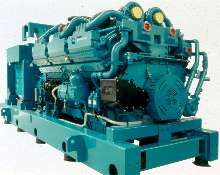
18386.jpg


How about one of these? 2.7MW should about do it....
 

Dick in Wisconsin

Well-known member
Joined
Mar 3, 2012
Messages
3,048
Location
Shawano, Wisconsin
I have all electric home and no propane or natural gas available. Any ideas on what I need to operate a heat pump and hot water, maybe fueled by diesel?

By an old construction generator that runs on diesel. Or one of those self-propelled power carts they use at the airport. You should be able to buy those surplus from the Air Force or Army. Light up the whole neighborhood!
 

VHF

Well-known member
Joined
Oct 27, 2008
Messages
420
Location
NW Wisconsin
Also, lets say I lose NG, is it feasible to DIY the gen to run on Propane?

The switchover on most units is easy (on my Generac there is lever on the carb), but as already mentioned doing the piping safely is non-trivial.

Also, a 10kw unit would struggle to run a on a single 20# cyclinder--you would need two 20# tanks plumbed in parallel to flow enough propane to run a 10kw under load. One tank just can't vaporize fast enough, especially in cool weather.

The most important thing would be having the appropriate 2-stage regulator to get from tank pressure down to the gas inlet pressure required by the generator (typically 11" W.C. which is <0.5psi). Hooking a 20# propane tank directly to the generator would probably damage its internal regulator... or blow the whole thing sky-high!
 

ranger_dood

Well-known member
Joined
Jan 22, 2005
Messages
1,237
Location
Pennsylvania
I know this doesn't help you... but if the power is ever out for an extended period of time, I'm just going to pack my **** up and go to work.

177220_10151166733667839_226742339_o.jpg


70kw NG Generac. 6.8l Ford V-10 (1800RPM). 480V 3ph.
 

EOC_Jason

Well-known member
Joined
Jun 25, 2012
Messages
11,388
Location
Bentonville, AR
Yeah I remember back in college across from the dorms was the data center and they had a one megawatt diesel generator there. Sounded like a locomotive when they fired it up for testing (was about the size of one too).... Love to have one of those for the block... ;)
 
To avoid these ads, REGISTER NOW!
Top Bottom