
Private Lugnutz
Well-known member
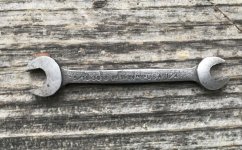
My understanding is that the "engineer" in engineers' wrench refers to a "traveling" (locomotive) or "stationary" (power plant) engineer, as opposed to a pipefitter, boilermaker, millwright, or rigger, etc, and that the key spec is putting the head at a 15* angle to the shank. It precedes the automobile by a good many years. If you put it in historical context, the term "engineer" is not distinguishing it from other open end wrenches, e.g., obstruction wrenches (75* or 90* angles) or ignition wrenches (60* and 75* angles), or even loom wrenches (22-1/2* angle), so much as pipe wrenches, alligator wrenches, structural wrenches (straight), toolpost wrenches (straight), etc used by other tradesmen. Again, that's my understanding, developed collectively. I'm not sure I have a single definitive reference that states that.
 Who indeed?


















 what a great life decision.. congratulations.. i never have quite got around to getting one, and when people start telling me to I have a vision of walking away into the distance along a deserted beach..!! Well done. Enjoy the calm of your own thoughts un interrupted and log on your new account when you feel like it.