Smokeshow69
Well-known member
Well i would say you got a lot of good stuff there! Nice grab!The seller is a collector too. He collected these for about 30 years. Now he's only keeping his snap on and high end tools.

Well i would say you got a lot of good stuff there! Nice grab!The seller is a collector too. He collected these for about 30 years. Now he's only keeping his snap on and high end tools.
Yeah he *****!Wow z28, that is an incredible haul!
Thank you.Wow z28, that is an incredible haul!

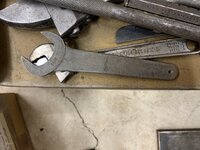
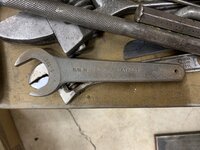
Part of Snapmom’sI found this packard at8067 wrench in the big estate buy out I did last weekend. Is this Bonney made? Part of a large gmtk
I checked that thread and posted this wrench over there as well. I asked the same question and no one has said who made it?? Someone did offer me $13.50 for it but I really have no clue what it’s worth ? Can’t find any on ebayPart of Snapmom’s
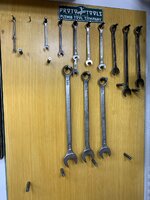
Packard Built Rolls Royce Merlin Tool Kit AT9368
check out the first picture in her thread.
-Don


Yup, that’s who offered me… and interesting what pops up on eBay sold listingsSnapmom would probably have the best idea. I’m pretty sure I know who made this one that Tin Medic sent me recently. One of these is shown in that toolset too.
-Don
 . I would totally be up for trading someone some plomb or Proto?
I have found Snapmom to be extremely pleasant and easy to deal with. If you want a fair price, she is square.Yup, that’s who offered me… and interesting what pops up on eBay sold listings


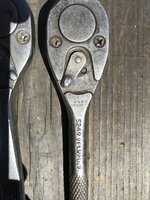

This is awesome, JjKk40! I do not think I saw another one on GJ! Congratulations!This bad boy came in the mail today! What a nice piece of hand tool right here!
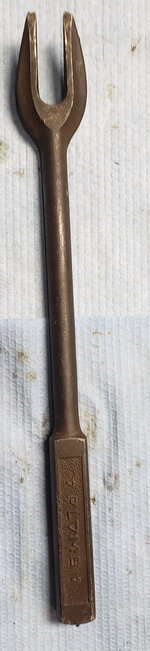
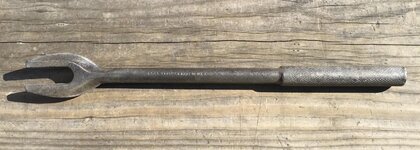

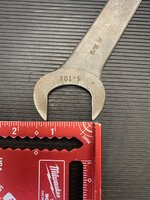
I've seen quite a few of that particular wrench and they all had Bonney date codes. That wrench looks very much like a Bonney by shape and marking. Many of the ones I've seen were marked with the CV in a circle and Chrome-Vanadium but not having a CV marking would not be evidence by itself of course. Look to see if there's any evidence of the date codes right by the drilled hole in yours. Also, yours has the decimal equiv. 1.101 of 5/8 whitworth but that doesn't match the 1 1/4" marking stamped on the opposite side does it? Wouldn't that be 1.25?I found this packard at8067 wrench in the big estate buy out I did last weekend. Is this Bonney made? Part of a large gmtk

Nobody knows for sure, LS. One theory is factory location code. (Plomb bought a number of small foundries and shops during WWII.) More typically and much more abundantly seen on the "WF" tools. Many different letters.What, if anything, is the significance of the subscript “F” following the model number?
I checked around the drilled holes and no dates around there. In terms of the decimal equivalent, you are right- it should be 1.25, not the 1.101. That’s really odd!I've seen quite a few of that particular wrench and they all had Bonney date codes. That wrench looks very much like a Bonney by shape and marking. Many of the ones I've seen were marked with the CV in a circle and Chrome-Vanadium but not having a CV marking would not be evidence by itself of course. Look to see if there's any evidence of the date codes right by the drilled hole in yours. Also, yours has the decimal equiv. 1.101 of 5/8 whitworth but that doesn't match the 1 1/4" marking stamped on the opposite side does it? Wouldn't that be 1.25?
Right, but the 1.101 would be correct if it is in fact a 5/8 whitworth. I'm assuming the 1 1/4 is the incorrect mark...did you measure the distance across the flats?I checked around the drilled holes and no dates around there. In terms of the decimal equivalent, you are right- it should be 1.25, not the 1.101. That’s really odd!


I have measured it both with a ruler and comparing it to an actual 1-1/4 wrench and it truly is 1-1/4.Right, but the 1.101 would be correct if it is in fact a 5/8 whitworth. I'm assuming the 1 1/4 is the incorrect mark...did you measure the distance across the flats?


I haven't been following this debate and couldn't find the original post , but a wrench for original Whitworth size of 5/8" is correct at 1 1/4" (1.25") measured across the flats. The British Standard Whitworth sizes moved everything down one size step from the original Whitworth standard.Right, but the 1.101 would be correct if it is in fact a 5/8 whitworth. I'm assuming the 1 1/4 is the incorrect mark...did you measure the distance across the flats?
Well, it's not a debate, it's 2 guys talking about a wrench. The issue is the size markings from the pictures on post 12,246 of this thread. On one side it's marked 1 1/4 on the other 1.101. Here's another AT8067 marked 1.101 and 5/8 but you'll see it's not 1 1/4", it's just under 1 1/8" which would match the 1.101. Smokeshow69 says his 5/8 whitworth, with the same AT8067 tool number and 1.101 marking is 1 1/4. do you see the problem now?I haven't been following this debate and couldn't find the original post , but a wrench for original Whitworth size of 5/8" is correct at 1 1/4" (1.25") measured across the flats. The British Standard Whitworth sizes moved everything down one size step from the original Whitworth standard.
What's the problem?
Spanner Jaw Sizes
Useful guide on spanner to nut/bolt relationships, and the selection and use of spanners and socket setswww.crawford-space.co.uk
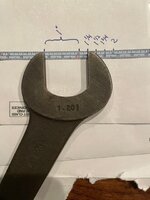
Here's a larger wrench from the Merlin Packard toolkit. It's an 11/16 Whitworth marked 1.201 and it's just shy of 1 1/4" which one would expect from the decimal marking.Well, it's not a debate, it's 2 guys talking about a wrench. The issue is the size markings from the pictures on post 12,246 of this thread. On one side it's marked 1 1/4 on the other 1.101. Here's another AT8067 marked 1.101 and 5/8 but you'll see it's not 1 1/4", it's just under 1 1/8" which would match the 1.101. Smokeshow69 says his 5/8 whitworth, with the same AT8067 tool number and 1.101 marking is 1 1/4. do you see the problem now?
Also, the spanner jaw size link you included....looking down the "spanner British" column at "W" marked fractional sizes and then scanning across the line to the corresponding jaw sizes expressed in decimal format and they match all the "whitworth" sized Merlin Packard wrench samples that I have in front of me at this location, so the wrenches that we are talking about appear to be using whatever that format is for sizing.Here's a larger wrench from the Merlin Packard toolkit. It's an 11/16 Whitworth marked 1.201 and it's just shy of 1 1/4" which one would expect from the decimal marking.
Thank you, yes I see the problem now. Now we have 3 guys talking about a wrench, and hopefully as the 3rd one wading in I have a solution for the problem of the previous 2. Here is what I believe is the answer, and the chaps in the workshop at Shuttleworth ( I went to college there) have already told me the same answer when I had the same problem:Well, it's not a debate, it's 2 guys talking about a wrench. The issue is the size markings from the pictures on post 12,246 of this thread. On one side it's marked 1 1/4 on the other 1.101. Here's another AT8067 marked 1.101 and 5/8 but you'll see it's not 1 1/4", it's just under 1 1/8" which would match the 1.101. Smokeshow69 says his 5/8 whitworth, with the same AT8067 tool number and 1.101 marking is 1 1/4. do you see the problem now?
 www.shuttleworth.org
That's good. You have a tool kit wherein all of the tools are marked to the same British Standard specification.Also, the spanner jaw size link you included....looking down the "spanner British" column at "W" marked fractional sizes and then scanning across the line to the corresponding jaw sizes expressed in decimal format and they match all the "whitworth" sized Merlin Packard wrench samples that I have in front of me at this location, so the wrenches that we are talking about appear to be using whatever that format is for sizing.

Do you have a link for pre "War emergency B.S. 916: 1940" whitworth sizes chart? i read Mr Crawford's explanation when you sent it initially but couldn't seem to match up any of the standards with 1 1/4" AF.....but assuming that that's just my comprehension problem there's still the initial issue of a wrench (spanner) marked 1 1/4" that does actually measure 1 1/4" across the flats but is ALSO marked with a size expressed in decimal format (1.101) that would imply the opening is between 1 1/16 and 1 1/8"....so it's not marked to a different standard it appears to be mismarked. Of course confusion over the changing standard could be the reason for the marking discrepancy. I suppose it could be a case of professionally widening the jaws and stamping the new size without addressing the already present markings too but that seems unlikely. So again, I understand the concept of 2 Whitworth wrenches having the exact same size marking but having different sized jaw openings depending on what standard they were using when they were manufactured. The U.S. had a similar thing in the late 20's and people who find old wrenches are always thinking they found an error or mistake. This wrench has the additional element of the decimal sizing.One spanner is slightly older than the other, and the markings are made to a different standard.
During the Second World War the standards were changed as "War Emergency B.S. 916 : 1940" as an austerity measure to reduce steel consumption and this resulted in the normal BSW head sizes being reduced by one step, basically making the BSW = BSWS = BSF head size. If you stroll up to near the top of Mr Crawfords web page, above his size table, he gives a full story and explanation.
Ah, I see the problem but have no immediate explanation for this. Having thought about it for a while I am now at the limit of my mental capacity!there's still the initial issue of a wrench (spanner) marked 1 1/4" that does actually measure 1 1/4" across the flats but is ALSO marked with a size expressed in decimal format (1.101) that would imply the opening is between 1 1/16 and 1 1/8"

I appreciate it. You inspired me to pull out those wrenches and check to see if I was talking out my A-- or what and to relook what I thought I knew about Whitworth et al.sizing conventions. That bit about the change in 1940 seems like it would be a perfect storm of chaos for not just the tool makers but I can't imagine what the guys at Packard were going through.Ah, I see the problem but have no immediate explanation for this. Having thought about it for a while I am now at the limit of my mental capacity!
I don't have a pre B S 916 : 1940 size chart, but will make some enquiries and attempt to seek out.
Thank you for your patience, I thought I had a simple answer and could help with this one.
The jaws look factory and not modified or broached to accommodate a new size. I have a few plomb wrenches that were factory broached to the correct size and you can see the modifications. No such signs here.What do the working surfaces of the jaws look like - It's possible it was mis-marked during war time transition, but also it could have been modified (but that doesn't tie in with one marking being correct)
Looks like you got your $100.00 box for half the going rate! Plus no shipping.It was just posted yesterday, I was lucky to run across it shortly after it went up. When I got it this morning the guy said there were a bunch of people in line behind me.
I’ll take better pics if the sun ever comes out!