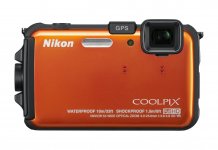
I can't see spending too much on a camera of this caliber (point&shoot). You can figure in 8 months the manufacturer of your XYZ camera will introduce the XYZa which will have 2x the megapixels, faster glass, anti-quakeshake and it will be only 1/2 the size and cheaper. Just know that your XYZ camera will still do what you bought it to do so you don't really need to upgrade.
Important features are:
The Glass - Canon, Nikon, Leica have all been making lenses for over 100 years so these makers are pretty safe regarding their lenses. Chances are they've made the lenses on the sony or panasonic etc cameras.
Maximum Aperture - This is the diaphragm in the lens that lets light in, F-2 is good for a point and shoot. F-2.8 is more common and this number will change as you zoom but the maximum at the wide setting is a good reference point.
I'll explain further so this number has more meaning. Aperture value is expressed as a fraction related to 1. example - 1:1 or 1:1.8 or 1:2 etc. Basically 1 (on the left of the colon) is the amount of light that exists outside the lens and the next number (to the right of the colon is the amount of that light that passes through the lens. So 1:1 means all the light outside the lens will pass through the lens. 1:2 means only half of the light outside the lens passes through the lens onto the sensor. Apertures are round shaped so their numbers represent their area squared, F 2, F 2.8, F 4, F 5.6, F 8 etc. These squared values are all half of the value of the number in front or double the value of the number following. The smallest number is the biggest opening. BUT WAIT!!! you just want a point and shoot! OK but the aperture is important to get a grasp of. Just one last thing, aperture effects dept of field which is the depth of focus or what is in focus. Big aperture (big opening) like f 2 is a shallow depth of field so the front of the wrench you're shooting is in focus but the back is blurry. You need a small opening like F 16 or so for a greater depth of field to keep the whole wrench in focus (turn more lights on so you can use a smaller aperture, You're going to love her old 40D in the shop!).
Anti-Shake - was a Canon invention so Canon is always right on top with this technology. It's no substitute for learning to properly hold your camera when releasing the shutter but it is a nice feature
Chip Type - CMOS is pretty well the norm in point and shoot cameras and the CMOS chip has seen drastic improvements over the last 10 years. It will have some advantages over a CCD imager, the biggest being cost as they don't require a clean room for manufacture like CCD's do.
As mentioned the physical size of the chip will permit more sensors and likely better processors and therefor reflect the quality and price but keep in mind, the next best one is only 8 months away so a big jump in price for a little bigger sensor is not always money well spent.