To avoid these ads, REGISTER NOW!

Power to Bendpack HD9ST Help

American Locomotive

Well-known member
Joined
Jan 8, 2017
Messages
10,971
Location
Rhode Island
210 21 simply describes the allowable connected load, not the allowed recept. It goes further down the way to describe utilization equipment in the 80% rule.
The connected load is limited by the design, this hoist comes with a 15 end but this load (12A) is allowed to be connected to this circuit thru a 15 recept on a 20A circuit.
210.21 (B) (1): "A single receptacle installed on an individual branch circuit shall have an ampere rating not less than that of the branch circuit". 210.21 (B) (3) and Table 210.21 B (3) describes that if there are two or more receptacles on a branch circuit, you are permitted to use 15 amp receptacles. However table 210.21 (B) (2) shows that a 15 amp receptacle on a 20 amp branch circuit is limited to 12 amps maximum current.

But that's fine, since his lift doesn't use over 12 amps.
My ability to explain this leaves a lot to be desired. I bought new microwave, 15 end, 14.8 rating. I am not sure how they come to that but they do. Its a listed product. Power strips, 15 breakers.
There are all kinds of inconsistencies within the NEC and even between other standards and ratings bodies. My 15 amp hair-dryer has a 16 AWG cord. My 12 amp vacuum cleaner has an 18 AWG cord.

My Lincoln 125 MIG has a 15 amp plug on 12 gauge wire, but in the manual, Lincoln states the machine should be installed on a dedicated 25 amp circuit for maximum power. Yet there are no 25 amp outlets that can accept a NEMA 5-15 plug.

My TIG welder came with a 15 amp 120v plug to 50 amp 240v receptacle adapter cord. It's molded, approved and everything. According to things like the NEC, this adapter cord should not exist, yet it's mass produced?:headscrat
 
Last edited:
To avoid these ads, REGISTER NOW!
OP
P

Pucman1

Well-known member
Joined
Oct 8, 2015
Messages
207
Location
Northern Va
Actually this may do the trick! Just need to run by and see if they have it in my local store! Thanks for the link

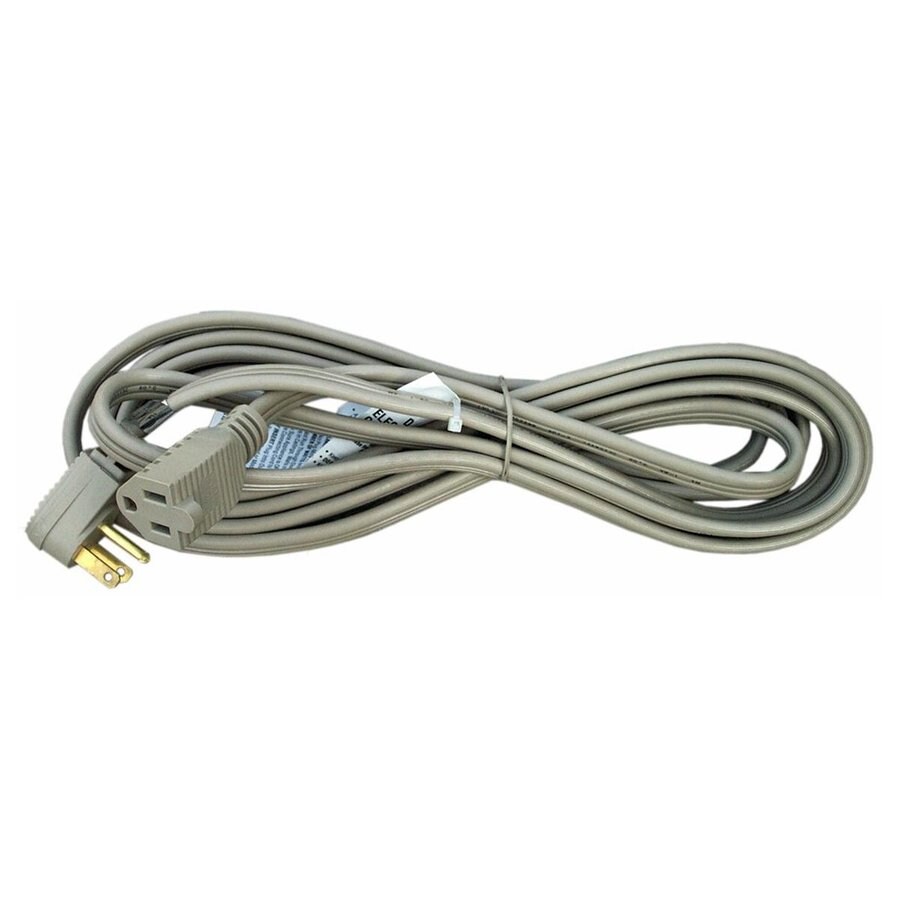
This is all you need... unless 15' isn't long enough. https://www.lowes.com/pd/Morris-Pro..._clickID=a35a0665-b944-4206-b0dd-0cb6270ed362
4731863.jpg
 

wyliesdiesels

Well-known member
Joined
Aug 14, 2012
Messages
20,023
Location
Modesto, CA
NEC 210.20 D
NEC 210.21 B
NEC 406.4 A

210.21 B does allow for 15 amp receptacles on 20 amp circuits IF there are two or more receptacles on the circuit - HOWEVER - the maximum current you're allowed to draw through that outlet is only 12 amps.

If that 20 amp circuit only has a single receptacle, it has to be a 20-amp rated receptacle.

U do realize that a 5-15 duplex receptacle is considered 2 outlets and thus is allowed on a 20a circuit.

But do u also realize that there is NO difference in the guts other than the faceplate between 15a and 20a outlets?

The OPs setup is code legal since he has multiple 15a outlets on a 20a circuit.

and u contradicted yourself with the above comment and your previous comment which is below.

The picture he posted was of a set of NEMA 5-15R outlets. There's a reason why they're called 5-15. They're normally only on 15 amp circuits. I have seen some NEMA 5-15R receptacles rated for 20 amps, but the vast majority of 20 amp outlets are the NEMA 5-20R "t-slot" outlets.

Just because those particular outlets are on a 20 amp breaker, doesn't mean they're necessarily the correct outlets. If he had NEMA 5-20R outlets, like this, the 20 amp plug he went to buy at the store would have worked just fine.

attachment.php

There is no such thing as a 5-15r that is rated for 20a that i know of. If it was rated for 20a then it would be a 5-20r. Code allows 15a outlets on a 20a circuit.
 
Last edited:

wyliesdiesels

Well-known member
Joined
Aug 14, 2012
Messages
20,023
Location
Modesto, CA
210.21 (B) (1): "A single receptacle installed on an individual branch circuit shall have an ampere rating not less than that of the branch circuit". 210.21 (B) (3) and Table 210.21 B (3) describes that if there are two or more receptacles on a branch circuit, you are permitted to use 15 amp receptacles. However table 210.21 (B) (2) shows that a 15 amp receptacle on a 20 amp branch circuit is limited to 12 amps maximum current.

But that's fine, since his lift doesn't use over 12 amps.

There are all kinds of inconsistencies within the NEC and even between other standards and ratings bodies. My 15 amp hair-dryer has a 16 AWG cord. My 12 amp vacuum cleaner has an 18 AWG cord.

My Lincoln 125 MIG has a 15 amp plug on 12 gauge wire, but in the manual, Lincoln states the machine should be installed on a dedicated 25 amp circuit for maximum power. Yet there are no 25 amp outlets that can accept a NEMA 5-15 plug.

My TIG welder came with a 15 amp 120v plug to 50 amp 240v receptacle adapter cord. It's molded, approved and everything. According to things like the NEC, this adapter cord should not exist, yet it's mass produced?
:headscrat

Now youre comparing apples to oranges.

Welders and the circuit that supply them are a completely different animal that a general use circuit. This is due to duty cycle rating of welders.

U can have #10 wire feeding a 6-50r for a welder with a 50a breaker. 30% duty cycle, 50a input = .55 multiplier * 50 = 27.5a.

http://ecmweb.com/qampa/code-qa-45

your welder uses 25a for a brief moment. The 15a plug and cord can handle that current for short bursts...
 

American Locomotive

Well-known member
Joined
Jan 8, 2017
Messages
10,971
Location
Rhode Island
U do realize that a 5-15 duplex receptacle is considered 2 outlets and thus is allowed on a 20a circuit.
The NEC code in question states receptacle, not outlets. I know a duplex receptacle is two outlets, but the code specifically says receptacle, and not outlet.
But do u also realize that there is NO difference in the guts other than the faceplate between 15a and 20a outlets?
There actually is a difference, since 20 amp outlets have a little bit of extra metal to grab the horizontal prong. But I am well aware the actual current carrying components are the same.
The OPs setup is code legal since he has multiple 15a outlets on a 20a circuit.
I never said it wasn't.
and u contradicted yourself with the above comment and your previous comment which is below.
I'm not seeing where I contradicted myself at all?
There is no such thing as a 5-15r that is rated for 20a that i know of. If it was rated for 20a then it would be a 5-20r. Code allows 15a outlets on a 20a circuit.
I actually have one installed in my barn. 5-15R, but says 125v 20A on the back. And yes, I know you can install 15A outlets on 20 amp circuits, as I said in my post

Now youre comparing apples to oranges.

Welders and the circuit that supply them are a completely different animal that a general use circuit. This is due to duty cycle rating of welders.

U can have #10 wire feeding a 6-50r for a welder with a 50a breaker. 30% duty cycle, 50a input = .55 multiplier * 50 = 27.5a.

http://ecmweb.com/qampa/code-qa-45

your welder uses 25a for a brief moment. The 15a plug and cord can handle that current for short bursts...
You completely missed the point of my post, and completely ignored the portion above it too. My point was that this is a portable machine with a 15 amp plug, but Lincoln says it needs to be on a 25 amp circuit. Yet normally a 5-15R cannot be put on a 25 amp circuit, and since it's a portable machine, it can't really have a dedicated circuit. I was pointing out oddities and inconsitencies within the code and listed equipment.
 
Last edited:

sberry

Banned
Joined
Jun 18, 2005
Messages
35,747
Location
Brethren, Michigan
Also, I don't remember about the Lincoln but they have a 14 cord on the Hobart. The adapter on a MVP to 50A has protection in it to allow a 14 cord, protection it doesn't require on lower amp circuits on 120v.
Older models in small 240v or earlier ones where the operator changed the plugs for the voltage come with 12 cord.
As Wylie said there is exception for wire size with them, I will add that they actually allow 12 single circuit in pipe for them in 50A.
 

sberry

Banned
Joined
Jun 18, 2005
Messages
35,747
Location
Brethren, Michigan
What we are basically trying to explain is that it's not the quality or amp rating of the mechanical of the recept but the connection they allow the user to make. Says if there is a single it is a dedicated 20A. Doesnt mean multiple 20A can't be installed, the outlet will still accept 15A either way. Any equip that has a 15A end must be rated to be legal on 20A also.
It's not the code is inconsistent but it's the understanding of it. A lot is direction for the installer and it's not an explanation. They don't tell "why" and it doesn't explain the intricacies of Nema.
It does list wire types and size, so much I can't remember it all, not that I ever know it that well anyway.
 
Last edited:

sberry

Banned
Joined
Jun 18, 2005
Messages
35,747
Location
Brethren, Michigan
Doesn't say it "needs" a 25, it says it's the max ocpd and implies that the internals are listed for it. The language in the manual assumes the installer understands this which may not be so,,, hence the disclaimer that they should be "qualified". Same when they describe the minimum requirements for wire size and list 30 with the wire size,, when in fact if a larger wire is used it can go to 50A, the plug that comes on it. The Tig has a special adapter or 12 cord.
 
Last edited:

sberry

Banned
Joined
Jun 18, 2005
Messages
35,747
Location
Brethren, Michigan
Just as a guess I would say you would be a mechanical engineer by profession. Sorry for my smart *** remarks, I know you are not amateur.
 

wyliesdiesels

Well-known member
Joined
Aug 14, 2012
Messages
20,023
Location
Modesto, CA
There actually is a difference, since 20 amp outlets have a little bit of extra metal to grab the horizontal prong. But I am well aware the actual current carrying components are the same.

I actually have one installed in my barn. 5-15R, but says 125v 20A on the back. And yes, I know you can install 15A outlets on 20 amp circuits, as I said in my post

Theres no point in arguing further on most of this.

U contradicted yourself by saying that 15a outlets on a 20a circuit arent necessarily the correct outlets. Then you said 15a outlets on a 20a2 circuit are fine. So if they arent the correct outlets why is it allowed by code?

However i will make some points about the above quote.

There are several threads on here about this very subject including pics of the internal of a 5-15r. Most brands of 5-15r have the EXACT same t-slot prongs in them as the 5-20r.

This is why i said the only difference is the faceplate.

If charles in georgia was still on here he would whip out that pic.

Also, the 20a rating on the back is a PASS THROUGH rating since it can be used on a 20a circuit with 20a T-slot outlets. This isnt a rating for the prongs on the outlet.
 

American Locomotive

Well-known member
Joined
Jan 8, 2017
Messages
10,971
Location
Rhode Island
Theres no point in arguing further on most of this.

U contradicted yourself by saying that 15a outlets on a 20a circuit arent necessarily the correct outlets. Then you said 15a outlets on a 20a2 circuit are fine. So if they arent the correct outlets why is it allowed by code?
It can be allowed by code and legal, but still doesn't mean it's "correct" to me. My personal feeling is that a 20 amp circuit should have 20 amp outlets so I can plug equipment that happens to have 20 amp plugs in.
However i will make some points about the above quote.

There are several threads on here about this very subject including pics of the internal of a 5-15r. Most brands of 5-15r have the EXACT same t-slot prongs in them as the 5-20r.

This is why i said the only difference is the faceplate.
I will concede that the only receptacles I've taken apart have been very old ones, where a 5-15 was only that and nothing more. Newer ones must be different.
Also, the 20a rating on the back is a PASS THROUGH rating since it can be used on a 20a circuit with 20a T-slot outlets. This isnt a rating for the prongs on the outlet.
I stand corrected then, and learned something new.
Doesn't say it "needs" a 25, it says it's the max ocpd and implies that the internals are listed for it. The language in the manual assumes the installer understands this which may not be so,,, hence the disclaimer that they should be "qualified". Same when they describe the minimum requirements for wire size and list 30 with the wire size,, when in fact if a larger wire is used it can go to 50A, the plug that comes on it. The Tig has a special adapter or 12 cord.
There is no disclaimer in the manual that says it needs a "qualified installer". This is a portable homeowner machine. You plug it in and go.

The manual litterally and explicitly says you need a 25 amp branch circuit to achieve the full output of the welder. The manual says "20 AMP input @ Rated output" however, the "Rated Output" is only 90 amps, which is well short of the 125 amps the machine can put out.

I've tripped 20 amp breakers in just a few minutes with this welder, and if you've ever looked at at breaker trip curve, that means at full power this welder is drawing well over 25 amps, probably close to 30.

I'm pretty sure the "rated output" thing is how lincoln gets away with using a 15 amp plug. Even their 140A mig is "rated" at 90 amp output / 20 amp input. The manual for that machine also says it needs a 25 amp circuit.
 
Last edited:
To avoid these ads, REGISTER NOW!

pattenp

Well-known member
Joined
Jun 4, 2008
Messages
10,175
Location
Virginia - USA
The NEC code in question states receptacle, not outlets. I know a duplex receptacle is two outlets, but the code specifically says receptacle, and not outlet.

Actually a duplex receptacle is two receptacles, not two outlets. Outlets are the points on the wiring system where receptacles are installed or utilization equipment is attached, such as light fixtures.

Outlet
A point on the wiring system at which current is taken to supply utilization equipment.

Receptacle Outlet
An outlet where one or more receptacles are installed.

Receptacle
A receptacle is a contact device installed at the outlet for the connection of an attachment plug. A single receptacle is a single contact device with no other contact device on the same yoke. A multiple receptacle is two or more contact devices on the same yoke.
 

sberry

Banned
Joined
Jun 18, 2005
Messages
35,747
Location
Brethren, Michigan
It can be allowed by code and legal, but still doesn't mean it's "correct" to me. My personal feeling is that a 20 amp circuit should have 20 amp outlets so I can plug equipment that happens to have 20 amp plugs in.

I will concede that the only receptacles I've taken apart have been very old ones, where a 5-15 was only that and nothing more. Newer ones must be different.

I stand corrected then, and learned something new.
There is no disclaimer in the manual that says it needs a "qualified installer". This is a portable homeowner machine. You plug it in and go.

The manual litterally and explicitly says you need a 25 amp branch circuit to achieve the full output of the welder. The manual says "20 AMP input @ Rated output" however, the "Rated Output" is only 90 amps, which is well short of the 125 amps the machine can put out.

I've tripped 20 amp breakers in just a few minutes with this welder, and if you've ever looked at at breaker trip curve, that means at full power this welder is drawing well over 25 amps, probably close to 30.

I'm pretty sure the "rated output" thing is how lincoln gets away with using a 15 amp plug. Even their 140A mig is "rated" at 90 amp output / 20 amp input. The manual for that machine also says it needs a 25 amp circuit.

Yes, I don't recall how they rate it but no where does it say to chop the plug off and change it. They just allow a dedicated for it. I agree, for that machine it probably doesn't say much about the installer, the others with dedicated circuits do.
 
OP
P

Pucman1

Well-known member
Joined
Oct 8, 2015
Messages
207
Location
Northern Va
Ok so I learned a lot about the electrical code from the posts and I think I have a plan of action. Friday will be a day off work so I can concentrate and get the material to make a connection. The lift is really not going to be operated very much until the projects get a little farther along. I may see about a more permanent hookup at that point.
My panel is real close and I just wanted be safe with the circuit! Thanks again for the information

JP
 
OP
P

Pucman1

Well-known member
Joined
Oct 8, 2015
Messages
207
Location
Northern Va
So here is the solution I used after all the suggestions. Pulled the angled plug from the outlet ran through a cord protector over to the lift where the motor is....used some mouthing pads and zip ties to make it neat. Ran fine until the heater kicked on, then the breaker tripped. Replaced one outlet and now I am rock solid. I need to trim the cord protector to the angle I have next to the wall and zip tie the cord to the wall and I will be complete. Thank for the help
Brick is only there to get the cord protector flat...it was rolled up.

31881147573_6c2d842699_z_d.jpg
 
Last edited:

mm08822

Well-known member
Joined
Jan 13, 2012
Messages
5,958
Location
NJ
So here is the solution I used after all the suggestions. Pulled the angled plug from the outlet ran through a cord protector over to the lift where the motor is....used some mouthing pads and zip ties to make it neat. Ran fine until the heater kicked on, then the breaker tripped. Replaced one outlet and now I am rock solid. I need to trim the cord protector to the angle I have next to the wall and zip tie the cord to the wall and I will be complete. Thank for the help
Brick is only there to get the cord protector flat...it was rolled up.

31881147573_6c2d842699_z_d.jpg

Did you run it with a vehicle on it?

What does replacing the receptacle have to do with fixing the overload condition of heater and lift running at same time?
 

sberry

Banned
Joined
Jun 18, 2005
Messages
35,747
Location
Brethren, Michigan
How is it a guy smart enough to get this built and passed inspection cant manage to plug a simple extension cord in and hang it up off the floor? 4 pages of instruction and still fug it up.
 
Last edited:
To avoid these ads, REGISTER NOW!
Top Bottom