To avoid these ads, REGISTER NOW!

Radiant garage floor

zoomf4

New member
Joined
Jan 27, 2015
Messages
3
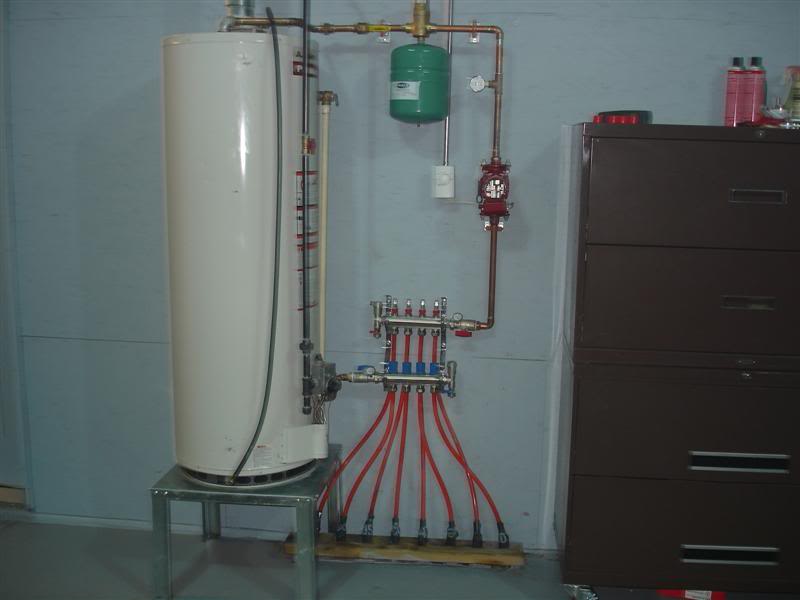
In the process building 26x40 garage. At this time thinking of putting radiant heat into the floors and use hot water heater. I have Natural Gas, walls 10' high. 8" block walls with insulation sprayed into the cells. Ceilings will be insulated. first 16' have 10' ceilings the rest is scissored trusse centered about 15'. I live in Western Pa. Plan righ now is to vapor barrier , 2" insulation then 4" concrete and run 4 loops.

Looking for any thoughts / suggestions. Or Is it worth it?
 
To avoid these ads, REGISTER NOW!

Kaizen

Well-known member
Joined
Jan 9, 2015
Messages
6,948
Location
New England
Use zones so it’s three or so different loops. Adding a lift? Don’t run where it will attach. The price of the insulation is what stopped me. Make sure you insulate outside of slab. Realize it will take a week for that thermal mass to get up to temp and a week to cool down. Not what you want if you are just needing heat for a few hours here and there.


Sent from my iPhone using Tapatalk
 

ford33

Well-known member
Joined
Feb 26, 2011
Messages
2,118
Location
Chicago, IL. USA
There's so much information here on this very subject.

People will tell you what they believe you need. Perform some heating calculations and compare available heating fuel types and cost in you area. One number you will need is the difference in outside vs inside temperature. Also decide the frequency of use inside the garage. What is the point of constant radiant heat when you are only in the garage one or two days a week? Why heat it for 5 days and use it for 2?

Asking a general question like this and asking for idea's is not going to help you now. Define some parameters and ask a specific question. Then people will provide facts not opinion.
 

yeldogt

Well-known member
Joined
Jan 2, 2012
Messages
18,184
Insulation and air sealing are both important with conditioning any space -- with a properly constructed space the temps remain more constant and require smaller equipment to change. This is especially true with radiant where you are asking a large mass (the floor) to make the change.

The height of the ceilings is less important when using radiant floor -- I have heated church conversions with properly insulated spaces -- it's all about keeping the lower areas around people at the proper temp. Proper insulation is the key.

You have to do a heat load for you building in your climate -- that will give you the BTU's required to maintain a temp. Then you need to lay out the tubes --making sure they don/t exceed maximums. There are many strategies with tube loop layout and what you are trying to achieve.

Using a water heater is often not recommended because they don't have large BTU inputs -- a typical standard 40g WH is only about 26k at 80% -- the fast recovery is 40k at 80%. This is not often enough for a house .. but may very well be enough for a garage. What you have to understand is if you are asking the unit to be running all the time it will not last as long -- water heaters are designed for intermittent firing -- and stay hot. they often condense when used in radiant heat.

Another factor to keep in mind is the speed of change -- the key with radiant success is maintaining a space temp and this is achieved with enough insulation. trying to quickly heat a slab requires hotter water and this is often not possible with a WH and a cold slab.

Radiant heat is very forgiving -- there are many poorly designed systems that work well. With a large boiler installed almost any system can heat a space -- it's just not doing it with efficiency.
 
To avoid these ads, REGISTER NOW!

Randy in Maine

Well-known member
Joined
Nov 21, 2010
Messages
2,176
Location
The Beach
Not much to add to what was said above other than I really love my radiant floor heat in my 40x28 shop. Quiet, warm, dust free, cheap to operate, and just downright dependable.

Good insulation really pays off in the long run.
 

jlckmj

Well-known member
Joined
Dec 7, 2009
Messages
732
Location
SE Wiscosin
I did just what you are talking about, and it has been working great for 5 - 6 years now. I did have to replace the water heater for two reasons,

1) I started with a 10 year old water heater.
2) I had to go with a power vent because my garage was too tight for the first one to vent properly. (I have no windows, and very tight insulation)


lowrider2

Well-known member
Joined
May 26, 2016
Messages
48
Location
Idaho Panhandle
Just tried to fire up my hydronics system today. filled the tubes and bled the air out as best we could and tried to light the heater. I'm using a Takagi Jr on demand propane water heater with exactly the same set up as I have in my other shop which was installed by a plumber. It's been working great since 2007 and keeps thing toasty all Winter. Everything is working fine except the system sensor is not seeing any flow and won't light off the heater. Pump (Taco) is working just fine. First thought is a defective sensor on a new heater which of course is possible. Any other thoughts out there?
 
Joined
Nov 6, 2018
Messages
5
Location
behind house
Just tried to fire up my hydronics system today. filled the tubes and bled the air out as best we could and tried to light the heater. I'm using a Takagi Jr on demand propane water heater with exactly the same set up as I have in my other shop which was installed by a plumber. It's been working great since 2007 and keeps thing toasty all Winter. Everything is working fine except the system sensor is not seeing any flow and won't light off the heater. Pump (Taco) is working just fine. First thought is a defective sensor on a new heater which of course is possible. Any other thoughts out there?
Jump boiler at the tt terminal. Lots of variables depending on wiring. You can also try reaching out to manufacture to diagnose.

Sent from my SM-G960U using Tapatalk
 
To avoid these ads, REGISTER NOW!
Top Bottom