nadogail
Well-known member
Obviously a Spike Maul, for driving the spikes that hold the rails onto the wooden ties.

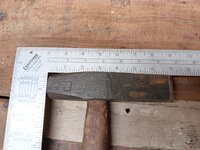
A big hot cut chisel I guess.I picked this up at an auction a couple weeks ago. It was in a lot with some axes and sledges and described as a maul, which i was very pleased about because it was priced as a no-name weirdly short handled maul would be. After some careful examination, weighing, and measuring, I'm fairly certain I've got a Woodings Verona "Veronalloy" 1Q chisel, as found on page 20 of the Woodings Verona catalogue 16. I've not been able to find much else about it, none for sale anywhere, or recently sold, no post about them or even any actual pictures, just the sketch from the catalogue. So i felt it my responsibility to put it on the line(and i think its cool as hell and wanted to show it off) so that others may have something to reference.
Thats what I was figuring when I bid on it. I only thought that because I had gotten something similar this past summer. Also W-V but half the size.A big hot cut chisel I guess.
I have some W&V hammers that are green, I need to check if they are marked Veronalloy.
I wonder what they were used for. What would they be cutting?Thats what I was figuring when I bid on it. I only thought that because I had gotten something similar this past summer. Also W-V but half t
I wondered the same thing. So much so that I even had doubts about posting it on this thread lol. But I imagine they were probably an all purpose field Utility tool. Out in the middle of nowhere laying tracks, problems arise, stuff breaks, things are needed. So likely they'd fabricate solutions, and metal will always need to be cut at some point in that process.I wonder what they were used for. What would they be cutting?
Also, my hammers don't have the Veronalloy mark.
It would be used to cut hot iron or steel at a forge. The hot metal would be placed on an anvil, the cutting edge of the hot chisel would be placed on the metal, and the hot chisel would be struck with a sledgehammer.I wonder what they were used for. What would they be cutting?
Rail used to be fractured on site for odd pieces. You'd have one guy holding the chisel while another swung a sledge and the rail would fracture like cast iron then fused with existing rail with thermite.I wonder what they were used for. What would they be cutting?
Also, my hammers don't have the Veronalloy mark.
Now I need one so I can try to break a piece of rail.Rail used to be fractured on site for odd pieces. You'd have one guy holding the chisel while another swung a sledge and the rail would fracture like cast iron then fused with existing rail with thermite.
It was cold, not hot, though because it was just fracturing instead of cutting.
Also they had variable length options. Longer handles for those who didn't trust the guy with the hammer and smaller for those that had more trust. Mines a 16" so it's the one they'd use if they wanted to retire early. Realistically it was moved to thermite cleanup where the hot iron was cut away on seam lines and the top of the mold before being worked down with grinding tools to match the surrounding track.

Just make sure it's an old rail, newer rail might not react favourably. Also not in use of course, the railroad isn't too happy with that.Now I need one so I can try to break a piece of rail.
Thanks for the explanation.
I was joking. There are some old pieces of rail out in barn that I was thinking of but I doubt I'll be breaking them anytime soon.Just make sure it's an old rail, newer rail might not react favourably. Also not in use of course, the railroad isn't too happy with that.
New stuff is cut with a diamond blade, not sure of composition difference but I think there's been at least three different variations on rail alloy throughout USA rail development.
If you're in a hurry to try it any metal chisel should work too, just score it across the width a bit more and expect to be there for awhile. With the rail chisel it'd basically be shifted along the width of the rail and beat on till a fracture started then centered and continued till a final separation basically like breaking concrete up.
Figured you were joking with theI was joking. There are some old pieces of rail out in barn that I was thinking of but I doubt I'll be breaking them anytime soon.
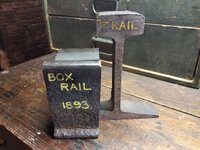
and had to include my own attempt, a bit dry but I like wrong assumption humour. Too easy to miss the humor or sarcasm on the internet. Here's a piece of rail I have sitting by my anvil. It's a lot smaller than modern rail. Maybe from logging or mining.Figured you were joking with the
I got some pieces too, a 3 foot section from the co-op and some scrap cuts. Haven't had a reason to break anything down either although I had looked at cutting the big piece down to make a horn on one end for a more proper anvil. Small sections, 3/8 to 1-1/2, made good shaping anvils too but those were precut scrap that someone tried to see if my window was impact resistant with. Perks of living by a railroad I guess, plus the city dumps some interesting stuff here too occasionally.
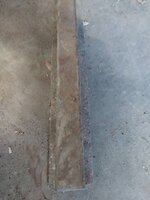
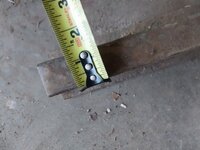

Mining would be the only thing I can imagine using that tiny rail. Ore carts specifically because they had to haul the rail in by hand and minimize space and weight overall given the harsh environment. Basically anything you could physically push/pull or have a mule pull would be viable with that size though.Too easy to miss the humor or sarcasm on the internet. Here's a piece of rail I have sitting by my anvil. It's a lot smaller than modern rail. Maybe from logging or mining.
Any ideas about what it would have been used for?
It seems old. It came from SW Virginia and there is coal mining around there.Mining would be the only thing I can imagine using that tiny rail. Ore carts specifically because they had to haul the rail in by hand and minimize space and weight overall given the harsh environment. Basically anything you could physically push/pull or have a mule pull would be viable with that size though.
Could be pretty old too, not necessarily the oldest but definitely well aged. Could've easily been a souvenir from about any mine.
Hard to tell in pics but that could've been fractured in the last pic too, if there's no clear cut marks like from a saw or torch then it'd most likely have been hit with a chisel, specifically the one mentioned earlier since they were fairly abundant when tracks were being built. Only the right tools were used because those rails having issues or taking too much time to install meant they were costing the mine owners money.
Most likely mining rail. But some of the first RR rails were wood, and then they went to about that size rail. There was a big discussion on that subject on Smoke stack.It seems old. It came from SW Virginia and there is coal mining around there.
It looks like it was broken off.
Wood with a cast-iron cap, which didn't last worth a damn and had to be continuously replaced.Most likely mining rail. But some of the first RR rails were wood, and then they went to about that size rail. There was a big discussion on that subject on Smoke stack.
Hey, Sonny, you posted this in the middle of the Jim Crow deep dive last fall, I forgot about your post, then I sort of lost the bead on the thread through the winter, and then I dove back in during the SWACO hopper car wrench discussion, shamefully, without ever commenting. Apologies. That's a really nice and well-done tribute.Railroading runs in the blood. Here is a shadow box with the retirement certificate of my great grandfather. He was a track man for the Erie railroad.
No apologies needed at all. I forgot that I posted that in this thread. lolHey, Sonny, you posted this in the middle of the Jim Crow deep dive last fall, I forgot about your post, then I sort of lost the bead on the thread through the winter, and then I dove back in during the SWACO hopper car wrench discussion, shamefully, without ever commenting. Apologies. That's a really nice and well-done tribute.

It seems old. It came from SW Virginia and there is coal mining around there.
It looks like it was broken off.
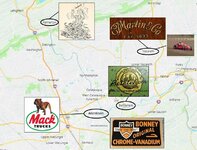
The subject is near and dear to my heart. You may have seen me mention my grandfather a few times here and there, briefly, especially if you've followed my Lugzsonian thread. "Little Johnny", as he was affectionately known in town, was a track man and then the foreman of the track gang for the Chestnut Ridge Railway, in Palmerton, PA.Thank you for circling back on this old post of mine.
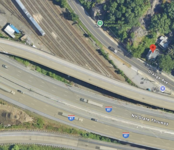
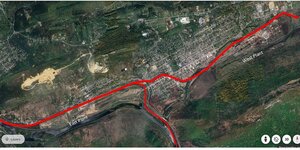
I can relate to this more than you know. I have photos of steam engines picking up and dropping off my great grandfather for his work day as my great grandmother waived from the porch. My great grandparents lived across the street from the train yard along with my grandparents and my dad and uncles. Present day, things look much different, especially since the NYS thruway decided to build an overpass directly over the yard but here is an areal shot just for further illumination. 44 and 46 were owned by my great grandfather.The subject is near and dear to my heart. You may have seen me mention my grandfather a few times here and there, briefly, especially if you've followed my Lugzsonian thread. "Little Johnny", as he was affectionately known in town, was a track man and then the foreman of the track gang for the Chestnut Ridge Railway, in Palmerton, PA.
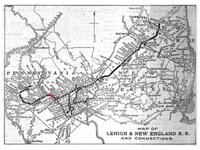
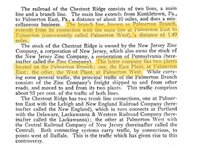
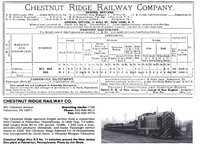
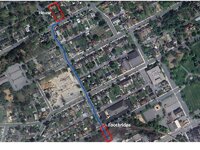
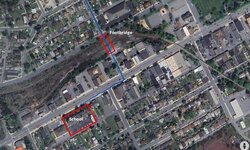
I could go on about Chestnut Ridge with all kinds of cool maps and photos and memorabilia. It was an interesting railway. A short track, established in 1898 by the likes of J.P. Morgan and John Jacob Astor, with a passenger main line (only 11 miles long!) that ran between Kunkletown, PA and Palmerton, PA, and an even shorter passenger and freight branch line (1.49 miles!) that ended up playing a very significant role in the economy of the town, intertwined with my boyhood, and the source of some popular lore among Pennsy railroaders.
But only if @AntiqueBen indulges me. I don't want to "de-rail" the tools context of the thread.
HAHA! Indeed. Neat photo.I can relate to this more than you know.



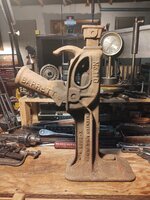


Good work. I had difficulty locating this patent too. The link to the patent is HERE@AntiqueBen:
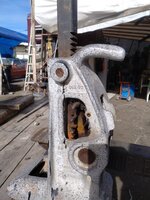
RE: Duff 110 railroad jack
patent 1534613 Apr 21 1925 F.H. Schwerin
Thanks Jeff!
My initial search "patent April 21 1925 Duff jack" on Google is a glaring example of why "AI" will NEVER work.
Google's "AI" return on my earlier search this morning gave a completely different patent number, which was also for a completely different item.
The photo image posted below shows the return from Google's "AI" on the THIRD search using that exact same search string. Each time the search results were different. At least on the THIRD attempt Google found a patent for a jack - the first two were for completely unrelated items.
I find it difficult to believe that educated, seemingly intelligent people think this will ever work. Mind-boggling, to say the least.

 (31 files from 1904 to 1948... but no 110)
I know. Very odd. Up to this point the only thing I've found was the original 1924 ad. I found the 1925 catalog & it wasn't there eitherDuff and Duff Norton jacks at International Tool Catalog Library
the model 110 is not shown in the 1924 Duff catalog.
none of the material I have here shows a model 110.