To avoid these ads, REGISTER NOW!

Realistic expectations with concrete - cracks

BRENT in 10-uh-C

Well-known member
Joined
Jan 28, 2006
Messages
212
Location
Tennessee
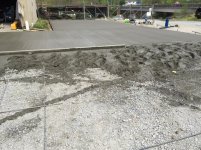
I have always heard the only guarantee with concrete is that it WILL crack. To a certain extent I guess I am OK with that however less than 48 hours ago, I had 50 yards of 4000 psi (-w/ Fiber & 1½% air) put down on a compacted base with loose crusher-run stone to level up. The thickness is approximately 4½-5 inches. The slab has been watered several times beginning with the evening of the pour. In the 2nd-4th picture you can see the thickness and how this was all poured at the same time.

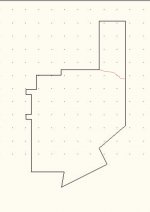
This morning as I moved the water sprinkler, I noticed a hairline crack beginning in a corner spanning across 20-25 foot of the slab to the opposite side. (See 1st image below of slab and location of crack marked in red). The concrete finishers showed up this morning to remove forms and cut the expansion joints, and when I showed it to the 'Boss', he looked concerned but shrugged his shoulders as if to say that is just part of it.

My question is; to be fair to him, -AND me, exactly what is reasonable expectation regarding this? My perspective is I just had them put down a total 107 yards of concrete and I have not even paid them yet and I am already seeing a stress crack. I thought by having an extra ½-1" of thickness plus the expense of the fiber/steel/etc, I was insuring myself against the likelihood of a crack such as this, ...especially this soon!! Was I just kidding myself? What should I do now??

.
 

Attachments

  • ParkingLotLayoutCrack1.jpg
    ParkingLotLayoutCrack1.jpg
    38.7 KB · Views: 314
  • ParkingLotPour0.jpg
    ParkingLotPour0.jpg
    83.9 KB · Views: 359
  • ParkingLotPour1.jpg
    ParkingLotPour1.jpg
    149.2 KB · Views: 340
  • ParkingLotPour2.jpg
    ParkingLotPour2.jpg
    148.9 KB · Views: 426
To avoid these ads, REGISTER NOW!

ItsNemo

Well-known member
Joined
Mar 5, 2016
Messages
4,805
Location
Canada
Given the location of the crack, I think it's to be expected. Corners like that are almost always going to crack. If it didn't do it now, it would have done it (expansion joints or not) within the first couple months anyway.
 

Cyberbear

Well-known member
Joined
Nov 23, 2013
Messages
1,524
Location
California
Inside sharp corners almost always develop cracks over time, yours came very early. Even if you had ordered additional steel in that corner, your slab design invites a crack at that location, thickness notwithstanding. And, concrete does not develop strength until the proper cure time has elapsed.
I would suggest a spray on curing agent be used to retard water loss during the cure period. Too much surface water can be a problem. Good luck with your project.
 

TommyK

Well-known member
Joined
Mar 29, 2011
Messages
546
Location
CT
It would seem from your post they waited in excess of 48 hrs to cut the control joints. If that is the case, that is a major contributing factor to the cracking.

Not to be a DH but that rebar is doing nothing.
 

MagKarl

Well-known member
Joined
Oct 15, 2012
Messages
684
Location
Olympia, WA
To be expected even with rebar in my experience.

My garage is "L" shaped and even with rebar I got cracks coming right out of the corner. Concrete shrinks as it cures. I did not saw cut and often wonder after the fact if that could have helped to hide them better. Rebar can help hold the cracks reasonably tight after the cracks occur.
 

DougWil

Well-known member
Joined
Dec 29, 2015
Messages
545
Location
NW Montana
Cracks occur for several reasons.

1. Shrinkage cracks: wet concrete has a lot of water. When it cures it shrinks. The higher the concrete strength the more it shrinks. That is why you need joints, sawcut, etc to control where the shrinkage cracks occur.

2. Tension stresses: slab loading, slab heaving, slab settling, poorly compacted bases, water under the slab causing loss of support/soil expansion all cause either the exposed face or the underside to be in tension or compression. Concrete by itself has very little tension strength that is why you need steel mesh or rebar, NOT fiber!

3. Steel rebar and mesh have great tensile strength, but the concrete has to be under tension for the steel to be "engaged".
Think of a piece of straight rope lying on the floor. It isn't stressed just laying there, has no forces acting to tension it.
But the rope has great strength tensioned, only before it can take that force the kinks need to be straightened out and the rope stretched. Same for rebar.
By the time the rebar is tensioned the surrounding concrete has already cracked.
Which is OK mostly, because the purpose of the rebar is not to stop a crack from forming but to prevent it from becoming a big crack or a separating slab.

The only way to not have cracks is by constantly keeping the concrete under tension.
Prestressing concrete is one way, post tensioning is another.
If done properly, neither allow the concrete to ever be under tension, and so you never get cracks.

The slab appears to have little rebar, and as typical with mesh they stood on it and shoved it to the bottom of the slab, making it far, far less effective than in the middle of the slab.
 
OP
B

BRENT in 10-uh-C

Well-known member
Joined
Jan 28, 2006
Messages
212
Location
Tennessee
It would seem from your post they waited in excess of 48 hrs to cut the control joints. If that is the case, that is a major contributing factor to the cracking.

Not to be a DH but that rebar is doing nothing.

Actually, it is 10:00AM now, and the first concrete truck arrived less than 48 hours ago to dump the first load. They are out there cutting now which has put them inside their 48 hour window, ...so is that really the contributing factor.

As far as the rebar is concerned, that and the wire mesh was to be an insurance policy as was the depth and type of concrete that was used. A phone call to the Concrete Co's salesman this morning netted a response back that concrete generally cracks in the first 24-48 hours as the concrete is shrinking. He knows that we had been watering and so he was surprised his happened. He suggested me doing spraying the curing agent now also but I reminded them that the extra cost of going from the 3500 psi to the 4000, along with the watering is the specific reason why I went with their recommendation.

Again, I am just sick to my stomach as I spent an extra $4k+ worth of materials & labor just to circumvent this very situation.
 

woodzy

Well-known member
Joined
Oct 16, 2011
Messages
248
Location
Se Michigan
I agree, it ***** but it is going to happen. I also agree, they should have cut the control joints within 24 hours. I have a crack in my new basement that my wife was not happy with but I told her it is to be expected. It is to be covered with laminate flooring anyways.

On my driveway, where there was an inside corner, they put in expansion joints during the pour and they put them in every 30 or so feet.
 

lakeroadster

Well-known member
Joined
Jan 19, 2015
Messages
5,166
Location
Central Colorado
Again, I am just sick to my stomach as I spent an extra $4k+ worth of materials & labor just to circumvent this very situation.

Hang in there Brent...

As for Control Joints: "Concrete might crack if joints are not cut within 6-12 hours after finishing concrete." http://www.concretenetwork.com/concrete/slabs/controljoints.htm

Re-bar... depends who you talk to. Steel and concrete expand at different rates. Concrete gets hot internally while curing. Some folks will tell you cracking is more likely during curing if you are using re-bar. Wire mesh is weaker than re-bar, thus more forgiving.

The more you research... the more confusing it gets.

http://www.garagejournal.com/forum/showthread.php?t=326215

Do you know if they did any density testing of the sub-base, after compaction? And if so what where the numbers, higher than 95%?
 
Last edited:

Falcon67

Well-known member
Joined
Jun 11, 2009
Messages
18,371
Location
Merkel, TX
The slab next door was poured in 2007 - 18" footers, 6" thick, base, pro poured, etc, etc. Laid for a good size 40x60 steel building. It has all kinds of hair line cracks. The new house next door has 92 yards of concrete for a foundation. They stained the floor, the cracks give it a lot of cool character. One runs from the living room out to the porch - about 25' or so. My slab - 24x40 - had hairlines within 24 hours. It was so hot here that running water on the surface "cooled" the slab to around 100F. Ran water on it for two days then had to go to work, surface temp was 135F in the afternoons when I'd come home. I made note of several cracks in different areas and since 2011 they have not changed one bit, and that's the only thing that would have been a concern. After the slab cures, if the cracks don't change then it's about as good as it gets. I don't care for control joints, so didn't put any in.
 
Last edited:

kerr

Well-known member
Joined
Sep 14, 2012
Messages
151
Location
S.E. Oklahoma
That ***** ! I have no joint cuts eather , and no cracks on 30 x 40 , 4 in. slab . Poured it myself , no pump truck just outa the shoot with NO vapor barrier in 1996 . Its on a compacted sand base that I had soaked to almost mud when we poured it . Kept it wet for couple weeks after .

I think along with other things guys have pointed out , the batch plant mix is the biggest problem with most concrete . Mixture control or lack of .

Its not the end of the world a few hairline cracks . BUT , you went the extra mile to not have it turn out like that and I would be all kinda pissed too .

Kerr
 
OP
B

BRENT in 10-uh-C

Well-known member
Joined
Jan 28, 2006
Messages
212
Location
Tennessee
OK, I appreciate everyone's comments/concerns/opinions.

So what do I do from here. Do I pay the man and just '**** it up'? Should I request some type of fix??


(Again, the biggest thing that bothers me about this is I paid $6 a yard ($642.00 extra) for fiber to be added to help prevent this, and I went with an extra thickness of material (33 extra yards!!) and a higher strength concrete at a significant upcharge. Do the math, I spent an extra 30% on an initial $15k project just so cracks would not happen. )


Again, thanks for all the quick responses!!
 

lakeroadster

Well-known member
Joined
Jan 19, 2015
Messages
5,166
Location
Central Colorado
The thermal expansion coefficient of concrete and steel are very close.
8 and 6.7 (10-6 in/(in R))*)

Over a 50 ft slab and a 100 degree temp swing about 1/16" between the two.

Sure once the concrete is up to strength then that difference of expansion is negligible. The problem is the concrete has very little strength within the 1st few days... thus the steel grows due to the heat and the concrete may crack as a result.

Re-bar has it's place and it's advantages... but it also has a downside.

OK, I appreciate everyone's comments/concerns/opinions.

So what do I do from here. Do I pay the man and just '**** it up'? Should I request some type of fix??

Do you have any previous contractual agreement in regard to the issue at hand?

Do you have any contractual conditions such as performing verification testing at 28 days to verify concrete compressive strength?

If the answer is no then yes, pay the contractor.
 
Last edited:

ItsNemo

Well-known member
Joined
Mar 5, 2016
Messages
4,805
Location
Canada
OK, I appreciate everyone's comments/concerns/opinions.

So what do I do from here. Do I pay the man and just '**** it up'? Should I request some type of fix??


(Again, the biggest thing that bothers me about this is I paid $6 a yard ($642.00 extra) for fiber to be added to help prevent this, and I went with an extra thickness of material (33 extra yards!!) and a higher strength concrete at a significant upcharge. Do the math, I spent an extra 30% on an initial $15k project just so cracks would not happen. )


Again, thanks for all the quick responses!!
Talk to the guy again and ask what he can do about it.
 

pcmeiners

Well-known member
Joined
Aug 13, 2009
Messages
7,878
Location
In the only town in Pennsylvania, Bloomsburg.
"Too much surface water can be a problem."
In what way? The best thing for concrete curing is submersion in water.

Brent I do not see the stone base wet in any area, this should have been thoroughly wet ( saturated) unless you somehow have plastic sheeting under the crete. Concrete loses water from the top and bottom; bottom of crete definitely lost water too fast. Possibly only surface cracks due to non uniform curing; the 3 Gouges dam in China has those, but a lot deeper.

"the batch plant mix is the biggest problem with most concrete . Mixture control or lack of ."
I don't see it. The crete supplier is not going to screw with the mixture to make a few bucks, they afford the liability considering concrete can always be tested.
 
Last edited:

DougWil

Well-known member
Joined
Dec 29, 2015
Messages
545
Location
NW Montana
Sure once the concrete is up to strength then that difference of expansion is negligible. The problem is the concrete has very little strength within the 1st few days... thus the steel grows due to the heat and the concrete may crack as a result.

Re-bar has it's place and it's advantages... but it also has a downside.

I think what you are talking about is the initial shrinkage of the curing concrete from water loss vs the steel that doesn't shrink creating stress.

Or even the daily temp swings on curing concrete.

A 40 degree swing would make a 10ft slab shrink by about 1/32", but the steel would shrink just about the same.
 

DougWil

Well-known member
Joined
Dec 29, 2015
Messages
545
Location
NW Montana
OK, I appreciate everyone's comments/concerns/opinions.

So what do I do from here. Do I pay the man and just '**** it up'? Should I request some type of fix??


(Again, the biggest thing that bothers me about this is I paid $6 a yard ($642.00 extra) for fiber to be added to help prevent this, and I went with an extra thickness of material (33 extra yards!!) and a higher strength concrete at a significant upcharge. Do the math, I spent an extra 30% on an initial $15k project just so cracks would not happen. )


Again, thanks for all the quick responses!!

What was the water/cement ratio?
What was the slump?
^ Call and ask the plant, they know.

Did they add water on site?

Other than saw cuts and a partial refund there is no "fix".
 

lakeroadster

Well-known member
Joined
Jan 19, 2015
Messages
5,166
Location
Central Colorado
I think what you are talking about is the initial shrinkage of the curing concrete from water loss vs the steel that doesn't shrink creating stress.

Or even the daily temp swings on curing concrete.

Yes exactly.

.... A 40 degree swing would make a 10ft slab shrink by about 1/32", but the steel would shrink just about the same.

But you are missing the point... the concrete is trying to shrink, the steel is growing due to the heat generated by the concrete and that temperature is way more than 40 degree swing. Thus the concrete is being put into tension, it has horrible tension strength, and even more horrible before it is cured. And to boot... cold water is being sprayed onto the concrete.

Thus re-bar can amplify cracking issues during curing.
 
Last edited:
OP
B

BRENT in 10-uh-C

Well-known member
Joined
Jan 28, 2006
Messages
212
Location
Tennessee
What was the water/cement ratio?
What was the slump?
^ Call and ask the plant, they know.

Did they add water on site?

Other than saw cuts and a partial refund there is no "fix".

Yes, the entire load was "brought dry" and they added water here. Evidently that is the norm?? (I am not educated to know all the details however that is my understanding.)

The plant it came from is actually a TN DoT road contractor, so they are likely doing it correctly, however I will tell you they did pour the entire yardage 'soupier' than I thought it should have been, but they said it was indeed OK. This contractor has poured about 100 yards total on 3 other pours for me, and so I feel good about him (-until now :D ). Again, just not sure what to do at this point. I guess I'll just pay him and live with it. After all, it is only a parking lot. :(
 
To avoid these ads, REGISTER NOW!

DougWil

Well-known member
Joined
Dec 29, 2015
Messages
545
Location
NW Montana
But you are missing the point... the concrete is trying to shrink, the steel is growing due to the heat generated by the concrete and that temperature is way more than 40 degree swing. Thus the concrete is being put into tension, it has horrible tension strength, and even more horrible before it is cured. And to boot... cold water is being sprayed onto the concrete.

Thus re-bar can amplify cracking issues during curing.

But the concrete also grows with the heat generated by curing, but it shrinks from water loss far more.
And that expansion or growth from temperature change is almost exactly the same as the steel.

And yes rebar can amplify cracking issues.
But what are the alternatives besides no rebar, prestressing or post tensioning?

Shrinkage cracking can be minimized with, dampened base, low water cement ratios, water reducer additives, fiber and proper curing.

Rebar and it's contributions to cracking are way down the list of causes.
 

matt_i

Well-known member
Joined
Mar 14, 2008
Messages
10,725
Location
SE Michigan
My opinions here...the saw cuts should have been the next morning. I personally believe rebar in the center to lower third of the slab helps. What I see in the pics is not on chairs, half buried in the gravel fill, not helping much at all. I see the welded wire mats, but did they get placed in the center to lower third? If pulled up into the mix nobody knows. I think fiber is over-sold as a reinforcement ("sounds great") and is mostly a placebo that is around 2% as good as real steel reinforcement. My opinion is that the rebar has to be pretty closely spaced, 12" to 18" on-center to be able to resist the shrinkage forces.

This is one nice thing about pump trucks. The 50,000# delivery truck doesn't have to drive over the reinforcement. As long as it can stand the weight of the crew walking over it, it will not move.

Hopefully the crack(s) is/are tight and should stay that way because of the metal. Control joint grid would have to be 10-12' squares, and outdoors I'd want to seal them to prevent it from being a water encapsulator to freeze and apply stress in cold weather.
 
Last edited:

DougWil

Well-known member
Joined
Dec 29, 2015
Messages
545
Location
NW Montana
Yes, the entire load was "brought dry" and they added water here. Evidently that is the norm?? (I am not educated to know all the details however that is my understanding.)

The plant it came from is actually a TN DoT road contractor, so they are likely doing it correctly, however I will tell you they did pour the entire yardage 'soupier' than I thought it should have been, but they said it was indeed OK. This contractor has poured about 100 yards total on 3 other pours for me, and so I feel good about him (-until now :D ). Again, just not sure what to do at this point. I guess I'll just pay him and live with it. After all, it is only a parking lot. :(

Well generally ready mix plants mix all the ingredients before putting it in the truck.
Some of those use the truck's mixer for final mixing, but they don't add water.

They have a dry plant.
Either way they should have been able to specify how much water to add.

Soupy, high slump mixes assuming there wasn't a water reducer added = much lower concrete strength than purchased and more shrinkage cracking.
 

lakeroadster

Well-known member
Joined
Jan 19, 2015
Messages
5,166
Location
Central Colorado
But what are the alternatives besides no rebar, prestressing or post tensioning?

For a slab on grade, with proper sub-grade preparation, confirmed by density tests.. the alternative is wire mesh and, yes, no re-bar.

When concrete dries it contracts (shrinks), and when it is wetted again it expands. These volumes change with changes in moisture content are an inherent characteristic of hydraulic cement concretes. The concrete trying to move, and the rebar restraining the movement creates additional stress in the concrete.

Eliminate the rebar and you eliminate the additional stress.

Yes, the entire load was "brought dry" and they added water here. Evidently that is the norm?? (I am not educated to know all the details however that is my understanding.)

A good quality mix plant will have mix sheets that look like the one below. Notice in the upper right corner it has an area where the driver adds the amount of water added on-site. You and your contractor should use this to calculate if the Water / Cementitious Ratio is correct.

If you talk to the mix plant ahead of time you can get their "Mix Summary" for the specified concrete type (3,000 - 3,500 - 4,000). Then when the truck arrives you can compare the actual mix to their specified mix.

I created an Excel Spreadsheet that allows actually inputting the mix sheet data when the truck arrives on-site, thus confirming it is correct before they start pouring. As long as the contractor knows this will be done, and is in agreement ahead of time, this will assure you that the mix you get is the mix you wanted / paid for.


Last edited:

pcmeiners

Well-known member
Joined
Aug 13, 2009
Messages
7,878
Location
In the only town in Pennsylvania, Bloomsburg.
Brent, what being discussed is not whether water was added to the dry mix at your site, that is common. What happens is contractors tell the drivers to add extra water to the mix so they can move the poured concrete around. In NYC, unless you get to the driver first, extra water will be added, which lowers the strength.
 

DougWil

Well-known member
Joined
Dec 29, 2015
Messages
545
Location
NW Montana
For a slab on grade, with proper sub-grade preparation, confirmed by density tests.. the alternative is wire mesh and, yes, no re-bar.

When concrete dries it contracts (shrinks), and when it is wetted again it expands. These volumes change with changes in moisture content are an inherent characteristic of hydraulic cement concretes. The concrete trying to move, and the rebar restraining the movement creates additional stress in the concrete.

Eliminate the rebar and you eliminate the additional stress.

Rebar and mesh are both steel and both have the same thermal coefficient.

You don't have the deformations on smooth wire mesh that rebar has for as an effective cement to steel bonding, but you have Xwires every 4 or 6 inches that restrain the curing concrete.

Given all the real world problems of mesh, not flat, stepped on, ends up in bottom of slab, improper lapping etc.... I would never recommend mesh for a slab.

And as noted before, in the long list or reasons why shrinkage cracks occur, steel reinforcement in way down that list.
 

rburke65

Well-known member
Joined
Nov 10, 2007
Messages
12,349
Location
Canfield, Ohio
Not a concrete guy, but have been in the trades and I have always been of the understanding that expansion saw cuts are done as soon as you can walk on the slab without making an impression. In my opinion.
 

lakeroadster

Well-known member
Joined
Jan 19, 2015
Messages
5,166
Location
Central Colorado
Not a concrete guy, but have been in the trades and I have always been of the understanding that expansion saw cuts are done as soon as you can walk on the slab without making an impression. In my opinion.

Within 6-12 hours per: http://www.concretenetwork.com/concrete/slabs/controljoints.htm

If the concrete crew would have put a control joint at the corner that the OP said cracked, this thread never would have existed.


Rebar and mesh are both steel and both have the same thermal coefficient.

You don't have the deformations on smooth wire mesh that rebar has for as an effective cement to steel bonding, but you have Xwires every 4 or 6 inches that restrain the curing concrete.

Given all the real world problems of mesh, not flat, stepped on, ends up in bottom of slab, improper lapping etc.... I would never recommend mesh for a slab.

And as noted before, in the long list or reasons why shrinkage cracks occur, steel reinforcement in way down that list.

So you think 10 gauge wire mesh will apply the same loading, due to thermal growth, into the concrete as 3/8" or 1/2" diameter rebar would? That's not realistic.

And if you use concrete dobies with integral wire tires under mesh flat sheets (not rolled mesh) in a spacing that is in accordance with the manufacturer requirements, those real world issues you discuss aren't big issues.

Rebar induced concrete cracking is much higher on the list than wire mesh.

 
Last edited:

DougWil

Well-known member
Joined
Dec 29, 2015
Messages
545
Location
NW Montana
So you think 10 gauge wire mesh will apply the same loading, due to thermal growth, into the concrete as 3/8" or 1/2" diameter rebar would? That's not realistic.

And if you use concrete dobies with integral wire tires under mesh flat sheets (not rolled mesh) in a spacing that is in accordance with the manufacturer requirements, those real world issues you discuss aren't big issues.

Linear growth would be the same regardless of diameter.
If you have the same area steel/area concrete ratio what would it matter?
The expansion forces would be the same.

The change in dia for a 1/2 dia steel bar over a 100 degree swing is 0.0008".
Do you really think a less than one thousandth change is diameter is significant?

Here is a thread on a structural engineering site on reinforcement for slab on grade.
http://www.eng-tips.com/viewthread.cfm?qid=392997
^ Few choose mesh.
Mostly #4 at 16" or 18" OC.
 

lakeroadster

Well-known member
Joined
Jan 19, 2015
Messages
5,166
Location
Central Colorado
Linear growth would be the same regardless of diameter.
If you have the same area steel/area concrete ratio what would it matter?
The expansion forces would be the same.

The change in dia for a 1/2 dia steel bar over a 100 degree swing is 0.0008".
Do you really think a less than one thousandth change is diameter is significant?

Here is a thread on a structural engineering site on reinforcement for slab on grade.
http://www.eng-tips.com/viewthread.cfm?qid=392997
^ Few choose mesh.
Mostly #4 at 16" or 18" OC.

The thermal expansion growth length is indeed the same.

But again, you miss the point.

The stress that comes into play, that we are discussing in this thread, is due to the superior strength of the steel while the concrete is curing and shrinking and the steels ability to apply that load to the concrete.

If you had a steel wire filament of .001" diameter trying to apply a load to a 6" thick slab, the concrete would then have superior strength. As you increase the wire size diameter it will eventually equal the concrete strength and increase it further it will exceed the concrete strength.

In the case we are discussing, freshly poured curing concrete, the steel is strong, the concrete goes from no strength at all, but will eventually have a compressive strength of 4,000 psi in 28 days.

Initially the steel is much much stronger and it will attempt to stretch the concrete, which may lead to cracking. The 10 ga. mesh doesn't have the same strength as rebar, not even comparable... thus, less chance of cracking the concrete during the curing process.

As for the article you linked to... talk to 50 different folks, you'll get 50 different opinions.
 
Last edited:

SALIV8

Well-known member
Joined
Dec 11, 2008
Messages
2,114
Location
chicago and s/w michigan
I feel bad for you, OP. I would be unhappy with a brand new slab cracking that soon. i cannot help other than to say the concrete I had poured for my 30x48 barn did not crack at all, nor has any cracks today. The crew sawcut it early the next morning. no rebar, 4" thick, wire mesh only and no fibers. Good luck
 

DougWil

Well-known member
Joined
Dec 29, 2015
Messages
545
Location
NW Montana
The thermal expansion growth length is indeed the same.

But again, you miss the point.

The stress that comes into play, that we are discussing in this thread, is due to the superior strength of the steel while the concrete is curing and shrinking and the steels ability to apply that load to the concrete.

If you had a steel wire filament of .001" diameter trying to apply a load to a 6" thick slab, the concrete would then have superior strength. As you increase the wire size diameter it will eventually equal the concrete strength and increase it further it will exceed the concrete strength.

In the case we are discussing, freshly poured curing concrete, the steel is strong, the concrete goes from no strength at all, but will eventually have a compressive strength of 4,000 psi in 28 days.

Initially the steel is much much stronger and it will attempt to stretch the concrete, which may lead to cracking. The 10 ga. mesh doesn't have the same strength as rebar, not even comparable... thus, less chance of cracking the concrete during the curing process.

As for the article you linked to... talk to 50 different folks, you'll get 50 different opinions.

That is correct if you have far lower area of steel/area concrete you will have far less capacity to resist the shrinkage forces.

Only you have far less capacity to resist all the tension forces on a slab when it is in use from loading, settlement and heaving too.

And those aren't just folks, they are PEs and SEs in the business.
 
Last edited:

DougWil

Well-known member
Joined
Dec 29, 2015
Messages
545
Location
NW Montana
I feel bad for you, OP. I would be unhappy with a brand new slab cracking that soon. i cannot help other than to say the concrete I had poured for my 30x48 barn did not crack at all, nor has any cracks today. The crew sawcut it early the next morning. no rebar, 4" thick, wire mesh only and no fibers. Good luck

Wet your slab and watch it dry.
You have cracks. ;)
 

matt_i

Well-known member
Joined
Mar 14, 2008
Messages
10,725
Location
SE Michigan
A couple of ways I look at it, everywhere on the slab, draw any kind of line at any angle, the concrete is trying to break apart and crack open to relieve the tensile stresses on it. Picture any patch of it and its trying to shrink away from a patch next to it. The crack simply forms at the weakest link at random, starting from some propagation point. As the concrete tries to separate, the steel is what restrains it.

If there were really no need for reinforcement I wouldn't see heavy vertical and flatwork for highways and bridges built with a mazework of steel reinforcement. The interstates around Chicago have an absolutely impressive amount of green coated rebar in them so it doesn't rust. Not every one is built to that standard, but in my mind its to handle the heavy truck traffic.
 

lakeroadster

Well-known member
Joined
Jan 19, 2015
Messages
5,166
Location
Central Colorado
Your right Matt... interstates are designed for very heavy loads.... it's apples and oranges compared to a simple slab on grade.

That is correct if you have far lower area of steel/area concrete you will have far less capacity to resist the shrinkage forces.

Only you have far less capacity to resist all the tension forces on a slab when it is in use from loading, settlement and heaving too.

And those aren't just folks, they are PEs and SEs in the business.

Those forces you speak of aren't there unless the sub-base prep isn't done correctly (compaction, verified via testing and properly elevated site prep for good drainage)

We are all just "folks"... and the ones I talked to that are SE's said re-bar on a "slab on grade" that is not highly loaded is not needed, simply use wire mesh. They added that rebar will likely cause other problems... such as we are discussing.

That's why I've been tenacious here in regard to this topic. A lot of folks are always saying " heavier, bigger, larger, more" here on the GJ... and sometimes the overkill produces avoidable problems.

And it appears others agree...

Not to be a DH but that rebar is doing nothing.
 
Last edited:

bczygan

Well-known member
Joined
Nov 4, 2009
Messages
22,002
Location
DETROIT! Arsenal of Scrappers
If you have all their money, and a contract that specifies, in proper language, the quality level in measurable terms, then you may have recourse.

That and a performance bond, in an adequate amount, would have protected you by covering the cost of removal and replacement.

Bill
 

DougWil

Well-known member
Joined
Dec 29, 2015
Messages
545
Location
NW Montana
Those forces you speak of aren't there unless the sub-base prep isn't done correctly (compaction, verified via testing and properly elevated site prep for good drainage)

How many homeowner sites have a geotechnical site investigation and report?
Let alone are compacted with the kind of equipment that would be required?

You are envisioning a perfectly compacted, stable base that is never subject to non uniform loads or any water,earthquake, etc,, issues.

The real world doesn't work that way and there are plenty of examples of cracked and cracked up/heaved/parted slabs as proof.

That's why I've been tenacious here in regard to this topic. A lot of folks are always saying " heavier, bigger, larger, more" here on the GJ... and sometimes the overkill produces avoidable problems.

#4 bars at 16 or 18" in a 5" or 6" slab barely meet the requirements for temperature and shrinkage steel in structural slabs.
Hardly massive overkill.
 
Last edited:

pstnbly

Well-known member
Joined
Jul 20, 2010
Messages
766
Location
So. Vermont
My opinions here...the saw cuts should have been the next morning. I personally believe rebar in the center to lower third of the slab helps. What I see in the pics is not on chairs, half buried in the gravel fill, not helping much at all. I see the welded wire mats, but did they get placed in the center to lower third? If pulled up into the mix nobody knows. I think fiber is over-sold as a reinforcement ("sounds great") and is mostly a placebo that is around 2% as good as real steel reinforcement. My opinion is that the rebar has to be pretty closely spaced, 12" to 18" on-center to be able to resist the shrinkage forces.

This is one nice thing about pump trucks. The 50,000# delivery truck doesn't have to drive over the reinforcement. As long as it can stand the weight of the crew walking over it, it will not move.

Hopefully the crack(s) is/are tight and should stay that way because of the metal. Control joint grid would have to be 10-12' squares, and outdoors I'd want to seal them to prevent it from being a water encapsulator to freeze and apply stress in cold weather.

^^^^^^ All of this
 

lakeroadster

Well-known member
Joined
Jan 19, 2015
Messages
5,166
Location
Central Colorado
How many homeowner sites have a geotechnical site investigation and report?
Let alone are compacted with the kind of equipment that would be required?

You are envisioning a perfectly compacted, stable base that is never subject to non uniform loads or any water,earthquake, etc,, issues.

The real world doesn't work that way and there are plenty of examples of cracked and cracked up/heaved/parted slabs as proof.

#4 bars at 16 or 18" in a 5" or 6" slab barely meet the requirements for temperature and shrinkage steel in structural slabs.
Hardly massive overkill.

Ugh.. so your saying design every slab based on bad sub-base prep and based on non uniform loads and expect water, earthquake, and all other unknown issues.

Awesome.
 

Playwme

Well-known member
Joined
Sep 13, 2012
Messages
2,032
Location
The Lucky Country Down Under
I wouldn't feel too bad. The extra you put in will still likely stop any cracking from being as bad as it would have been without. I struggle to see a situation where it would be completely crack free. Even if you pounded the sub base for a month with a vibrating roller that area would likely still crack eventually.
 
To avoid these ads, REGISTER NOW!
Top Bottom